United African Organization (UAO) honors the memory of Sgt. Albert Dono Ware, who died from wounds sustained when his vehicle was attacked with an Improvised Explosive Devise (IED) in the Arghandab River Valley of Afghanistan on December 18, 2009. Sgt. Ware's exemplary service to his adopted homeland, United States of America, lasted for six years in the military. He was assigned to the 782nd Combat Support Battalion, 4th Brigade Combat Team, 82nd Airborne Division, Fort Bragg in North Carolina.
This scholarship seeks to honor the life of Sgt. Albert Dono Ware by supporting students who share his commitment to helping others.
Any African American undergraduate student who is involved in community service may apply for this scholarship opportunity.
To apply, write a short essay in response to the prompt below.
Selection Criteria:
Ambition, Drive, Impact
Essay Topic Requirements
Sgt. Albert Dono Ware’s legacy reflects the values of service, sacrifice, and bravery. How have these values shaped your personal journey, and how do they inspire your vision for addressing current challenges faced by the African diaspora in the US? What policy or community reforms do you see as most critical, and which key stakeholders should be involved in driving change?
500–1000 words
$12,000
6 winners, $2,000 each
Awarded
Application Deadline
May 29, 2026
Winners Announced
Jun 30, 2026
Education Level
Undergraduate
1
Contribution
Share
Explore All Kinds of Scholarships for All Kinds of Students
City Colleges of Chicago-Malcolm X CollegeChicago, IL
My daughter calls me Mama like it is the only word that has ever mattered. She is two years old, she laughs at everything, and she has no idea that she is the reason I have never once thought about quitting. I came from Nigeria with nothing but hope and the will to build something real. I am raising her alone, without the village that was supposed to be around us, without the family that would have made this easier. I work, I study, I serve, and I do all of it in a country still learning my name. Most days I run on love and stubbornness and the belief that everything I am going through is getting me ready for everything I am meant to do.
That purpose is nursing. Not because it is practical, though it is. Not because it is stable, though I need it to be. But because I have spent years sitting with people at their lowest, and I have learned that what hurting people need before anything else is not a fix. It is just someone who is not going to leave. I learned that as a mental health case worker, sitting with people whose pain needed someone to witness it before anything else could help. I carry it now as an eligibility specialist, pushing through broken systems every day so that families who deserve care can actually get to it. And I show up every weekend at my church food pantry, handing groceries to people who came to this country the same way I did, full of hope and figuring it out alone. I have not been waiting to serve. I have been doing it for years.
I know what it feels like to need someone and not find them. I know what it is like to walk into a room and feel like people have already decided you are too hard to understand, too foreign to be taken seriously. That experience shaped me. It is also what will make me a great nurse, because I have never forgotten how that felt, and I have made it my business to make sure the people I work with never feel that way.
As an undergraduate student at Malcolm X College working toward nursing school, I bring all of this into every late night and every long shift. I do not see it as a burden. I see it as the only response that makes sense given everything I have seen and everyone I have sat with through hard times.
Sgt. Albert Dono Ware gave his life serving a country he chose, not because it was easy, but because the call was stronger than the cost. I feel that same pull. Mine does not lead to a battlefield. It leads to a bedside, to the moment when someone is scared and needs a person who truly understands what that feels like from the inside. Someone who will not pretend they cannot hear you just because your accent sounds different. Someone who will not stumble over your name and give up, as if the name your mother gave you is a problem rather than something precious. Someone who will see you as a person first and never as a burden. Someone who will stay. That is who I am becoming. Honestly, I already am that person. I just need the degree to prove it.
The African diaspora in America is hurting in ways the healthcare system keeps getting wrong. I know this from my own experience, from walking into appointments and feeling the energy in the room shift before anyone spoke. We are the mother who stops going to the doctor because the last visit made her feel like a problem. We are the woman who leaves a clinic feeling worse about herself, not because of her health but because of how she was treated. When someone in that room looks like you, everything changes. You feel safe enough to ask the question you were holding back. You actually come back next time. Representation in healthcare is not just a nice idea. It is medicine. Every Black woman who becomes a nurse is making a real difference just by showing up.
But one person cannot carry this alone. Nursing schools need to do more than admit Black and immigrant women. They need to support them all the way through with real funding and real commitment, not just an acceptance letter. Community organizations need to be the bridge between diaspora families and the healthcare system, reaching people before things get to a crisis point. Providers need real training in how to listen across cultures, not a one day workshop but a genuine shift in how they show up for patients. And institutions, governments, and community leaders all need to work together on this, not separately.
This is my everyday reality. I live it as a student, a worker, a mother, and a woman from a continent that has been overlooked inside these systems for far too long.
My daughter will not remember these years. But she will grow up knowing her mother did not give up. She will know her mother served, stayed, and kept showing up for people who needed her. I do not have a perfect story or a straight path. What I have is a life built around service, a community I already show up for, and a calling that has never once gone quiet, not through leaving home, not through raising a child alone, not through any of it.
It is not too much. It is exactly enough. And I am ready.
Service, sacrifice, and bravery are values that have strongly shaped my personal journey, goals, and the way I view my responsibilities to others. Growing up, I learned these values through my family experiences and through my decision to join the Army Reserve. Watching my mother work hard as a single parent taught me the meaning of sacrifice from a young age. Even during stressful times, she continued to provide for our family and encourage me to stay focused on my future. Seeing her perseverance inspired me to become disciplined, responsible, and determined to create a better future for myself and those around me. Her example showed me that bravery is not always loud or dramatic; sometimes it is simply continuing to move forward despite challenges.
Joining the Army Reserve strengthened these values even more. Military service requires teamwork, discipline, courage, and commitment to something greater than yourself. Through my experiences, I learned how important it is to remain calm under pressure, support the people around you, and stay focused during difficult situations. These lessons have influenced the way I approach school, work, and my future career goals. Service has become more than an idea I admire; it has become a part of my identity and the type of person I want to be.
Sgt. Albert Dono Ware’s legacy reflects the importance of using courage and sacrifice to uplift others. His story inspires me to think about how I can contribute to improving the lives of people in my own community. One of the biggest challenges facing the African diaspora in the United States today is unequal access to opportunities. Many communities continue to experience barriers in education, healthcare, employment, and mental health support. These issues can limit opportunities for young people and create cycles of hardship that are difficult to escape.
As someone who hopes to pursue a career in sports medicine or orthopedic surgery, I believe healthcare reform is one of the most important areas where change is needed. Many underserved communities do not have access to quality healthcare, mental health resources, or preventative care. Expanding affordable healthcare programs and increasing medical resources in underserved neighborhoods could improve countless lives. Mental health services are especially important because many families face stress, anxiety, trauma, and financial struggles without proper support systems. I believe healthcare professionals should focus not only on treating injuries and illnesses, but also on building trust and supporting patients emotionally.
Education reform is also critical. Schools in underserved communities need better funding, updated technology, mentorship programs, and stronger career preparation opportunities. Many students have talent and potential but lack the resources or guidance needed to reach their goals. Mentorship programs, scholarships, internships, and after-school activities can help students build confidence and stay motivated toward success.
Creating meaningful change requires teamwork from many groups. Government leaders, educators, healthcare workers, businesses, community organizations, and families all play important roles in improving opportunities for future generations. Community leaders understand local challenges, while educators and mentors help young people develop confidence and direction. Healthcare professionals can advocate for equal access to care and healthier communities.
The values of service, sacrifice, and bravery continue to guide my life and future goals. I want to build a career that allows me to help people heal, support underserved communities, and inspire others to overcome challenges. Through healthcare, mentorship, and service, I hope to create a positive impact that extends beyond myself and helps future generations succeed.
Sgt. Albert Dono Ware’s legacy of service, sacrifice, and bravery represents more than military excellence; it represents a lifelong commitment to uplifting others and standing firm in the face of adversity. These values have shaped my personal journey as an Army ROTC cadet preparing to commission as a Second Lieutenant, and as a student pursuing an engineering-focused degree in Industrial Technology. Balancing demanding academic responsibilities with military training has taught me discipline, resilience, and accountability. More importantly, it has instilled in me the belief that leadership is not about personal recognition, but about responsibility to serve and empower those around me.
Service and sacrifice have guided my decision to pursue a career that combines military leadership with engineering and technology. I have learned that real progress often requires stepping into uncomfortable situations, carrying heavy workloads, and pushing beyond perceived limits. Through ROTC, I have trained to lead peers, make decisions under pressure, and remain committed to team success. Through my academic journey, I have developed problem-solving skills, technical knowledge, and hands-on experience in design and manufacturing. Together, these experiences have prepared me to contribute solutions to complex challenges while remaining grounded in humility and service.
These same values inspire my vision for addressing current challenges faced by the African diaspora in the United States. Persistent barriers in education, career access, economic mobility, and mentorship continue to limit opportunities for many young Black students. I believe the most critical reforms lie in expanding access to quality education, increasing exposure to STEM fields, and creating structured mentorship and leadership development programs within underserved communities. Early access to technical training, scholarship opportunities, and career guidance can dramatically shift life trajectories and break cycles of limited opportunity.
Community-based mentorship initiatives are particularly essential. When young people see leaders who share their background succeeding in professional, technical, and service-oriented careers, it expands their belief in what is possible. Partnerships between schools, community organizations, military and veteran groups, and industry leaders can provide mentorship, internships, technical workshops, and leadership training. These programs not only build skills, but also foster confidence, discipline, and purpose.
Policy reform must also support increased funding for STEM education in under-resourced schools, accessible college pathways, and workforce development programs. Key stakeholders in driving change include educators who shape early learning experiences, policymakers who allocate resources, community leaders who understand local needs, military and veteran organizations that offer structured leadership training, and private-sector partners who provide career opportunities. Collaborative investment across these groups is necessary to create sustainable progress.
My goal is to serve as both a military officer and an engineering professional who actively mentors and invests in future generations. By embodying Sgt. Ware’s values of bravery, sacrifice, and service, I intend to contribute not only to my profession and my country, but to strengthening communities and expanding opportunities for the African diaspora. This scholarship would support my continued journey toward leadership, innovation, and service —and allow me to help build pathways for those who follow. I hope that I can provide the guidance needed for those under me and above to continue to grow and develop.
Sgt. Albert Dono Ware’s legacy of service, sacrifice, and bravery reflects values that have shaped my life long before I fully understood their meaning. Growing up in Dominica, I was raised in a close-knit community where people relied on one another to survive and succeed. Service was not something you talked about—it was something you lived. Families shared resources, neighbors helped raise children, and sacrifice was often necessary just to make it through each day. Those early experiences taught me resilience, humility, and responsibility, values that continue to guide me as a member of the African diaspora now living in the United States.
Sgt. Albert Dono Ware’s legacy of service, sacrifice, and bravery reflects values that have shaped my personal journey. Growing up in Dominica, I was raised in a close knit community where people depended on one another for survival. Service was not an idea but a way of life. Neighbors supported each other, families shared what little they had, and sacrifice was often required just to move forward. These early experiences taught me resilience, responsibility, and the importance of showing up for others, values that continue to guide me as a member of the African diaspora living in the United States.
Coming to the United States as an international student from a low income, single parent household required courage in ways I never imagined. I had to leave my home, adjust to a new culture, and navigate unfamiliar systems with limited support. Financial hardship, academic pressure, and uncertainty about my future tested my strength daily. Still, I chose to persevere. Like Sgt. Ware’s legacy, my journey has demanded sacrifice and bravery, especially when continuing felt difficult. These challenges strengthened my determination to succeed not only for myself but for those who come from similar backgrounds.
These values shape my vision for addressing challenges faced by the African diaspora in the United States. I have seen how health disparities, economic inequality, and limited access to resources affect Black and immigrant communities both in Dominica and in America. As a Public Health major with aspirations of becoming a health administrative worker, I want to help improve healthcare systems so they serve underserved communities with dignity and efficiency. I believe equitable healthcare access is essential for reducing long term disparities.
The most critical reforms include expanding affordable healthcare, strengthening community health centers, and improving patient navigation services. Many individuals struggle to understand healthcare systems or access preventative care. Policies that support culturally competent care, language access, and workforce development are necessary to create lasting change. Education and economic reforms that support low income students are also vital.
Driving change requires collaboration among policymakers, healthcare administrators, educators, nonprofit organizations, faith based leaders, and community members. Including voices from the African diaspora ensures solutions reflect lived experiences. Sgt. Albert Dono Ware’s legacy inspires me to serve with courage, sacrifice with purpose, and work toward equity for the communities that shaped me and the future I hope to build. My lived experience motivates me to advocate for policies that center prevention, access, and accountability. I want to work within healthcare systems to reduce barriers that prevent families from receiving timely care. By combining policy reform with community engagement, I believe meaningful progress is possible. Service means using my education to uplift others, sacrifice means committing to long term solutions, and bravery means challenging inequitable systems even when it is uncomfortable. These principles guide my commitment to improving outcomes for future generations. I carry these values daily as I strive to honor my roots, strengthen communities, and build pathways toward justice, health equity, and opportunity for all globally.
Sgt. Albert Dono Ware's legacy is a testament to the transformative power of service, sacrifice, and bravery. His selfless commitment to others has inspired me to reflect on my journey and the challenges faced by the African diaspora in the US.
Growing up, I struggled to find direction and purpose. Despite being surrounded by peers who seemed to have their lives figured out, I felt lost and uncertain about my future. However, through perseverance and determination, I discovered my passion for nursing. The desire to care for others and make a meaningful impact on their lives resonated deeply with me. The quest for miracles and life-altering experiences is a journey that I fearlessly want to embark on every day. Because of its unlimited variety, I consider myself a kind person who sincerely enjoys helping others and wants to have a lasting impact on people's lives by fulfilling a longtime desire.
Unfortunately, my dreams were put to the test when I encountered significant obstacles as an undocumented student. The harsh reality of being ineligible for a nursing license due to my immigration status was devastating. I felt like I was back at square one, forced to re-evaluate my aspirations and confront the harsh realities of my situation. I was told to give up on school due to my status and due to lack of exposure I struggled to navigate the situation. At some point I lost interest in school, I just did school work for doing sake, I mean what’s the point? What’s the point if I can’t pursue what I love, what’s the point if I have no direction?
Despite these challenges, I refused to give up. I drew strength from my parents, who had sacrificed so much for me to pursue my education in the US. Their unwavering support and encouragement inspired me to push forward, even when the odds seemed insurmountable. I continued looking for ways, I was blessed to have a physics teacher who cared about me, she helped me understand that education is critical no matter what happens, it gives you power. Fundamentally, it is not so much about me as it is about others. What can I contribute to improving the world? How can I, in my way, make things better for others?
I’ve been told there are a lot of people like me out there, but they didn’t say it in a way to keep me going, they made it sound like giving up on education is no big deal.” Many undocumented people have given up because the struggle can sometimes make them feel hopeless, especially when there are no resources. But I have a great dream that I know shouldn’t be ended. I applied to colleges with doubts, I got accepted into Honors programs, I got grants and I dedicated my time to 40 hours of volunteer services every school year.
I hope to assist other undocumented immigrants like me through education, guidance to helpful resources, receiving adequate health care and help with mental health as immigration status affects mental state.
As I reflect on Sgt. Ware's legacy reminds me of the importance of perseverance, resilience, and community. His selfless service to others is a powerful reminder that our struggles are not isolated but interconnected with the broader struggles of our communities.
To address the challenges faced by the African diaspora in the US, I believe it is essential to prioritize education reform as it tackles the structural injustices and obstacles that prevent immigrants from accessing high-quality opportunities and education, immigration reform to help immigrants navigate their status and understand that it doesn't hinder them from getting education. Community empowerment can empower the social-economic well-being of African diaspora groups.
These reforms must be driven by a coalition of key stakeholders, including:
Community leaders and organizations are best positioned to understand the unique challenges and needs of their communities.
Policymakers must work to create and implement policies that address the systemic barriers and inequalities faced by the African diaspora.
Educators and mentors, who can provide guidance, support, and resources to help individuals navigate the challenges of education and career development.
Ultimately, Sgt. Ware's legacy reminds us that our individual and collective struggles are not in vain. By working together to address the challenges faced by the African diaspora, we can create a more just, equitable, and compassionate society for all.
Sgt. Albert Dono Ware’s legacy of service, sacrifice, and bravery deeply inspires me—not only as an aspiring educator but as a young Black woman determined to uplift and empower her community. His dedication to something greater than himself reflects the same values that guide my personal journey. I believe education is one of the most powerful forms of service, and I am committed to using my voice and leadership to bring about meaningful change for children who look like me.
I’m from Greensboro, North Carolina, where I was raised in a tight-knit, hardworking community that taught me the importance of resilience and faith. From an early age, I knew I wanted to become a teacher. I saw the impact my teachers had on me—not just academically, but emotionally—and I wanted to be that same steady presence for children, especially those from low-income and underserved backgrounds.
As a volunteer in Guilford County Schools, I’ve had the privilege of working directly with students across grade levels, offering academic help and emotional support. I’ve helped kindergartners learn their ABCs and their names, supported older students with homework, and designed creative, interactive lessons that make learning fun and engaging. These experiences confirmed that the classroom is where I belong—but they also opened my eyes to the deep inequalities still present in our education system.
Currently, I am a rising junior at North Carolina Central University majoring in elementary education, and I proudly hold a 4.0 GPA. My academic journey has been shaped by my determination to be excellent—not for the sake of achievement, but because I know how much representation matters. Our children need to see Black women in positions of leadership, and I intend to be one of them. Starting this summer, I will work as an Early Childhood Education (ECE) Summer Camp Counselor through the School of Education, using STEM-based activities to support young learners and help them build confidence in their abilities. Before college, I also worked full-time for three years at Growing the Distance Inc., serving as both an after-school teacher and summer camp counselor for kindergarten through fifth-grade students.
Inspired by Sgt. Ware’s courage and lifelong service, I want to extend my impact beyond the classroom. My long-term vision is to become a superintendent in Guilford County, where I can influence educational policy, create inclusive and equitable learning environments, and design programs that support the whole child. I believe we must address systemic issues that disproportionately affect Black students—like underfunded schools, lack of culturally responsive teaching, and the shortage of Black educators and mentors.
The most critical reforms we need include equitable school funding, comprehensive mental health services, more robust teacher training in culturally relevant pedagogy, and community-based after-school and summer programs that provide academic support and enrichment. We must also push for policy changes that prioritize racial equity in education and expand access to leadership opportunities for Black women and other underrepresented groups.
These reforms cannot succeed without collaboration. Key stakeholders must include teachers, school administrators, local education boards, historically Black colleges and universities, parents, nonprofit organizations, and most importantly, students themselves. Their voices and experiences should be at the center of every decision we make.
Sgt. Ware’s life reminds me that true leadership is about service—it’s about showing up, standing firm in your values, and being willing to carry others even when the journey is hard. That is the type of leader I strive to become. Whether I am in front of a classroom or behind the scenes shaping policy, I will always carry his spirit of bravery, sacrifice, and love for community with me. And I will continue fighting for an educational system where every child—no matter their zip code—has the opportunity to learn, grow, and lead.
When I arrived alone in the United States in April 2021, the Chicago skyline represented both promise and uncertainty. I embarked on this journey by myself—a young first-generation Togolese student determined to pursue education in a country where I had no relatives to guide me. This solitary path echoes the profound values embodied by Sgt. Albert Dono Ware: service, sacrifice, and bravery. While my challenges differ from his, the core values that sustain me through difficult times mirror those that defined his remarkable legacy.
The sacrifice involved in leaving my home country of Togo was immense. I left behind everything familiar to pursue academic opportunities in computer science and data science at Northeastern Illinois University. As a first-generation college student living independently in Chicago, I've had to navigate the rigorous demands of my studies while supporting myself entirely on my own. Each day requires balancing academic excellence with meeting basic needs, all while adapting to a new cultural landscape without the guidance of parents who understand the American higher education system.
This experience has given me firsthand insight into the unique challenges faced by first-generation members of the African diaspora who lack established support networks in America. The bravery required to persist despite language barriers, financial constraints, and complex educational systems has become a defining element of my character. Like Sgt. Ware, who demonstrated exceptional courage in his service, I've had to find reserves of strength when confronting obstacles that might have otherwise seemed insurmountable.
Service to others has become my response to these personal challenges. Rather than becoming insular in my struggles, I've chosen to view my experiences as preparation for helping other first-generation students in similar situations. My concentration in data science reflects this commitment. Where others might see just numbers and algorithms, I see tools for service—opportunities to address critical challenges facing first-generation African immigrant communities.
My research at NEIU focuses on using data analytics to identify systemic barriers to resource access among first-generation African immigrants in urban centers. This work is deeply personal; each data point represents someone whose journey might resemble my own. By applying computational methods to understand patterns of need and access, I hope to develop solutions that make the path easier for those who follow me.
From my perspective as a first-generation college student navigating life independently, I believe the most critical reforms must address three interconnected areas: support systems for first-generation students, educational access, and economic opportunity.
Firstly, support systems for first-generation students from immigrant backgrounds remain woefully inadequate. Many institutions assume knowledge of American educational systems that simply doesn't exist for individuals like me. I propose developing mentorship networks powered by technology platforms that can match experienced first-generation graduates with newcomers based on language, cultural background, and professional interests.
Secondly, educational access involves more than just admission to universities. For first-generation independent students from the African diaspora, the hidden costs of education create significant barriers to success. I envision data-driven approaches to identifying these hidden barriers and designing targeted interventions, such as emergency micro-grants and resource-sharing platforms.
Thirdly, economic opportunity must include pathways for first-generation immigrants to leverage their unique perspectives. Using predictive analytics, we can identify emerging sectors where the multicultural insights of African immigrants provide competitive advantages, creating targeted training programs that position us as valuable contributors to the American economy.
The stakeholders crucial to implementing these reforms include educational institutions, community organizations, technology companies, policy makers, and successful first-generation members of the African diaspora who can serve as mentors. The most effective coalitions will bridge traditional divides between these groups, creating integrated approaches that address our complex realities.
My role in this ecosystem is to serve as both a bridge and an example—demonstrating that even without family support or prior knowledge of American systems, first-generation members of the African diaspora can thrive when provided with appropriate resources. This approach embodies Sgt. Ware's legacy of service by putting my personal experience and technical expertise at the disposal of community advancement.
Each day since April 2021, I have faced the fears that come with navigating a new society alone as a first-generation student—fears of failure, of cultural misunderstandings, of financial instability. Yet like Sgt. Ware, who persevered through challenges, I continue forward, driven by the belief that my struggles serve a greater purpose.
As I continue my studies at NEIU, I carry with me not only personal ambitions but also a responsibility to create pathways for other first-generation students. The values of service, sacrifice, and bravery that defined Sgt. Albert Dono Ware's legacy guide my approach to both personal challenges and community engagement. Through my work at the intersection of data science and immigrant support, I hope to honor his memory by ensuring that no first-generation student has to face alone the challenges I've encountered on my journey.
How it works
Bold.org is Built to Make Scholarships Feel Possible
Step 01
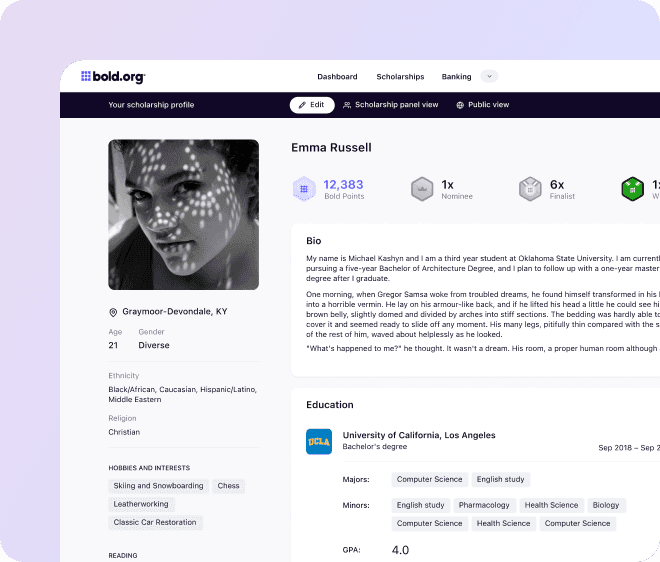
Start with your story
Bold.org helps students show donors who they are beyond a transcript.
Step 02
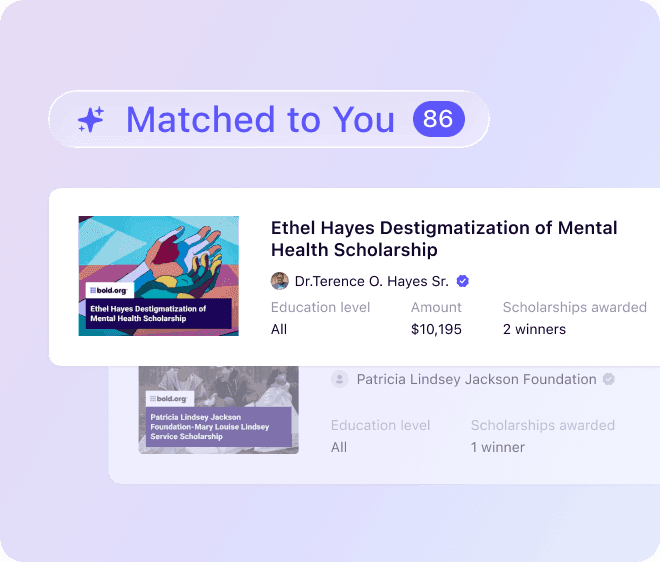
Where scholarships are awarded
Every scholarship is funded by donors and managed directly on Bold.org.
Step 03
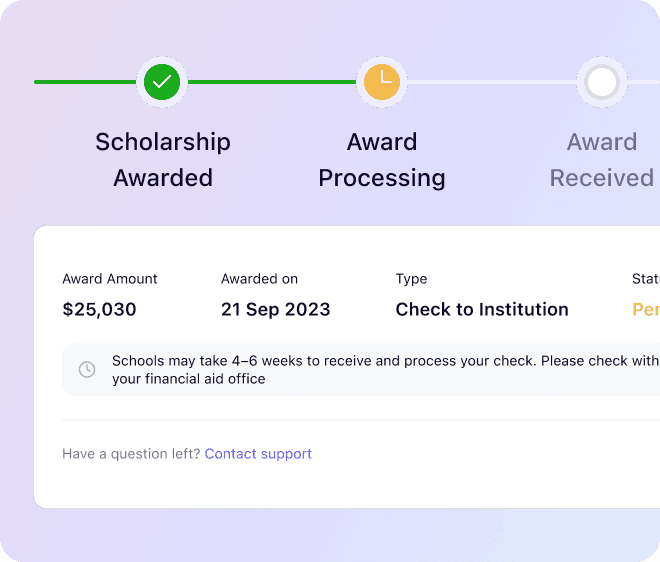
Fund your future
Scholarship dollars are disbursed through Bold.org to help students pay for school.
FAQ
When is the scholarship application deadline?
The application deadline is May 29, 2026. Winners will be announced on Jun 30, 2026.
How will scholarship application information be used?
Your privacy is a top priority on the Bold.org platform, and you can find our privacy policy in full here. You may opt out of communications from Bold.org at any time, and unless we’ve first notified you and gotten your consent, you’ll never receive communication from any third parties related to personal information you give us.
What is the scholarship award?
Award amounts per winner are designated by the donor. Check the award amount for a detailed breakdown.
When will the scholarship winner be chosen? How will they be notified?
The winner will be publicly announced on Jun 30, 2026. Prior to the announcement date, we may contact finalists with additional questions about their application. We will work with donors to review all applications according to the scholarship criteria. Winners will be chosen based on the merit of their application.
How will the scholarship award be paid?
Award checks will be sent to the financial aid office of the winner's academic institution in their name to be applied to their tuition, and in the name of their institution (depending on the school's requirements). If the award is for a qualified educational non-tuition expense, we will work with the winner directly to distribute the award and make sure it goes towards qualified expenses.
How will my scholarship application be verified?
Before we award the scholarship, the winner will be required to confirm their academic enrollment status. Depending on the circumstances, verification of Student ID and/or their most recent transcript will be required.
How should I get in touch with questions?
If you have any questions about this scholarship or the Bold.org platform, just email contact@bold.org and we’ll get back to you as quickly as we can.
Does the scholarship have terms and conditions?
Yes. The terms and conditions for this scholarship can be found here.
97% of students don't win scholarships. We’re here to change that.