Hobbies and interests
Reading
Painting and Studio Art
Drawing And Illustration
Art
Sewing
Knitting
Fashion
Graphic Design
Reading
Romance
Mystery
Adult Fiction
Adventure
I read books daily
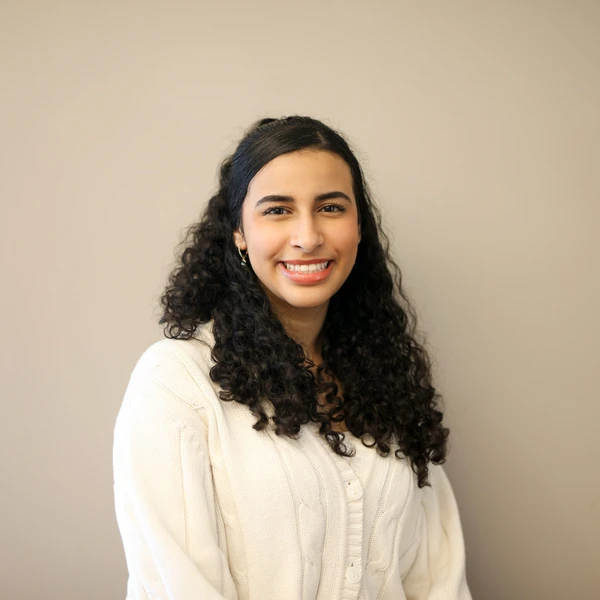
Hebat Elkacemi
1x
Finalist
Hebat Elkacemi
1x
FinalistBio
Electrical and Computer Engineering student at Northeastern University (Class of 2027) with a focus on RF systems, embedded hardware, and digital communications. I've built hands-on experience across multiple industries through Northeastern's co-op program, including defense research at the Kostas Research Institute for Homeland Security, semiconductor manufacturing at GlobalFoundries, and precision technology at Nordson Corporation, with an upcoming role at Motorola Solutions.
I'm a first-generation college student from Revere, MA, and that background shapes how I think about engineering, access, and who gets to be in these spaces. Outside of my technical work, I serve as New England Zone Secretary for NSBE, coordinating communications across more than ten chapters in the region. I'm also an Undergraduate Representative on Northeastern's College of Engineering Dean Search Committee, a mentor to my former high school robotics team, and involved in several campus organizations including BESS, ISNU, the North African Student Association, and EMPOWER.
I'm a member of the Northeastern Honors Program and a recipient of the Patrick P. Lee Scholarship and the Amelia Peabody Scholarship. I care deeply about building technology that is equitable, and about creating pathways for students from underrepresented communities to thrive in engineering.
Education
Northeastern University
Bachelor's degree programMajors:
- Electrical and Computer Engineering
GPA:
3.5
Revere High School
High SchoolGPA:
4
Miscellaneous
Desired degree level:
Master's degree program
Graduate schools of interest:
Transfer schools of interest:
Majors of interest:
- Electrical and Computer Engineering
Career
Dream career field:
Electrical/Electronic Manufacturing
Dream career goals:
Electrical and Computer Engineering
Presales Systems Engineering Intern
Motorola Solutions2026 – Present6 monthsIT Operations Co-Op
Nordson Corporation2025 – 2025ESD Device Engineering Intern
GlobalFoundries2025 – 2025Radio Frequency Engineering Co-op
Kostas Research Institute2026 – Present6 months
Sports
Tennis
Varsity2021 – 2021
Swimming
Junior Varsity2019 – 20201 year
Research
Electrical, Electronics, and Communications Engineering
Kostas Research Institute — Radio Frequency Engineering Co-op2026 – PresentSubstance Abuse/Addiction Counseling
84 movement — PSA Creator2020 – 2020
Arts
Drama/ Theater
ActingSchool Rehearsals and Events2017 – 2019
Public services
Public Service (Politics)
Revere High School Robotics Team — Student Engineer & Mentor2023 – PresentAdvocacy
Northeastern University — Undergraduate Student Representative2026 – Present
Future Interests
Advocacy
Volunteering
Entrepreneurship
Michele L. Durant Scholarship
The ballroom was loud in the best possible way. Hundreds of Black engineering students filling every seat, business cards trading hands, laughter cutting through the noise of a career fair that actually felt like it was made for us. At the NSBE Fall Regional Conference, I looked around and saw people who looked like me presenting research, leading sessions, and being recruited by top companies. It was the first time engineering felt like it had room for me in it.
I left that conference unwilling to simply be a recipient of what NSBE had built. I got involved with the Northeastern Black Engineering Student Society and eventually ran for Secretary of the NSBE New England Zone E-Board, a decision that became the most defining leadership experience of my time at Northeastern.
The role is easy to underestimate from the outside. Secretary sounds administrative. But in an organization serving over 300 members across more than ten chapters, communication is everything. A missed deadline means a student does not know about a conference. A poorly documented decision means a chapter loses continuity when leadership changes. I drafted official communications, maintained records, coordinated logistics across universities, and ensured every chapter had equal access to resources and professional development. I helped plan the Fall and Spring Zone Conferences for the entire New England region, events that brought together hundreds of Black engineering students under one roof. Watching students connect, find mentors, and leave with internship leads and a renewed sense of belonging reminded me why the behind-the-scenes work matters.
That belief in behind-the-scenes work is something I learned even earlier. In high school I delivered testimony at the Massachusetts State House in support of STEM and robotics funding for Greater Boston schools. My robotics team, the NUTRONs, had ranked second in the world that year on a fraction of most programs' budgets. The bill passed. Now I mentor that same team as a college student, and the work feels like a full circle: someone once pulled up a chair next to me, and now I do the same for someone else.
I am a first-generation college student from Revere who found her footing through community and gave back through service. The world I want to build is one where the next student who walks into a new room, whether it is an engineering lab or a conference ballroom, does not have to wait as long as I did to feel like she belongs there.
7023 Minority Scholarship
Although I had rehearsed it many times, nothing could quite prepare me for the feeling of standing before the microphones in the Massachusetts State House. The chamber was filled with lawmakers who had heard dozens of testimonies before mine. At seventeen years old, I testified on behalf of a grant proposal to fund robotics in schools, palms sweating as I gathered my thoughts and found my voice. I gritted my teeth and delivered the message I had come to say: excellence does not necessitate privilege. It takes investment. From that experience, I learned something I have kept close ever since: leadership is not about having access to opportunities. It is about making opportunities accessible to others.
I am a first-generation college student from Revere, Massachusetts, the daughter of Moroccan immigrants, pursuing a degree in Electrical and Computer Engineering at Northeastern University. My technical work has taken me from automating semiconductor testing at GlobalFoundries to building transmit-to-receive signal chains at the Kostas Research Institute for Homeland Security, to developing radio infrastructure for first responders at Motorola Solutions. Engineering, for me, has never been separate from the communities it affects. The problems worth solving live at the physical layer, in the systems that people depend on when everything else fails.
The causes I support are the ones I grew up inside. Since my freshman year of high school, I have worked on civic engagement campaigns in Revere, going door to door in languages people could understand, making sure BIPOC communities had access to the democratic process that shaped their lives. I became a BIPOC voter outreach worker, then a youth leader facilitating workshops on identity and systemic inequality, then an advocate at the State House fighting for equitable student funding. These are not abstract causes to me. They are the stuff of everyday life in my city, and the people living through these issues deserve to be in the rooms where decisions are made.
At Northeastern, I carry that same work forward. As New England Zone Secretary for NSBE, I coordinate resources and communications for over 300 Black engineering students across more than ten chapters, because I know that access to information and opportunity is not evenly distributed and that someone has to build the infrastructure that closes that gap. I continue mentoring students on the NUTRONs robotics team in Revere, kids who remind me of who I was before my mentors refused to leave me uncertain.
Addie James Hamerter dedicated her life to making sure that access to justice and opportunity was not a privilege. That is exactly the work I am trying to do, in engineering, in advocacy, and in every room I am fortunate enough to enter.
Stephan L. Daniels Lift As We Climb Scholarship
The ballroom was loud in the best possible way. Hundreds of Black engineering students filling every seat, business cards trading hands, laughter cutting through the noise of a career fair that actually felt like it was made for us. At the NSBE Fall Regional Conference, I looked around and saw people who looked like me presenting research, leading sessions, and being recruited by top companies. It was the first time engineering felt like it had room for me in it.
That moment clarified something I had been building toward for years without fully naming it. I did not just want to succeed in STEM. I wanted to make sure the room stayed that full.
I am a first-generation college student from Revere, Massachusetts, the daughter of Moroccan immigrants, and I came to Northeastern's Electrical and Computer Engineering program through a path that was never guaranteed. In high school, I joined the NUTRONs robotics team not knowing anything about engineering, convinced everyone else had a head start I would never close. What changed was not my performance. It was my mentors, who refused to leave me on the sidelines. By the time our team ranked second in the world on a limited budget, engineering had become an indispensable part of my life. Being on the other side now, as one of the mentors, I understand what that investment required and what it created.
My technical path has been intentional. At GlobalFoundries, I developed algorithms to automate semiconductor testing. At the Kostas Research Institute for Homeland Security, I built transmit-to-receive signal chains and performed frequency sweep testing on embedded Linux systems. This spring, I began a co-op at Motorola Solutions, developing radio infrastructure for first responders and public safety agencies. Each experience has brought me closer to the engineer I am trying to become: one who engineers with discipline and designs with the end user always in mind.
But the reason I pursue STEM is inseparable from the community I come from. Black students earn roughly 5% of engineering degrees. I keep that number in mind. As New England Zone Secretary for NSBE, I coordinate resources and communications for over 300 Black engineering students across more than ten chapters in New England, because I know that a missed opportunity can be the difference between a student who stays in engineering and one who quietly walks away. I continue mentoring students on the NUTRONs robotics team in Revere, kids who remind me of who I was before my mentors refused to leave me uncertain.
Representation is not just symbolic. It is systemic. The communities most affected when critical systems fail are often the same ones underrepresented in the rooms where those systems are built. I intend to keep showing up to close that gap, as an engineer, as a mentor, and as someone who has never forgotten where she came from.
Sgt. Albert Dono Ware Memorial Scholarship
There is a moment in community organizing that no one warns you about. It is the moment you realize the problem you are trying to solve is not an accident. It was built into the systems that were supposed to serve everyone equally. That realization does not make the work easier. It makes it feel more necessary.
That moment came for me early.
Since my freshman year of high school, I have dedicated most of my free time outside of class to civic engagement, campaigns, and special elections in Revere and the Greater Boston area. What started as a desire to do something important for my community eventually turned into a lifelong dedication to making sure that BIPOC communities, such as my own, had actual access to the democratic process that dictated their lives. I became a BIPOC voter outreach worker for the Fair Share Amendment Campaign. I went door to door and made phone calls in languages that people could understand. I did not tell people who to vote for. I made sure they knew about it in the first place, because for many people in my community, that information was never made available to them. When I told my parents about the elections I was working on, they said they had never heard about them before. I never stopped asking myself why.
Sgt. Ware's values of service, sacrifice, and bravery are not abstract to me. They are the texture of showing up anyway, even when the door does not open, even when the room was not designed for you, even when the work is unglamorous and discouraging. I testified at the Massachusetts State House in support of funding for my high school robotics team, a team that ranked second in the world despite a fraction of the resources other programs had. I wanted our lawmakers to understand that the gap between what our communities produce and what our communities receive is not a measure of our potential. It is a measure of whether our communities have been invested in or not.
That same belief drives my work at Northeastern. As New England Zone Secretary for NSBE, I coordinate resources and communications for over 300 Black engineering students across more than ten chapters in New England. I continue mentoring students on the NUTRONs robotics team in Revere, kids who remind me of who I was before my mentors refused to leave me uncertain. I also serve as the sole undergraduate representative on the College of Engineering Dean Search Committee, bringing a student perspective into a university-level leadership decision. Representation is not just symbolic. It is systemic. And I intend to keep showing up to build it.
The challenges facing the African diaspora in the United States are interconnected, and the reforms that matter most are the ones that address access at the root. Equitable funding for schools in majority Black and brown communities is the foundation, because excellence cannot be built on a budget that signals to students that they are worth less. Alongside that, STEM pipelines need to be widened deliberately, through mentorship programs, community partnerships, and investment in organizations like NSBE that are already doing the work of retaining Black students in technical fields. Immigration and civic access reform matters too, because many members of the African diaspora, including families like mine, navigate systems that were never designed to include them.
The stakeholders who need to be at the table are the ones who are too often missing from it: community organizations, HBCU networks, first-generation students, and the families who send their children into institutions that do not always send them back whole. Policy without those voices is policy that will miss the point.
Sgt. Ware gave everything in service to a country still working to live up to its promises. I carry that seriously. The least I can do is keep showing up.
Tawkify Meaningful Connections Scholarship
I was that student once. Standing at the edge of the lab, arms crossed, waiting for someone to tell me I didn't belong there. I had joined the NUTRONs robotics team in high school not knowing anything about engineering. I was nervous, behind, and convinced that everyone else had a head start I would never close. What changed was not that I started doing better or receiving less criticism. The shift came when my mentors refused to leave me on the sidelines. They pulled up a chair next to mine, asked me what I thought, and waited for the answer. Over time, that patience became my confidence.
That is the relationship that shaped everything.
My mentors did not just teach me engineering. They taught me that belonging is something you can give to another person. That showing up consistently, asking questions instead of giving answers, and refusing to let someone sit at the edge of the room is one of the most powerful things a human being can do for another. I did not have a word for what they were doing at the time. I just knew it changed me.
By the time our team rose to second in the world on a limited budget, engineering had become an indispensable part of my life. But the thing I carried out of that lab was not technical. It was relational. It was the understanding that excellence is built in the space between people, not in isolation.
When I came back to Revere as a college student to mentor that same team, I knew exactly what I was there to do. I started sitting next to students the way my mentors once sat next to me. I asked them questions instead of giving them answers. I made them walk me through their thinking even when they were sure they were wrong. I stayed when they got frustrated, because I knew what was on the other side of that frustration.
One student in particular stood at the edge of the lab the same way I once had. Arms crossed. Watching. Waiting. I recognized that posture immediately because I had worn it myself. By the end of the season she was running her own subteam. She debugged problems independently, made decisions under pressure, and stood in front of competition judges and explained her work with a clarity that made me want to cry a little, if I am being honest.
That is what a meaningful relationship does. It does not just change the person receiving it. It changes the person giving it too. Mentoring her taught me things about my own confidence, my own capacity, and my own purpose that I could not have learned any other way.
This is the pattern I carry into every room I enter now. As New England Zone Secretary for NSBE, I coordinate resources and communications for over 300 Black engineering students across more than ten chapters, because I know that a missed opportunity can be the difference between a student who stays in engineering and one who quietly walks away. Through EMPOWER and the Islamic Society at Northeastern, I hold space for students navigating higher education as first-generation students and students of color, because I remember what it felt like to need that space and not know where to find it.
Human connection, for me, is not abstract. It is the specific act of pulling up a chair. It is refusing to let someone sit at the edge of the room alone. My mentors gave that to me. I gave it to someone else. That is the kind of engineer, leader, and person I intend to keep becoming.
Strong Leaders of Tomorrow Scholarship
This prompt ("what makes you a leader") maps perfectly to your ballroom/NSBE essay. Your words, minimal changes:
The ballroom was loud in the best possible way. Hundreds of Black engineering students filling every seat, business cards trading hands, laughter cutting through the noise of a career fair that actually felt like it was made for us. At the NSBE Fall Regional Conference, I looked around and saw people who looked like me presenting research, leading sessions, and being recruited by top companies. It was the first time engineering felt like it had room for me in it.
I left that conference unwilling to simply be a recipient of what NSBE had built. I got involved with the Northeastern Black Engineering Student Society, the local NSBE chapter, and eventually ran for Secretary of the NSBE New England Zone E-Board. That decision became the most defining leadership experience of my time at Northeastern.
The role is easy to underestimate from the outside. Secretary sounds administrative. But I quickly learned that in an organization serving over 300 members across more than ten collegiate and professional chapters, communication is everything. A missed deadline means a student does not know about a conference. A poorly documented decision means a chapter loses continuity when leadership changes. I became the person responsible for making sure none of that happened. What I learned is that leadership is not always visible. Some of the most important work happens behind the scenes, making sure the infrastructure is strong enough that others can show up and thrive.
Serving at the regional level gave me a view of how many different students were navigating engineering with very different resources, support systems, and starting points. Some came from well-funded programs with industry connections. Others, like me, were figuring it out as they went. Being in that role meant holding both realities at once and making sure our programming, communications, and culture reflected everyone, not just those who already had access.
Leadership, for me, also means going back. I continue mentoring students on the NUTRONs robotics team in Revere, the same team that taught me I belonged in engineering. I was that student once, standing at the edge of the lab, unsure if this world had space for me. My mentors refused to leave me uncertain. Now I get to be that for someone else. I also serve as the sole undergraduate representative on Northeastern's College of Engineering Dean Search Committee, bringing a student perspective into a university-level leadership decision.
I am a first-generation college student from Revere who found her footing through community and gave back through service. Leadership, to me, is not about being the loudest voice in the room. It is about making sure all voices are heard, and then building the systems that keep them there.
Forever90 Scholarship
Although I had rehearsed it many times, nothing could quite prepare me for the feeling of standing before the microphones in the Massachusetts State House. The chamber was filled with lawmakers who had heard dozens of testimonies before mine. At seventeen years old, I testified on behalf of a grant proposal to fund robotics in schools, palms sweating as I gathered my thoughts and found my voice. I gritted my teeth and delivered the message I had come to say: excellence does not necessitate privilege. It takes investment. From that experience, I learned something I have kept close ever since: leadership is not about having access to opportunities. It is about making opportunities accessible to others.
That belief started even earlier. Since my freshman year of high school, I spent most of my free time outside the classroom doing civic engagement work in Revere and the Greater Boston area. I became a BIPOC voter outreach worker, going door to door in languages people could understand, making sure communities that were not being reached knew their voice mattered. When I told my parents about the elections I was working on, they said they had never heard about them before. I never stopped asking myself why. That question has driven everything since.
Service, for me, has never been a single act. It is a practice. I continued mentoring students on the NUTRONs robotics team in Revere, the same team that taught me I belonged in engineering. I was that student once, standing at the edge of the lab, unsure if this world had space for me. My mentors refused to leave me uncertain. Now I get to be that for someone else. There is nothing quite as rewarding as watching a student go from not knowing where to start to presenting their work with confidence at a regional competition.
At Northeastern, the scope of that service expanded. As New England Zone Secretary for NSBE, I coordinate communications and resources for over 300 Black engineering students across more than ten chapters in New England. I also serve as the sole undergraduate representative on the College of Engineering Dean Search Committee, bringing a student perspective into a university-level leadership decision. Through EMPOWER and the Islamic Society of Northeastern University, I have continued organizing events and holding space for students navigating higher education as first-generation students and students of color.
My education is the tool I use to serve. Engineering has taught me precision, accountability, and the weight of building systems that people depend on. I carry that into every community I am part of. The communities most affected when institutions fail are often the same ones underrepresented in the rooms where decisions are made. I intend to keep showing up to close that gap, as an engineer, as a mentor, and as someone who has never forgotten where she came from.
Mrs. Makins believed in the power of education to change lives. So do I. And I plan to spend mine proving it.
Byte into STEM Scholarship
The ballroom was loud in the best possible way. Hundreds of Black engineering students filling every seat, business cards trading hands, laughter cutting through the noise of a career fair that actually felt like it was made for us. At the NSBE Fall Regional Conference, I looked around and saw people who looked like me presenting research, leading sessions, and being recruited by top companies. It was the first time engineering felt like it had room for me in it.
I left that conference unwilling to simply be a recipient of what NSBE had built. I got involved with the Northeastern Black Engineering Student Society, the local NSBE chapter, and eventually ran for Secretary of the NSBE New England Zone E-Board. That decision became the most defining leadership experience of my time at Northeastern. I became the person responsible for drafting official communications, maintaining records, coordinating logistics across universities, and ensuring that every chapter had equal access to resources, scholarships, and professional development opportunities. A missed deadline means a student does not know about a conference. I learned that equity is not just a value. It has to be built into systems intentionally, or it quietly disappears.
I am a first-generation college student from Revere, Massachusetts, the daughter of Moroccan immigrants, and I came to Northeastern as someone who had spent years organizing in her community before she ever set foot in an engineering lab. I canvassed neighborhoods door to door, organized multilingual voter registration drives, testified at the Massachusetts State House in support of funding for my high school robotics team, and mentored students who reminded me of who I was before my own mentors refused to leave me uncertain. None of that work has ever felt separate from my technical path. It is the reason I chose it.
My ECE program at Northeastern is giving me the foundation to work at the physical layer of systems that matter. At GlobalFoundries, I developed algorithms to automate semiconductor testing. At the Kostas Research Institute for Homeland Security, I built transmit-to-receive signal chains and performed frequency sweep testing on embedded Linux. This spring, I began a co-op at Motorola Solutions, developing radio infrastructure for first responders and public safety agencies. Each experience has brought me closer to the engineer I am trying to become: one who engineers with discipline, leads with compassion, and designs with the end user always in mind.
The communities most affected when critical systems fail are often the same ones underrepresented in the rooms where those systems are built. I keep that in mind as I continue mentoring students on the NUTRONs robotics team in Revere and serving as the sole undergraduate representative on Northeastern's College of Engineering Dean Search Committee. Representation is not just symbolic. It is systemic. And I intend to keep showing up to build it.
Teria Onwuaduegbo Black Women in STEM Scholarship
The ballroom was loud in the best possible way. Hundreds of Black engineering students filling every seat, business cards trading hands, laughter cutting through the noise of a career fair that actually felt like it was made for us. At the National Society of Black Engineers Fall Regional Conference, I looked around and saw people who looked like me presenting research, leading sessions, and being recruited by top companies. It was the first time engineering felt like it had room for me in it.
I left that conference unwilling to simply be a recipient of what NSBE had built. I got involved with the Northeastern Black Engineering Student Society (BESS), the local NSBE chapter, and eventually ran for Secretary of the NSBE New England Zone E-Board. That decision became the most defining leadership experience of my time at Northeastern.
The role is easy to underestimate from the outside. Secretary sounds administrative. But I quickly learned that in an organization serving over 300 members across more than ten collegiate and professional chapters, communication is everything. A missed deadline means a student does not know about a conference. A poorly documented decision means a chapter loses continuity when leadership changes. I became the person responsible for making sure none of that happened, drafting official communications, maintaining records, coordinating logistics across universities, and ensuring that every chapter had equal access to resources, scholarships, and professional development opportunities.
My technical path has been just as intentional. Now in Northeastern's Electrical and Computer Engineering program, I have developed a clear preference for hardware, embedded systems, and solving problems where precision counts. At GlobalFoundries, I developed algorithms to automate semiconductor testing. At the Kostas Research Institute for Homeland Security, I built transmit-to-receive signal chains and performed frequency sweep testing on embedded Linux systems. This spring, I began a co-op at Motorola Solutions, developing radio infrastructure for first responders and public safety agencies.
Black women are still underrepresented in the rooms where these systems are built. I keep that in mind in everything I do. I continue mentoring students on the NUTRONs robotics team in Revere, kids who remind me of who I was before my mentors refused to leave me uncertain. I also serve as the sole undergraduate representative on Northeastern's College of Engineering Dean Search Committee.
Teria Onwuaduegbo followed her passion for mathematics despite the obstacles in front of her. I carry that same belief: that showing up, doing serious work, and making room for others who come after you is exactly what this field needs more of. Receiving this scholarship would allow me to keep doing both.
Teaching Technicians Scholarship
Although I had rehearsed it many times, nothing could quite prepare me for the feeling of standing before the microphones in the Massachusetts State House. The chamber was filled with lawmakers who had heard dozens of testimonies before mine. At seventeen years old, I testified on behalf of a grant proposal to fund robotics in schools, palms sweating as I gathered my thoughts and found my voice. I gritted my teeth and delivered the message I had come to say: excellence does not necessitate privilege. It takes investment. From that experience, I learned something I have kept close ever since: leadership is not about having access to opportunities. It is about making opportunities accessible to others.
When I started my journey in robotics, I was not confident. Joining the team late, I questioned whether I belonged. What changed was not that I started doing better or receiving less criticism. The shift came when my mentors refused to leave me on the sidelines. By the time our team rose to second in the world on a limited budget, engineering had become an indispensable part of my life. Being on the other side now, as one of the mentors, I understand what that investment required and what it created.
That focus led me into technical work earlier than I anticipated. At GlobalFoundries, I developed algorithms to automate semiconductor testing, the physical foundation of modern electronics. At the Kostas Research Institute for Homeland Security, I worked on electronic warfare and secure communications in contested environments, building transmit-to-receive signal chains and performing frequency sweep testing on embedded Linux. Those experiences made something clear to me: the problems worth solving live at the physical layer, in the signals and the systems that critical infrastructure depends on. This spring, I began a co-op at Motorola Solutions, developing radio infrastructure for first responders and public safety agencies.
The communities most affected when systems fail are often the same ones that are underrepresented in the rooms where those systems are built. I keep that in mind as New England Zone Secretary for NSBE, where I organize programming for Black engineering students across more than ten chapters. I continue mentoring students on the robotics team in Revere, kids who remind me of who I was before my mentors refused to leave me uncertain. I also serve as the sole undergraduate representative on Northeastern's College of Engineering Dean Search Committee. None of this is separate from my technical work. It is the reason I do it.
As a first-generation college student, financial support makes a real difference. It allows me to focus fully on technical preparation and research without balancing my studies against pressures outside the classroom.
My testimony at the State House was about investment. Everything since has been an attempt to live that out.
Carla M. Champagne Memorial Scholarship
Although I had rehearsed it many times, nothing could quite prepare me for the feeling of standing before the microphones in the Massachusetts State House. The chamber was filled with lawmakers who had heard dozens of testimonies before mine. At seventeen years old, I testified on behalf of a grant proposal to fund robotics in schools, palms sweating as I gathered my thoughts and found my voice. I gritted my teeth and delivered the message I had come to say: excellence does not necessitate privilege. It takes investment. From that experience, I learned something I have kept close ever since: leadership is not about having access to opportunities. It is about making opportunities accessible to others.
When I started my journey in robotics, I was not confident. Joining the team late, I questioned whether I belonged. What changed was not that I started doing better or receiving less criticism. The shift came when my mentors refused to leave me on the sidelines. By the time our team rose to second in the world on a limited budget, engineering had become an indispensable part of my life. Being on the other side now, as one of the mentors, I understand what that investment required and what it created. I continue mentoring students on the robotics team in Revere, kids who remind me of who I was before my mentors refused to leave me uncertain. Watching a student who stood at the edge of the lab, arms crossed, unsure she belonged, eventually run her own subteam, that is the kind of return that does not show up on a resume.
That same instinct carried into civic work. I canvassed neighborhoods in Revere door-to-door, organized multilingual voter registration drives, and provided data to local representatives to inform public education policy. I became a BIPOC Community Engagement Fellow, doing outreach in communities that had every reason to feel like the process was not built for them. The work was unglamorous and often discouraging. I kept showing up anyway.
Service has never felt separate from who I am. Growing up as a first-generation student in a city of immigrants, I watched my family navigate systems that were not always designed to include them. That shaped how I understand my responsibilities. The communities most affected when institutions fail are often the same ones that are underrepresented in the rooms where decisions are made. Volunteering is how I try to close that gap.
At Northeastern, the scope expanded. As New England Zone Secretary for NSBE, I organize programming and coordinate communications for Black engineering students across more than ten chapters in New England. I serve as the sole undergraduate representative on the College of Engineering Dean Search Committee, bringing a student perspective into a university-level leadership decision. I show up to both the same way I did in Revere: consistently and with the people around me in mind.
None of this is separate from my technical work. It is the reason I do it. Carla Champagne gave her time regardless of what else was on her plate. That is the standard I hold myself to.
My testimony at the State House was about investment. Everything since has been an attempt to live that out.
I Can Do Anything Scholarship
After seeing what my mentors have done for me and what they do in their careers, I realized that I, too, can make an impact on student's lives; I wish to give back to robotics in the future and continue to be a mentor for kids like me who are just getting into robotics; I hope to be a resource and guide to those just starting in the field and help them navigate their challenges.
Our Destiny Our Future Scholarship
My small hands trembled, struggling to maneuver the wooden knitting needles as I wrapped a piece of yarn over to create a loop. The needles clacking against each other caught my mom's attention.
“What are you making?” she said curiously.
I stared at her blankly, not knowing how to answer.
“I don’t know yet,” I said, turning away to continue knitting.
I didn’t have an end result in mind, but I knew that whatever I created, I would gift it to her.
After many attempts, I finally made a wonky square. I was so happy with what I had made that I didn’t notice my mom’s reaction to my trapezoid-looking “square.”
As I got older and spent more time learning how to knit, strands of my hair would fall into the yarn. Eventually, the fallen strands were woven into every project I made in the same way that the guilt of losing my best friend stuck with me. I was struck with a sense of responsibility for feeling like I didn’t do enough as a friend. But all it took was a look around me to see that I wasn’t the only one struggling with overcoming the news of my friend committing suicide. I was twelve years old and didn’t know much about how relationships worked, but I did see a lot about the process found in knitting.
My friends and I were like loose strands of yarn; we were all so distant. We were distancing ourselves in an attempt to accept that the memories, moments, and inside jokes were attached to someone who no longer existed. Alone we could never make anything of these loose strands, I realized there needed to be someone who could knit them together, and I knew I had the skills to do it. They needed a safe space and a trustworthy listener to help them grieve. On a group level, sharing our experiences and emotions was a way to bring these memories and moments of her back to life. Individually, each of us had our own struggles. Instead of letting them knot up inside us, we worked through them with one-on-one conversations and simply being there for one another. I learned how to heal myself and those around me, discovering that quality time with the ones I love is the best way to build better relationships.
Through helping my friends, I found that I had a purpose: to create connections between people and build community, similar to how I intertwined my yarn to create something more significant. I worked for organizations and campaigns in Revere that allowed me to get involved and build relationships with people with such interesting backgrounds and identities while helping improve our community. Every phone bank, door knock, and campaign I got involved with allowed me to see the impact I had on weaving more BIPOC voters into the decision-making process on our schools, housing, transportation, and overall access to opportunities. As with helping my friends through the grieving process, talking to people about issues of mutual concern gives me a sense that I am empowering them to use their voices to improve their lives and the world we share.
Like my knitting journey, which started with a square only my mother could love and progressed to sweaters my friends wear proudly, my community-building progressed from my small circle of friends to encompass my entire city and school. No matter how big or small my impact is, my work in building better relationships brings me back to the same childish happiness I got from creating my wonky square.