Women in Healthcare Scholarship


Healthcare plays a part in the lives of individuals and communities on a daily basis. Workers in this field are frontline warriors in the battle against disease, providers of comfort during times of illness, and advocates for healthier living. They are responsible for pushing the boundaries of medical knowledge, delivering compassionate care, and making healthcare accessible to all.
As demand for healthcare professionals grows, diversity and gender equality in this field become increasingly vital. Inclusivity is essential to the growth and progress of healthcare, as women bring unique, valuable strengths and experiences to the field.
Historically, women have faced barriers to accessing education and achieving leadership roles in healthcare. Additionally, pursuing a degree in the healthcare field, while rewarding, can be financially challenging.
This scholarship aims to support and empower female students pursuing degrees in healthcare so they can afford to complete their education and shape the future of healthcare.
Any female high school senior, undergraduate, or graduate student who is a U.S. citizen or permanent legal resident pursuing healthcare may apply for this scholarship.
To apply, tell us why you’ve decided to pursue healthcare and how you hope to make a difference as a woman in the field.
Why have you chosen to pursue a degree in healthcare? How do you hope to make a positive impact as a woman in the healthcare field?
Explore All Kinds of Scholarships for All Kinds of Students
Winners and Finalists
July 2026


August 2025


Winning Application


How it works
Bold.org is Built to Make Scholarships Feel Possible
Step 01
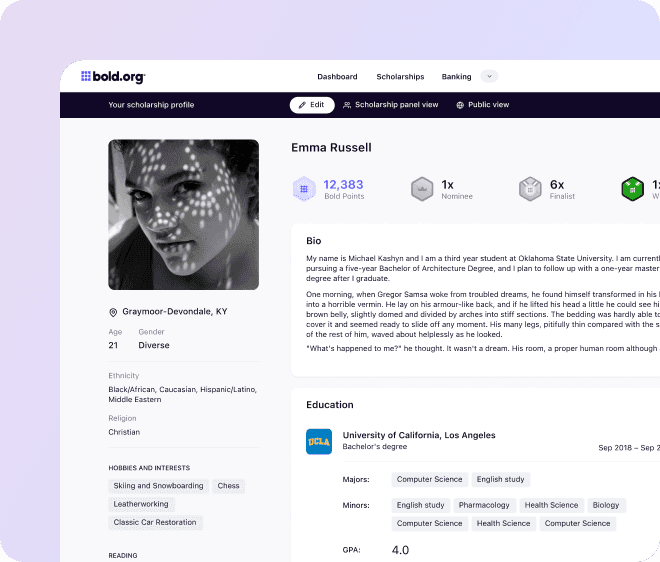
Start with your story
Bold.org helps students show donors who they are beyond a transcript.
Step 02
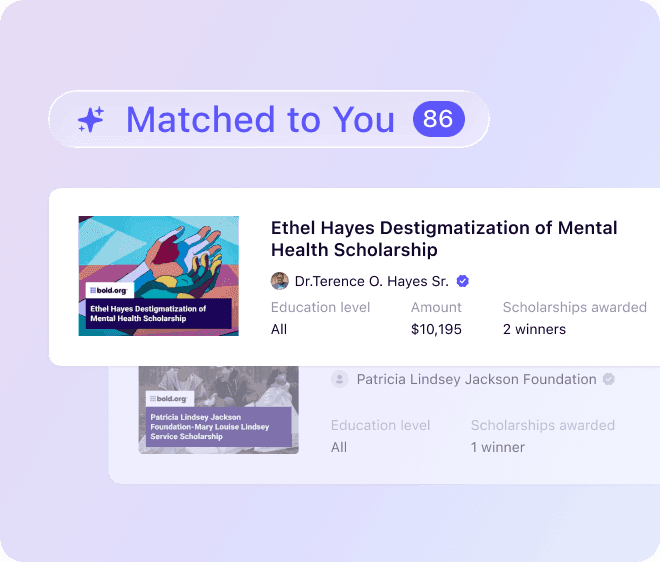
Where scholarships are awarded
Every scholarship is funded by donors and managed directly on Bold.org.
Step 03
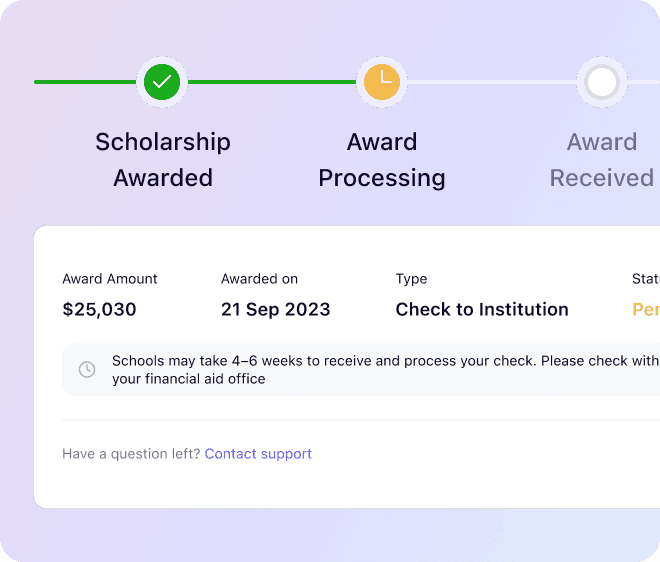
Fund your future
Scholarship dollars are disbursed through Bold.org to help students pay for school.
FAQ
The application deadline is Jun 1, 2026. Winners will be announced on Jul 1, 2026.
Your privacy is a top priority on the Bold.org platform, and you can find our privacy policy in full here. You may opt out of communications from Bold.org at any time, and unless we’ve first notified you and gotten your consent, you’ll never receive communication from any third parties related to personal information you give us.
Award amounts per winner are designated by the donor. Check the award amount for a detailed breakdown.
The winner will be publicly announced on Jul 1, 2026. Prior to the announcement date, we may contact finalists with additional questions about their application. We will work with donors to review all applications according to the scholarship criteria. Winners will be chosen based on the merit of their application.
Award checks will be sent to the financial aid office of the winner's academic institution or future academic institution in their name to be applied to their tuition, and in the name of their institution (depending on the school's requirements). If the award is for a qualified educational non-tuition expense, we will work with the winner directly to distribute the award and make sure it goes towards qualified expenses.
Before we award the scholarship, the winner will be required to confirm their academic enrollment status. Depending on the circumstances, verification of Student ID and/or their most recent transcript will be required.
If you have any questions about this scholarship or the Bold.org platform, just email contact@bold.org and we’ll get back to you as quickly as we can.
Yes. The terms and conditions for this scholarship can be found here.
