
Hobbies and interests
Ice Skating
3D Modeling
Coding And Computer Science
Biotechnology
Engineering
STEM
Foreign Languages
Snowboarding
Alpine Skiing
Music Composition
Music
Music Production
Piano
Violin
Volunteering
Community Service And Volunteering
Social Justice
Artificial Intelligence
Machine Learning
Global Health
Biomedical Sciences
French
Cantonese
Chinese
Mandarin
English
American Sign Language (ASL)
Reading
Literature
Economics
Science
Women's Fiction
Sociology
Social Issues
Philosophy
I read books multiple times per week
Charlotte Law
1x
Finalist
Charlotte Law
1x
FinalistBio
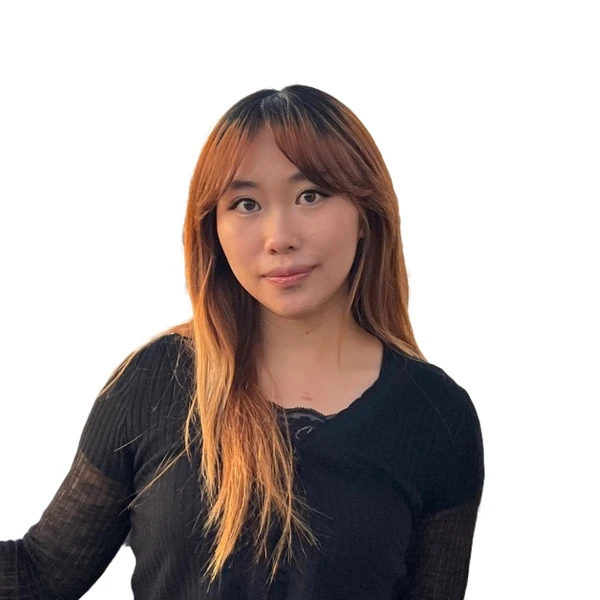
Hello! My name is Charlotte Law, and I am a rising senior at UC Berkeley pursuing a dual degree in Bioengineering and Electrical Engineering & Computer Science (EECS). I sit at the unique intersection of software engineering, distributed systems, and healthcare innovation, with a career mission to build highly secure, intelligent, and scalable technological tools that improve lives.
As an ambitious woman in tech, my background includes developing real-time metrics pipelines for cloud infrastructure at Amazon Web Services (AWS), optimizing data ingestion for machine learning anomaly detection at SeQure AI, and prototyping an automated medical delivery device with safety tracking at Stanford Medicine.
Beyond my technical work, I am deeply committed to uplifting others in STEM. I serve as the Internal Vice President for Blueprint (Tech for Social Good), where I lead full-stack web development teams to support public welfare organizations, and I am a proud officer of UC Berkeley’s Association of Women in EE & CS (AWE).
Beyond engineering, I am an officially copyrighted music producer, US Figure Skating Gold Medalist, and alpine ski racer. I am seeking scholarships to fund my final year at Berkeley as I prepare to build an inclusive and equitable future.
Education
University of California-Berkeley
Bachelor's degree programMajors:
- Computer Science
- Electrical and Computer Engineering
- Biomedical/Medical Engineering
Dougherty Valley High School
High SchoolMiscellaneous
Desired degree level:
Doctoral degree program (PhD, MD, JD, etc.)
Graduate schools of interest:
Transfer schools of interest:
Majors of interest:
- Biomedical/Medical Engineering
- Biotechnology
- Computer Science
- Electrical and Computer Engineering
- Mechanical Engineering
Career
Dream career field:
Technology
Dream career goals:
To architect scalable software, cloud infrastructure, and accessible health tech while serving as an executive advocate expanding technical workshops, mentorship, and career tracks for women in STEM
Wetware Engineer
Neurotechnology at UC Berkeley2025 – Present1 yearExecutive Officer & Treasurer
Association of Women in EE and CS2023 – 20263 yearsSoftware Development Engineering Intern (Return Offer)
Amazon Web Services (AWS)2026 – Present7 monthsSoftware Development Engineering Intern
Amazon Web Services (AWS)2025 – 2025Technology Engineer
Stanford University School of Medicine2024 – Present2 yearsProject Leader
Blueprint, Tech for Social Good2026 – Present7 monthsVIce President
Blueprint, Tech for Social Good2025 – 20261 yearFull Stack Software Developer
Blueprint, Tech for Social Good2024 – 20251 yearProduct Development Engineering Intern
Neptune Medical2024 – 2024Biomedical Engineering Intern
Stanford University School of Medicine2022 – 2022R&D Engineering Intern
MagIC Lifescience2022 – 20231 year
Sports
Snowboarding
Varsity2020 – Present6 years
Awards
- 2x NASTAR National Championships Qualifier (2020, 2022)
Figure Skating
Varsity2010 – Present16 years
Awards
- US Figure Skating Gold Medal
Research
Nanotechnology
QB3 Berkeley — Undergraduate Engineering Researcher2023 – 2025Biomedical/Medical Engineering
Stanford University's School of Medicine — Bioengineering Intern2022 – 2022
Arts
SoundCloud
Musichttps://soundcloud.com/charlottelaw2022 – Present
Public services
Volunteering
Association of Women in EE & CS — Executive Officer & Treasurer2023 – 2026Volunteering
Inspire2Dev (International STEM Organization) — CEO and Founder2021 – PresentVolunteering
We Love STEM 501(c)(3) — Chapter Director2020 – Present
Future Interests
Advocacy
Volunteering
Entrepreneurship
Women in Healthcare Scholarship
My path into healthcare started because I had to help take care of my younger brother. He was born with over twenty severe allergies and experienced multiple anaphylactic crises growing up. By the time I was six, managing his steroid inhalers, nebulizer masks, and Epipens was just a normal part of my daily routine. I spent my childhood checking food labels with hyper-vigilance to keep him safe from dairy or peanuts. Experiencing the constant anxiety of using bulky, painful epinephrine auto-injectors that expired every year made me realize how much room there was to improve medical technology. I wanted to build devices that make life-saving care seamless and less intimidating for families.
This personal mission is exactly why I chose to major in Bioengineering and Electrical Engineering & Computer Science (EECS) at UC Berkeley. I wanted the technical foundation to bridge the gap between clinical needs and hardware-software engineering.
During my time at Berkeley, I have focused on turning that childhood goal into real engineering projects. To tackle the very allergy tech I grew up using, I took a bioengineering research internship at the Stanford University School of Medicine. Working alongside clinical physicians, my team designed and prototyped a modular emergency epinephrine delivery device featuring magnetically-detachable nasal spray and sublingual film modules. I took ownership of the software-hardware interface, writing the embedded C++ microcontroller automation logic and developing a cross-platform mobile app prototype to handle real-time device-state tracking and automatic alerts for clinicians.
As my engineering skills matured, I wanted to learn how to scale complex software systems. This led me to an internship at Amazon Web Services (AWS), where I built an end-to-end telemetry monitoring pipeline across five distributed systems to catch infrastructure failures early. I also decoupled a legacy system service and refactored it into a standalone Android APK, which cut device memory usage by 66% with zero CPU overhead. Developing these systems taught me how to design the kind of resilient infrastructure needed for safety-critical healthcare applications.
Beyond my technical work, I want to make sure engineering innovation actually reaches the people who need it most. As the Internal Vice President of Blueprint (Tech for Non-Profits), I lead full-stack development teams building free digital tools for community groups. Our latest project was an accessible e-commerce platform for the Shanti Project, which helps older adults and people with disabilities in the Bay Area independently order essential medical and lifestyle supplies.
At the same time, I work to make sure more women have a voice in engineering spaces. As an executive officer and treasurer for Berkeley’s Association of Women in EE & CS (AWE), I manage professional and financial tracks for a community of 300+ members, organizing the technical workshops and networking events that give young women the resources to lead future tech breakthroughs.
This scholarship will greatly reduce the financial pressure of my final year at Berkeley, letting me focus completely on my senior coursework, systems research, and mentorship initiatives. I am eager to graduate and bring a balance of real clinical empathy and technical rigor to the front lines of healthcare engineering.
Chadwick D. McNab Memorial Scholarship
To me, working in technology is inspiring because it provides a canvas where abstract logic directly translates into structural stability and human empowerment. Technology is an evolving ecosystem where an engineer is never restricted to the status quo; we are given the tools to diagnose hidden inefficiencies, rebuild outdated frameworks, and create seamless experiences that eliminate frustration for users globally. This constant invitation to push boundaries and engineer elegant solutions to complex system failures is exactly what fuels my professional ambition.
My deepest passion for this iterative problem-solving came to life during my software engineering internship at Amazon Web Services (AWS), where I was tasked with solving a cascading system failure on the AWS WorkSpaces Thin Client device. An outdated configuration service was deeply embedded within the core Settings application, creating a critical architectural bottleneck. Under high operational loads, the scattered conditional logic would fail, causing memory leaks that threatened the entire system's stability. I realized that fixing the code superficially would not prevent future failures; the entire infrastructure required an ambitious architectural overhaul.
I took full ownership of the project and proposed a complete decoupling strategy: porting the legacy service out of the central framework and refactoring it into a completely standalone Android APK. I spent weeks deeply embedded in the codebase, designing a unified priority management API to replace the fragmented logic and ensure faster background processing. To guarantee fault tolerance, I implemented a foreground service architecture equipped with state preservation and an automatic restart protocol, ensuring the system could fully recover in real-time from unexpected crashes.
The engineering process was grueling, demanding rigorous debugging and the creation of device-native testing harnesses for continuous CPU and memory stress-testing. However, the result was incredibly rewarding. The standalone APK achieved an immediate 66% reduction in device memory usage, saved over 70% in native heap allocation, and maintained near-zero CPU overhead, permanently eliminating the cascading system failures. Developing this reusable modularization pattern did more than just optimize a product—it established a template for future engineers on the team to decouple other legacy services safely.
This project reflects precisely why technology inspires me. It proves that software engineering is a powerful mechanism for turning technical debt into high-performance scalability. My passion for this work stems from knowing that the architectures I build hidden behind codebases directly translate to a smoother, stress-free day for users on the other side of the screen.
Furthermore, my journey in technology has taught me that the truest measure of progress is how we use our technical execution to uplift our community. I apply the exact same modular, problem-solving mindset I utilized at AWS to my leadership as the Internal Vice President of Blueprint and an executive officer for the Association of Women in EE & CS (AWE) at UC Berkeley. By leading engineering teams to build accessible e-commerce applications for local non-profits and spearheading technical workshops for a community of over 300+ women in tech, I aim to inspire the next generation of engineers to unlock their full potential. This scholarship will significantly alleviate the financial strain of my final undergraduate year, enabling me to focus entirely on my technical major coursework, open-source systems contributions, and structural diversity advocacy as I prepare to graduate and lead on the technology sector’s front lines.
Women in STEM Scholarship
My entry into engineering began with a heavy responsibility: being my younger brother’s life support. Born with more than twenty severe, life-threatening allergies, his childhood was defined by emergency rooms and near-death experiences. By the age of six, my hands were routinely full of nebulizer masks and steroid inhalers, and I had learned to read labels with hyper-vigilance, protecting him from dairy, peanuts, and cross-contamination. Experiencing firsthand the anxiety of handling unwieldy, painful, and easily expired epinephrine auto-injectors sparked a core obsession: I wanted to reinvent medical technology to make life-saving interventions seamless, reliable, and accessible.
I chose to pursue a dual degree in Bioengineering and Electrical Engineering & Computer Science (EECS) at UC Berkeley to bridge the gap between biological vulnerabilities and hardware-software infrastructure. For me, STEM is not an abstract academic discipline; it is a direct tool to protect human life and dismantle systemic healthcare inequities.
Over my undergraduate career, I have transformed this childhood mission into concrete engineering milestones. Driven to improve the very allergy technology I grew up utilizing, I joined an engineering cohort at the Stanford University School of Medicine. There, I collaborated with clinical physicians to design and prototype a novel, modular emergency epinephrine delivery system featuring magnetically-detachable sublingual and nasal spray modules. I personally spearheaded the hardware-software interface, writing the embedded C++ microcontroller automation logic and constructing a cross-platform mobile application to enable real-time device-state tracking and emergency clinician alerts.
As my technical skills matured, I scaled my focus to industrial-level software engineering and cloud systems. While interning at Amazon Web Services (AWS), I built a real-time, end-to-end telemetry and quality monitoring pipeline spanning five distributed systems and four codebases, enabling proactive error diagnosis for critical infrastructure. I also single-handedly ported a legacy system service into a standalone Android APK, achieving a 66% reduction in device memory consumption and 0% CPU overhead to eliminate cascading system failures. This taught me how to architect the resilient, low-latency infrastructure required for safety-critical medical and software ecosystems.
True innovation, however, must actively empower the most vulnerable populations. As an ambitious woman in an underrepresented field, I maximize my impact through public service and systemic advocacy. As the Internal Vice President of Blueprint (Tech for Non-Profits), I lead agile full-stack development teams to deliver free digital products for social welfare organizations. Recently, we launched an accessible e-commerce web platform for the Shanti Project, optimizing frontend-backend integration to empower older adults and individuals with disabilities across the Bay Area to independently order essential medical and lifestyle supplies.
Simultaneously, I recognize that true equity means ensuring other women have a seat at the design table. As an executive officer and treasurer for UC Berkeley’s Association of Women in EE & CS (AWE), I direct professional and financial tracks for a community of 300+ members. By designing technical workshops and industry networking pipelines, I provide young women with the structural resources and confidence to lead the technological frontier.
As a classical musician, copyrighted electronic music producer, and competitive athlete, I bring a highly disciplined, creative perspective to technical problem-solving. This scholarship will alleviate final-year financial barriers at UC Berkeley, allowing me to fully dedicate my focus to non-profit development and biomedical systems research. Upon graduation, I am ready to step onto the global stage as a senior engineer, leading with empathy, building with data, and ensuring women are at the absolute forefront of lifesaving technological change.
Lyndsey Scott Coding+ Scholarship
Before last summer, I was having an existential crisis. Being an computer science lover and french linguist fanatic, I spent my high school career torn between the two. How could I give up my Moliere for Turing or Ada Lovelace for Victor Hugo? I wanted to waltz with them all.
My interest in computer science started with being my brother’s life support. My younger brother was born with severe allergies to 20+ substances, and he has had a multitude of near-death experiences. Over the years, much of my brother’s care fell to me. I was only six when I learned to administer Epipens. My hands were full of allergy medication devices and nebulizer masks, and I read labels on every product he ate. I did what I could to help my brother live a better, safer, and more normal life, and save him whenever chocolate, dairy, or cheese came near.
Growing up administering allergy medication, I experienced firsthand the struggles of using Epipens – they are unwieldy, painful, and expire every year. I wanted to improve this medical device.
This past summer, I sought out nearby computer science/engineering programs and I was ecstatic to join Stanford’s Institutes of Medicine Research Program last summer as a bioengineering intern. Advised by Bioengineering Ph.D students, I worked with a team to model and prototype a new emergency allergy medication delivery device (epinephrine auto-injector). As part of the device, I developed a companion mobile app and programmed electronic integration with microcontrollers using the C++ language and object-oriented programming concepts to automate aspects of our device, such as automatically opening up our companion app, sending your current location to your emergency contacts, and calling emergency service after using the device.
At the same time, I'm also a linguist lover. I believe a great engineer needs to be able to communicate with the world. Growing up, I was lucky to be surrounded by a melting pot of languages and cultures, allowing me to speak to friends, classmates, and even teachers in different languages – and that’s the fun part. Now, I speak English, Cantonese, and Mandarin fluently, French semi-fluently, and recently started learning Japanese and Russian.
Being multilingual has given me a wide and nuanced frame of reference, and I am supercharged to understand different perspectives and cultures. Languages are powerful – they instigate meaningful connections between people from different backgrounds. Connecting with others has the potential to impact the world.
And then, multiculturalism and STEM intersected. In my sophomore year. I established Inspire2Dev, an international STEM/computer science volunteer organization, and formed a leadership team hailing from the US, Pakistan, Indonesia, Argentina, Nigeria, the UK and more. With a community built on varying perspectives, I was able to bring STEM education and opportunities to students from different parts of the world, allowing them to translate their passions into coding projects.
As I pursue higher education, I hope to major in computer science and pursue a minor in languages and intercultural communications. My experiences have taught me that no matter how glaringly different two fields may be, I can make them work together. Being a computer scientist and languages lover has influenced what I want to do, and now, I can’t wait to combine these fields. I want to go for a Ph.D in Computer Science, establish an international Software Company with connections in different countries, innovate products with the ideas of many, and bring them to communities around the world.
Women in Technology Scholarship
The chances of having very, very, very bad luck are low, but never zero.
So when my younger brother was born abnormally underweight with a weak respiratory system, severe asthma, and severe allergies to over 20 substances (including dust), I thought he was cursed. Six-year-old me even thought that he’d spend his whole life bedridden, isolated from his classmates, inhaling vaporized steroids through nebulizer masks, and carrying around needles everywhere he went.
Fortunately, my childish prediction of my brother’s fate was far from true, all except for the needles part. Since he was a child, he has been carrying around a medication bag with epinephrine auto-injectors (Epipens) and a plethora of allergy medications.
Over the years, much of my brother’s care fell to me. I was only in elementary school when I learned to administer Benadryl, albuterol and steroid inhalers, and Epipens. My hands were full of allergy medication devices and nebulizer masks. Being the oldest native English speaker in the household, I was tasked with communicating with waiters, managers, and even chefs about my brother’s allergies. My caretaking didn’t stop there – I read labels on every single product he ate and looked after him for signs of swelling or allergy symptoms. I did what I could to help my brother live a better and safer life, and save him whenever chocolate, dairy, or cheese came near.
Growing up administering allergy medication, I experienced firsthand the struggles of using Epipens – they are unwieldy, painful, and expire every year. My desire to improve this medical device piqued my interest in this field.
I wanted to expand my impact to a larger demographic -- not only helping my brother but also helping those around the world who suffer from life-threatening allergies. I sought out nearby biomedical engineering programs and I was ecstatic to join Stanford’s Institutes of Medicine Research Program last summer as a bioengineering intern. Advised by Bioengineering Ph.D students, I worked with a team to model and prototype a new emergency allergy medication delivery device (epinephrine auto-injector). The medical device features two magnetically-detachable modules: one module is for storing antihistamines and epinephrine sublingual film and the other module is a functioning epinephrine nasal spray. It’s the first of its kind. In addition, I developed a companion mobile app and programmed electronic integration with microcontrollers as part of our device.
After seeing the widespread and lifesaving implications of this field, I intend on pursuing a major in biomedical engineering to prepare for a Ph.D. I hope to continue prototyping, developing, and building medical devices that fill certain need gaps in the medical industry, be it in the immunology sector or neuroscience sector. Equipped with a biomedical engineering degree, I will have all the resources, opportunities, and knowledge to be able to innovate medical devices that save lives.
Elevate Women in Technology Scholarship
Last summer, I prototyped an improved epinephrine auto-injector to benefit those suffering from severe allergies.
My interest in biomedical engineering started with being my brother’s life support. My younger brother was born with severe allergies to 20+ substances, and he has had a multitude of near-death experiences. Over the years, much of my brother’s care fell to me. I was only six when I learned to administer Epipens. My hands were full of allergy medication devices and nebulizer masks, and I read the labels on every product he ate. I did what I could to help my brother live a better, safer, and more normal life, and save him whenever chocolate, dairy, or cheese came near.
Growing up administering allergy medication, I experienced firsthand the struggles of using Epipens – they are unwieldy, painful, and expire every year. I wanted to improve this medical device, and that’s when I discovered biomedical engineering.
I sought out nearby biomedical engineering programs and I was ecstatic to join Stanford’s Institutes of Medicine Research Program last summer as a bioengineering intern. Advised by Bioengineering Ph.D students, I worked with a team to model and prototype a new emergency allergy medication delivery device (epinephrine auto-injector). The medical device features two magnetically-detachable modules: one module is for storing antihistamines and epinephrine sublingual film and the other module is a functioning epinephrine nasal spray. It’s the first of its kind. In addition, I developed a companion mobile app and programmed electronic integration with microcontrollers as part of our device.
My experience opened my eyes to the widespread and lifesaving implications of the biomedical field and biomedical devices. These devices can improve the lives of 240 million people around the world suffering from severe and life-threatening allergies, allowing them to easily administer epinephrine when needed. I can't wait to continue studying biomedical engineering, equipping me with everything I need to build tools that save the world.
Future Leaders in Technology Scholarship - High School Award
My interest in biomedical engineering started with being my brother’s life support, literally.
Born with 20+ severe allergies, he has had a multitude of near-death experiences. Much of his care fell to me. I was only six when I learned to administer Benadryl, albuterol and steroid inhalers, and Epipens. My hands were full of allergy medication devices and nebulizer masks, and I read the labels on every product he ate. I did what I could to help my brother live a better, safer, and more normal life, and save him whenever chocolate, dairy, or cheese came near.
Growing up administering allergy medication, I experienced firsthand the struggles of using Epipens – they are unwieldy, painful, and expire every year. My desire to improve this medical device piqued my interest in bioengineering.
I sought out nearby biomedical engineering programs and I was ecstatic to join Stanford’s Institutes of Medicine Research Program last summer as a bioengineering intern. Advised by Bioengineering Ph.D students, I worked with a team to model and prototype a new emergency allergy medication delivery device (epinephrine auto-injector). The medical device features two magnetically-detachable modules: one module is for storing antihistamines and epinephrine sublingual film and the other module is a functioning epinephrine nasal spray. It’s the first of its kind. In addition, I developed a companion mobile app and programmed electronic integration with microcontrollers as part of our device.
After seeing the widespread and lifesaving implications of the biomedical engineering field, I intend on pursuing a major in biomedical engineering to prepare for a Ph.D. There are still a lot of need gaps in the biomedical field, specifically in the immunology and disease sector. I hope to study biomedical engineering to create even more devices that will improve the livelihood of patients and the effectiveness of emergency allergy medication administration. The resources, knowledge, and opportunities that I will receive as a biomedical engineer will equip me with everything I need to build tools that save the world.