If you had asked me at 15 years old whether I thought I would become a Division I swimmer, I probably would have laughed. At the time, I was stuck in a plateau that seemed endless. For nearly two years, I did not improve in any of my events. While other swimmers were dropping time, qualifying for bigger meets, and getting recruited, I felt like I was standing still. Swimming had always been a huge part of my identity, but during that period it became difficult to enjoy. I questioned whether I was good enough to continue, especially as the recruiting process approached. There were days when I genuinely considered quitting. What made the situation even harder was that I felt like I was doing everything right. I was showing up to practice, working hard, and doing everything my coaches asked of me, yet the results never came. It was frustrating and discouraging. Looking back, that was the first major challenge that truly tested my resilience as an athlete.
Then everything changed because of an event I never expected.
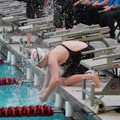
For most of my swimming career, I was primarily a breaststroker and 400 IM swimmer. The 200 backstroke was not supposed to be my breakthrough race. But when I decided to branch out and try something different, I had the swim that completely changed the direction of my career. After two years of feeling stuck, I finally broke through.Three months later, I committed to Villanova University.
That experience taught me one of the most important lessons of my life: setbacks are not always roadblocks. Sometimes they force you to discover opportunities you would have never found otherwise. If I had not gone through that plateau, I may never have tried the 200 backstroke. If I had never tried the 200 backstroke, I may never have ended up at my dream school.
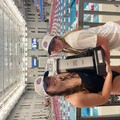
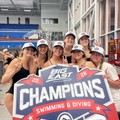
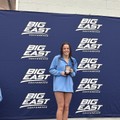
Today, I am a Division I swimmer at Villanova and a finance major in a business program that challenged and excited me from the moment I started looking at colleges. I wanted a school that would allow me to pursue excellence both in the pool and in the classroom, and Villanova has given me that opportunity. My goals are ambitious. In swimming, I want to continue improving, contribute points to our conference Big East championship team, and help Villanova remain one of the top programs in our conference. I want to push myself to see how far I can go and compete at the highest level possible.
Outside of swimming, I hope to build a successful career in finance. One day, I would love to work in New York City and build a life that reflects the same independence, discipline, and ambition that swimming has taught me. The lessons I have learned through athletics especially perseverance during difficult periods will stay with me long after my final race. As much as I love swimming, I also see flaws in the current system.
Swimming asks athletes to dedicate thousands of hours to perfecting their craft, but the opportunities available after college are extremely limited. Unless an athlete becomes an Olympian or one of the most recognizable names in the sport, it can be difficult to continue competing professionally while supporting yourself financially. I also believe swimming struggles because it is not accessible enough to fans. Many people simply do not know when meets are happening or how to watch them. Unlike other sports, swimming is often hidden behind difficult-to-find streams and limited coverage. As a result, incredible athletes accomplish extraordinary things without receiving the recognition they deserve.
My vision for the future of swimming is a sport that is easier to watch, easier to follow, and easier for athletes to build careers within. I want swimming to reach people who have never stepped onto a pool deck. I want young swimmers to see professional athletes competing regularly and know there is a future for them beyond college. I want elite swimmers to be compensated in a way that reflects the amount of work, sacrifice, and dedication required to reach the highest levels of the sport.
That is why I believe Speed League Swimming is needed right now.
A professional league would give swimmers something that currently does not exist: a visible pathway between college swimming and retirement. It would provide athletes with opportunities to continue competing while helping the sport grow its audience. More visibility creates more fans, more sponsorship opportunities, and more financial support for athletes.
For me personally, Speed League Swimming represents hope for a future where swimmers do not have to choose between pursuing their athletic dreams and building financial stability. It would create opportunities for athletes who may not be Olympic superstars but who still have the talent, passion, and dedication to contribute to the sport.
I believe I would bring a valuable perspective to Speed League Swimming because I understand what it means to fight for opportunities. I am currently a walk-on at Villanova and the only member of my team who does not receive athletic scholarship funding. Every day, I compete alongside scholarship athletes because I believed in myself enough to take a chance on my dream. That experience has shaped me. It has taught me resilience, humility, and gratitude. It has taught me how to keep showing up when success is not guaranteed. Most importantly, it has taught me that meaningful growth often happens during the moments when quitting seems easier.
Speed League Swimming is built for athletes who refuse to let setbacks define them. My journey from a swimmer who nearly walked away from the sport to a Division I athlete at her dream school is proof of that. I am proud of where I am today, but I am even more excited about where swimming can go next.
Swimming, like all sports, requires discipline, commitment, dedication, and perseverance. But I would argue that to be an elite swimmer, those cannot just be skills; they have to be lifestyles. You have to wake up every morning knowing that today will be more challenging than yesterday. You have to train knowing that in a couple of months, it could all be for nothing. But that is the sport of swimming. People always say elite swimmers are a "different breed," and that is because they are willing to endure more pain in one practice than a regular human will endure in a lifetime.
Now, I could go on a long tangent about how being an elite swimmer has shaped my life, but I don't think you want to read that much. But you did ask for my story and how that story has shaped my vision for the future of swimming. My story is far from normal and far from easy, and in short, it is much more complicated than I could ever express in one essay, but it shaped me in unimaginable ways.
Amid the peak of my recruiting process, I was informed of a letter that had been sent to all 199 D1 colleges in the country. This letter urged the coaches not to recruit me because of my “narcissistic and manipulative behavior,” signed anonymously. I was blindsided and betrayed. For the past 11 years, my teammates were the reason I got up in the morning. The family we built was the reason I never quit. I knew this did not describe me, and my teammates, who laughed with me between sets, hung out with me on Saturday nights, and unanimously elected me captain, never hinted at these feelings. Overnight, I became the "victim" of defamation. This rumor quickly spread around my club team, and a picture of the letter seemed to be saved in everyone's camera roll.
My next days and months were filled with confusion, anger, and self-doubt⎯ as questions of who and why echoed in my mind relentlessly. I feared for myself and my future, but all I could do was fear, because at the end of the day, I was only 17 years old. Suddenly, I made three realizations. Number one, I realized that I couldn't live my life in fear without closure. Number two, I couldn't keep allowing the letter to define who I was or how I lived my life. Finally, number three, I couldn't control who sent this letter or why, but I could control my response.
That’s when things changed, and I grew years in months. I urgently set up a meeting with my therapist about presenting a speech to my teammates about my story and the adverse effects of gossip. That speech became my closure. I compared my experiences with surface-level gossip in high school to criminal-level drama that tried to ruin my life. I addressed issues of hate and urged my peers to question the reasons behind hurting one another. I warned them about the issues that arise from fake gossip and its lasting effects in society. When I concluded, I smiled with the realization that I was creating kindness that was bigger than myself and that my team would carry for generations to come; almost immediately, I saw kindness radiating out of my teammates.
This challenge has opened my eyes to the cruelty that exists within our world and this sport. But it doesn't have to be like that, and that is what I preached to my teammates. The pool should be a place where kids feel they belong to something bigger than themselves. A place where everyone is welcome. A place where you can feel at peace with who you are because the people around you love and accept you. That is my goal and my dream. I will keep sharing my story and spreading my message because I believe that the effects of this go beyond just the sport. Plain and simple, the world needs to learn to be kinder to each other, despite our differences, and that is a very challenging task, but if it can begin in the sport I love, that's a good start.
Despite the challenges I have endured, I am continuing my swimming career at Boston University in the fall of 2026 without an athletic scholarship. I plan to share my message and experience with the team, hoping it inspires them to be kinder to each other. I hope to contribute to the sport of swimming in an inclusive way that prioritizes athletes' bonds with one another, which are often overlooked. Swimming is difficult enough on its own, and I aim to make the friendship and belonging aspects easier so every swimmer feels like they matter. If I end my swimming career knowing that I have touched the lives of children and athletes in this sport and made the pool feel more like a home, then I will have accomplished the goal that 17-year-old-me set out for in the first place. Every kid deserves to feel like they matter and are loved, and in the pool, it should be no different. I believe I can achieve this goal because some would say I'm a "different beast," and if that includes having the passion and heart to do what's right for the sport of swimming, well, then I guess I am.