When I was twelve, I was already on my second knee surgery. By the time I entered college, I had endured four. Each recovery meant months of physical therapy, lost class time, and a constant fear of falling behind. It would have been so easy to let the sand slip from my grasp; to silently pull away as I watched people live the life I desired for myself from a distance. That cycle of self-sabotage almost claimed me, if not for the the exploration of art.
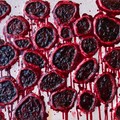
Like any average child, I liked to draw. It's not like it was my main hobby, but I would engage with it from time to time, and that level of casual art is where my passion sat for years. During high school, however, I had taken an honors humanities seminar and was required to produce four art pieces: I fell in absolute love with my creations. The year after, I began taking AP drawing. This blooming passion, I believe, was not by happenstance. It directly coincided with my physical and mental decline due to my knee disability. I would paint what I felt, mainly through manifesting my fears and nightmares into heavily textured paintings. I experimented with molding paste, tissue paper, string: essentially anything that helped make my painting look like the hell I was living in. Some were weirded out by how scary some of my art was during that time, but it just felt right at the time. I didn't expect anyone to understand, the feeling of weightlessness I felt, no matter how quick, of putting my grief somewhere other myself was worth the weird looks. One of my artworks at the time, for example, were a whole bunch of hyper-realistic gashes that I created using molding paste and synthetic tissue that I made at home. My mother was horrified when she saw the painting, not knowing meaning it held to me, as it reflected my feelings toward my own scars that run long and thick across my knees.
My legs will never be what they used to be, but I've learned to live with it. I'll never be able to run again, and will always have trouble climbing stairs, hiking, or standing for long periods of time for the rest of my life. That period of time, however, genuinely pulled me out of the worst of it. If not for art, my entire perception of myself as a person would be so much more negative than what it is now, and while I've left painting monsters in the past, my passion for the craft is ever present.
Art helps me cope with my disability because it gives me a place where my brain is not the enemy. Living with PANDAS, OCD, depression, and a history of self harm can make my own thoughts feel loud, intrusive, and sometimes cruel. My mind can turn against me without warning. Art is one of the few spaces where those thoughts don’t control me , I control what happens on the page, on the canvas.
When OCD spirals start, everything feels rigid and overwhelming. Art interrupts that loop. If I’m drawing, painting, or writing, my focus shifts from compulsions to creation. The same brain that overthinks becomes detail oriented in a way that actually helps me. Instead of obsessing over fears, I obsess over shading, word choice, rhythm, or color. That shift is grounding. It doesn’t erase the OCD, but it redirects it.
Depression tells me I’m empty, unmotivated, or invisible. Art proves that voice wrong. When I create something, it exists. It’s evidence that I was here and that I felt something. As a Black person, that feels especially powerful. So much of our history includes being silenced or misrepresented. Creating art allows me to define myself on my own terms. It reminds me that my story is complex, worthy, and mine.
Self harm urges often come from wanting to release pressure or feel something. Art gives me a safer release. When I pour pain into a poem or a painting, it externalizes it. Instead of hurting my body, I transfer the intensity into lines, colors, or sounds. Sometimes the art looks messy or dark, but that’s honest. And honesty feels better than pretending I’m fine.
Being in IOP has also made me more aware of my coping skills. Art isn’t just a hobby; it’s a regulation tool. It slows my breathing. It keeps my hands busy. It creates structure in days that might otherwise feel heavy. Even small acts, doodling in the margins of my notes, curating music playlists, journaling without censoring myself, help me stay engaged.
Motivation can be hard when depression flattens everything. But art gives me small, achievable goals: finish the sketch, revise the paragraph, learn one new technique. Completing something builds momentum. Momentum builds hope. And hope makes it easier to choose recovery, even when it’s hard.
Art doesn’t cure my conditions. PANDAS, OCD, and depression are still real. Recovery is still work. But art reminds me that I am more than my diagnoses. I am creative. I am expressive. I am resilient. And every time I create instead of self harm, that is proof that I am fighting for myself in a different way.
Anyone who struggles with ADHD, ODD, Anxiety, and Depression knows how hard it is to stay focused and on the right path. Unfortunately, I struggle with all of the ones I named. I've taken so many medications in the past, jumping around from one therapist to another, and continue to take daily pills just to help me function and concentrate in school. When in doubt, no matter the situation, you can always turn to art for guidance.
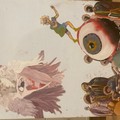
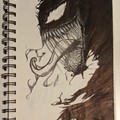
I've been in so many free art classes, starting since kindergarten. Art classes, music classes, choir, theater, dance, etc, I've done it all. All of these keep me from derailing. There is no limit to art. There's no right or wrong with art. In a world where I've been told that I'm not right for being the way that I am and for being different, I found comfort in being able to draw and paint my thoughts, emotions, and stories without having to be judged for being weird. I guess, with what I've said already, maybe it's easy to tell that my favorite form of art is surrealism. My favorite medium to use, though, is black and silver pens. I go all in, no erasing and planning. I like seeing my art in black, white, and gray because you can tell the major contrast of the white being space, and the black being the full areas, making it a symbol of my own life as the black represents the parts of my life that are full of achievements and struggles, and the white symbolizing the emptiness that is waiting to be filled. I usually get my art materials from backpack drives that the school and the other schools in my community hold; getting notebooks and artbooks from teachers who have spares.
I was raised by a single hardworking Latino father. My mom passed away when I was 3 years old, triggering the years' worth of depression that my father and I faced all alone. He can't afford his therapy (we're hardly even considered at the lowest level of the middle class), but he was able to cut a few corners in order to help me receive medical treatment for my mental illnesses/disabilities and therapy sessions. He dropped his career of wanting to be a music producer and artist, sacrificing his own dreams to raise me and help me make my own dreams. He pushes me to be successful with my education, not wanting me to follow in his footsteps of barely making ends meet.
Although sunflowers are a symbol for people who struggle with hidden disabilities, I like to think that I'd be an orchid. Peculiar, yet full of life and fulfilling. Regardless of my struggles that people may or may not know of, I haven't given up in life. I came close to it once, but I let art guide me out of the depressing trance of helplessness that I had been drowning in for years. I'm so grateful to be alive to this day, watching myself bloom despite what differences are chained to me from others.
Art is not just what I do—it’s who I am. It has been my only constant, my only refuge, my only true friend. When the world grew cold, and even colder within myself, art was the warmth that kept me alive.
I didn’t have a typical childhood. While other kids were building friendships and laughing at recess, I was learning how to disappear. Bullies made sure I never forgot I was different, but they weren’t the worst of it. My harshest critic—the one who tore me down the most—lived in my own head. I was angry at myself, filled with a quiet, aching rage I couldn’t explain. I didn’t know how to be kind to myself. I didn’t know how to be myself.
I didn’t speak much. Words felt heavy, clumsy, like they weren’t made for me. So I stayed quiet. Alone. But even in that silence, there was something waiting patiently for me to notice it: art. It was always there, like an open door I didn’t have to knock on. I’d pick up a pencil, and suddenly I was somewhere else. Somewhere safe. Somewhere honest.
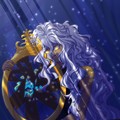
Drawing, writing, creating—it became the only language I trusted. When I couldn’t say “I’m hurting,” my sketchbook could. When I didn’t know how to say “I’m here, I matter,” my characters whispered it for me. Through art, I could finally breathe. I could finally be.
I’ve never had a best friend. But if I had to name one, it would be art. It never yelled. It never walked away. It never asked me to be less. It never demanded an explanation. It just listened. And in return, it gave me a way to survive.
There were nights I wanted to give up. Nights when the silence in my room felt louder than any voice. Nights when I wondered if anyone would notice if I just disappeared. But then I’d draw. Or I’d write. And somehow, the pain would become something beautiful. Something worth creating. Something worth staying for.
Art taught me that my voice didn’t have to be loud to be heard. That I didn’t need to fit in to matter. That even broken stories can be worth telling—and that they’re often the most powerful ones.
Now, I don’t create just to escape. I create to reach. I want someone, somewhere, who feels the way I once did—small, voiceless, invisible—to see my art and feel less alone. I want my work to be the hand I never had to hold. The light I never saw when I was stumbling in the dark. If I can make one person feel seen, then every tear I’ve cried will have been worth it.
Art didn’t just give me purpose—it gave me life. It took a quiet, hurting child and handed them a pencil instead of a goodbye. And now, I’m here. Still healing. Still learning. But alive. And finally, finally free.
That’s why I will never stop creating. Because art saved me. And now, I want to spend the rest of my life passing that gift on.