Hobbies and interests
Model UN
Wynter Perrineau
1x
Finalist1x
Winner
Wynter Perrineau
1x
Finalist1x
WinnerBio
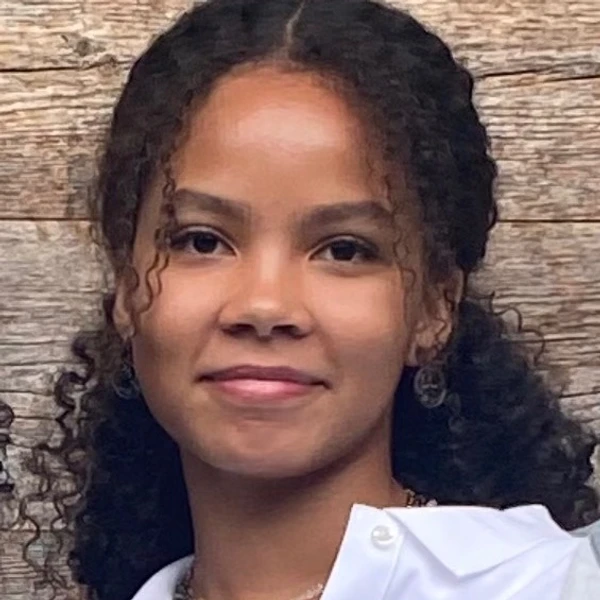
I am a high school senior looking forward to becoming the first member of my family to obtain a college degree. I am passionate about science and math, and am the President of Model UN at my school. I am a published researcher, and an advocate for PANDAS and PANS, a pediatric neurological autoimmune condition. My advocacy work includes lobbying to pass bill AB 2105 into law last year, ensuring that all children in the state of California will be covered by insurance for treatment of the condition.
Education
The Archer School for Girls
High SchoolMiscellaneous
Desired degree level:
Bachelor's degree program
Majors of interest:
- Biological/Biosystems Engineering
Career
Dream career field:
Chemicals
Dream career goals:
Summer Research Program
SSP2025 – 2025
Research
Chemistry
SSP — Researcher2025 – 2025
Arts
SAG
Acting2016 – Present
Public services
Advocacy
AB 2105 — Advocate, lobbying2023 – Present
Future Interests
Advocacy
Politics
Volunteering
Philanthropy
Entrepreneurship
Learner Calculus Scholarship
Calculus is one of the most important subjects in the STEM field because it provides the mathematical foundation for understanding change, motion, growth, and complex systems. Many scientific and engineering concepts involve quantities that are constantly changing, and calculus gives us the tools to analyze and predict those changes.
In science, calculus is used to describe natural phenomena such as the motion of planets, the flow of fluids, population growth, and the spread of diseases. Physicists rely on calculus to model forces, energy, electricity, and motion. Without calculus, many of the equations that explain how the universe works would not be possible.
In engineering, calculus is essential for designing and improving structures, machines, and technologies. Engineers use it to calculate rates of change, optimize designs, and ensure safety and efficiency. Whether designing bridges, aircraft, medical devices, or computer hardware, engineers depend on calculus to solve real-world problems.
Calculus is also a critical tool in technology and computer science. It is used in fields such as artificial intelligence, machine learning, computer graphics, robotics, and data analysis. For example, machine learning algorithms often use calculus to minimize errors and improve the accuracy of predictions. As technology continues to advance, a strong understanding of calculus becomes increasingly valuable.
My own experience reflects the importance of calculus in STEM. After completing every calculus course offered at my high school, I wanted to continue challenging myself and expanding my mathematical knowledge. As a high school senior, I enrolled in Calculus III at a local college. Taking a college level course outside of my school's curriculum exposed me to advanced concepts such as multivariable functions, partial derivatives, and vector calculus. The experience strengthened my problem solving skills and gave me a deeper appreciation for how higher-level mathematics is used to model complex systems in science and engineering.
Beyond its practical applications, calculus teaches important analytical and critical-thinking skills. It encourages students to break down complex problems into smaller parts, recognize patterns, and develop logical solutions. These skills are useful not only in STEM careers but also in many aspects of life.
As someone pursuing a future in STEM at Stanford, I view calculus as more than just a math requirement. It is a powerful tool that helps explain the world around us and drives innovation across countless fields. My decision to continue into Calculus III as a high school senior demonstrates both my passion for mathematics and my commitment to academic growth. By learning calculus, students gain the skills needed to tackle challenging problems and contribute to advancements in science, technology, engineering, and mathematics.
Abigail O. Adewunmi Memorial Scholarship
My future goals are deeply connected to my personal experiences, advocacy work, and commitment to improving healthcare access for children and families. As someone who has personally battled PANDAS/PANS and is now in remission, I understand firsthand how life changing proper diagnosis, treatment, and support can be. My journey through illness not only shaped my resilience, but also inspired me to turn my experience into advocacy for others facing similar challenges.
One of the most meaningful parts of my work has been advocating for children affected by PANDAS/PANS, a condition that is often misunderstood, underdiagnosed, and difficult for families to navigate. Through my advocacy efforts, I have worked to raise awareness about the medical and emotional challenges these children face, while also pushing for better access to care and recognition within the healthcare system. This work became especially significant through my involvement in supporting the passage of California Bill AB 2105, a critical healthcare bill aimed at improving awareness, education, and care surrounding pediatric acute onset neuropsychiatric disorders. Participating in lobbying efforts and helping contribute to the bill’s passage showed me how public policy can directly improve lives and demonstrated the power of advocacy in creating systemic change.
In college, I hope to continue combining my interests in public health, healthcare advocacy, and public policy and STEM. Stanford is especially meaningful to me because of its commitment to interdisciplinary problem solving and because it is home to a PANDAS clinic that is actively advancing research and treatment for patients like me. I hope to engage with opportunities surrounding public health policy, medical research, and healthcare equity while learning from experts who are shaping the future of pediatric care. I want to deepen my understanding of how medicine, legislation, and community advocacy intersect so I can continue helping families who often feel unheard or unsupported.
Beyond academics, I want to remain actively involved in service and advocacy organizations on campus and in surrounding communities. I hope to use my experiences not only to advocate for policy reform, but also to mentor and support children and families navigating difficult medical journeys. Having experienced the uncertainty, frustration, and isolation that can come with chronic illness, I understand the importance of empathy and representation. I want others to know they are not alone and that meaningful change is possible.
Post-graduation, my long term goal is to work at the intersection of public health and public policy, helping shape healthcare systems that are prioritize accessibility, education, and patient-centered care. Whether through medicine, policy, research, or nonprofit advocacy, I hope to continue improving awareness and resources for pediatric health conditions, especially those that are overlooked or misunderstood. My own recovery has given me not only gratitude, but also a responsibility to help create a future where children facing conditions like PANDAS/PANS receive timely care, support, and hope.
Peter and Nan Liubenov Student Scholarship
I see myself as a positive force in my community through advocacy rooted in personal experience, service, and a commitment to creating lasting change. As a BIPOC student, I have learned that the challenges I face are often shaped by larger systems, and I have chosen to confront those systems rather than accept them. My work connected to the passing of AB 2105 is one of the clearest examples of how I have turned my own struggle into action that benefits others.
I live with PANDAS, a condition that has affected both my health and my daily life. Navigating school while managing symptoms has not been easy, and at times I felt isolated and misunderstood. Through those experiences, I realized that many students with similar conditions lack awareness, support, and proper resources. That realization motivated me to get involved in advocacy efforts surrounding AB 2105, which aimed to address inequities that directly impact students like me.
I began by volunteering in my community and connecting with others who were also affected. I helped raise awareness by sharing my story, organizing conversations, and encouraging people to engage with the issue. What started as a personal struggle became a broader mission to ensure that others would not have to face the same barriers alone. One of the most meaningful parts of this journey was participating in efforts to lobby Gavin Newsom. Speaking up to a state leader about something so personal was intimidating, but it was also empowering. It showed me that my voice could contribute to real change.
Social norms have strongly influenced my thinking, especially the idea that personal struggles should remain private or that young people should not challenge authority. For a long time, I internalized those beliefs and hesitated to speak openly about my condition. However, my advocacy work helped me question those norms. I came to understand that sharing my experience was not a weakness but a way to create understanding and push for solutions. I also learned that leadership does not require age or status, only the willingness to act.
This shift in perspective has shaped my future goals. I will be attending Stanford University, where I plan to study chemistry and public health. I want to continue exploring the intersection of science and policy so I can advocate for better resources, research, and care for individuals with conditions like PANDAS. My goal is not only to succeed academically but also to remain actively engaged in improving systems that affect underserved communities.
Being a positive force in my community means using my voice, my experiences, and my education to uplift others and drive change. My journey has shown me that even personal challenges can become powerful tools for advocacy, and I am committed to continuing that work in the years ahead.
Byte into STEM Scholarship
I have always been curious about why some people get the care they need while others are left to struggle. That question became personal when I was diagnosed with PANDAS and PANS, an autoimmune condition that affects the brain and is often misunderstood and difficult to treat. Navigating my own diagnosis opened my eyes to how complicated and inconsistent access to care can be, especially for conditions that are not widely recognized. Instead of accepting that reality, I felt a growing responsibility to do something about it.
What drives me is the belief that no one should have to fight as hard as I did just to be understood or treated. My experience pushed me beyond learning about my condition and into advocating for change. I lobbied for and helped secure the passage of California Bill AB 2105 so that other children with PANDAS and PANS could have better access to coverage and care. That process taught me how policy directly shapes people’s lives. I met with legislators, shared my story, and worked to make something complex and often dismissed feel real and urgent. It was not easy, but it showed me that even as a student, I could contribute to meaningful change.
That experience redefined what leadership means to me. It is not about having authority, but about stepping forward when something is wrong and staying committed even when progress is slow. I had to speak up in rooms where I felt out of place and advocate not just for myself, but for others who did not have the same opportunity. It required persistence, courage, and a willingness to keep going even when the outcome was uncertain. At the same time, it deepened my sense of service. I was not just telling my story, I was helping create a path for others to receive care and recognition.
I plan to study public health, policy, and chemistry at Stanford because I want to understand both the scientific and systemic sides of healthcare. My condition showed me how closely science and policy are connected. Advances in research mean little if they are not accessible, and policies fall short if they are not grounded in sound science. At Stanford, I hope to build a strong foundation in these areas while learning from people who are equally committed to improving healthcare systems.
In the future, I want to work at the intersection of science and policy to improve access to care for people with complex and underrecognized conditions. I hope to continue advocating for patients, shaping policies that are informed by both data and lived experience, and helping create a healthcare system that is more equitable and responsive. My education will give me the tools to do this work thoughtfully and effectively, but my experiences have already given me a clear sense of purpose. I know what it feels like to be overlooked, and I am committed to making sure others are not.
Ruthie Brown Scholarship
As a Black woman balancing school, work, and my health, addressing my student debt is something I think about every day. I am currently working as a special needs tutor, and while this job helps me financially, it also reflects my values of care, patience, and community. At the same time, I am pursuing a path in public health and STEM, where I hope to make a meaningful impact on communities that are often overlooked, including people who share my experiences.
I will be attending Stanford University, where the cost of attendance is approximately ninety six thousand dollars per year. While this is an incredible opportunity, it also comes with a significant financial responsibility. Knowing this, I have been intentional about how I prepare for and manage the cost of my education so that I do not graduate with overwhelming debt.
Living with ADHD and an autoimmune condition has shaped how I move through the world. There are days when focusing feels like a challenge and days when my body simply does not cooperate. Because of that, I have had to learn how to be flexible, disciplined, and honest with myself about what I can handle. These realities have also influenced how I approach my finances and my education. I cannot afford to take a passive approach to student debt, so I am intentional about every decision I make.
Working while in school is one of the main ways I am reducing how much I need to borrow. As a tutor, I earn money that goes directly toward my educational expenses and daily needs. It is not always easy to balance work and classes, especially while managing my health, but it allows me to stay more independent and avoid taking on unnecessary loans. I also budget carefully, making sure that what I earn is used in a way that supports both my short term needs and long term goals.
In addition to working, I actively apply for scholarships and seek out financial resources that can ease the burden of tuition. I see these opportunities as essential, not optional. As someone who is both BIPOC and managing disabilities, I know that financial support can make the difference between just getting by and actually thriving. Every scholarship I receive brings me closer to graduating with less debt and more freedom to choose my future.
My long term goal in public health and STEM is closely connected to why I am so focused on minimizing debt. I want to be able to enter my field without the pressure of overwhelming financial obligations, so I can focus on meaningful work rather than just financial survival. I am especially interested in addressing health disparities and improving access to care for marginalized communities. My lived experience gives me a perspective that cannot be taught in a classroom, and I plan to use that perspective to create change.
For me, addressing student debt is about more than money. It is about creating stability, maintaining my health, and building a future where I can contribute to my community in a real and lasting way. Every step I take now is part of that larger goal.
Evangelist Nellie Delores Blount Boyce Scholarship
My experiences have shaped not only who I am but also the goals I hope to pursue through higher education. Living with PANDAS, OCD, depression, and a history of self harm has required me to develop resilience at a young age. There have been times when my own mind felt like the hardest obstacle to navigate. Participating in an Intensive Outpatient Program has helped me learn coping skills, build structure, and understand the importance of support systems. These experiences have not defined me, but they have given me a deeper understanding of perseverance and empathy. They have also motivated me to pursue an education that allows me to turn personal challenges into opportunities to help others.
One of the ways I have learned to manage my mental health is through art and creative expression. Art has allowed me to process difficult emotions and redirect the intensity of my thoughts into something constructive. It gives me a sense of control when my mind feels chaotic and reminds me that difficult experiences can still lead to meaningful creation. This ability to transform struggle into growth has shaped my mindset toward education. I see learning not only as a pathway to knowledge but also as a tool for solving problems that affect real people.
My interest in STEM comes from a desire to understand complex systems and find solutions that can improve lives. Living with a condition like PANDAS made me curious about how the brain, immune system, and mental health intersect. I want to explore these connections through scientific research and innovation. Higher education will give me the opportunity to gain the knowledge, technical skills, and research experience needed to investigate these kinds of questions. I am especially interested in fields that combine science, technology, and healthcare to improve diagnosis, treatment, and accessibility for individuals with neurological or mental health conditions.
As a Black student, I am also committed to increasing representation and equity within STEM fields. Many communities of color face barriers when it comes to accessing quality healthcare and mental health resources. I want my education to help address those disparities. By pursuing higher education, I hope to contribute to research and technological advancements that prioritize inclusivity and accessibility. I want to be part of a generation of scientists and innovators who design solutions that reflect the needs of diverse communities rather than overlooking them.
Beyond my academic goals, I hope to use my experiences to support others who may feel isolated because of mental health challenges or systemic barriers. Mentorship and representation can be powerful tools for change. If younger students see someone who shares their background and struggles succeeding in STEM, it can open doors they may not have imagined for themselves.
I am committed to pursuing higher education because it represents both opportunity and responsibility. It is an opportunity to deepen my knowledge, expand my perspective, and pursue meaningful work. It is also a responsibility to use that knowledge to improve the lives of others. My goal is to build a future where scientific innovation and compassion work together to create healthier, more equitable communities.
Sunflowers of Hope Scholarship
WinnerArt helps me cope with my disability because it gives me a place where my brain is not the enemy. Living with PANDAS, OCD, depression, and a history of self harm can make my own thoughts feel loud, intrusive, and sometimes cruel. My mind can turn against me without warning. Art is one of the few spaces where those thoughts don’t control me , I control what happens on the page, on the canvas.
When OCD spirals start, everything feels rigid and overwhelming. Art interrupts that loop. If I’m drawing, painting, or writing, my focus shifts from compulsions to creation. The same brain that overthinks becomes detail oriented in a way that actually helps me. Instead of obsessing over fears, I obsess over shading, word choice, rhythm, or color. That shift is grounding. It doesn’t erase the OCD, but it redirects it.
Depression tells me I’m empty, unmotivated, or invisible. Art proves that voice wrong. When I create something, it exists. It’s evidence that I was here and that I felt something. As a Black person, that feels especially powerful. So much of our history includes being silenced or misrepresented. Creating art allows me to define myself on my own terms. It reminds me that my story is complex, worthy, and mine.
Self harm urges often come from wanting to release pressure or feel something. Art gives me a safer release. When I pour pain into a poem or a painting, it externalizes it. Instead of hurting my body, I transfer the intensity into lines, colors, or sounds. Sometimes the art looks messy or dark, but that’s honest. And honesty feels better than pretending I’m fine.
Being in IOP has also made me more aware of my coping skills. Art isn’t just a hobby; it’s a regulation tool. It slows my breathing. It keeps my hands busy. It creates structure in days that might otherwise feel heavy. Even small acts, doodling in the margins of my notes, curating music playlists, journaling without censoring myself, help me stay engaged.
Motivation can be hard when depression flattens everything. But art gives me small, achievable goals: finish the sketch, revise the paragraph, learn one new technique. Completing something builds momentum. Momentum builds hope. And hope makes it easier to choose recovery, even when it’s hard.
Art doesn’t cure my conditions. PANDAS, OCD, and depression are still real. Recovery is still work. But art reminds me that I am more than my diagnoses. I am creative. I am expressive. I am resilient. And every time I create instead of self harm, that is proof that I am fighting for myself in a different way.
Stephan L. Daniels Lift As We Climb Scholarship
I want to pursue a career in STEM because science has shaped my life in immediate and personal ways. Living with PANDAS, OCD, and depression showed me that biology is not theoretical. It influences how we think, feel, and function every day. The intersection of infection, inflammation, neurology, and mental health has defined much of my experience, and it has driven my desire to understand the science behind conditions like mine.
For years, my symptoms were misunderstood as behavioral problems rather than manifestations of an underlying medical condition. I saw how limited research, gaps in awareness, and stigma can delay diagnosis and complicate treatment. That experience revealed how deeply communities depend on strong scientific foundations. When research is incomplete or inaccessible, families are left to navigate uncertainty on their own. I want to be part of strengthening that foundation.
At Stanford, I plan to study Public Health through a STEM lens, focusing on the connections between immunology, neuroscience, and epidemiology. I am particularly interested in how infection and inflammation can influence psychiatric symptoms and how environmental stressors shape mental health outcomes. Conditions that blur the line between physical and mental illness require interdisciplinary approaches, and I am eager to engage in research that bridges those divides. By contributing to scientific understanding in these areas, I hope to support more accurate diagnoses and more effective, evidence-based treatments.
Beyond research, I want to use my degree to uplift communities that often struggle to access specialized care. Families navigating complex or debated conditions frequently encounter financial barriers, long waitlists, and providers unfamiliar with emerging science. Through public health policy and community-based initiatives, I hope to advocate for expanded mental health resources and integrated care models that treat mental and physical health as inseparable.
STEM also has the power to reshape narratives. When mental illness is framed solely as a personal weakness, stigma grows and people suffer in silence. When it is examined through scientific research and public health data, it becomes a matter of systems, prevention, and equitable access to care. I want to help translate research into language that communities, educators, and policymakers can understand so that scientific findings lead to tangible improvements in schools, clinics, and local health programs.
My time attending an Intensive Outpatient Program while remaining committed to school has reinforced my belief that health and education are deeply connected. Students facing medical or mental health challenges can thrive when given appropriate support. I hope to advocate for school based mental health resources and policies that recognize well being as foundational to academic achievement.
A career in STEM will allow me to combine scientific inquiry with social responsibility. At Stanford, I aim not only to expand my knowledge but also to contribute to research and initiatives that improve access, reduce stigma, and strengthen community health systems. My goal is to help build a healthcare landscape where complex conditions are met with evidence, compassion, and coordinated care. By pursuing this path, I hope to ensure that science serves not just discovery, but people.
Ethel Hayes Destigmatization of Mental Health Scholarship
Living with PANDAS has shaped nearly every part of my life, my goals, my relationships, and the way I understand the world. What began as a confusing cluster of symptoms became a defining force in how I see health, resilience, and responsibility.
PANDAS introduced me early to the reality that health is not always visible. My OCD, depression, and episodes of self harm were not character flaws or a lack of willpower; they were manifestations of something neurological and inflammatory. Still, that distinction was not always understood by others, or even by me. For a long time, I internalized my symptoms as personal failures. I wondered why I could not simply “try harder” to silence intrusive thoughts or push through despair.
Participating in an Intensive Outpatient Program (IOP) five days a week while continuing school has forced me to confront both my vulnerability and my strength. I am learning coping skills, emotional regulation strategies, and the discipline of showing up even when my mind feels like it is working against me. Recovery has not been linear. Some days, progress looks like insight; other days, it looks like just getting by. But the act of continuing to choose treatment, choosing honesty, choosing to stay, has reshaped my definition of resilience.
My relationships have changed as well. Living with mental illness has made me more attuned to what safety feels like. I have learned to value the people who respond with curiosity rather than judgment, patience rather than frustration. I have also become more compassionate. When I see someone struggling, I no longer assume laziness or indifference. I think about what might be happening inside, what biological, psychological, or social factors might be influencing their behavior. My experiences have dismantled the illusion that everyone operates on an even playing field.
Most profoundly, PANDAS has influenced my academic and professional goals. Navigating a condition that sits at the intersection of immunology, neurology, and psychiatry exposed me to the complexity of public health. I experienced firsthand how gaps in awareness, stigma, and access to specialized care can shape outcomes. I saw how families must advocate relentlessly for diagnoses that are still debated or misunderstood. I recognized how research, policy, and education directly impact whether patients feel believed and supported, especially as a woman of color.
These realizations solidified my desire to study Public Health at Stanford. I want to contribute to a healthcare system that treats mental health as inseparable from physical health. I am particularly interested in the ways infection, inflammation, and environmental stressors intersect with psychiatric symptoms. Often, individuals with conditions like mine are reduced to behavioral problems rather than understood through a comprehensive lens. I hope to help bridge that gap, through research, advocacy, or policy work that integrates neuroscience, epidemiology, and mental health services.
My experience has also changed how I define success. Achievement, for me, is no longer just academic distinction. It is sustainability. It is building a life that prioritizes wellness, boundaries, and balance. Attending IOP while preparing for college has required time management and perseverance, but it has also required humility, and the willingness to accept help. That humility is something I will carry with me.
Living with PANDAS, OCD, and depression has been painful. But it has also given me clarity. It has shown me that health is foundational, that stigma is damaging, and that systems matter. It has made me more observant, more empathetic, and more determined to pursue solutions that address root causes rather than symptoms alone.
I am going to Stanford not despite my mental health journey, but shaped by it. My experiences have given me both urgency and direction. I do not just want to succeed within existing systems. I want to help improve them, so that the next young person navigating a complex, misunderstood condition feels seen, supported, and scientifically understood.
Mireya TJ Manigault Memorial Scholarship
As a Black woman, living through Pediatric Autoimmune Neuropsychiatric Disorder Associated with Streptococcal Infections (PANDAS) was more than a medical journey, it was a battle for understanding, access and compassion. When I was first diagnosed, I faced not only the physical and emotional toll of the condition, but also the misunderstanding and dismissal that so many other patients experience. My recovery taught me resilience, but also taught me how many others are struggling in silence. That realization helped shape my future goal: to become a strong advocate for research. awareness and equitable healthcare for individuals affected by PANDAS and PANS. This is why I spent 2024-25 lobbying the state of California to pass bill AB 2105, a critical healthcare bill for children that was signed into law in January. I went into remission prior to this bill being passed, and my family paid out of pocket for all of my treatment including IVIG, which is the gold standard and often denied by insurance companies. Now, families in California won't have to worry about time wasted, and continued denials.
My advocacy continues with education. Too often, families spend years searching for answers, dismissed by professionals unfamiliar with these conditions. I was to change that by working to improve early diagnosis and treatment access. I plan to pursue a degree in neuroscience, with a focus on autoimmune and neuropsychiatric disorders. My ultimate goal is to contribute to scientific research that clarifies the connection between infection and brain inflammation, paving the way for even potentially a biomarker test.
This scholarship will be a crucial step in turning these goals into a reality. As a first-generation college student, I am determined to break barriers, not just for myself, but for every young person who has been told that their health struggle defines their limits. Financial support from this scholarship will allow me to focus more deeply on my education and research opportunities rather than worrying about the cost to pursue them. More importantly, this scholarship represents more than financial aid, it represents belief. Belief that my story, my perseverance, and my passion for advocacy can make a difference. I want to use what I have been through to help others find answers faster, feel less alone, and see a future beyond their diagnosis. My journey with PANDAS gave me a mission, to transform pain into purpose, and science into hope. With this scholarship, I will be one step closer to creating a world where understanding replaces stigma and every child who faces PANDAS or PANS has the chance to heal and thrive.
I Can and I Will Scholarship
I was the child of drought and flood, a clumsy god of small gardens. I grew up surrounded by green corpses. Violets and daisies turned to paper in my fists. I drowned the plants in sudden floods, then abandoned them to the fever of thirst. Each plant was a mirror of something inside me I could not name. Time and time again, I would find myself with brown, withered leaves on my bedroom floor.
“Water it more.” “No, less.” The voices around me clashed like storms, each offering a cure. But no cure worked. Leaves curled.
“How did you even kill a cactus?” a friend laughed, staring at the husk.
But some plants don’t wither because of thirst, shade or neglect; they wither from hidden rot in the roots, something you can’t see until it’s too late. As a gardener friend discovered, our soil had been contaminated with a fungus, lurking underneath. That was my childhood with PANDAS. An illness so obscure that not my teachers, not my doctors, not even I knew what was wrong.
By the time I was eight, five years of confusion and pain had already piled up. Proper treatment wouldn’t come until I was fourteen. By then, much of my childhood, days of friendship and laughter, had withered away, each lost memory like a petal plucked from a flower.
Because this illness is both unknown and controversial within the medical community, I didn't know what was wrong with me until I was eight. That is five years of confusion and pain fueled by the ignorance of every single person in my life. It then took another six years for me to get treated properly. By fourteen I was healthier, but the symptoms still linger, reminders of the time I lost.
I would look back on my childhood with tear-filled eyes, as I imagined every lost childhood memory as petals on a flower that were plucked off. There was a point in my life where I would melt down when someone mentioned this illness. I had to fight tooth and nail just to be able to think about my childhood.
Gradually, knowledge became my sunlight. I devoured medical journals, filled my notes app with treatments and studies, and explained symptoms to anyone who would listen. What started as late-night research for myself grew into something larger: friends coming to me for advice, families asking for help with siblings, and eventually, collaborations with national organizations.
For the first time, I wasn’t alone. I had discovered others who shared my struggle. I had always seen myself as a single plant wilting on a windowsill; now I was part of a garden, rooted in community, strengthened by connection. Together, we shared what worked, what didn’t, and how to survive when no one else seemed to understand.
For years I thought of myself as fragile, neglected not out of cruelty but out of ignorance. Today, I see myself differently. Through knowledge and connection, I’ve learned to cultivate my own soil, to tend to my roots, to transform fragility into resilience. The guilt I once carried has softened into humility, and the grief over my lost childhood has become gratitude for the life I’ve built since.
Hard things don’t make you stronger by themselves. You have to choose to grow. I made that choice. And today, looking back, I feel not withered but in full bloom, proud of the garden that I have built.
I thought it was best to share my essay on my mental health journey, as my symptoms were all mental health related.
Mikey Taylor Memorial Scholarship
I was the child of drought and flood, a clumsy god of small gardens. I grew up surrounded by green corpses. Violets and daisies turned to paper in my fists. I drowned the plants in sudden floods, then abandoned them to the fever of thirst. Each plant was a mirror of something inside me I could not name. Time and time again, I would find myself with brown, withered leaves on my bedroom floor.
“Water it more.” “No, less.” The voices around me clashed like storms, each offering a cure. But no cure worked. Leaves curled.
“How did you even kill a cactus?” a friend laughed, staring at the husk.
But some plants don’t wither because of thirst, shade or neglect; they wither from hidden rot in the roots, something you can’t see until it’s too late. As a gardener friend discovered, our soil had been contaminated with a fungus, lurking underneath. That was my childhood with PANDAS. An illness so obscure that not my teachers, not my doctors, not even I knew what was wrong.
By the time I was eight, five years of confusion and pain had already piled up. Proper treatment wouldn’t come until I was fourteen. By then, much of my childhood, days of friendship and laughter, had withered away, each lost memory like a petal plucked from a flower.
Because this illness is both unknown and controversial within the medical community, I didn't know what was wrong with me until I was eight. That is five years of confusion and pain fueled by the ignorance of every single person in my life. It then took another six years for me to get treated properly. By fourteen I was healthier, but the symptoms still linger, reminders of the time I lost.
I would look back on my childhood with tear-filled eyes, as I imagined every lost childhood memory as petals on a flower that were plucked off. There was a point in my life where I would melt down when someone mentioned this illness. I had to fight tooth and nail just to be able to think about my childhood.
Gradually, knowledge became my sunlight. I devoured medical journals, filled my notes app with treatments and studies, and explained symptoms to anyone who would listen. What started as late-night research for myself grew into something larger: friends coming to me for advice, families asking for help with siblings, and eventually, collaborations with national organizations.
For the first time, I wasn’t alone. I had discovered others who shared my struggle. I had always seen myself as a single plant wilting on a windowsill; now I was part of a garden, rooted in community, strengthened by connection. Together, we shared what worked, what didn’t, and how to survive when no one else seemed to understand.
For years I thought of myself as fragile, neglected not out of cruelty but out of ignorance. Today, I see myself differently. Through knowledge and connection, I’ve learned to cultivate my own soil, to tend to my roots, to transform fragility into resilience. The guilt I once carried has softened into humility, and the grief over my lost childhood has become gratitude for the life I’ve built since.
Hard things don’t make you stronger by themselves. You have to choose to grow. I made that choice. And today, looking back, I feel not withered but in full bloom, proud of the garden that I have built.
Lori Nethaway Memorial Scholarship
In 2025, I lobbied Governor Newsom to pass bill AB 2105 into law. See, the year before he had denied our bill. He denied every single children’s health care bill. And although I was in remission from PANDAS, a debilitating autoimmune condition, other kids were getting insurance denials left and right. I was lucky enough that my parents paid out of pocket for my treatment. I used social media, celebrity influence, and so many other things to bring attention and awareness. And in 2025, out bill was the only health care bill singed into law that year. In college, I plan to study biosciences. I now want to find a cure. A cure for children with brain inflammation, so that it’s diagnosed early, and not one more child’s parents donate their brain to the Pond Brain bank at Georgetown. You see, it’s one thing for insurance to cover the medicines we have right now, but it’s another thing to understand the disease, diagnose early and find a cure. I will use my education for research purposes, and then to continue my advocacy to help others get the treatment they need. California was the thirteenth state to adopt this type of law, and I won’t rest until all fifty states have coverage. I spoke last night, to raise money for the Alex Manfull Foundation, and what stuck with me was the work they are doing to find a biomarker for this disease. I’ve made it my job to bring awareness to this illness, and through the research I hope to be able to do in college, I will make a difference.
Pete and Consuelo Hernandez Memorial Scholarship
I plan to study science, particularly chemistry.
Cacti are supposed to live forever. Despite this assurance from the woman at the plant shop, the cactus I bought and affectionately named Bob, died within a month. Root rot. I overwatered him in an attempt to overcompensate for the pothos plant I had underwatered and killed the month prior. I was not new to gardening, you could even say I was a veteran. I read every book, every blog page, I tried everything to figure out how to keep plants alive. Still, my bedroom floor was covered in withered, brown leaves. Even if I did everything right, some mysterious force would always come to drag my plants back to their maker.
This is what it was like growing up with PANDAS, an illness so mysterious not even my doctors could figure out what was wrong. I’m sure my parents felt like I did trying to care for those plants; fighting hard and watching your efforts fail over and over. The truth is sometimes it doesn’t matter how hard you try, things wither because no one around them knows how to take care of them.
Growing up with this illness meant I fought everyday to be seen. I didn’t hear about PANDAS until I was eight, 5 years after initial symptoms. Half a decade spent suffering, fueled by the ignorance of every person in my orbit. It took 6 years to get any decent treatment. At fourteen I was mostly better but symptoms lingered like spectres of a world just barely in my rearview. This illness wasn’t just a part of my life, it claimed my childhood. Birthdays, field trips, graduations, I missed much of my life withering away in hospital waiting rooms. Im sad looking back on it but there was a point in my life where you couldn’t mention PANDAS without triggering a complete meltdown. I fought just to be able to talk about my life, though the way I fought was somewhat unconventional; I fought through information.
I spent countless hours scouring medical journals, filling pages with notes, arming myself with the knowledge and sharing it with everyone who would listen. I started in my small circle of friends. What began as dumping information about PANDAS onto a somewhat unwilling audience, turned into friends pulling me aside to ask for help with siblings. Before long I was reaching out to others with this disorder, attending advocacy events, even starting my own organization. My quest for information blossomed into a thriving network of other PANDAS kids all across the country. For the first time, I wasn’t alone. I had gone from a wilting flower to a garden. Others from all walks of life were learning how to bloom and grow right beside me.
These people taught me so much about what it means to heal. This wasn’t a journey I could’ve undergone by myself, with their help I’ve learned to tend my own roots and water my own soil. I no longer see myself as a wilted plant, discarded by ignorant caretakers. I’m in full bloom. I put in the effort to turn the negative into positive, I’ve now reached a place in life where the guilt I always felt has softened into humility and the grief at my lost childhood has become appreciation for the life I’ve built since. I don’t think that hard things make you stronger, I think that is something you have to do for yourself. I made the choice to grow, and now I get to look back at the beautiful garden I’ve built for myself.
Learner Math Lover Scholarship
Math has always been more than just numbers and equations to me. It's a language that explains how the world works. From patterns that repeat, to the logic behind everyday decisions, math connects everything.
My journey with math wasn't always easy. The elementary school I attended didn't teach basic math facts, which left me struggling once I entered middle school. I was placed in "math cafe" which was code for extra help. At first, I felt embarrassed, but that experience ended up shaping who I am today. I worked hard to catch up, spending extra time practicing until I could stand confidently alongside my peers.
That lesson stayed with e as I continued through high school. My love for math grew stronger with every class, and I eventually surpassed all the math courses my school offered. I am now taking Calculus 3 online, exploring the beauty of multivariable calculus and the complex relationships between dimensions.
Math has become a symbol of growth and resilience in my life. As a first-generation STEM student, I know that every equation I solve represents more than a grade, it represents curiosity, determination and how far I've come. I love math because it reminds me that I can overcome anything with effort, and passion.