Top First-Generation Scholarships to Apply for in October 2026
Be the first in your family to graduate with these first-generation scholarships, hosted and awarded directly by Bold.org. Apply today with easy applications and no fees.
100% Free.

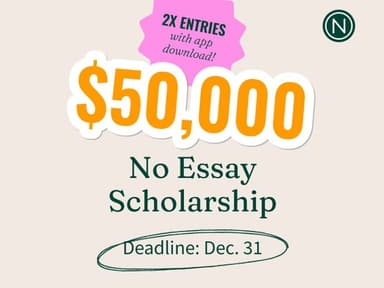
Niche $50,000 "No Essay" Scholarship
By: Niche
First-generation student? Eligible high school students can enter Niche’s $50,000 No Essay Scholarship for a chance to help cover future college costs. Apply for free by December 31.All students are eligible$50,000Winners:1 winnerLearn MoreVerified by Bold.orgSponsored1
Lovely B. Thomas Education Scholarship
Funded byLondon Real Estate HoldingsOpen to low-income, first-generation, underrepresented minority students pursuing education or healthcare.- Background: First-generation college student
- Identity: Underrepresented minority
- Field of Study: Education or Healthcare
- Education Level: High school, undergraduate, or graduate student
- Financial Status: Low-income
$1,250Only 25 days left!One Click Apply2
SoFi $2,500 Scholarship Giveaway
By: SoFi
SoFi gives students a chance to win a $2,500 scholarship every month. No essays, interviews, or hoops. Winning is that easy! Must be 18+ apply.All students are eligible$2,500Winners:MonthlyLearn MoreVerified by Bold.orgSponsored3
Ryan McAuliffe Memorial Award
Funded byMirna McAuliffeOpen to Hispanic female high school students in Illinois.- Education Level: High school student
- Ethnicity: Hispanic
- Gender: Female-identifying
- State: Illinois
$10,000Deadline:Mar 28, 2027One Click Apply4
Edwards Scholarship
Funded byAmera EdwardsOpen to first-generation international undergraduate and graduate students in the U.S.- Education Level: Undergraduate or graduate student
- Background: First-generation college student
- Status: International student
$600Only 28 days left!One Click Apply5
Dr. Fletcher L. Gamble Scholarship
Funded byGLEN FISHEROpen to first-generation Black male high school seniors planning to attend an HBCU.- Education Level: High school senior
- Gender: Male-identifying
- Race: African American
- Background: First-generation college student
- College Plans: Will attend an HBCU
$630Deadline:Apr 30, 2027One Click Apply6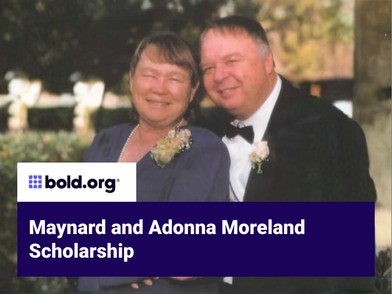
Maynard and Adonna Moreland Scholarship
Funded byFriends of the Moreland and Rawson familiesOpen to first-generation college-bound seniors at East Career and Technical Academy in Las Vegas, Nevada.- School Name: East Career Technical Academy
- State: Nevada
- Background: First-generation student
- Education Level: High school senior
$1,000Deadline:Dec 20, 2026One Click Apply7
1st Gen College Scholarship
Funded byCharlie VelezOpen to BIPOC, first-generation college students in New Jersey with at least a 3.5 GPA.- Education Level: Four-year undergraduate student
- State: New Jersey
- Race: BIPOC
- Background: First-generation college student
- GPA: 3.5 or higher
$13,500Only 3 days left!One Click Apply8
HBCU STEM Scholarship
Funded byChrispin RainfordOpen to first-generation, low-income students studying STEM at an HBCU.- Identity: FGLI (first-generation and low-income)
- GPA: 3.0 or higher
- Field of Study: STEM
- Education Level: Undergraduate
- Current College: HBCU
$10,000Only 8 days left!One Click Apply9
Carlos F. Garcia Muentes Scholarship
Funded byThe Pride Resource NetworkOpen to first-generation college students who are immigrants, children of immigrants, refugees, or asylum seekers.- Immigration status: First- or second-generation immigrant, refugee, or asylum seeker
- Legacy status: First-generation college student
$500Only 9 days left!One Click Apply10
José Ventura and Margarita Melendez Mexican-American Scholarship Fund
Funded byBorders FamilyOpen to first-generation Mexican or Mexican American students starting or pursuing an undergraduate degree.- Education Level: High school graduate currently pursuing or looking to begin an undergraduate degree
- Identity: Mexican or Mexican-American
- Background: First-generation college student
- Experience: Work or significant volunteer experience
$2,000Only 18 days left!One Click Apply11
Framework Scholarship for Aspiring Local Business Owners
Funded byFrameworkOpen to undergraduate and trade school students who plan to start their own local business.- Background: Planning to start a service business
- Education Level: Current undergraduate or trade school student
- Desired Career: Entrepreneurship
$2,500Only 23 days left!One Click Apply12
L. Renee Burch-Bealer Memorial Scholarship
Funded byDixon-BrownOpen to low-income, first-generation high school seniors and college freshmen in Texas.- Education Level: High school senior who will attend a two or four-year college or first-year undergraduate student
- State: Texas
- Background: First-generation college student
- Financial Status: Low-income
$1,000Only 24 days left!One Click Apply13
Gabe J. Maletta Memorial Scholarship for Mental Health
Funded byRichard StoeckelOpen to first-generation high school seniors with volunteer experience pursuing mental health careers.- Education Level: High school senior
- Field of Study: Mental health
- Background: First-generation college student
- Experience: Volunteering experience
$1,000Only 26 days left!One Click Apply14
Yaa Asantewaa Scholarship
Funded bySamuella BussOpen to Black women in graduate school studying social work, public health, STEM, or social justice.- Education Level: Graduate student
- Race: Black
- Gender: Female-identifying
- Field of Study: Social work, public health, STEM, or social justice
- Background: Demonstrated financial need
$3,000Only 28 days left!One Click Apply15
Grace In Action Scholarship
Funded byGrace In Action Mission Inc.Open to high school juniors and seniors who are first-generation immigrants active in their church.- Education Level: High school junior or senior
- Background: First-generation immigrant
- Religion: Involved in church
$3,000Only 30 days left!One Click Apply16
John Walker and Christine Horton Education Scholarship
Funded byDouglas HortonOpen to underrepresented minority or first-generation students in North Carolina pursuing health or physical education.- Education Level: High school or undergraduate student
- State: North Carolina
- Identity: Underrepresented minority and/or first-generation student
- Background: Experience working with children and non-profit/volunteering experience
- Field of Study: Health or physical education
$2,100Deadline:Nov 29, 2026One Click Apply17
STEAM Generator Scholarship
Funded byFrancis Rei IsraelOpen to bachelor's and master's degree students studying STEM.- Education Level: Bachelor's or master's degree
- Field of Study: STEAM
- Background: First or second-generation immigrant or other underrepresented minority
$3,165Deadline:Nov 30, 2026One Click Apply18
Velazquez Social Sciences Scholarship
Funded byJorge VelazquezOpen to first-generation high school seniors of Puerto Rican heritage pursuing social work, psychology, or other social sciences.- Background: First-generation college student
- Heritage: At least one parent of Puerto Rican descent
- Education Level: High school senior
- Field of Study: Social work, psychology, sociology, political science, international relations, or criminal justice
$1,100Deadline:Dec 06, 2026One Click Apply19
CML Music Scholarship
Funded bySherie McArthurOpen to first-generation undergraduate students at HBCUs who plan to pursue music.- Education Level: Undergraduate student
- School: HBCU
- Field of Study: Music
- Experience: First-generation college student
$2,000Deadline:Dec 08, 2026One Click Apply20
Bright Lights Scholarship
Funded byBria AlexanderOpen to students of color or first-generation students in high school, college, or trade school.- Education Level: High school or undergraduate student
- Identity: Underrepresented minority and/or first-generation college student
$1,100Deadline:Dec 10, 2026One Click Apply21
Sharon L. Smartt Memorial Scholarship
Funded byDebrah Smartt HenryOpen to first-generation, low-income female high school and undergraduate students in California, Oregon, or Washington studying the humanities.- Education Level: High school or undergraduate student
- Gender: Female-identifying
- State: California, Oregon, or Washington
- Field of Study: Humanities (English, history, etc.)
- Background: FGLI (first-generation, low-income)
$500Deadline:Dec 19, 2026One Click Apply22
Frontier Scholarship
Funded byJohn RodgersOpen to high school seniors and undergraduates who are immigrants, refugees, or children of immigrants.- Citizenship: US Citizen, permanent resident, refugee, or asylee as applicable
- Immigration Background: Child of immigrants; first generation immigrant; refugee or asylum seeker
- Education Level: High school seniors or undergraduate students
$2,500Deadline:Jan 05, 2027One Click Apply23
Pete and Consuelo Hernandez Memorial Scholarship
Funded byHernandez FamilyOpen to first-generation, underrepresented minority high school seniors and college freshmen in California.- State: California
- Background: First-generation
- Identity: Underrepresented minority
- Education Level: High school senior or first-year undergraduate student
$6,100Deadline:Jan 11, 2027One Click Apply24
Breanna Coleman Memorial Nursing Scholarship
Funded byColeman FamilyOpen to first-generation high school seniors planning to study nursing.- Education Level: High school senior
- Background: First-generation student
- Field of Study: Nursing
- Experience: Volunteering and extracurricular experience
$5,000Deadline:Jan 23, 2027One Click Apply25
Appalachian Region Vocational Scholarship
Funded byDaelyn ChaneyOpen to first-generation high school and college students in Kentucky, West Virginia, or Virginia pursuing STEM careers.- Education Level: High school or undergraduate
- Type of Education: Trade or vocational
- State: Kentucky, West Virginia, or Virginia
- Major/Career of Interest: STEM
- Background: First generation college student
$1,000Deadline:Jan 24, 2027One Click Apply26
Camille S. Amantine Scholarship
Funded byCamille AmantineOpen to undergraduate and graduate students who are low-income, first-generation, or BIPOC.- Education Level: Undergraduate or graduate student
- Background: Low-income, first-generation, or BIPOC student
$2,000Deadline:Jan 28, 2027One Click Apply27
Donovan Harpster “Called to Teach” Scholarship
Funded byHarpster FamilyOpen to first-generation high school seniors and undergraduates studying to become teachers.- Field of Study: Education
- Education Level: High school senior or undergraduate student
- Background: First-generation college student
$1,000Deadline:Feb 10, 2027One Click Apply28
Maurice Geyen Business Scholarship
Funded byViZion360Open to African American male high school and undergraduate students pursuing business.- Education Level: High school or undergraduate student
- Race: African American
- Gender: Male-identifying
- Field of Study: Business
$1,000Deadline:Feb 15, 2027One Click Apply29
Goellner Public Education Scholarship
Funded byGoellner FamilyOpen to BIPOC high school seniors and undergraduates planning to teach in K-12 public schools.- Education Level: High school senior or undergraduate student
- Desired Career: K-12 public school teacher
- Identity: BIPOC
- Preference: First-generation college students and male applicants
$4,000Deadline:Feb 26, 2027One Click Apply30


How it works
Bold.org is Built to Make Scholarships Feel Possible
Step 01
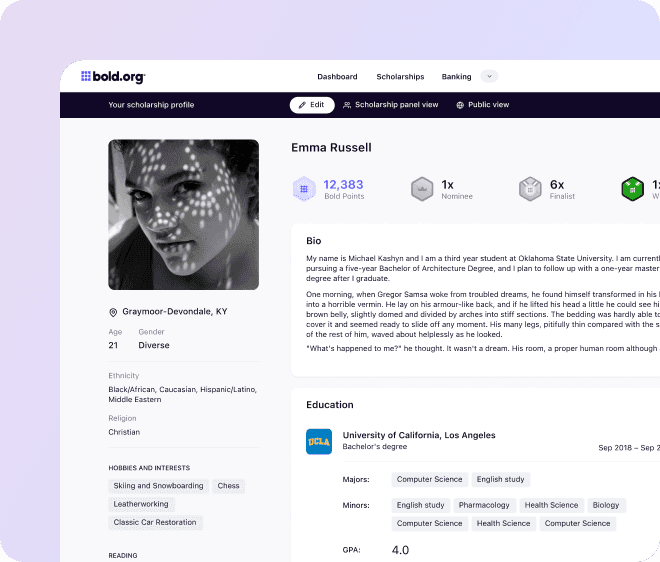
Start with your story
Bold.org helps students show donors who they are beyond a transcript.
Step 02
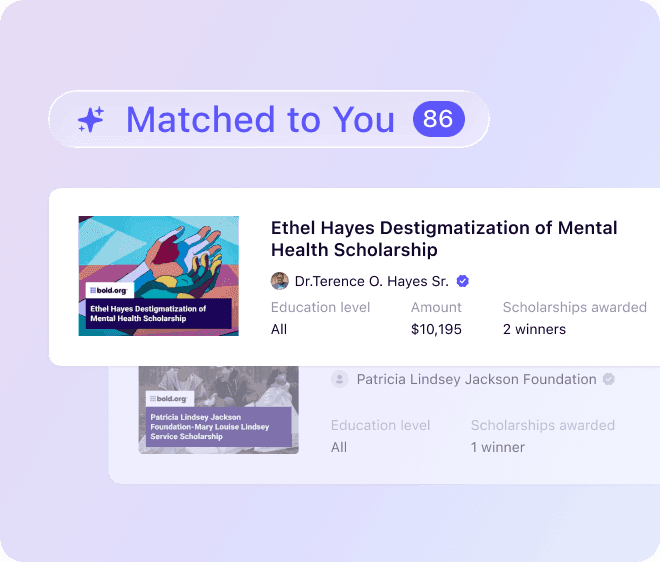
Where scholarships are awarded
Every scholarship is funded by donors and managed directly on Bold.org.
Step 03
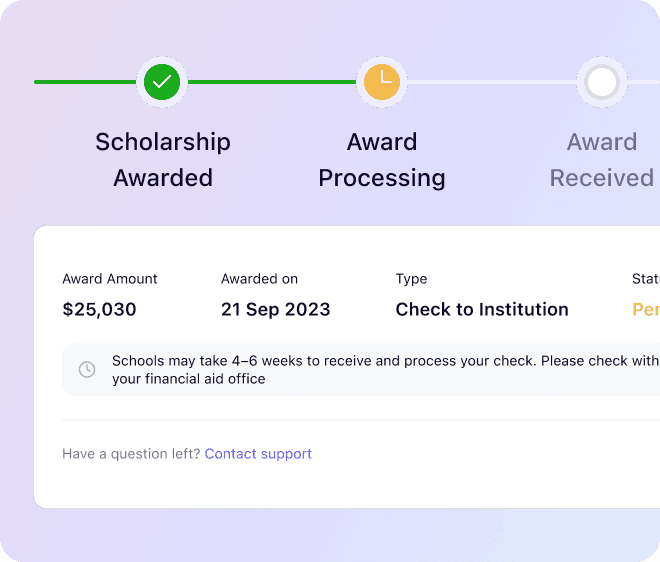
Fund your future
Scholarship dollars are disbursed through Bold.org to help students pay for school.
First Generation Scholarships: Who Applies, Who Wins, and How to Stand Out
First-generation college students make up roughly one-third of all undergrads in the United States. These are students whose parents did not finish a four-year degree. They arrive on campus without the built-in roadmap that other students inherit. No one at home has filed a FAFSA, chosen a major under deadline, or decoded the unwritten rules of college life.
That knowledge gap has a real dollar cost. And it falls hardest on students who can least afford it.
Bold.org tracks scholarship application data across its platform — and the numbers reveal just how steep the financial cliff is for first-gen students, what winning scholarship profiles look like, and where the real opportunities are (methodology).
The First Generation Scholarships Funding Gap
Among first-generation scholarship seekers on Bold.org, the average annual tuition is $23,519. The average annual aid covers $11,986. That leaves an $11,533 gap that students must close through loans, jobs, or savings.
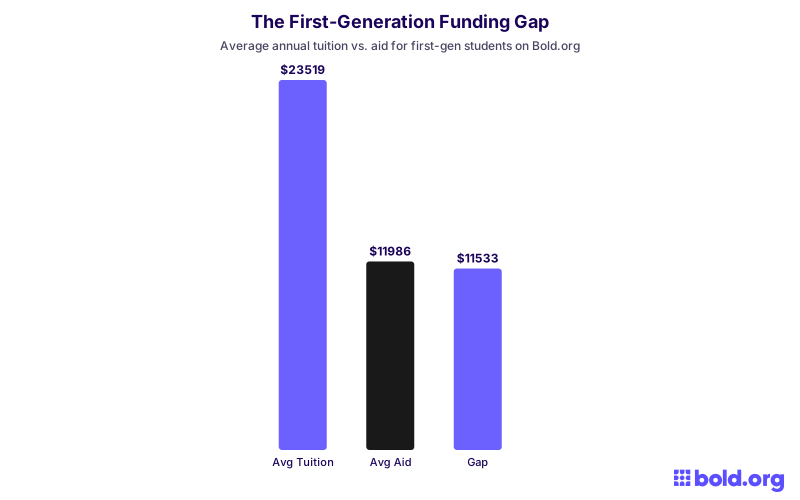
The breakdown on the platform: 42% of first-gen students' tuition comes from loans. Another 32% is self-funded through work and savings. Only 26% comes from family or other sources. Compare that to students from college-educated families, who draw more heavily on family support and institutional grants — NCES data shows that continuing-generation students receive significantly more parental financial contributions and are more likely to receive institutional aid than their first-gen peers.
Nearly all first-gen scholarship seekers on the platform (99.9%) report expecting to need more loans to finish school. That number is not a rounding artifact — it reflects a population where borrowing is the default, not the exception.
The financial picture gets sharper when you look at who these students are. Platform data shows that 70.1% of first-gen students also identify as low-income. The overlap is not coincidental. It reflects the lack of generational wealth that college-educated families often draw on for tuition. According to the Pell Institute, first-generation, low-income students are four times less likely to earn a bachelor's degree within six years compared to higher-income peers whose parents went to college.
Scholarships directly reduce this gap. On Bold.org, the median first-gen scholarship award is $1,000, with an average of $1,764. Among third-party scholarships on the page, the median jumps to $2,500. No single award erases a five-figure gap. But stacking multiple awards — and 77% of external first-gen scholarships use rolling deadlines — creates cumulative savings that compound across semesters.
Who First-Gen Scholarship Seekers Are
The first-gen student body on Bold.org is diverse across every dimension. It is not one type of student.
Ethnic background: Hispanic and Latino students make up 33% of first-gen scholarship seekers. White students account for 29.6%, Black and African American students 22.9%, Asian students 7.2%, and Native American students 2.7%. This breakdown is more diverse than the overall Bold.org population, and it mirrors national patterns tracked by NASPA's Center for First-Generation Student Success.
Gender: Women make up 72.7% of first-gen scholarship seekers — a higher share than the general applicant pool on the platform.
Education level: Among first-gen scholarship seekers on Bold.org, half are current high school students (50%). Another 21.7% are college undergrads, 12.8% are adult learners, 10.8% are in associate degree programs, and 4.8% are graduate students. The strong presence of adult learners and community college students sets this group apart from most other scholarship categories.
Where they go to school: The most common schools among first-gen scholarship seekers tell a striking story.
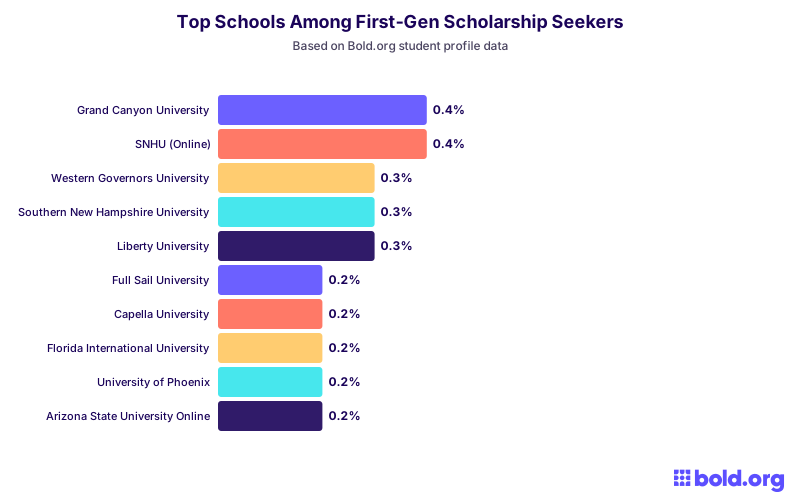
Grand Canyon University, Southern New Hampshire University, Western Governors University, Liberty University, and Capella University lead the list. These are overwhelmingly online, flexible-format schools. The pattern suggests that first-gen students choose educational paths that work around jobs, family duties, and location constraints. Traditional four-year residential campuses are less prominent in this data.
What they study: Nursing and health fields dominate. Registered Nursing alone accounts for 9.8% of first-gen scholarship seekers, followed by Business (5.8%), Psychology (5.4%), Health Professions (3.4%), and Education (2.5%). Among scholarship winners, the healthcare tilt is even stronger — 50% of career goals fall in health-related fields (methodology).
Academic profile: The median GPA is 3.5, and 56.3% of first-gen scholarship seekers hold a 3.5 GPA or above. First-gen students carry a slightly lower average GPA (3.42) than non-first-gen students (3.57) — a 0.15-point gap. That gap exists but does not control outcomes. As the funnel data below shows, first-gen students who reach the finalist stage perform on par with any other cohort.
The First Generation Scholarships Landscape
The scholarship world for first-gen students extends well beyond any single platform. Bold.org lists both its own first-gen scholarships and 782 third-party scholarships that first-gen students can access — all browsable from one page.
Award sizes differ by source. Third-party first-gen scholarships carry a median award of $2,500 and an average maximum of $6,267. Bold.org's own first-gen awards have a median of $1,000, reflecting the mix of large institutional awards and smaller community-funded scholarships on the platform.
Deadlines favor steady applicants. Among external first generation scholarships listed on the platform, 77% use rolling deadlines. Only 21% have fixed cutoffs. This means students can apply throughout the year. If you discover opportunities mid-semester, the majority of the landscape is still open.
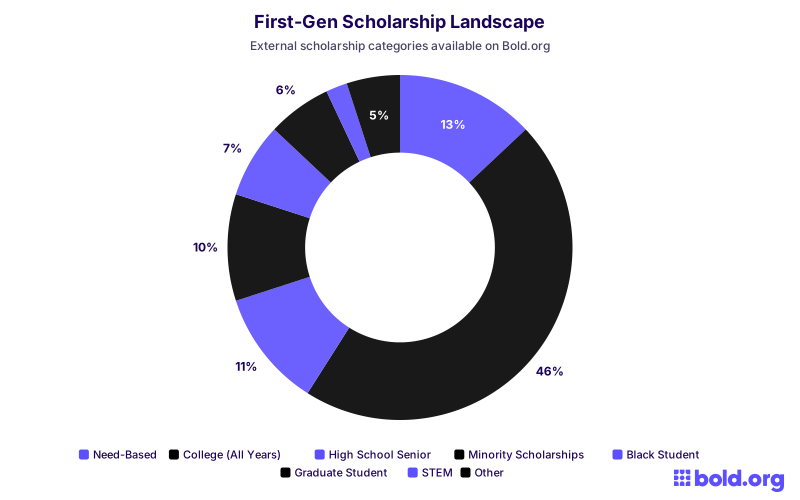
The categories are broad. According to Bold.org's external scholarship data, the first-gen ecosystem is heavily need-based (13% of listings) and overlaps with minority-focused scholarships (10%), Black student scholarships (7%), and STEM awards (2%). Scholarships span every grade level: 30% target high school seniors, 19% target college students, and 9% target graduate students.
Named providers and programs that shape the first-gen scholarship world include the Gates Scholarship (full cost-of-attendance for Pell-eligible students with strong academics), QuestBridge (matching high-achieving, low-income students with full rides at 50+ partner colleges), the Dell Scholars Program (combining funding with mentorship and tech support), and the Coca-Cola First Generation Scholarship. On Bold.org, donors frequently create awards that target first-gen drive and ambition specifically.
When First-Gen Students Should Apply
Application volume for first-generation scholarships on Bold.org is not spread evenly across the year — and the imbalance creates a real strategic opening.
December dominance: December carries an application index of 344 — more than three times the average month. This spike tracks with college application season and winter break, when students have time to sit down and write. February follows at 264, driven by spring-semester momentum and FAFSA filing season. March rounds out the peak window at 195.
Summer collapse: From May through August, volume drops off a cliff. May sits at 41, June at 22, July at 17, and August bottoms out at just 8 — barely a trickle compared to December. Fall rebuilds slowly: September (43), October (40), November (31).
The instinct for first-gen students — many of whom work summer jobs or pick up extra shifts when school is out — is to put scholarship applications on hold until the academic year starts. The data says the opposite. August through November is the hidden advantage window. Application indexes range from 8 to 43, meaning a fraction of the normal volume is competing for the same awards. And with 77% of external first-generation scholarships using rolling deadlines, those awards are still open and accepting applications.
The December-February window is when most first-gen students apply. That is also when competition is fiercest. Submitting applications during the low-volume months — even one or two per week over the summer — puts you in front of reviewers when their inboxes are thinnest. For students balancing work schedules, this does not require blocking out a full weekend. It means treating June through November as a slow, steady drip rather than waiting for the December rush.
What First-Generation Scholarship Finalists and Winners Look Like
Bold.org's selection process moves applications through three stages: general pool, finalists, and winners. The data at each stage reveals what reviewers actually value — and it is not what most guides tell you.
The funnel: Among first-gen scholarships on the platform, 16,106 applications reached finalist status, and 3,612 of those finalists received awards.
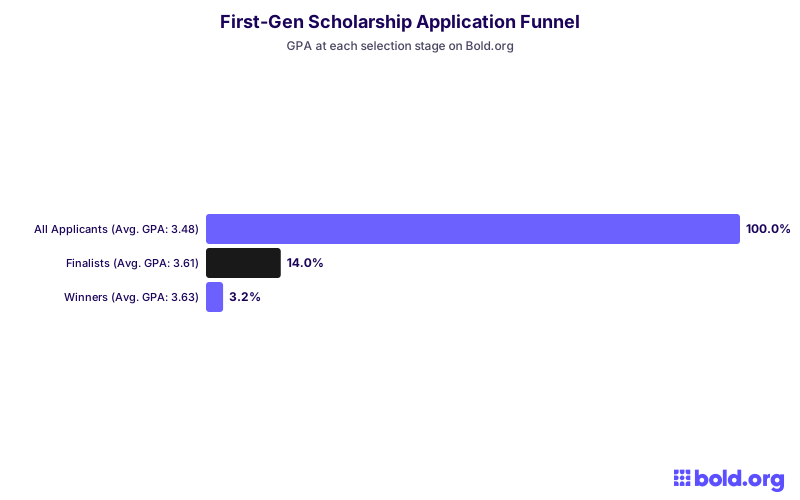
GPA matters early, not late. The average GPA among all first-gen scholarship applicants is 3.48. Finalists average 3.61 — a meaningful 0.13-point jump that shows academics play a role in the initial screen. But the key finding: winner GPA averages 3.63, barely 0.02 points above finalists. At the finalist stage, grades are essentially equal. The deciding factor is qualitative.
Low-income students gain ground through the funnel. Among finalists on Bold.org, 82.6% identify as low-income. Among winners, that rises to 86.4% — a 3.8 percentage-point increase. Low-income representation increases from finalist to winner, suggesting financial need plays a role in final selections even beyond its presence in the applicant pool.
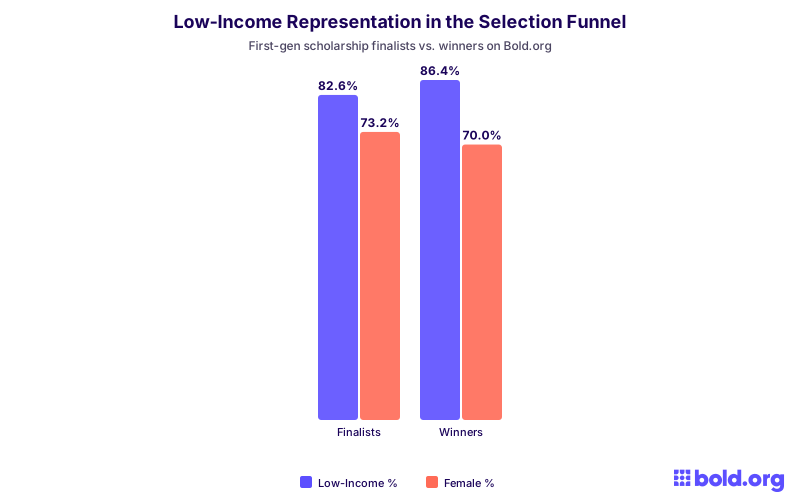
Gender tracks the applicant pool: 70% of winners are female, 27.8% male. This closely mirrors the 72.7% female applicant base, with no major selection bias in either direction.
Career goals cluster in service fields: Hospital & Health Care (22%), Medicine (16%), Mental Health Care (12%), Education (11%), and Law Practice (10%). This lines up directly with scholarship criteria on Bold.org, which weight Drive (33%), Ambition (33%), and Impact (30%). Students whose career goals show clear community purpose match what reviewers are scoring.
The need-criteria paradox. First-gen scholarship criteria on Bold.org explicitly weight Drive (33%), Ambition (33%), and Impact (30%) — with financial Need accounting for just 1% of stated criteria. Yet 86.4% of winners are low-income. This gap between stated criteria and actual outcomes is notable: financial context appears to influence outcomes even when it is not the formal criterion. The takeaway is actionable. Even when a first-gen scholarship does not list "need" as a criterion, your financial reality still matters. Describing it honestly alongside your goals gives reviewers a fuller picture of your situation.
Navigating the Barriers — and What the Data Says Works
First-gen students deal with challenges that other students rarely think about. The data shows what these barriers look like — and how students are already adapting.
No one to ask. Without parents who went to college, first-gen students lack guidance on FAFSA timing, course selection, office hours, and dozens of other institutional processes. The heavy presence of online and flexible schools (Grand Canyon, SNHU, WGU) among first-gen scholarship seekers reflects a smart adaptation. These schools often provide more structured advising and scheduling that fills the guidance void. Research from NASPA confirms that first-gen students benefit most from schools with strong wraparound support services.
Work and school compete for the same hours. With 42% of tuition coming from loans and 70.1% identifying as low-income, many first-gen students work jobs while taking classes. The data shows this clearly: 12.8% of first-gen scholarship seekers are adult learners, and 10.8% are in associate degree programs. These students have built their education around their financial reality, not the other way around. Despite this, 56.3% maintain a 3.5+ GPA — higher than many scholarship guides suggest is realistic for working students. The time crunch is real, but it is not preventing academic performance.
The GPA gap is real but narrow. Platform data shows first-gen students average a 3.42 GPA compared to 3.57 for non-first-gen students — a 0.15-point difference. This likely reflects working while studying, less tutoring access, and the extra load of navigating an unfamiliar system. It does not reflect ability. First-gen students who reach the finalist stage carry a 3.61 GPA, nearly matching the platform-wide average.
Fewer professional connections. First-gen students are less likely to have family ties to specific industries or alumni networks. The career data supports this: first-gen winners concentrate in healthcare, education, and social work — fields with clear entry pathways and strong community-service alignment that do not require inherited professional connections. These fields also have the strongest community-entry pathways of any profession: clinical placements, student teaching, and social service internships build professional networks directly through the degree itself. First-gen students are gravitating toward careers where the credential opens the door — no rolodex required.
Organizations like TRIO, QuestBridge, and NASPA's First-Gen Center exist specifically to close these gaps. More on each below.
What the Data Says Works
The gap between being a finalist and winning is not about grades. Finalist GPA: 3.61. Winner GPA: 3.63. That 0.02-point spread means your essay and personal story carry almost all the weight once you clear the academic bar.
Analysis of winning first-gen scholarship essays on Bold.org reveals patterns that set winners apart from finalists who did not receive awards.
Show drive with evidence, not adjectives. Drive and Ambition account for 66% of stated first-gen scholarship criteria on Bold.org — the single most important signal reviewers are scoring. Winners back up claims of ambition with concrete details: specific jobs held while studying, organizations they served, or academic hurdles cleared with measurable outcomes. The 12.8% of seekers who are adult learners and the 10.8% pursuing associate degrees prove that non-traditional paths are welcomed — what matters is forward motion.
Describe what you built from your experience. Winners describe specific skills they developed — resourcefulness, self-advocacy, comfort with uncertainty — rather than focusing on limitations. Finalist essays often stop at the challenge ("I struggled because no one in my family went to college"). Winners go further. They describe what they built because of that gap, and they connect it to concrete goals.
Draw a line from your family's story to your career choice. Analysis of winning essays on Bold.org shows the strongest entries link family experience directly to professional direction. With 50% of first-gen winners heading into healthcare, the pattern is clear: winners explain why they chose their field through their family's experience with health access, financial insecurity, or immigration. The link needs to be specific. Generic community-service language does not stand out among first-gen applicants who all share similar backgrounds.
Pair financial context with forward motion. Low-income students make up 86.4% of first-gen scholarship winners on Bold.org — the highest need-to-winner ratio in any demographic category. Reviewers respond to honest financial context. But the winners who stand out use their financial reality as the setup for a specific plan: "Working 25 hours a week at Target taught me to manage time and people — skills I'll bring to my healthcare administration career." The funding gap is the opening. The ambition is the argument.
The first-gen scholarships listed above this article include 782 third-party opportunities alongside Bold.org awards. Since 77% use rolling deadlines, the landscape stays open year-round — a major advantage for students juggling work schedules and non-traditional academic calendars.
Resources for First-Generation Students
Several organizations focus on supporting first-gen students with funding, mentorship, and community:
TRIO Programs (U.S. Department of Education)
Federal outreach programs — including Upward Bound, Student Support Services, and McNair Scholars — provide academic tutoring, counseling, mentoring, and financial guidance for first-gen and low-income students at thousands of institutions. Eligibility typically requires first-gen status, low-income status, or both.
QuestBridge
A national nonprofit connecting high-achieving, low-income students with full four-year scholarships at 50+ partner colleges. QuestBridge's National College Match is built specifically for first-gen students, providing funding plus a scholar community and alumni network.
I'm First (Center for Student Opportunity)
A community platform connecting first-gen students with mentors, resources, and shared stories. I'm First provides college guidance, scholarship information, and peer support through its network of first-gen alumni and current students.
NASPA Center for First-Generation Student Success
A national hub for research and institutional programs supporting first-gen students. NASPA's First Scholars network connects students with colleges committed to first-gen success — including dedicated advisors, peer mentoring, and bridge programs.
National College Attainment Network (NCAN)
Provides tools, policy advocacy, and community organizing focused on college access for underrepresented students. NCAN's resources help students navigate financial aid, applications, and persistence strategies.
The Suder Foundation — First Scholars Program
Partners with universities to give first-gen students comprehensive support: financial aid, academic coaching, and career development across their entire college experience.
Frequently Asked Questions
What qualifies you as a first-generation college student?
A first-gen student is someone whose parents or guardians did not complete a four-year bachelor's degree. Some schools define it more broadly — neither parent having any college experience. Others use the bachelor's degree cutoff. On Bold.org, students self-report first-gen status based on being the first in their immediate family to pursue a four-year degree. If a parent started college but did not graduate, most providers — including Bold.org, QuestBridge, and federal TRIO programs — still count you as first-gen.
Do first-gen students receive more financial aid?
First-gen students are more likely to qualify for need-based aid because first-gen status strongly correlates with lower family income. On Bold.org, 70.1% of first-gen seekers also identify as low-income. Federal Pell Grants, state grants, and institutional aid reach first-gen students at higher rates. Still, average annual aid ($11,986 on Bold.org) leaves a large gap against average tuition ($23,519). Scholarships fill part of that remaining shortfall. The Gates Scholarship, QuestBridge, and Dell Scholars Program offer substantial multi-year awards for first-gen students specifically.
Can you be first-gen if a parent went to college outside the U.S.?
It depends on the provider's definition. Most U.S.-based programs focus on degree completion. If a parent earned a foreign bachelor's degree, most would not consider you first-gen. If a parent attended college abroad without finishing, you would likely qualify. Bold.org uses self-reporting. When unsure, contact the specific provider. Worth noting: 33% of first-gen students on Bold.org are Hispanic or Latino, reflecting the large immigrant-family population within this community.
Does being first-gen actually help your scholarship application?
For scholarships that target first-gen students, your status is a qualifier — everyone applying shares it. What separates winners is how they use their story. Platform data shows criteria for first-gen awards weight Drive (33%), Ambition (33%), and Impact (30%). Winners demonstrate those traits through specific experiences: working while studying, guiding younger siblings through college prep, building something from scratch. Low-income representation among winners (86.4%) shows that honest financial context, paired with clear ambition, resonates with reviewers.
Can first-gen status stack with other scholarship categories?
Yes — and it should be part of your strategy. On Bold.org, 33% of first-gen seekers are Hispanic or Latino, 22.9% are Black or African American, and 70.1% are low-income. Students qualifying for multiple categories (first-gen plus minority, first-gen plus STEM, first-gen plus low-income) can apply across overlapping scholarship pools. This stacking approach works well given that 77% of external first-gen scholarships use rolling deadlines, letting you apply across categories year-round without deadline conflicts.
Methodology
This analysis is based on Bold.org's database of student profiles, scholarship applications, and award records. Data sources include:
- Student profiles: Demographic, academic, and financial information from students who created Bold.org accounts and self-reported first-generation status
- Scholarship applications: Records for scholarships in the "First-Generation" category on Bold.org, including finalist selection and award outcomes
- Award data: Records from Bold.org's awardees table, covering award amounts and winner demographics for first-gen scholarships
- External scholarships: 782 third-party scholarships listed on Bold.org matching first-generation or need-based criteria, sourced from the integrated external scholarship database
- Essay analysis: Aggregate theme analysis of winning first-gen scholarship essays, identifying patterns across narratives without quoting any individual applicant
GPA data is filtered to the 0.0–4.0 scale to remove reporting errors. Award amounts reflect scholarships awarded to first-gen winners on Bold.org. External scholarship metrics (median amounts, deadline types) come from third-party listings on the platform.
External benchmarks: National Center for Education Statistics (NCES), Pell Institute for the Study of Opportunity in Higher Education, NASPA Center for First-Generation Student Success.
All percentages are proportional distributions, not raw counts, per Bold.org's data standards. Reported metrics exceed minimum sample-size thresholds for statistical significance.
Last updated: March 2026
Frequently Asked Questions
Yes! As long as your parents did not graduate or receive any college degree, including an associate's or bachelor's, you qualify as a first-generation student. Your parents may have taken college courses and obtained college credit, but that is different from formally graduating and receiving a college diploma.
Yes, you may still be eligible for first-generation scholarship opportunities if your immediate family members—specifically your parents—have not earned a bachelor’s degree. Many colleges define first-gen scholarships based solely on your parents’ education, so it's important to carefully review the additional criteria of each scholarship application.
Yes, you can often combine first-generation scholarship opportunities with federal and state grants to support your college journey. Being the first person in your family to pursue a degree can open doors to multiple funding sources designed to help future generations break barriers in higher education.