Chris Jones Innovator Award


Chris Jones was an incredible person who was innovative, creative, and driven to continuously improve his community.
Community-minded students who share Chris’s dedication and selflessness are some of the most important and influential people in their towns, organizing those around them, inspiring others to take action, and identifying the needs that can be filled through local programs and resources.
This scholarship seeks to honor the life and legacy of Chris Jones by supporting students who share his passions.
Any high school senior in Virginia who is an innovative, community-minded change agent may apply for this scholarship opportunity if they will begin their bachelor’s degree in the Fall.
To apply, tell us how you have made a difference in your community so far and how you plan to make even more of an impact going forward.
What action have you taken to help your community and how do you plan to drive change in the future?
Explore All Kinds of Scholarships for All Kinds of Students
Winners and Finalists
July 2026


Winning Applications

How it works
Bold.org is Built to Make Scholarships Feel Possible
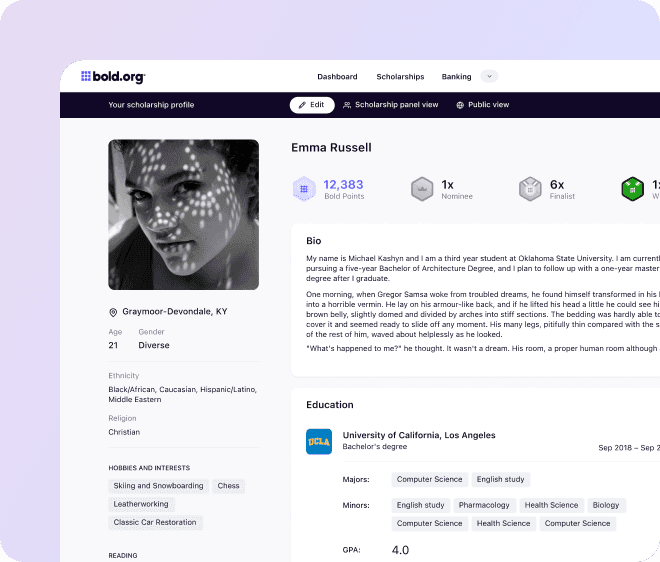
Step 01
Start with your story
Bold.org helps students show donors who they are beyond a transcript.
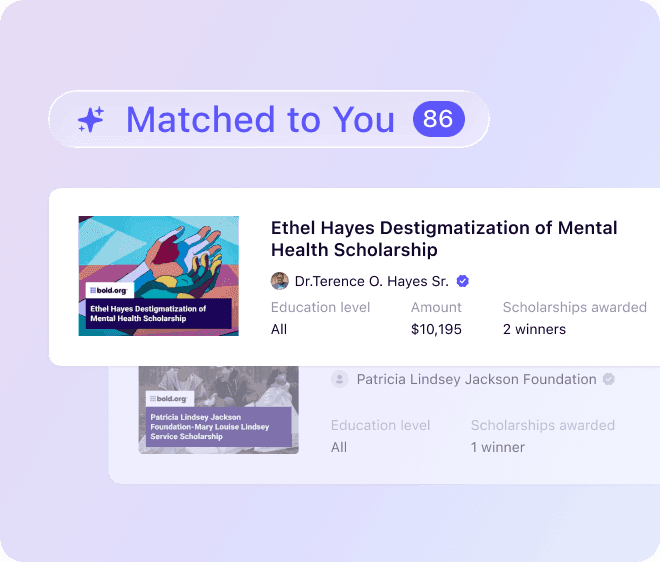
Step 02
Where scholarships are awarded
Every scholarship is funded by donors and managed directly on Bold.org.
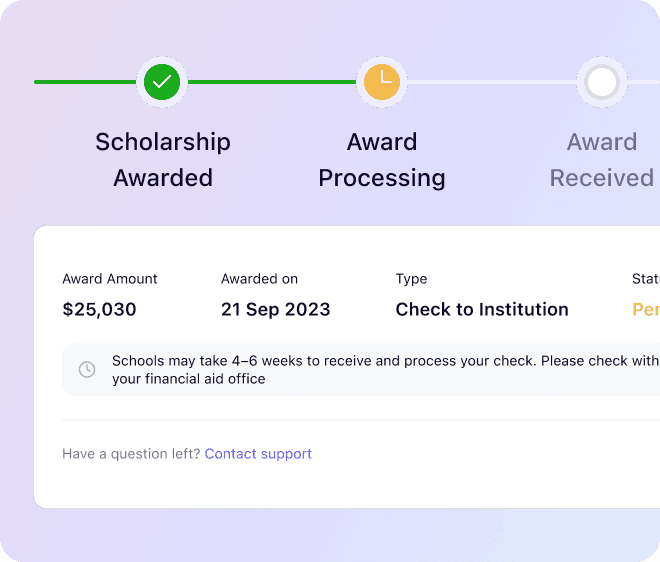
Step 03
Fund your future
Scholarship dollars are disbursed through Bold.org to help students pay for school.
FAQ
The application deadline is Jun 15, 2026. Winners will be announced on Jul 16, 2026.
Your privacy is a top priority on the Bold.org platform, and you can find our privacy policy in full here. You may opt out of communications from Bold.org at any time, and unless we’ve first notified you and gotten your consent, you’ll never receive communication from any third parties related to personal information you give us.
Award amounts per winner are designated by the donor. Check the award amount for a detailed breakdown.
The winner will be publicly announced on Jul 16, 2026. Prior to the announcement date, we may contact finalists with additional questions about their application. We will work with donors to review all applications according to the scholarship criteria. Winners will be chosen based on the merit of their application.
Award checks will be sent to the financial aid office of the winner's academic institution or future academic institution in their name to be applied to their tuition, and in the name of their institution (depending on the school's requirements). If the award is for a qualified educational non-tuition expense, we will work with the winner directly to distribute the award and make sure it goes towards qualified expenses.
Before we award the scholarship, the winner will be required to confirm their academic enrollment status. Depending on the circumstances, verification of Student ID and/or their most recent transcript will be required.
If you have any questions about this scholarship or the Bold.org platform, just email contact@bold.org and we’ll get back to you as quickly as we can.
Yes. The terms and conditions for this scholarship can be found here.
