The Best Esports Scholarships with Upcoming Deadlines in 2026
Exclusive Scholarships found only in Bold.org!
100% Free.

Chris Jackson Computer Science Education Scholarship
Funded byChris Jackson's FamilyThis memorial fund for Chris Jackson will support students who want to pursue a Computer Science degree to make the world a better place.All students are eligible$5,000Deadline:Oct 09, 2026One Click Apply1PrimePutt Putting Mat Scholarship for Women Golfers
Funded byPrimePuttThis scholarship will support a woman golfer.- Sport/Hobby: Golf
- Education Level: High school senior, undergraduate, or graduate
- Gender: Female/Female-identifying
$1,000Deadline:Nov 30, 2026One Click Apply2Olivia Rodrigo Fan Scholarship
Funded byBold.orgThis scholarship is perfect for students who have been impacted by Olivia Rodrigo's "Guts" album!All students are eligible$500Deadline:Mar 20, 2027One Click Apply3Love Island Fan Scholarship
Funded byBold.orgThis scholarship aims to support students who are fans of "Love Island" and are invested in the stories on screen.All students are eligible$500Only 14 days left!One Click Apply4Sabrina Carpenter Superfan Scholarship
Funded byBold.orgThis scholarship seeks to support fans of Sabrina Carpenter who have been impacted by her career.All students are eligible$500Only 14 days left!One Click Apply5Women in Sports Scholarship
Funded byAshley WardThis scholarship will support women pursuing careers in sports.- Education Level: Undergraduate
- Gender: Woman
- Major/Career Field: Sports-related career
$2,550Scholarship is awarded to
1 winnerDeadline:Dec 01, 2022One Click Apply6Jack “Fluxare” Hytner Memorial Scholarship
Funded bysteven hullanderThis scholarship exists to support a passionate high school senior or undergraduate student who plans to study computer science or video game design and production.- Education: High school senior or current undergraduate
- Field of Study: Studying or planning to study computer science, video game design and production, or a related field.
$1,000Scholarship is awarded to
1 winnerDeadline:Apr 01, 2023One Click Apply7Yifan Zhu "Late Night" Scholarship
Funded byYifan ZhuThis scholarship will be awarded to a low-income college student who has a track record of social engagement through their extracurricular activities (e.g. student council, community service, dance/sports, etc.).- Background: Low-income student
- Background: First-gen students preferred
$500Scholarship is awarded to
1 winnerDeadline:Feb 02, 2021One Click Apply8Donald De La Haye "No Regrets" Scholarship
Funded byDonald De La HayeThe Donald De La Haye "No Regrets" Scholarship exists to support an athlete who could use a helping hand on his or her pathway to success.All students are eligible$5,000Scholarship is awarded to
1 winnerDeadline:Apr 15, 2021One Click Apply9No-Essay Sideline Sprint Sports News Scholarship
Funded byBold.orgThis scholarship will be awarded to sports fans who get the most out of the Sideline Sprint newsletter.All students are eligible$1,000Scholarship is awarded to
1 winnerDeadline:Aug 24, 2021One Click Apply10FOS Sports Industry Professional Scholarship
Funded byFOSThis scholarship will support one student who wants to pursue a career as a sports industry professional.- Education Level: High school, undergraduate, graduate
- Career Path: Sports industry professional
$2,000Scholarship is awarded to
1 winnerDeadline:Feb 01, 2022One Click Apply11New Year, New Opportunity Scholarship
Funded bySarah FrankThis scholarship aims to support high school and undergraduate students so they can feel confident about affording the college of their dreams.- Education Level: High school, undergraduate
$500Scholarship is awarded to
1 winnerDeadline:Mar 03, 2022One Click Apply12WPU Esports and Gaming Administration Scholarship
Funded byBold.orgThis scholarship is for students who are passionate about gaming and ready to turn their hobby into a lucrative profession.All students are eligible$1,000Scholarship is awarded to
1 winnerDeadline:May 01, 2022One Click Apply13Sportsletter Sports News No-Essay Scholarship
Funded byBold.orgThis scholarship will be awarded to applicants who get the most out of The Sportsletter.All students are eligible$1,000Scholarship is awarded to
1 winnerDeadline:Sep 01, 2022One Click Apply14Upshot Sports Scholarship
Funded byBold.orgPerfect for sports fans who enjoy reading sports news!All students are eligible$500Scholarship is awarded to
1 winnerDeadline:Nov 01, 2022One Click Apply15Engineers of the Future Scholarship
Funded bywiseGEEKThis scholarship will support students pursuing a degree in engineering.- Education Level: Any
- Major/Field: Engineering
$500Scholarship is awarded to
1 winnerDeadline:Nov 15, 2022One Click Apply16Classic Nerd Scholarship
Funded byBold.orgThis scholarship will be awarded to applicants who get the most out of reading Classic Nerd!All students are eligible$1,000Scholarship is awarded to
1 winnerDeadline:Jan 01, 2023One Click Apply17Boardroom Scholarship
Funded byBold.orgPerfect for sports-lovers interested in reading daily stories on sports, business, and culture.All students are eligible$1,000Scholarship is awarded to
1 winnerDeadline:Apr 01, 2023One Click Apply18Front Office Sports Scholarship
Funded byBold.orgThis scholarship will be awarded to applicants who get the most out of reading Front Office Sports!All students are eligible$500Scholarship is awarded to
1 winnerDeadline:Jun 01, 2023One Click Apply19Huddle Up Scholarship
Funded byBold.orgPerfect for candidates interested in learning more about the money and business behind the sports industry.All students are eligible$1,000Scholarship is awarded to
1 winnerDeadline:Jul 01, 2023One Click Apply20Life-Changing Concepts Scholarship
Funded byBold.orgPerfect for anyone who is interesting in learning new modes of thinking!All students are eligible$1,000Scholarship is awarded to
1 winnerDeadline:Jul 01, 2023One Click Apply21Kahoot Live Scholarship
Funded byBold.orgThis scholarship will be awarded on November 30th to the winner of the Kahoot game we’ll be hosting on Instagram Live!All students are eligible$500Scholarship is awarded to
1 winnerDeadline:Dec 01, 2023One Click Apply22Hermit Tarot Scholarship
Funded byPatti WoodsThis scholarship will support a student who is interested in tarot.- Education Level: High school or undergraduate
- Hobby/Interest: Tarot
$500Scholarship is awarded to
1 winnerDeadline:Feb 07, 2024One Click Apply23GIST Sports Media No-Essay Scholarship
Funded byBold.orgThis scholarship is for students passionate about sports media and leveling the playing field for women in sports.All students are eligible$500Scholarship is awarded to
1 winnerDeadline:May 31, 2024One Click Apply24Nintendo Super Fan Scholarship
Funded byBold.orgThis scholarship aims to support students who have been impacted by the world of Nintendo as they pursue higher education.All students are eligible$500Scholarship is awarded to
1 winnerDeadline:Sep 01, 2024One Click Apply25Great Games No-Essay Scholarship
Funded byBold.orgThis scholarship seeks to support students who love playing games and exploring new opportunities.All students are eligible$500Scholarship is awarded to
0 winnersDeadline:Nov 01, 2024One Click Apply26Level Up Scholarship
Funded byLevel Up ScholarshipThis scholarship aims to support students who are avid gamers interested in pursuing fields related to art or programming.- Education Level: High school senior or undergraduate student
- Field of Study: Programming, graphics, or animation
$2,000Scholarship is awarded to
1 winnerDeadline:Feb 23, 2025One Click Apply27STEM Opportunity Scholarship
Funded byRobert JessenThis scholarship seeks to support students who are passionate about pursuing STEM careers.- Education Level: High school senior or undergraduate student
- State: Minnesota
- Field of Study: STEM
$1,200Scholarship is awarded to
1 winnerDeadline:Apr 30, 2025One Click Apply28NBA 2K25 Fan No-Essay Scholarship
Funded byBold.orgThis scholarship seeks to support dedicated fans of the iconic NBA video game series.All students are eligible$500Scholarship is awarded to
1 winnerDeadline:Sep 30, 2025One Click Apply29Peter T. Buecher Memorial Scholarship
Funded bySamantha NortonThis scholarship exists to support high school seniors or undergraduate students from Minnesota who swim, dive and/or synchronized swim.- Education Level: High school senior or undergraduate
- State: MN
- Sport: Swimming, diving, and/or synchronized swimming
$1,000Scholarship is in reviewDeadline:May 15, 2026One Click Apply30


Esports Scholarships: Who Wins, What They Pay, and How to Land One
Esports scholarships fund college for competitive gamers — and the data paints a different picture than most people expect. Bold.org's analysis of the broader sports and esports scholarship category shows a median GPA of 3.7, with 65.2% carrying GPAs above 3.5 (methodology). Nearly half of winners (47%) come from low-income homes. The GPA gap between winners and the overall pool is just 0.04 points across this category. That means essays, ambition, and real-world impact matter far more than a perfect GPA for merit-based esports awards.
The esports scholarship space is growing fast. More than 175 colleges now run varsity esports teams, per the National Association of Collegiate Esports (NACE). On this page alone, 78 external esports and gaming scholarships offer between $2,000 and $50,000 total (multi-year). Ball State University leads with up to $50,000 over four years (~$12,500/year).
This article draws on platform data covering applicant profiles, award results, and timing patterns — plus external data from NACE and college esports programs. The goal: a clear, data-backed plan for finding and winning esports scholarships, whether through a varsity roster spot or a merit-based award. Every claim below ties back to specific data. The methodology section details sources, sample sizes, and scope.
What Defines Esports Scholarships
Esports scholarships come in two forms. Mixing them up is the fastest way to miss chances.
Varsity esports programs work like traditional athletic scholarships. Schools recruit players for certain game titles. They provide coaching, practice space, and partial or full tuition help. The student plays on the school's official team. Rank expectations vary by program and title: competitive D1-equivalent programs typically look for Diamond+ in League of Legends, Immortal+ in Valorant, Champion+ in Rocket League, and Masters+ in Overwatch 2. Mid-tier programs recruit at lower rank thresholds. All require a minimum GPA — usually 2.5 or higher — plus strong communication and team play. Common titles include League of Legends, Valorant, Rocket League, Overwatch 2, Super Smash Bros., and Apex Legends.
Merit-based and passion-based scholarships skip the rank requirement. These awards come from organizations, foundations, and platforms. They judge applicants on essays, grades, and ties to esports culture. Streaming, content creation, running a campus gaming club, coaching younger players, or even esports journalism all count. You do not need to be Radiant or Challenger to win.
Of the 78 external esports scholarships listed on this page, the split between these two forms tells the story. Varsity-tied awards average $11,522 and top out at $50,000 (Ball State). Merit-based awards start lower — the platform median is $1,000 — but there are far more of them and they have no rank gate. The dollar gap is real, but the accessibility gap runs the other direction.
Since Robert Morris launched the first varsity program in 2014, NACE counts 175+ schools with varsity or club-level programs — and the number grows 15-20% yearly. What separates programs is where they sit institutionally, which directly affects funding. Athletics-housed programs (Ball State, UCI) tend to offer the largest awards — Ball State reaches $50,000 over four years (~$12,500/year), and UCI built a dedicated esports arena with broadcast capabilities. Academic-housed programs (often under game design or digital media departments) offer smaller stipends but bundle lab access, equipment, and industry connections. Student-affairs-housed programs (common at smaller schools) typically fall in between.
This structural split explains why esports scholarship amounts vary so widely. The $50,000 Ball State award and the $1,000 community-funded award aren't anomalies — they represent two parallel funding systems, each with different selection criteria. Title IX does not currently govern esports the same way it governs NCAA athletics, giving schools flexibility in how they structure and fund programs.
Varsity spots are limited by roster size — most teams carry 5 to 10 players per title. The merit-based path holds the bigger opportunity. And as the data below shows, the applicant pool is far more diverse than the stereotype suggests.
The Esports Scholarship Landscape
This page lists 78 external esports and gaming scholarships from college and institutional providers, with awards spanning $2,000 to $50,000 (methodology). The average external esports award is $11,522. The median is $8,000. Those figures are much higher than community-funded awards on the platform, which carry a median of $1,000 and an average of $1,712.
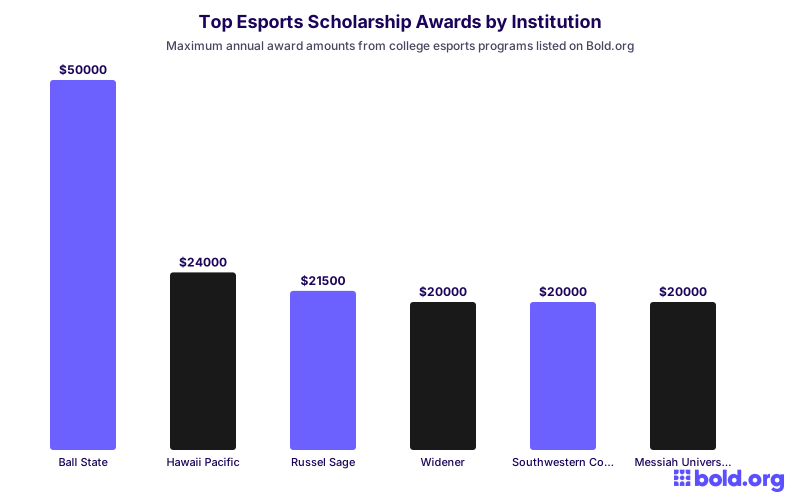
The top awards show the range. Ball State leads at $50,000 over four years (~$12,500/year). Hawaii Pacific University offers up to $24,000. Russel Sage College reaches $21,500. Widener University, Southwestern College, and Messiah University each award up to $20,000. These are varsity-level awards. Most renew each year as long as you keep your GPA up and stay on the team.
Below that tier, community-funded scholarships fill a different role. The platform median of $1,000 is smaller on its own. But these awards stack. They often need no gaming rank — just a strong essay about your ties to esports. Win three or four of them alongside one bigger award and you've built real funding.
The market breaks into two tiers. Varsity scholarships run $8,000 to $50,000 and need competitive skill. Merit-based awards run $1,000 to $5,000 and reward strong writing and clear goals. Smart applicants target both tiers at once. The listings on this page cover both — filtering by award amount helps separate the two.
Who Applies for Esports Scholarships
The applicant profile for sports and esports scholarship seekers on the platform pushes back on several common assumptions (methodology).
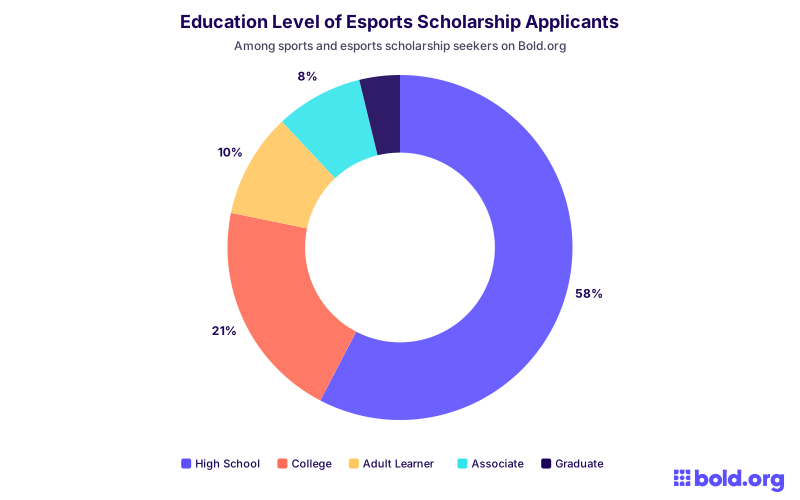
High school students make up the biggest group. At 57.7%, they outnumber every other level — college students (20.6%), adult learners (9.8%), associate-degree seekers (8.2%), and graduate students (3.8%). Esports draws younger applicants than many other scholarship types. This lines up with the age profile of competitive gaming.
Grades are strong across the board. The median GPA is 3.7 across the broader sports and esports applicant pool. More than 65% of seekers hold a GPA above 3.5. The 25th percentile sits at 3.2 and the 75th at 3.9. These figures reflect the full sports and esports category — esports-only GPA patterns may vary slightly — but the overall profile counters the idea that gamers slack off in school.
Low-income students win at higher rates than expected. Among winners in the broader sports and esports scholarship category on Bold.org, 47% come from low-income homes — 7.2 percentage points above their share of finalists (39.8%). First-generation college students account for 29.9% of winners. These findings come from the broader Sports category and may not match esports-specific ratios exactly, but the financial-need signal is strong: providers in this space actively select for students with demonstrated need. The gender breakdown in this category (56.7% women among winners) reflects the Sports pool as a whole, including traditional sports where women's participation rates differ significantly from esports — this figure should not be read as an esports-specific statistic.
These patterns hold strategic value. The pool is less narrow than outsiders assume. Students across income levels, academic backgrounds, and education stages compete for and win esports funding.
The high-school-heavy mix signals timing. Most esports scholarship seekers are juniors or seniors, applying while they still have time to stack awards before enrollment. College students in the pool (20.6%) skew toward freshmen and sophomores looking to add to existing aid packages. Adult learners (9.8%) tend to be returning students or career-changers in game design and digital media — a smaller but growing segment as esports career paths multiply.
What does this mean for you? If you are in high school, you are in the largest group — but not competing only against other high schoolers. Esports scholarships draw from all education levels. The upside: your academic profile (median GPA 3.7) is strong enough to compete across the board. The 65.2% of seekers with GPAs above 3.5 suggests this pool takes school seriously, which is why providers weigh ambition and drive alongside gaming ability.
What Esports Scholarship Providers Evaluate
The criteria data shows what providers actually look for when they pick winners (methodology).
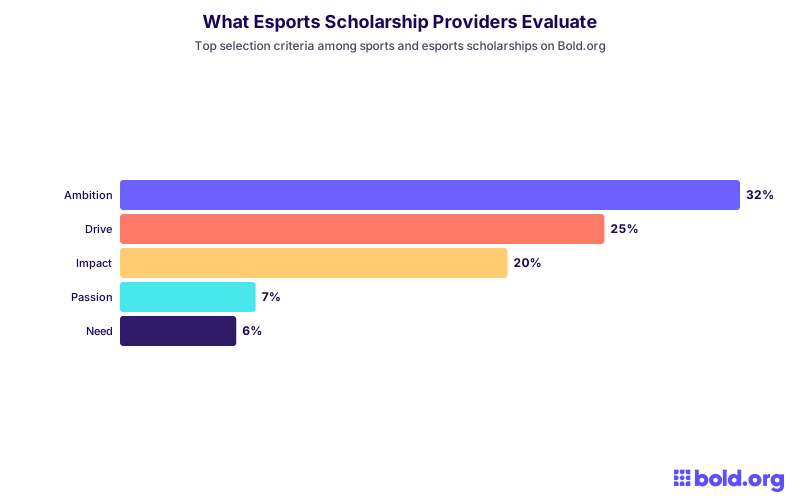
Ambition tops the list at 32%. Providers want to see where gaming fits into a larger plan. A student who ties esports to a career in game design, sports management, media, or tech scores higher than one who treats gaming as a hobby with no next step.
Drive follows at 25%. This tracks work ethic and the ability to push through setbacks. In esports terms: staying consistent through ranked losses, keeping a practice schedule while handling coursework, and showing growth over time.
Impact holds 20% of the weight. Impact means helping others — not just climbing the ladder yourself. Running a tournament, coaching a team, building a gaming community online, or writing guides for newer players all qualify. Esports scholarship providers reward applicants who lift their scene, not just their own rank.
Passion (7%) and need (6%) fill out the picture. Need plays a modest but real role — in line with the 47% of winners who come from low-income backgrounds.
For varsity programs, the bar adds a skill layer. Coaches review gameplay clips, rank history, stats, and team communication. But even coaches weigh grades and character alongside raw mechanics. A high-rank player who can't hold a 2.5 GPA won't keep the seat.
The criteria split also reveals an opportunity. Most applicants focus on proving gaming skill. Fewer invest time in showing ambition and impact — the two criteria that together account for 52% of provider evaluations. An application that leads with a clear career vision and evidence of community building addresses the gap most competitors leave open.
The Application Funnel: From Finalist to Winner
The three-tier funnel for sports and esports scholarships shows what splits finalists from winners at the final stage (methodology).
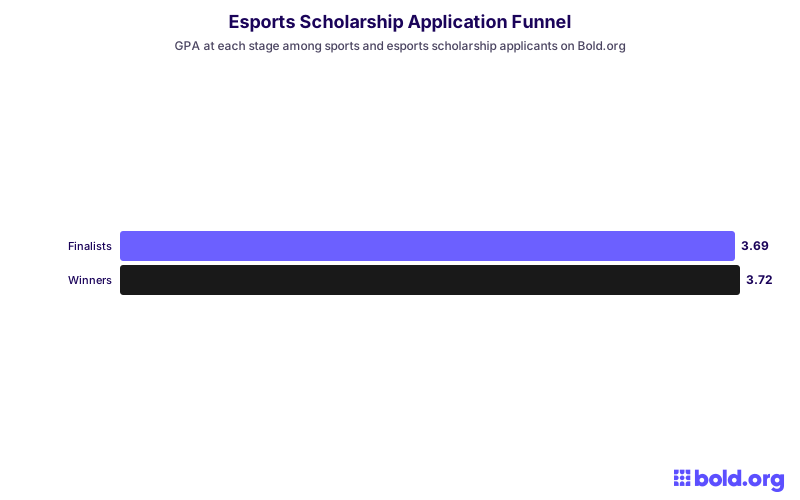
Across the sports and esports category, finalists average a 3.69 GPA. Winners average 3.72 — a gap of just 0.03 points. These funnel figures come from the broader category (esports-specific conversion rates may differ), but the pattern is clear: once you reach the finalist stage, grades are a non-factor. The pick comes down to qualitative fit.
The funnel tells a clearer story through demographics.
Low-income students are well-represented among winners. They make up 39.8% of finalists but 47% of winners — a 7.2 point jump. Low-income representation increases at the final selection stage. If money is tight, describing that context honestly adds to your application rather than detracting from it.
First-gen students gain a small edge. They go from 26.8% of finalists to 29.9% of winners — a 3.1 point lift. The gain is smaller than for low-income applicants but still positive.
Gender stays flat across the broader category. Women are 56.5% of finalists and 56.7% of winners in the Sports scholarship pool. This reflects the broader category (not esports-specific), and the process does not tilt one way at the final stage.
For esports scholarship applicants, the math is clear. A GPA above 3.5 gets you into range. From there, your essay and your story close the deal — not a tenth of a point on your transcript.
How to Strengthen Your Esports Scholarship Application
Across the broader sports and esports category, the GPA gap between applicants and winners is just 0.04 points. While esports-specific figures may vary, the pattern is clear: the real selection happens in the essay, the profile, and the story you tell about gaming.
Frame ambition as a career path, not a pastime. Ambition makes up 32% of what providers weigh. They want students whose gaming connects to a clear direction — game design, esports management, streaming media, data analytics, or computer science. An essay that maps a route from competitive Valorant to a career in UX design or broadcast production hits the mark. "I've loved gaming since I was six" does not.
Show impact beyond your own rank. Impact accounts for 20% of criteria. It also shows up in the funnel — winners are the ones who give back. Coaching a high school esports team, running a community tournament, creating a strategy guide, or streaming tips for newer players all count. The strongest applications cite real results: "I ran a 64-team Rocket League bracket that raised $2,000 for our school's tech fund" beats a vague line about community passion.
Be direct about financial need. Low-income students make up 47% of winners versus 39.8% of finalists — a 7.2 point gap that shows providers selecting for it. If money is a factor, say so plainly. Explain what the scholarship would change. Providers respond to concrete stakes: a tuition gap, a need for better equipment, the difference between staying enrolled and dropping out.
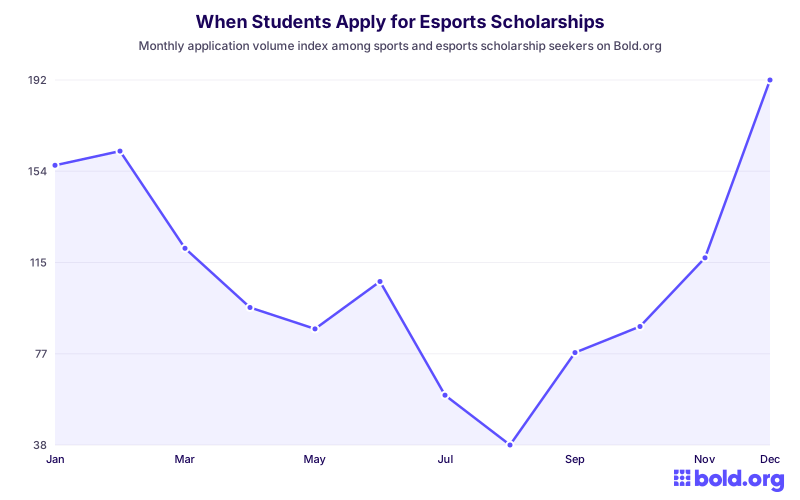
Apply when others don't. Platform data shows volume peaks in December (index 192) and February (162). It drops to 38 in August and 59 in July. Applying in late summer puts your application in front of reviewers when fewer students are competing for the same pool.
What falls flat: essays that treat gaming as pure fun with no link to goals, profiles that skip grades or community work, and applications that ignore the criteria data. The finalist pool averages a 3.69 GPA — providers expect gaming passion paired with academic effort.
One more angle worth noting: content creation as a differentiator. Streaming, YouTube highlights, strategy breakdowns, and tournament recaps are all forms of demonstrated engagement that set an application apart. If you already create gaming content — even casually — reference it. If you don't, starting a simple highlight reel or strategy blog before applying gives you material that most other applicants lack. Providers looking for "impact" respond well to evidence of audience-building, even at a small scale.
Find Esports Scholarships Open Now
The esports scholarship listings above this article are sortable by deadline, amount, and eligibility. Multiple awards close within the next 30 days. Applying to several in one sitting — mixing smaller community-funded awards with bigger institutional ones — is the fastest way to build a real funding stack.
How Esports Scholarships Stack with Other Aid
The average annual tuition for sports and esports scholarship seekers is $24,567. Average aid received is $12,348. That leaves a gap of $12,219 per year (methodology). Among these applicants, 99.7% expect to take on loans. Scholarships cut directly into that debt.
Esports scholarships layer on top of other funding. Varsity awards typically sit alongside federal Pell Grants (for students who qualify), state aid programs, and the school's own merit-based aid. A student on a $20,000 esports scholarship at Messiah University who also gets $6,000 in Pell Grants and $4,000 in state aid is covering most of their costs through grants alone.
Community-funded awards work as a supplement. They don't reduce what the school gives you. A $1,000 platform award stacks on top of whatever aid your school already offers. Win four or five of these and you add $4,000 to $5,000 — enough for textbooks, a housing deposit, or equipment for a full year.
Here is how the stacking math works in practice. Take Ball State University: in-state tuition runs about $22,000 per year. A varsity esports scholarship there can reach $50,000 total over multiple years (roughly $12,500 annually), and students who qualify for the federal Pell Grant (up to $7,395) and Indiana state aid ($4,000–$6,000) can approach full coverage. Even at a school with a smaller esports award — say $8,000, the median external esports scholarship — pairing it with three community-funded awards ($1,000 each) and a $6,000 Pell Grant covers $17,000 of a $24,000 annual cost. That cuts the remaining gap to a single subsidized loan rather than five figures of debt.
The timing of applications matters for stacking too. Platform data shows December and January are peak application months (index 192 and 156). Students who start their scholarship search in fall — applying to community-funded awards in October and November while pursuing varsity tryouts — build their stack over multiple cycles rather than scrambling in one window. Treating scholarship applications like a semester-long project, rather than a one-time event, is what separates students who stack $5,000+ from those who win a single $1,000 award.
No-essay scholarships and easy-to-apply scholarships are the fastest way to add more awards with little effort. Stack those alongside targeted esports scholarship applications for the most efficient funding plan.
For students already on a varsity team, check whether your school's financial aid office treats the esports scholarship as athletic or academic aid. The classification affects how other aid stacks. Athletic aid may reduce need-based packages at some schools, while academic-classified esports awards typically do not. Ask your financial aid office before committing to avoid surprises.
Frequently Asked Questions
Can you get a full ride for esports?
Full-ride esports scholarships exist but they are rare. Ball State University offers up to $50,000 over four years (~$12,500/year). Hawaii Pacific goes up to $24,000. Widener, Southwestern College, and Messiah University each reach $20,000.
Most varsity esports scholarships are partial. They cover 25% to 75% of tuition. According to NACE, the average varsity award is around $4,800 per year. The realistic path to full-ride-level funding is stacking: combine a partial varsity scholarship with academic merit aid, federal grants, and community-funded awards. Platform data shows the median community award in this space is $1,000. Win several of those on top of a varsity package and you approach full coverage.
The biggest variable is game title. Programs for League of Legends, Valorant, and Rocket League tend to offer the largest awards because those titles have the most players, viewers, and school investment. Newer titles rotate in as programs grow — check each school's roster page for the latest list.
One additional path: some schools offer esports-adjacent scholarships through game design, digital media, or sports management departments. These don't require competitive play at all. They fund students who want to work in the esports industry — casting, event management, marketing, or data analytics — rather than on the team. Those programs often stack with varsity awards if you qualify for both.
What games qualify for esports scholarships?
League of Legends, Valorant, Rocket League, Overwatch 2, Super Smash Bros. Ultimate, Fortnite, Apex Legends, and Counter-Strike 2 are the most common across varsity programs. Some schools also field teams for Hearthstone, FIFA/EA FC, Madden, Call of Duty, Marvel Rivals, and Street Fighter 6. Titles shift as games rise and fall in popularity — always check the school's esports page for current rosters. Merit-based esports scholarships do not restrict by game title. If your essay connects any gaming experience to your goals, you qualify regardless of which game you play.
How many colleges offer esports scholarships?
NACE counts 175+ schools with varsity or varsity-level programs as of 2025. That number has grown 15% to 20% each year since Robert Morris started the first program in 2014. Beyond NACE members, many more schools run club-level teams that may offer smaller stipends or gear funding without formal varsity status.
The trend is still going up. UCI built a full esports arena. Ball State invested in a competition facility. SNHU, Messiah University, and Southwestern College all have structured programs with coaches and scholarship budgets. Community colleges are also joining in — several now offer esports-related funding through gaming clubs and digital media departments.
How much are esports scholarships worth?
The range is wide. Platform data shows the median community-funded esports award is $1,000, with an average of $1,712. External institutional scholarships listed on this page average $11,522 with a median of $8,000. The top awards reach $50,000 (Ball State), $24,000 (Hawaii Pacific), and $20,000+ at Widener, Southwestern College, and Messiah University.
NACE reports the average varsity award is about $4,800 per year. Non-varsity merit-based awards usually fall between $500 and $5,000.
Do you need a high rank to qualify for esports scholarships?
For merit-based awards, no. Criteria data shows ambition (32%), drive (25%), and impact (20%) outrank competitive gaming skill by a wide margin. An applicant with a strong essay about how esports shaped their career goals and community work can win without a top-tier rank.
Varsity programs are different. Coaches review gameplay footage, rank history, and in-game stats. But even varsity recruiting weighs teamwork, communication, and coachability alongside raw mechanics. A slightly lower-ranked player who calls out well and adapts fast can beat a higher-ranked player who doesn't work with the team.
Two clear paths exist. If rank is your strength, go after varsity spots. If writing and community work are your edge, merit-based and community-funded awards are the better fit. The data shows both paths lead to real money.
There is also a third group: students who combine both. A student who competes at a varsity level and creates content or coaches younger players has the strongest possible profile. They qualify for varsity recruitment and rank highest on the ambition/impact criteria that dominate merit-based awards. If that describes you, apply to both types and use your competitive experience as proof of drive in your merit-based essays.
Methodology
This analysis draws on two sets of data.
Platform data covers applicant profiles, scholarship applications, and award results for sports and esports scholarships on Bold.org. The data uses the broader "Sports" scholarship category, which includes esports alongside traditional sports scholarships. GPA figures (median 3.7, based on 6M+ applicant records), demographic splits, and timing patterns come from this broader group. Finalist funnel data (533 finalists, 134 winners) is specific to scholarships within this category. Winner demographics (first-gen 29.9%, low-income 47%, female 56.7%) are based on 134 award recipients.
External scholarship data focuses on esports and gaming only. The external database includes 78 esports-related scholarships from college and institutional providers. Award figures (average $11,522, median $8,000, range $2,000–$50,000) come from what providers report. School-level details draw on public info from NACE, UCI, Ball State, Robert Morris, SNHU, Messiah University, Southwestern College, Hawaii Pacific, Widener, and Russel Sage College.
Industry context comes from the National Association of Collegiate Esports (NACE) for program counts and varsity data.
All figures are based on data as of the analysis date. Sample sizes appear where relevant in the article. Timing data uses month names without years to show recurring seasonal patterns rather than a single snapshot.
Last updated: March 2026