Nurse practitioner, physician assistant, or registered nursing program
Education Level:
Field of Study:
Undergraduate or graduate student
Nurse practitioner, physician assistant, or registered nursing program
Since 2011, Skin, Bones, Hearts & Private Parts has provided continuing medical education (CME) to more than 21,859 nurse practitioners, physician assistants, registered nurses, and physicians across the country.
The organization focuses on areas such as Cardiology/Emergency Medicine, Diabetes, Dermatology, Orthopedics, Prescribing/Pain Management, and Women’s Health. It offers in-person, virtual, and on-demand learning opportunities.
This scholarship aims to support adult learners who are pursuing higher education in nursing fields.
Any undergraduate or graduate student pursuing a Nurse Practitioner (NP), Physician Assistant (PA), or Registered Nurse (RN) program at an accredited university in the United States may apply for this scholarship opportunity.
To apply, tell us about your motivation to pursue higher education and how this scholarship will help you.
Selection Criteria:
Ambition, Drive, Impact
Essay Topic Requirements
To apply, please provide the following information:
1. Your motivation for pursuing advanced education.
My motivation to pursue higher education comes from both personal responsibility and the experiences that shaped how I understand patient care. After my mother passed away during my adolescence, I had to grow up quickly. I learned how to take on responsibility, support my family, and continue moving forward without much guidance. That period of my life taught me discipline, but more importantly, it showed me how important it is to have someone who can step in during moments of uncertainty. That is the kind of provider I want to become.
As I moved forward, I began working in healthcare and quickly realized that my motivation extended beyond just helping people. I wanted to understand medicine at a deeper level. Working as a medical assistant in dermatology, I assisted with procedures such as biopsies and excisions, where attention to detail could directly impact early diagnosis and patient outcomes. In orthopedics, I worked with patients dealing with chronic pain and mobility issues, which showed me how physical limitations can affect daily life. Each role exposed me to different areas of medicine and reinforced the importance of having a broad, adaptable skill set.
My experience as an EMT further shaped this perspective. I encountered patients in urgent situations where quick thinking and clear communication were essential. In the pharmacy, I saw the challenges patients face even after leaving the clinic, especially when it comes to understanding and accessing medications. These experiences showed me that patient care does not exist in isolation. It requires a provider who can connect different aspects of medicine and continue learning over time.
This understanding led me to pursue a career as a physician assistant. I will be starting physician assistant school this May in Jacksonville, where I will continue building the clinical foundation needed to care for patients across a variety of settings. I am drawn to the profession because it emphasizes both adaptability and lifelong learning, allowing providers to grow alongside the needs of their patients.
This scholarship would directly support my ability to complete my education with less financial strain. I will be relying on student loans to cover both tuition and living expenses, and while I am prepared for that responsibility, additional support would help reduce the long term burden that comes with it. It would allow me to focus more fully on my training and developing my clinical skills without constant financial pressure.
Pursuing higher education is not just about earning a degree. It is about becoming a provider who is prepared, adaptable, and committed to continued growth. This scholarship would help me take that next step and continue building toward a career centered on meaningful patient care.
My drive to seek higher education in Health Management stems from a wish to turn the systemic breakdowns I have endured into a framework for comprehensive recovery. Having been raised in a low-income family, I witnessed directly how poverty serves as a barrier to accessing quality care. This truth was starkly emphasized when I lost my father to gun violence, an occurrence that broke my family's stability and revealed the absence of community-oriented trauma assistance in disadvantaged regions. Following this loss, I grappled with alcohol dependence, a fight that almost jeopardized my future but ultimately provided me with a profound sense of purpose. I noticed that while physicians care for the patient, managers oversee the system. I am seeking this degree because I aim to be the architect who fixes that system, guaranteeing that a patient’s scarce energy is directed towards recovery instead of bureaucracy.
My education has equipped me with the technical skills to connect business logic with human empathy. I am more than a student; I am a guardian of human dignity. I intend to guide healthcare organizations that emphasize operational empathy by applying data-driven approaches such as LEAN Six Sigma to reduce bureaucratic waste that overwhelms frontline staff. Being a first-generation student has instilled in me the resilience to overcome both academic and personal obstacles. I plan to utilize my career to guarantee that a family's zip code or financial situation does not determine their health results. My dedication to this journey is additionally demonstrated through my volunteer role as a Health Navigator, where I actively assist marginalized individuals in overcoming administrative obstacles to obtain the care they need.
This scholarship will aid me by acting as an essential catalyst for my academic and professional goals. Seeking an advanced degree in Health Management demands a strong dedication to studies in healthcare law, policy, and informatics. This scholarship's financial aid would relieve the urgent burden of tuition and fees, enabling me to concentrate more on valuable internships and targeted certifications instead of part-time jobs. It is an investment in a leader who recognizes the human impact behind a spreadsheet.
Additionally, these resources will support my quest for the LEAN Six Sigma Green Belt certification in conjunction with my degree. This certification will offer the technical basis needed to execute the systemic transformations I foresee, like minimizing patient wait times and enhancing resource distribution in poorly funded urban clinics. This scholarship removes financial obstacles, allowing me to fully focus on mastering the intricacies of healthcare administration.
Receiving this scholarship will ultimately equip me with the resources needed to enhance the patient experience after graduation. It will offer the tools necessary to support my shift from a system student to a leader of its advancement. With this assistance, I can focus on creating a healthcare environment that is resilient, transparent, and compassionate like the individuals it serves, transforming my experience of survival into a legacy of systemic fairness.
At fifteen, I suffered a severe shoulder dislocation during a basketball game. I was in excruciating pain as multiple manual attempts were made to reduce the joint without adequate analgesia. Because of language barriers and unfamiliarity with the healthcare system, my parents were unable to advocate for me. I felt helpless and afraid at that time.
After several unsuccessful attempts, a certified registered nurse anesthetist (CRNA) stepped in. I did not know her role at the time, but I remember exactly how she made me feel. She brought a sense of safety and relief in a moment that had felt chaotic and overwhelming. What I did not realize back then, but understand now, is that this was my first encounter with a CRNA, and it became the start of my journey.
My background as a low income refugee immigrant has also shaped who I am. I had to learn a new language while facing financial hardship, housing instability, and navigating unfamiliar systems. I was at risk of falling through the cracks, especially within the public school system. I did not receive formal education until right before high school and was significantly behind academically. Instead of allowing that setback to define me, I used it as motivation to work harder. I sought help from a teacher who worked with me daily to rebuild my foundation and close those gaps. Through that process, I learned that I am not afraid to start behind and work hard to earn my place. Through persistence and discipline, I graduated as valedictorian and earned a scholarship to attend UCLA.
At UCLA, my degree in Sociology helped me develop a deeper understanding of the social determinants of health and how they affect patient outcomes. This perspective strengthened my awareness and empathy for underserved populations and guided my decision to pursue nursing. I went on to earn my Master of Science in Nursing and now work in the pediatric intensive care unit. As a pediatric ICU nurse, I get to be the person who steps into someone’s worst moment and helps them feel safe. I see how vulnerable patients are and how important it is to not only excel clinically, but also provide emotional support to both patients and their families. These experiences have strengthened my desire to advance my training in anesthesia, where I can have an even greater impact. As a future pediatric CRNA, I will get to protect children from both the physical and emotional trauma of surgery, and that gives me a deep sense of purpose.
This scholarship will support my education in the UC Davis nurse anesthesia program and allow me to continue building the clinical skills needed to serve at a higher level. My long term goal is to work in critically underserved and rural communities, where access to anesthesia care is limited. I grew up in a rural village and have seen how shortages in healthcare providers can delay or prevent life saving care. I hope to expand access to safe anesthesia care for pediatric patients in these areas. I hope to eventually establish an organization of providers who travel annually to rural regions of India to deliver pediatric surgical and anesthesia care. I will continue to grow into a provider who contributes to health equity and expanding access.
What makes my journey unique is not just the challenges I have faced to get me to this point in my career, but how those experiences have shaped my purpose to give back and serve.
My journey toward nursing began in the NICU when my twin daughters were born prematurely at just 25 weeks. For months, I watched nurses provide extraordinary care, performing EKGs, managing fragile vital signs, and offering unwavering compassion. Despite my fear and uncertainty, their skill and dedication gave my children the chance to survive and thrive. That experience left a permanent mark on me and planted the seed for my calling: to one day provide that same level of care for others. For more than 18 years, I have worked in healthcare across inpatient and outpatient settings in top Boston hospitals. My professional path has been in management and operations, but the most meaningful moments have always been when I directly supported patients and families. Time and again, colleagues and mentors encouraged me to pursue nursing, recognizing the compassion and care that I naturally brought to every interaction. During the COVID-19 pandemic, I gained invaluable knowledge and training, learning to adapt under pressure and reaffirming my commitment to serve patients during their most vulnerable times.
As a Haitian immigrant, husband, and father, my decision to enter nursing carries an even greater purpose. I am the first male in my immediate family to graduate from college, and I want to be a role model for my siblings, cousins, and community. Too often, men, especially men of color, are underrepresented in nursing. By becoming a nurse, I aim not only to deliver exceptional care but also to show others that it is never too late to follow your calling and that representation in healthcare matters. My daughters, now in college, view me as their role model, and I want to continue inspiring them through my dedication and perseverance. My vision as a nurse extends beyond the bedside. I want to make an impact on individual patients by providing compassionate, evidence-based care, but also on a larger scale by engaging in community outreach and global health initiatives. I hope to join programs that deliver care to underserved populations, both locally and abroad, ensuring that people without access to healthcare still receive dignity, compassion, and support. Over time, I also want to mentor future nurses, sharing both my personal journey and professional experience to encourage others to step into this vital role. In becoming a nurse, I am uniting my personal story, professional background, and lifelong commitment to service. My goal is to leave every patient I encounter with the same sense of hope, comfort, and care that the NICU nurses gave my family. To me, nursing is not just a career; it is the fulfillment of my purpose and the way I want to make a lasting impact on individuals, families, and communities. My goal is to ensure that every patient I encounter feels a profound sense of hope, comfort, and care, reflecting the support my family received from compassionate NICU nurses during a challenging time. Their kindness shaped my understanding of the vital role healthcare professionals play in the lives of patients and families.
How it works
Bold.org is Built to Make Scholarships Feel Possible
Step 01
Start with your story
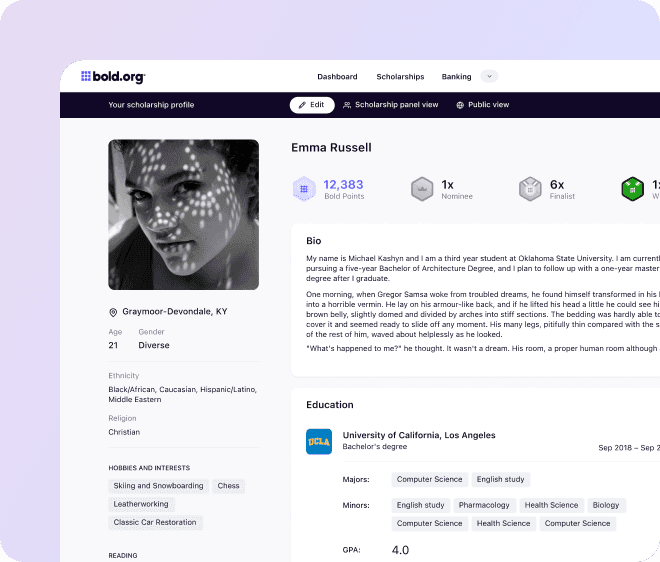
Bold.org helps students show donors who they are beyond a transcript.
Step 02
Where scholarships are awarded
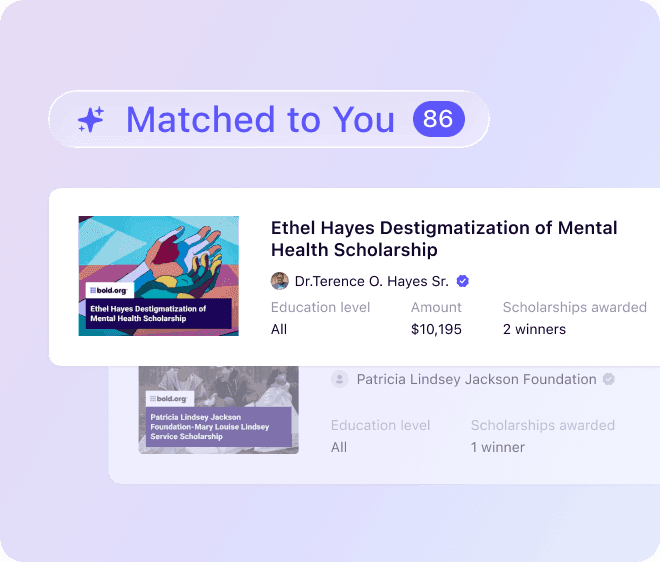
Every scholarship is funded by donors and managed directly on Bold.org.
Step 03
Fund your future
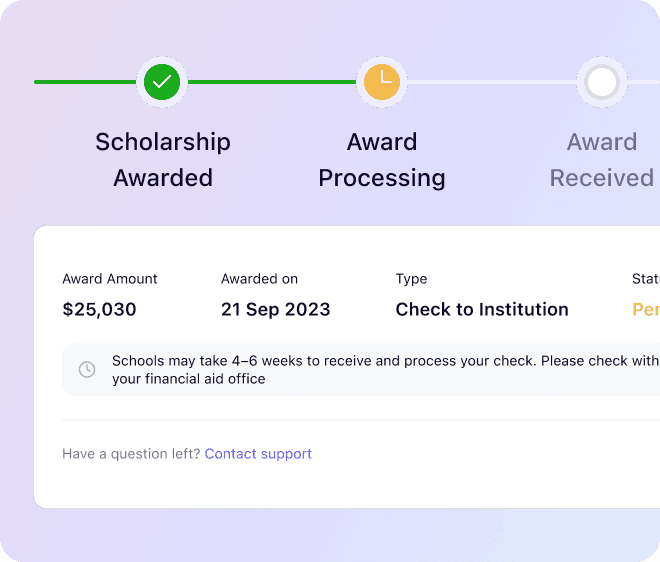
Scholarship dollars are disbursed through Bold.org to help students pay for school.
FAQ
When is the scholarship application deadline?
The application deadline is Mar 31, 2027. Winners will be announced on Apr 30, 2027.
How will scholarship application information be used?
Your privacy is a top priority on the Bold.org platform, and you can find our privacy policy in full here. You may opt out of communications from Bold.org at any time, and unless we’ve first notified you and gotten your consent, you’ll never receive communication from any third parties related to personal information you give us.
What is the scholarship award?
Award amounts per winner are designated by the donor. Check the award amount for a detailed breakdown.
When will the scholarship winner be chosen? How will they be notified?
The winner will be publicly announced on Apr 30, 2027. Prior to the announcement date, we may contact finalists with additional questions about their application. We will work with donors to review all applications according to the scholarship criteria. Winners will be chosen based on the merit of their application.
How will the scholarship award be paid?
Award checks will be sent to the financial aid office of the winner's academic institution in their name to be applied to their tuition, and in the name of their institution (depending on the school's requirements). If the award is for a qualified educational non-tuition expense, we will work with the winner directly to distribute the award and make sure it goes towards qualified expenses.
How will my scholarship application be verified?
Before we award the scholarship, the winner will be required to confirm their academic enrollment status. Depending on the circumstances, verification of Student ID and/or their most recent transcript will be required.
How should I get in touch with questions?
If you have any questions about this scholarship or the Bold.org platform, just email contact@bold.org and we’ll get back to you as quickly as we can.
Does the scholarship have terms and conditions?
Yes. The terms and conditions for this scholarship can be found here.