Joe Gilroy "Plan Your Work, Work Your Plan" Scholarship


Joe Gilroy was an incredible grandfather as well as a skilled entrepreneur and a source of inspiration in the lives of many.
Joe owned and ran a small, niche manufacturing company for specific machine parts. Every single day, he kept an index note and pen in his shirt pocket which held his to-do list for the day. He was highly motivated and lived by the motto of "Plan Your Work, Work Your Plan."
This scholarship aims to support any student who has dreams and a detailed plan on how to pursue and achieve them.
Anybody who is pursuing further education of some kind may apply for this scholarship if they have specific goals and experience in the field they’re pursuing. Eligible candidates includes those pursuing trade school, certifications or graduates who are trying to pay down student loan debt.
To apply, tell us about your goals and your plans for achieving them, including as many details as possible.
Please describe your goals and the plans you have to reach these goals. Please include details, including the resources necessary, a budget, and thorough thought of all the angles. Resources and timing are important in any plan, as well as consideration of all paths for success.
Explore All Kinds of Scholarships for All Kinds of Students
Winners and Finalists
October 2026


March 2025


Winning Application

How it works
Bold.org is Built to Make Scholarships Feel Possible
Step 01
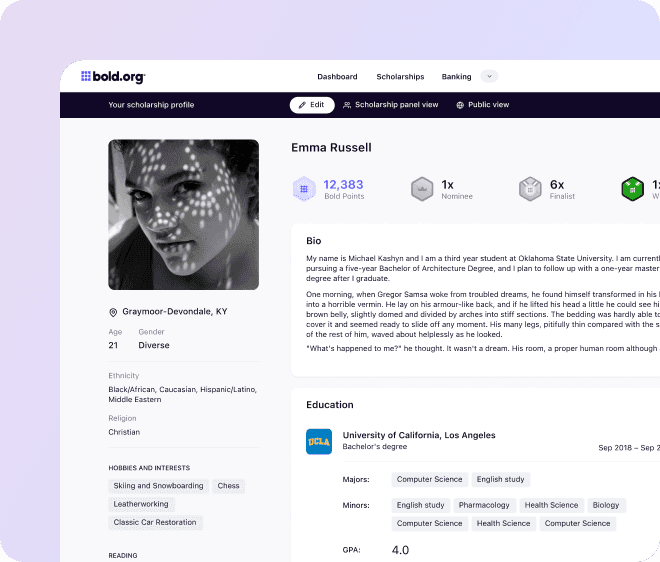
Start with your story
Bold.org helps students show donors who they are beyond a transcript.
Step 02
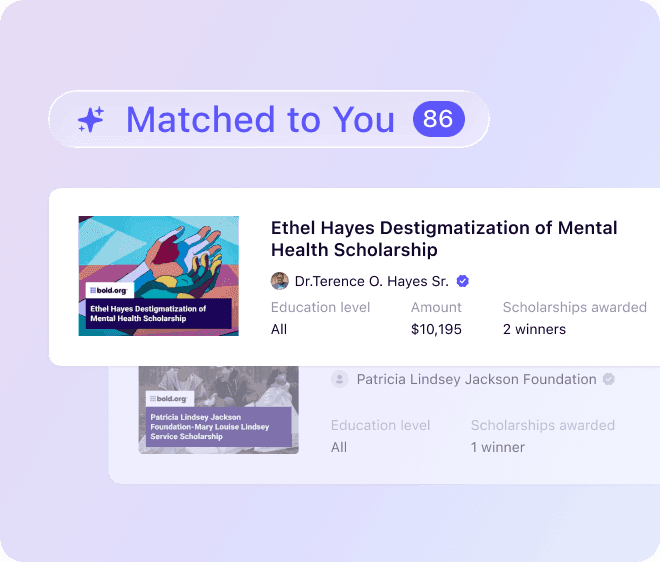
Where scholarships are awarded
Every scholarship is funded by donors and managed directly on Bold.org.
Step 03
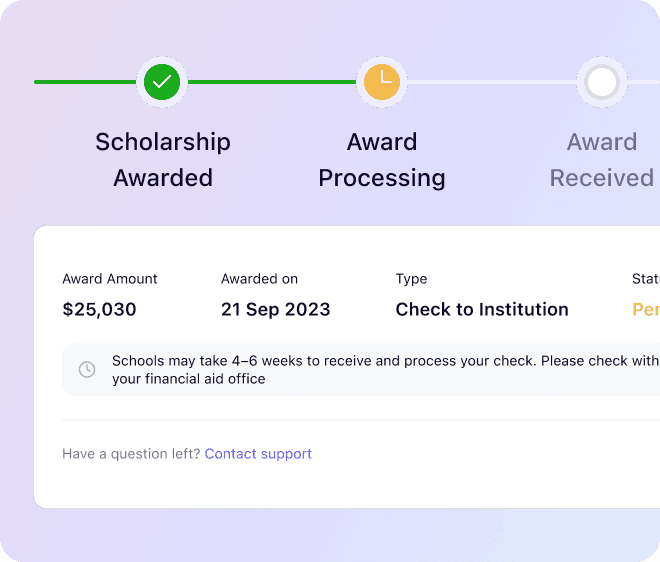
Fund your future
Scholarship dollars are disbursed through Bold.org to help students pay for school.
FAQ
The application deadline is Aug 30, 2026. Winners will be announced on Oct 1, 2026.
Your privacy is a top priority on the Bold.org platform, and you can find our privacy policy in full here. You may opt out of communications from Bold.org at any time, and unless we’ve first notified you and gotten your consent, you’ll never receive communication from any third parties related to personal information you give us.
Award amounts per winner are designated by the donor. Check the award amount for a detailed breakdown.
The winner will be publicly announced on Oct 1, 2026. Prior to the announcement date, we may contact finalists with additional questions about their application. We will work with donors to review all applications according to the scholarship criteria. Winners will be chosen based on the merit of their application.
Award checks will be sent to the financial aid office of the winner's academic institution or future academic institution in their name to be applied to their tuition, and in the name of their institution (depending on the school's requirements). If the award is for a qualified educational non-tuition expense, we will work with the winner directly to distribute the award and make sure it goes towards qualified expenses.
Before we award the scholarship, the winner will be required to confirm their academic enrollment status. Depending on the circumstances, verification of Student ID and/or their most recent transcript will be required.
If you have any questions about this scholarship or the Bold.org platform, just email contact@bold.org and we’ll get back to you as quickly as we can.
Yes. The terms and conditions for this scholarship can be found here.
