Top Swimming Scholarships to Apply to in 2026
The Best Swimming Scholarships with Upcoming Deadlines
100% Free.

David G. Sutton Memorial Scholarship
Funded byStacy MenschThis scholarship aims to honor the life of David G. Sutton by supporting athletes who are pursuing higher education.- Education Level: High school student
- Background: Athlete
- State: Pennsylvania
$500Deadline:Nov 30, 2026One Click Apply1
Special Delivery of Dreams Scholarship
Funded byRocky Mountain Philatelic LibraryThis scholarship seeks to give back to students who collect stamps so that they can afford to pursue their education dreams and career goals.- Interest/Hobby: Stamp collecting
- Education Level: Pursuing an associate degree, bachelors degree, graduate degree, or trade school certificate
$15,000Deadline:Mar 01, 2027One Click Apply2
Coach Ray Memorial Athletic Scholarship
Funded byDerek JindraThis scholarship aims to honor the legacy of Coach Ray by supporting deserving athletes who excel in the classroom and in athletics.- Education Level: High school senior
- Sport: Basketball
- Gender: Female
- State: California
- GPA: 2.8 or higher
$500Deadline:Mar 09, 2027One Click Apply3
Peter T. Buecher Memorial Scholarship
Funded bySamantha NortonThis scholarship supports Minnesota high school seniors and undergraduate students who participate in swimming, diving, and/or synchronized swimming.- Education Level: High school senior or undergraduate
- State: MN
- Sport: Swimming, diving, and/or synchronized swimming
$1,000Deadline:Apr 30, 2027One Click Apply4
Derk Golden Memorial Scholarship
Funded byShari GoldenThis scholarship seeks to honor the life of Derk Golden by supporting athletes in their pursuit of higher education.- Education Level: High school senior or undergraduate student
- GPA: 3.0 or higher
- Background: Athlete
$1,000Scholarship is awarded to
1 winnerDeadline:Mar 15, 2024One Click Apply5
Michael J. L. Suojanen Memorial Athletics Scholarship
Funded byJonathan FisherThis scholarship aims to honor the memory of Michael J. L. Suojanen by supporting high school seniors in Pennsylvania who play sports.- Education Level: Must be a high school senior
- State: Must live in Pennsylvania
- Extracurriculars: Must play a sport
$1,200Scholarship is awarded to
1 winnerDeadline:Jan 26, 2022One Click Apply6
Sports Lover Scholarship
Funded byThriveThis scholarship will support a student who is pursuing a career in an athletics field.- Education Level: High school senior, undergraduate, or graduate
- Citizenship: U.S. citizen or permanent legal resident
- Major/Career: Athletics/sports related field
$500Scholarship is awarded to
1 winnerDeadline:Jul 31, 2023One Click Apply7
GIST College Sports Scholarship
Funded byBold.orgThis scholarship is for students passionate about college sports media and leveling the playing field for women in sports.All students are eligible$1,000Scholarship is awarded to
1 winnerDeadline:Jun 01, 2024One Click Apply8
Anthony Bruder Memorial Scholarship
Funded byCourtney VieraThe scholarship aims to support students who, like Anthony, display a dedication to various interests while striving for excellence in sports and academics.- GPA: 3.0
- Extracurriculars: Sports
- Education Level: High school senior
$600Scholarship is awarded to
1 winnerDeadline:Apr 18, 2025One Click Apply9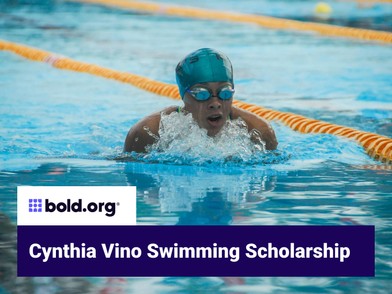
Cynthia Vino Swimming Scholarship
Funded byLisa VinoThis scholarship seeks to honor the legacy of Cynthia Vino by supporting students in Connecticut who share her passion for swimming and her love for community.- Education Level: High school senior
- Sport: Swimming
- State: Connecticut
$500Scholarship is awarded to
1 winnerDeadline:Mar 27, 2026One Click Apply10


How it works
Bold.org is Built to Make Scholarships Feel Possible
Step 01
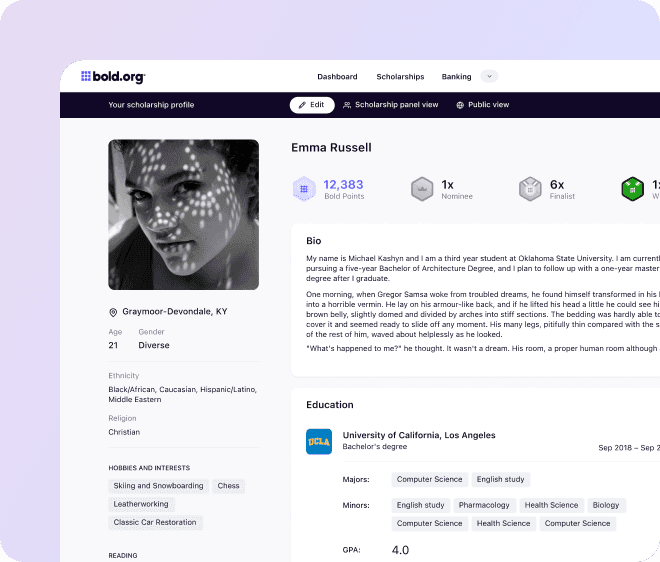
Start with your story
Bold.org helps students show donors who they are beyond a transcript.
Step 02
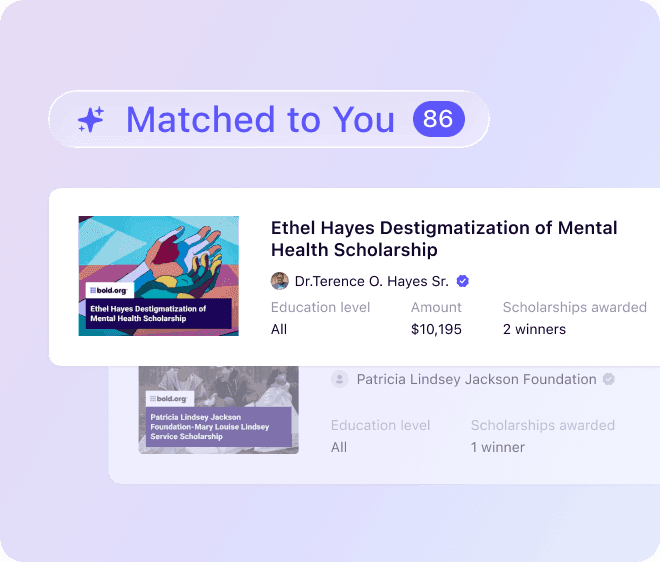
Where scholarships are awarded
Every scholarship is funded by donors and managed directly on Bold.org.
Step 03
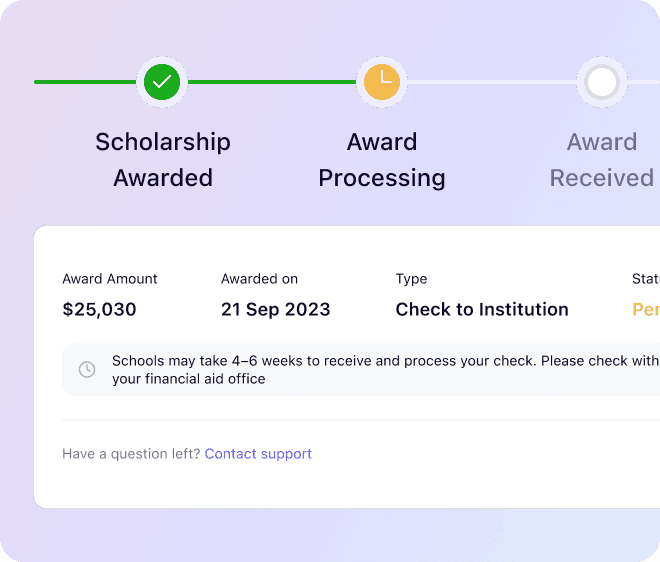
Fund your future
Scholarship dollars are disbursed through Bold.org to help students pay for school.
Swimming Scholarships: NCAA Limits, Merit-Based Options, and What Winners Look Like
Most guides on swimming scholarships assume one thing: you are being recruited by a college coach. The landscape changed in 2025. Under the House v. NCAA settlement, the NCAA eliminated sport-specific scholarship caps for D1 swimming. The old limits — 9.9 scholarships for men's teams and 14 for women's — are gone. D1 programs now operate under a 30-athlete roster limit and can distribute scholarships flexibly across the entire roster. Some conferences have adopted lower limits — the SEC set men's swimming at 22, for example — so roster caps vary by conference. No new NCAA funding came with the change — schools fund these expanded packages from their own budgets. One practical impact: many walk-on spots are disappearing as teams formalize their rosters to fit the caps, which makes merit-based scholarships even more relevant for swimmers who fall outside the recruiting pipeline. Bold.org's data on athletic scholarship seekers tells a wider story — merit-based and need-based swimming scholarships go well past the recruiting pipeline (methodology).
Among athletic scholarship seekers on the platform, the median GPA is 3.7 and 57.7% are high school students. Across the broader Athletics category on Bold.org, winner and applicant GPAs both sit at 3.67 — showing that grades alone don't separate winners. Low-income students outperform at the winner stage by 6.3 points over finalists. These patterns reflect the Athletics category broadly (swimming-specific ratios may vary), but the signal is consistent: need and personal story carry real weight.
This article pairs proprietary data on athletic scholarship seekers with NCAA rules, USA Swimming Foundation context, and landscape data to map what swimming scholarships look like, who wins them, and how to build a funding plan — whether or not a coach is calling.
What Defines a Swimming Scholarship
The term "swimming scholarship" covers three distinct funding paths, and each works differently.
NCAA athletic scholarships are tied to recruiting. As of the 2025-26 academic year, D1 swimming programs that opted into the House v. NCAA settlement operate under a 30-athlete roster limit with no fixed scholarship caps. Coaches can now distribute full or partial scholarships to any rostered athlete at their discretion. Previously, D1 women's swimming had 14 scholarship equivalencies and D1 men's swimming had 9.9 equivalencies, both split across the roster. The new system gives coaches more flexibility — but schools that haven't increased their budgets may still offer a similar total dollar amount, spread across more athletes. D2 continues to use an equivalency model with lower limits. D3 offers zero athletic scholarships.
The NAIA runs outside the NCAA system. NAIA schools offer swimming scholarships that blend athletic merit with need. The total pool is smaller but less known — meaning less competition for spots. The NJCAA governs community college athletics, where swimmers can compete for two years and then transfer to a four-year program with a recruiting resume and academic record that open more scholarship doors. California's CCCAA offers a similar pathway at California community colleges.
Merit-based swimming scholarships treat the sport as proof of discipline and drive — but don't need a recruiting offer. The College Swimming & Diving Coaches Association of America (CSCAA) and the USA Swimming Foundation give awards that weigh swimming alongside grades and personal qualities. Club, high school, and masters swimmers all qualify.
Need-based and essay-based swimming scholarships don't evaluate times at all. According to platform data on selection criteria for the Athletics category, merit-based awards prioritize ambition (33%), profile strength (25%), and financial need (23%). A swimmer applying here is judged on their story and finances, not their 100-meter freestyle split.
Swimmers who fund college best combine all three paths. A D2 partial athletic scholarship plus a CSCAA merit award plus a need-based award can rival a D1 full ride — without D1-level times.
The Swimming Scholarship Landscape
What swimming scholarships are out there, and what do they pay? Bold.org data shows the merit-based side of the market (methodology).
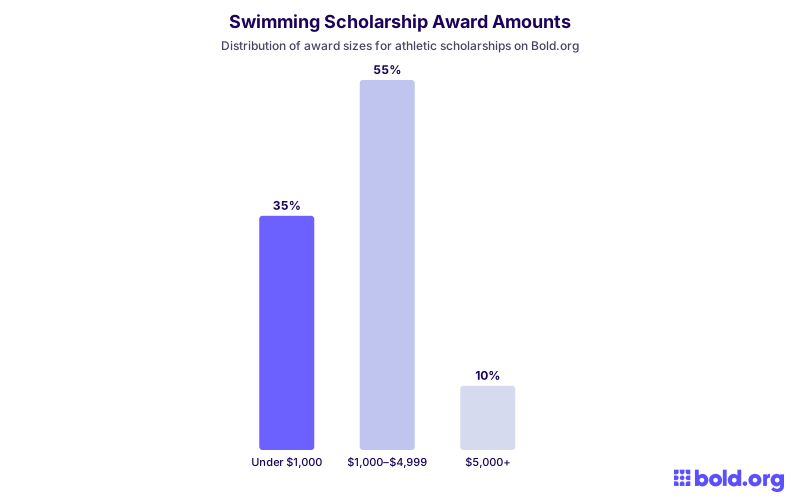
Per platform data, the median award is $1,000 and the average is $2,067. The middle bracket leads: 55.3% of awards land between $1,000 and $4,999. About 35% come in under $1,000, and 9.6% top $5,000.
Swimming-specific scholarships listed on the platform average $2,720, with awards up to $7,000. The broader athletics category lists 406 external entries averaging $3,052, with the largest at $45,350.
Key providers in the swimming scholarships space differ by what they evaluate:
- CSCAA — Runs the Scholar All-America program, recognizing college swimmers with a 3.5+ GPA. Awards go to current collegiate swimmers regardless of scholarship status, making this accessible to D3 and walk-on athletes.
- USA Swimming Foundation — Funds athlete development grants and programs for competitive swimmers. Awards tend to favor USA Swimming members with established competitive records.
- NCSA College Recruiting — Connects high school swimmers with college programs and provides recruiting guidance. Not a direct scholarship provider, but the recruiting pathway it enables leads to institutional athletic aid.
- SwimSwam — Publishes scholarship directories, program rankings, and recruiting news. A research resource rather than an award provider.
The $1,000–$4,999 bracket is the sweet spot for merit-based awards. A swimmer who wins three awards in this range covers more tuition than one chasing a single $10,000 long shot. The swimming scholarship landscape rewards volume, not a single big bet.
Top Colleges for Swimming Scholarships
Choosing where to swim depends on your competitive level, academic goals, and funding needs. Here is how the college swimming landscape breaks down by division, followed by standout programs.
| Division | Men's Programs | Women's Programs | Scholarship Model |
|---|---|---|---|
| D1 | ~130 | ~190 | Roster cap 30, flexible distribution (post-settlement) |
| D2 | ~50 | ~65 | Equivalency model, lower limits |
| D3 | ~200 | ~240 | No athletic scholarships |
| NAIA | ~30 | ~40 | Flexible athletic + academic aid |
| NJCAA | ~40 | ~50 | Two-year pathway with transfer opportunity |
D1 powerhouses — Stanford, Cal, Texas, Florida, and Virginia consistently rank among the top programs. Under the new settlement rules, these well-funded programs can now distribute scholarships flexibly across a 30-athlete roster — potentially offering more full-ride packages than under the old caps. They recruit nationally and internationally. Competitive times are a prerequisite: D1 men's programs typically look for 100 freestyle times under 46 seconds, while women's programs target sub-52 seconds — though standards vary by program strength and event.
D1 mid-major programs — Schools like NC State, Louisville, Wisconsin, and Auburn field strong teams with less recruiting pressure than the elite programs. Scholarship availability can be higher relative to talent because these programs attract less attention from top-tier recruits. For a swimmer whose times are competitive but not elite, mid-major D1 programs often offer better financial packages per swimmer.
D2 sweet spot — D2 programs at schools like Queens University of Charlotte, Drury University, and Nova Southeastern offer athletic aid on an equivalency basis. D2 is where partial athletic scholarships combine most effectively with academic and need-based aid. A D2 swimmer receiving 40% athletic aid plus a $5,000 academic merit scholarship plus a $3,000 need-based award can approach full coverage.
D3 academic route — Johns Hopkins, Emory, Kenyon, and Denison are perennial D3 swimming powers. These schools offer zero athletic scholarships — but their academic and need-based aid can be generous. A Kenyon swimmer with a 3.8 GPA might receive a $30,000+ institutional merit package. D3 swimmers fund the rest through external merit-based awards like those on this page.
NAIA programs — Keiser University, Olivet Nazarene, and Lindsey Wilson field competitive swim teams with flexible aid packages that combine athletic and academic merit. NAIA schools are less well-known, which means less competition for roster spots and scholarship dollars.
Who Applies for Swimming Scholarships
Platform data on athletic scholarship seekers — reflecting the broader Athletics category, not swimming-specific applicants — shows a profile tied closely to the NCAA recruiting timeline (methodology).
Per this broader category data, 57.7% are high school students — the biggest group. College students make up 20.6%, adult learners 9.8%, associate degree students 8.2%, and grad students 3.8%. The high school share fits: most swimmers commit during junior or senior year, and swimming scholarship searching peaks in the same window.
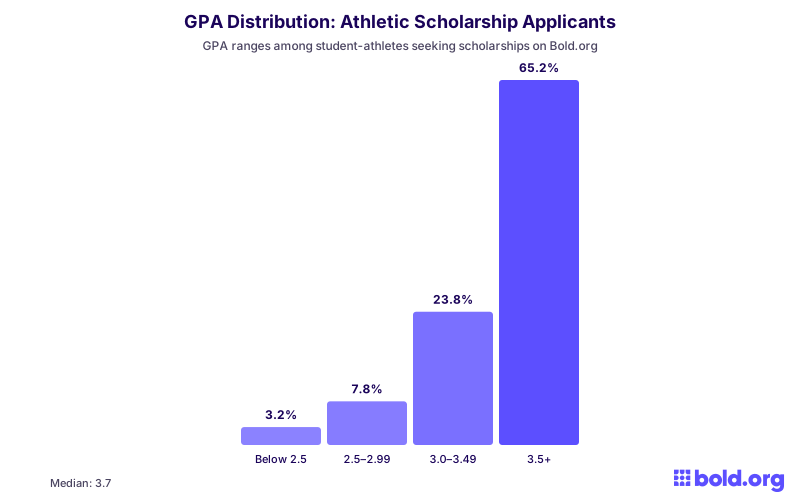
Grades are strong across the board. The median GPA is 3.7, and 65.2% carry a GPA above 3.5, per platform data. Another 23.8% fall in the 3.0–3.49 range. These student-athletes hold up in the classroom while managing 5:00 a.m. practices, dual meets, and travel.
Among winners, 55.8% are female and 44.2% male, per platform data for the broader Athletics category. Women have historically had more NCAA swimming scholarship slots — 14 equivalencies versus 9.9 for men under the old rules. While the House v. NCAA settlement equalized roster caps at 30 per gender, Title IX continues to shape funding decisions, and decades of greater women's scholarship availability have built a deeper pipeline of female applicants into the merit-based space as well.
The Application Funnel: From Applicant to Winner
The three-tier funnel for athletic scholarships on Bold.org — based on the broader Athletics category, not swimming-only applicants — shows what separates finalists from winners (methodology).
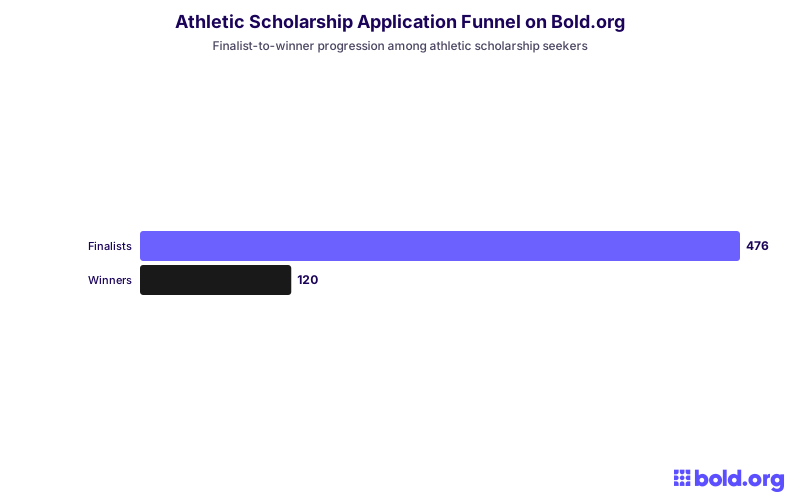
Per this Athletics category data, finalists average a GPA of 3.7. Winners average 3.67. That 0.03-point gap is noise. Once you reach the finalist stage, grades stop mattering. The pick shifts to essay quality, need, and fit with the scholarship mission.
Low-income applicants outperform. Per platform data, 44.5% of finalists come from low-income homes. Among winners, that jumps to 50.8% — up 6.3 points. Reviewers pick low-income students at higher rates when making final calls on swimming scholarships.
Female applicants see a similar lift: 52.7% of finalists versus 55.8% of winners, per platform data — a 3.1-point gain. First-gen students hold steady at about 27% through the funnel, advancing at the same rate.
The takeaway for swimmers seeking scholarships: if your GPA tops 3.0, you are in range. These funnel figures come from the broader Athletics category on Bold.org — swimming-specific conversion rates may differ, but the pattern holds across sports: grades get you to the finalist stage, while need, story, and how you frame your experience decide the win.
Application Timing: When Swimmers Should Apply
Application data from the platform shows a sharp seasonal pattern tied to the swimming and NCAA recruiting calendar (methodology).
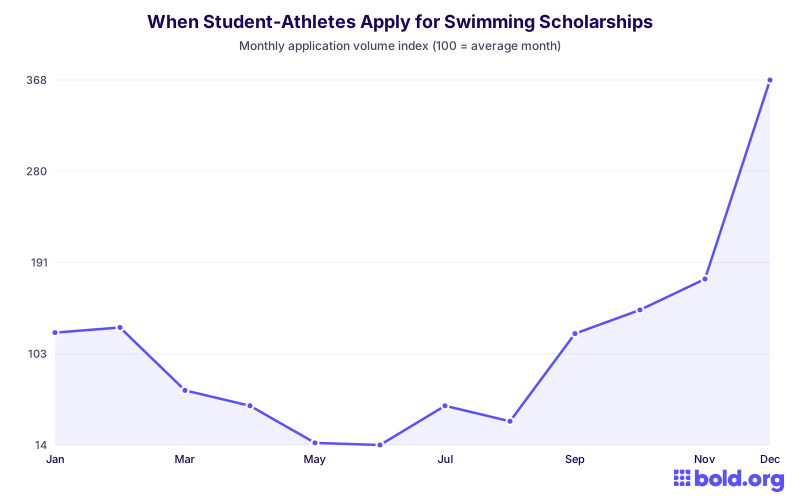
December dominates with a volume index of 368 — 3.7 times the average month. This lines up with the NCAA Early Signing Period (November), after which athletes turn to swimming scholarship applications. The fall ramp is clear: September (122), October (145), November (175), then the December spike.
Summer is dead. June hits an index of 14, May sits at 16. Swimmers train for summer meets — they are not filling out applications.
The best windows sit on either side of the December peak. January and February (index 123 and 128) have solid volume but far less crowding than December. Applications sent in January still meet spring deadlines. September and October (122 and 145) offer an early-action window before the fall rush hits.
For high school swimmers, this maps cleanly: recruiting talks happen in fall, the signing period closes in November, and December turns into scholarship season. Starting your swimming scholarship search in September — while peers focus only on recruiting — gives a real timing edge.
How to Strengthen Your Swimming Scholarship Application
The funnel data tells a clear story: finalist and winner GPAs are the same (3.7 vs. 3.67). Grades get you in. Something else gets you selected. Here is what the data says about winning swimming scholarships.
Show financial need with specifics. Low-income applicants move from 44.5% of finalists to 50.8% of winners — the biggest shift in the funnel. If your family faces real financial pressure, name the gap between what they can pay and your tuition. Vague claims of "needing help" lose to concrete numbers. Per platform data, awards that weigh need make up 23% of athletic scholarships listed on the page.
Tell a character story, not a stats sheet. Merit-based swimming scholarships are not recruiting evaluations. A coach wants your 200 IM time; a reviewer wants to know what 4:30 a.m. practices taught you. The best essays connect the discipline of swimming to goals, community work, or career plans. A swimmer who trained through injury and held a 3.5 GPA tells a story about resilience — not just a list of achievements.
Apply in January or February. Per the timing data, December's volume index of 368 means heavy traffic. January (123) and February (128) have good activity with far less crowding. Prep your materials in November, submit in early January, and your application hits a less packed review cycle while still meeting spring deadlines.
Stack swimming scholarships to close the tuition gap. According to platform data, average tuition for athletic scholarship seekers is $24,567. Average aid is $12,348. That leaves a $12,219 annual gap. One $1,000 award won't close it — but three or four across merit-based, need-based, and essay-based categories will. D2 swimmers with partial athletic aid and D3 swimmers with none gain the most from stacking.
The anti-pattern: treating merit-based applications like recruiting profiles. Leading with times and event rankings misses the point. Per platform data for the Athletics category, the top criteria are ambition (33%), profile strength (25%), and need (23%) — none of which require a fast split time. Save the race results for coaches; give scholarship reviewers your story.
Swimming Scholarships: Browse the Full List
The swimming scholarship listings above this article are sorted by deadline, amount, and eligibility. Based on the timing data, the fall-to-winter window (September through February) captures peak activity. Listings update as new awards open and old ones close. Use the filters to match your education level, finances, and deadlines.
Stacking Swimming Scholarships with Other Financial Aid
No single swimming scholarship covers four years of college. Full funding comes from stacking sources — and swimmers have more options than most students know.
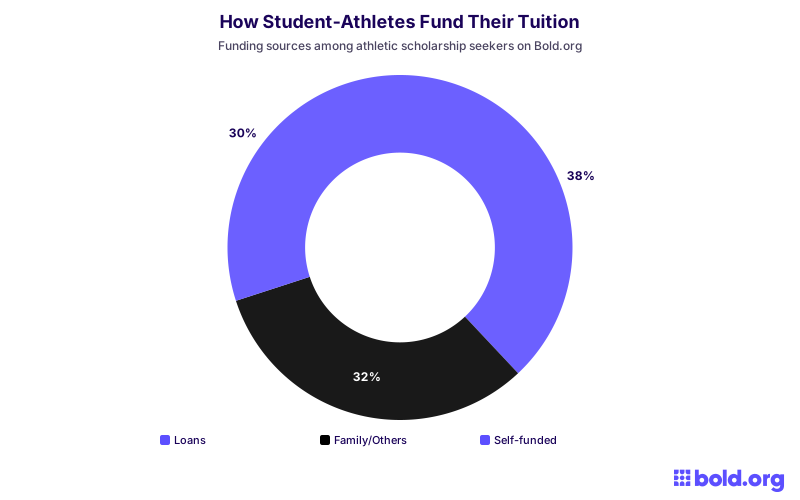
According to platform data, athletic scholarship seekers fund school three ways: 38% through loans, 32% from family and other sources, and 30% self-funded. Every scholarship dollar earned cuts the loan share — the most costly piece of the mix.
Here is how stacking works for each path:
D1 swimmers on full scholarships — under the new settlement rules, more D1 swimmers may receive full scholarships as coaches gain flexibility in distribution. These cover tuition, room, board, and books. External merit-based swimming scholarships still help with personal costs, travel, and training. NCAA rules let athletes receive outside scholarships up to the cost of attendance.
D2 swimmers with partial aid — the common case. A D2 swimmer might get 30–50% of tuition from athletic aid. CSCAA merit awards, need-based scholarships, and school-based academic aid fill the rest. Three partial awards adding up to $4,000–$8,000 per year is a realistic target based on the award data.
D3 and non-recruited swimmers — no athletic money at all. These swimmers rely on academic merit, need-based aid, and external awards. According to platform data, the median award is $1,000. Winning four to five swimming scholarships in the $1,000–$3,000 range builds a base of $4,000–$15,000 per year. D3 programs at schools like Kenyon, Emory, and Johns Hopkins actively recruit swimmers for their teams despite offering no athletic aid. The trade-off is often worth it: strong academic programs, generous institutional merit scholarships, and a competitive swimming environment without the pressure of maintaining athletic scholarship eligibility. A D3 swimmer with a 3.7 GPA at a school with strong institutional aid, supplemented by external merit-based awards, can build a package comparable to a partial D1 scholarship.
The College Board puts average tuition at public four-year schools at roughly $11,260 in-state and $29,150 out-of-state. Against the $24,567 average tuition that seekers report on the platform, a stack of partial athletic aid ($5,000–$10,000) plus two to three merit-based awards ($2,000–$6,000) plus need-based school aid ($3,000–$8,000) approaches full coverage.
Federal aid — Pell Grants, subsidized loans, work-study — stacks on top of all private swimming scholarships. Filing the FAFSA is required to access these funds, whether or not you receive athletic aid.
Frequently Asked Questions
What swim times do you need for a D1 scholarship?
Recruiting standards vary by program, event, and gender. As a general benchmark, D1 men's programs typically recruit 100 freestyle swimmers with times under 46 seconds, and 200 IM swimmers under 1:50. Women's D1 programs look for 100 free times under 52 seconds and 200 IM under 2:05. Elite programs (Stanford, Texas, Cal) set higher bars — men's 100 free under 44 seconds, women's under 50. Mid-major D1 programs have more flexibility. D2 standards are 2–4 seconds slower per event.
The House v. NCAA settlement may shift recruiting dynamics. With roster limits set at 30 and flexible scholarship distribution, some programs may recruit deeper while others may concentrate funding on fewer swimmers. Check each program's current recruiting questionnaire for their latest standards.
These are recruiting benchmarks, not merit-based scholarship requirements. A swimmer whose times fall short of D1 recruiting standards still qualifies for every merit-based, need-based, and essay-based swimming scholarship on this page. Platform data shows merit-based athletic scholarship criteria prioritize ambition, profile strength, and financial need — your times get you a roster spot, but they don't determine whether you win application-based awards.
How can I get a swimming scholarship?
Three paths exist, and the strongest strategy combines all of them. First, the recruiting path: build a profile on NCSA or a similar platform, attend recruiting camps, and reach out to college coaches starting sophomore or junior year. This targets NCAA or NAIA athletic scholarships tied to your competitive times. Second, the merit-based path: apply for awards from organizations like the CSCAA and USA Swimming Foundation, plus community-funded scholarships on platforms like Bold.org. These evaluate your story, grades, and financial need — not your race results. Third, the need-based path: file the FAFSA, apply for Pell Grants, and seek need-based institutional aid from your school. Bold.org data shows low-income applicants gain a 6.3 percentage point lift from finalist to winner, so stating your financial reality clearly works in your favor. For a detailed data-backed strategy, see the How to Strengthen section above.
Is it hard to get a scholarship for swimming?
NCAA swimming scholarships are competitive. D1 programs now have a 30-athlete roster limit under the House v. NCAA settlement, with flexible scholarship distribution — but the total funding at most schools hasn't increased, so per-athlete awards may actually be smaller as coaches spread money across more swimmers. Merit-based swimming scholarships have different criteria entirely. Bold.org data shows that athletic scholarship winners and applicants share identical average GPAs of 3.67, and low-income applicants win at rates 6.3 percentage points above their finalist representation. Demonstrated need and a strong personal narrative matter more than athletic ranking.
How many scholarships does D1 swimming get?
Under the 2025 House v. NCAA settlement, D1 swimming programs no longer have sport-specific scholarship caps. Previously, men received 9.9 equivalencies and women had 14 headcount scholarships. Now, D1 programs that opted into the settlement operate under a 30-athlete roster limit and can distribute scholarships — full or partial — at the coach's discretion across the entire roster. The practical impact depends on each school's budget. Well-funded programs may offer more full scholarships than before. Programs with unchanged budgets may offer the same total dollars spread across more athletes, meaning smaller per-swimmer awards. Check each school's financial aid office for current allocations.
Can non-recruited swimmers get swimming scholarships?
Yes — and this is the most underserved part of the swimming scholarship landscape. Swimmers who are not recruited by college coaches can access merit-based scholarships that evaluate swimming as evidence of discipline and commitment rather than competitive times. The CSCAA recognizes academic excellence among college swimmers regardless of athletic scholarship status. The USA Swimming Foundation funds development programs. On Bold.org, athletic scholarships evaluate ambition (33% of awards), profile strength (25%), and need (23%) — none of which require a recruiting offer. A club swimmer with a 3.5 GPA and a compelling essay about what the sport taught them is a strong candidate for these awards.
D3 schools, which offer no athletic scholarships, still recruit swimmers for their teams. These athletes fund their education through the same merit-based, need-based, and institutional aid channels available to all students — plus swimming-specific external scholarships.
Do D3 swimmers get scholarships?
D3 schools cannot offer athletic scholarships by NCAA rule. D3 swimmers fund their education through academic merit scholarships, need-based institutional aid, and external awards. The advantage of D3 is that financial aid is based entirely on academics and need, not athletic performance — meaning a strong student-swimmer can receive a generous institutional package without the pressure of maintaining athletic scholarship eligibility. External scholarships from Bold.org and organizations like the CSCAA stack on top of whatever institutional aid a D3 school provides.
What GPA do you need for a swimming scholarship?
NCAA D1 eligibility requires a minimum 2.3 core GPA, and D2 requires a 2.2, per the NCAA Eligibility Center. Those are floors, not targets. Bold.org data shows the median GPA among athletic scholarship seekers is 3.7, and 65.2% carry a GPA above 3.5. For merit-based swimming scholarships, there is no universal GPA cutoff — winners average 3.67, but the identical applicant average means GPA alone does not determine outcomes. The House v. NCAA settlement did not change academic eligibility requirements.
Methodology
This analysis draws on Bold.org's proprietary database of scholarship applications, awards, and student profiles within the Athletics scholarship category. Platform data reflects all athletic scholarship applicants — not swimming-specific applications — because the Athletics category encompasses multiple sports. Swimming-specific data (NCAA scholarship limits, division rules, recruiting timelines) comes from the NCAA, NAIA, and sport-specific organizations cited throughout.
Data scope and sample sizes:
- GPA distribution and academic profile: based on 6M+ athletic scholarship-related student profiles on the platform
- Award amounts: based on 197 athletic scholarship awards on Bold.org (median $1,000, average $2,067)
- Application funnel: 476 finalists and 120 winners in the Athletics category, with demographic comparisons at each stage
- Application timing: indexed monthly volume based on 4,514 athletic scholarship applications
- Financial profile: tuition, aid, and funding breakdown from 7.1M+ student profiles
- Scholarship criteria: derived from 294 athletic scholarships on the platform
External sources:
- NCAA — Division I/II/III scholarship rules, roster limits, and eligibility requirements (reflecting 2025 House v. NCAA settlement changes)
- NAIA — NAIA swimming scholarship policies
- NJCAA — Community college athletics and swimming transfer pathways
- USA Swimming Foundation — Swimmer development and scholarship programs
- College Swimming & Diving Coaches Association of America (CSCAA) — Academic recognition and swimmer awards
- NCSA College Recruiting — Recruiting platform and scholarship data
- College Board — Tuition and college cost benchmarks
- NCAA Eligibility Center — Academic eligibility requirements
Key definitions:
- "Low-income" refers to students who self-identify as low-income on their Bold.org profile.
- "Volume index" is indexed to 100, representing the average monthly application volume across the analysis period. A value of 368 means 3.68 times the monthly average; a value of 14 means 14% of the monthly average.
Limitations: Platform data represents the Athletics category broadly, not swimming exclusively. Award amounts and applicant profiles may include student-athletes from other sports. Where swimming-specific claims are made, they draw from NCAA rules and external sources, not platform data. External scholarship counts reflect listings available at the time of analysis and may change as awards open and close.
Last updated: March 2026