Dennis L. N. Yakobson was a beloved father-in-law who impacted the world through the work he was passionate about.
This scholarship seeks to perpetuate Dennis Yakobson’s enduring dedication to the advancement of sustainable energy solutions. Sustainability is crucial to ensuring the future wellness of the world, requiring the efforts of the brightest minds of the next generation.
In honor of Dennis Yakobson, this scholarship aims to support students who share his passion for renewability and sustainability.
Any high school senior interested in pursuing sustainable energy sciences or related fields may apply for this scholarship opportunity.
To apply, tell us how you think we can use renewable and traditional energy to ensure sustainable world solutions.
Selection Criteria:
Ambition, Impact, Passion
$500
1 winner$500
Awarded
Application Deadline
Dec 26, 2024
Winners Announced
Jan 26, 2025
Education Level
High School
Share
Essay Topic
How can we use renewable and traditional energy to ensure sustainable and environmentally-sound solutions for human kind?
400–600 words
Explore All Kinds of Scholarships for All Kinds of Students
The balance between renewable and traditional energy sources represents one of the greatest challenges—and opportunities—of our time. My journey toward understanding and addressing this balance has been shaped by experiences in research, entrepreneurship, and community outreach. Working in a lab on electrochemical carbon capture, green hydrogen production, and vanadium redox batteries for energy storage, collaborating with a hyper-local hydroponics farm, founding an algae biofuel startup, and engaging with global experts at the American Geophysical Union (AGU) have taught me how innovative technologies, existing infrastructure, and community education must converge to build a sustainable energy future.
In Dr. Rahimi’s lab, I’ve explored electrochemical methods for carbon capture, enhancing ocean alkalinity to sequester atmospheric CO2, and green hydrogen production as a clean energy source. These projects focus on low-cost solutions, revealing how leveraging existing infrastructure can drive the practical application of sustainable technologies. For instance, pairing carbon capture systems with traditional fossil fuel plants allows for significant emission reductions while maintaining energy reliability. Similarly, green hydrogen production and ocean alkalinization can be integrated into industrial systems, contributing to global decarbonization without requiring an overhaul of current energy frameworks. The lab has taught me that successful energy transitions depend on melding cutting-edge research with the realities of infrastructure and cost.
Three years ago, I founded an algae biofuel startup to explore the potential of carbon-negative energy solutions. By cultivating algae in nutrient-rich wastewater and extracting lipids to produce biofuels, I developed a closed-loop system that aligns environmental sustainability with energy production. Through this process, I delved into techno-economic analyses, gaining an appreciation for the immense R&D required to make new technologies viable. I discovered that while scaling a novel energy solution is a daunting challenge, it is a worthwhile endeavor that combines creativity with technical rigor. This experience reinforced the importance of small-scale innovation as a foundation for larger sustainability efforts.
Attending the AGU conference further expanded my perspectives. Discussions with leading researchers highlighted unintended consequences of certain renewable technologies, such as the environmental impact of geothermal energy extraction on local water tables and ecosystems. These conversations underscored the importance of understanding the societal and ecological effects of energy transitions. Sustainable solutions must consider not only their technical feasibility, but also their impacts on the surrounding communities.
For this reason, I’ve focused on bringing sustainable energy solutions to the community level. As an intern at Moonflower Farms, an urban hydroponics startup, I’ve worked to incorporate renewable energy into their farming systems while emphasizing education and outreach. By integrating solar panels and energy-efficient technologies, we’ve demonstrated how small-scale renewables can power local food systems sustainably. Through Moonflower’s nonprofit arm, I’ve helped develop curricula that teach community members–from elementary students to historically marginalized groups–how to adopt similar systems in their homes and neighborhoods. This emphasis on education ensures that sustainability is not just a technological innovation but a shared value, fostering widespread support for renewable energy adoption.
My journey has shown me that sustainable energy solutions require more than technical innovation—they demand collaboration across disciplines, cultures, and perspectives. Whether conducting research in the lab, engaging with experts at AGU, or working with local communities, I’ve learned that the most effective solutions emerge from a nexus of science, infrastructure, and education. I plan to continue this work, focusing on practical, inclusive energy solutions that empower communities while protecting our planet and honoring Dennis Yakobson’s enduring dedication to sustainability. Guided by ambition, driven by impact, and fueled by passion, I aim to help create a world where renewable and traditional energy systems coexist in harmony, ensuring a sustainable and environmentally sound future for all.
North Carolina State University at RaleighRaleigh, NC
In the face of growing environmental concerns and the need for sustainable solutions, the integration of both renewable and traditional energy sources has emerged as a crucial strategy. By leveraging the strengths of each, we can create a balanced and resilient energy landscape that meets the demands of a growing global population while minimizing environmental impact.
Renewable energy sources, such as solar, wind, hydro, and geothermal, have gained significant popularity in recent years due to their clean and inexhaustible nature. Solar power, derived from harnessing sunlight through photovoltaic cells, provides a decentralized and abundant energy source. Similarly, wind energy utilizes the kinetic energy of the wind to generate electricity, offering a scalable solution for regions with varying wind patterns. Hydroelectric power, produced through the flow of water, and geothermal energy, derived from the Earth's internal heat, further contribute to the diversification of our energy portfolio.
These renewable sources present several advantages. Firstly, they are sustainable in the long run, as they do not deplete finite resources. Secondly, they significantly reduce greenhouse gas emissions, mitigating climate change and its adverse effects. Moreover, the decentralization of renewable energy systems empowers communities and promotes energy independence.
However, despite these benefits, the intermittent nature of some renewable sources poses challenges for maintaining a reliable energy supply. This is where traditional energy sources, such as fossil fuels and nuclear power, play a complementary role. Fossil fuels, including coal, oil, and natural gas, have been the backbone of global energy production for decades. While they contribute to environmental degradation through carbon emissions, advancements in technology, such as carbon capture and storage, aim to mitigate their impact.
Nuclear power, although controversial due to concerns about safety and radioactive waste disposal, offers a low-carbon alternative with a consistent and reliable energy output. Nuclear fusion research, in particular, holds promise as a cleaner and safer way to harness nuclear energy.
To achieve a sustainable energy future, a transition towards renewable energy sources is imperative. However, an immediate and complete shift is challenging due to infrastructural, economic, and technological constraints. Therefore, a transitional period that includes the responsible use of traditional energy sources is a pragmatic approach.
In addition to technological advancements, policy frameworks and public awareness are essential components of this transition. Governments and international organizations must incentivize the adoption of renewable technologies through subsidies, tax incentives, and regulatory measures. Simultaneously, educating the public on the importance of sustainable energy practices fosters a culture of responsible consumption.
In conclusion, the integration of renewable and traditional energy sources is key to achieving a sustainable and environmentally sound energy landscape. While renewables offer clean and inexhaustible options, traditional sources provide reliability and support during the transition. A balanced approach, supported by technological innovation, policy initiatives, and public engagement, will pave the way for a future where energy meets the needs of humanity without compromising the health of our planet.
How it works
Bold.org is Built to Make Scholarships Feel Possible
Step 01
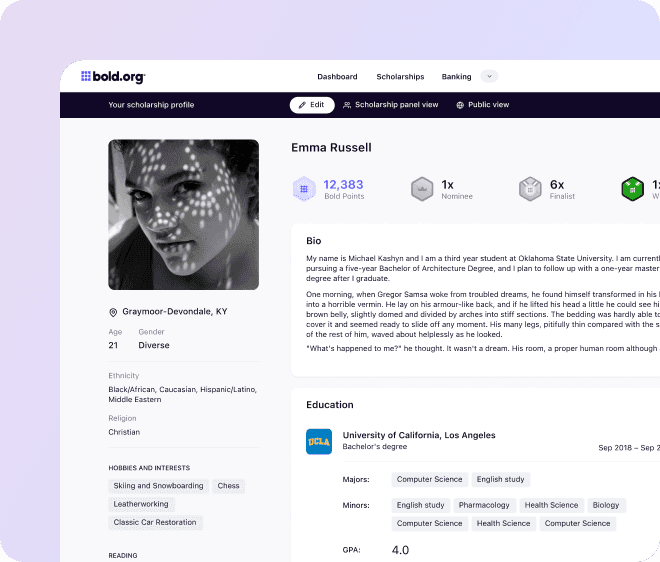
Start with your story
Bold.org helps students show donors who they are beyond a transcript.
Step 02
Where scholarships are awarded
Every scholarship is funded by donors and managed directly on Bold.org.
Step 03
Fund your future
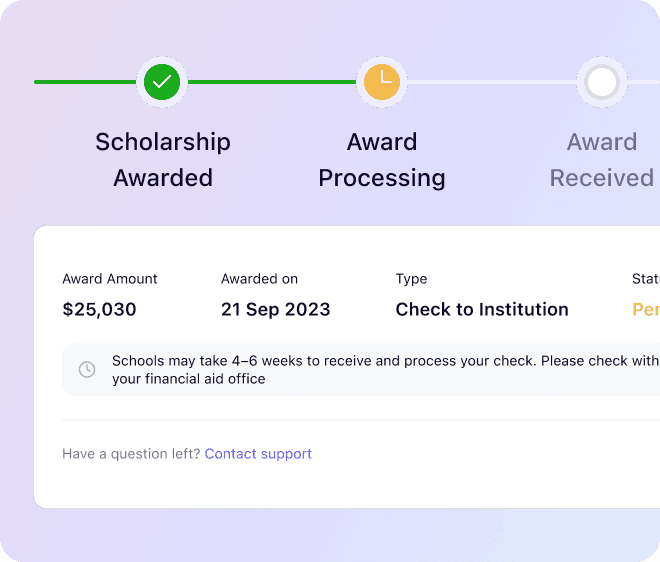
Scholarship dollars are disbursed through Bold.org to help students pay for school.
FAQ
When is the scholarship application deadline?
The application deadline is Dec 26, 2024. Winners will be announced on Jan 26, 2025.
How will scholarship application information be used?
Your privacy is a top priority on the Bold.org platform, and you can find our privacy policy in full here. You may opt out of communications from Bold.org at any time, and unless we’ve first notified you and gotten your consent, you’ll never receive communication from any third parties related to personal information you give us.
What is the scholarship award?
Award amounts per winner are designated by the donor. Check the award amount for a detailed breakdown.
When will the scholarship winner be chosen? How will they be notified?
The winner will be publicly announced on Jan 26, 2025. Prior to the announcement date, we may contact finalists with additional questions about their application. We will work with donors to review all applications according to the scholarship criteria. Winners will be chosen based on the merit of their application.
How will the scholarship award be paid?
Award checks will be sent to the financial aid office of the winner's academic institution or future academic institution in their name to be applied to their tuition, and in the name of their institution (depending on the school's requirements). If the award is for a qualified educational non-tuition expense, we will work with the winner directly to distribute the award and make sure it goes towards qualified expenses.
How will my scholarship application be verified?
Before we award the scholarship, the winner will be required to confirm their academic enrollment status. Depending on the circumstances, verification of Student ID and/or their most recent transcript will be required.
How should I get in touch with questions?
If you have any questions about this scholarship or the Bold.org platform, just email contact@bold.org and we’ll get back to you as quickly as we can.
Does the scholarship have terms and conditions?
Yes. The terms and conditions for this scholarship can be found here.
97% of students don't win scholarships. We’re here to change that.