
Hobbies and interests
Dance
Singing
Community Service And Volunteering
Reading
Drama
I read books multiple times per month
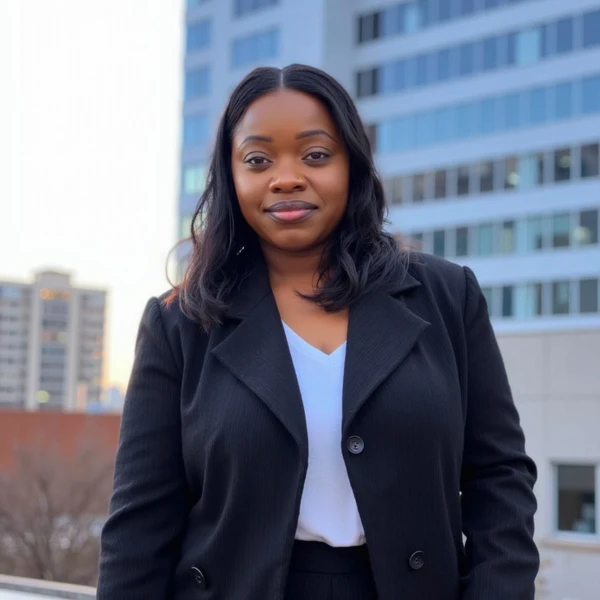
Zoyah Nthobogeng
1x
Finalist
Zoyah Nthobogeng
1x
FinalistBio
Growing up in Botswana, I witnessed how limited resources and fragile supply chains affected access to healthcare. Rather than accepting these challenges, I chose education to create change. I earned a Bachelor’s in Physiotherapy and am pursuing an MBA in Global Supply Chain Management with a 4.0 GPA, researching ways to strengthen health and supply chain systems in resource-constrained settings.
Service has always been central to my journey. As a physical therapist, I volunteered in hospice care and provided free physical therapy to children in my hometown who lacked access to rehabilitation, helping young athletes return to the sports they loved.
My research on climate-resilient food and health supply chains for landlocked countries earned first place at the Northeast Decision Sciences Institute (NEDSI) conference and strengthened my goal of pursuing a PhD in Health Services and Policy Research. I hope to develop sustainable solutions that improve health systems and equitable access to care.
My goal is to combine research, policy, and community service to create lasting impact while inspiring girls from backgrounds like mine to believe their circumstances do not define their future. A scholarship is an investment in a future researcher and leader committed to improving lives.
Education
University of New Haven
Master's degree programMajors:
- Business Administration, Management and Operations
Academy for Nursing and Health Occupations
Bachelor's degree programMajors:
- Health Professions Education, Ethics, and Humanities
Miscellaneous
Desired degree level:
Doctoral degree program (PhD, MD, JD, etc.)
Graduate schools of interest:
Transfer schools of interest:
Majors of interest:
Career
Dream career field:
- Research
Dream career goals:
Junior Physical Therapist
LenMed Health Private Hospital Group2022 – 20242 years
Sports
Cycling
Club2018 – Present8 years
Research
Business/Managerial Economics
University of New haven — Research Assistant2025 – Present
Arts
Private Club
Dance2015 – Present
Public services
Volunteering
Catholic Hospice — Physical therapist volunteer2020 – 2022
Future Interests
Volunteering
Philanthropy
Entrepreneurship
Yaa Asantewaa Scholarship
My journey as a Black woman pursuing graduate education has been shaped by resilience, courage, and the belief that my circumstances do not have to determine my future.
I grew up in a small village in Botswana, raised by a mother who worked every job she could find to provide for our family. I grew up without knowing my father, and from an early age I understood the realities of poverty. I was always a dedicated student, but poverty affects more than finances. It affects confidence, stability, and the ability to focus on long-term dreams when you are constantly worried about basic needs such as food, school supplies, and warm clothing.
As the only girl in my household, I faced challenges that forced me to become resilient at a young age. Growing up in an environment affected by poverty and vulnerability exposed me to situations where I had to fight for my own future. I experienced harm from someone who took advantage of my circumstances, but I refused to allow that experience to define who I would become. Instead, it strengthened my determination to create a different life.
I realized early that education would be my pathway forward. I disciplined myself and remained focused because I knew it was the one thing I could use to change my circumstances. At the age of 17, I lost my mother to cancer, and I had to learn independence while continuing my education. I moved between relatives’ homes while trying to maintain my academic goals, and the instability affected my confidence and sense of belonging. However, each challenge taught me perseverance and self-reliance.
At 19, I was admitted to study engineering, but I eventually realized it was not aligned with my passion. I made the difficult decision to change direction and returned to school in 2018 to pursue a BSc in Physiotherapy,completed in 2022. Throughout my education, I found ways to support myself, including selling clothes, ice cream, and other small items. These experiences taught me resourcefulness, determination, and the importance of creating opportunities even when resources are limited.
My dream of pursuing graduate education in the U.S once felt impossible. I was a young woman from a village who had never traveled internationally, yet I believed a bigger future was possible. I took the bold step of moving to the U.S alone, without relatives or a support system waiting for me, carrying only faith, determination, and the belief that with hard work and perseverance, opportunities can be created.
In 2025, I began pursuing an MBA in Global Supply Chain Management. I chose this path because I wanted to combine my healthcare background with systems-level knowledge to improve access to essential resources and help build stronger, more sustainable health systems, especially in underserved communities. My research focuses on resilient food and health supply chains, reflecting my commitment to solving challenges that affect vulnerable populations.
With only one semester remaining in my graduate program, I face another challenge: the financial barrier of completing my education. However, my life has always been defined by overcoming barriers. This scholarship would not only help me complete my degree; it would support my mission to create meaningful change.
I want my journey to show young people who grew up or are growing up in circumstances similar to mine that their background does not define their future. Where we come from does not determine who we become. With hope, determination, and the courage to pursue our dreams, there is always a path forward.
Like Queen Mother Yaa Asantewaa, I believe courage is found in standing strong despite adversity.
Sloane Stephens Doc & Glo Scholarship
I was fifteen when my understanding of life and health changed forever. I used to share a bedroom with my maternal grandmother, and she was my sense of stability and comfort. One day I left for a sleepover at my cousin’s house. When I returned the next morning, I found her unconscious. Shortly after, she was diagnosed with cervical cancer. At that age, I could not fully understand what the disease meant, but I could see something much clearer, there were not enough resources, support systems, or access to proper care to help her recover.
That experience marked the beginning of a long, painful journey. Years later, my mother was diagnosed with breast cancer and eventually passed away as well. Losing both of them within a relatively short span of time shaped me in ways I am still learning to process. In both cases, I saw how limited healthcare resources, especially in rural and underserved areas of Botswana, can determine outcomes long before a patient ever gets a fair chance.
After these losses, I initially tried to distance myself from healthcare. I enrolled in mechanical engineering, believing that stepping away from health-related fields would protect me from reliving that pain. But over time, I realized that healthcare is not something you can simply avoid when it has shaped your life so deeply. It felt less like a choice and more like a calling I could not ignore. I eventually made the difficult decision to leave engineering and pursue a Bachelor’s degree in Physiotherapy instead.
Through physiotherapy, I began to understand healthcare from a more human perspective. I saw how recovery is not only about treatment but also about access, timing, and systems that either support or fail patients. Over the past 15 years since my grandmother’s passing and 12 years since my mother’s, I have come to recognize a consistent issue: in Botswana and many other landlocked, resource-constrained countries, healthcare outcomes are heavily influenced by supply chain limitations, delayed access to care, and systemic inefficiencies.
The situation, especially after COVID-19, has highlighted how fragile global and local healthcare systems can be. In 2024, instead of losing hope, I made a deliberate decision to take a different path. I began an MBA in Global Supply Chain Management, not only to advance my education, but to position myself to contribute to real, structural solutions in healthcare delivery. My goal is to help strengthen healthcare supply chains in low-income and landlocked countries, where delays and shortages often cost lives.
Looking ahead, I intend to pursue a PhD in Health Services and Policy Research, with a focus on supply chain stability and resilience in vulnerable healthcare systems. I want my research to translate into practical policies that governments and institutions can use to improve access to essential medicines and services.
More than anything, I want my journey to mean something beyond myself. I have found purpose in turning personal loss into long-term impact. Scholarships like this represent more than financial support, they represent the possibility of transforming lived experience into service that can reach others who are still waiting for the care my loved ones never fully received.
One group of people who continue to inspire me deeply are individuals living with disabilities. Despite systemic barriers, they continue to push forward, achieve, and redefine what is possible. Their resilience reminds me that limitations don’t define potential.
My goal is to contribute to a world where access to healthcare is not determined by geography, income, or circumstance, but is a basic reality for all. I hope to use my education to help build that future.
Bick First Generation Scholarship
When people hear that I am a first-generation student, they often think it means I was simply the first in my family to attend college. For me, it meant much more than that. It meant making life-changing decisions without anyone who had ever made them before.
My grandparents could not read or write. My mother left school at thirteen and my father at fifteen. There were no college graduates in my family, no professionals whose footsteps I could follow, and no one who could explain what opportunities education could create. When I struggled with homework, I had to walk to a neighbor’s house and ask their older child for help because no one at home knew the answers.
My mother did everything she could to provide for us, but because she lacked an education, her options were limited. She sold alcohol from our home to earn a living. As a young girl, I often found myself surrounded by adult strangers who came to drink in our yard. At fifteen, one of those customers sexually assaulted me. I remember feeling powerless, but I also remember making a promise to myself: I would not allow the circumstances I was born into to determine the rest of my life.
Around the same time, I watched my older brother lose the opportunity to become the first person in our family to attend college. Alcohol and drugs slowly pulled him away from the future he once had. Seeing that happen strengthened my belief that education was not just important,it was my way out.
Then, during my final year of high school, my mother died of breast cancer. My father had long since abandoned me. Overnight, I found myself facing adulthood without the two people who should have guided me through it. When it came time to choose a degree, I chose mechanical engineering, not because I loved it, but because I thought it sounded successful. I failed, left the program, and lost two years of my life. It was devastating. Yet looking back, I realize that failure taught me one of the most important lessons I have ever learned: when you have no roadmap, sometimes resilience matters more than getting everything right the first time.
I started over and eventually earned a Bachelor of Science in Physiotherapy, graduating cum laude. Later, I became the first person in my family, both immediate and extended, to travel to the United States and pursue an MBA in Global Supply Chain Management.
Today, I am driven by something bigger than personal achievement. Growing up in Botswana, I witnessed how weak supply chains can limit access to healthcare and essential resources. I want to help build systems that ensure vulnerable communities receive the care they need. I also want young girls from backgrounds like mine to see that their dreams are valid, even when the world around them suggests otherwise.
With only one semester left and insufficient student loan, this scholarship would helping overcome the financial barrier I’m currently facing.
Sharra Rainbolt Memorial Scholarship
Cancer has shaped my life in ways I never imagined possible. It has brought grief, fear, uncertainty, and painful loss into my family, but it has also taught me resilience, purpose, compassion, and the importance of hope. Although cancer took away some of the people I loved most, it also gave me a deeper understanding of strength and inspired me to use my experiences to help others and continue pursuing my dreams with determination.
When I was fourteen years old, I lost my maternal grandmother to cervical cancer. At that age, I did not fully understand what cancer was or why it had taken her away from us. Coming from a low-resourced background made the situation even more difficult because there was very little information available to my family about the disease, treatment options, or emotional support. I remember feeling confused and helpless while watching my family struggle through something we barely understood. At the time, I believed that losing my grandmother was the hardest thing my family would ever face.
Three years later, cancer returned to my family in a much more devastating way. During my final year of high school, my mother passed away from breast cancer. Her death came during one of the most important academic periods of my life because my final examinations would determine whether I could gain admission into university. Losing my mother while preparing for those exams felt unbearable. I struggled emotionally, mentally, and academically while trying to process my grief. Eventually, I was diagnosed with depression during that phase of my life.
Despite everything, I was fortunate to have a strong Christian peer support group that constantly encouraged me. They checked on me, prayed with me, and reminded me that my life still had purpose even during the darkest moments. Their support gave me the courage to continue fighting for my future when I felt hopeless. Although my circumstances could easily have caused me to give up, I pushed forward and completed my examinations successfully. While my results were not exactly what I had once hoped for, many people around me viewed my ability to persevere as a miracle considering everything I was facing.
Unfortunately, cancer did not stop affecting my family there. Years later, my mother’s older sister also battled breast cancer until the end of her life. Today, my cousin has undergone a bilateral breast removal because of cancer as well. Watching multiple generations of my family suffer from this disease left me living in fear for a long time, constantly wondering whether I might be next.
However, through these experiences, I learned that fear can either control your life or motivate you to live more intentionally. I chose not to allow cancer to define my future. Instead, I decided to become informed, proactive, and determined to educate others about the importance of awareness and early detection. My experiences taught me the value of support systems, resilience, and access to health information, especially within underserved communities.
Today, I am stronger and braver than I was before cancer entered my family. Rather than allowing fear to stop me, I continue to pursue my academic goals courageously and with purpose. Cancer changed my family forever, but it also shaped me into someone who understands the power of perseverance, compassion, faith, and hope despite adversity.
Byte into STEM Scholarship
I come from a small town where opportunities were limited and success often felt out of reach for someone with my background. Growing up there shaped me in a way I did not fully understand at the time, it made me observant, determined, and constantly aware that my circumstances did not have to define my future. From a young age, I felt a strong desire to move beyond what I could see around me and pursue something greater through education.
Over time, this mindset grew into a deeper sense of purpose. I began to see education not just as personal advancement, but as a responsibility. Coming from a landlocked country with complex logistical and supply chain challenges, I have witnessed how systems that seem distant and technical can directly affect people’s daily lives. Delays in supply chains, inefficiencies in distribution, and limited access to resources all shape opportunities in ways that are often overlooked. These experiences sparked my passion for Global Supply Chain Management, because I began to understand that improving systems is also a way of improving lives.
One of the most important values that has shaped me is resilience. There were many moments where the path forward was not clear, especially when resources were limited or opportunities were scarce. However, I learned to adapt, seek out opportunities, and remain focused on my long-term goals. I also learned the importance of community, supporting others who face similar challenges and recognizing that success becomes more meaningful when it is shared.
As I progressed academically, I became more intentional about leadership and impact. Whether through group projects or academic collaborations, I naturally found myself in roles where I encouraged others, organized ideas, and helped teams stay focused. These experiences taught me that leadership is not about position, but about responsibility and influence, even in small settings.
I am currently pursuing an MBA in Global Supply Chain Management because I want to understand how global systems operate and how they can be improved to create more efficient and equitable outcomes. This degree will give me the technical knowledge, analytical tools, and global perspective needed to engage with real-world challenges in a meaningful way. It will also expose me to diverse ways of thinking, which is essential for developing solutions that are both innovative and practical.
My long-term goal is to contribute to strengthening supply chain systems in my country in ways that improve access, efficiency, and economic stability. I want to be part of building systems that do not just function, but function better for the people who depend on them. Beyond this, I hope to continue my academic journey through research in health services and policy, because I believe that strong systems in both business and healthcare are essential for sustainable development.
Ultimately, my goal is to use my education to create lasting impact, not only through systems and policies, but also through people. I want to mentor and inspire young people, especially girls from rural communities like mine, who may feel limited by their circumstances. I want them to see through my journey that their starting point does not determine their future, and that with education and perseverance, they can build something greater than what they were told was possible.
Marilynn Walker Memorial Scholarship
Higher education, for me, is not just about getting a degree. It represents possibility, change, and the chance to rewrite what my future could look like. I grew up in a small town where opportunities were limited and success often felt out of reach for people like me. But even then, I always felt there had to be more beyond what I could see. Education became that “more” for me, the bridge between where I come from and where I want to go.
Choosing to pursue an MBA in Global Supply Chain Management was not random. Coming from a landlocked country, I have seen how deeply systems of trade and logistics affect everyday life. Something as simple as delays in supply chains can impact access to essential goods and slow down development in entire communities. Over time, I began to realize that these systems are not just about business, they are about people, opportunity, and survival. I want to understand them deeply enough to be part of improving them.
Higher education will give me more than technical knowledge. It will give me perspective. I want to learn how different systems work across the world, how solutions are built, and how challenges are solved in ways that I may not have been exposed to growing up. I believe being in an academic environment that pushes me beyond my comfort zone will help me grow not just as a student, but as someone capable of thinking on a global level.
My long-term goal is to use what I learn to help improve supply chain systems in my country in ways that actually make a difference in people’s lives. I want to be part of solutions that make access to goods and services more efficient and more fair, especially in places where systems are often strained or overlooked. I also hope to continue my studies further through a PhD in Health Services and Policy Research, because I have come to understand that strong systems, whether in business or healthcare, are what truly shape quality of life.
But beyond all of this, what drives me the most is something very personal. I come from a place where many young girls grow up believing that their background defines their future. I know what it feels like to look around and wonder if there is space for your dreams. I want my journey to be proof that there is. That your starting point does not decide your ending.
Higher education is the key that will allow me to turn that belief into reality. It is not just about advancing my career, it is about becoming someone who can create impact, open doors for others, and show that change is possible, even from the most unlikely places.