Hobbies and interests
Anime
Baking
Hiking And Backpacking
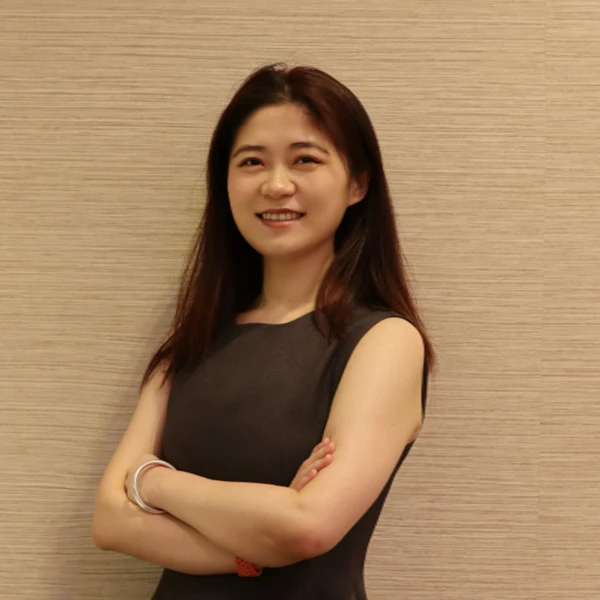
Zongmiao Liu
1x
FinalistZongmiao Liu
1x
FinalistBio
Hi, my name is Zongmiao Liu. I’m passionate about education, technology, and cross-cultural collaboration. With a background in education and psychology, I enjoy working on projects that empower young people and promote meaningful learning experiences. I’m currently involved in educational consulting, and I’m always excited to connect with others who care about innovation and impact.
Education
Lehigh University
Doctoral degree program (PhD, MD, JD, etc.)Majors:
- Education, Other
Johns Hopkins University
Master's degree programMajors:
- Education, Other
University of Connecticut
Bachelor's degree programMajors:
- Psychology, General
Miscellaneous
Desired degree level:
Doctoral degree program (PhD, MD, JD, etc.)
Graduate schools of interest:
Transfer schools of interest:
Majors of interest:
Career
Dream career field:
Education
Dream career goals:
Academic Advisor
Walnut Bond2024 – Present2 years
Sports
Volleyball
Club2016 – 20182 years
Research
Education, General
Independent Researcher2023 – 2024
Public services
Volunteering
The Nanyang Wancheng District Social Psychology Association, Nanyang, Henan — Remote Counselor Assistant2020 – 2020Volunteering
University of Connecticut — UConn Connects Mentor2022 – 2022
Future Interests
Volunteering
Entrepreneurship
Healing Self and Community Scholarship
I believe that mental health support should not be a luxury but a fundamental right. As an educator and mental health advocate with a cross-cultural background, I am committed to integrating mental health support into educational systems and family environments at an earlier stage. I am particularly focused on building mental resilience and help-seeking awareness among international students and young people. Drawing on my research experience in educational technology, I plan to develop low-threshold, culturally sensitive, and scalable digital mental health support tools, such as AI-enabled self-regulation training programs and guidelines for parents and teachers on mental health identification and intervention. My vision is for every child and every family to access warm and professional mental health support at the lowest possible cost, regardless of their location, language, or background.
RonranGlee Special Needs Teacher Literary Scholarship
“The purpose of education is to help students recognize their sense of belonging.” In my view, the core of this statement lies in the fact that education is not merely about imparting knowledge; it is also about helping every student realize “who they are,” “their value,” and “that they deserve to be seen and heard.” For students with special needs, this sense of belonging is often misunderstood, overlooked, or even erased. What I aim to do is be that light, illuminating their uniqueness and igniting their desire to connect with the world.
As a special education teacher, my mission is to create a space filled with empathy, safety, and respect, helping students see and affirm themselves. I will:
Center on personalized instruction: Every student has unique learning styles and ways of expressing emotions. I will design lesson plans based on students' abilities and interests, allowing them to learn in an environment where they feel understood.
Cultivate expression and participation: Whether through language, drawing, body movements, or assistive communication tools, I am committed to helping students find their own way of “speaking” so that they can truly be “heard.”
Strengthen a sense of belonging: Through an inclusive classroom culture, daily emotional exercises, and collaborative learning, I hope students will feel that “I belong here” and come to understand that their unique existence also holds meaning within the collective.
A small Fairy Tale:
Once upon a time, in a place called “Silent Valley,” there lived a group of children who seemed silent. They did not speak with words and did not always look others in the eye. But they had their own voices—only the world could not hear them.
One day, a female teacher named “Star Weaver” came to this place. She didn't have a magic wand, but she brought a needle that wove light and a sincere heart.
She didn't make the children memorize lessons; instead, she let them draw their dreams, feel the rhythm, and tell stories with their eyes. She discovered that Xiao Jie would gently tap the corner of the table when he heard the rhythm—that was his way of expressing joy; Xiao Ai would smile when she heard others' names—that was her response.
Star Weaver wove these subtle signals into her lessons one by one. Gradually, the children began to be “heard.” Their voices, like the light of fireflies, slowly gathered and illuminated the entire valley.
One day, Xiao Jie wrote his name on the canvas for the first time, and Xiao Ai walked up to her and softly said, “I'm here.” At that moment, the Star Weaver knew they had found their sense of belonging.
And she, too, had fulfilled her mission.
Reimagining Education Scholarship
If I had the opportunity to design a required course for all K-12 students, I would choose to offer an interdisciplinary course called “Life Literacy Lab.” Its core objective is not to improve students' test scores, but to help them grow into well-rounded individuals with critical thinking skills, emotional regulation skills, and a commitment to societal duty.
Traditional education emphasizes knowledge-based content such as language, mathematics, science, and humanities, which are certainly important. However, we are increasingly aware that knowledge alone is insufficient to navigate the intricacies of the real world. When students enter college or the workforce and face interpersonal pressures, decision-making challenges, and rapid technological changes, many realize that they never truly learned “how to navigate life” in school.
Therefore, the “Life Literacy Lab” course will address the four most overlooked yet fundamental dimensions of student development, systematically building the core competencies they require to excel in the future.
1. Emotional and Self-Awareness: In this module, students will begin in elementary school to learn how to name their emotions, understand the physiological basis and psychological significance of emotions, and learn regulation techniques such as deep breathing, self-talk, and emotional journaling. By middle and high school, the curriculum will include empathy training, conflict resolution skills, and stress management.
Impact: Enhances students' psychological resilience, reduces anxiety, depression, and school conflicts, and enables students to better understand themselves and care for others.
2. Critical and Systems Thinking This module will enable students to cultivate the ability to view issues from multiple perspectives. Elementary school students can start with “how to identify fake news”; middle school students will learn about logical fallacies and cognitive biases; high school students can explore into more complex systems thinking models, such as causal loops, power structures, and ecosystem analysis.
Impact: Cultivates students' judgment and analytical skills, enabling them to avoid blindly following trends when faced with social issues and make logical, well-reasoned judgments in life.
3. Digital and AI Literacy This section will teach students how to protect personal privacy, deal with cyberbullying, and identify algorithmic bias, encouraging them to use technological tools for creation and expression. Citizens in the AI era must understand how their lives are shaped by digital systems in order to truly possess “freedom under technology.”
Impact: Enhances adaptability and creativity in the technological age, avoiding the isolation and sense of control brought about by technological alienation.
4. Real-World Readiness From cooking, financial management, renting, time management, to career exploration and project practice, students will enhance their self-reliance and sense of responsibility through “learning by doing.” Each stage includes a “Life Challenge Week” where students simulate real-world task solutions.
Impact: Enhances independent living skills, helps students connect with their “future selves,” and strengthens their sense of purpose in learning.
Imagine a student who has been taking this course every academic year since first grade. They will learn earlier how to understand emotions, collaborate with others, discern the authenticity of information, express their true thoughts, and take responsibility for their own lives. Such children, whether they become programmers, artists, doctors, or farmers in the future, will be better equipped to face the uncertainties and challenges of life.
We cannot predict what the world will look like in ten years, but we can be certain: the ability to manage emotions, the capacity for critical analysis, the ability to coexist with technology, and the ability to take charge of one’s life will always be humanity’s true “foundational skills.” This course was created precisely for this purpose.