
Hobbies and interests
American Sign Language (ASL)
Reading
Travel And Tourism
Church
Reading
Academic
Action
Adult Fiction
Anthropology
Humanities
Folklore
Cultural
Architecture
Historical
I read books daily
LOW INCOME STUDENT
Yes
FIRST GENERATION STUDENT
Yes
Zoey Wilson
1x
Nominee1x
Finalist1x
Winner
Zoey Wilson
1x
Nominee1x
Finalist1x
WinnerBio
I am a Mass Communication/ English major at Louisiana State University. I believe I'm an exceptional candidate for scholarships because I embody boldness, bravery, a strong work ethic, and my future objectives have the nation’s best interests at heart.
I'm deeply passionate about English neurodivergent/Special Education teaching. It's a profession that can shape young minds and enhance the communication skills of children with cognitive impairments. I envision my career as one that utilizes my knowledge to teach students how to navigate and communicate proficiently in social settings. Moreover, it illustrates that they can achieve anything that they desire.
Likewise, I'm attracted to Travel Journalism. It'll enable me to connect with diverse cultures and develop an adequate understanding of the world. It also presents an opportunity to expand my understanding of my African-American culture. As I advance in my college career, I plan to study abroad. I’ll visit regions such as the Middle East, Africa, and South America. I'll share stories that bring awareness to substantial issues, experiences, and the ignored perspectives of POC in modern society. With my teaching, journalistic, and travel skills, I will help make a positive difference in our nation.
“And when we speak, we are afraid our words will not be heard nor welcomed, but when we are silent, we are still afraid; so it’s better to speak, remembering we were never meant to survive.” -Audre Lorde, Civil Rights Activist
Education
Louisiana State University and Agricultural & Mechanical College
Bachelor's degree programMajors:
- Liberal Arts and Sciences, General Studies and Humanities
- Communication, Journalism, and Related Programs, Other
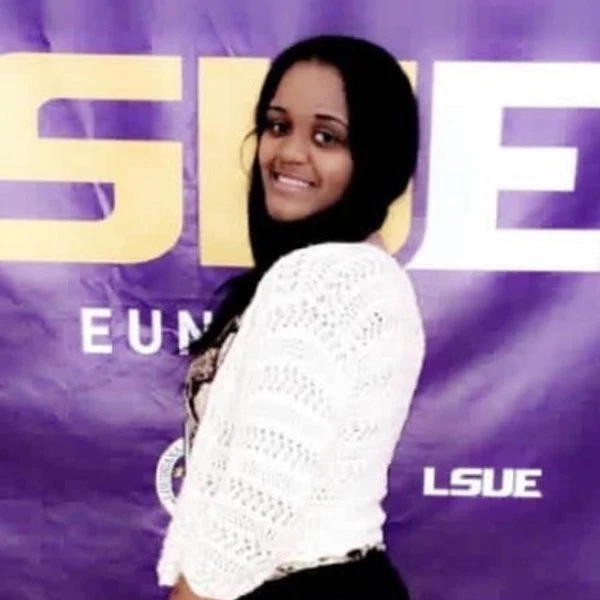
Louisiana State University-Eunice
Associate's degree programMajors:
- Communication, Journalism, and Related Programs, Other
Miscellaneous
Desired degree level:
Bachelor's degree program
Graduate schools of interest:
Transfer schools of interest:
Majors of interest:
- Communication, Journalism, and Related Programs, Other
- Sports, Kinesiology, and Physical Education/Fitness
Career
Dream career field:
Broadcast Media
Dream career goals:
Journalism/ Broadcast Media
Direct Service Worker
I Care Home Care Solutions2023 – Present3 yearsDirect Service Worker
Heaven on Earth Inc2021 – Present5 yearsSales Consultant
AT&T2021 – 20232 years
Sports
Baseball
Varsity2017 – 20214 years
Track & Field
Varsity2017 – 20214 years
Basketball
Varsity2017 – 20214 years
Cheerleading
Varsity2017 – Present9 years
Research
Behavioral Sciences
DSA2023 – 2023
Arts
Barbizon Modeling and Acting
Performance Art2021 – PresentBarbizon Modeling and Acting
Acting2021 – Present
Public services
Volunteering
American Red Cross — Volunteer/ Disaster Services2023 – PresentVolunteering
Christian Care & Share Community Center — Volunteer/ distributor of food, clothing and other resources2021 – PresentVolunteering
“Sisters On The Go” Breast Cancer Survivors — Community group for breast cancer survivors. We raise money to help patients with their treatment, transportation and medical expenses.2021 – Present
Future Interests
Advocacy
Politics
Volunteering
Philanthropy
Entrepreneurship
Sgt. Albert Dono Ware Memorial Scholarship
While Sgt. Albert Dono Ware’s legacy of service, sacrifice, and bravery is documented as a historical note, to me, it is so much more significant. I've drawn inspiration from his values. As a Traveling Journalist and English Education major, I have great aspirations for my life and work. However, I’ve realized that having values that align with my goals is equally important, not just for personal, but also for social satisfaction and gain. These goals are to inform and entertain people through my writing, and to raise awareness of the various issues related to people of color in the United States through Broadcasting, encouraging representation, facilitating cross-cultural exchange, and promoting equality.
Service: We live in a time when we need to tell more stories to give people more representation. Accordingly, Broadcast Media is like a storytelling service/ outlet that facilitates representation, exchange, and equality. So you may ask, where does Journalism fit in? Travel journalism is viewed as a leisurely practice. But I believe it’s an effective means of bringing the neglected voices of society to the forefront, so that our culture is defined not only by the places we visit, but by the people, their culture and history, their triumphs and trials. It is therefore imperative for writers like me to portray the stories of marginalized communities without stereotypes, derogatory language, or superficiality.
Sacrifice: At times, our chosen path can be sacrificial. It is often more convenient to be shallow than to delve deep into the stories of marginalized communities. It can be tedious and time-consuming to undertake thorough research and engage with people’s stories. Sometimes, sacrifice even entails turning down an opportunity for personal gain to protect another’s story's integrity. In today’s sensational society, where headlines and fleeting attention may all but pay writers and journalists, the quest for truth can often feel like a lonely road because truth isn’t always popular.
Bravery: One of the most important of my values in pursuing meaningful work and effecting social change is bravery. Writing about the African diaspora in the United States will force me to address some very uncomfortable issues, from systemic prison sentencing disparity to the ongoing struggle against white supremacy, from the celebration of Black culture to slavery, from Black-on-Black homicide and violence to acknowledging that while we have problems within our own communities, the dominant narratives which we get boxed into often don't scratch the surface of the problems we acknowledge and descriptions we attribute ourselves to. To be brave is to be unapologetically honest in my quest for answers, and in the exposure of both societies and my own biases. Work that will not only challenge the status quo but will leave readers of all backgrounds feeling uncomfortable – but challenging and therefore motivated to explore uncomfortable topics even more.
I want to use my values to influence the current socio-political narrative regarding subjects about the African Diaspora in the United States. The issues facing our communities stem from systemic societal inequality, which impacts all of the following subjects and more: education, employment, healthcare, media representation via headlines, and writing. It also encompasses cultural relevance in curricula and in the teaching of history and social science, further underscoring the importance of educating for social awareness and responsibility. So, while learning about the African Diaspora will help one to develop a heightened and healthy respect for themselves and others, it is also incredibly important when crafting educational materials and for the lecturers who deliver the content, because they are instrumental in strengthening and shaping the social perspectives of generations to come.
Media reform is critical for addressing issues affecting the African Diaspora. The news helps to reinforce existing stereotypes of Black communities and often serves to perpetuate the disparity between the “criminal” and the “victim”. However, media reforms that offer disparate voices a seat at the table go a long way to ensuring that the negative stereotypes are replaced. It is therefore critical that journalists writing about the African Diaspora write in a respectful, factual, and socially aware manner, and that the media institutions that pay them are held accountable for the content they share. All forms of media have the power to shape, mold, leverage, and inform societal perceptions; hence, we all have an obligation to use our outlets for good, ensuring we don’t perpetuate misinformation or destructive stereotypes.
Economic reform is as important to the socio-political issues of the African Diaspora as asking for media representation. Most of the reforms we seek, painstakingly cataloged under the headings of education, media, and socio-political, are just as integral to the initiatives of our leaders and activists fighting for equality through economic reform. Our communities, our families, and our businesses all need to be a part of the investment promised by economic reforms, and equal opportunity for wealth building and economic stability in our communities, in our businesses, and in our lives must also be part of the equation. Access to culturally competent mental health services and awareness of the stress our communities face, and experiences of stigma and discrimination, are also key issues that impact our economic reform agenda. We cannot achieve social parity if we’re feeling disempowered, unproductive, and ashamed.
Several groups of people are key to achieving the above social changes, which are integral to improving our communities. Community leaders and grassroots organizations are the most important because they know what our communities, families, and friends need. Educators and tertiary institutions are responsible for creating educational materials and facilitating learning. The government must implement the necessary legislative changes to drive reform. The media disseminates and communicates our messages. The private sector must also fulfill its role by increasing investment and philanthropic activity in initiatives that promote equality.
While reflecting on his anniversary, I’ve been thinking about what values I hold dear, which ones I’d be prepared to stand for, and how Sgt. Ware’s legacy of service, sacrifice, and bravery greatly informs mine.
Special Needs Advocacy Inc. Teresa Politano Memorial Scholarship
I am a Mass Communication/ Journalism major at Louisiana State University A&M College. I am a first-generation minority college student and aspire to use my voice in journalism to impact my community positively. Using my identity and experience as an African American broke me down when I realized the power that is entrusted to us as journalists writing about minority groups. I strive to write stories with the utmost truth and integrity and to be as unbiased as possible. Still, I feel it is my responsibility to elevate the voices of the minority group to which I belong and to shed light on the vital issues within our community.
Our society is media-driven. Whether we like it or not, the media plays a huge role in shaping our thoughts and building narratives about unfamiliar groups. Unfortunately, the media has been known to have a bias towards minority groups such as African Americans. It is not uncommon for our stories to be framed in a negative light, thereby perpetuating harmful stereotypes. These experiences led to the inception of my journey as a journalist. I want to use my work to shed light on the issues that our society has overlooked and pay homage to the extraordinary accomplishments of our community. Additionally, I strive to raise awareness of the issues facing minority groups, including social inequality, educational disparities, and social justice.
As a Mass Communication & Journalism major at LSU, I have been able to blend classes with extracurriculars to make the most of my experience. I am actively involved in many aspects of journalism and have used my work in student media to pitch and write stories, build a network, and learn the craft. I also participate in cultural and community service organizations that celebrate diversity. Through these organizations, I’ve had the opportunity to meet amazing individuals, engage in many enlightening cultural and educational conversations, and be heavily involved in projects aimed at improving the LSU campus and the surrounding community.
I have initiated and actively participated in organizations that focus on African American leadership and empowerment. Through these organizations, I have grown tremendously as an individual and as a professional and leadership role model to other minority students. I utilize every opportunity I have to give back to my community by attending a range of local events, mentoring and/or tutoring on-campus and minority students, and assisting in planning and attending campus events that celebrate our culture and heritage. I aspire to carry out my duties in all aspects of my life to have a positive impact on our society and to create an accepting and encouraging atmosphere for all.
I plan to use journalism as a tool to create social change by reporting on community and investigative stories through a variety of media. My main objective is to focus on reporting stories of injustice to hold those accountable while also highlighting the inspiring and positive aspects of our community. I strive to build trust with the communities I cover so I can tell their stories in the most accurate and impactful way possible, ensuring my stories have a profound effect on my readers and the ability to bring about change.
My aspiration is more than just reporting. I want to educate the uneducated, expose the unexposed, and unite communities. I know it’s going to take a lot of work, but I’m prepared to put in the time and dedication to make journalism a positive social impact and an unforgettable journey.