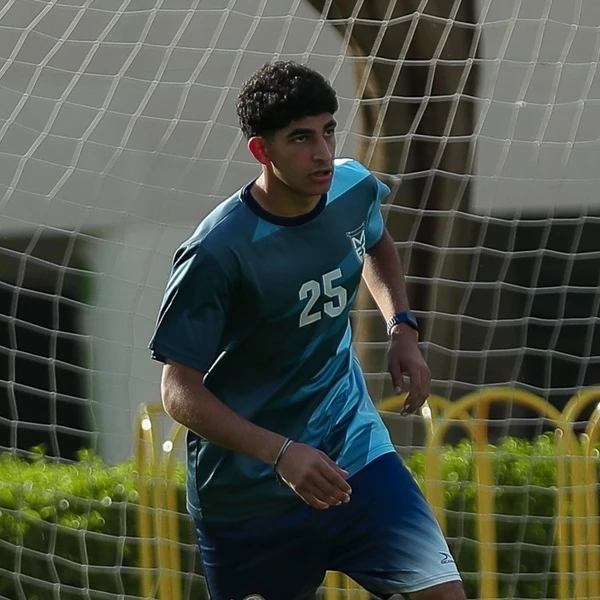
user profile avatar

Zeyad Elshahed

1x

Finalist

Bio

I am a driven student focused on using education to create meaningful opportunities for myself and others. I value discipline, growth, and resilience, and I approach challenges with a mindset of continuous improvement. My goal is to build a career that combines success with positive impact. Scholarships will allow me to focus on my education, develop my skills, and take full advantage of the opportunities ahead.

Education

South High School

High School
2022 - 2026

Miscellaneous

  • Desired degree level:

    Bachelor's degree program

  • Majors of interest:

    • Mechanical Engineering
    • Aerospace, Aeronautical, and Astronautical/Space Engineering
  • Not planning to go to medical school
  • Career

    • Dream career field:

      Mechanical or Industrial Engineering

    • Dream career goals:

    • I would help file papers, market policies and was an assistant to the boss

      Lara Insurance Agency
      2022 – 20253 years

    Sports

    Soccer

    Varsity
    2012 – Present14 years

    Research

    • Agricultural Engineering

      Cairo Water Week — Engineer an idea
      2024 – 2025

    Public services

    • Volunteering

      The American University of Cairo — To pack and give out the food
      2021 – Present
    Scorenavigator Financial Literacy Scholarship
    I was eleven years old when my mother packed our lives into suitcases and moved us from America to Egypt. There was no long explanation. There did not need to be. I was old enough to understand that money was the reason we did most things and the reason we could not do most others. Growing up in a single-parent household taught me that lesson early. My mother carried everything alone, and watching her do it shaped how I see work, responsibility, and what it means to show up for the people you love. She never complained. She simply kept moving. The years that followed in Egypt were an adjustment I did not always handle gracefully. I had to rebuild friendships, navigate a different school system, and learn to live without things I had taken for granted. What I could not have, I learned not to dwell on. What I could control, I worked on. That discipline did not come naturally. It came from watching my grandfather. He was not a man of many words, but he was the most honest and hardworking person I have ever known. I spent entire days at my grandparents' house while my mother worked, sitting beside him watching television, listening to him read from the Quran in a voice that made everything feel steady. He never chased status or comfort. He simply did what needed to be done, with full effort, every time. That image stayed with me. It became the standard I measured myself against. Mechanical engineering chose me before I fully chose it. I was always the kind of child who needed to understand how things worked, who took things apart not out of carelessness but out of genuine curiosity about what lived inside them. There is something deeply satisfying about a system that functions exactly the way it was designed to and something even more satisfying about being the person who designed it. I want to build things that solve real problems for real people, and I believe that engineering done with honesty and purpose is one of the most direct ways a person can contribute to the world around them. Pursuing higher education in the United States is not simply an academic decision for me. It is the most serious step I can take toward becoming someone capable of changing my family's circumstances. My mother gave up stability to give me opportunity. The return I owe her is not symbolic. It is financial, practical, and real. I want to graduate, build a career in mechanical engineering, and make sure she never has to carry everything alone again. My ambitions do not stop at my front door, though. Engineering touches infrastructure, energy, transportation, and manufacturing in ways that affect entire communities. I grew up between two countries, and I understand from direct experience what under-resourced environments look like and what they need. I intend to bring both the technical skills and that perspective into everything I build, designing things that function well and serve people who need them most. Those quiet afternoons at my grandparents' house taught me more than I recognized at the time. They taught me that a life of integrity is built slowly, through small consistent choices; through showing up; and through refusing to let difficulty become an excuse. My grandfather never had the educational opportunities I am now pursuing. He built his character without them. I intend to build mine with them and make sure that whatever I create afterward is worthy of everything it cost to get here.
    Pierson Family Scholarship for U.S. Studies
    I was eleven years old when my mother packed our lives into suitcases and moved us from America to Egypt. There was no long explanation. There did not need to be. I was old enough to understand that money was the reason we did most things and the reason we could not do most others. Growing up in a single-parent household taught me that lesson early. My mother carried everything alone, and watching her do it shaped how I see work, responsibility, and what it means to show up for the people you love. She never complained. She simply kept moving. The years that followed in Egypt were an adjustment I did not always handle gracefully. I had to rebuild friendships, navigate a different school system, and learn to live without things I had taken for granted. What I could not have, I learned not to dwell on. What I could control, I worked on. That discipline did not come naturally. It came from watching my grandfather. He was not a man of many words, but he was the most honest and hardworking person I have ever known. I spent entire days at my grandparents' house while my mother worked, sitting beside him watching television, listening to him read from the Quran in a voice that made everything feel steady. He never chased status or comfort. He simply did what needed to be done, with full effort, every time. That image stayed with me. It became the standard I measured myself against. Mechanical engineering chose me before I fully chose it. I was always the kind of child who needed to understand how things worked, who took things apart not out of carelessness but out of genuine need to see the inside. There is something deeply satisfying about a system that functions the way it was designed to and something even more satisfying about being the person who designed it. I want to build things that solve real problems for real people. I believe that engineering done honestly is one of the most direct ways a person can contribute to the world around them. Pursuing higher education in the United States is not simply an academic decision for me. It is the most serious step I can take toward becoming someone capable of changing my family's circumstances. My mother gave up stability to give me opportunity. The return I owe her is not symbolic. It is financial, practical, and urgent. I want to graduate, work in my field, and make sure she never has to carry everything alone again. But my ambitions do not stop at my front door. Engineering has the capacity to touch infrastructure, energy, transportation, and manufacturing in ways that affect entire communities. I grew up between two countries, and I understand, from direct experience, what under-resourced environments look like and what they need. I intend to bring both the technical skills and that perspective into my career, building things that function beautifully and serve people who need them most. Those quiet afternoons at my grandparents' house taught me more than I realized at the time. They taught me that a life of integrity is built slowly, through small consistent choices, through showing up, through refusing to let difficulty become an excuse. My grandfather never had the educational opportunities I am pursuing. He built his character without them. I intend to build mine with them, and make sure that what I build after is worthy of everything it cost to get here.
    WCEJ Thornton Foundation Low-Income Scholarship
    My father fixed other people's cars for twenty years. He came home every night with grease under his fingernails that never fully washed out no matter how hard he scrubbed. He believed in education the way some people believe in religion, as something sacred, something that could save you. The irony is that believing in it was never our problem. Affording it was. I grew up understanding money as something that disappeared. Rent took it. Groceries took it. Emergencies took the rest. College was not a conversation we had at the dinner table because it felt like discussing a vacation home: theoretically possible, practically absurd. What changed was not our financial situation. What changed was me deciding that the story I had inherited was not the only story available to me. I started working at sixteen, not for spending money, but because the household needed it. Evenings and weekends, I tutored younger kids in math at a local community center. That experience did something unexpected to me. I watched children who had been told, explicitly or implicitly, that they were not smart, kids who had absorbed failure like a second language, suddenly understand something. The moment a concept clicked, their entire posture changed. They sat up straighter. They looked at the problem differently. They looked at themselves differently. I realized that education is not simply the transfer of information. It is the transfer of possibility. When someone learns something real, they expand their model of what they are capable of knowing. That expansion is quiet, permanent, and cannot be taken back. That is why I am pursuing a degree in education with a concentration in mathematics. Not because it is the safe choice financially, it is not, but because it is the most direct path between who I am, what I have witnessed, and what I believe the world needs. The problem I care about is specific: low-income students are dramatically underrepresented in STEM, and the gap opens early. By middle school, many have already decided that mathematics belongs to other people, smarter people, better-resourced people. This belief is not innate. It is slowly taught through underfunded classrooms and a cultural message that scientific identity belongs to a particular kind of background. I know this because I almost believed it myself. What I want to do is teach mathematics in under-resourced schools and eventually develop training programs that give other teachers the tools to make students feel that mathematics belongs to them. There is a meaningful difference between a teacher who explains mathematics and a teacher who makes a student feel capable of owning it. I want to be the second kind, and multiply that kind. I will not pretend the financial weight of this path is invisible to me. Every semester is a calculation: what I earn, what I owe, what I sacrifice. I have applied for every scholarship available. I work. I plan carefully. I lose sleep over it sometimes, and then I remember the girl at the community center who thought she was bad at math until the night she suddenly wasn't, and I remember exactly what this is worth. The cost is worth everything. Because the alternative is not simply that I don't get a degree. The alternative is that I become one more person who wanted to change something, ran into a financial wall, and quietly accepted the limits that circumstance drew around them. I cannot stand in front of a classroom of kids from difficult backgrounds and ask them to persist if I did not. My father never complained about the work. He complained about the ceiling, the invisible line above which his opportunities simply did not extend, regardless of how hard he pushed. He spent twenty years wanting me to find a life without that ceiling. I am trying to build one. Not just for myself, but structured so I can hold the door open behind me, so that the students I teach can walk through it, and the students they eventually reach can walk through it after them, until the idea that mathematics and intellectual life are not for people like us becomes not just false, but historically, demonstrably, obviously false. That is the impact I am working toward. A classroom. A student. A moment when something clicks and a child sits up straighter and sees themselves differently. That moment, multiplied, is how the world actually changes.