Hobbies and interests
Fencing
Art History
Neuroscience
Public Policy
Reading
History
Historical
Science
I read books daily
Zara Pehlivani
1x
FinalistZara Pehlivani
1x
FinalistBio
Flow mode is an intoxicating experience that made me obsessed with wanting to understand the mind. I’ve found that neurotechnology unites my sundry academic interests, from art to science to athletics, and has the potential to restore and augment the wellbeing of so many people. That said, hooking up a brain to a machine (even a simple electroencephalogram) raises ethical and philosophical concerns. As the field grows, the law will predictably lag behind.
In the future, I hope to contribute to the development of the policy framework regulating cognitive therapies. Neuroscientific competence is a keystone for sound policymaking—yet broader ethical, economic, and social considerations are indispensable. I would love to be solving problems at the convergence of each of these.
Education
Harvard College
Bachelor's degree programMajors:
- Neurobiology and Neurosciences
The Meadows School
High SchoolMiscellaneous
Desired degree level:
Master's degree program
Graduate schools of interest:
Transfer schools of interest:
Majors of interest:
- Neurobiology and Neurosciences
Career
Dream career field:
Neuroscience
Dream career goals:
Sports
Fencing
Club2018 – Present8 years
Awards
- National Champion Div II Epee
Research
Neurobiology and Neurosciences
Max Plank Institute at Ludwig Maximilian University of Munich — Lab technician, data analyst2023 – 2023
Arts
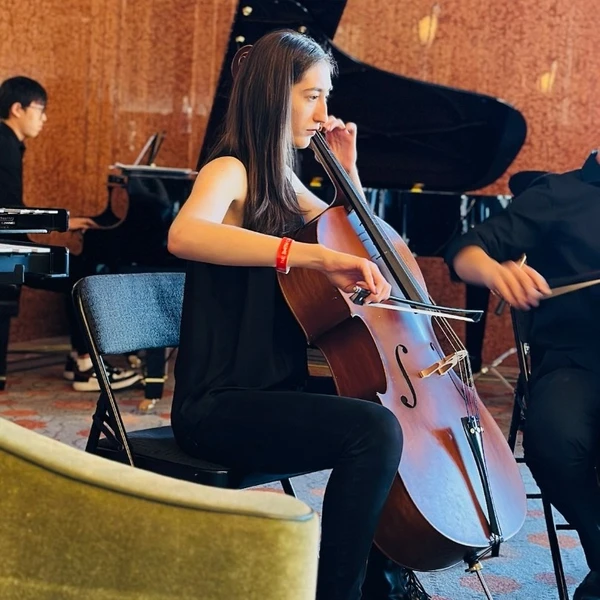
School orchestras
Musicconcerts2018 – Present
Public services
Advocacy
Two Steps Forward Foundation — Events organizer, public speaker, promoter.2021 – Present
Jimmie “DC” Sullivan Memorial Scholarship
I am a first-year undergraduate student pursuing a Bachelor's degree in computational neuroscience. I actually selected my field of study largely because of my experience with "flow mode" while fencing on the national and NCAA Division I circuits. I'm obsessed with feeling the world dissolve around me and my opponent, processing nothing but the sensory experience of the bout. In these moments, I feel like an outside spectator of my own body and mind—and the more I compete, the more I am in awe of my brain's ability to switch gears like this under high-pressure situations.
At the same time, being a student-athlete has made me hyper-aware of the fragility of this mental state.
Being an athlete is scaffolded by cognition. Sports and the brain have a complex relationship, especially among youth, who are both neuroplastic and undergoing physical growth. Even in optimal physical condition, the human body simply fails to perform when the motor system, prefrontal cortex, or emotional regulation pathways break down. Psychological training is thus indispensable for athletic success—yet excessive self-analysis exacerbates anxiety and hinders motor function. Conversely, constant practice is important, yet when it spills over into recovery time (as it often does), it reinforces mental blocks and worsens fatigue, which undermines progress.
In other words, being a competitive athlete means being a master of constant calibration—of self-tuning. In my view, what distinguishes top fencers from even great fencers is, ultimately, their strong and accurate intuition for the dynamic interplay between their own physical and psychological parts. It is this intuition which enables them to determine when to push themselves and when to pull back, when to strategize and when to trust their reflexes. Regrettably, many young fencers are undereducated about this, in part because fencing is a niche activity with relatively few and recent resources addressing its neuropsychological demands. These athletes quietly battle anxiety, burnout, and low confidence because they lack the tools to truly understand and process their experience.
My work as a local referee, assistant coach, and camp counselor for youth fencers has reinforced this observation, particularly among athletes whose results no longer reflect their effort. Motivated by this, I wrote a book specifically about the neuroscience of fencing, aiming to explain the concepts in a way that they can be usefully applied. Through these avenues, and in the future, I want to help young athletes acquire the tools to understand their minds on a deeper level through a physical activity with which they already deeply connect. This is critical not only for their fencing goals but also for their broader personal development in a society where addiction, anxiety, and other psychopathologies are increasingly pervasive among young people.
I am particularly excited by what the future of sports neuroscience holds. As our comprehension of the brain develops alongside emergent technology, we will soon be able to employ non-invasive biofeedback techniques to help athletes observe their cognitive activity in real time. These technologies will demystify cognitive performance in sports, empowering athletes to train their brains with precision and self-compassion. I am eager to contribute to this evolving field by bridging developmental neuroscience research and fencing, helping to shape a smarter, healthier, and more confident generation of competitors.