
Hobbies and interests
Veterinary Medicine
Biomedical Sciences
Biotechnology
Yuxuan Xia
2x
Finalist1x
Winner
Yuxuan Xia
2x
Finalist1x
WinnerBio
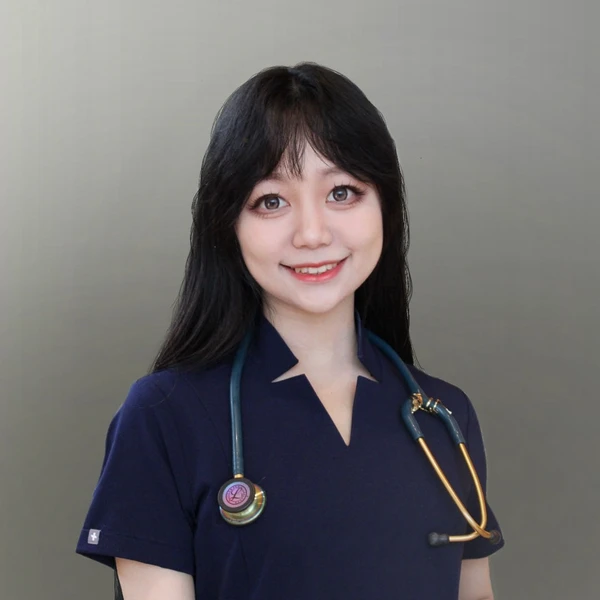
My name is Yuxuan Xia, and I am a D.V.M. candidate at Cornell University College of Veterinary Medicine. Born and raised in China, I bring a global perspective to animal health grounded in scientific training and compassion for all species. I graduated from UCLA in three years with a 4.0 GPA, double majoring in Biology and Computational and Systems Biology, and conducted research in bioengineering and statistical genomics.
My path in veterinary medicine has been shaped by hands-on work with small animals, exotics, and wildlife. I have interned at hospitals in both the U.S. and China, operated an exotic pet hotel in Los Angeles, and volunteered in wildlife rescue and animal education. As a reptile keeper, I also founded student clubs to challenge stigma against non-traditional pets.
I have a strong interest in veterinary dermatology. I am drawn to its diagnostic complexity and to the way skin disease intersects with animal health, human health, and quality of life. Through volunteer clinical work and specialty shadowing, I have seen how dermatology demands both careful reasoning and meaningful long-term client communication.
Beyond clinical care, I am deeply invested in public health, animal welfare, and education. I have published research, led social justice initiatives, and mentored aspiring pre-vet students.
My household income is under $10,000 annually. Scholarships are essential to my continued education and future in veterinary medicine. I deeply appreciate your help!
Education
Cornell University
Doctoral degree program (PhD, MD, JD, etc.)Majors:
- Health Professions and Related Clinical Sciences, Other
University of California-Los Angeles
Bachelor's degree programMajors:
- Biology, General
- Biomathematics, Bioinformatics, and Computational Biology
Career
Dream career field:
Veterinary
Dream career goals:
Small Animal and Exotics Veterinarian
Student Veterinary Assistant
Cornell University Hospital of Animals2025 – Present1 year
Research
Wildlife and Wildlands Science and Management
Independent research — Researcher2019 – 2021Veterinary Biomedical and Clinical Sciences
Wu Laboratory at Nanjing Agricultural University — Undergraduate Researcher2021 – 2021Biomathematics, Bioinformatics, and Computational Biology
Balliu Laboratory at the UCLA Department of Computational Medicine, Los Angeles, CA — Undergraduate Researcher2022 – 2024Biomedical/Medical Engineering
Demer-Tintut Lab at UCLA David Geffen School of Medicine, Los Angeles, CA — Undergraduate Researcher2022 – 2024
Public services
Volunteering
Southside Clinic, Ithaca, NY — Volunteer (Veterinary student)2024 – 2025Volunteering
Positive Tail, Long Island City, NY — Volunteer (Veterinary assistant)2025 – 2025Volunteering
Fly Horse Equestrian Club, Nanjing, China — Volunteer2020 – 2021Volunteering
Hongshan Forest Zoo — Volunteer2020 – 2021Volunteering
Feral Cat Control at Nanjing Agricultural University, Nanjing, China — Volunteer2020 – 2020Volunteering
RescueMe, Los Angeles, CA — Adopter/Foster2021 – 2023Volunteering
Jiangsu Wildlife Rescue Center, Nanjing, China — Volunteer2020 – 2021Advocacy
Parrot Protector — Volunteer2021 – PresentVolunteering
International Women Association — Volunteer2020 – 2021Volunteering
NGO “Let Bird Fly” — Volunteer2021 – 2021
Future Interests
Advocacy
Volunteering
Philanthropy
Entrepreneurship
Unleashable Scholar
The first time I understood what veterinary dermatology could mean was not in a specialty hospital, but at a free volunteer clinic in New York. An old man walked in holding a cat that looked as weathered as he did. What struck me first was not only the cat’s patchy alopecia and irritated skin, but the similar lesions on his own skin. In the quiet urgency of someone used to being dismissed, he told us he was homeless. The cat had been with him for years, moving through shelters, sidewalks, and winters together. Recently, the cat had begun losing fur. He could not afford a regular veterinary visit, but his concern was unmistakable.
In that moment, dermatology stopped feeling like a narrow specialty of “skin problems” and became something larger: a field where animal health, human health, dignity, and access to care intersect. Skin disease is visible, uncomfortable, stigmatizing, contagious, and impossible to ignore. It can alter not only how an animal feels, but how an owner holds, touches, and lives alongside that animal.
We made an exception, worked up the cat, and later confirmed ringworm. The veterinarian prescribed treatment, and we urged the client to seek care for himself. I still remember the tenderness: he had so little, yet had carried responsibility for another life through instability. What haunted me afterward was how easily cases like his could become something worse: a severe allergic flare, a deep pyoderma, or chronic otitis left untreated. That encounter left me wondering what it would take to become the kind of specialist who could make care like this more accessible.
I started to explore dermatology in a more professional setting. I was fascinated by the way it transforms what seems visible and simple into a nuanced diagnostic puzzle. Shadowing in a specialty service, I saw how rigorous and rewarding that work could be. I observed cases of chronic otitis and recurrent allergic skin disease that had frustrated owners for years. The answers came not from a single dramatic test, but from careful listening, lesion mapping, cytology, skin scrapings, thoughtful differentials, and long-term planning. I also saw how much communication mattered: teaching owners how to recognize flares, administer treatment consistently, and understand that good medicine is often iterative rather than instantaneous. That combination of technical depth and long-term relationship-building felt deeply meaningful to me.
I was also drawn to the possibility of practicing in an independently owned specialty setting, where clinical freedom can make space for both high standards of care and a commitment to the community. I hope to build a career in veterinary dermatology that combines advanced expertise with the flexibility to dedicate part of my work to patients and owners who might otherwise go without specialty care.
My commitment to access is also deeply personal. As an international student, I am ineligible for the loans and federal aid that many of my peers rely on. My parents earn barely $3,000 per month, and cancer has placed additional strain on my family. We once hoped to sell our home to help finance my education, but the housing market collapsed. These experiences have made me acutely aware of how easily dedication and compassion can be constrained by financial insecurity. They have also made me more certain that expertise should not belong only to those who can most easily afford it.
Dermatology drew me in through science, but it has kept me through something deeper: relieving suffering, restoring comfort, and protecting the bond between animals and their people.
Team Crosby Forever Veterinary Medicine Scholarship
"A vet? It's not a suitable job for you."
According to the stereotype in Chinese society, studying veterinary medicine is not a wise choice for a girl. My dream was discouraged, like a wounded bird retreating into the shadows. Yet, as birds are destined for the sky, my aspiration, nurtured by years of introspection, eventually grew stronger.
In my second year in LA, a video of a black kite, Hei, that I once cared for in a rescue center, incidentally caught my eye. Hei's wings brought me back to the summer of 2021, when I met her at the shelter. At first sight, her vulnerable yet resilient gaze touched me. Dr. Chen, my mentor at the shelter, diagnosed Hei with an ulna fracture and asked me to monitor her status. Looking at this wounded raptor confined in a small cage, I reflected on my own vet dream crippled by discrimination. Yet, much like Hei, who bravely regained strength to face surgery, my dream survived, quietly yet persistently. Standing next to the operating table, I could not help but envision myself as the vet cleaning the infected tissue, placing the IM pin, and mending the incision. In Hei's eyes, I saw a vivid soul, with intelligent consciousness and profound emotions, which ignited my aspiration to cure, to prevent death, and to do a vet's job.
Would Hei ever fly again? I left for LA after her operation, not expecting an answer until the video reconnected us. I contacted Dr. Chen, who sent me pictures of Hei's thick bony callus, resembling my own protective shell where I secretly hid my aspirations. Chen then talked about Hei's miraculous recovery and the rewilding plan. Seeing Hei hovering swiftly in the training cage and getting closer to the sky, I sensed the impulse to free my own dream out of my self-imposed shell. I started to familiarize myself with the U.S. veterinary medicine system, learning from supportive experts and like-minded peers. Through data-driven veterinary research and global vet practice analysis, I recognized the value of my interdisciplinary background and international identity. No longer a passerby, I secured an internship in a clinic, where I found my niche in the work. In my days with patients, even blood, vomit, and feces became a totally acceptable part of my routine. Once again, I confirmed my love for this job, one that combines scientific precision with empathy and healing with meaning.
In the summer of 2023, I attended Hei’s rewilding event. As she disappeared toward the distant horizon, I saw not just an animal rescued by a vet, but my vet dream rekindled by this black kite. Just as Crosby’s legacy reminds us, loss does not define the future. Although one companion’s journey may end, the world remains filled with lives intertwined with human love and dependence. Whether returning a wild raptor to the sky or striving to protect the precious human-animal bonds, I hope, through my veterinary education, to strengthen the connections that sustain resilience in times of uncertainty. By integrating clinical practice with research and community engagement, I aspire to create pathways where healing extends beyond survival to quality of life and shared well-being.
That night, I shared my decision with my family. From the luminance in my eyes, they recognized the same naive child who once returned home with mud on her clothes and cockleburs tangled in her hair, proudly presenting a wild snake she had caught by hand. An irrepressible childhood enthusiasm matured, like a bird finally trusting the strength of its wings. They smiled.
“Be a vet. It’s the perfect job for you.”
Betsy V Brown Veterinary Scholarship
WinnerThree years from now, I see myself stepping into the world as a newly graduated veterinarian—confident in my clinical training, grounded in compassion, and equipped to serve both conventional companion animals and those often overlooked in mainstream care. After earning my DVM degree from Cornell University, I hope to join a mixed animal or exotics-focused practice where I can treat not only dogs and cats, but also birds, reptiles, and small mammals. I plan to devote my personal time to wildlife rehabilitation efforts and low-cost community clinics, especially for immigrant families and non-English-speaking clients who may lack access to regular veterinary care. I also hope to contribute to local shelters by offering spay/neuter surgeries and basic exotic animal triage, helping reduce suffering and promote responsible ownership.
In the long term, I aspire to launch a mobile veterinary unit that brings field-ready care to underserved rural and urban areas. This initiative would combine clinical service with educational outreach—empowering owners, students, and local stakeholders through culturally competent, science-based animal health education. Whether it’s teaching a young child how to care for their first turtle or stabilizing a barn owl caught in a fence, I want to be present where both medical skill and empathy are urgently needed.
This vision was not built in a classroom. It began with a black kite named Hei.
In the summer of 2021, I volunteered at a wildlife rescue center in China. That’s where I met Hei, a black kite with a fractured ulna. Hei watched us—not with panic, but with sharp, curious eyes. Dr. Chen, my mentor, asked me to monitor her recovery after surgery. Standing beside the operation table and watching each step, I imagined myself cleaning the wound, placing the IM pin, suturing the incision. Hei wasn’t just a patient. She became a mirror of my own dream: grounded, wounded by doubt, but not defeated.
At that time, I was on a different path, studying Computational and Systems Biology and Data Science Engineering at UCLA, preparing for a Ph.D. in Bioinformatics. Growing up in China, I had internalized the stereotype that veterinary medicine was low-status and financially unstable. I told myself that research was safer, more prestigious. But as I watched Hei confined in her cage—longing for flight yet unable to take off—I realized that I, too, had clipped my own wings.
Caring for Hei reignited a calling I thought I had outgrown. Her surgery was successful, and I left for Los Angeles shortly after. I never expected to see her again—until Dr. Chen sent me photos of her thick bony callus and final flight preparations. That summer, I traveled back to attend Hei’s official rewilding event. As she soared beyond the horizon, I saw not just an animal returning to the wild—I saw my own dream returning to life. I finally made the decision I had long postponed: I submitted my VMCAS application. I wasn’t just dreaming of becoming a veterinarian anymore—I was taking the first real step.
Hei taught me what veterinary medicine truly means. It’s not just diagnosis or technique—it’s bearing witness to recovery, believing in resilience, and choosing healing even when the world tells you not to. She showed me that being a vet is not just a career—it’s a promise: to advocate for the voiceless, to restore dignity, and to never walk away from life just because it’s fragile.
Today, as a first-year-DVM candidate at Cornell, I carry Hei’s story with me into every lab, every clinic, and every goal I set for the future. In three years, I will be the vet Hei helped me become.