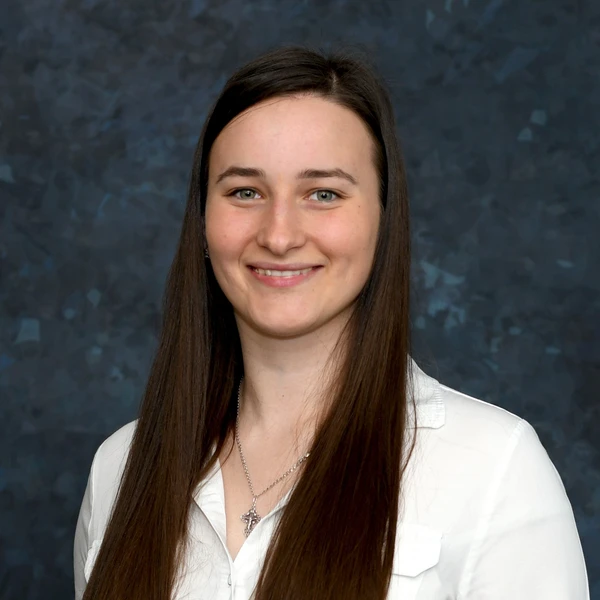
When I think about Alzheimer’s disease and other forms of dementia, what comes to mind is not just a clinical diagnosis, but the profound human cost—the way memory loss reshapes identities, families, and communities. My personal journey as a displaced medical student from Ukraine and now an aspiring psychiatrist in the United States has given me a unique perspective on what it means when the brain—our most precious organ—begins to falter.
Although I have not had a family member with Alzheimer’s, I have witnessed dementia-related illnesses up close through my work in psychiatry clinics. I remember one patient in particular whose early-onset Alzheimer’s had stripped away her independence long before her family expected. She would arrive accompanied by her daughter, who spoke with a mixture of love and exhaustion. There were days when the patient smiled warmly and asked about everyone in the clinic as if they were old friends, and other days when she did not remember she had been there before. Sitting with her during treatments, I saw how devastating it was not only for her but for her family to watch her slip in and out of herself. For me, it was a lesson that dementia does not affect one person alone; it reshapes the lives of everyone connected to them.
This experience deepened my understanding of how memory is more than a biological function—it is the thread that connects us to our history, our relationships, and our sense of who we are. When dementia takes hold, those threads begin to unravel, leaving loved ones to piece together continuity for someone who can no longer provide it themselves. I think about this often as I study neuroscience and prepare for medical school: the fragility of memory, and yet the resilience of love and caregiving that often surrounds dementia patients.
The impact of Alzheimer’s on my perspective has also been shaped by my own history of displacement. During the war in Ukraine, I lost my home, my studies, and the life I had built. While my memories remain intact, the dislocation created a disorienting sense of rupture—like waking up in a world that no longer recognized me. It gave me a glimpse into what it might feel like to lose one’s bearings, to struggle to connect past and present, to feel the ground of familiarity slipping away. That personal experience gave me an even greater empathy for people with dementia. While I could hold on to my identity through memory, they cannot. And yet, like me, they deserve compassion, patience, and care as they navigate an unfamiliar reality.
Alzheimer’s and other dementias also highlight a critical gap in medicine and research that I hope to help address. Despite decades of study, we still have limited treatments and no cure. Through my undergraduate studies in biology and neuroscience, I have immersed myself in understanding the brain not just as an organ, but as the seat of human experience. I am fascinated by the biochemical processes of memory, the ways neurons communicate, and the mysteries of what causes those pathways to deteriorate. Every lecture, every lab, and every patient I encounter fuels my conviction that advancing dementia research is urgent and necessary.
But the lessons I’ve learned go beyond science—they are deeply human. Dementia has taught me about patience: the importance of meeting people where they are, even if that “where” changes from day to day. It has taught me about resilience: how families adapt, grieve, and yet continue to show up for their loved ones. And it has taught me about dignity: that every person, no matter how much memory they have lost, deserves to be treated with respect and compassion.
In my future as a psychiatrist, I plan to integrate these lessons into both my clinical practice and research endeavors. I want to work at the intersection of neuroscience and psychiatry, studying not only how to treat dementia but how to support the mental health of caregivers and families who shoulder the invisible weight of this disease. Too often, the conversation about dementia ends with the patient, but the ripples extend far beyond. Addressing those ripples—through therapy, education, and accessible community resources—is just as important.
My advocacy also extends into broader community work. As the co-founder of a bilingual children’s library created in response to the war in Ukraine, I have seen how preserving memory and identity can sustain resilience during times of upheaval. That project reminded me that storytelling, continuity, and connection are forms of “mental preservation” too. In a way, it parallels the challenges of dementia: when memory begins to fade, communities must step in to hold stories and identity on behalf of those who cannot. This belief—that community can help carry memory—will guide me as I continue working in healthcare and mental health advocacy.
The legacy of people like Henry Respert reminds me that dementia is not an abstract concept but a lived reality for countless families. It demands our attention, compassion, and most of all, our commitment to research. I want to be part of the generation of medical professionals who not only deepen our scientific understanding of Alzheimer’s and related diseases but also transform the way society supports those affected by them.
For me, studying healthcare and neuroscience is not just about academic achievement—it is about service. It is about using science to restore dignity where it is threatened, to create hope where it is scarce, and to honor the humanity of those whose memories are fading. What I have learned from dementia is that while the disease can steal memories, it cannot erase the love, patience, and determination of those who continue to care. That is the legacy I want to carry forward in my career: to combine science with empathy, and to work tirelessly for a future where memory loss is met not only with understanding, but with real, effective treatments and cures.