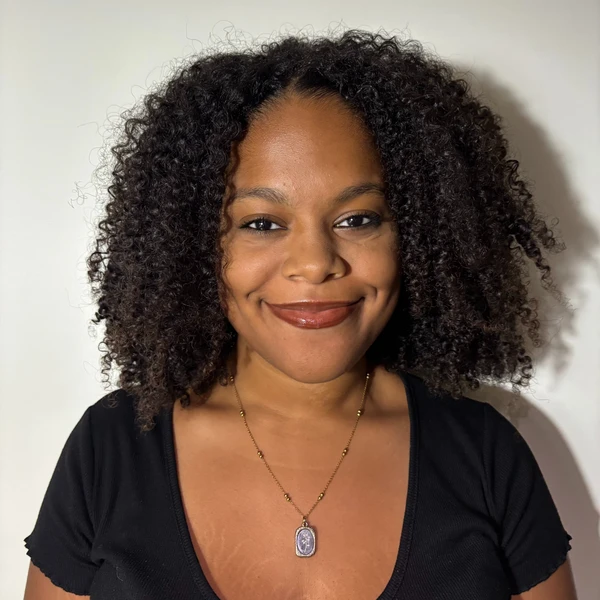
user profile avatar

Yuisa Davis Polen

1x

Finalist

General information

Hobbies & Interests

  • Acting And Theater
  • Latin Dance
  • Dance
  • Drums

Bio

Ever since I was a little girl, I have always been a performer. From playing the drums at age five to dancing with different groups, the arts have always been a central part of my life. However, nothing captured my attention quite like acting. Whether on stage or in front of a camera, acting allows me to connect with people and tell meaningful stories. Throughout high school, I have grown as both a performer and a leader, serving as captain of my school’s acting team, earning multiple awards, and later taking the stage in our production of Elf Jr. the Musical. This fall, I will begin pursuing a Bachelor of Fine Arts in Dramatic Arts at The New School. I selected this major because acting is more than a dream for me; it is my passion and a way to create change. Howard's Theatre Arts program will provide rigorous training in acting, movement, voice, breathing techniques, and performance, helping me develop the skills necessary to succeed in this highly competitive industry.

Education

The New School's School of Drama

Bachelor's degree program

2026 – 2030

Majors:
  • Drama/Theatre Arts and Stagecraft

Cupeyville School

High School

2021 – 2026

Miscellaneous

Desired degree level:
Bachelor's degree program
Majors of interest:
Drama/Theatre Arts and Stagecraft
Desired degree modality:
In-Person
Medical school interest:
No

Career

Miscellaneous

Dream career field:
Performing Arts
Work experience:
1 year
Has nursing license:
No
Hines Scholarship
During my senior year, college represented the opportunity to grow as an artist, discover more of who I am and begin building a life around the work I love. But getting to college has already taught me that the path toward that future will not always look the way I expect it to. I have been performing since I was five years old. Growing up as a percussionist, dancer, and actor gave me the foundation to eventually choose acting as the career I wanted to pursue. When I began thinking seriously about my future, I knew I wanted a career that challenged me creatively and allowed me to spend my life doing something meaningful to me. Initially, I planned to study at Howard University’s Theatre Arts Acting program. Howard’s theater program has shaped artists I admire, including Chadwick Boseman, Taraji P. Henson and Phylicia Rashad. I truly believed Howard was where I was supposed to begin my journey. I imagined growing as an actor in a space where Black artists were not the exception, while learning within a community known for producing I creatives who have made a lasting impact. That plan changed completely on July 22nd, 2026. After attending orientation, connecting with classmates, and packing for move-in, I received an email saying I had been unenrolled. I was shocked. Instead, more than 500 other students and I suddenly found ourselves without the enrollment we had expected. For the next two weeks, I advocated for my enrollment because my family and I had already invested time, money, and trust in the university because I still believed Howas was where I was meant to be. After months of college decisions and financial stress, I had finally felt secure in my future. Suddenly, that security was gone. But losing one plan forced me to reconsider another opportunity I had already let go. Before deciding whether I would need to take a gap year, I reached back out to The New School, a university that had previously admitted me but that I declined because of the cost. . Studying in New York City had actually been my goal from the beginning of my college search, but financial limitations had originally made Howard University the more realistic option for my family. At the time, being unenrolled felt devastating. Now I can also see how it redirected me toward an opportunity that fits who I am as an artist. The New School gives me the opportunity to study in an environment built for multidisciplinary artists , which immediately connected with the way I see myself, as a percussionist, dancer, and actor. . Throughout the enrollment process , The New School has been transparent, supportive, and proactive in helping me make the transition. The challenge is that attending The New School will cost my family approximately $14,000 more than we had originally budgeted for my education. My family and I are doing everything we can to make this opportunity possible, and scholarships like the Hines Scholarship could reduce the financial burden while allowing me to continue pursuing the education I fought so hard to reach. College no longer represents only new experiences or professional training to me. It represents perseverance and the decision to keep moving toward the life I want even when the path changes completely. I am going to college to become a stronger actor and multidisciplinary artist, but I am also going to prove to myself that an unexpected setback does not have to determine where my story ends.
Charlene K. Howard Chogo Scholarship
Women's empowerment, to me, means creating a world where women and girls feel confident using their voices, pursuing their dreams, and recognizing their own potential. As a young Afro-Latina woman and an aspiring actress, I understand the importance of representation and having people who encourage you to believe in yourself. My experiences in acting, drumming, Bomba dance, and leadership have taught me that empowerment is not only about achieving my own goals, but also about helping other women discover that they can achieve theirs. Through the arts and my involvement in my community, I strive to be an example of what is possible when women are given the opportunity to grow, lead, and express themselves. One of the most meaningful ways I have contributed to women's empowerment is through my work with Taller Tamboricua, a Puerto Rican Bomba organization. I began as a student and have grown into a teaching assistant, administrator, and performer. Since 2021, I have dedicated countless hours to helping younger students learn Bomba, develop their confidence, and connect with their cultural identity. Working with girls and women of different ages, including students with disabilities, has shown me how important it is to create spaces where everyone feels welcome and capable. When I help a young girl learn a new movement, find the courage to perform, or feel proud of her heritage, I am helping her recognize her own strength. I hope these experiences remind her that she deserves to be seen, heard, and respected. My commitment to empowerment also comes from my experiences as a student leader and performer. Throughout high school, I served as class president, acting team captain, and National Honor Society chapter president. These roles taught me that leadership is not simply about having authority; it is about listening, encouraging others, and making sure people feel that their contributions matter. As an actress, I have also learned the power of storytelling. Performing allows me to explore different perspectives and bring attention to experiences that may otherwise go unheard. As an Afro-Latina woman entering the professional performing arts, I want to challenge limiting expectations about who belongs onstage and in leadership positions. I hope to show other young women that their backgrounds, voices, and identities are strengths rather than obstacles. Ultimately, my impact on women's empowerment is rooted in mentorship, representation, and service. I want to use my education and future career in the performing arts to create opportunities for women and girls to express themselves, develop their talents, and become leaders. Whether I am teaching Bomba, supporting a fellow student, or performing onstage, I want my actions to encourage others to believe in their abilities. I know that empowerment does not happen through one person alone; it grows when women support one another and make room for others to succeed. My goal is to continue building those connections and to become the kind of woman who inspires others to pursue their dreams with confidence. By investing in myself while uplifting the women around me, I hope to leave a lasting impact on my community and contribute to a future where every woman and girl has the freedom to recognize her worth and reach her full potential.
The Concrete Rose Scholarship Foundation
For the past thirteen years, I have trained in the performing arts through acting, dance and percussion. These disciplines have shaped not only the artist I am becoming, but also the stories I hope to tell. Growing up as an African American and Puerto Rican girl, I often searched for women on screen who reflected both sides of my identity. My connection to Puerto Rican culture came largely through my family, while my understanding of Black identity was shaped by both my home and the world around me.What I rarely saw were women who fully embraced both identities and were portrayed with complexity, joy, ambition and strength. That absence became one of the reasons I decided to pursue acting professionally. I do not simply want to see greater representation; I want to help create it. My goal is to portray characters who reflect the full humanity of Black, Puerto Rican and Afro Latina communities, not only struggle, but also joy, intelligence, creativity, humor, love and success. I want younger girls who share my background to see themselves represented in ways that make them feel visible and proud. Throughout high school I worked hard to prepare myself for this future. I balanced rigorous academics with acting programs, bands, dance companies and other artistic opportunities while maintaining straight A’s. I believed that if I worked hard enough, the transition to college would be straightforward. Instead, the months before college became one of the most uncertain periods in life. Originally, I planned to attend Howard University, where I hoped to deepen my connection to Black culture and study within an environment rooted in Black excellence. In July 2026, I was among more than 500 students who were unexpectedly unenrolled. With very little time before the start of the academic year, I had to make a difficult decision: allow the setback to interrupt everything I had worked toward, or find another path. I chose another path. The New School in New York City offered me the opportunity to continue pursuing my education in an environment centered on creativity and multidisciplinary artistic development. Its approach allows me to strengthen my acting while continuing to draw from my experience in dance and percussion. Although I received significant merit and need-based aid, my family and I still face an approximately $18,000 financial gap each semester. The Concrete Rose Scholarship would help close that gap and make it possible for me to continue my education without allowing finances to become the obstacle that ends a dream I have spent more than a decade preparing for. It would allow me to focus more fully on my training, continue developing as a multidisciplinary artist, and move closer to a professional career in acting. My goal is not simply to become successful for myself. I want to build a career that expands what young Black, Puerto Rican and Afro-Latina girls believe is possible for them. I have already learned that the path to that goal will not always be easy, but I have also learned that when one path closes, I am capable of finding another. This scholarship would help ensure that I can keep moving forward.
Sloane Stephens Doc & Glo Scholarship
Growing up in the United States as an African American and Puerto Rican girl, I noticed that I had very few women in the media I could look up to who shared my heritage. I did not live in Puerto Rico nor speak Spanish fluently, so my exposure to Puerto Rican culture was limited to my family. In terms of African American actresses, they were scarce in the media and when they were shown, they were often portrayed in a negative light. Meanwhile, I rarely saw other Afro-Latinas represented on screen, women who proudly represented both their African American and Latin cultures. This realization became a key factor behind my decision to pursue acting as a profession. While there are many public figures of Afro-Latino descent, few openly celebrate and represent the full spectrum of their identity. I want to change that narrative. I want to see more people who were talented in the arts and were unapologetically proud to be both Black and Latino. Through acting, I plan to portray meaningful characters, characters that represent the joy and prosperity of my people, not the negative and stereotypical tropes that we are often subjected to. Someone who has inspired me to go on this path is Elia Cortes, director and founder of Taller Tamboricua Inc., a bomba school in Puerto Rico. Bomba is a traditional form of dance and music in Puerto Rico and Elia has made it her mission to share this part of our culture with the world. Tamboricua teaches students from the ages of two up to adults, ensuring that every generation is exposed to Bomba. I began dancing with Tamboricua and working directly under Elia. She taught me the importance of being the voice for the underrepresented. Regardless of my intended profession, I always knew college was a part of my future. I knew how important it is to learn from masters of the field I want to enter, even more so acting. The performing arts is not an easy profession to pursue, it is often seen as unreliable, and the term “starving artist” often gets thrown around. However, I believe that without artists, society could not function as a whole. As stated in one of my favorite movies, Dead Poets Society, “Medicine, law, business, engineering, these are noble pursuits, necessary to sustain life. But poetry, beauty, romance, love; these are what we stay alive for.” Without the visual and performing arts, society would lose its sense of wonder. Originally I planned on studying at Howard University, a place where I could connect to my African American roots and learn my culture in the lens of black academia. However, I was one of the 500+ students unenrolled from the institution. It was a complete curveball to my future, but rather than give up on my dreams, I continued to fight for my education. I then turned to The New School in NYC. This institution focuses on art through a multidisciplinary approach, so it would allow me to explore all of my artistic skills, acting, dance, and percussion. Going to an expensive school in an expensive city is the risk I am willing to make to create an impact large enough that can touch the souls of young Puerto Rican and Black girls. Through my impact, I want to see the beauty of Black and Puerto Rican stories represented in the media, the change I wished to see when I turned on the TV as a young girl.
STLF Memorial Pay It Forward Scholarship
Bomba is a traditional Afro-Puerto Rican music and dance tradition that blends drumming, singing, and improvisational dance. In the past, Bomba was illegal, and it was deeply discouraged to dance; however, over the years, Puerto Ricans have embraced our roots. Over the past two years, I have organized and led a Bomba dance class for a small group of elementary school girls in my community. It troubled me at first, as this would be the first time I led a class completely on my own and without the guidance of any of my own instructors. However, I allowed myself to follow what I had learned for the past five years of studying Bomba and apply it to these young girls. Teaching the foundations of Bomba to these girls allowed me to see the impact of cultural and artistic education, After the first week of classes, my students told me they had practiced together all day because they wanted to perfect the steps. They asked me how long I had been dancing and showed genuine excitement to continue learning. As the classes progressed, their curiosity grew beyond the movements themselves. One student would often ask about the different regions of Puerto Rico where each style of Bomba originated after I taught them about the historical and geographical significance of the tradition. After a month of classes, the girls performed in front of their families. Seeing their excitement, confidence, and growth gave me a sense of pride I had never experienced before. Watching them share a tradition that carries so much history showed me the true power of service through art. These students became part of a legacy that will continue carrying the history of Bomba into future generations. This experience taught me that leadership is not only about guiding others, but also about creating opportunities for people to connect with something greater than themselves. Through service, I was able to introduce children to a cultural tradition they may not have encountered otherwise. By teaching art to our youth, I am able to make sure this important part of our Puerto Rican heritage continues to be passed down and remembered. There are many ancient cultures and traditions around the world that have been forgotten due to colonialism and the silencing of the native people, but in Puerto Rico we pride ourselves in always representing and celebrating our culture loudly and proudly. By leading these classes, I was able to reach children who may have not been exposed to Bomba and its rich history otherwise. Whether they continue their studies, or dance with the knowledge they gained, these girls will always have a hand at not only preserving a dance, but entire culture. This fall, I will begin pursuing a Bachelor of Fine Arts in Theatre Arts at Howard University as an acting major. My long-term goal is to build a professional career in theater, film, and television while using my platform to increase representation for Puerto Rican communities. Growing up as an African American and Puerto Rican girl, I rarely saw parts of my culture in the media, a perfect example being Bomba. As a result, I understand the importance of representation and the impact it can have on a young person's appreciation of their heritage. Through acting, I hope to help tell stories that allow people from underrepresented backgrounds to see themselves reflected on screen and on stage. I had the opportunity to share a vital part of my culture and heritage with young children, and I hope to continue these pursuits in the future.
Brett Brakel Memorial Scholarship
Softball entered my life in my freshman year in high school, and it was a drastic change from what I normally do. My entire life I have been incredibly involved in the arts, from music and dancing to more recently acting. With that being said, when my friends tried to convince me to join the softball team, I was hesitant at first. I had never played softball, and if I am being honest, I could not tell you the difference between softball and baseball, but we were all open to trying something new. Luckily for us, the team was pretty new, and we were all beginners. Learning the game was definitely a humbling experience. I was placed on second base, and as I was learning the game, I also had to understand the complexities that are expected of a second baseman. Knowing when to throw directly to first or step on second base, then throw to first to complete a double play had my brain everywhere at once, but the more practice I had, the more I understood. I will not lie, our team was definitely not a winning team. We all were pretty new to the game, and we played in a league where many schools offered scholarships for students to join their team. Some people may think this would be something that discourages us as a team; however, it was quite the opposite. The humbling moments where someone would drop a ball or perform a horrible play were moments we were able to laugh about. Our coach and co-coach fostered an environment where it truly was not winning; it was about learning the game, giving it your all, and having fun. We knew we were not a “good” team, but we sure did not let that stop us from having the time of our lives. Being a part of my school’s softball team taught me a lot about working as a team, staying focused at all times, and making quick decisions given the actions and decisions of another player. But most importantly, to never allow yourself to be upset over not being the best in the room. If we beat ourselves up for losing in a strikeout over an incredibly talented team, we would have been miserable. We made sure to take every loss as a lesson, whether it was “never be afraid of the ball” or “maybe next time listen to the coach and throw to first base ”. I loved the embarrassing and funny moments because they allowed me to let go of the expectations of the “perfect” student and allowed me to laugh at my own mistakes. As I plan to pursue a career in acting, this experience has taught me that in moments where I may be auditioning for a role or essentially “competing” with other people, I know I cannot compare myself with the performance of others. I have to allow myself to learn and laugh from my mistakes and give myself grace. I learned there is no constructive way to constantly criticize myself about my work, but as long as I recognize what can be better and work as hard as I can to reach that goal, I will find something significant in the experience, whether it is a role or a laugh with my teammates.
Charles B. Brazelton Memorial Scholarship
I have been playing the drums since I was five years old. Most people are surprised when I tell them that, especially when they see videos of me playing at such a young age. But that was my childhood. I grew up in an incredibly artistic family. My parents were art collectors, my sister was classically trained on the piano, and creativity was simply a part of everyday life. I always knew the arts would play a major role in who I would become. Training as a musician meant my childhood looked very different from that of many other kids. At six years old, while many of my friends were outside riding bikes or watching television, I was sitting behind a drum set trying to perfect a rhythm. By the time I was ten, instead of spending weekends at the mall, I was rehearsing for recitals and performing with jazz ensembles. There were moments when I resented the hours of practice, but looking back, I would not trade them for anything because they shaped the person I am today. Years of musical training have changed the way I experience the world. Without even realizing it, I am constantly tapping rhythms with my hands or feet whenever I am concentrating. My friends love to tease me because one of my biggest pet peeves is when people clap offbeat. Whether someone is clapping, playing an instrument, or even humming along to a song, I notice it almost immediately. I usually have to resist the urge to fix it. Some people might think that is an odd habit, but to me it is proof of how deeply music has become part of who I am. I do not just hear songs. I notice the rhythm behind everything. It has also given me a greater appreciation for artists who perform live with musicians instead of relying on prerecorded tracks. As someone who understands the discipline it takes to master an instrument, I admire the skill, preparation, and teamwork that live performances require. Music has also opened doors to other artistic passions. Along with playing the drums for the past twelve years, I have been a member of a professional dance company and have earned awards in acting competitions throughout high school. Every artistic experience has challenged me to become more disciplined, confident, and expressive. This fall, I will attend Howard University as a Theatre Arts major, and I hope to continue playing in Howard's Jazz Ensemble. Pursuing the arts has been my dream for as long as I can remember. If there is one thing that makes me stand out, it is that music has never simply been something I do. It has shaped the way I think, the way I listen, and even the way I move through the world. I may always be the person who notices when someone is offbeat, and honestly, I would not have it any other way.
Christian Fitness Association General Scholarship
Growing up as both African American and Puerto Rican has always been a source of pride. Being part of two rich cultures has filled me with curiosity about my heritage and a deep appreciation for where I come from. However, growing up in the United States as a Puerto Rican also presented unexpected challenges. Because only one of my parents spoke Spanish, I was never taught the language fluently. Although I was proud of my Puerto Rican identity, I felt disconnected from an important part of my culture without fully realizing it. In 2020, everything changed. I was eleven years old when the world shut down because of the COVID-19 pandemic. Like everyone else my age, I attended school remotely from my home in Washington, D.C., trying to adapt to the isolation we all experienced. While most students were adjusting to online learning, my family made a life-changing decision—we moved to Puerto Rico, over 1,000 miles away from everything I had ever known. Almost overnight, I lost my friends, my school, my neighborhood, and the life I had grown up with. I barely spoke Spanish, and I knew no one on the island. Throughout seventh grade, I sat in an unfamiliar classroom on an unfamiliar island, struggling to communicate in a language I barely understood. I often questioned whether I truly belonged. I was proud to call myself Puerto Rican, yet I constantly battled imposter syndrome because I didn't speak the language or fully understand the culture. When in-person classes resumed the following year, those feelings only intensified. I could no longer hide behind a computer screen. Every conversation, every classroom discussion, and every social interaction reminded me of how disconnected I felt. I knew something had to change. That change came when I joined Taller Tamboricua, a dance and music school dedicated to preserving Bomba, Puerto Rico's traditional music and dance. At first, I was intimidated. I knew very little about Bomba, and I was embarrassed by my limited Spanish. I stayed quiet and kept to myself, afraid of making mistakes. Fortunately, the community at Taller Tamboricua never allowed me to feel like an outsider. Instead of criticizing my Spanish or making me feel embarrassed, they encouraged me with patience and kindness. They celebrated every small improvement and created an environment where learning felt safe. Over time, my confidence grew. Through conversations, rehearsals, and performances, I became comfortable speaking Spanish and eventually reached the point where I could communicate fluently with those around me. More importantly, I developed a genuine connection to my Puerto Rican heritage. I learned the history of Bomba, its rhythms, its cultural significance, and the resilience it represents. I realized that Bomba is much more than music and dance—it is a living tradition that connects generations of Puerto Ricans. Watching children, parents, and grandparents participate together showed me how culture is preserved through community and education. I knew I wanted to become part of that legacy. For more than four years, I have volunteered every Saturday as a teacher's assistant at Taller Tamboricua. More recently, I have had the opportunity to teach Bomba on my own during a summer camp for eight-year-old girls. Leading my own class for the first time was intimidating. Without my instructors beside me, I questioned whether I was ready. I soon realized that everything I had learned extended beyond dance steps. I had learned how to encourage others the same way my teachers had encouraged me. Throughout the summer, I watched my students become more confident with every class. They practiced together outside of lessons, asked thoughtful questions about the history of Bomba, and became excited to improve. One student frequently asked about the geographic origins of each rhythm after learning how different regions shaped the tradition. At the end of the program, seeing them perform proudly for their families gave me a sense of accomplishment unlike anything I had experienced before. Looking back, the greatest challenge I faced during school was not simply learning a new language; it was finding a place where I truly belonged. By embracing my culture instead of fearing what I did not know, I transformed insecurity into confidence. What once made me feel like an outsider has become one of my greatest strengths. Today, I proudly embrace both my African American and Puerto Rican identities. My experiences taught me that overcoming challenges is not about abandoning who you are, but about embracing every part of yourself. Through art, culture, and service, I found my voice. Now, I hope to create spaces where other young people, especially those searching for their own identity, can feel seen, accepted, and proud of who they are.
Tia Lukeya Woods from Books Pages to Boarding Passes Scholarship
Growing up being African American and Puerto Rican has always brought me great pride. Being part of such rich cultures has always given me joy and curiosity about where I am from. However, growing up in the US as a Puerto Rican has its difficulties. Living in a household where only one parent knows Spanish put me in a position where I did not grow up speaking my language. For the entire first part of my life, there was a strong disconnect with my culture, without me even realizing it. However, in 2020, everything changed. I was eleven years old when the COVID-19 pandemic forced schools to close. While the rest of the world was learning how to navigate online classes, my family was preparing for an even bigger change: moving from Washington, D.C., to Puerto Rico. Overnight, I left behind my home, my friends, and everything familiar. Suddenly, I was living on an island where I barely spoke the language and knew no one my age. By the time I entered eighth grade, I found myself sitting in classrooms trying to understand lessons given in a language I was still learning, all while determined to maintain the straight-A grades I had always worked so hard to earn. Instead of allowing that challenge to define me, I turned to books. The first book that truly changed my education was Ellas: Historias de mujeres puertorriqueñas. Each story appeared in both Spanish and English, allowing me to compare the languages line by line. For the first time, Spanish became more than vocabulary memorization; it became a bridge to my own culture. As my confidence grew, I challenged myself to read books I already loved, like the Harry Potter and The Hunger Games series, entirely in Spanish. I watched familiar movies in Spanish as well, connecting words with stories I already knew by heart. Because I understood the plots, I could focus on learning the language itself rather than struggling to keep up with the story. Those books transformed my education. They improved my reading comprehension, strengthened my academic performance, and gave me the confidence to participate in school. More importantly, they allowed me to reconnect with a part of my identity that had always been there but had always felt out of reach. Not only did access to bilingual books teach me Spanish; it gave me a sense of belonging. This fall, I will begin pursuing a Bachelor of Fine Arts in Theatre Arts at Howard University. As an acting major, books will once again become some of my most valuable teachers. Plays, dramatic literature, and scripts will deepen my understanding of characters and the cultures they represent. This scholarship would ease the financial burden of purchasing those materials and allow me to fully engage with the resources. Instead of worrying about how to afford textbooks, scripts, and other academic materials, I could devote my energy to studying, rehearsing, and growing as both a student and storyteller. One day, I hope to tell stories that authentically represent Afro-Puerto Ricans, not as stereotypes, but as people with rich, complex, and evolving histories. My own journey began with access to books that helped me discover my voice. This scholarship would ensure that I continue building it, one page at a time.
Sara Molina Memorial Scholarship
I was born in Fajardo, Puerto Rico and shortly after my birth, my family moved to the United States, where I spent the next twelve years of my life. Growing up away from Puerto Rico made it difficult to fully connect with my heritage beyond what I experienced at home. As I began exploring my artistic interests through music, dance, film, and theater, I searched for people who looked like me and shared my experiences. Without fluency in Spanish and with limited time spent on the island, I often felt disconnected from a core part of my identity. As I pursue a career in acting, I have come to realize how deeply that feeling of disconnection has shaped both my perspective and my purpose. Puerto Rico remains significantly underrepresented in film and television, and when Puerto Ricans are portrayed, our stories are often reduced to narratives of hardship and struggle. While those realities deserve to be told, they do not represent the full complexity, beauty, and humanity of Puerto Rican life. These limited portrayals influence not only cultural identity, but also how the world perceives and values Puerto Rico and its people. This awareness has given me a profound sense of responsibility as an artist. My goal is not simply to act, but to contribute to storytelling that portrays Puerto Rico as a living, evolving culture rather than a statistic or a stereotype. I want to help tell stories that celebrate Puerto Rican creativity, resilience, joy, and talent. For young Puerto Ricans, both on the island and throughout the diaspora, representation matters. Seeing themselves reflected authentically can expand their sense of what is possible. Since I was a little girl, I have always wanted to be a performer. From early on, I have been involved in various performing arts, from playing the drums since I was 5 to dancing in different teams and performing with dance companies. However, nothing caught my eye like acting did. Being on screen or on stage has always been my biggest goal. Throughout high school, I have grown as both a performer and a leader, serving as captain of my school’s acting team, earning multiple awards, and later taking the stage in our production of Elf Jr. the Musical. Obtaining a higher education will equip me with the knowledge necessary to succeed as a professional performer. I have been blessed to receive 90% of my tuition at Howard University, however I am left with over twenty thousand dollars in room and board. As a resident of Puerto Rico, I am limited to very few scholarship opportunities. Many scholarships are only open to residents of the 50 states, and oftentimes, the scholarships I can apply for are the huge scholarships with hundreds of thousands of applicants that are targeted towards STEM students. Receiving this scholarship would significantly reduce my financial burden and allow me to focus on succeeding academically and artistically at Howard rather than worrying about how to afford the cost of attending. It would bring me one step closer to turning my dream into a reality. As stated in one of my favorite movies, Dead Poets Society, “Medicine, law, business, engineering, these are noble pursuits, necessary to sustain life. But poetry, beauty, romance, love; these are what we stay alive for.” Creating new art would not only give my life purpose, but it would also allow me to bring joy to perhaps a young African American and Puerto Rican girl going to the movies or a play, and seeing someone just like her pursuing their dreams and doing good for the world.
Yuisa Davis Polen Student Profile | Bold.org