Hobbies and interests
Art
Table Tennis
Tennis
Dermatology
Drawing And Illustration
digital art
Volunteering
Tutoring
Spending Time With Friends and Family
History
Math
Painting and Studio Art
Russian
Polish
Physiology
Music
Reading
Classics
I read books multiple times per week
Yelyzaveta Kilochko
1x
Finalist
Yelyzaveta Kilochko
1x
FinalistBio
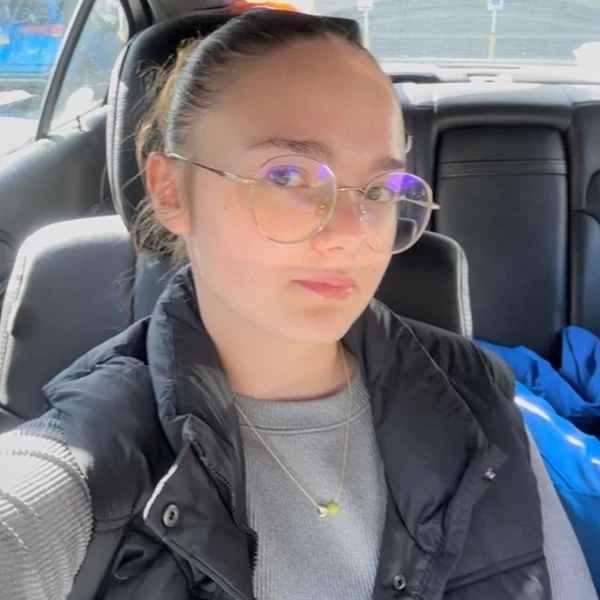
My name is Yelyzaveta Kilochko, I am 17, and I moved to the United States from Ukraine three years ago. I have had Type 1 diabetes since I was one year old. I grew up in a close-knit family where hard work, creativity, and caring for others were part of everyday life. I love combining my curiosity in art and math to create and solve, whether it’s designing something new or tackling a challenging problem. I value community, helping others, and learning from every experience. I hope to bring my creativity, dedication, and unique perspective to the college community and make a meaningful impact.
Education
Monticello High School
High SchoolMiscellaneous
Desired degree level:
Bachelor's degree program
Majors of interest:
- Chemistry
- Biochemistry, Biophysics and Molecular Biology
Career
Dream career field:
- Medicine
Dream career goals:
Undecided
Volunteer and Pageant Participant
St. Peter’s Church2024 – 2024Volunteer and Pageant Participant
St. Peter’s Church2024 – 2024
Sports
Tennis
Varsity2025 – Present1 year
Research
Visual and Performing Arts, Other
AP Art and Design Program, Monticello High Scho — Student Researcher and Artist2024 – 2025
Arts
Drawing and painting I, Drawing and painting II, Monticello High School
Painting2023 – 2024
Public services
Volunteering
Federation for the homeless — Participate2024 – 2025
Jeanne Murphy Scholarship: Compassion in Action
I learned about compassion at home, through the actions of my mother and grandmother. They didn’t just talk about kindness, they lived it in a way that showed me what it really meant to care about others.
My mother often visited orphanages in Ukraine, where she spent time with children. She brought small gifts, but more importantly, she gave them her attention, time, and warmth. She talked about babies being so sweet and defenseless, and she talked about children with tears in their eyes. Watching her, I realized that compassion is about how much you give and how sincerely you give it. She taught me that even simple actions like listening, being present, and showing kindness can help a person feel valued and less alone.
My grandmother expressed compassion in a different, but no less powerful, way. Since the beginning of the war in Ukraine, she has supported the military by donating essential items such as body armor and shoes. She deeply empathized with those who were risking their lives and wanted to help protect them in any way she could. I remember several young soldiers thanking us for saving their lives. From her, I learned that compassion also means recognizing the needs of others and taking action, even when the situation is serious or goes far beyond your personal life.
Based on their actions, I try to practice compassion in my daily life. At school, in my community, and through community service, I try to be understanding and supportive of others. For example, I volunteered at the Federation of the Homeless through the Boys & Girls Club, where I saw how even small acts of caring can make a difference. Whether it’s helping a struggling people, especially one who are in big struggles experiencing homelessness, or showing kindness in small moments, I believe that these actions matter. Compassion is not always something big or visible, it often manifests itself in quiet, consistent choices.
In the future, I plan to become a doctor, where compassion will be one of the most important parts of my job. I want to care for patients by treating their illnesses and by listening to them, supporting them, and making them feel safe and understood. The example of my mother and grandmother showed me that helping others is both a responsibility and a kindness. Compassion for me is not just a feeling, it is a responsibility. It is something I will continue to practice and develop throughout my life, especially as I work towards a career dedicated to helping others.
Carolyn Craddock Memorial Scholarship
I have no memories of how I got type 1 diabetes, since I was only one and a half old when I was diagnosed. At the time, we lived in Ukraine, where diabetes treatment was not as advanced as today. My mother had to check my blood sugar levels, day and night. As a child, I didn’t understand why my fingers were constantly pricking me, but my mother remembers how my fingertips often turned purple from checking. She says I cried, not understanding why life was already so hard for such a young child.
As I grew older, I began to realize that my life would always require more responsibility. While other children could eat candy or snacks without thinking about it, I had to control my carbohydrates and monitor my blood sugar levels. I remember asking my mom why I was the only one around with diabetes and why I couldn’t live like everyone else. At the time, it seemed unfair. But those moments also taught me something important: Sometimes we face challenges that we can’t change, but we can choose how we respond to them.
Managing diabetes is a never-ending task. Since I can’t use a continuous glucose monitor like the Dexcom Monitor anymore, I still manually check my blood sugar levels many times throughout the day. At school, I often have to find time between classes to go to the nurse’s office, check my blood sugar, and give myself insulin injections. After years of injections, I have small lumps under the skin on my arms, stomach, and legs. They remind me of how long I’ve lived with this condition and how much effort it takes to manage it.
There have been scary moments. I remember times when my blood sugar levels dropped dangerously low while playing sports or doing physically demanding work. One time, my blood sugar levels dropped so quickly that I fainted. I also faced medical complications, including hormonal problems and a severe foot infection that could have become chronic if I hadn’t gotten treatment in time. These experiences stick in my mind and remind me of how serious diabetes can be if not treated properly.
Despite these challenges, I refuse to let diabetes define me. I continue to be active in sports, such as tennis and golf, choosing activities that allow me to stay healthy while managing my energy levels. I also dedicate a significant portion of my time to helping others. Through the NHS, my church, and organizations like the Boys & Girls Clubs, I volunteer in my community, tutoring younger students and supporting programs that help people experiencing homelessness. Helping others reminds me that kindness and compassion can really make a difference in someone’s life.
Living with diabetes has also shaped my future goals. I hope to become a doctor so I can help people who are facing the same challenges I am. My younger cousin recently developed a condition that causes her blood sugar to become dangerously low. Through my own experiences, I was able to help teach my uncle and aunt how to monitor her blood sugar and manage her condition. Being able to walk my family through something so scary showed me that the challenges I faced could also give me the knowledge to help others.
Living with diabetes has required patience, but like Carolyn Craddock, I strive to be strong in managing my health and kind in helping others facing similar challenges. My journey with diabetes has not been easy, but it has shaped who I am and strengthened my determination to help others.
James T. Godwin Memorial Scholarship
One of the military members in my family who has deeply inspired me is my mother’s cousin, Volodymyr Yednak. He served as a soldier from 2022 to 2024 during the war in Ukraine. Although we lived far from the front lines, the war was always present in our conversations, our concerns, and our prayers. Through Volodymyr’s service, I learned what courage, responsibility, and love for one’s country really mean.
I remember one conversation with him that stuck with me. He told us that being a soldier is not just about fighting, but also about protecting the people around you. He described how soldiers support each other like a family. In difficult times, they shared food, helped each other stay hopeful, and reminded each other why they were here. Listening to him talk about this, I realized that a soldier’s strength comes not only from bravery in battle, but also from loyalty and compassion for others.
Even in dangerous times, Volodymyr tried to keep a sense of humor. My family often remembers him telling us about how he once tried to cook a meal with his comrades, using whatever ingredients were available to them. The food didn’t turn out very well, but he joked that after a long day it was still the best meal they had ever tasted, and the most important thing was that they were alive. These stories showed how soldiers find small moments of joy even in the most difficult circumstances. They slept in dugouts in the winter, his friends sometimes froze, and he still had hope for the best, remembering his family.
What inspires me most about Volodymyr is his determination. He understood the risks of his service, but he chose to protect his country and the people he loved. His courage reminds me that true strength is not the absence of fear, but the decision to do what is right, despite it.
Through him, I learned the importance of resilience and responsibility. His example motivates me to work hard in my own life and to appreciate the sacrifices that military families make. Whenever I face challenges in school or in my future goals, I think of his dedication and remind myself that perseverance can help us get through tough times.
Volodymyr’s service is something my family is incredibly proud of. His stories are not just about war, but also about friendship, courage, and hope. Through him, I learned that the actions of one person can inspire many others, and that true heroes are often those who quietly serve and protect others.
Rainbow Futures Scholarship
From early adolescence, I realized I was attracted to both boys and girls. Growing up in a conservative family in Ukraine, where any manifestation of homosexuality was condemned, I was terrified to even acknowledge my feelings. At school, classmates laughed at gay or lesbian students, breaking my heart, and in church, I was taught that love like mine was one of the worst sins. But how could love itself be a sin?
My first mutual love brought both joy and heartbreak. This girl showed me a world I had never seen—a world brighter, freer, and more accepting, where feelings were not silenced and conversations could be honest. She became a sanctuary I hadn’t known I needed. But even this sanctuary was fragile, and I learned that love, for some, can feel like rebellion.
Moving to America changed everything. Here, love does not carry the same fear. Holding hands with a girl does not invite ridicule or judgment; instead, people understand, or simply do not care. Yet, I still carry the weight of my family’s beliefs. I cannot come out to them. The war uprooted us, and now we live much more modestly, making it difficult even to find space to discuss my feelings with my mother. I want to explain that who I love is not something shameful or dangerous. The Bible teaches love—and love is what I feel. I am capable of loving fully, without limits or fear.
These experiences have shaped not just who I am, but who I want to become. I aspire to pursue higher education to develop the knowledge, skills, and confidence to advocate for LGBTQ+ rights and to create safe spaces where young people like me can feel seen, heard, and loved. I hope to be a mediator—someone who can speak openly, not only with my family but with society at large, bridging understanding between those who fear difference and those who live it. Education is my path to empowerment, giving me the tools to fight stigma, promote acceptance, and help others embrace their authentic selves.
Receiving this scholarship would alleviate a tremendous financial burden and allow me to focus entirely on my studies and advocacy. Coming to America was already a challenge, and living modestly has limited my opportunities to pursue higher education without worrying about finances. This support would give me the freedom to dedicate myself to learning, growing, and preparing to make meaningful change in my community. It would allow me to amplify my voice, not just for myself, but for every LGBTQ+ individual struggling to love openly in a world that does not always accept them.
I have faced fear, judgment, and silence, yet I have learned resilience, courage, and the power of love. I want to transform my experiences into advocacy, using education as a bridge between misunderstanding and acceptance. Through this scholarship, I will not only pursue my dreams but also work to ensure that others, wherever they are, can love without fear.
Sammy Hason, Sr. Memorial Scholarship
A career in healthcare offers one of the most meaningful ways to make a lasting impact on people’s lives. Choosing a career in healthcare feels natural to me because it combines compassion, science, and service—three values I deeply care about. By that my goal in pursuing a healthcare career is to contribute to that mission by improving care for individuals affected by lung disease and rare medical conditions—two areas where understanding is greatly needed.
Healthcare professionals have the unique opportunity to restore not only physical health but also emotional strength. For patients living with lung disease, the simple act of breathing can be a daily struggle. Conditions such as asthma, chronic obstructive pulmonary disease (COPD), and pulmonary fibrosis can make even routine tasks difficult. Through a career in healthcare, I hope to help develop and apply treatments that improve lung function, manage symptoms, and provide education that empowers patients to live more comfortably. By focusing on prevention and patient-centered care, healthcare workers can help people with lung diseases regain control of their health and maintain a better quality of life.
From my own experience, I know what it means to live with a chronic condition. I have diabetes, and only thanks to modern advances in medicine am I able to control my condition and live a healthy life. Since childhood, I have dreamed that one day there would be a cure, and I truly believe that moment is coming soon. Medical technology is progressing rapidly, and I have hope that people with lung diseases and other serious illnesses will also have access to life-changing treatments that can fully heal them. The new generation of young people entering the medical field will have the opportunity to discover cures for conditions that were once thought to be incurable. Equally important is the care for individuals living with rare medical conditions. These patients often face challenges that go beyond their illness: long diagnostic processes, limited treatment options, and feelings of isolation due to the rarity of their condition. A strong healthcare system must be built to support them with specialized care, research, and emotional support. Working in healthcare would allow me to contribute to that effort by ensuring patients receive accurate information and compassionate care regardless of how uncommon their condition may be.
Improving the lives of others in healthcare also means recognising that every patient’s experience is unique. Listening carefully, showing empathy, and communicating clearly are just as vital as medical knowledge. A respectful and supportive environment can make a major difference in how patients cope with their diagnosis and treatment. By helping create such an environment, healthcare professionals can reduce fear, build trust, and help patients feel more hopeful about their future.
In the long term, advancements in technology and research will continue to open new possibilities for treating lung diseases and rare conditions. I hope to be part of a healthcare system that embraces innovation while keeping humanity at its core. Whether through direct patient care, medical research, or health education, every effort contributes to a greater goal: giving people the chance to live better, healthier lives.
Improving the lives of others through a career in healthcare means combining science with compassion. It means standing beside those who struggle, offering solutions, comfort, and understanding. For people with lung disease or rare medical conditions, this committed can bring real hope—and that is the impact I aim to help create in the world.
Johnna's Legacy Memorial Scholarship
Living with a chronic medical condition has shaped the way I see myself and the world. It grew up patience and gratitude in ways that most people my age don’t experience. It’s not something that can be seen on the outside, but it’s something I carry with me every day — a quiet reminder that I need to take care of myself, stay focused, and keep moving forward no matter what challenges appear.
There have been moments when managing my health has made life more complicated. I’ve had to balance schoolwork, activities, and self-care all at once. There are days when I feel exhausted or frustrated because things that seem easy for others take extra effort for me. But over time, I’ve realized that these experiences have not made me weaker — they’ve made me stronger. They’ve given me a sense of discipline, organization, and resilience that pushes me to keep striving for my goals.
What inspires me to excel despite the limitations is the belief that every challenge has meaning. I’ve seen how perseverance can turn struggle into strength. When I face setbacks, I remind myself that I’ve already overcome so much. I’ve learned that success isn’t just about talent or intelligence — it’s about consistency, attitude, and self-belief. My condition has taught me to value the small victories, to celebrate progress, and to never give up even when the road feels long.
This experience has also helped me see others with more compassion. I’ve learned that you never really know what someone is going through just by looking at them. Everyone has invisible challenges, and sometimes the best thing you can do is offer understanding and encouragement. That lesson has inspired me to want to help others, whether through art, health, or mentorship.
One of my biggest goals is to pursue a career where I can use both creativity and empathy to make a difference — possibly in cosmetic dermatology or web design. Both paths allow me to combine science and art while helping people feel confident and seen. My experiences have shown me how deeply self-image can affect well-being, and I want to empower others to embrace their uniqueness and take pride in who they are.
Through my art and volunteer work at church, I’ve already seen how creativity and kindness can lift people up. I’ve helped organize events, plays, and cultural celebrations that bring my community together and remind people of hope, faith, and resilience. These experiences continue to motivate me to live with purpose and make a positive impact wherever I can.
Living with a chronic condition has not defined me — it has refined me. It’s given me perspective, strength, and compassion. It has shown me that even when life isn’t perfect, I can still choose growth, courage, and kindness. My dream is to use what I’ve learned to empower others to believe that no matter their challenges, they have what it takes to succeed — because sometimes, strength is quiet, but it’s always powerful.
YOU GOT IT GIRL SCHOLARSHIP
1. What qualities or experiences make you a “You Got It Girl”?
To me, being a “You Got It Girl” means having the courage to keep going no matter what stands in your way. I’ve faced challenges that tested my strength—from managing diabetes to overcoming financial hardships—but I never let those things stop me from growing or dreaming big. What makes me a “You Got It Girl” is my determination to turn every obstacle into motivation. I’ve learned to stay organized, focused, and positive, whether it’s in school, art, or personal goals. I work hard, not because life is easy, but because I believe in making something meaningful out of every situation.
This scholarship would help me continue building my future. I’m passionate about both creativity and science, and I plan to study either web design or cosmetic dermatology—fields where I can help people feel confident and express themselves. Support from YGIG would give me the opportunity to continue my education without worrying about financial pressure and would remind me that hard work truly pays off.
2. Tell us about the sport(s) you compete in, how long you’ve been involved, and any accomplishments or awards you’ve received during your athletic career.
I’ve been involved in dance for several years, and it’s something that has deeply shaped who I am. Dance helps me express myself in ways words can’t—it’s a mix of strength, rhythm, and emotion. I’ve performed in my church’s cultural and holiday events, including plays and pageants, where I get to represent Ukrainian traditions through movement. My biggest accomplishment isn’t a trophy—it’s the confidence and pride I’ve built through every performance. Dance taught me how to stay disciplined, take feedback, and find joy in progress.
3. Can you share a time when you faced a challenge or setback, and how you turned that experience into a moment of growth and empowerment?
Being diagnosed with diabetes was one of the hardest things I’ve ever faced. It changed my daily life completely—suddenly I had to think about my health in everything I did. At first, I was scared and frustrated, but over time I learned to turn that challenge into strength. I became more aware, responsible, and motivated to take care of myself while staying active in school and art. It taught me to balance self-care with ambition. Now, I use my experience to remind others that health challenges don’t define you—they teach you discipline, patience, and resilience.
4. Who is someone you admire and look up to, and what is it about them that inspires you?
I admire my mom more than anyone. She has always been the person who shows me what true strength looks like. No matter how hard things get, she stays positive, works hard, and keeps our family together. She’s shown me that love and perseverance can get you through anything. When I feel tired or discouraged, I think of how much she’s done for us, and it gives me the energy to keep pushing forward. She inspires me to stay humble, kind, and strong.
5. At YGIG, we believe in backing future athletes who are building toward something bigger. How would this scholarship support your journey?
This scholarship would help me focus more on my growth—both as a student and as a dancer. Financial support would allow me to afford the materials and technology I need for my art and design projects, as well as dance gear and training costs. It would also help relieve stress about college expenses, so I can dedicate more energy to studying and improving. I see this scholarship as more than money—it’s a reminder that hard work and dedication are seen and valued.
6. If there is anything else you’d like us to know please share here!
I’m proud of my Ukrainian heritage and love expressing my culture through creativity and community involvement. I’ve volunteered at my church for years, helping organize plays, ceremonies, and holiday celebrations that bring people together. Art and service are two things that keep me grounded—they remind me that success means using your gifts to uplift others.
7. Please let us know what sport you currently participate in or plan to participate in during college.
I plan to continue dance in college, whether through a team, club, or community performances. Being a student-athlete in dance means more than performing—it’s about dedication, teamwork, and expressing emotion through movement. It’s also about maintaining balance between physical health, academics, and creativity. Dance gives me confidence, keeps me healthy, and allows me to share my story through art.
Taylor Swift Fan Scholarship
Taylor Swift has performed on some of the biggest stages in the world, from sold-out stadium tours to intimate award shows. But of all her performances, her most moving was her 2021 rendition of “All Too Well (10-Minute Version)” from her album Red (Taylor’s version) on Saturday Night Live. The performance captured her emotional honesty and creative power. What makes this performance truly powerful is its genuine vulnerability. “All Too Well” has long been one of Taylor’s most beloved tracks thanks to its incredibly detailed storytelling. When she first performed the 10-minute version live, she transformed the SNL stage into a cinematic experience—one take, minimal lighting, and a flow of emotion. She didn’t rely on backup dancers or dramatic effects; it was just her, her guitar, and her story. Each lyric felt personal and lived, as if the audience were watching her relive the pain and beauty of memories she had once written about years ago.
The performance also represented a certain evolution for Taylor as an artist and as a woman in control of her own story. “All Too Well (10 Minute Version)” exists because she decided to reclaim her work through the re-recording of her albums. Watching her sing these words years later—older, wiser, and free from the industry’s control—was inspiring not only for her, but also for her fans who grew up with her music.
Visually, the performance was captivating. The lighting shifted from warm to cool, reflecting the emotional development of the song—from nostalgic warmth to heartache. By the time she reached the final chorus, her voice was cracking with passion, and the audience fell completely silent, immersed in the emotion of the moment. It wasn’t just a performance; it was storytelling in its purest form. Taylor Swift’s performance of “All Too Well (10 Minute Version)” on SNL is one of her most moving performances, as it embodies everything that defines her artistry—vulnerability, strength, and the courage to speak her truth. In this ten-minute performance, Taylor reminded the world that music is at its most powerful when it’s deeply personal and unapologetically authentic.
USMC Sgt. Owen J. Lennon Memorial Scholarship
My goal is to make a positive impact on the world through the field of cosmetic dermatology, where medicine and art combine to help people feel confident in their own skin. I want to use my skills to restore the health of those struggling with skin conditions or scars, especially young people who may feel isolated or insecure about their appearance. For me, dermatology is not just about improving appearance, it is also about emotional well-being—giving people the confidence to live without shame and with spiritual integrity.
Skin problems, including acne, can be dangerous for many reasons. In some cases, bacterial infections can spread deeper into the skin or even enter the bloodstream, leading to serious inflammation or, in rare cases, sepsis. Many people, especially teenagers, may not realize that using harsh medications or home remedies without a doctor’s supervision can be much more harmful than they seem. Some medications can negatively affect the liver, disrupt hormones, or even affect mental health.
In addition to the physical risks, acne often has strong emotional and psychological consequences. On social media, teenagers are constantly exposed to unrealistic beauty standards, which can increase feelings of insecurity. This emotional pressure sometimes pushes young people to take drastic or dangerous actions in an attempt to change their appearance. As a result, many struggle with low self-esteem, severe anxiety, or depression. These issues show that skin problems are not just cosmetic issues, but real health issues that can deeply affect both the body and the mind. I want to give people a healthy way to deal with the problem, it is difficult but with professional care it can be overcome.
This scholarship will help me get closer to that goal by reducing the financial burden of pursuing a medical education. As someone who has lived with diabetes since the age of one, I understand how deeply health can impact a person’s confidence and their daily lives. My experience has inspired me to dedicate my career to helping others overcome challenges that affect their self-esteem and well-being.
As I walk this path, I hope to honor Owen's memory through compassion, dedication, and service to others. From what I've learned about Owen, he embodied kindness and helped those around him feel noticed and valued. I want my work to reflect that same spirit—helping patients feel not just beautiful, but truly cared for and understood. In doing so, I hope to continue Owen's legacy by touching lives through hope.
No Limits Athletic Scholarship
Living with diabetes has shaped not only my perspective on life but also my sense of responsibility. Dealing with a chronic illness means facing challenges that others may not see—checking my blood sugar, adjusting insulin, and balancing my energy levels every day. I like to say it’s simply a way of life. Having been diagnosed when I was only one year old, I’ve learned from an early age that resilience is not a choice—it’s a necessity. Over time, I’ve realized that limitations only exist when you stop trying to overcome them. That mindset has carried me through both my academic and athletic goals, and it’s one of the main reasons I’m applying for this scholarship.
I want to receive this scholarship because it represents more than just financial assistance—it’s recognition of perseverance and determination. Living with diabetes requires daily strength and consistency, but I’ve never allowed it to define or limit who I am. When I was younger, my old school advised me not to play sports out of concern that my blood sugar might drop. Instead of accepting that, I chose to fight for my right to participate while responsibly managing my condition. I was determined to prove that I could achieve anything I set my mind to—on the field, in the classroom, and in life. This scholarship would help me continue pursuing my education and athletic training without the heavy burden of financial stress, allowing me to focus on what matters most: improving myself and inspiring others who face similar challenges.
Academically, I plan to use this scholarship to help fund my college education and, eventually, medical school. My passion for medicine comes from my own life experience. Living with diabetes has shown me how powerful compassion and care can be—I’ve been supported by amazing doctors who gave me hope, and now I want to do the same for others. My goal is to become a doctor and help people who are struggling with chronic illnesses to believe that their diagnosis does not define their future. Living with a disability has given me a deeper understanding of what accessibility, empathy, and patient care truly mean.
Athletically, sports have always been my anchor. They’ve taught me teamwork, focus, and self-discipline. I’ve especially loved playing soccer and tennis—both have helped me strengthen my body and mind. Physical activity even helps me manage my diabetes more effectively; during periods of intense training, I’ve sometimes been able to go off insulin for a day. Of course, it hasn’t always been easy. There have been tough moments—when my blood sugar dropped in the middle of practice or when I had to take a break because I wasn’t feeling well—but every setback made me stronger. I’m especially thankful for my tennis coach, who has become a mentor and friend. His brother also has diabetes, which has created a special bond between us. My teammates on the women’s tennis team are like family, and together we push each other to grow both on and off the court.
My dream is to continue proving that having diabetes doesn’t mean I can’t succeed in every area of my life. I want to be a voice for others who feel limited by their conditions and show them that with perseverance, support, and heart, anything is possible. On the field, I aim to keep improving my strength and endurance; in the classroom, I will work toward mastering my studies and pursuing medicine; and beyond, I hope to use my journey to inspire others to view their challenges as opportunities for growth.
Learner Math Lover Scholarship
I have always loved math. To be honest, when I first came to America, I struggled with every subject except math. Math always came easily to me because I was good with numbers and understood how to solve problems. Although the letters and words in Europe and America were different, numbers remained the same, and this gave me a sense of confidence. I remember how quickly I picked up new material and was often one of the best in the class.
I especially liked geometry because it allowed me to see the beauty of numbers and shapes around us. My love of math also helped me develop an interest in physics, a science that had always come easily to me because of its search for unknown quantities. I enjoyed solving complex problems and finding solutions because it gave me a sense of accomplishment and satisfaction. Math encouraged me to think critically and approach problems step by step, which made the learning process both exciting and rewarding.
Mathematics has become my hobby that allows me to relax. Each task is a small challenge that requires careful consideration, and finding the right solution brings real joy. I like to plan, analyze, and think logically, and mathematics helps me strengthen these skills.
I plan to continue studying mathematics in the future, as electives, because it not only gives knowledge, but also shapes my thinking. Mathematics for me is more than just a subject, it is a way of seeing the world, thinking, understanding its patterns, and finding solutions where others see only difficulties. That is why I love mathematics and want to continue developing in this field.
Ella's Gift
Living with Type 1 diabetes since childhood has had a huge impact on my life and my family. In Ukraine, where I am from, medications were not as advanced as they are in America. For the biggest part of my life, I did not have a pump or a Dexcom. From daily insulin injections to constant blood sugar monitoring, I had to learn to balance discipline, resilience, and self-awareness. I still remember my strict diet and how I could not eat candy or cake. My mother told me that it broke her heart to watch me follow such restrictions.As a kid I always had purple fingers from multiple daily injections, I still remember that pain.
The experiences of diabetes have not only taught me the importance of resilience and responsibility but also fueled my desire to pursue a career in medicine, so that I can support and inspire others facing chronic health challenges. I want medical advancements to be accessible to everyone, helping people feel free from injections and the fear of hypoglycemia.
Managing diabetes is a daily exercise in problem-solving. I have had to understand my body in ways many of my peers cannot yet imagine, learning to recognize subtle signs of high or low blood sugar, adjusting meals and activities accordingly, and advocating for myself in school and social settings. Even as a child in Ukraine,very few people understood my condition, that’s why I tried to be responsible since youger age. Here in America, people still sometimes do not know how to help, so I need to be ready for anything and act quickly. This ongoing challenge has strengthened my responsibility, the quality that is essential in the medical field. It has also provided me with a unique perspective on patient care, empathy, and the importance of listening carefully to those under my care.
I have always been a patient, and through my experiences, I have seen both the good and the bad sides of doctors. I understand how a patient feels, how a child feels, and what they might be thinking. I remember a moment from kindergarten during a matinee: every girl wore a beautiful dress, and the boys wore elegant costumes. I told my mother that I saw every girl as a princess, but I could never see myself as one because of my diabetes. I was four, and even at that young age, I felt that my condition limited what I could do. I want others to believe that their health challenges do not define them—that they can achieve their goals, just as my doctor helped me believe in myself. These experiences have solidified my commitment to medicine and deepened my understanding of the patient-doctor relationship.
My experience has not been without struggle. There were moments of frustration, fear, and isolation, especially during my teenage years, when the demands of diabetes sometimes felt overwhelming. I have faced serious health complications, such as partial paralysis at age eight and a foot infection that required hospitalization. However, these moments became catalysts for personal growth. I learned the value of asking for help, leaning on supportive friends and family, and building routines that prioritize both physical and mental well-being. I came to understand that resilience is not about facing challenges alone but about seeking guidance, learning from setbacks, and continually striving to improve.
Academically, my experience with diabetes has inspired a deep interest in the sciences, particularly biology and chemistry, as I strive to understand the mechanisms behind chronic diseases and the development of medical treatments. My goal is to become a doctor who not only treats illness but also guides patients in managing their health proactively. To achieve this, I have focused on advanced courses in science and mathematics while seeking opportunities to volunteer.
Looking ahead, I am committed to continuing to manage my diabetes proactively while pursuing my educational goals.Balancing my health with the demands of a rigorous academic path will require discipline and planning, but my history of successfully managing diabetes demonstrates that I am prepared to meet these challenges.If I managed that other also can.
Ultimately, my journey with diabetes has taught me the power of perseverance, the importance of empathy, and the impact that knowledgeable and compassionate healthcare providers can have on the lives of patients. These lessons have guided me toward my dream of becoming a doctor—someone who combines scientific expertise with understanding and compassion. I am eager to dedicate my life to advancing patient care, supporting others through their health challenges, and continuing to grow both personally and professionally.