
Hobbies and interests
Basketball
Fitness
Mental Health
Human Resources
Self Care
yelihwakanyehs powless
1x
Finalist1x
Winner
yelihwakanyehs powless
1x
Finalist1x
WinnerBio
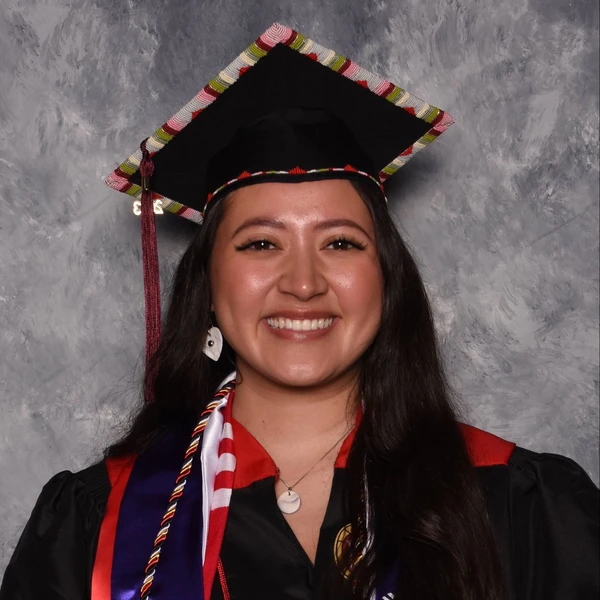
Proud older sister to 4 younger brothers, 24 years old, a member of the Oneida Nation of Wisconsin. I am a first-generation MSW student at the University of Washington, Seattle.
Education
University of Washington-Seattle Campus
Master's degree programMajors:
- Public Administration and Social Service Professions, Other
University of Wisconsin-Madison
Bachelor's degree programMajors:
- Human Development, Family Studies, and Related Services
Oneida Nation High School
High SchoolMiscellaneous
Desired degree level:
Doctoral degree program (PhD, MD, JD, etc.)
Graduate schools of interest:
Transfer schools of interest:
Majors of interest:
Career
Dream career field:
Mental Health Care
Dream career goals:
Child Placement Coordinator
Oneida Nation Family Services2023 – 20252 years
Sports
Basketball
Varsity2015 – 20194 years
Research
Foreign Languages, Literatures, and Linguistics, Other
University of Oregon Linguistics department — student researcher2022 – 2022
Arts
Cornhusk Collective
Jewelry2023 – Present
Tawkify Meaningful Connections Scholarship
A meaningful relationship to me is with my mom. I think our relationship is even more special because she stepped up to play that role. She chose to be that caretaker when my biological mom could no longer take care of me due to DV, alcohol, and substance abuse. My mom not only stepped up for me but also for my four younger brothers. Because of my mom's dedication to raising us with the best she could, she remained a single-parent household raising 5 of us, along with my cousins from time to time.
My mom and my biological mom are 2 of 4 sisters. Which came along with their kids and the ongoing effects of generational trauma. My mom lived deep on the reservation with her sisters, my grandma, and great-grandma. My mom would tell me stories of how my grandmas acholoism affected her childhood. So I learned from a very young age about the demons my family members faced. My mom grew up relying on community support outside of our immediate family. Because of this, she was able to travel, learn our ceremonies, language, and cultural teachings. This gave my mom a whole different perspective when it came to the life she could have had for herself versus the life she came from. This definitely affected how she ended up raising my siblings and me.
With that being said, my mom raised us in a strictly alcohol and drug-free household, which then created tension between our small family and our family members who all used. Seeing my mom set boundaries just to protect us, even if it cost her a relationship with them, was very empowering to see growing up. My mom and I always viewed ourselves as the black sheep of the family. Simply for wanting a healthy life for our family, even though we both grew up in chaos. Our isolation from the rest of our family only made our relationship stronger. Not to mention, it also allowed us to make strong, meaningful connections with others within our community. Through this, I have obtained a countless number of chosen cousins, aunties, uncles, and grandparents.
As I started working through higher education, which led me to move away from the family I had created, I started to really see the importance of the connections we create outside of where we grew up. Navigating undergrad amongst other native students, I soon obtained a sisterhood with my colleagues. Looking back at those relationships makes me reflect on the importance of female connections in my life. Strong women in my community were the ones getting things done. My mom was a single mom, so I saw nothing but her nonstop figuring out how to make ends meet, even when we had nothing. Due to not having any sisters, I soon obtained a strong sisterhood of young native women on my campus. To this day, we all remain close and supportive of one another and visit frequently
Looking back on all these relationships makes me even more grateful for the work and sacrifices my mom made. She figured things out when she didn't have the support or guidance from anyone she should've been able to rely on. As I navigate this life, I hope I can be at least half the woman she is.
Learner Mental Health Empowerment for Health Students Scholarship
Looking back through my life, I have always struggled with multiple mental health disorders. However, due to stigmas in Indigneous communities, I never received proper support. I was just recently diagnosed with Anxiety, Depression, CPTSD, and, most recently, bipolar disorder. Through my own journey, I have experienced the injustices and underrepresentation of those with mental health disorders. I also have had to advocate a lot for myself because my family wasn't as supportive. Not because they didn't want to be, but because it was something that people just didn't talk about on our reservation.
Due to this, I often felt very alone and isolated throughout my childhood. Often feeling like an outsider or just thinking something was wrong with me. It wasn't until I left for undergrad and actively took it upon myself to get therapy through my school's mental health services. Through years of therapy and medication, I now feel so much more open to sharing and talking about my mental health challenges. It became a big passion of mine, as I soon learned I wasn't the only one. I began working with my reservation from 2023 to 2025 as a child placement worker through our family services department. I began to see how much youth on our reservation had struggled with very similar things as I was/did growing up. Through this job, I was able to spread awareness of mental health by sharing my story with others. I already am a very emotional and sensitive person, so by further being open and upfront about my mental health struggles, others felt safe enough to share their stories as well.
As time went on, I began to explore the possibilities of working within the mental health field to spread awareness and shine a light on my experiences, as well as those of so many others. Not only as a future social worker/therapist but as a community member, mental health is extremely important to me. I think it is the community's responsibility for each and every one of us to advocate and spread awareness on mental health. I am extremely passionate about mental health because I know it is so easy to hide or suffer in silence. This further isolates individuals from seeking help. I think that through my own personal experience, I understand the obstacles of navigating life with mental health issues. I understand so deeply to the point where I wouldn't want anyone else to struggle or suffer in silence the way I did.
Lotus Scholarship
My mother has always been a single mom to not only me but also my 4 younger brothers. I am the oldest, so I believe I was also molded into a caregiver role without even realizing it.
Even though coming from a single-parent household created barriers in the sense that there was a lot of extracurriculars my mom had to juggle with 5 kids. Not to mention all the equipment we needed for said extracurriculars, my siblings and I were all in sports growing up.
Despite the challenges, it was rarely an issue because we also come from a small, tightly knit Indigenous community. So if there was anything my mother needed help with, there was always someone in the community who stepped up to support us. Through this, I was able to not only show how to ask for help from others when I needed it. This also strengthened my ties to community members that I now acknowledge as aunties, uncles, grandparents, cousins, etc., all non-blood related but yet still hold powerful titles. I was also taught how to raise funds myself through either giving back to the community, whether that was babysitting, selling my artwork, or doing yard work for community members.
Throughout my academic journey through high school, undergrad, and now graduate school, I have had to utilize these skills as a way to not only survive but I also realied on these skills to simply make ends meet at times. I am currently in my Master's program for social work in Seattle, which is extremely expensive. However, by leaning into the skills my mother taught me, I'm able to stay above water.
Pay It Forward Scholarship
I didn’t realize how full circle my lived experience and work aspirations coincided until I began my previous job within Oneida Family Services. To spare some of the depressing details, I was taken in by my Auntie, my biological mother's sister. This was because both my mother and father struggled with drug and alcohol abuse. My mother and father's relationship was extremely toxic as well. There were countless times I endured abuse, and Child Protective Services was involved. Because my father was guilty of DV, amongst other things, he was also an illegal immigrant from Mexico. So, due to the charges, he was deported immediately.
My entire life, I struggled with mental health and abandonment issues, but I never understood why. For the majority of my life, I dismissed my experiences. After all, at the end of the day, I was “lucky” because I didn’t enter the foster care system, I had a loving home, and I had so much community support. But as I got older, I felt more and more ashamed of my parents and where I came from. I started internalizing the reasons why they didn’t want me or couldn't take care of me. My 4-year-old self remembers crying to my Auntie, asking why my parents wanted drugs more than they wanted me. What I didn’t realize was that I was burying my trauma deeper and deeper. By the time I reached high school, I started experiencing major depression episodes, anxiety attacks, and flashbacks that would wake me from my sleep. But I kept telling myself, “I have nothing to be hurt or sad over. I need to get over this.” I was an overachiever all my life because I constantly had a voice in the back of my head telling me I couldn’t be like my parents.
My full-circle moment happened when I was in the field. I was a Child Placement Coordinator working on the reservation I was born and raised on, specifically working with Native foster homes and kinship homes. Working as a case manager for members of my community whom I knew, I realized how common my personal experience was throughout our community. I realized that I really wasn’t the only one, and kinship has been a part of our communities since the beginning of time. All of a sudden a switch flipped. I knew I wanted to be a further support to the youth who were in either kinship homes or foster care homes. By the time I was on a case, I felt I could only do so much. That’s when I realized I wanted to further my education in social work to eventually become a licensed clinical therapist, specifically for Native youth in these situations. Through my own mental health journey, I remember feeling like my therapist didn’t understand the complexities of my life or my community. My goal now is to be a support for others and give everything I could have only imagined when going through my own experiences.
Joshua’s Light: Suicide Awareness & Resilience Scholarship by Solace Mind®
I didn’t realize how full circle my lived experience and work aspirations coincided until I began my previous job within Oneida Family Services. To spare some of the depressing details, I was taken in by my Auntie, my biological mother's sister. This was because both my mother and father struggled with drug and alcohol abuse. My mother and father's relationship was extremely toxic as well. There were countless times I endured abuse, and Child Protective Services was involved. Because my father was guilty of DV, amongst other things, he was also an illegal immigrant from Mexico. So, due to the charges, he was deported immediately.
My entire life, I struggled with mental health and abandonment issues, but I never understood why. For the majority of my life, I dismissed my experiences because, at the end of the day, I was “lucky” because I didn’t enter the foster care system, I had a loving home, and I had so much community support. But as I got older, I felt more and more ashamed of my parents. I started internalizing the reasons why they didn’t want me. My 4-year-old self remembers crying to my Auntie, asking why my parents wanted drugs more than they wanted me. What I didn’t realize was that I was burying my trauma deeper and deeper. By the time I reached high school, I started experiencing major depression episodes, anxiety attacks, and flashbacks that would wake me from my sleep. But I kept telling myself, “I have nothing to be hurt or sad over. I need to get over this.” I was an overachiever all my life because I constantly had a voice in the back of my head telling me I couldn’t be like my parents.
My full-circle moment happened when I was in the field. I was a Child Placement Coordinator working on the reservation I was born and raised on. Specifically working with Native foster homes and kinship homes. Working as a case manager for members of my community whom I knew, I realized how common my personal experience was throughout our community. I realized that I really wasn’t the only one, and kinship has been a part of our communities since the beginning of time. All of a sudden, a switch flipped. I knew I wanted to be a further support to the youth who were in either kinship homes or foster care homes. By the time I was on a case, I felt I could only do so much. That’s when I realized I wanted to further my education within Social work to eventually be a licensed clinical therapist, specifically for Native youth in these situations. Through my own mental health journey, I remember feeling like my therapist didn’t understand the complexities of my life or my community. My goal now is to be a support for others and give everything I could have only imagined when going through my own experiences.
Finance Your Education No-Essay Scholarship
100 Bold Points No-Essay Scholarship
300 Bold Points No-Essay Scholarship
200 Bold Points No-Essay Scholarship
Bold.org No-Essay Top Friend Scholarship
$25,000 "Be Bold" No-Essay Scholarship
Ruthie Brown Scholarship
I am currently enrolled in the first year of my MSW program at the University of Washington-Seattle. I chose to go back to school for my MSW with an emphasis on the clinical track to become a licensed therapist/clinician. I want to connect Indigenous methods and ways of healing into the Social Work world to be able to meet families where they are, using culturally competent approaches. I strive to put Indigenous ideologies and decolonial frameworks at the forefront of my practice to recenter physical, mental, emotional, and spiritual well-being. I truly believe reconnecting with our cultural practices and traditions are significant building blocks to how we take care of our physical, mental, emotional, and spiritual well-being. I hope to be able to be a bridge to Indigenous communities and mental wellness by de-centering Western practices and implementing traditional teachings that have guided our communities since the beginning of time.
However, as I continue to pursue my degree, which is out of state, I am left in constant worry about debt and loans that I've accumulated. In terms of addressing my current and future debt, I work two part-time jobs in between going to school full-time and attending my practicum. I also am constantly researching and applying for scholarships in hopes to offset expenses. To make up whatever remainder debt I have, I also make handmade Indigenous jewelry. I relied on this form of income during undergrad, and throughout grad school, I've had to whip up items to sell in order to pay bills. Once grad school is complete, I plan on utilizing all these resources and forms of income to further work my way out of debt as I begin my clinical hours. I am also hopeful that the profession will eventually pay for itself. Even though I know I did not enter this field looking to make a ridiculous amount of money. However, I do hope I can eventually pay off the debt I accumulated in school by achieving my MSW and being able to work consistently.
Debt is something that is often not talked about within my family. So I've had to take the initiative on learning on my own about student loans, FAFSA, loan repayment programs, work studies, scholarships, etc. I received a lot of discouragement from certain family members about my school and financial choices. Sometimes I am unsure if I made the right decision, but once I saw my acceptance letter for the University of Washington MSW program, I decided I wasn't going to let debt fear me into not trying to experience something new.
Dr. DeNinno’s Scholarship for Mental Health Professionals
WinnerI am currently enrolled in the first year of my MSW program at the University of Washington-Seattle. I chose to go back to school for my MSW with an emphasis on the clinical track to become a licensed therapist/clinician. I want to connect Indigenous methods and ways of healing into the Social Work world to be able to meet families where they are, using culturally competent approaches. I strive to put Indigenous ideologies and decolonial frameworks at the forefront of my practice to recenter physical, mental, emotional, and spiritual well-being. I truly believe reconnecting with our cultural practices and traditions are significant building blocks in how we take care of our physical, mental, emotional, and spiritual well-being. I hope to be a bridge to Indigenous communities and mental wellness by de-centering Western practices and implementing traditional teachings that have guided our communities since the beginning of time.
By furthering my education, I hope to continue to diversify Social Work and Mental Health. This work hits extremely close to home for me and is a big reason why I am so passionate about these issues. Growing up within the Indian Child Welfare system, I soon developed several mental health concerns. Mental Health and Indian Child Welfare are two topics that are extremely sensitive to Indigenous communities. This further isolated me as a child. I had no outlet or anyone to turn to, who I felt understood what I was going through. My family lacked the knowledge and resources I needed throughout my childhood, which trickled into a lot of struggles through young adulthood.
Through my lived experience and furthering my education, I hope to continue to spread awareness and education around the stigmas of mental health. Specifically, stigmas of mental health within Indigneous communities. I view this profession as something that not only upholds my personal/ cultural beliefs but also the principles that I believe should exist within all professions, not just social work. These principles should be embedded in our daily lives.
While working in the field, I constantly feel as though I am walking in two completely different worlds; I want to work towards conjoining the two. Not further separating it.
My personal experience truly lights my fire to be in this profession. I want to change the narrative around social work and Indigneous communities to be able to heal and grow.
I often refer back to my own lived experiences and want to continue advocating for those who haven’t found their voice yet in the field, while also uplifting my community