Hobbies and interests
Culinary Arts
Painting and Studio Art
Running
Swimming
Reading
Academic
Realistic Fiction
Education
I read books daily
Yazmin Torres
1x
Finalist
Yazmin Torres
1x
FinalistBio
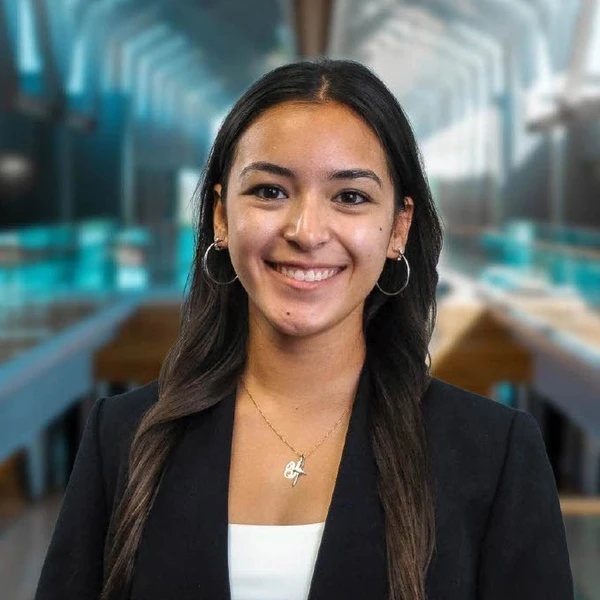
Hi! I’m Yazmin Torres, and I’m from Dearborn, Michigan! I’m a first-year law student at DePaul University College of Law. I went to Central Michigan University, where I studied Law and Economics, and Spanish. During that time, I interned at an international auto supplier, where I conducted legal research and market strategy. I want to practice international and immigration law. My ultimate goal is to start the process of rewriting the federal immigration statutes, which have remained unchanged since the 90s. I have a very open mind, which I believe to be an essential skill in law because there are so many perspectives to digest.
Education
DePaul University
Doctoral degree program (PhD, MD, JD, etc.)Majors:
- Law
Central Michigan University
Bachelor's degree programMajors:
- Law
- Business/Managerial Economics
Miscellaneous
Desired degree level:
Doctoral degree program (PhD, MD, JD, etc.)
Graduate schools of interest:
Transfer schools of interest:
Majors of interest:
- Law
Career
Dream career field:
Law Practice
Dream career goals:
Immigration Law policies
Intern
Yazaki North America2023 – 20252 years
Sports
Swimming
Varsity2017 – Present9 years
Public services
Volunteering
Institute of Latino Progress — legal assistant2026 – PresentVolunteering
Prospanica: Association of Hispanic Business Professionals — President of chapter2022 – 2025
Future Interests
Advocacy
Politics
Volunteering
Philanthropy
Catrina Celestine Aquilino Memorial Scholarship
These two words bring together two ideals, cultures, and nationalities: Mexican American. These two words are what make up my entire world. I have come to understand the privilege I have in encompassing both these nations in how I present myself to my communities. I have always tried to balance these two parts of myself, when in reality, being Mexican American is in itself its own culture. Being Mexican American means having the grit and passion of both my nations. I want to demonstrate the grit and passion of the Mexican Americans who raised me as a determined and forward-thinking individual.
At the heart of everything I do is a steady drive to uplift others and create spaces where people feel empowered. I have put that passion into studying the law at DePaul University because I believe that I can advocate for changing lives, especially for the Latino community. I am drawn to the intersection of the law and creativity because these fields shape our world. I want to use my legal education to expand access to essential human rights and amplify voices that are often left out of the conversation.
As an undergraduate, I served in many leadership roles. For instance, I was the president of Prospanica, a business organization aimed at uplifting Hispanic and Latino students in the business field. I didn’t step into this role to be in charge; I stepped into it to fill gaps. Students were lacking mentorship, professional development, and a sense of belonging. I organized workshops, networking events, and peer-support programs that helped students access opportunities and feel valued.
What I have realized in my first year of law school at DePaul is that I am someone who leads with purpose and discipline. These qualities have guided me through my academic journey, leadership roles, and now my path as a law student committed to advocacy and empowerment. I plan to continue my advocacy for Latino voices into my second year of law school by participating in the DePaul Law Student DEI Committee to effect change on campus against policies that are potentially discriminatory. I will be serving as the secretary of the Latino Law Student Association to better inform my fellow Latino students of opportunities they can take advantage of to further our Latino presence in the legal field. I will also be the president of the Society of Asylum and Immigration Law, where I plan to create more professional opportunities for students pulled towards the rewarding career of immigration law.
The Catrina Celestine Aquilino Memorial Scholarship would directly reduce the financial pressure I face and allow me to devote more time to my coursework, experiential learning, and community-focused initiatives. With the support of this scholarship, I would be able to reduce my principal loan, decreasing the amount of interest building up as I complete my program. This support would not only ease the immediate financial strain but also help me build the foundation I need to succeed in law school and in my future career.
Charles B. Brazelton Memorial Scholarship
Awkwardness is often treated like something to hide, a flaw to smooth out before stepping into the world. Yet the very things that make someone feel different are often the traits that make them memorable, expressive, and deeply human. Everyone carries some small quirk—an odd habit, a strange enthusiasm, a way of moving or speaking that doesn’t quite match the expected rhythm. These quirks are not imperfections to be corrected but signatures of individuality. They reveal how a person experiences the world and how they choose to interact with it.
For some people, their “awkward thing” shows up physically. They might move with a kind of spontaneous energy, dancing or wiggling or pacing when they’re excited. These movements can look silly or unpolished, but they’re also honest. They show a person who is comfortable enough to let their body express what their words can’t fully capture. In a world where so many people try to appear composed and controlled, someone who allows themselves to be playful stands out. Their presence becomes a reminder that joy doesn’t need permission and that self‑expression doesn’t have to be graceful to be meaningful.
Others have quirks that are less visible but just as defining. Some people overthink tiny details, diving deep into ideas that others might overlook. They might get excited about patterns, connections, or questions that seem trivial on the surface. This kind of enthusiasm can feel awkward in conversation, especially when the world expects quick, simple exchanges. Yet this intensity is also a strength. It shows curiosity, passion, and a willingness to explore beyond the obvious. People who think this way often bring depth to discussions and notice beauty in places others ignore.
What makes these quirks valuable is not the trait itself but the authenticity behind it. When someone embraces their awkwardness, they give others permission to do the same. They create space for real connection, the kind that isn’t based on perfection but on honesty. Awkwardness becomes a bridge rather than a barrier. It signals that a person is not performing for approval but simply existing as themselves.
In the end, the things that make someone “a little different” are often the things that make them shine. Whether it’s a love of silly movement, an unusual way of thinking, or a habit that doesn’t quite fit the norm, these quirks are expressions of individuality. Instead of hiding them, people can choose to celebrate them. After all, life is far more interesting when everyone brings their full, unpolished, wonderfully awkward selves into the world.
Olivia Rodrigo Fan Scholarship
One lyric from Olivia Rodrigo’s "Lacy" that resonates deeply with my own experience is the line, “Yeah, I despise my rotten mind and how much it worships you.” It captures a feeling I have known intimately—the tug‑of‑war between admiration and self‑critique, between wanting to grow into someone I respect and wrestling with the parts of my mind that make that growth feel fraught. Rodrigo’s lyric is not just about envy; it is about the uncomfortable awareness of how comparison can distort your sense of self. That tension has shaped many of the triumphs and challenges in my personal journey.
As a first‑generation student navigating predominantly white institutions, leadership roles, and now the legal profession, I have often found myself admiring people who seemed effortlessly confident, articulate, or accomplished. But admiration, for me, sometimes slipped into something sharper—an internal voice that questioned whether I belonged in the same rooms, whether I was doing enough, whether I was enough. Rodrigo’s lyric names that feeling with painful accuracy: the frustration of knowing your own mind can become your harshest critic, even when you are achieving things your younger self could barely imagine.
This lyric also reflects the emotional complexity of growing up in spaces where you feel pressure to represent more than just yourself. As a Latina, a daughter of immigrants, and someone who has always taken on leadership roles, I carried the weight of wanting to make my family proud, wanting to open doors for others, and wanting to prove that I deserved every opportunity I earned. That pressure can make admiration feel dangerous—because every time you look up to someone, you also see the distance between who you are and who you want to be.
But the lyric also mirrors the turning point in my journey. Through my work in Prospanica, my leadership in the Society for Asylum and Immigration Law, and my role as an Immigrant Justice Fellow, I have learned to recognize when admiration becomes self‑erasure. I have learned to interrupt the instinct to shrink myself in the presence of people I respect. Instead, I’ve begun to see admiration as a reflection of qualities I am developing, not evidence of what I lack.
In law school, especially in immigration work where clients rely on me to show up with clarity and confidence, I have had to confront the internal voice that questions whether I belong. Rodrigo’s lyric reminds me of the moments when I doubted myself, but it also highlights the growth that followed—learning to trust my abilities, my perspective, and the value of my lived experience.
What resonates most is that the lyric doesn’t end in despair; it ends in recognition. It names the feeling so you can move through it. That has been the arc of my own journey: acknowledging the parts of my mind shaped by comparison or fear, and choosing to build a life grounded in purpose, community, and self‑expression instead. In that way, the lyric reflects not only a challenge I’ve faced, but a triumph I continue to claim.
Arin Kel Memorial Scholarship
If I could start a business with my deceased sibling, I would build something rooted in the values we both carried: community, expression, and the belief that people deserve spaces where they can show up as their full selves. Losing a sibling reshapes the way you think about purpose. It forces you to imagine not just who they were, but who they could have become—and what you might have built together if life had unfolded differently. For us, that shared vision would take the form of a community‑based empowerment studio that blends creative expression, legal literacy, and storytelling.
The idea comes from the world we grew up in: a family that worked hard, built things with their hands, and believed in lifting others. My mom created a fitness business from scratch, and my dad spent his life in the Detroit auto industry. From them, we learned discipline, resilience, and the importance of creating opportunities for others. My sibling and I would carry that legacy forward by building a space where people—especially immigrants, first‑generation students, and young professionals—could learn to express themselves confidently.
The business would offer photography, branding, résumé and interview support, creative workshops, and community events. My sibling would bring their creativity, warmth, and ability to make people feel seen. I would bring my legal training, organizational skills, and experience in community education. Together, we would create a place where someone could walk in unsure of their voice and walk out with a sense of clarity, pride, and direction.
More than anything, the business would be a way of honoring the conversations we never got to finish. It would allow me to keep their spirit alive by building something that reflects who we were together—two people who believed deeply in the power of expression, identity, and community. In creating a space where others can find their voice, I would be preserving theirs.
Jeffrey J. Douglas First Amendment Scholarship
My commitment to free expression is grounded in a belief that voice is a form of dignity—one that shapes opportunity, belonging, and the ability to challenge systems that silence or overlook entire communities. As a Latina, a first‑generation college graduate, and now a law student working in immigration and community‑education spaces, I have seen how transformative it is when people are empowered to speak for themselves and how damaging it is when they cannot.
At Central Michigan University, I served as President of Prospanica, where I worked to create platforms for Latino students to share their experiences, build confidence, and develop professional identities rooted in authenticity rather than assimilation. Many of our members came from backgrounds where speaking up—whether in classrooms, workplaces, or unfamiliar institutional settings—felt intimidating or discouraging. I organized workshops on public speaking, storytelling, and leadership, and I facilitated conversations about identity and navigating predominantly white academic environments. These spaces became opportunities for students to reclaim their narratives and practice self‑advocacy. Through this work, I learned that free expression is not only a constitutional principle; it is a skill that must be nurtured, especially among communities historically denied it.
My interest deepened as I transitioned into immigration‑related work. As an Immigrant Justice Fellow at DePaul University, I support removal‑defense training and community‑education initiatives. Much of this work involves helping individuals understand their rights, access information, and communicate effectively with legal institutions that often feel inaccessible. I draft templates, organize materials, and assist the Asylum and Immigration Law Clinic team—tasks that may seem administrative but ultimately help clients articulate their stories clearly and confidently. Many of the individuals we serve fled environments where speaking freely was dangerous. Watching them slowly regain the ability to advocate for themselves underscores how essential expressive freedom is to safety, autonomy, and healing.
My earlier internship at Yazaki North America also shaped my understanding of expression in professional and cross‑cultural contexts. I taught headshot photography classes to help employees present themselves confidently, and I translated and briefed laws from Central America—work that required sensitivity to language, clarity, and the power dynamics embedded in communication. These experiences reinforced that expression is not only verbal; it is visual, cultural, and deeply tied to access and representation.
In law school, my academic interests—legal writing, constitutional law, and immigration—reflect my belief that doctrine shapes lived experience. Whether analyzing government power or drafting materials for community education, I approach each task with the understanding that the law can either protect or restrict expression.
Across leadership, advocacy, and legal work, my guiding principle remains constant: free expression enables people to claim space, challenge inequity, and participate fully in their communities. As a future attorney, I hope to continue defending and expanding that possibility, ensuring that expressive freedom is not theoretical but meaningfully accessible to those who need it most.