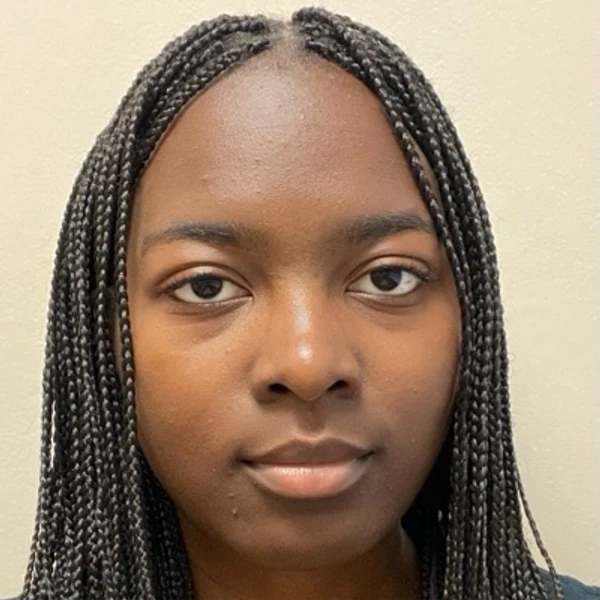
user profile avatar

Yasser Louis

1x

Finalist

1x

Winner

Bio

Yasser is an Environmental Science and Policy major passionate about restoration, environmental education, and environmental justice. Born and raised in South Florida, she witnessed firsthand the impact of pollution, flooding and lack of green space in underserved communities, fueling her passion for protecting ecosystems and public health. She gained hands-on restoration experience with the Everglades Restoration Ambassadors, removing invasive vegetation, planting native species and helping to improve campus habitats. The club also collaborated with a nearby elementary school, allowing her to teach kids about Florida’s ecosystems and native wildlife. As an EcoExplorer intern, Yasser sharpened her communication skills and was able to connect with thousands of children and families with lessons about Florida’s ecosystems, climate impacts and conservation. She also volunteers with the Sierra Club Tampa Bay, assisting with community events and environmental learning experiences. Ultimately, she hopes to be an environmental researcher and advocate who works to improve water quality, restore degraded ecosystems and expand green space in underserved communities. Yasser seeks to connect scientific research with community needs, so that environmental solutions are not only possible and just but grounded in justice.

Education

University of South Florida-Main Campus

Bachelor's degree program
2025 - 2029
  • Majors:
    • Environmental Geosciences
    • Environmental/Natural Resources Management and Policy
    • Geography and Environmental Studies
  • Minors:
    • Geography and Environmental Studies
    • Linguistic, Comparative, and Related Language Studies and Services

Miscellaneous

  • Desired degree level:

    Master's degree program

  • Graduate schools of interest:

    • University of South Florida-Main Campus
    • Florida Agricultural and Mechanical University
    • Howard University
  • Transfer schools of interest:

  • Majors of interest:

    • Geography and Environmental Studies
  • Not planning to go to medical school
  • Career

    • Dream career field:

      • Renewables & Environment
    • Dream career goals:

      Environmental Scientist

    • Housing Services Clerk

      University of South Florida
      2026 – Present8 months
    • Social Media Manager

      Tampa Bay Sierra Club
      2025 – Present1 year
    • ESE Paraprofessional Intern

      Broward County Public Schools
      2024 – 2024
    • Ecoexplorer Intern

      Museum of Discovery and Science
      2023 – 20241 year

    Public services

    • Advocacy

      Black Student Union — Vice President
      2024 – 2025
    • Advocacy

      South Plantation High School — Green Team Lead
      2024 – 2025
    • Volunteering

      Everglades Restoration Ambassador — Volunteer
      2023 – 2025
    • Volunteering

      Inspiring Connections Outdoors Sierra Club — Volunteer
      2025 – 2026

    Future Interests

    Advocacy

    Volunteering

    Philanthropy

    RonranGlee Literary Scholarship
    “In fact, we often believe with criminal superficiality that to educate the masses politically is to deliver a long political harangue from time to time. We think that it is enough that the leader or one of his lieutenants should speak in a pompous tone about the principal events of the day for them to have fulfilled this bounden duty to educate the masses politically. Now, political education means opening their minds, awakening them, and allowing the birth of their intelligence; as Cesaire said, it is "to invent souls." To educate the masses politically does not mean, cannot mean, making a political speech. What it means is to try, relentlessly and passionately, to teach the masses that everything depends on them; that if we stagnate it is their responsibility, and that if we go forward it is due to them too, that there is no such thing as a demiurge, that there is no famous man who will take the responsibility for everything, but that the demiurge is the people themselves and the magic hands are finally only the hands of the people. In order to put all this into practice, in order really to incarnate the people, we repeat that there must be decentralization in the extreme.” Frantz Fanon, The Wretched of the Earth In this paragraph, Fanon makes the argument that liberation necessitates dismantling the psychological architecture of dependency and substituting it with a collective consciousness capable of self-governance. He contends that true political education is a radical process of transferring authorship of history from leaders to the people themselves. Although Frantz Fanon's phrase from The Wretched of the Earth is frequently interpreted as a critique of superficial political rhetoric, it actually has a much deeper significance. Fanon is diagnosing a deeper ailment inside post-colonial political culture, the permanence of dependency, rather than only cautioning against meaningless statements. He describes an existential rather than informational transformation when he states that "political education means opening their minds, awakening them, and allowing the birth of their intelligence." Fanon argues that rather than being passive beneficiaries of guidance from above, the masses must learn to regard themselves as the "demiurge," the makers of history. The argument that Fanon's deeper goal in this essay is to redefine political education as the eradication of reliance and the development of a common political subject capable of self-governance is supported by this essay. His emphasis on "decentralization in the extreme" is psychological rather than administrative; it serves as a means of teaching the people that emancipation is something they must act upon rather than something they can wait to be granted. One must start with Fanon's criticism of "criminal superficiality" in order to get his underlying meaning. This is a moral critique rather than rhetorical. According to Fanon, leaders who think political education entails "a long political harangue from time to time" are not only misguided, but they are also breaking political law. Reproducing the colonial connection between ruler and ruled is the crime. The colonized were viewed as things to be subdued, instructed, and controlled throughout colonialism. When post-colonial leaders believe that political consciousness can be communicated through speeches, Fanon observes them repeating this pattern. The superficiality is illegal because it does not rouse the masses to their own agency; instead, it keeps them in a state of passivity, waiting for guidance. Fanon’s deeper meaning is that political education must break this pattern entirely. It must dismantle the hierarchical habits that colonialism implanted and that nationalist elites often unconsciously perpetuate. Fanon's assertion that political education is a process of "inventing souls" is inextricably linked to this criticism of superficiality. The term, which is taken from Aimé Césaire, indicates that Fanon is not interested in disseminating ideas or knowledge. The development of a new type of person is his concern. According to Fanon's perspective, colonialism deforms rather than just exploits. It creates subjects who question their own initiative and believe they are powerless to influence history. Therefore, political education needs to be an ontological rebuilding process. The general public must be made aware of their capacity for thought, decision-making, and action. The fundamental idea of Fanon is that in order to achieve emancipation, a new political subject collective consciousness that acknowledges itself as the creator of national life, must emerge. For this reason, Fanon disapproves of the notion that a leader is a "demiurge." According to classical philosophy, the demiurge is the divine artisan who creates the world. Fanon intentionally uses the phrase. He is challenging the idea that exceptional people make history and the concept of the savior-leader. In many post-colonial settings, the populace views nationalist leaders as the new source of all initiative and transfers the colonial system of authority onto them. According to Fanon, this is a catastrophic mistake. People remain spectators rather than agents if they think that the leader's "magic hands" are the source of progress. The cult of personality is a type of political infantilization, according to Fanon's deeper interpretation. It promotes the mass to wait for guidance, expecting redemption, and believing that someone else will be in charge of the country's destiny. Because it upholds the psychological framework of colonialism, this notion is incompatible with emancipation. Fanon's rejection of the leader-myth is a practical caution rather than an abstract philosophical statement. He contends that when people think someone else would carry out the liberation effort, revolutions fall short. The masses continue to rely on the leader as a stand-in for the colonial governor. Dependency is the real adversary of liberty, according to Fanon's deeper meaning. Overthrowing colonial rule alone is insufficient; one also needs to eradicate the passive habits that colonial rule fostered. Therefore, the general public has to learn that "everything depends on them" through political education. This is a structural assertion rather than motivational rhetoric. According to Fanon, the extent to which the masses take ownership of the revolution determines whether it succeeds or fails. It is their responsibility if they stagnate, and their accomplishment if they move forward. Fanon's idea of political education is centered on this drastic redistribution of responsibility. Fanon's demand for "decentralization in the extreme" must be seen in light of this. Although Fanon's purpose is psychological, many readers understand this as a plea for administrative reform. The process by which the general public discovers that they are the writers of history is known as decentralization. People continue to be dependent on leaders when decision-making is centralized in their hands. Initiative is inevitable when accountability is distributed. Decentralization forces the masses to face their own agency, according to Fanon's deeper interpretation. It does away with the need to wait for guidance from above. It establishes circumstances that force people to act, make decisions, and accept accountability. Therefore, the practical approach for developing the new political subject Fanon previously discusses is decentralization. It is the way that political education is incorporated into the country's everyday existence. Fanon's larger criticism of post-colonial nationalism is also evident in his insistence on decentralization. He cautions that nationalist leaders frequently replicate colonial rule's hierarchical systems. They treat the masses as submissive followers, concentrate power, and foster personality cults. Fanon's deeper interpretation is that this kind of nationalism is substitution rather than emancipation. It maintains the psychological framework of dependency while substituting one authority for another. Therefore, rather than strengthening hierarchy, political education must be a process of destroying it. Fanon advocates for the dismantling of political paternalism through his call for decentralization. It is a demand that people be regarded as citizens capable of self-governance rather than as children. Fanon's fundamental meaning revolves around this emphasis on self-governance. He contends that freedom is a change carried out by the people themselves rather than an event brought about by leaders. Therefore, political education must convey to the general public that they are in charge of the future of the country. This obligation is empowering rather than burdernsome. Fanon's deeper message is that individuals need to realize they have the power to influence history. The idea that someone else will take care of things for them must be rejected. They have to understand that the leader's "magic hands" are just their own hands. The core of political awakening is this realization. There is a moral component to Fanon's argument as well. According to him, political education needs to foster a feeling of shared accountability. People need to realize that their choices, or lack thereof, determine the country's destiny. Political agency is inextricably linked to this moral obligation. Fanon's underlying meaning is that a change in ideals is necessary for emancipation. Initiative, involvement, and group decision-making must be valued by the populace. They must resist hero-worship, passivity, and reliance. Therefore, political education is a process of moral development rather than just teaching. When one synthesizes Fanon's thesis, it becomes clear that his main point is that emancipation is not about changing the set of rulers. A new political subject, a people who acknowledge themselves as the writers of history, must be created. Therefore, political education ought to foster agency and eradicate dependency. A community awareness capable of self-governance must take the place of the myth of the leader-demiurge. The practical means of accomplishing this change is Fanon's demand for "decentralization in the extreme." It compels people to take action, make decisions, and accept accountability. It makes it possible for the general public to act as the "magic hands" that determine the future of the country. In the end, Fanon's deeper meaning is that authorship is transferred during the process of freedom. It is the transfer of accountability, initiative, and inventiveness from leaders to the people. The general public must be taught through political education that they are the demiurge, the makers of their own reality. Fanon envisions a revolution in which there are only participants and no bystanders. His passage is an appeal for the emergence of a new political subject that is capable of self-governance and self-determination. In this way, Fanon's argument is existential rather than just political. It is a call for citizens to recognize their own power and take charge of the country's future. According to Fanon, liberation is something that the people must accomplish rather than something that happens to them
    John "Sam" Collins Memorial Scholarship
    Winner
    Since I was a kid in Florida, I've always felt a connection to the natural places that shape our communities, like our wetlands, coastlines, and the animals that live here. That connection is what made me choose to study Environmental Science and Policy, which lets me use my scientific knowledge to help people in my community. I want to help protect Florida's ecosystems and make sure that everyone, especially people who don't have a lot of resources, has access to clean water, healthy environments, and the natural areas that shaped my own life. I became interested in conservation in high school when I went to an Environmental Science and Everglades Restoration magnet school. This program helped me learn about taking care of the environment by giving me real-life experiences, it created a space for me to be an active member in the environment. I was able to join the Everglades Restoration club, this allowed me to help plant native plants on campus, take part in service activities and education local elementary students on our ecosystem. I also want to make sure that everyone, especially communities that don't have access to clean water, healthy environments, and the natural spaces that shaped my own life, has access to them. I helped start a Green Team during my senior year as part of the process for Florida Green School designation. We worked on two main things: cutting down on energy waste and dealing with the growing problem of clothing waste on campus. I helped plan ways to get people to use energy wisely, reuse and give away clothes, and learn more about how the choices we make every day affect the environment. This experience taught me that small, student-led projects can make a big difference when people work together with a goal in mind. Interning as an EcoExplorer at the Museum of Discovery and Science was one of the most important things I've ever done. I taught thousands of people about environmental issues. I learned how to explain scientific ideas in ways that were fun and easy to understand, especially for kids and families who might not have learned about the environment before. It was amazing to see people leave with a new understanding of wildlife, climate, or conservation. It showed me how powerful education can be. It confirmed that my job in environmental work isn't just research; I also have to get other people to care. I plan to get more involved in environmental advocacy in the future by joining GenCLEO at USF. This is a youth-led climate group that focuses on policy change and giving people more power in their communities. I also joined the Marine Biology Club, which introduced me to marine conservation topics and reinforced my interest. I also want to help out with the Tampa Bay ICO, which is a part of the Sierra Club that takes underprivileged kids who don't get the typical nature exposure on hikes, kayaking trips, and service projects. Their goal is to show young people how amazing nature is, which is exactly what I want to do. I want to help make experiences that make the next generation more curious, confident, and aware of the environment. My long-term goal is to work in environmental justice or conservation, with a focus on restoring ecosystems, making water cleaner, and expanding community education programs. I will use my ambition, drive, and scientific training to protect Florida's natural environment and make the communities that depend on it stronger.