user profile avatar

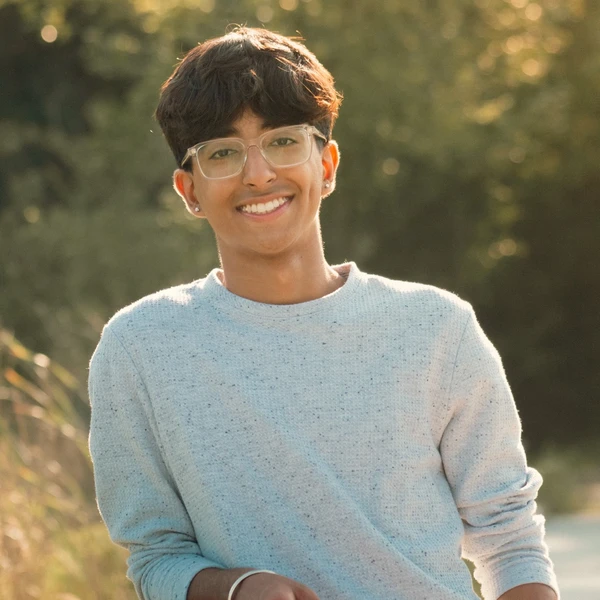
Yash Goswami

1x

Finalist

1x

Winner

General information

Hobbies & Interests

  • Alpine Skiing
  • Cricket
  • Golf
  • Mock Trial
  • Student Council or Student Government
  • Public Policy
  • Mental Health
  • Marketing
  • Advocacy And Activism
  • Badminton
  • Pickleball
  • Spikeball
  • Public Speaking
  • Coaching
  • Coffee
  • Singing
  • Economics
  • Mathematics

Reading

  • Action

I read books multiple times a week.

Bio

Hi! I’m Yash, a 12th grader at St. Croix Preparatory Academy, deeply interested in statistics and mathematics. Find out more about me through my LinkedIn: www.linkedin.com/in/yash-goswami-3a301a232

Education

St. Croix Preparatory Academy Upper

High School

2022 – 2026
Miscellaneous

Desired degree level:
Master's degree program
Majors of interest:
Mathematics and Statistics, Other, Biomathematics, Bioinformatics, and Computational Biology, Business/Managerial Economics, Management Sciences and Quantitative Methods
Desired degree modality:
In-Person
Medical school interest:
No
Test scores:
  • SAT1460

Career

  • Student Intern

    Marketing and Advertising · India Association of Minnesota

    Jan 2023 – Jan 2024

Miscellaneous

Dream career field:
Information Technology and Services
Dream career goals:
Teaching
Work experience:
0 years
Has nursing license:
No

Future Interests

  • Advocacy
  • Politics
  • Volunteering
  • Philanthropy
  • Entrepreneurship
Tom LoCasale Developing Character Through Golf Scholarship
Golf entered my life almost by accident. Cricket was the sport I grew up playing and it shaped how I understood competition, practice, and patience. Golf felt unfamiliar and quiet, and it was not something I imagined myself committing to. It was a friend’s recommendation, not a long-term plan, that first put a club in my hands. One afternoon at Topgolf, after watching me swing a few times, he stopped, stared, and told me I had a natural golf swing, then joked that he nearly fainted when he saw it. The beginning felt unreal. I practiced wherever I could, even setting up a hitting net in my basement and sending ball after ball into a space meant for storage. Early rounds went well. Beginners’ luck showed up when I least expected it, including a near hole-in-one in my first round. Progress came quickly, and confidence came even faster. Less than a year after picking up a golf club for the first time, I earned a spot on the varsity team. It would have been easy to believe that momentum would last. It did not. As the season went on, golf became less forgiving. Rounds unraveled. Scores climbed. Shots that once felt automatic demanded full attention. What humbled me most was not playing poorly, but realizing how fragile confidence can be when it depends on early success. Golf made it clear that improvement does not carry itself forward. That realization changed how I approached the game. I learned to separate preparation from outcome. You can practice deliberately and still struggle. The lesson was not to abandon effort, but to refine my response. Staying composed after mistakes, rather than frustrated, became the skill that mattered most. Over time, I learned that humility is not about ignoring success, but about respecting how easily it can disappear. That shift in perspective changed more than my scorecards. It changed how I measured progress. Golf forced me to accept that improvement is rarely linear and that effort does not always show up immediately as results. Some days, the work feels invisible. Other days, it seems to vanish entirely. Learning to stay committed through that uncertainty was uncomfortable, but necessary. Those lessons carried naturally into the rest of my life. In academics and leadership, I found the same pattern. Early success can create expectations that reality does not always meet. Setbacks arrive without warning. Golf prepared me for those moments by teaching me to stay grounded, keep working, and resist the urge to define myself by short-term outcomes. What surprised me most was realizing that humility did not diminish confidence. It strengthened it. Letting go of the need to prove myself in every moment gave me the freedom to focus on improvement instead. Humility became a form of discipline, a reminder to stay open to learning rather than being comfortable with progress. Tom LoCasale believed that a fulfilling life is built through skills developed intentionally over time. Golf taught me those skills honestly and persistently. What began as an accidental introduction grew into a long-term lesson in patience, perseverance, and humility, one that will continue to guide how I approach challenges well beyond the course.
Eden Alaine Memorial Scholarship
I didn’t lose my grandfather in a single moment. I lost him gradually, through a screen. Because he lived in India and I grew up in the United States, our relationship existed in fragments—measured in scheduled WhatsApp video calls and brief visits years apart. When the call connected, his face would appear beneath the steady blur of a ceiling fan, the background always familiar even as I kept changing. The connection was never perfect. The audio lagged. The image froze. Sometimes the call dropped entirely. But those few minutes were our version of presence. As a child, I didn’t recognize how much those moments mattered. I treated the calls casually, assuming there would always be another one. I answered his questions about school quickly. I promised to explain things later. Time felt endless, and distance felt temporary. My grandfather had lived a life defined by responsibility. He served as an Air Force mechanic, a role that demanded precision long before mistakes could be corrected. Lives depended on whether he did his job correctly, yet he never spoke about his work with drama or pride. He spoke about it simply, as if responsibility were just another part of breathing. Through a small phone screen, I learned that commitment doesn’t need an audience. Even from far away, his discipline shaped our family. He had moved constantly, uprooting his life again and again, learning to adapt not because he wanted to, but because he had to. Change was never treated as an obstacle—only as something to be managed. Over time, I began to understand that stability, for him, was not tied to place. It came from routine, accountability, and values that did not shift even when everything else did. When my grandfather passed away in 2023, the loss felt unfinished. There was no final conversation where I said everything I had saved for later. There was no closing moment—only the quiet realization that the call I expected would never come again. His contact remained on my phone, unchanged, while the world kept moving forward without him. That absence forced me to confront something uncomfortable: how easily I had assumed time would wait. Losing him stripped away the illusion that effort, opportunity, and connection are guaranteed. I realized how often I had delayed engagement—not just with him, but with my own goals—trusting that there would always be another chance. Grief reshaped the way I move through the world. I became more intentional, not out of fear, but out of respect for what can be lost. My grandfather lived with a quiet urgency—doing things correctly the first time because there might not be another opportunity. In his absence, that mindset became something I chose to carry forward. The calls ended. The lessons didn’t.
James T. Godwin Memorial Scholarship
Some stories only exist in certain places. For me, they lived thousands of miles away, in India, and only came alive every few years when we visited. Some of my strongest memories of my grandfather exist in fragments—late afternoons in India, the hum of a ceiling fan, and stories that felt too big to belong to real life. I grew up in Minnesota, born and raised in the United States, but every few years, my family would travel to India to visit our extended family. Those trips were when my grandfather came alive to me—not just as a relative, but as a storyteller shaped by a life of constant motion. My grandfather served as an Air Force mechanic in India, and the way he talked about his service made it feel like something out of a movie. He spoke casually about jumping out of planes, relocating homes multiple times in a single year, and learning to live with uncertainty as a normal part of life. To me, as a kid who had lived in the same place for years, it sounded unreal—almost exaggerated. But the more he talked, the more I realized that for him, instability wasn’t chaos; it was routine. My mother would often sit nearby and add details he left out. She told me how growing up in a military family meant never unpacking completely. She would make friends knowing they were temporary, attend schools knowing she would soon leave, and learn to adapt quickly because she had no choice. What sounded adventurous to me had been formative for her. Between the two of them, I began to understand that military life wasn’t just about service—it reshaped entire families. What struck me most wasn’t the dramatic moments, but how calmly my grandfather spoke about them. There was no performance in his voice, even when the stories themselves felt unbelievable. As an Air Force mechanic, his responsibility was to ensure aircraft were ready before others trusted them with their lives. Precision and accountability weren’t ideals—they were requirements. He taught me, without ever stating it outright, that doing your job well matters most when no one is watching. My grandfather passed away in 2023, but his legacy has never felt distant. It lives on in the way my family approaches responsibility, in how my mother views change, and in how I think about stability. Through his stories, I learned that consistency doesn’t always come from staying in one place—it comes from values you carry with you. To me, a successful life looks a lot like the one he modeled. It is built on responsibility, adaptability, and quiet service. His stories may have sounded like something out of a movie, but the lessons behind them were real. And they continue to guide how I approach challenges, uncertainty, and the future I am working toward.
Jessie Koci Future Entrepreneurs Scholarship
Incentives shape behavior long before intentions ever do. I’ve seen this play out repeatedly: people respond not to what a system claims to value, but to what it quietly rewards. That realization is what first drew me toward quantitative thinking. Numbers reveal patterns that intentions often hide, and understanding those patterns is essential to building systems that actually work. I plan to study a quantitative field rooted in mathematics, economics, and data analysis because I am drawn to understanding how systems behave at scale. I have always been more interested in why something works than simply whether it does. Math and economics reward that curiosity—assumptions must be stated, incentives must be understood, and outcomes must be measured. Higher education, for me, is not about credentials; it is about gaining the intellectual discipline to build ideas that hold up under pressure. My interest in entrepreneurship developed naturally from this mindset. I gravitate toward environments where effort does not translate cleanly into results and inefficiencies persist because no one is responsible for fixing them. I find myself asking the same questions repeatedly: What is actually driving behavior here? Where is friction being created? How could this system be redesigned so that doing the right thing becomes the easiest option? Entrepreneurship gives me the freedom to pursue those questions through action rather than theory. I am pursuing an entrepreneurial career because I want ownership over both the problems I work on and the solutions I build. I am motivated by designing systems—tools, platforms, or processes—that scale impact and reduce wasted effort. Business, to me, is not about risk for its own sake; it is about accountability. When you build something people rely on, results matter, and that responsibility sharpens both decision-making and discipline. I believe I will be successful in my business endeavors because I am comfortable operating without guarantees. Many ventures fail not from lack of intelligence, but from fear of iteration or attachment to initial ideas. I approach challenges experimentally—starting small, learning quickly, and adjusting deliberately. I value feedback, data, and long-term thinking over speed or validation. That mindset allows progress to continue even when momentum slows. A successful life, to me, is defined by ownership, usefulness, and growth. Ownership of my direction and work. Usefulness in the sense that what I build genuinely improves how people operate. Growth not just financially, but intellectually and personally. Higher education equips me with the tools to think rigorously; entrepreneurship is how I intend to apply that thinking to build something meaningful and lasting.
Richard Neumann Scholarship
Most people think math problems live on paper. I learned they live in people. The problem I wanted to solve first appeared in a quiet classroom on a Tuesday morning. I was paired with an Algebra 2 student who insisted he “wasn’t a math person.” He wasn’t lazy or careless—he was defeated. Each incorrect answer reinforced his belief that math was something people were either born good at or permanently excluded from. Helping him made me realize that the real issue wasn’t algebra; it was access to understanding delivered in the right way. To solve this, I created my own informal tutoring system. I broke problems into visual steps, connected abstract concepts to real examples, and—most importantly—created a space where mistakes were expected. Over time, the student stopped saying “I can’t” and started asking “why.” His grades improved, but more importantly, his confidence did. That experience showed me how powerful personalized learning can be—and how limited it is by time, staffing, and resources. If I had the funding and tools, I would scale this idea into a personalized learning platform designed specifically for students who fall through the cracks of traditional classrooms. Unlike generic tutoring apps, this system would adapt not just to academic performance, but to learning psychology. The platform would track where students lose confidence, not just where they lose points, and adjust instruction accordingly. The plan would involve three key components. First, an adaptive diagnostic engine that identifies not only content gaps, but misconceptions—the moment a student’s logic breaks down. Second, a modular explanation system that offers multiple explanations for the same concept: visual, numerical, real-world, and step-by-step, allowing students to choose what resonates with them. Third, a mentorship layer where trained peer tutors—high-performing students who understand the struggle—provide short, focused check-ins to humanize the learning process. Beyond academics, the platform would also collect anonymized feedback on how students emotionally respond to different explanations. This data would allow educators to see patterns invisible on tests—where frustration spikes, confidence drops, or engagement improves—and redesign instruction accordingly. Learning would become not just measurable, but understandable from the student’s perspective. With proper funding, I would partner with public schools to pilot the program, prioritizing districts with high failure rates in foundational math courses. Data from these pilots would refine the system and demonstrate impact, allowing the model to expand sustainably. Long term, this platform could reduce dropout rates, close achievement gaps, and redefine how we think about academic ability. What started as a solution for one student became a blueprint for a larger change. I didn’t just want to help someone pass algebra—I wanted to build something that convinces students they belong in the problem-solving process. Because when someone believes they can learn, everything else follows.
Learner Online Learning Innovator Scholarship for Veterans
In my education, YouTube has been one of the most effective learning tools I’ve used, often more powerful than a textbook or a single classroom lecture. In many cases, it has felt like having access to an entire course on demand. Whether I’m reviewing for a test, preparing for a quiz, or trying to understand a concept that didn’t fully click the first time, YouTube has made learning more accessible, flexible, and efficient. One of the biggest advantages of YouTube is control. In a classroom, lessons move at a fixed pace. On YouTube, I can pause, rewind, slow down, or rewatch explanations as many times as I need. That flexibility has completely changed how I study. When I’m preparing for exams, I often search for full-unit reviews or walkthroughs that break down topics step by step. Being able to revisit explanations the night before a test—or even minutes before a quiz—has made reviewing less stressful and far more effective. YouTube has also helped me approach learning from multiple perspectives. If one explanation doesn’t work, I can immediately find another. Different instructors explain the same concept in different ways, and that variety has helped me understand material more deeply. Instead of memorizing procedures, I focus on understanding why something works. That approach has strengthened my confidence and improved how I apply knowledge rather than just recall it. As a volunteer tutor, YouTube has been just as valuable. When working with students outside of scheduled sessions, I often recommend specific videos that match their learning style. This allows them to review material independently and come back with better questions. For students who feel overwhelmed in class, YouTube provides a judgment-free space to learn at their own pace. I’ve seen students gain confidence simply because they could hear an explanation one more time without feeling rushed or embarrassed. YouTube has also taught me how to learn independently. Instead of waiting for help, I’ve learned to seek it out. That skill—knowing how to identify gaps in understanding and find reliable explanations—is something I’ll carry into higher education and beyond. In the real world, answers aren’t always handed to you. YouTube mirrors that reality by rewarding initiative, curiosity, and persistence. What I appreciate most is how practical it is. Reviewing for tests and quizzes has never been easier because everything I need is centralized and accessible. Whether it’s a full course playlist, a last-minute review, or a detailed walkthrough of a difficult problem, YouTube meets me where I am academically and helps me move forward. Online learning doesn’t have to be complicated to be innovative. For me, YouTube represents education at its most effective: flexible, student-driven, and built around understanding rather than pressure. As I continue my education, I plan to keep using platforms like YouTube not just to support my own learning, but to help others learn with confidence and independence as well.
Julie Holloway Bryant Memorial Scholarship
I am a high school senior whose experiences have been shaped by navigating multiple worlds—academically, culturally, and personally. Throughout high school, I have challenged myself with rigorous coursework while remaining deeply involved in tutoring, athletics, and community service. These experiences have clarified my plans after graduation: to pursue higher education with the long-term goal of serving others through education and mentorship, where patience and guidance can change the trajectory of a student’s life. My first language was Hindi. English came later, once I entered school. Growing up bilingual shaped how I learned, how I communicated, and how I saw myself in academic spaces. Early on, I often understood ideas clearly in my head but struggled to express them with the same confidence in English. I remember moments in class when I knew the answer but hesitated to speak, worried that my phrasing wouldn’t come out right. That hesitation sometimes made me feel behind, even when I wasn’t. Those early challenges taught me persistence. Learning in a second language forced me to slow down, listen carefully, and process information deeply before responding. Over time, that became a strength. Switching between Hindi and English sharpened my ability to recognize nuance, context, and tone. It made me more thoughtful with words and more aware that understanding does not always happen instantly or visibly. This awareness has stayed with me, especially in academic settings where speed is often mistaken for intelligence. Being bilingual also shaped how I connect with others. Hindi allows me to communicate with family members across generations and remain rooted in my cultural identity. It has given me a sense of responsibility to bridge gaps—between home and school, between generations, and between people who may experience the same environment differently. Carrying two languages taught me that identity is layered, and that belonging does not have to be singular. These experiences influenced how I approach leadership and service. As a tutor, I am especially sensitive to students who hesitate to speak or ask questions. I recognize that silence does not mean a lack of understanding—it often means uncertainty or fear of being judged. Because of my own experience navigating language and confidence, I try to create spaces where students feel safe expressing confusion and taking their time. I explain ideas in multiple ways and emphasize that learning is a process, not a performance. After graduation, I plan to continue my education and ultimately work in public service through teaching. I want to be someone who understands what it feels like to learn while translating between languages, expectations, and identities. Being bilingual has shaped not only how I learn, but how I listen. It has taught me patience, empathy, and the importance of meeting people where they are. The challenges of growing up bilingual did not disappear with time, but they transformed into perspective. They taught me that language is power, but so is understanding. As I move forward, I hope to use my education to support others who feel caught between worlds, and to help create environments where differences in language or background are seen not as obstacles, but as strengths.
Rev. and Mrs. E B Dunbar Scholarship
One of the biggest obstacles I’ve faced in pursuing higher education has been learning to trust myself during uncertainty. For much of my academic life, especially in mathematics, progress did not come quickly or comfortably. There were moments when advanced concepts felt out of reach, when I questioned whether I belonged in challenging academic spaces or whether my effort would ever be enough. Unlike obstacles that are visible, self-doubt is quiet—but it can be just as limiting. That doubt was reinforced at times by the pressure to perform, balance multiple responsibilities, and keep moving forward even when results were not immediate. In math, effort does not always translate into instant success. I remember sitting with problems that made no sense at first, feeling frustrated and stuck. What changed was not a sudden breakthrough, but learning to slow down, break problems apart, and stay with them. Over time, persistence replaced fear, and confusion gave way to understanding. That process taught me that growth is rarely linear, and that discomfort is often a sign of learning rather than failure. Another challenge has been navigating education without always seeing clear examples of where I fit. While I was fortunate to have strong mentors, including teachers who believed in me, I still had to learn how to advocate for myself and remain confident in my path. Witnessing loss within my school community also reshaped how I experienced education. It reminded me that learning does not happen in isolation from life, and that emotional weight can affect students and teachers alike. Carrying that awareness while continuing to pursue my goals required resilience and perspective. Despite these challenges, education became the place where I found direction. Through tutoring classmates—voluntarily and free of cost—I discovered the impact of guidance and patience. Many of the students I worked with entered sessions convinced they were “bad at school,” shaped by labels or past experiences. Helping them rebuild confidence showed me that access to education is not just about resources, but about belief. Those experiences clarified my purpose. In the future, I plan to use my education to give back through public service in education. I hope to become a teacher who creates spaces where students feel supported, respected, and capable, especially when they are still figuring things out. I want to mentor students who doubt themselves the way I once did, and to pass forward the patience and belief that helped me persist.
Matthew E. Minor Memorial Scholarship
I am a high school senior who has grown up learning that safety, confidence, and belonging are not guaranteed for every young person. Through my experiences in tutoring, coaching, and leadership, I have seen how easily students—especially younger ones—can feel isolated or targeted, both in person and online. These experiences have shaped how I show up in my community and why preventing bullying, in all its forms, matters deeply to me. I am actively involved in my community through peer tutoring, youth sports coaching, and school leadership. As a volunteer tutor, I work one-on-one with students who often come in discouraged or insecure about their abilities. Many already carry labels placed on them by peers or online spaces—“slow,” “bad at school,” or “not enough.” In these moments, bullying is not always loud or obvious. Sometimes it shows up as silence, withdrawal, or fear of asking questions. I work to counter that by creating a space where students feel safe to speak, make mistakes, and be themselves without judgment. Coaching youth sports has also shown me how bullying can surface in subtle ways—teasing, exclusion, or embarrassment disguised as jokes. As a coach and mentor, I make it a point to model respect and address behavior early. I emphasize teamwork, accountability, and empathy, and I remind young athletes that confidence grows when people feel supported, not ridiculed. For many kids, sports and school are where they spend most of their time, so the tone adults and mentors set in those spaces matters. Online safety is an extension of that same responsibility. While I am not a programmer or content moderator, I focus on what I can control: awareness, conversation, and presence. I encourage younger students to speak up when something feels wrong online and remind them that they are never weak for asking for help. I also make a conscious effort to be thoughtful with my own digital footprint—avoiding harmful language, shutting down demeaning comments when I see them, and choosing not to amplify negativity. Silence online can feel like agreement, and I try not to let that happen. What draws me to the mission of the Matthew E. Minor Awareness Foundation is its focus on both prevention and healing. Cyberbullying, self-harm, and online challenges thrive in isolation. Awareness, education, and community support are what interrupt that cycle. I believe protecting youth begins with adults and older students taking responsibility for the spaces we create—both online and offline. As I prepare to enter higher education, I am mindful of the financial responsibility it brings. While my family supports my educational goals, the cost of college is high, and scholarships play a crucial role in reducing financial strain. This support would allow me to focus on my studies while continuing my involvement in mentorship and community service without needing to divert time toward financial stress. I strive to live with ambition and drive, but never at the expense of others’ well-being. Whether through tutoring, coaching, or everyday interactions, I try to protect younger students by leading with empathy, addressing harmful behavior early, and reminding them that they are not alone. This scholarship represents more than financial assistance—it represents a commitment to protecting young people and honoring lives impacted by online harm. If awarded, I would carry that mission forward with intention, responsibility, and care.
Aserina Hill Memorial Scholarship
I am a high school senior whose values have been shaped by people who believed in giving without expecting anything in return. Throughout my life, I have learned that the most meaningful support often comes quietly. In school, I have pushed myself academically while remaining deeply involved in service and community leadership. Outside the classroom, one of the most important roles I have taken on is tutoring. I have worked one-on-one with students in Algebra 2 and calculus, entirely free of cost, because I believe access to learning should not depend on financial ability. Many of the students I tutored came in discouraged, convinced they were “bad at school” or incapable of understanding certain subjects. What they needed most was not answers, but reassurance. Volunteering as a tutor taught me that education is deeply personal. Confidence can disappear quickly when students feel unseen or unsupported, and it can return just as powerfully when someone takes the time to believe in them. Watching a student go from avoiding problems to asking questions freely reminded me that learning is not just about academics—it is about dignity, encouragement, and trust. Aserina Hill’s story resonates with me because of her lifelong commitment to lifting others, even when she herself had limited resources. Though she was unable to complete her own education, she recognized its power and chose to invest in others instead. Her legacy of sacrifice, revealed through thank-you cards from students and family members, reflects the kind of impact I admire most—one that is humble, consistent, and rooted in love. If I were allowed to start my own charity, its mission would be to support students and families by removing educational barriers and restoring confidence in learning. The charity would focus on providing free academic support, mentorship, and educational resources to students who may not otherwise have access to them due to financial or personal circumstances. At the core of the organization would be a volunteer-based tutoring and mentorship program, pairing committed volunteers with students in need of consistent academic and emotional support. Rather than focusing solely on grades, the program would emphasize confidence-building, study habits, and long-term encouragement. Volunteers would work with students regularly, forming relationships that allow trust to grow over time. In addition to tutoring, the charity would support families by offering help with school supplies, guidance through academic transitions, and informational sessions to help caregivers better support their children’s education. Many families want to help but lack access to the resources or information needed to do so. By meeting families where they are, the charity would strengthen entire support systems, not just individual students. This vision is deeply inspired by Aserina Hill’s legacy. Like her, I believe that giving does not require abundance—only intention. If awarded this scholarship, I would honor her memory by continuing to serve students freely, building a charity rooted in education, compassion, and quiet generosity. Through this work, I hope to ensure that belief, once extended to me, continues to reach others who need it most.
Janet and Jim Boettcher Memorial Scholarship
I didn’t grow up wanting to be a teacher. I grew up watching one. My mom was a former biology teacher, and when she moved to the United States a few years before my birth, she had to leave her teaching career behind. But her teaching nature never left her. It showed up at our kitchen table, in the way she refused to move on until I truly understood. If I didn’t get something the first time, she tried again. Then again. She never treated confusion as failure—only as a signal that another explanation was needed. Without realizing it, I learned that learning was not about speed or talent, but about patience and trust. I want to study applied mathematics because it taught me how to think when answers are not obvious, and I want to teach because I know how much that guidance can matter. Math was not always something that came easily or comfortably to me. There were moments when concepts felt out of reach, when I questioned whether I was good enough to keep going. What changed everything was having teachers who did not treat confusion as failure. They treated it as part of the process—and that perspective stayed with me. One of the biggest challenges I have faced is learning to trust myself during struggle. In math, effort does not always produce immediate results. I remember sitting with problems that made no sense at first, feeling frustrated and stuck. Instead of walking away, I learned to slow down, break problems apart, and keep showing up. Over time, that persistence turned confusion into understanding. That experience shaped not only how I approach math, but how I approach people. During my junior year of high school, I began tutoring an Algebra 2 student, and in my senior year, I worked one-on-one with a calculus student. I did this voluntarily, without pay, because I genuinely wanted to help someone experience the same shift I once did. Both students came in convinced they were “bad at math,” defined by grades or by how quickly they could keep up in class. I never saw them that way. I saw students who needed patience, a different explanation, and reassurance that confusion did not mean failure. Tutoring showed me how deeply guidance matters. I learned to listen more than I spoke, to explain ideas in multiple ways, and to slow the pace when someone felt overwhelmed. Watching each student’s confidence grow after finally understanding a concept was one of the most rewarding experiences I have had. Those moments reinforced my belief that there is no such thing as a bad student—only students who have not yet received the right support. I want to become a teacher because I know how powerful it is when someone believes in you while you are still figuring things out. Teaching applied mathematics allows me to connect abstract ideas to real life and show students that math is not about speed or perfection. It is about reasoning, growth, and persistence. I want my classroom to be a place where students feel safe asking questions, making mistakes, and learning at their own pace. My goal is to make a positive impact by being the kind of teacher I once needed and later became for others—someone who listens, adapts, and refuses to define students by their struggles. Through teaching applied mathematics, I hope to give students not only mathematical understanding, but confidence they can carry far beyond the classroom.
Dream BIG, Rise HIGHER Scholarship
I didn’t grow up wanting to be a teacher. I grew up watching one. My mom was a former biology teacher, and when she moved to the United States a few years before my birth, she had to leave her teaching career behind. But her teaching nature never left her. It showed up at our kitchen table, in the way she refused to move on until I truly understood. If I didn’t get something the first time, she tried again. Then again. She never treated confusion as failure—only as a signal that another explanation was needed. Without realizing it, I learned that learning was not about speed or talent, but about patience and trust. In my eyes, education stopped being about answers and became about direction. I want to study applied mathematics because it will teach me how to think when answers are not obvious, and I want to teach because I know how much that guidance can matter. Math was not always something that came easily or comfortably to me. There were moments when concepts felt out of reach, when I questioned whether I was good enough to keep going. What changed everything was having teachers who did not treat confusion as failure. They treated it as part of the process. That stayed with me. One teacher in particular shaped the direction of my goals. Ms. Richgels taught me Calculus II, Calculus III, and Statistics during high school, and she was also my advisor during junior year. When calculus felt overwhelming, she never rushed me toward an answer. She cared more about understanding than speed. She trusted me with responsibility, encouraged me when I doubted myself, and showed me that progress does not always look linear. Senior year, when she wrote my letter of recommendation for college, I realized how deeply she understood not just my academic growth, but how I learned. She is the reason I am pursuing applied mathematics, and the reason I want to teach it. One of the biggest challenges I have faced is learning to trust myself during struggle. In math, effort does not always show immediate results. Calculus taught me that growth often happens quietly—through sitting with uncertainty, revisiting ideas, and allowing understanding to develop over time. I remember working through problems that made no sense at first, feeling frustrated and stuck. Instead of walking away, I learned to slow down, break problems apart, and keep showing up. Over time, that persistence turned confusion into clarity. That experience shaped not only how I approach math, but how I approach people. Studying calculus also changed how I understand learning itself. Concepts like limits and derivatives taught me that progress is not always visible in the moment, but that direction still matters. Even when an answer isn’t clear, the process of reasoning moves you forward. That idea mirrors how students learn. Growth often happens between attempts, in the space where confusion slowly turns into understanding. Recognizing that has made me more patient, both with myself and with others, and reinforced my belief that education should value thinking over speed and effort over perfection. During my junior year of high school, I began tutoring an Algebra 2 student, and in my senior year, I worked one-on-one with a calculus student. I did this voluntarily, without pay, because I genuinely wanted to help someone experience the same shift I once did. Both students came in convinced they were “bad at math.” They had been judged by grades or by how quickly they could keep up in class. I never saw them that way. I saw students who needed patience, a different explanation, and reassurance that confusion did not mean failure. Tutoring showed me how deeply guidance matters. I learned to listen more than I spoke, to explain ideas in multiple ways, and to slow the pace when someone felt overwhelmed. Watching each student’s confidence grow after finally understanding a concept was one of the most rewarding experiences I have had. Those moments reinforced my belief that there is no such thing as a bad student, only students who have not yet received the right support. I want to become a teacher because I know how powerful it is when someone believes in you while you are still figuring things out. Teaching applied mathematics allows me to connect abstract ideas to real life and show students that math is not about speed or perfection. It is about reasoning, growth, and persistence. I want my classroom to be a place where students feel safe asking questions, making mistakes, and learning at their own pace. My goal is to make a positive impact by being the kind of teacher I once needed and later became for others. Someone who listens, adapts, and refuses to define students by their struggles. Through teaching applied mathematics, I hope to give students not only mathematical understanding, but confidence they can carry far beyond the classroom. Every teacher who shaped me trusted me with something larger than knowledge. I intend to honor that trust.
Kalia D. Davis Memorial Scholarship
I am a high school senior who has learned that excellence is not a single achievement, but a habit built through consistency, discipline, and accountability. Athletics, academics, and service have shaped how I approach my life, each reinforcing the belief that showing up fully—especially when it’s difficult—is what creates lasting impact. I play both golf and cricket, two sports that demand different skills but the same commitment. Golf taught me patience and self-control. There is no one else to blame for a bad shot, and improvement happens slowly, through repetition and focus. Cricket, on the other hand, taught me teamwork, leadership, and resilience. Long matches require endurance, trust in teammates, and the ability to stay composed under pressure. Together, these sports taught me how to balance individual responsibility with collective effort—lessons that extend far beyond athletics. Balancing sports with academics pushed me to manage my time intentionally and hold myself to high standards. I challenged myself with rigorous coursework because I believe growth comes from sustained effort, not shortcuts. Outside the classroom, I committed time to tutoring classmates and volunteering in my community. Tutoring showed me that impact doesn’t always look impressive from the outside. Sometimes it’s simply being patient, explaining a concept one more time, and helping someone believe they are capable. Kalia D. Davis’s story resonates deeply with me because of the way she lived with purpose across every part of her life. She pursued athletics, academics, leadership, and service with equal dedication. That kind of balance—the refusal to limit oneself to a single identity—is something I strive for. Her work ethic, kindness, and ambition reflect the belief that excellence means giving your best wherever you are and lifting others along the way. This scholarship would directly support my ability to continue pursuing higher education while remaining committed to athletics and community service. Financial support would allow me to focus on my studies and leadership opportunities without the added strain of financial pressure. More importantly, receiving a scholarship that honors Kalia’s legacy would remind me of the responsibility that comes with opportunity—to live with integrity, consistency, and drive. I aim to carry forward the values this scholarship represents by continuing to lead through effort, discipline, and compassion. With the support of this scholarship, I will keep striving for excellence—not just in my own goals, but in the way I show up for my community and help create opportunities for others.
Wicked Fan Scholarship
I’m a fan of Wicked because it’s not really about magic at all—it’s about how people are labeled, misunderstood, and remembered. At its core, Wicked asks a hard question: what happens when the story everyone believes isn’t the truth? Elphaba isn’t evil; she’s principled, outspoken, and unwilling to bend for approval. Watching her become “the villain” simply because she refuses to conform made me think about how often integrity is punished when it disrupts comfort. The show doesn’t just challenge good-versus-evil—it exposes how power shapes narrative. That’s why Ariana Grande’s portrayal of Glinda resonates with me so much. Glinda isn’t shallow—she’s conflicted. She understands injustice, but she’s also aware of the cost of standing up too loudly. Ariana brings out that tension beautifully: the fear behind the charm, the awareness behind the smile. Glinda represents the choice many people face—knowing what’s right, but not being ready to lose everything for it. What makes Wicked unforgettable is that it doesn’t offer easy answers. Elphaba chooses direction over certainty. Glinda chooses influence over rebellion. Neither path is painless. The show honors that complexity and trusts the audience to sit with it. That’s why Wicked stays with me. It’s about identity, courage, and the quiet weight of choices that define how we’re seen—and how we choose to live, even when the story being told about us isn’t fair.
David Foster Memorial Scholarship
I didn’t survive calculus on my own. She got me through it. She taught me calculus when it felt overwhelming, statistics when it stopped making sense, and patience when I needed it most. Senior year, she wrote my letter of recommendation for college. Somewhere in between, she became the person who shaped how I approach learning, responsibility, and life. She ran our school’s peer tutoring program, and one afternoon after class, she asked if I would tutor another student. There was no speech or preparation. She trusted me. That trust mattered more than the assignment itself. It was the first time an adult treated me not just as a student, but as someone capable of helping another person grow. Tutoring quickly became more than reviewing math problems. The student I worked with struggled less with the material and more with confidence. He believed he didn’t belong in math. When I asked my teacher how to help, she didn’t give me a script or a shortcut. She told me to slow down, to listen, and to remember that learning isn’t linear. She reminded me that patience is part of teaching. I watched her live out that belief every day. She never rushed students to answers. She cared more about understanding than speed, more about direction than perfection. When tutoring sessions didn’t go well, she didn’t question my ability. She asked what I noticed, what I learned, and how I would approach it differently next time. She taught me that setbacks aren’t failures—they’re part of the process. Through tutoring, I saw how powerful belief can be. Over time, the student I worked with stopped apologizing for being confused. He began asking questions without hesitation. That change didn’t come from mastery of formulas. It came from feeling supported. My teacher made that possible by modeling calm confidence and by trusting me before I fully trusted myself. Her influence didn’t end in the classroom. Senior year, when she wrote my letter of recommendation, I realized how deeply she understood me—not just as a student, but as a person. We’ve grown closer through those moments, and her belief in me continues to push me forward. She is the reason I am pursuing an applied mathematics degree. She showed me that math isn’t about proving intelligence—it’s about understanding change, supporting growth, and investing in people. Because of her, I approach life with patience, accountability, and the confidence to step up when others need support. She taught me Calculus II, Calculus III, and Statistics. More importantly, she taught me how to trust direction when certainty isn’t there yet. For the patience, the trust, and the direction when I needed it most Thank you, Ms. Richgels.
Brooks Martin Memorial Scholarship
I did not always think about loss as something that could shape a person so completely. That changed during my senior year, when I experienced a loss that altered the way I see people, community, and responsibility. On February 14, 2025, one of my classmates died in a car accident during a snowstorm. In a graduating class of just under 100 students, her death did not feel distant or abstract. It was immediate and personal. The following Monday, her desk sat empty. Her name remained on the attendance sheets. Conversations stopped mid-sentence because no one knew what to say. Classrooms felt quieter, heavier, as if pretending everything was normal required more effort than anyone had. What affected me most was watching how deeply the loss impacted the adults in our building. Teachers who had always seemed emotionally steady struggled to hold themselves together. One sought therapy to process the suddenness of the loss. Another, once known for his humor, appeared permanently exhausted. Seeing the people we rely on for structure and reassurance openly grieve changed the way I understood loss. It made me realize that pain does not disappear with age or authority. It touches everyone. As a student, that experience reshaped how I show up in my community. I became more attentive to the people around me. I noticed when classmates withdrew, when teachers seemed overwhelmed, and when silence meant something heavier than words. I learned that support does not always come from having the right answers. Often, it comes from being present, listening, and allowing space for grief without rushing it away. It changed my outlook on life completely. A girl I had laughed with and seen in class earlier that same day was suddenly gone. That contrast was jarring. Experiencing such a sudden loss was traumatic, and it forced me to confront how fragile life really is and how quickly normal can disappear. Since then, I have moved through life differently. I am more present with the people around me. I no longer assume there will always be more time to check in, to listen, or to show care. This experience has influenced my goals by grounding them in people rather than outcomes. Whatever path I pursue, I want to be someone who notices when others are struggling, who leads with empathy, and who contributes to environments where mental health is taken seriously rather than ignored. That loss will always be part of my story, but so will the way it changed me. It taught me that compassion is not optional, and that how we treat one another—especially in moments of silence and grief—matters deeply. The way I live my life now is shaped by that understanding, and it is something I carry forward with intention.
Elijah's Helping Hand Scholarship Award
I did not always think about mental health as a student. It was something I assumed existed outside of school. That changed after experiencing loss within my community and watching how grief affected not only students, but teachers as well. On February 14, 2025, one of my classmates died in a car accident during a snowstorm. In a graduating class of just over 100 students, her death did not feel distant or abstract. It was immediate and personal. The following Monday, her desk sat empty. Her name was still on the attendance sheets. Conversations stopped mid-sentence because no one knew what to say. I watched students stare at walls, teachers pause lessons, and entire classrooms sit in silence because pretending everything was normal felt impossible. What affected me most was seeing how deeply the loss impacted the adults in our building. Teachers who had always seemed emotionally steady struggled to hold themselves together. One sought therapy because he could not process the suddenness of the loss. Another, once known for his humor, looked permanently exhausted. Seeing the people we rely on for structure and reassurance openly grieve made me realize that mental health does not disappear with age or authority. Pain does not care about roles. As a student, that experience changed how I show up in my community. I began paying closer attention to the people around me. I noticed when classmates withdrew, when teachers seemed overwhelmed, and when silence meant something heavier than words. I advocate for mental health by choosing empathy in moments when it is easier to look away. I check in on friends even when I do not know what to say. I make space for uncomfortable conversations. I try to be present, not to fix, but to listen. Mental health advocacy, I have learned, is not always loud. It is not always posters or assemblies or speeches. Sometimes it is sitting with someone after class. Sometimes it is acknowledging that things are not okay and do not have to be right away. In my school community, I try to help create an environment where struggling is not seen as weakness, and where asking for help feels human. Mental health matters to me because I have seen how fragile people can be, and how powerful support can be when it is real. That loss will always be part of my story, but so will the way our community leaned on one another. As a student, I carry that responsibility forward by showing up with compassion, awareness, and honesty, because no one should feel alone while trying to learn how to survive.
Ethel Hayes Destigmatization of Mental Health Scholarship
I did not always think about mental health as a student. It was something I assumed existed outside of school. That changed after experiencing loss within my community and watching how grief affected not only students, but teachers as well. On February 14, 2025, one of my classmates died in a car accident during a snowstorm. In a graduating class of just over 100 students, her death did not feel distant or abstract. It was immediate and personal. The following Monday, her desk sat empty. Her name was still on the attendance sheets. Conversations stopped mid-sentence because no one knew what to say. I watched students stare at walls, teachers pause lessons, and entire classrooms sit in silence because pretending everything was normal felt impossible. What affected me most was seeing how deeply the loss impacted the adults in our building. Teachers who had always seemed emotionally steady struggled to hold themselves together. One sought therapy because he could not process the suddenness of the loss. Another, once known for his humor, looked permanently exhausted. Seeing the people we rely on for structure and reassurance openly grieve made me realize that mental health does not disappear with age or authority. Pain does not care about roles. As a student, that experience changed how I show up in my community. I began paying closer attention to the people around me. I noticed when classmates withdrew, when teachers seemed overwhelmed, and when silence meant something heavier than words. I advocate for mental health by choosing empathy in moments when it is easier to look away. I check in on friends even when I do not know what to say. I make space for uncomfortable conversations. I try to be present, not to fix, but to listen. Mental health advocacy, I have learned, is not always loud. It is not always posters or assemblies or speeches. Sometimes it is sitting with someone after class. Sometimes it is acknowledging that things are not okay and do not have to be right away. In my school community, I try to help create an environment where struggling is not seen as weakness, and where asking for help feels human. Mental health matters to me because I have seen how fragile people can be, and how powerful support can be when it is real. That loss will always be part of my story, but so will the way our community leaned on one another. As a student, I carry that responsibility forward by showing up with compassion, awareness, and honesty, because no one should feel alone while trying to learn how to survive.
Zedikiah Randolph Memorial Scholarship
I am a high school senior planning to pursue an applied mathematics degree because I’m drawn to how math explains the world in motion. What interests me most isn’t arriving at an answer, but understanding how systems change—how small inputs compound, how uncertainty can be modeled, and how structure can be imposed on complexity. Applied mathematics gives me a way to connect theory to reality, whether that’s through data, engineering systems, or real-world decision-making. My path toward this field has been shaped by both coursework and experience. I completed Calculus AB and BC earlier in high school and am currently studying multivariable calculus, where the questions that first intrigued me have grown more complex and more realistic. Instead of isolated variables, I now think in terms of interacting systems. That shift mirrors the kinds of problems I want to work on long-term—problems that don’t have clean answers but still demand precision. Teaching math has been just as influential as studying it. Through tutoring classmates, I learned how deeply confidence affects access. Many students struggle not because they lack ability, but because they don’t see themselves as “math people.” Explaining concepts forced me to slow down, question my assumptions, and communicate clearly. Over time, I watched students gain confidence not just in their answers, but in themselves. That experience showed me that representation in quantitative fields isn’t only about numbers—it’s about who feels welcome to participate. As a Punjabi American pursuing applied mathematics, representation is difficult to quantify. There are no widely published statistics on the percentage of Punjabi Americans in applied mathematics because workforce data often groups us into the broader “Asian” category. While Asian Americans are sometimes viewed as well represented in STEM, that label obscures the reality that many sub-communities remain underrecognized, particularly in advanced mathematical fields and leadership roles. Growing up, I rarely saw people who shared my background in these spaces, which made mentorship and visibility even more important. I plan to make an impact on my community by expanding access and exposure to STEM from an early age. My involvement in tutoring and youth sports coaching has shown me how powerful early encouragement can be. When younger students see someone who looks like them pursuing advanced math, abstract careers become tangible. I want to continue mentoring students, supporting outreach programs, and creating environments where curiosity is nurtured rather than intimidated. Inspiring the next generation starts with honesty and presence. I don’t want younger students to believe that success in math comes from being naturally gifted. I want them to see that it comes from persistence, guidance, and a willingness to keep asking questions. By staying connected to my community while pursuing higher education, I hope to help increase both participation and confidence in applied mathematics—so that more students not only enter the field, but feel that they belong in it.
MastoKids.org Educational Scholarship
I felt a scratch on my body. It was five days before the homecoming dance. That night, I was supposed to ask my date. I had the words ready. I knew when I’d say them. Then the burning started. It spread fast. Across my arms. My back. My legs. The pain wasn’t the worst part. What scared me was how familiar it felt. I have chronic hives. They don’t follow patterns. Sometimes they show up multiple times in a month. Sometimes they disappear for years. But every time they return, they come back worse than before. I remember tears rolling down my face. It was my senior homecoming. I thought about my friends getting ready. About my date waiting. I felt like I was letting them down, even though I hadn’t done anything wrong. That’s what this does to you. It makes you feel responsible for something you can’t control. That night, plans stopped mattering. All I could think about was getting through it—about whether my body would listen to me this time. That night didn’t end the way I imagined it would. Some plans eventually returned. Others didn’t. What stayed with me wasn’t the disappointment—it was the quiet realization that my body and I weren’t always on the same side. Living with chronic hives forces you to pay attention. You learn your limits early. You learn to notice patterns, even when there aren’t any. You learn how to advocate for yourself when nothing looks wrong on the outside. Most of all, you learn that strength doesn’t always mean pushing through. Sometimes it means stepping back without guilt. Over time, this condition changed how I see people. When someone cancels last minute, I don’t assume indifference. When someone moves slower, I don’t assume laziness. I know how much effort it can take just to appear fine. Chronic hives taught me that not all battles are visible—and that empathy matters more than explanation. It also taught me gratitude in unexpected places. I’m grateful for ordinary days. Days without itching or burning. Days when my body stays quiet and lets me forget it exists. I don’t rush through those days anymore. I let them be what they are. I’m grateful, too, for the people who stayed patient when plans changed and expectations had to shift. Their understanding showed me that connection doesn’t disappear when circumstances do. It adapts. I wouldn’t have chosen this experience. I wouldn’t wish it on anyone. But I’m grateful for what it gave me: awareness, empathy, and the ability to sit with uncertainty without letting it define me. This life isn’t easier because of chronic hives—but it is deeper. And that depth is something I carry with me, quietly, into everything I do.
Jimmie “DC” Sullivan Memorial Scholarship
Youth sports have shaped who I am by teaching me that growth comes from patience, consistency, and trust. I’ve spent much of my life playing cricket, but some of my most meaningful experiences came from coaching younger players who were just starting. While coaching young kids on the fundamentals of a sport so dear to me, I often saw myself in them. Many came in with the same ambition I once had—eager to learn, excited to compete—even though cricket remains largely underrepresented in the United States. Growing up, I learned the game within communities that cared deeply about it, much like those in countries such as Britain, Australia, and India, where cricket is woven into everyday life. Coaching allowed me to pass that sense of belonging forward, helping young players build confidence, discipline, and pride in a sport that doesn’t always receive the recognition it deserves here. Some of the hardest moments came when kids asked questions I didn’t have easy answers to. They would ask if it was possible to play cricket in college or build their lives around a sport that meant everything to them. I didn’t want to feed them false hope. I knew how easily passion can turn into disappointment when opportunity doesn’t exist. That tension pushed me to think beyond weekly practices. I didn’t want to just encourage ambition—I wanted to create pathways. Along with several friends, I reached out to leadership in the city of Plymouth and formally presented a proposal advocating for dedicated cricket facilities. We worked with our community to gather signatures and demonstrate real demand for the sport. Standing in a government building and making our case was intimidating, but we believed that visibility was the first step toward legitimacy. Our efforts were successful in 2023. New cricket pitches were approved and built, and since then, additional facilities have followed across the Twin Cities and beyond. Seeing physical space created for a sport that had long existed on the margins was incredibly meaningful—not just for current players, but for future generations who may now see cricket as something viable rather than niche. This experience reshaped how I think about youth sports and community impact. Coaching taught me how to support individual growth; advocacy taught me how to change systems. While cricket is still developing in the United States, its continued growth at the professional level gives me optimism. More importantly, young players now have something concrete to point to—fields, teams, and a growing community that signals possibility rather than limitation. Through youth sports, I hope to continue doing both: mentoring kids on the field while working off it to expand access and opportunity. Impact doesn’t always come from guaranteeing outcomes. Sometimes, it comes from creating space—so that when ambition shows up, it has somewhere to land.
Learner Math Lover Scholarship
Winner
I drew a straight line and thought it was finished. Then the graph bent. Nothing dramatic happened—no numbers disappeared, no rules broken. But suddenly the line felt temporary, like a snapshot taken too early. That moment was the first time I realized math could describe motion, not just results. The question was no longer where the line was, but where it was headed next. That shift in thinking stayed with me as I continued my study of calculus. I took AP Calculus AB in tenth grade and AP Calculus BC in eleventh, where the ideas hinted at by that first bending graph became more precise. Limits refined intuition into something exact. Derivatives captured direction, while integrals revealed how small changes accumulate into meaningful outcomes. Now, as I study multivariable calculus, those same ideas extend across multiple dimensions at once, mirroring the complexity of real systems. This is why calculus plays such a critical role in STEM. Many careers in science, technology, engineering, and mathematics depend on understanding how systems evolve. Whether modeling growth, securing information systems, designing infrastructure, or optimizing performance, calculus provides the framework to analyze relationships rather than isolated values. It allows engineers to predict stress before failure, scientists to model dynamic processes, and technologists to optimize systems efficiently. In a world where STEM careers are rapidly expanding, calculus serves as a common language that connects theory to application. I also came to appreciate calculus through teaching. While tutoring an older student who struggled with Calculus II concepts during my junior year of high school, I learned that difficulty often comes from viewing math as static. Calculus had already taught me the opposite—that understanding develops gradually, through iteration and refinement. As I broke concepts down and followed my student’s thinking step by step, I watched his confidence grow. The experience reinforced that calculus is not just about solving hard problems; it is about developing persistence, adaptability, and clarity of thought—skills essential across all STEM fields. As I prepare to begin college, I plan to pursue an applied mathematics degree. This scholarship reflects what I believe math represents: curiosity, ambition, and impact. Supporting students who genuinely love math, it invests in the kind of thinking that drives innovation. I hope to continue using mathematics not just as a subject I enjoy, but as a tool for understanding complex systems and contributing meaningfully to the world.
Learner Calculus Scholarship
I drew a straight line and thought it was finished. Then the graph bent. Nothing dramatic happened—no numbers disappeared, no rules broken. But suddenly the line felt temporary, like a snapshot taken too early. That moment was the first time I realized math could describe motion, not just results. The question was no longer where the line was, but where it was headed next. That shift in thinking stayed with me as I continued my study of calculus. I took AP Calculus AB in tenth grade and AP Calculus BC in eleventh, where the ideas hinted at by that first bending graph became more precise. Limits refined intuition into something exact. Derivatives captured direction, while integrals revealed how small changes accumulate into meaningful outcomes. Now, as I study multivariable calculus, those same ideas extend across multiple dimensions at once, mirroring the complexity of real systems. Change is no longer isolated—it is interconnected, layered, and continuous. This is why calculus plays such a critical role in STEM. Many careers in science, technology, engineering, and mathematics depend on understanding how systems evolve. Whether modeling growth, securing information systems, designing infrastructure, or optimizing performance, calculus provides the framework to analyze relationships rather than isolated values. It allows engineers to predict stress before failure, scientists to model dynamic processes, and technologists to optimize systems efficiently. In a world where STEM careers are rapidly expanding, calculus serves as a common language that connects theory to application. I also came to appreciate calculus through teaching. While tutoring an older student who struggled with Calculus II concepts during my junior year of high school, I learned that difficulty often comes from viewing math as static. Calculus had already taught me the opposite—that understanding develops gradually, through iteration and refinement. As I broke concepts down and followed my student’s thinking step by step, I watched his confidence grow. The experience reinforced that calculus is not just about solving hard problems; it is about developing persistence, adaptability, and clarity of thought—skills essential across all STEM fields. As I prepare to begin my college education next year, I plan to pursue an applied mathematics degree. That choice was never about tackling something difficult for its own sake, but about developing the tools needed to model change, analyze complex systems, and contribute meaningfully to STEM fields. By helping relieve the burden of tuition, this scholarship would allow me to focus fully on building a strong foundation in applied mathematics and its real-world applications. As I enter college, I hope to continue using calculus not just as a subject I studied, but as a framework for understanding complex problems and shaping practical solutions.
Valerie Rabb Academic Scholarship
I did not grow up wanting to be a teacher. I grew up watching one. My mom spent her days explaining the same idea in ten different ways, not because students were incapable, but because she believed understanding was worth the effort. Long before I knew what applied mathematics was, I learned that patience and belief can change how someone sees themselves. I want to study applied mathematics because it taught me how to think when answers are not obvious, and I want to teach because I know how much that guidance can matter. Math was not always something that came easily or comfortably to me. There were moments when concepts felt out of reach, when I questioned whether I was good enough to keep going. What changed everything was having teachers who did not treat confusion as failure. They treated it as part of the process. That stayed with me. One of the biggest challenges I have faced is learning to trust myself during struggle. In math, effort does not always show immediate results. I remember sitting with problems that made no sense at first, feeling frustrated and stuck. Instead of walking away, I learned to slow down, break problems apart, and keep showing up. Over time, that persistence turned confusion into understanding. That experience shaped not only how I approach math, but how I approach people. During my junior year of high school, I began tutoring an Algebra 2 student, and in my senior year, I worked one-on-one with a calculus student. I did this voluntarily, without pay, because I genuinely wanted to help someone experience the same shift I once did. Both students came in convinced they were “bad at math.” They had been judged by grades or by how quickly they could keep up in class. I never saw them that way. I saw students who needed patience, a different explanation, and reassurance that confusion did not mean failure. Tutoring showed me how deeply guidance matters. I learned to listen more than I spoke, to explain ideas in multiple ways, and to slow the pace when someone felt overwhelmed. Watching each student’s confidence grow after finally understanding a concept was one of the most rewarding experiences I have had. Those moments reinforced my belief that there is no such thing as a bad student, only students who have not yet received the right support. I want to become a teacher because I know how powerful it is when someone believes in you while you are still figuring things out. Teaching applied mathematics allows me to connect abstract ideas to real life and show students that math is not about speed or perfection. It is about reasoning, growth, and persistence. I want my classroom to be a place where students feel safe asking questions, making mistakes, and learning at their own pace. My goal is to make a positive impact by being the kind of teacher I once needed and later became for others. Someone who listens, adapts, and refuses to define students by their struggles. Through teaching applied mathematics, I hope to give students not only mathematical understanding, but confidence they can carry far beyond the classroom.
Learner Mental Health Empowerment for Health Students Scholarship
I did not always think about mental health as a student. It was something I assumed existed outside of school. That changed after experiencing loss within my community and watching how grief affected not only students, but teachers as well. On February 14, 2025, one of my classmates died in a car accident during a snowstorm. In a graduating class of just over 100 students, her death did not feel distant or abstract. It was immediate and personal. The following Monday, her desk sat empty. Her name was still on the attendance sheets. Conversations stopped mid-sentence because no one knew what to say. I watched students stare at walls, teachers pause lessons, and entire classrooms sit in silence because pretending everything was normal felt impossible. What affected me most was seeing how deeply the loss impacted the adults in our building. Teachers who had always seemed emotionally steady struggled to hold themselves together. One sought therapy because he could not process the suddenness of the loss. Another, once known for his humor, looked permanently exhausted. Seeing the people we rely on for structure and reassurance openly grieve made me realize that mental health does not disappear with age or authority. Pain does not care about roles. As a student, that experience changed how I show up in my community. I began paying closer attention to the people around me. I noticed when classmates withdrew, when teachers seemed overwhelmed, and when silence meant something heavier than words. I advocate for mental health by choosing empathy in moments when it is easier to look away. I check in on friends even when I do not know what to say. I make space for uncomfortable conversations. I try to be present, not to fix, but to listen. Mental health advocacy, I have learned, is not always loud. It is not always posters or assemblies or speeches. Sometimes it is sitting with someone after class. Sometimes it is acknowledging that things are not okay and do not have to be right away. In my school community, I try to help create an environment where struggling is not seen as weakness, and where asking for help feels human. Mental health matters to me because I have seen how fragile people can be, and how powerful support can be when it is real. That loss will always be part of my story, but so will the way our community leaned on one another. As a student, I carry that responsibility forward by showing up with compassion, awareness, and honesty, because no one should feel alone while trying to learn how to survive.
Learner Tutoring Innovators of Color in STEM Scholarship
I aim to pursue a degree in STEM because curiosity has always guided the way I learn and understand the world. Growing up with a mother who was a biology teacher, I was constantly exposed to scientific conversations long before I fully understood them. Although those early lessons often went over my head, they planted a strong foundation that later allowed me to grasp scientific concepts more easily than my peers. By middle school, I began to recognize the impact of those early experiences and consistently found myself excelling in science classes, which encouraged me to deepen my interest in biology. That interest became tangible in tenth-grade Honors Biology when I conducted my first hands-on lab: a strawberry DNA extraction. Using simple household materials, I watched distinct DNA strands separate before my eyes—something I had previously only encountered in textbooks. Seeing biology come to life in such a direct way transformed the subject from abstract terminology into something observable and meaningful. Each lab after that fueled my curiosity and motivated me to explore scientific topics beyond the classroom. This growing curiosity led me to the NASA GeneLab for High Schools program, where I spent my junior-year summer studying space biology and bioinformatics. Under the guidance of NASA researchers, I gained exposure to how biological data is collected, analyzed, and interpreted in real research settings. Through office hours and mentorship, I learned how to approach unfamiliar material with persistence and confidence, strengthening both my technical skills and my problem-solving abilities. After completing the course, I was selected to participate in the program’s capstone research project. Working with a team of four students, I analyzed gene expression data from plant species grown aboard the International Space Station. Applying computational tools to real biological datasets was a significant step beyond traditional classroom labs and gave me insight into the interdisciplinary nature of modern science. This experience solidified my desire to pursue a degree in STEM by demonstrating how biology, technology, and data analysis intersect to answer complex questions. As a person of color in STEM, I am motivated not only by my passion for science but also by the importance of representation. Underrepresentation can limit access and discourage students from envisioning themselves in scientific careers. I hope to make an impact by contributing meaningful work to the field while also serving as a role model for younger students from similar backgrounds. By mentoring others, sharing my experiences, and advocating for equitable access to STEM education, I aim to help create a more inclusive and innovative scientific community.
W. M. Batson Inclusive Scholarship
Some of my happiest memories are from a run-down pickleball court, a few blocks away from our house. My sister and I always took one side, my parents the other, and our games were often more comedic than competitive. The cracked pavement and faded lines never mattered to us; it was simply a space where we could laugh together. For years, my sister and I dominated, until one unforgettable summer evening. At game point for their team, I smashed what I thought was an unreturnable spike. My dad stepped in with surprising confidence and dropped the shot cleanly between us. For a moment, all four of us froze. Then my parents erupted into a celebration that everyone in the neighborhood most definitely heard. They sprinted around the court like they'd just won Wimbledon. At dinner that night, they brought up “the legendary point” so many times that even pretending to be annoyed made us laugh. As my sister went off to college and I grew busier, those games became rare. One evening, my mom came home quieter than usual. She didn’t say anything, but I could feel the heaviness in the way she set down her bag. I instantly grabbed the paddles and asked if she wanted to play a quick match. She said yes in a heartbeat. The first few volleys were slow and hesitant, but with every point, she loosened up. By the time the sun was setting, she was laughing, teasing me for missing an easy shot. I saw her slowly return to her real self. After that afternoon, I started paying closer attention. Whenever I sensed that same melancholy vibe, I invited her to play. Some evenings we played competitively; other times we just rallied and talked about our days, sharing small frustrations and quiet victories. Although my mom and I were in very different stages of life, pickleball gave us common ground. Stepping onto the court together made her feel included not just as a parent, but as a person who could be herself. Over time, I realized that those matches weren’t really about winning or losing. They were about creating space for connection and offering comfort without forcing conversation. Pickleball taught me how to notice the little things. How to sense what someone needs before they ask. How even a simple invitation to step onto a cracked court under a fading sky can make someone’s day feel better. It became my way of saying “I’m here,” without actually saying anything. To me, that’s what empathy is.
Yash Goswami Student Profile | Bold.org