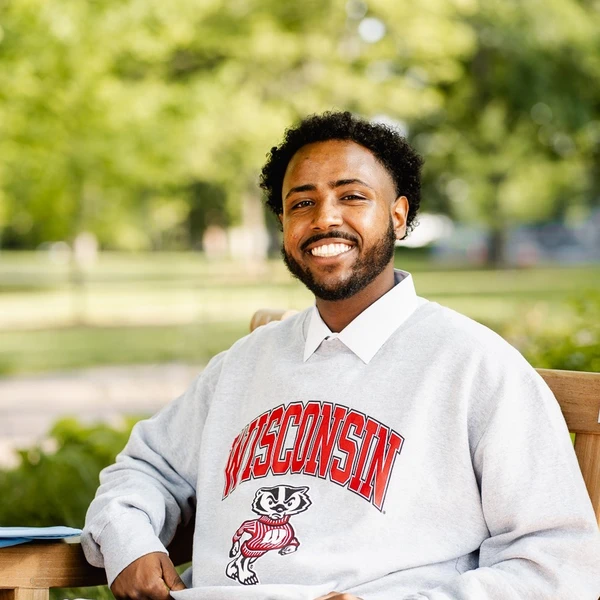
user profile avatar

Yakob Lemma

1x

Finalist

General information

Hobbies & Interests

  • Music
  • Volunteering
  • Community Service And Volunteering
  • Lacrosse
  • Psychology
  • Mental Health
  • Social Justice
  • Advocacy And Activism

Reading

  • Social Issues

I read books multiple times a week.

Bio

I am a first-generation graduate student pursuing my PhD in Counseling Psychology at the University of Wisconsin–Madison. I graduated from the University of North Carolina at Chapel Hill with degrees in Psychology and Human Development and Family Science, where I was a McNair Scholar and a member of Honors Carolina. My research focuses on the intersection of school discipline, racial inequities, and mental health, particularly among Black male youth. I am interested in how racialized perceptions of behavior and emotional expression, especially anger and frustration, contribute to exclusionary discipline and the school-to-prison pipeline. I also examine how structural inequalities, including poverty and housing instability, shape students' educational experiences and psychological well-being. Ultimately, I hope to advance culturally responsive, restorative, and mental health-centered alternatives to punitive school discipline. My passion for this work began through youth advocacy and community organizing, where I witnessed the importance of challenging systemic barriers in education. As the first person in my family to pursue graduate education, earning my doctorate represents an opportunity to create meaningful change. My goal is to become a counseling psychologist, researcher, and educator who bridges clinical practice, research, and advocacy to support underserved youth and families.

Education

University of Wisconsin-Madison

Doctoral degree program (PhD, MD, JD, etc.)

2025 – 2032

Majors:
  • Clinical, Counseling and Applied Psychology
Minors:
  • Education, Other

University of North Carolina at Chapel Hill

Bachelor's degree program

2021 – 2025

Majors:
  • Human Development, Family Studies, and Related Services
  • Psychology, General

Enloe High

High School

2017 – 2021

Miscellaneous

Desired degree level:
Doctoral degree program (PhD, MD, JD, etc.)
Majors of interest:
Psychology, General, Education, General
English as first language:
Yes
Homeschooled:
No

Career

  • Graduate Teaching Assistant

    Teaching · University of Wisconsin--Madison

    Sep 2026 – Present

  • Graduate Program Coordinator, Summer Collegiate Experience

    Teaching · University of Wisconsin--Madison

    Jun 2026 – Aug 2026

  • McNair Scholars Summer Research Internship

    Research · University of North Carolina at Chapel Hill

    Jun 2024 – Jul 2024

  • Summer Education Research Program (SERP) Scholar

    Research · University of Wisconsin--Madison

    May 2023 – Aug 2023

  • Intern

    Education · Carolina Friends School

    Jan 2023 – Jan 2023

  • Election Canvasser Phone Banker

    Non-Profit Organization Management · Scale For Change

    Jan 2022 – Jan 2022

  • Summer Camp Counselor, Before and After School Counselor

    Non-Profit Organization Management · YMCA

    Jan 2021 – Jan 2022

  • Intern

    Hospital & Health Care · NAF- Optum

    Jan 2020 – Jan 2020

  • Summer Camp Counselor

    Youth Mentor · YMCA

    Jan 2021 – Jan 2021

  • Cashier

    Retail · Hamricks

    Jan 2020 – Jan 2021

Miscellaneous

Dream career field:
Counseling, Research, Teaching
Dream career goals:
Counseling Psychologist, Academia
Has nursing license:
No
Leadership experience:
Yes

Future Interests

  • Advocacy
  • Volunteering
  • Philanthropy
Marjorie Moriole Early Childhood Education Scholarship
When I was seventeen years old, I stood outside school board meetings demanding that our schools invest in counselors, not cops. At the time, I was frustrated by how often our education system seemed more concerned with punishing students than understanding them. I remember wondering how different our schools could look if, rather than immediately disciplining a child for their behavior, we took the time to understand what they were experiencing. Years later, that same question continues to guide my research and my commitment to improving the educational experiences of young people. I believe that before we can expect children to be excited about learning, we must first create environments where they feel safe, supported, and understood. A child who constantly feels misunderstood or fears being punished for making mistakes may begin to associate school with frustration rather than curiosity. I want to help change that. Today, I am pursuing a PhD in Counseling Psychology at the University of Wisconsin–Madison, building on my undergraduate degrees in Psychology and Human Development and Family Science. My research focuses on the intersection of school discipline, race, and mental health, particularly how Black male students' emotions and behaviors are interpreted within educational environments. I am interested in understanding how schools can move away from punitive approaches and instead create environments that recognize children's developmental and emotional needs. Although I do not envision myself as a traditional classroom teacher for young children, I hope to make a difference in their educational experiences through research, clinical practice, and collaboration with educators and families. I want my work to help teachers recognize that what may appear to be defiance or disengagement could reflect a child struggling to communicate frustration or an unmet need. By helping educators better understand children's behavior, I hope to contribute to classrooms where students feel comfortable participating, asking questions, and exploring their interests. I am also training in Parent-Child Interaction Therapy (PCIT), an evidence-based approach that strengthens relationships between young children and their caregivers. One of the things I appreciate most about PCIT is its emphasis on following a child's lead, offering genuine praise, and building positive relationships through play. These principles have shaped how I think about learning. When children feel that adults are genuinely interested in their ideas and accomplishments, they may become more confident exploring the world around them. I hope to bring these principles into my future research and work with educators by encouraging creative approaches that make learning meaningful. For example, interactive storytelling, child-led activities, and opportunities for children to explore their own interests can help build confidence and curiosity. I am particularly interested in how emotionally supportive relationships can make these experiences more accessible to children whose behaviors might otherwise be misunderstood. Ultimately, my goal is not simply to help children succeed academically, but to help create the conditions that allow them to enjoy learning in the first place. Through research, counseling, and collaboration with educators and families, I hope to contribute to educational environments where children are not defined by their most difficult moments, but encouraged to discover their strengths and recognize their potential. I may not be the person standing at the front of an elementary school classroom, but I hope my work will help ensure that the children sitting in those classrooms feel excited to be there.
Brian J Boley Memorial Scholarship
When I was seventeen years old, I stood alongside hundreds of students demanding that our schools invest in counselors, not cops. At the time, I did not realize that the very change I was advocating for would eventually become my life's work. In 2020, following the murder of George Floyd, I co-founded the Wake County Black Student Coalition, a student-led organization dedicated to challenging systemic racism in education. Through organizing protests, speaking at school board meetings, and advocating for equitable policies, I became increasingly concerned with how Black students, particularly Black boys, were treated as disciplinary problems rather than young people deserving of compassion and support. I began questioning why expressions of frustration, anger, or emotional distress were so often met with punishment instead of understanding. My commitment to mental health also emerged from my own experiences with activism burnout. After years of advocating for change, I reached a point of emotional exhaustion. I struggled with guilt over stepping away from organizing, believing that prioritizing my well-being meant abandoning the communities I cared about. This experience taught me that caring for others requires recognizing our own emotional needs. More importantly, it helped me understand that mental health and social justice are not separate concerns; they are deeply interconnected. I carried these lessons into my undergraduate education at the University of North Carolina at Chapel Hill, where I earned degrees in Psychology and Human Development and Family Science. As a McNair Scholar, I conducted research examining educational inequities affecting historically marginalized students. My honors thesis explored racial disparities in school discipline and how mental health is considered in disciplinary practices involving Black male students. Through this work, I became increasingly interested in how schools interpret students' emotions and behaviors, and how these interpretations can shape their educational opportunities. Today, I am pursuing a PhD in Counseling Psychology at the University of Wisconsin–Madison, becoming the first person in my family to attend graduate school. My goal is to become a licensed counseling psychologist, researcher, and educator who works at the intersection of mental health, education, and racial equity. Through clinical practice, I hope to provide culturally responsive mental health services to Black youth and other historically underserved populations. I want to create therapeutic spaces where young people feel comfortable expressing their emotions without fear of judgment. I am especially passionate about supporting Black boys who may have learned that expressing vulnerability is a weakness or whose emotional experiences have been misunderstood by the adults around them. Through research, I hope to challenge the practices that contribute to the school-to-prison pipeline. My interests center on how racialized interpretations of student behavior contribute to exclusionary discipline and how these experiences intersect with mental health. I want my research to inform school policies that prioritize psychological well-being, supportive relationships, and restorative approaches over punishment. Beyond clinical practice and research, I am committed to mentorship. As a graduate teaching assistant and volunteer mentor to youth affected by parental incarceration, I have witnessed the importance of encouragement, representation, and meaningful relationships. I hope to extend these opportunities to future students and mental health professionals from historically underrepresented backgrounds. Ultimately, I am pursuing a degree in mental health because I believe that being understood can change the trajectory of someone's life. At seventeen, I demanded that schools invest in counselors rather than punishment. Today, I am working toward becoming one of the professionals I once advocated for. My hope is to help create a world where young people's emotional struggles are met not with criminalization, but with compassion, dignity, and care.
Francis E. Moore Prime Time Ministries Scholarship
On May 27, 2021, I found myself sitting in a jail cell, wondering whether the future I had worked so hard to build was slipping away. I had been arrested during a protest in Raleigh, North Carolina, while advocating against racial injustice. As I was fingerprinted, photographed, and stripped of my belongings, my mind raced with questions. Would I still be able to attend college? Had I jeopardized everything I hoped to accomplish? While waiting in jail, an incarcerated man approached me and said, "You look like you don't belong here. You look like you're supposed to be in college or something." His words have stayed with me ever since. Not because I believed I was more deserving of an education than anyone else in that room, but because I began to wonder how many people around me had once envisioned futures that seemed increasingly out of reach. That experience deepened my understanding of how encounters with the criminal legal system can threaten educational aspirations and reinforced my commitment to creating opportunities for those whose potential is too often overlooked. My journey began a year earlier, following the murder of George Floyd in 2020. At seventeen, I co-founded the Wake County Black Student Coalition, an organization that united high school students across our county to advocate against systemic racism in education. We organized protests, addressed school board representatives, and challenged the disproportionate policing and punishment of Black students. One of our central demands was simple: schools should invest in counselors and mental health resources rather than relying on punitive approaches to student behavior. Yet my commitment to advocacy came with personal challenges. Following my arrest, I remember telling my mother what had happened. She fell to her knees, crying and begging me to stop protesting because she feared losing her son. For the first time, I fully understood the emotional toll my activism had taken on both myself and my family. I eventually stepped away from organizing and experienced profound burnout. I struggled with guilt, questioning whether stepping back meant abandoning the communities I had worked so hard to support. Over time, I realized that advocacy could take many forms. I did not have to abandon my commitment to justice; I needed to find a sustainable way to pursue it. Education became that pathway. I attended the University of North Carolina at Chapel Hill, where I earned bachelor's degrees in Psychology and Human Development and Family Science. As a McNair Scholar, I pursued research examining educational inequities affecting historically marginalized students. My undergraduate honors thesis investigated racial disparities in school discipline and how mental health is considered in disciplinary practices involving Black male students. Through this work, I became increasingly concerned with how schools interpret students' emotions and behaviors, particularly when expressions of frustration or distress are met with punishment rather than support. Today, I am the first person in my family to pursue graduate education and a doctoral student in Counseling Psychology at the University of Wisconsin–Madison. My educational goal is to become a licensed counseling psychologist, researcher, and professor who works to dismantle the school-to-prison pipeline. My research focuses on the intersection of race, school discipline, and mental health, particularly how Black male students experience disciplinary practices and how racialized interpretations of their behavior can contribute to exclusion from educational opportunities. I believe that schools should be places where young people are supported through their most difficult moments, not institutions that push them further toward the criminal legal system. Through my doctoral training, I hope to develop the clinical skills necessary to provide culturally responsive mental health care while conducting research that informs more equitable educational practices. I want to work directly with young people whose emotional needs have been misunderstood, while also helping schools recognize how their policies and practices may contribute to the very challenges they seek to address. My commitment extends beyond academic research. Through Mentoring Connections at JustDane, I volunteer with young people affected by parental incarceration. This experience has strengthened my understanding of how incarceration reaches beyond the individual and shapes the lives, relationships, and opportunities of entire families. It has also reinforced my belief that meaningful intervention requires more than addressing individual behavior; it requires understanding the broader circumstances shaping a young person's life. Pursuing these goals has required navigating significant financial challenges. As a doctoral student, I balance academic responsibilities, teaching, research, and community engagement while managing the financial realities of graduate education. Receiving this scholarship would help alleviate these pressures, allowing me to devote more of my energy toward developing the knowledge and skills necessary to serve communities that have historically lacked access to educational and mental health resources. When I reflect on the young man I was in that jail cell, I recognize how much my understanding of advocacy has evolved. At seventeen, I believed change meant leading protests and demanding that institutions listen. Today, I understand that change can also happen through research, mentorship, therapy, and education. I cannot change what happened on May 27, 2021, but I can determine what I do with that experience. My goal is to ensure that young people, especially those affected by incarceration and educational inequity, have access to the support and opportunities they deserve. I want them to know that their circumstances do not define their potential and that their futures are worth investing in.
Bold Community Activist Scholarship
The summer of 2020 was possibly the most emotional I have ever been. I was hurt and angry at the systemic racism I see on a daily basis. I am sick and tired of seeing innocent Black men die on the news every day. It made me realize that every single thing in America is built to oppress minorities, it is clear in our legal systems, hospitals, and especially in our education systems. I recognize that as a student in Wake County I see my own peers getting criminalized by School Resource Officers every day. So I took initiative and along with a friend I Co-Founded the Wake County Black Student Coalition, a coalition of students dedicated to ending the school-to-prison pipeline and fighting the systemic racism in our education systems. We have held multiple different student-led protests over the summer expressing that Black Students Matter. As a founder and member of the WCBSC, our jobs are to change our community through respect and hope for a better future for our schools. We spent our summer organizing student-led protests in the streets of downtown Raleigh. When not in the streets, we were writing emails, researching budgets, looking up contracts, and exploring why curricula do not include authentic African-American participation and achievement in all aspects of our country. We developed a demand list called “The Big 5”. Our 5 demands include the abolition of SROs and replacing them with social psychologists and therapists, staff accountability and having teachers and admin go through racial training, having active Black Student Unions in every school as our minorities need a platform to speak on, a safe and organized way to report sexual harassment, and we demand that Black and Indigenous history gets included into all curricula.
Ruth and Johnnie McCoy Memorial Scholarship
My name is Yakob Lemma, I am a freshman student at UNC-Chapel Hill and a huge mental health advocate. I am not afraid of standing up for what I believe in and am a huge social justice activist. Sophomore year was my first year attempting to run for student council. I needed a campaign slogan but I had no idea what to make it. After talking with a bunch of my friends and family, I decided to base it off who I am. I love making others smile and helping them see the light in every dark situation, so I thought “Be Happy, Vote Yakob”. So I created an Instagram account for it and posted every day spreading good energy. When election day came I won, but I knew I did not want the Be Happy Movement to die just because I won the position on Student Government. It became a special part of me. I got invested in making sure I can do all that I can to make others smile. When quarantine began I saw everyone around me sad and alone; so I decided to create a podcast called the Be Happy Podcast where I speak on topics such as Self Love, Mental Health, and just giving reasons to smile. Knowing that I have the power to make someone else smile makes me feel so amazing. I truly feel like my purpose in this world is to spread love and positivity, and I am ready to serve that. On May 25th, 2020 George Floyd was murdered due to white supremacy. Because of this, staying positive was a huge challenge for me. I was very depressed and angered for a while, I soon realized that I was capable of empowering both myself and others, so I used anger and pain as fuel for action. I took initiative and started the Wake County Black Student Coalition, uniting Wake County students to help end systemic racism and the oppression of all black people, by educating our community and the surrounding communities collectively. Our goal as a coalition has become to ensure that all WCPSS student voices are heard loud and clear; and that everyone has an equal opportunity to thrive regardless of their race or ethnicity. We spent our summer organizing student-led protests in the streets of downtown Raleigh. Over the summer, I realized how powerful I really am; I want to continue fighting for what is right. I don’t want to have to give my children the same frightening talk my parents gave me. I want my kids and others to grow up in a world where I don’t have to tell them that their melanin is a burden. I want people to be able to pursue the same unconditional happiness that I once idolized, regardless of the color of their skin. I am a psychology major and I plan on becoming a mental health therapist so I can be a person that people can talk to no matter the situation, especially for people of color. Black mental health is so important and it is vital that we have more black people in these fields to have representation.
Brandon Zylstra Road Less Traveled Scholarship
All my life I’ve always been an optimistic person. Full of love and happiness, I wanted the whole world to be full of sunshine. As a member of Junior Advisory for Student Government, I started an organization called the “Be Happy Movement,” and what originally started as a student council slogan turned into a part of me that I cannot live without. On May 25, 2020, George Floyd, another black man, was murdered due to white supremacy. As a result, staying positive became the ultimate challenge for me. I realized that there was nothing scarier than being black in America, daily microaggressions, racial profiling, and being the token black kid in a class full of white and Asian AP students. The consequences of racism forced me to realize that the world is not full of sunshine and happiness for everyone because of disparity. The injustice of being killed for being black was at the forefront of my mind. To say “just be happy” would just be inconsiderate, so I began to focus on the fact that I have to work twice as hard as my peers just to catch up. I soon realized that I was capable of empowering both myself and others, so I used anger and pain as fuel for action. This summer, I gathered twenty to thirty friends of mine and created a charity organization called Raleigh Durham Student Coalition On Racial Equality (RDU SCORE). The purpose of our charity is to raise money and donate all of it to other organizations dedicated to fighting systemic racism and dismantling white supremacy. I led this team to raise over $2,400 that will go to Emancipate NC, an organization providing bail funds to protesters in North Carolina. In spite of our efforts, I still felt like there is more that needs to be done. I am the co-founder of the Wake County Black Student Coalition. We are uniting Wake County students to help end systemic racism and the oppression of all black people, by educating our community and the surrounding communities collectively. Throughout many high schools in Wake County, the sad truth is that we see a disparity in the amount of support for students of color and more specifically, Black students. Our goal as a coalition has become to ensure that all WCPSS student voices are heard loud and clear; and that everyone has an equal opportunity to thrive regardless of their race or ethnicity. As a founder and member of the WCBSC, our jobs are to change our community through respect and hope for a better future for our schools. We spent our summer organizing student-led protests in the streets of downtown Raleigh. When not in the streets, we were writing emails, researching budgets, looking up contracts, and exploring why curricula do not include authentic African-American participation and achievement in all aspects of our country. We scheduled a meeting with three Wake County Board of Education members to share our research and to request that they create better systems to improve racial equity throughout the county. Over the summer, I realized how powerful I really am; I want to continue fighting for what is right. I don’t want to have to give my children the same frightening talk my parents gave me. I want my kids and others to grow up in a world where I don’t have to tell them that their melanin is a burden. I want people to be able to pursue the same unconditional happiness that I once idolized, regardless of the color of their skin.
Pandemic's Box Scholarship
During the COVID-19 pandemic, I learned how to love myself more than ever. Not being able to see anyone has taught me to handle my thoughts alone, although it may have been detrimental to many student’s mental health, it sent me on a spiritual journey. In the beginning of quarantine, I was consumed in social media. I was spending my days only on my phone without leaving my room. I was slowly becoming more unhappy everyday, but I then came across a youtube channel talking about the importance of meditation and “raising your vibration”. So I gave it a try and took 10 minutes to myself to just focus on my breath and my thoughts, no phone, no distractions. Those special 10 minutes rested my mind and put me at true peace. So I decided to take 30 days without social media, and during this time as I disconnected from the world I spent my time in nature and learning how to truly love myself. I learned that in order to have a blissful state of mind, instead of spending my energy on things that don’t matter, I need to be spending more time taking care of myself.
"Your Success" Youssef Scholarship
All my life I’ve always been an optimistic person. Full of love and happiness, I wanted the whole world to be full of sunshine. As a member of Junior Advisory for Student Government, I started an organization called the “Be Happy Movement,” and what originally started as a student council slogan turned into a part of me that I cannot live without. On May 25, 2020, George Floyd, another black man, was murdered due to white supremacy. As a result, staying positive became the ultimate challenge for me. I realized that there was nothing scarier than being black in America. The consequences of racism forced me to realize that the world is not full of sunshine and happiness for everyone because of disparity. The injustice of being killed for being black was at the forefront of my mind. To say “just be happy” would just be inconsiderate, so I began to focus on the fact that I have to work twice as hard as my peers just to catch up. I soon realized that I was capable of empowering both myself and others, so I used anger and pain as fuel for action. This summer, I gathered twenty to thirty friends of mine and created a charity organization called Raleigh Durham Student Coalition On Racial Equality (RDU SCORE). Our charity aims to raise money and donate all of it to other organizations dedicated to fighting systemic racism and dismantling white supremacy. I led this team to raise over $2,400 that will go to Emancipate NC, an organization providing bail funds to protesters in North Carolina. Despite our efforts, I still felt like there is more that needs to be done. I am the co-founder of the Wake County Black Student Coalition. We are uniting Wake County students to help end systemic racism and the oppression of all black people, by educating our community and the surrounding communities collectively. Throughout many high schools in Wake County, the sad truth is that we see a disparity in the amount of support for students of color and more specifically, Black students. Our goal as a coalition has become to ensure that all WCPSS student voices are heard loud and clear; and that everyone has an equal opportunity to thrive regardless of their race or ethnicity. As a founder and member of the WCBSC, our jobs are to change our community through respect and hope for our schools' better future. We spent our summer organizing student-led protests in the streets of downtown Raleigh. When not in the streets, we were writing emails, researching budgets, looking up contracts, and exploring why curricula do not include authentic African-American participation and achievement in our country's aspects. We scheduled a meeting with three Wake County Board of Education members to share our research and to request their consideration of our five major demands: the abolition of school resource officers, a staff accountability system, a platform for black and minority students to speak, a safe and organized system where students can report sexual harassment, and integrating black history into our curriculums. Over the summer, I realized how powerful I really am; I want to continue fighting for what is right. I don’t want to have to give my children the same frightening talk my parents gave me. I want my kids and others to grow up in a world where I don’t have to tell them that their melanin is a burden. I want people to be able to pursue the same unconditional happiness that I once idolized, regardless of the color of their skin.
Undiscovered Brilliance Scholarship for African-Americans
When I was a little boy, I loved reading. I always loved going to the local bookstore. So one day, my father walked me to the bookstore. He gave me a $20 bill, allowed me to hold it, and told me “you can buy whatever you want with this”. As we walked and got closer and closer to the bookstore, we saw an old man sitting outside the store. He had his head buried into his arms, sobbing. It was clear that he was a homeless man, he had his cup out with some change in it and he had a cardboard box laid out flat on the ground with a couple of dirty blankets. So I put the $20 bill in his cup and told him “don’t cry mister, everything will be okay”. He then looked up and a big smile grew on his face. He told me “you are going to do great things in your life, keep being you.” At that moment, I had a huge warm feeling in my heart. I have never been happier in my life than at that moment. That is when I knew that I wanted to help people for the rest of my life. Humans are emotional beings, every decision we make is based on how we are feeling. When we are angry we give off bad energy and when we are happy we make others smile around us. The biggest thing that humans lack is empathy, and the number one thing we disregard is our own mental health. We take care of our work before we take care of ourselves. We wear this mask to show the public that we are okay and happy when in reality we don’t want to tell our problems to others because we feel like a burden, so we hold it all in and end up hurting ourselves. I want to be the person that can truly make a difference in people’s lives by becoming a psychologist. I want to be someone that patients can talk to when they are depressed and sad and help them reach a blissful state of mind. Mental health is the most neglected yet the most important thing we need to acknowledge. Aside from my mental health passions, I have discovered my role as a social justice activist within the last year. This past summer was possibly the most emotional I have ever been. I was hurt and angry at the systemic racism I see daily. I am sick and tired of seeing innocent Black men die on the news every day. It made me realize that every single thing in America is built to oppress minorities, it is clear in our legal systems, hospitals, and especially in our education systems. I recognize that as a student in Wake County I see my own peers getting criminalized by School Resource Officers every day. So I took initiative and along with a friend I Co-Founded the Wake County Black Student Coalition, a coalition of students dedicated to ending the school-to-prison pipeline and fighting the systemic racism in our education systems. We have held 4-5 different student-led protests over the summer expressing that Black Students Matter. We developed a demand list called “The Big 5”. Our 5 demands include the abolition of SROs and replacing them with social psychologists and therapists, staff accountability and having teachers and admin go through racial training, having active Black Student Unions in every school as our minorities need a platform to speak on, a safe and organized way to report sexual harassment, and we demand that Black and Indigenous history gets included into all curricula. I want to create a diverse and inclusive environment for all students in our education systems. Over the summer, I realized how powerful I really am; I want to continue fighting for what is right. I don’t want to have to give my children the same frightening talk my parents gave me. I want my kids and others to grow up in a world where I don’t have to tell them that their melanin is a burden. I want people to be able to pursue the same unconditional happiness that I once idolized, regardless of the color of their skin.
A Sani Life Scholarship
On May 25, 2020, George Floyd, another black man, was murdered due to white supremacy. As a result, staying positive became the ultimate challenge for me. I realized that there was nothing scarier than being black in America, daily microaggressions, racial profiling, and being the token black kid in a class full of white and Asian AP students. The consequences of racism forced me to realize that the world is not full of sunshine and happiness for everyone because of disparity. The injustice of being killed for being black was at the forefront of my mind. To say “just be happy” would just be inconsiderate, so I began to focus on the fact that I have to work twice as hard as my peers just to catch up. I soon realized that I was capable of empowering both myself and others, so I used anger and pain as fuel for action. This summer, I gathered twenty to thirty friends of mine and created a charity organization called Raleigh Durham Student Coalition On Racial Equality (RDU SCORE). The purpose of our charity is to raise money and donate all of it to other organizations dedicated to fighting systemic racism and dismantling white supremacy. I led this team to raise over $2,400 that will go to Emancipate NC, an organization providing bail funds to protesters in North Carolina. In spite of our efforts, I still felt like there is more that needs to be done. I am the co-founder of the Wake County Black Student Coalition. We are uniting Wake County students to help end systemic racism and the oppression of all black people, by educating our community and the surrounding communities collectively. Throughout many high schools in Wake County, the sad truth is that we see a disparity in the amount of support for students of color and more specifically, Black students. Our goal as a coalition has become to ensure that all WCPSS student voices are heard loud and clear; and that everyone has an equal opportunity to thrive regardless of their race or ethnicity. As a founder and member of the WCBSC, our jobs are to change our community through respect and hope for a better future for our schools. We spent our summer organizing student-led protests in the streets of downtown Raleigh. When not in the streets, we were writing emails, researching budgets, looking up contracts, and exploring why curricula do not include authentic African-American participation and achievement in all aspects of our country. We scheduled a meeting with three Wake County Board of Education members to share our research and to request their consideration of our five major demands: the abolition of school resource officers, a staff accountability system, a platform for black and minority students to speak, a safe and organized system where students can report sexual harassment, and integrating black history into our curriculums. Over the summer, I realized how powerful I really am; I want to continue fighting for what is right. I don’t want to have to give my children the same frightening talk my parents gave me. I want my kids and others to grow up in a world where I don’t have to tell them that their melanin is a burden. I want people to be able to pursue the same unconditional happiness that I once idolized, regardless of the color of their skin.
Ethel Hayes Destigmatization of Mental Health Scholarship
When I was a little boy, I loved reading. I always loved going to the local bookstore. So one day, my father walked me to the bookstore. He gave me a $20 bill, allowed me to hold it, and told me “you can buy whatever you want with this”. As we walked and got closer and closer to the bookstore, we saw an old man sitting outside the store. He had his head buried into his arms, sobbing. It was clear that he was a homeless man, he had his cup out with some change in it and he had a cardboard box laid out flat on the ground with a couple of dirty blankets. So I put the $20 bill in his cup and told him “don’t cry mister, everything will be okay”. He then looked up and a big smile grew on his face. He told me “you are going to do great things in your life, keep being you.” At that moment, I had a huge warm feeling in my heart. I have never been happier in my life than at that moment. That is when I knew that I wanted to help people for the rest of my life. Humans are emotional beings, every decision we make is based on how we are feeling. When we are angry we give off bad energy and when we are happy we make others smile around us. The biggest thing that humans lack is empathy, and the number one thing we disregard is our own mental health. We take care of our work before we take care of ourselves. We wear this mask to show the public that we are okay and happy when in reality we don’t want to tell our problems to others because we feel like a burden, so we hold it all in and end up hurting ourselves. I want to be the person that can truly make a difference in people’s lives by becoming a psychologist. I want to be someone that patients can talk to when they are depressed and sad and help them reach a blissful state of mind. Mental health is the most neglected yet the most important thing we need to acknowledge.
Elevate Mental Health Awareness Scholarship
When I was a little boy, I loved reading. I always loved going to the local bookstore. So one day, my father walked me to the bookstore. He gave me a $20 bill, allowed me to hold it, and told me “you can buy whatever you want with this”. As we walked and got closer and closer to the bookstore, we saw an old man sitting outside the store. He had his head buried into his arms, sobbing. It was clear that he was a homeless man, he had his cup out with some change in it and he had a cardboard box laid out flat on the ground with a couple of dirty blankets. So I put the $20 bill in his cup and told him “don’t cry mister, everything will be okay”. He then looked up and a big smile grew on his face. He told me “you are going to do great things in your life, keep being you.” At that moment, I had a huge warm feeling in my heart. I have never been happier in my life than at that moment. That is when I knew that I wanted to help people for the rest of my life. Sophomore year was my first year attempting to run for student council, I needed a campaign slogan but I had no idea what to make it. After talking with a bunch of my friends and family, I decided to base it off who I am. I love making others smile and helping them see the light in every dark situation, so I thought “Be Happy, Vote Yakob”. So I created a special Instagram account for it and posted every day spreading out good energy and when election day came I won, but I knew I did not want the Be Happy Movement to die just because I won the position on Student Government. So I continued to make posts every single day, it became a special part of me. I got invested in making sure I can do all that I can to make others smile. When quarantine began, I saw everyone around me sad and alone because they are not used to being alone for a long period of time. So I decided to create a podcast called the Be Happy Podcast where I speak on topics such as Self Love, Mental Health, and just giving reasons to smile. Knowing that I have the power to make someone else smile makes me feel so amazing. I truly feel like my purpose in this world is to spread love and positivity, and I am ready to serve that. Humans are emotional beings, every decision we make is based on how we are feeling. When we are angry we give off bad energy and when we are happy we make others smile around us. The biggest thing that humans lack is empathy, and the number one thing we disregard is our own mental health. We take care of our work before we take care of ourselves. We wear this mask to show the public that we are okay and happy when in reality we don’t want to tell our problems to others because we feel like a burden, so we hold it all in and end up hurting ourselves. I want to be the person that can truly make a difference in people’s lives by becoming a psychologist. I want to be someone that patients can talk to when they are depressed and sad and help them reach a blissful state of mind. Mental health is the most neglected yet the most important thing we need to acknowledge.
Impact Scholarship for Black Students
When I was a little boy, I loved reading. I always loved going to the local bookstore. So one day, my father walked me to the bookstore. He gave me a $20 bill, allowed me to hold it and told me “you can buy whatever you want with this”. As we walked and got closer and closer to the bookstore, we saw an old man sitting outside the store. He had his head buried into his arms, sobbing. It was clear that he was a homeless man, he had his cup out with some change in it and he had a cardboard box laid out flat on the ground with a couple of dirty blankets. So I put the $20 bill in his cup and told him “don’t cry mister, everything will be okay”. He then looked up and a big smile grew on his face. He told me “you are going to do great things in your life, keep being you.” At that moment, I had a huge warm feeling in my heart. I have never been happier in my life than at that moment. That is when I knew that I wanted to help people for the rest of my life. Humans are emotional beings, every decision we make is based on how we are feeling. When we are angry we give off bad energy and when we are happy we make others smile around us. The biggest thing that humans lack is empathy, and the number one thing we disregard is our own mental health. We take care of our work before we take care of ourselves. We wear this mask to show the public that we are okay and happy when in reality we don’t want to tell our problems to others because we feel like a burden, so we hold it all in and end up hurting ourselves. I want to be the person that can truly make a difference in people’s lives by becoming a psychologist. I want to be someone that patients can talk to when they are depressed and sad and help them reach a blissful state of mind. Mental health is the most neglected yet the most important thing we need to acknowledge. Aside from my mental health passions, I have discovered my role as a social justice activist within the last year. This past summer was possibly the most emotional I have ever been. I was hurt and angry at the systemic racism I see on a daily basis. I am sick and tired of seeing innocent Black men die on the news every day. It made me realize that every single thing in America is built to oppress minorities, it is clear in our legal systems, hospitals, and especially in our education systems. I recognize that as a student in Wake County I see my own peers getting criminalized by School Resource Officers every day. So I took initiative and along with a friend I Co-Founded the Wake County Black Student Coalition, a coalition of students dedicated to ending the school-to-prison pipeline and fighting the systemic racism in our education systems. We have held 4-5 different student-led protests over the summer expressing that Black Students Matter. We developed a demand list called “The Big 5”. Our 5 demands include the abolition of SROs and replacing them with social psychologists and therapists, staff accountability and having teachers and admin go through racial training, having active Black Student Unions in every school as our minorities need a platform to speak on, a safe and organized way to report sexual harassment, and we demand that Black and Indigenous history gets included into all curricula. I want to create a diverse and inclusive environment for all students in our education systems.
Yakob Lemma Student Profile | Bold.org