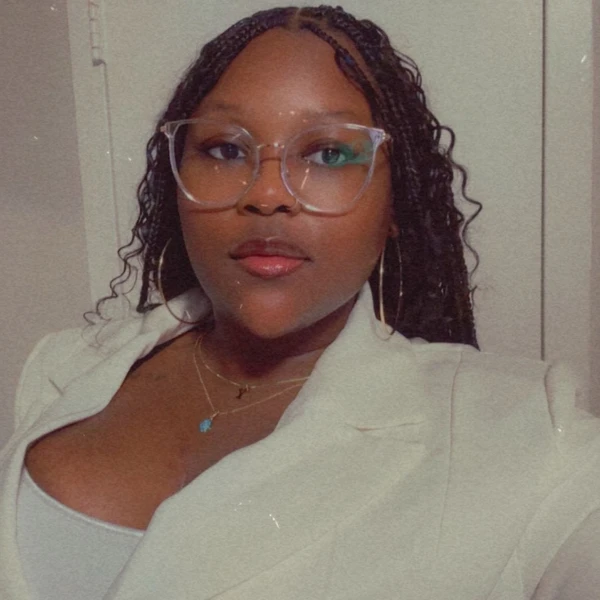
According to Webster-Merriam's dictionary, tenacity is the quality or state of being tenacious. Tenacious is persistence in maintaining, adhering to, or seeking something valued or desired. My introduction to this world has been nothing more or less than persevering through adversities. Born and raised in North Philadelphia, I have witnessed murders, drug usage, homelessness, criminal violence, and gun violence. Product of one's environment: allowing one's neighborhood to dictate one's future. Some assume the environment defines a person. One must venture into diverse horizons and experience more than the surrounding neighborhoods. I deny my environment.
In May 2022, I graduated from Temple University with a Bachelor of Arts in Psychology and a minor in Africology and African American studies because I have hope for my community. The practices of psychology and Africology are opposites in philosophy, studies, and target audience, yet there needs to be pairings of the disciplines to engage and support African Americans. Mental health significantly impacts African Americans and people of color. Many minorities are affected by the intersectionality of discrimination, sexism, ableism, and sexual orientation.
Within many upbringings of African-American communities, families, and neighborhoods, mental health is stigmatized. Within the mental health field, there are diagnoses. However, some African Americans view them as labels. They view it as a label that shapes and hinders an individual. Black communities are not open to saying that mental health matters. Rather than being transparent about how mental health impacts life, it is dismissed as "bad nerves," "tiredness," or "overworking." African-American communities must acknowledge their thoughts, feelings, and behaviors regarding how we are and where we want to be.
Mental health care and advocacy can ignite social justice for African-American communities. Having mental health services in African-American communities demonstrates generational growth and awareness. Generational change and awareness help break cycles and meet one's expectations. In my experience as a Crisis Advocate, helping clients obtain counseling is one of my responsibilities. Many clients have asked, "Is a person of color or Black therapist available?" Representation is critical for vocalization, safety, and understanding. Mental health care needs African-American therapists, psychiatrists, psychologists, and advocates.
For advocacy, organizations and companies can bring awareness to July. July is National Minority Mental Health Month. Getting attention to The Office of Minority Health (OMH) supports and acknowledges the mental health of racial and ethnic minorities. There needs to be more advocacy for those splitting through the cracks. Many undiagnosed African Americans need mental health care, but it is not affordable or local.
Stigmas, unconsciousness, and generational traumas negatively impact our mental health in African-American communities. Ideally, society's motto for mental health is self-awareness, support, and systems. Each word represents a step in pursuing guidance for mental health. Therefore, having mental health care and advocacy brings forth presentation and awareness. Mental health care and advocacy give Black people resources and networks for their healing journeys.
I envision self-awareness, support, and systems as a motto to assist everyone in this society.
Self-awareness allows us to be conscious within. We are acknowledging our mental, emotional, physical, and spiritual health. Support will enable us to tell our stories to people we trust, such as friends, family, team members, coworkers, etc. Support lessens the load that one is carrying. Systems allow us to have counseling or psychiatric care. Systems engage the start of our mental health journey and metamorphosis.
Not only am I entering this field because of the stigma, but I also want to help others overcome adversities and traumas I have been affected by and overcome silently. As a child, I experienced many traumatic experiences like molestation, being raised in a domestic violence household, and having an incarcerated father. From the time I was nine years old, I would write. I wrote about my frustrations, pain, sadness, and joys. Writing made me feel like I was in another dimension, my little universe.
In middle school, I recall learning about poetry. Initially, I was not interested because it required schemes, patterns, rhyming, and stanzas, which all felt overwhelming until I discovered free verse poetry. Free verse was a free expression; I did not have to follow the rules of poetry; my words could exist on paper written in cursive exhalation. Shortly after creating my poetry, I began to read others' poetry to hear their voices. In the readings of others, I found similarities between pain, healing, and spiritual awakening differences, such as anger, depression, and heartbreak. Poetry is a haven. It is a way of conveying the inner soul, thoughts, and quietness. Poetry gave a voice to many people who fell silent in the past.
I used the newfound voice to speak to my parents about the effects of molestation and upbringing around domestic violence. Working in the mental field would assist individuals in finding their voice. In times of trauma, everyone copes differently. However, I noticed that many people bury it within themselves and never discuss it, so it goes without being treated. Like an untreated wound, it affects the individual in different ways with emotional, physical, and mental health.
In relation to being a sexual assault survivor, I embarked on a journey of working with fellow survivors. In November of 2022, I received an offer for a position as a Crisis Advocate at Women Organized Against Rape (WOAR)- Philadelphia Center Against Sexual Violence. I have worked at WOAR for nine months, and after six months, I earned the Lead Crisis Advocate position. As the Lead Crisis Advocate, one of my roles is coordinating and communicating with universities throughout Philadelphia to establish volunteer and internship opportunities for undergraduate students. I train and supervise all incoming undergraduate interns. Also, as the Lead Crisis Advocate, my role entails supporting victims/survivors of sexual assault. I provide check-in calls, medical/ forensic rape exam ( FRE) accompaniment, group services, and follow-ups.
One of my favorite responsibilities is to conduct check-in calls. During check-in calls, clients can discuss their daily activities, mental state, mood, or the past; it is open to their discretion. While conducting these calls, I observed a shift in clients; the trust, length of our conversations, topics, and trauma processing led to a new path for the client. The change in the clients' openness and drive to heal has led to my passion for therapy. Therapy opens the opportunity to have a haven to openly address one's fears, hidden traumas, triggers, and memories that are within. Therapy allows for thoughts to become spoken words and for words to be addressed and understood. Therapy is a gateway to a new journey. That journey is a roller coaster of emotions ranging from exhaustion, frustration, happiness, and peace, yet it is a path worth traveling.
As a Crisis Advocate, my passion for assisting clients beyond check-in calls has risen. I love my work and am invested in joining the next phase of the individual's journey in counseling. In August 2023, I am beginning a graduate program to obtain a Master of Science in Community & Trauma Counseling with a concentration in Trauma, Addictions, and Recovery Concentration. As I receive my academic purpose of getting a Community & Trauma Counseling Master of Science, I am taking steps to become a Licensed Professional Counselor (LPC).
In August 2023, I am beginning the Community & Trauma Counseling Master of Science Program at Thomas Jefferson University because I hope for my community. As I obtain my academic purpose of getting a Community & Trauma Counseling Master of Science, I am taking steps to become a Licensed Professional Counselor (LPC). I want to become an LPC to provide mental health services to individuals, families, and groups in treating trauma, cognitive, behavioral, and emotional problems and disorders. As an LPC, I would give client-centered services, not primarily illness-centered ones. Ultimately, the goal would be to have healthy and sustainable individuals by addressing their mental health and trauma.
Recently, mental health has been a topic that has been highly acknowledged
and prioritized. As the field develops, there need to be more individuals like myself willing to be committed, compassionate, and understanding to make a change. I want to provide guidance and health to communities to help them thrive mentally, behaviorally, and emotionally. Becoming a Licensed Professional Counselor would advance the ability to support diverse cultures, populations, and age groups. My passion is helping individuals from all walks of life. I am passionate about pursuing a career in therapy because the impact is transformative.
I would be stepping towards financial security by obtaining the Darclei V. McGregor Memorial Scholarship. As I embark on my graduate school journey, I will work as a full-time student and Crisis Advocate. With the scholarship, I can satisfy a financial need: books, supplies, or tuition. It would lessen the load and worries. I can focus on academics successfully. I would be able to develop the skills and characteristics it takes to succeed in the mental health profession. Ultimately, it would support me in becoming the Licensed Professional Counselor I know I can become.