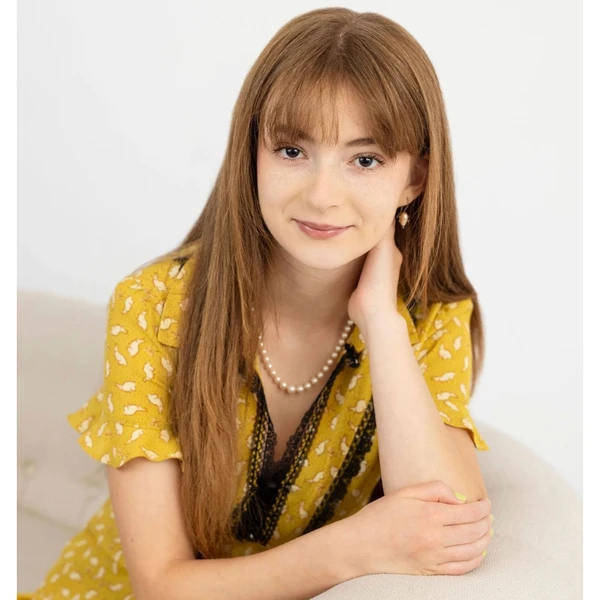
user profile avatar

Yael Miller

1x

Finalist

1x

Winner

Bio

My name is Yael Miller, and I’m from Montclair, New Jersey. I’m naturally introverted, so talking about myself hasn’t always come easily, but over the past few years I’ve grown more confident in expressing who I am and what matters to me. Art has always been central to my life, especially drawing and painting. I feel most at peace creating with music in the background and a paintbrush or pen in my hand. I’m also passionate about biology and the natural world, which I weave into my work. My art explores ambiguity through strange imagery and layered symbolism. I often use insects because they evoke strong reactions. When I paint locusts, they symbolize anxiety to me, but others may see religion, destruction, or resilience. I want my work to leave viewers questioning both the piece and their own reactions to it. That fascination with interpretation extends beyond art. I come from a family of talkers—my dad is a comedy writer, my mom is a journalist, and my grandfather is a criminal defense attorney. Growing up around strong opinions taught me the value of listening. One defining moment came when my grandfather invited me target shooting. I was uncomfortable, but instead of rejecting the experience, I listened. I realized listening isn’t passive—it means making space for different perspectives while still holding onto your own values. Both my art and experiences have taught me that understanding begins with curiosity. I hope to continue creating work and building relationships that encourage deeper thought and openness.

Education

Montclair High School

High School
2022 - 2026

Miscellaneous

  • Desired degree level:

    Bachelor's degree program

  • Majors of interest:

    • Fine and Studio Arts
    • Zoology/Animal Biology
    • Biology, General
  • Not planning to go to medical school
  • Career

    • Dream career field:

      Arts

    • Dream career goals:

      To be able to use my talents in the arts and my interest and passion for the natural world to make a difference for the planet.

    • Office assistant

      Temple Shalom of West Essex
      2023 – 20241 year
    • Hostess

      Tinga Montclair
      2025 – 2025

    Sports

    Softball

    Junior Varsity
    2022 – 2022

    Arts

    • Montclair High School

      Theatre
      Mama Mia, Clue, Mean Girls, Fall showcase 2024, Fall showcase 2025, Dance Co Performance 2024, Dance Co performance 2025, Dance Co Performance 2026, Comedy of Terrible Errors
      2023 – 2026

    Public services

    • Volunteering

      Temple Shalom of West Essex — I helped the lead teacher with lessons and tutored in Hebrew as well as helping to organize activities and materials
      2021 – 2023
    • Volunteering

      YMCA Camps — I collaborated with other volunteers on community projects, taught & cared for kids, cleaned streams (or restored streams), exchanged language with peers, and learned leadership teamwork.
      2024 – 2024
    • Volunteering

      YMCA Camps — I was a member of the construction crew
      2023 – 2023

    Future Interests

    Advocacy

    Volunteering

    Philanthropy

    Entrepreneurship

    Kay Sykes Arts Scholarship
    I chose sculpture as my primary art form because it gives me the freedom to shape an idea exactly as I imagine it. Unlike painting, where repeated revisions can wear down the canvas or paper, clay invites experimentation. I can reshape, remodel, or even start over with the same ball of clay without losing the work that came before it. That freedom has made sculpture feel instinctive to me. I enjoy sketching and painting, but sculpting is different—it is completely hands-on, physical, and often cathartic. Instead of following a rigid plan, I can respond to the material itself, letting each change bring me closer to what I want to express. Ironically, the sculpture that taught me the most was also the one that challenged me the most. My favorite piece, Weird Fishes, depicts a catfish half-devouring a woman. It began as nothing more than a fish-shaped doodle on the edge of my mixing paper while I was working on an oil painting, but it quickly evolved into a project that transformed how I think about making art. I had never worked with clay before. What I expected to be an exciting experiment became a three-month lesson in failure. I burned my fingers while modeling the clay, broke and reattached the fins repeatedly, and questioned whether the sculpture—or even the idea behind it—was worth finishing. The process involved wiring, sculpting, re-sculpting, sealing, and painting. As I built the fish, I discovered that the thickness of its body caused it to topple over or snap the supporting legs. Every solution created a new problem. Looking at the finished sculpture, none of those setbacks are visible, but each one shaped the final piece. The sculpture mirrored my own experience. Like the fish struggling in an unfamiliar environment, I was learning an entirely new medium. Until then, my creative process had always been structured. Oil painting follows a predictable sequence: the wash, the sketch, blocking in color, developing shadows, and refining highlights. Sculpture dismantled that certainty. There was no formula to follow—only problems to solve as they appeared. One of the most valuable lessons I learned was knowing when to "cheat." In sculpture, cheating isn't about being dishonest with the work; it's about creating the illusion that something is true. A fin may need to be thicker than it appears in nature, or a pose may need to shift slightly so the sculpture can physically stand. Accuracy isn't always literal—it's perceived. Learning to trust my artistic judgment instead of rigidly following references taught me that experience often matters more than instructions. At a certain point, manuals and diagrams can only take you so far. Real understanding comes from wrestling with problems yourself. That realization has extended beyond my artwork. Whether I'm creating a sculpture or facing a challenge elsewhere, I've learned that growth comes from adapting rather than following a perfect plan. Failure is not evidence that I am incapable; it is evidence that I am pushing beyond what I already know. Every revision forces me to think more critically, trust my instincts more deeply, and discover solutions I never would have found if everything had worked the first time. Today, I carry that lesson into every piece I create. Sculpture has taught me that the process of reshaping clay is also the process of reshaping myself. Every mistake leaves me with a stronger piece, a stronger understanding of my craft, and a greater confidence in my ability to solve problems creatively—both in art and beyond.
    WCEJ Thornton Foundation Music & Art Scholarship
    I hope to make a positive impact on the world through my art by challenging people to engage with uncomfortable subjects and imagery. My goal is not simply to create something visually interesting, but to encourage viewers to question their own reactions, reconsider their assumptions, and perhaps learn something about themselves in the process. A recurring element in my work is insect imagery because insects create immediate and often intense responses. They can be fascinating, unsettling, or even frightening. That emotional reaction is what draws me to them as a subject. I believe there is a powerful intersection between art, the natural world, and social commentary. Just as a speech, photograph, or story can evoke strong emotions and reveal personal beliefs, imagery of insects can become a tool for exploring deeper ideas about fear, discomfort, and human experience. For example, when I paint locusts, they represent anxiety to me. However, another viewer may see them as symbols of religion, destruction, or environmental concerns. That difference in interpretation is intentional. I want my work to leave room for uncertainty because confusion can inspire curiosity. If a viewer walks away wondering why they reacted so strongly to an image, they have already begun engaging with the piece on a deeper level. Was their response based on a dislike of insects, or did the imagery bring forward a larger feeling about anxiety, change, or their place in the world? Ultimately, I want my art to provoke thought and encourage critical thinking. In a world where information is often consumed quickly and without reflection, I believe art has the ability to slow people down. I do not want to provide my audience with a simple answer; I want to create something they have to examine, interpret, and understand for themselves.
    CollectaBees, LLC Golden Hive Gallery Art Scholarship
    Winner
    Art has taught me that the most meaningful questions rarely have simple answers. Through my work, I strive to disrupt certainty, inviting viewers to question their assumptions about themselves, nature, and the world around them. As I look toward the future, I plan to use art not only as a form of self-expression but as a tool for exploration, communication, and scientific discovery. My artwork often centers on animals, particularly insects. I am fascinated by the strong reactions they provoke. Bugs are strange, uncomfortable, and frequently misunderstood, making them powerful symbols for exploring human experiences. When I paint locusts, for example, they represent anxiety to me, but viewers may see religion, resilience, destruction, or something entirely different. I intentionally leave room for multiple interpretations because I believe art is most impactful when it encourages people to think long after they have left the gallery. My artistic interests are deeply connected to my passion for biology and the natural world. Throughout high school, I have discovered that science and art are not separate pursuits but complementary ways of understanding the same questions. Last summer, while interning at a New Jersey crime lab, I learned that insects can help investigators estimate the age of crime scenes and reveal evidence of toxins or drug use. Seeing insects serve as both scientific evidence and artistic inspiration reinforced my belief that observation is a powerful skill shared by both disciplines. In college and beyond, I hope to become a scientist studying animals and the natural world. Art will sustain that future by helping me remain curious, creative, and open-minded. Scientific breakthroughs often begin with asking unexpected questions, and art has trained me to look beyond obvious answers. At the same time, art can help make science more accessible. Through visual storytelling, I hope to communicate complex scientific ideas in ways that inspire curiosity and encourage people to engage more deeply with environmental and biological issues. I am particularly interested in exploring the relationship between humans and nature. In future projects, I hope to continue combining human and animal imagery to challenge the boundaries we create between ourselves and the natural world. By encouraging viewers to see themselves reflected in other living things, I hope my work can foster a greater sense of connection, empathy, and responsibility toward the environment. Ultimately, I do not see art as separate from my future career. Instead, I see it as a lifelong companion to my scientific pursuits. Art will sustain my future by helping me ask better questions, communicate new ideas, and encourage others to engage with the natural world with the same curiosity and wonder that inspires me. This scholarship would support more than my education—it would support the intersection of two passions that shape how I see the world. I plan to use my art throughout my life, not only to sustain my own curiosity and growth, but also to inspire others to ask questions, reconsider assumptions, and develop a deeper appreciation for the natural world. Through both science and art, I hope to contribute to a future built on observation, understanding, and wonder.
    Tawkify Meaningful Connections Scholarship
    I’m someone who usually manages best on my own. I like being dependable, figuring things out independently, and knowing that if something needs to get done, I can handle it myself. For a long time, I thought being capable meant self-sufficiency. But my friend Thea has shown me that being strong on your own is only one kind of strength. Through working with her, I’ve learned that knowing how to connect with people and rely on others can be just as important. Thea and I work together as seniors on the lighting crew for technical theater at our school. On the surface, lighting might seem simple: hang a few lights, press some buttons, and the stage glows. However, it’s more of a constant balancing act of organization, troubleshooting, creativity, and teamwork than anything. Every production depends on dozens of moving parts working together perfectly, and when something goes wrong, there’s rarely time to panic. Recently, we ran into one of those problems. While preparing for a production, we realized we were missing three lights, and two more were completely nonfunctional. The show was approaching quickly, and without enough working lights, entire scenes would have to be redesigned. I initially started to solve the problem myself, heading straight into the cramped storage room backstage, convinced there had to be spare equipment hidden somewhere among the tangled cables, old gels, and stacks of dusty cases. At the same time, Thea approached the problem completely differently. Instead of trying to tackle everything alone, she started connecting people. She sent a few freshmen backstage to help me search through storage. She contacted seniors from the previous year to ask if anyone remembered where equipment had been stored after the last show. She reached out to friends who had experience repairing old lighting instruments. Within an hour, information and ideas were coming from every direction. While I worked on reassembling parts from damaged fixtures to create one usable light, the freshmen managed to locate two others that had been misplaced behind old set pieces. Meanwhile, after talking with former crew members, Thea discovered that one of the broken lights could actually be repaired. With help from a friend, she fixed it herself. Each person helped just enough, in their own way, to together solve the problem. None of us could have done it alone, not even Thea, but what she could do was organize us so we could do it. I might have managed to repair one light by myself, but we never would have recovered all of them without everyone contributing something different. The freshmen noticed the details we overlooked. Former students remembered information we didn’t have. Friends brought the technical knowledge we lacked. And Thea somehow knew how to bring all those people together without making anyone feel controlled or unnecessary. That’s what I admire most about her leadership. She doesn’t dominate a room or demand authority. Instead, she creates an environment where people naturally want to contribute. She recognizes strengths in others and gives them space to use those strengths. Watching her made me realize that leadership isn’t about proving you can do everything yourself. Sometimes, the best leaders are the ones who understand they shouldn’t have to. That experience changed the way I think about both teamwork and myself. I still value independence, and I still take pride in being reliable. But I no longer see relying on others as weakness. Collaboration doesn’t diminish individual effort but strengthens it. Thea showed me that connection is its own skill, one that can turn a stressful situation into a successful one simply by bringing the right people together. As I move into new environments and opportunities, I hope to carry that lesson with me. I want to be someone who works hard and applies myself fully, but also someone who knows how to build trust, encourage collaboration, and make people feel valued. Whether in theater, academics, or future leadership roles, I hope to embody the kind of leadership Thea demonstrated backstage that day: calm, inclusive, and quietly capable of bringing out the best in everyone around her.
    Big Picture Scholarship
    When I first read this prompt, I immediately thought of the film "Everything Everywhere All at Once", directed by Daniel Kwan and Daniel Scheinert and starring Michelle Yeoh. Every time I watch it, I am amazed not only by its incredible cinematography and imaginative set design, but also by the deeper message at the center of the story. Beneath the crazy humor and chaotic multiverse action, I feel the film explores something deeply human: how we find meaning, connection, and hope in a world that often feels overwhelming. The story follows Evelyn Wang, a woman who feels trapped by the disappointments and frustrations of her everyday life. She discovers that there are countless parallel universes in which different versions of herself exist, each shaped by different choices and possibilities. However, the balance of the multiverse is threatened when Jobu Tupaki, a powerful figure capable of experiencing all realities at once, begins tearing through these universes. Evelyn must learn to “jump” between realities in order to stop her and restore order. Eventually, Evelyn realizes that Jobu Tupaki is deeply connected to her daughter, Joy. This revelation shifts the conflict from being a simple battle between good and evil into something much more personal. Evelyn begins to understand that the same controlling behavior she used in an attempt to shape Joy into the person she wanted her to be only pushed her daughter further away. In trying so hard to prevent failure, disappointment, and pain, she unintentionally created more of it. What makes the movie so powerful is that Evelyn ultimately realizes that force and control cannot solve the problem. Instead, compassion, empathy, and acceptance are what allow her to reconnect with Joy. Through this journey, Evelyn also begins to see her husband, Waymond, in a different light. Instead of seeing his kindness and gentleness as weakness, she realizes that his optimism and empathy are actually forms of strength. In a chaotic and uncertain world, kindness becomes a way of surviving without losing yourself. One of my favorite parts of the movie is the ending. After traveling through countless universes and confronting impossible choices, Evelyn ends up right back where she started: sitting in an IRS office during an audit. Yet everything has changed. At the beginning of the film, she feels consumed by regret and distracted by thoughts of what her life could have been. By the end, she is finally present in her own life. She learns to appreciate the people around her and accept that meaning does not come from having the “perfect” life, but from being able to connect with others despite life’s uncertainty. To me, this movie is an allegory for real life. We constantly compare ourselves to who we could have been or imagine alternate versions of our lives. Everything Everywhere All at Once suggests that instead of becoming overwhelmed by regret, fear, or chaos, we can choose empathy, acceptance, and connection. The film argues that even in a confusing and unpredictable world, there is still value in kindness and in appreciating the life we already have.