Hobbies and interests
Drawing And Illustration
Singing
Swimming
Research
Reading
Action
Christian Fiction
Cultural
Fantasy
Historical
I read books multiple times per week
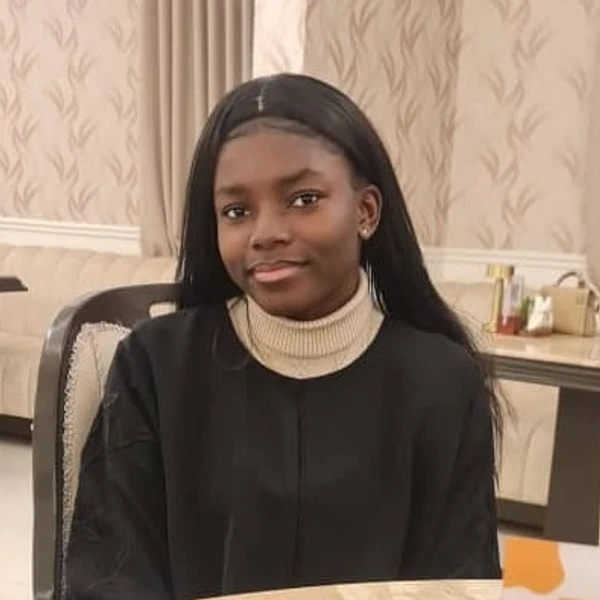
Wereniseoluwa Ogunkeyede
1x
FinalistWereniseoluwa Ogunkeyede
1x
FinalistBio
My goal in life is for a better future for the world and I want to make that a reality the best way I can. I plan to further my education so that it would make this dream more possible. I enjoy reading, sleeping and swimming in my free time. If I don't have my nose deep in books you'd most likely find me playing with children.
Education
Carmel High School
High SchoolMiscellaneous
Desired degree level:
Bachelor's degree program
Majors of interest:
- Biological and Biomedical Sciences, Other
- Neurobiology and Neurosciences
- Psychology, Other
Career
Dream career field:
Medicine
Dream career goals:
Medical assistant and cashier
Lifeline Hospital2021 – 20243 years
Sports
Swimming
Junior Varsity2014 – 202410 years
Arts
Eucharistic Heart of Jesus Cultural dancers
Dance2022 and 2023 Graduation Dance production2021 – 2024
Eric W. Larson Memorial STEM Scholarship
“Where’s Grandma?”
We had just closed from boarding school in Nigeria, and my mom and sisters came to pick me up. Everything felt normal — until I asked that question. My younger sister went quiet and said, “She died.”
At first, I thought she was joking. I laughed nervously. Grandma couldn’t be gone — she was the one who called me “Moyin,” a name only she used even when I insisted I preferred my full name. I needed to hear it from my mom. But when I asked, my mom's face fell. Her lips trembled as she whispered, “Why would your sister tell you first? I was going to be the one…”
That moment is etched in my mind forever.
I broke down completely. “Who’s going to call me Moyin now?” I cried again and again. It felt like more than just a loss — like a voice that made me feel special had been silenced. I had lost a part of myself.
That was the beginning of a shift in me. I saw my mom cry — not as a parent, but as a daughter. I saw how fragile life was. I had never thought about cervical cancer before, but now I couldn’t stop. Grandma hadn’t complained much. The signs weren’t obvious. By the time we really noticed, it was too late.
Two years later, my grandfather passed too — this time from blood cancer. It was like history repeating itself. This time, I was older, more aware, and even more afraid. I would sometimes cry without knowing why. Maybe it was the fear of losing my mom too. Maybe it was the realization that our family had become familiar with grief. But I was sure of one thing: I didn’t want this pain to visit other people if I could help it.
That was the root of my desire to become a doctor. Not because it sounded nice, or because I wanted a stable career, but because I wanted to learn everything I could about cancer. I wanted to understand it, fight it, prevent it. I wanted to make sure no child would have to experience the kind of helpless heartbreak I did.
As I was still growing into this new purpose, life changed again. After spending most of my life in Nigeria and Saudi Arabia, my family finally got approval to move to the United States. It was a long process — one that filled us with hope, uncertainty, and prayer. Every night, we gathered around the screen for the midnight Hallelujah Challenge — an online praise, worship, and prayer session. We weren’t sure what the future held, but we believed God would make a way.
And He did.
When the application was approved, it felt like our prayers had been answered. But we arrived with more dreams than resources. Both my parents are currently unemployed. We had no formal support system, but a close family friend stepped in and helped us find our footing. It wasn’t easy. There were days I felt unsure of everything — myself, my accent, how to fit in, what to say in class, or how to explain why I had lived on three continents before age 18.
But the challenges made me stronger. Starting over in a new country taught me more about resilience than any textbook ever could. I now understand how education, healthcare access, and opportunity are deeply connected — and not evenly distributed. That awareness drives me even harder to pursue a future in medicine, especially in underserved communities.
Along the way, I’ve also learned to conquer fear in other ways. As a child in kindergarten, I nearly drowned while learning to swim. Most kids would avoid water forever after that. But something inside me felt different — like I had something to prove. Not just to others, but to myself. I wanted to overcome that fear, and now that I’m here in the U.S., I plan to join my school’s swim team next year. It’s more than just a sport for me — it’s a symbol of growth, endurance, and strength.
In school, I’ve immersed myself in STEM classes. Biology, especially, has helped me connect classroom learning with personal experience. I’ve started researching different types of cancer, not just to understand them, but to ask better questions: Why are so many people unaware of the early signs? Why are women in African communities disproportionately affected by late-stage diagnoses? What can be done — not just in hospitals, but in schools, homes, and public campaigns?
My goal is to become a cancer specialist — not just to treat patients, but to educate. I want to create outreach programs, work with researchers, and one day open clinics in communities like mine. Places where people don’t always get answers until it’s too late. I want to bring hope where silence has lingered for too long.
This scholarship would mean so much to me. It would help ease the financial weight my parents carry and give me the freedom to pursue internships, volunteer work, and college studies with full focus. But more than that, it would be an investment in my mission — to make sure fewer families lose a voice like my Grandma’s, and that more girls like me are empowered to rise beyond grief and into purpose.
Because even though the voice that used to call me Moyin is gone, I carry it with me — in every goal, every class, and every prayer.
And now, I’m ready to use my own voice to change lives.
Cynthia Vino Swimming Scholarship
“Whose kid is that?”
That was the voice I heard—shaky, confused, maybe even a little panicked. Then silence. When I came to, I was on the side of the pool, coughing up water with people standing over me, eyes wide with worry. I had almost drowned during a swimming lesson in kindergarten back in Nigeria.
I don’t remember the exact moment I slipped under, but I remember the stares. The pity. The awkward tension. I hated that more than the water itself. Something about those looks made me feel small and powerless, and I promised myself I never wanted to be seen that way again.
That day didn’t leave me with a fear of swimming. It left me with a challenge. I became quietly determined to not let that moment define me. Even though I didn’t have the chance to really pursue swimming while growing up in Nigeria—or later in Saudi Arabia where we moved—I kept the memory. I kept the goal.
When we eventually moved to the United States, I finally had access to what I’d never had before: a chance to actually learn how to swim, on my terms. I plan to join my school’s swim team this coming year, not just because I enjoy the water, but because I’m ready to reclaim the part of my story that once made me feel weak.
Swimming has already taught me lessons, even outside of the pool. It taught me what it means to face discomfort, to move forward even when everything feels unfamiliar. Adjusting to life in a new country felt like trying to swim in deep water for the first time—awkward, scary, and uncertain. But I kept kicking, kept learning, and kept trying to find my rhythm.
There’s something special about the feeling that comes when you push through a challenge—when you finish that lap, when you keep going even though you once almost drowned. That feeling of strength, of doing something you once feared, has spilled into other parts of my life. It’s made me more confident in school, more grounded socially, and more motivated to grow into someone who doesn't run from challenges but moves through them with purpose.
Swimming, to me, isn’t just a sport. It’s a symbol of the resilience I’ve built—starting from the day a stranger asked, “Whose kid is that?” to the day I’ll step onto the swim team as someone in control of their story.
Cyrilla Olapeju Sanni Scholarship Fund
Moving to the United States was one of the biggest transitions of my life—not just physically, but emotionally, spiritually, and mentally. Before coming here, my family lived in Saudi Arabia, having moved from Nigeria years earlier. We were already used to adapting, but applying to move to the US brought a new kind of uncertainty—one that required patience, prayer, and faith.
The application process was long and filled with unknowns. There were nights when we didn’t know if things would work out or if we would ever get the approval. During that time, my family leaned heavily into prayer. I remember how we participated in something called the Hallelujah Challenge—a midnight praise, worship, and prayer program streamed online. Even though it aired in the middle of the night, we would stay up as a family, lifting up our hopes and praying for breakthrough. It wasn’t just about wanting to come to the US—it was about trusting that God was leading us somewhere, even when we couldn’t see the outcome. That period built my faith in a way that nothing else could.
When we finally got the approval to move, it felt surreal. But even after arriving, new challenges appeared. Adjusting to life in the US was not as easy as I imagined. From understanding how schools worked, to navigating systems and accents, everything felt unfamiliar. I went from being confident in my environment to feeling unsure and often out of place. But I carried that faith with me. I prayed during moments I felt overwhelmed, and slowly, I began to find my footing.
A family friend supported us during our early days in the US, helping with small but important things like transportation and settling in. She was later paid back, but her willingness to help during our transition showed me how powerful kindness can be. It made me realize how important it is to be there for others in their uncertain moments—something I now try to live by.
Being in a new school environment also came with emotional highs and lows. I had to learn how to adapt socially, academically, and mentally, while still staying true to myself. At times, I felt pressure to fit in, especially with how different my background was. But over time, I learned that I didn’t need to shrink who I was—I just needed to grow into who I was becoming.
This journey helped me understand the bigger picture. My parents made major sacrifices so I could have better opportunities. They didn’t come to the US because they had no options; they came because they believed in giving me more. That shaped my mindset. I now work hard not just for my own success, but to honor the doors they opened for me. I think often about the future I want to give my children someday—one where they have access, understanding, and faith just like I was given.
Spiritually, emotionally, and mentally, the process of moving shaped me into someone who doesn’t back down from change. I see obstacles as part of the growth. I value community, kindness, and resilience. And most importantly, I’ve learned to trust in God’s timing—even when the answer doesn’t come immediately.
That period of midnight prayers in Saudi, waiting in faith, feels far away now. But the girl who stayed up praising during the Hallelujah Challenge is still in me—hopeful, driven, and grounded. And she’s just getting started.
Richard (Dunk) Matthews II Scholarship
My name is Wereniseoluwa Ogunkeyede, and while my long-term dream is to become a surgeon, the trade I am most drawn to—and determined to master—is sewing. What makes this ironic is that, despite my passion, I still don’t know how to use a sewing machine properly.
I was born in Nigeria, spent part of my childhood in Saudi Arabia, and recently moved to the United States. Across each country and culture, one thing remained consistent: my love for stitching things by hand. My mother and aunt taught me the basics growing up—sewing buttons, patching clothes, and making small adjustments with a needle and thread. But my most treasured sewing memory comes from primary school in Nigeria.
One afternoon after class, I was playing with my best friend and her little sister, who had outgrown most of her clothes. I went home, found a piece of old fabric, and hand-stitched a simple skirt with the help of a needle, thread, and a lot of hope. I didn’t have a sewing machine, and the stitches were uneven, but I poured my heart into it. When she wore it, she smiled and twirled like it was made by a real designer. That moment stuck with me. I remember thinking, “I just made something for someone else that made them feel special.” It felt like I had stitched a piece of the future with my own hands.
Even though I’ve never had the chance to take a formal sewing class, I’ve remained the go-to person in my family for mending school uniforms, reshaping scarves, or fixing tears. It’s a trade I’ve built slowly, stitch by stitch, and I hope to finally master it through professional learning. Moving to the U.S. has given me access to more resources—but it has also meant financial challenges. My family is rebuilding from the ground up, and I qualify for free lunch and fee waivers. A scholarship like this would help me afford materials, enroll in a local sewing workshop, and finally learn how to use a machine to bring more of my ideas to life.
To me, sewing is more than just a skill—it’s a symbol. It mirrors my dream of becoming a surgeon, where precision and care restore lives. Both fields require focus, patience, and a desire to fix what is torn. I plan to carry both trades—medicine and sewing—into my future, using them to support myself, connect with others, and give back to my community.
Back in Nigeria, I also volunteered with school programs that supported young girls, encouraging them to take pride in their creativity and education. Many of them had never considered learning a trade, but I saw how much confidence they gained through small acts of creation. Here in the U.S., I hope to continue that work by eventually starting a sewing and mentorship program for girls from low-income or immigrant backgrounds—helping them build confidence and practical skills.
I am a Nigerian girl with strong hands, steady dreams, and a needle that refuses to quit. I may not yet know how to use a sewing machine, but I know how to create from nothing, how to uplift others through my hands, and how to imagine a more empowered future—one stitch at a time.
Snap EmpowHER Scholarship
The classroom fell silent as my classmate gasped for air. Her eyes widened, and she clutched her chest in panic. Most students froze, unsure of what to do—but I didn’t. Without fully thinking, I rushed to her side. I asked her to sit upright, loosened her collar, and encouraged her to take slow, deep breaths. I brought her water, spoke calmly, and stayed beside her until the clinic nurse arrived. I wasn’t sure if I was doing everything right, but instinct guided me. When it was over, the nurse told me I’d done well. But what stayed with me wasn’t the praise—it was the pride I felt. That moment sparked something in me. I knew then that I wanted to help people like that for the rest of my life.
My name is Wereniseoluwa Ogunkeyede. I am a Nigerian student who spent part of my life in Saudi Arabia and recently relocated to the United States. Although both my parents are doctors, my passion for medicine didn’t come from family pressure—it came from moments like that one, where I realized that helping someone, even in a small way, gave me a deep sense of purpose.
For much of my childhood, I thought I wanted to be a doctor simply because it was expected of me. In primary school, when everyone shared their career dreams, I echoed “doctor” like most of my classmates. But as I grew, I began to question whether it was truly my calling. I did well in business classes—though I never got along with accounting tables—and enjoyed reading and creative writing. Academic writing, however, felt rigid. I wasn’t always confident in my abilities, and for a while, I thought maybe medicine wasn’t for me after all.
Still, when it came time to choose my academic track in senior secondary school, I returned to science. Deep down, something kept pulling me toward healthcare. That classroom experience brought everything into focus: I wanted to be the person who stays calm in chaos, who shows up when others don’t know how to help, who can heal not just with knowledge, but with care.
Since arriving in the United States, that purpose has grown even stronger. Here, I’ve seen how many more opportunities exist to learn, research, and serve. My dream is to become a surgeon—not just to perform procedures, but to change lives. I’m drawn to the intensity, precision, and life-saving nature of surgery. At the same time, I want to approach medicine holistically, caring for both the physical and emotional well-being of my patients.
Empowering women has also been a core part of my journey. While in Nigeria, I was actively involved in school clubs that encouraged girls to explore science and leadership. I helped tutor classmates, participated in girl-led discussions, and created a safe space for others to feel seen and heard. Since moving to the U.S., I’ve continued mentoring peers and plan to volunteer with organizations that support women’s health and education. I want to show young women—especially those from underrepresented backgrounds—that they belong in every space, including science, medicine, and leadership.
My name is Wereniseoluwa Ogunkeyede. I am a future surgeon, a learner with heart, and a believer in the power of showing up. I want to help heal, uplift, and inspire—and I’m committed to doing it with compassion, skill, and purpose.