user profile avatar

Vani Garcha

1x

Finalist

Bio

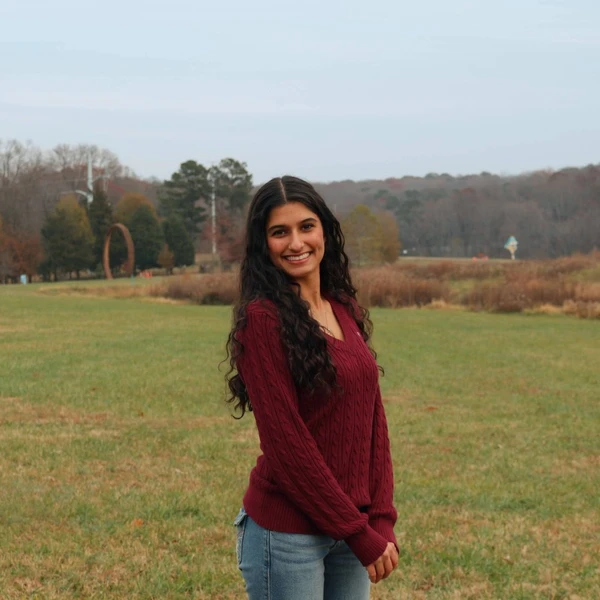
Hi! I am an upcoming freshman at UNC Chapel Hill hoping to study public health and focus on neurodegenerative disease prevention and advocacy! I have been working part time for the past 2 years and investing my paycheck in hopes to save up enough. I hope to finance myself through undergrad and medical school and am grateful for all the help I can get!

Education

Raleigh Charter High School

High School
2022 - 2026

Miscellaneous

  • Desired degree level:

    Bachelor's degree program

  • Majors of interest:

    • Biological and Biomedical Sciences, Other
    • Nanotechnology
    • Nutrition Sciences
  • Not planning to go to medical school
  • Career

    • Dream career field:

      Alternative Medicine

    • Dream career goals:

    • Head Summer Swim Coach and Assistant YOTA Club Team Coach

      YMCA
      2023 – Present3 years

    Sports

    Triathlon

    Intramural
    2021 – Present5 years

    Awards

    • State Champs Runner Up
    • National Qualifier
    • NC Tri Series Winner

    Research

    • Ethnic Studies

      Duke School of Medicine — Researcher
      2024 – 2025

    Arts

    • Cary School of Music

      Music
      2019 – 2024
    • Taurya School of Dance

      Dance
      Annual Dance
      2016 – Present

    Public services

    • Volunteering

      Cary Teen Council — Lead Teen and Environmental Outreach Advocate
      2021 – Present
    • Volunteering

      UNC Health — Junior Volunteer
      2025 – Present

    Future Interests

    Advocacy

    Volunteering

    Philanthropy

    Entrepreneurship

    Younce, Vtipil, Baznik & Banks Scholarship
    The first time I met Tu, she refused to look at the pool. She stood by the edge clutching her goggles in one hand, water lapping just inches from her little toes. As a Diversability Swim Lessons coach, with experience working with children on many ends of the spectrum, none had distrusted me as much as Tu. Her eyes darted everywhere except the water, and every splash from a nearby lane sent her stiffening in place. For weeks, we began every lesson the same way: sitting side by side on the warm concrete, dipping only our feet into the pool. There were no whistles, no kickboards, no pressure to perform. Instead, we talked: about her day at pre-K, about her favorite colors, about the sounds the water made when it moved slowly versus when it splashed. Progress came not in strokes, but in moments. One afternoon, Tu giggled when I flicked water toward her ankles. Those tiny drops marked the first wave of trust, and with it, the beginning of real change. Working with swimmers on the spectrum taught me that patience is not passive waiting; it is intentional space-making. Each milestone, from her first assisted float, her first bob under the surface, to her first independent glide, felt monumental because it was earned through consistency and trust. I learned to celebrate progress that others might overlook and to redefine success on each swimmer’s terms. Over time, these lessons extended beyond individual swimmers. As Head Swim Coach, I began adapting team practices so children with disabilities could join our summer program alongside their peers. We adjusted drills, rethought communication, and fostered a culture where teammates learned to encourage rather than compare. What began as accommodation evolved into a stronger, more empathetic team, one that understood difference not as a limitation, but as a shared responsibility. The most rewarding moment came when Tu joined her first relay. As she jumped in, her teammates erupted into cheers, lining the pool edge with outstretched hands. When she finished her leg, they high-fived her like any other swimmer celebrating a win. In that moment, the pool felt larger than lanes and lap times; it felt like belonging. That day, I realized patience can move more than swimmers: it can shift entire communities. Watching Tu beam with pride, I understood that patience isn’t quiet endurance. It is love in motion, powerful enough to transform fear into confidence and teams into families.
    Ava Wood Stupendous Love Scholarship
    Have you ever seen giant, inflatable, chicken cheerleaders? My very first sighting was at the Chik-fil-A 3 Little Pigs triathlon – also my very first race. Everything about it felt chaotic and overwhelming. I didn’t sign up with dreams of becoming a triathlete; my friend and I had just thought it would be an excuse for a sleepover. But something about the challenge unknowingly set me on a journey I could never have imagined. I kept training on my own, slowly signing up for bigger competitions until I qualified for the USA Triathlon National Championships in Wisconsin. Traveling across states with my family and my bike, swimming in the freezing waters of Lake Michigan, and racing alongside some of the best youth athletes in the country was surreal. But it was also isolating. Standing in a sea of two hundred racers, surrounded by blonde ponytails and pale skin, I couldn’t shake the thought that maybe I didn’t belong there. When my mother opened a container of rice while other athletes grabbed hot dogs, I felt my face burn with embarrassment. It was as if I was living between two selves: Indian and American, not sure if either fit fully in the triathlon world. Those insecurities are ones that stay and pinch you for a long time. I told myself maybe Indians weren’t meant for sports, maybe there was a reason my peers thought I was joking when I said I was competing. Yet even in those moments of doubt, I was never truly alone. On race mornings, my mom would wake at three in the morning to make my breakfast. My dad tuned up my bike, checking each gear and tire with a mechanic’s precision. My sister left sticky notes in my race bag with scribbles like “We’re proud of you!” While the triathlon community sometimes magnified my insecurities, my family’s quiet devotion reminded me that I didn’t need to prove myself to anyone. Every finish line I’ve crossed has been less about independence and more about the invisible team beside me whose love made the journey possible. Over time, I realized triathlons weren’t just about medals or rankings. I loved biking with wet hair and letting the sun dry my swimsuit. I loved peeling off my watch to see tan lines that told the story of hours in the sun. I loved the exhaustion that left me smiling at the end of a workout. And I loved the pride of pushing past limits I thought were impossible, knowing that someday, someone like me might see a place for themselves in the sport. Triathlon became more than a competition; it became a space where I tested my limits, found discipline, and embraced both parts of my identity. Slowly, that confidence spilled into other parts of my life. In class, I raised my hand more. On my swim team, I coached athletes who reminded me of myself – hesitant, wondering if they belonged. I saw them, because I was them. And eventually, I began to see myself differently too. The same girl who once Googled “do Indians do triathlons?” now leads her school’s first Triathlon Club. The same girl who used to sit silently now choreographs Kathak-inspired stretches for my track team, adding rhythm and heritage into warm-ups. Now, when I race, I carry more than gear. I carry the quiet pride of knowing a younger version of me would have been excited to see someone like me on the starting line. I am not racing to fit a mold – I am racing to prove that I never needed one.
    Kristen McCartney Perseverance Scholarship
    Have you ever seen giant, inflatable, chicken cheerleaders? My very first sighting was at the Chik-fil-A 3 Little Pigs triathlon – also my very first race. Everything about it felt chaotic and overwhelming. I didn’t sign up with dreams of becoming a triathlete; my friend and I had just thought it would be a funny thing to try. But something about the challenge unknowingly set me on a journey I could never have imagined. I kept training on my own, slowly signing up for bigger competitions until I qualified for the USA Triathlon National Championships in Wisconsin. Traveling across states with my family and my bike, swimming in the freezing waters of Lake Michigan, and racing alongside some of the best youth athletes in the country was surreal. But it was also isolating. Standing in a sea of two hundred racers, surrounded by blonde ponytails and pale skin, I couldn’t shake the thought that maybe I didn’t belong there. When my mother opened a container of rice while other athletes grabbed hot dogs, I felt my face burn with embarrassment. It was as if I was living between two selves: Indian and American, not sure if either fit fully in the triathlon world. Those insecurities are ones that stay and pinch you for a long time. I told myself maybe Indians weren’t meant for sports, maybe there was a reason my peers thought I was joking when I said I was competing. Yet even in those moments of doubt, I was never truly alone. On race mornings, my mom would wake at three in the morning to make my breakfast. My dad tuned up my bike, checking each gear and tire with a mechanic’s precision. My sister left sticky notes in my race bag with scribbles like “We’re proud of you!” While the triathlon community sometimes magnified my insecurities, my family’s quiet devotion reminded me that I didn’t need to prove myself to anyone. Every finish line I’ve crossed has been less about independence and more about the invisible team beside me whose love made the journey possible. Over time, I realized triathlons weren’t just about medals or rankings. I loved biking with wet hair and letting the sun dry my swimsuit. I loved peeling off my watch to see tan lines that told the story of hours in the sun. I loved the exhaustion that left me smiling at the end of a workout. And I loved the pride of pushing past limits I thought were impossible, knowing that someday, someone like me might see a place for themselves in the sport. Triathlon became more than a competition; it became a space where I tested my limits, found discipline, and embraced both parts of my identity. Slowly, that confidence spilled into other parts of my life. In class, I raised my hand more. On my swim team, I coached athletes who reminded me of myself – hesitant, wondering if they belonged. I saw them, because I was them. And eventually, I began to see myself differently too. The same girl who once Googled “do Indians do triathlons?” now leads her school’s first Triathlon Club. The same girl who used to sit silently now choreographs Kathak-inspired stretches for my track team, adding rhythm and heritage into warm-ups. Now, when I race, I carry more than gear. I carry the quiet pride of knowing a younger version of me would have been excited to see someone like me on the starting line. I am not racing to fit a mold – I am racing to prove that I never needed one.