Hobbies and interests
Dance
American Sign Language (ASL)
Art
Bass
Beach
Classics
Acting And Theater
Advocacy And Activism
Poetry
Social Media
Politics and Political Science
Reading
Academic
Art
Epic
I read books multiple times per week
Doris Resor
1x
Finalist
Doris Resor
1x
FinalistBio
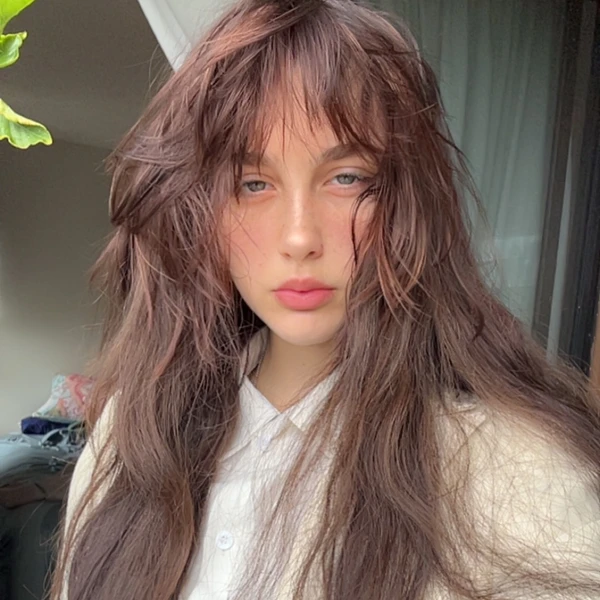
Hi, I’m Vianna (Doris) Resor!
I’m a queer writer, and aspiring author. I’m passionate about human rights, foreign affairs, and classic literature. I’m a hula dancer, as well as a kickboxer, and I enjoy learning new things about different cultures and languages. In my ultimate successful fantasy, I become President one day.
Education
Excel High School
High SchoolMiscellaneous
Desired degree level:
Doctoral degree program (PhD, MD, JD, etc.)
Majors of interest:
- Philosophy, Politics, and Economics
- Classics and Classical Languages, Literatures, and Linguistics, General
- Rhetoric and Composition/Writing Studies
- Business, Management, Marketing, and Related Support Services, Other
- Journalism
- Public Policy Analysis
- International/Globalization Studies
Career
Dream career field:
Political Organization
Dream career goals:
Diplomat for the United States
Social Media Manager
The Collective2022 – 20231 yearLibrary Assistant
Kailua Public Library2022 – 20242 yearsCashier/Book Attendent
Bookends2024 – Present2 years
Sports
Basketball
Club2018 – 20235 years
Tennis
Club2018 – 20235 years
Awards
- Most improved player x3
Figure Skating
Club2022 – 20253 years
Awards
- Graduated to advanced at the top of my class
Kickboxing
Club2020 – Present6 years
Dancing
Club2024 – Present2 years
Awards
- Chant Leader
Arts
Kalaheo Art and Media Design Academy
DesignCompeted in competitive competitions in AD making, story telling, and digital design techniques.2022 – 2025Guitar Honolulu
Music2022 – 2023Kalaheo Drawing and Painting Program
Drawing2023 – 2025
Public services
Advocacy
Hiroshima Junior International Peace Forum — Ambassador for the United States Youth2023 – 2023
Future Interests
Advocacy
Politics
Volunteering
Entrepreneurship
Tawkify Meaningful Connections Scholarship
When I was a kid I used to talk to inanimate objects. I didn’t understand that they didn’t have the same capacity to feel as we do. I didn’t understand that they aren’t as we are.
I used to apologize for bumping into or hitting or knocking over anything at all, whether it was capable of cognitive thinking or not. I believed that connection was something you made, not something you earned.
As I grew older, I began to understand it more, the power behind community. I was always fascinated by it, the idea that every human being sees through their own eyes, how they all breathe as I do, all think, though never the same thought.
The idea of consciousness, the human consciousness possessed me, I was addicted to it. I’ve never been an introvert, never been a stranger in the game of making friends or building a family outside of blood, but something changed me the day I stepped foot in the Hiroshima Peace Memorial Museum.
I saw death. Suffering. Despair. But I had never felt it as I did then. As if the weight of those souls were upon my very shoulders. I felt connected to every single one of those people as if they were my own kin. Their names are still carved into my head, Shinichi Tetsutani, Aiko & Toru Ikemoto, and Wataka Hirono.
It was a kind of connection that went beyond race, went beyond nationality, religion, way of life. It was human. I saw them, in their weakest and hardest state, a state many of them did not survive. To be connected is to carry others with you, even when they are strangers.
I cannot see and forget something like that. The same way I cannot forget the millions suffering around the world and in my own country.
Relationships and connections are the basis of human society, and in order for society to function human compassion and empathy must be at the root of it.
That is why every relationship I form, whether personal or professional, is rooted in understanding, empathy, and the belief that people are never as distant from us as they seem. And this is a belief I intend to carry into my career field. I hope to pursue a future in politics, where connection is too often lost behind policy and power. I want to be someone who remembers the people behind the numbers, the names behind the statistics, and the humanity behind every issue. The same way I once reached for connection as a child, I now seek to protect it, to build systems that do not ignore suffering but respond to it with compassion and action.
I want to build a future where policies are shaped not just by data, but by empathy, where connection is not overlooked, but prioritized. Because to me, true progress begins the moment we stop seeing people as distant from ourselves but as human beings connected by one earth and one life we get to live together.
Richard Neumann Scholarship
He couldn’t remember it again. So, I had to do it again.
“What’s your name?” It took him a moment to think properly, saying something about Hell. How we’re all going there. When someone you love starts to lose something important, something fundamental to ways of life, the little things start to count for more. My ex boyfriend suffered with a type of schizophrenia, and during certain episodes, his memory would fracture.
Break off as if drifting away in the wind.
He would forget names, places, even people entirely. Sometimes he didn’t know who I was, even thought I wasn’t real at all. He would forget conversations, lose track of time, or struggle to recognize what was real and what wasn’t. Watching that happen felt helpless at first, but I couldn’t accept doing nothing. So, I did, what I do best, I created something.
Something silly, I called it, “The Memory Game.”
The Memory Game was a way to ground him when nothing else worked, when he wouldn’t accept my answers of plainly written fact, the idea that we weren’t in Hell, or that he wasn’t dead.
I would ask him questions, things with one answer at first, slowly adding them on. Facts, things about his life, family, and loved ones, things I knew were core memories and people.
The first was his name. Something simple, something small that could lead to perhaps, a revelation of such, and sometimes it did. The next was my name, matching it to my voice, forcing him to connect to the scene around him. Next was his siblings names and ages, a hard one sure, but for him? The boy who loved each one of them with everything in him, well for him it should’ve been easy. Though often it was not. If he struggled, I would gently fill in the gaps, connecting each memory to something tangible, like a photo, a message, or an object nearby. The goal was not to test him, but to guide him back to a sense of continuity.
I created something small, but it helped him in the moment, but those moments would end. Oftentimes replaced with moments of where confusion turned to anger and shame. He was angry, angry at how he felt and who he was, and that’s not a problem with just him. I began to understand that even the most thoughtful, personal solutions can only go so far if the world around them is not built to support people struggling with mental health.
If I had the time and resources, I would expand my efforts beyond individual tools like the Memory Game and focus on advocacy. I would use funding to support campaigns centered on the destigmatization of mental illness, particularly conditions like schizophrenia that are often misunderstood and misrepresented. This would include creating accessible, youth-focused content that explains these experiences in a way that is humanizing rather than clinical or fear-based.
In addition, I would direct resources toward mental health research and community-based support systems. While personal strategies can provide immediate relief, long-term change depends on better treatment options, increased funding, and broader public understanding. Advocacy and research must work together to create lasting impact.
1000 Bold Points No-Essay Scholarship
Transgender Future Scholarship
Heart pounding. I needed to get out of the bathroom. No seriously, I needed to get out. “Hey? Are you a girl or a fag?” Maybe I’d let my hair grow too long, or maybe my shirt was too tight, or maybe I truly didn’t pass at all. “Uh I’m a guy.” I managed to muster.. but the high pitch gave me away. “Ew! So you’re a fucking faggot!” I ran. Three of them, one of me. I bolted down the way, B-lining towards the classroom of my AP history teacher. I was a transgender kid. The girls didn’t want me in their bathroom, I dressed and talked like a boy. But evidently, it seemed the boys didn’t want me there either. “Yo, it’s actually running?” The word, ‘faggot’, they had said. Again and again. It felt like the words branded me swallowed me whole. This was not an uncommon occurrence at my old school. Most of my peers border on the edge of being uneducated when it comes to the inner workings of the word ‘Transgender.’
I spent classes in the counselors office, hiding out from the world that seemed so out to get anything like me.
I don’t recall learning much at all my sophomore or freshman year. Survival mode had me by the throat.
Eventually, with help from those around me, my loved ones, those who supported me, I was able to transfer to online school, with much convincing to my mother that it was the better option for me.
I was able to escape that toxic environment and access education in a way many students cannot. I recognize the privilege in that. While I was able to leave, many transgender students cannot. Transgender kids like me, and some even younger than me, being treated like a subhuman. If we are ever to reshape the society we live in, the stigma and ignorance of current societies need to change, and so does legislation. That is why education matters so deeply to me. I want to pursue a career in public policy and politics so that the next generation of transgender and non-binary students can attend school without fear of harassment or exclusion. I believe practical legislation, such as laws guaranteeing safe private facilities for students, stronger accountability for schools that fail to address bullying, and acts of hate and expanded access to trained school counselors can make education accessible to transgender and non-binary students without turning their existence into a political debate. My experiences showed me how systems can fail vulnerable students, but they also gave me the determination to change those systems. No student should have to run down a hallway simply to feel safe enough to learn.
Light up a Room like Maddy Scholarship
Hi, I’m Doris, and my dad use to struggle with heroin. Hi, I’m Cam, and my brother is a coke addict. Hi, I’m Via, and my boyfriend/fiancé struggled with meth.
Hi, I’m Vianna Resor, and I’m going to change the world.
Drugs has always been something in the background of my life. From the faint smell of cigarettes in my childhood bedroom, to my brother’s twitches and the look in his eyes.
I have known about the dangers of drugs and fentanyl since I learned to breath. Something hounded into me by my father who didn’t want me to fall to his childhood mistakes. My father is a good man, someone strong, who shapes the world to how he sees it: Kind and loving.
Growing up around addiction made me aware of how the criminal justice system often intersects with substance abuse. Too frequently, individuals suffering from addiction encounter law enforcement before they ever encounter meaningful treatment. I saw how cycles of punishment can sometimes deepen the problem rather than resolve it. When addiction is treated only as a crime instead of a health issue, families can become trapped in patterns of incarceration, stigma, and instability.
These experiences really motivated and shaped my interest in pursuing a degree in criminal justice. Rather than seeing the system only from the outside, I want to understand how policies, policing strategies, and rehabilitation programs actually function. Education will allow me to study the relationship between crime, addiction, and public health, and to explore approaches that address root causes instead of symptoms.
My goal is to work toward solutions that balance accountability with rehabilitation. Drug courts, diversion programs, and treatment-centered interventions are examples of policies that can reduce recidivism while giving individuals the opportunity to rebuild their lives. By focusing on rehabilitation and prevention, the criminal justice system can help break the cycle that many families experience when addiction is met only with punishment.
For me, this path is personal. The impact addiction has had on my family has shown me both the damage it can cause and the resilience people must develop to overcome it. Pursuing a criminal justice degree is my way of turning that experience into action. I want to be part of a system that recognizes addiction as a complex social problem and works toward solutions that prioritize recovery, community safety, and long-term change.
Addiction is hard, it’s something that sticks and refuses to move. Something my brother told me sticks in my head, like a bad song, “The opposite of addiction is community.” And that’s the truth. Addicts are not criminals for their use, and should not be treated as such. They are people, people who need support, kindness and compassion. In the United States, drug overdose deaths have reached record highs, with approximately 109,600109,600 drug-overdose-related deaths in the 12-month period ending January 31, 2023. People die, when the systems are against them, and it’s been proven again and again.
I want to fundamentally change the systems within our society, and how we treat our ill and sick. I want to build systems rooted in treatment, community, and understanding, because when people are given the chance to recover instead of simply being punished, entire families and communities can heal.
Dan Leahy Scholarship Fund
The person I admire most is my brother, although technically he is my hānai brother. In Hawaiian culture, hānai refers to a family bond that is chosen and nurtured rather than defined strictly by blood. Growing up with him taught me that family is not simply something you inherit, but something you build through loyalty, support, and shared responsibility. My brother embodied those values in the way he approached life and the people around him, and his influence has shaped the person I am today.
Some of my earliest experiences with debate did not happen in a classroom or competition, but in conversations with him. He encouraged me to question ideas, defend my opinions, and listen carefully to opposing viewpoints. Though smart as he was, he was also dumb as rocks sometimes, in the way older brothers can be. He was an addict, and there’s no easy way to say that. The kind where you see it in the eyes and the ways his hands seemed to always shake. He was addicted to cocaine, his vice of choice, and you could always tell in the ways he spoke too fast or moved too slow.
I want to get a higher education because of him, because he was so smart, because he taught me life, debate and growing up when times were hard, when I cried, and when the world spun so fast I didn’t understand it anymore. He helped me to keep my footing while I kept his. Watching someone so brilliant battle addiction taught me something important about the world: intelligence alone does not protect people from the systems around them. It showed me how complicated human lives can be, and how desperately we need people who are willing to speak up, question systems, and advocate for change.
That realization is part of what drew me to speech and debate. Debate gave me a place to take the conversations my brother and I used to have and turn them into something larger. It taught me how to organize my thoughts, defend my ideas, and listen to the perspectives of others. More importantly, it showed me that words have power, and power is the thing that changes the world.
I want to study public policy, political science and law. I want to change the world, once I have the knowledge to do so. My brother helped me to start challenging the world, now it’s my turn to choose what I do with that challenge.
Our Destiny Our Future Scholarship
Our earth is dying. There’s no easy or soft way to go about it anymore.
Sustainability is no longer a question of isolated problems and lackluster solutions. There needs to be a fundamental change within not only our nation, but of all nations and all people. As someone interested in political science, and public policy as well as international diplomacy, I believe environmental sustainability must be embedded into the decisions that determine how societies grow.
One policy I stand firm on is the concept of mandatory urban rewilding zones. Cities around the world continue to expand, while natural ecosystems and entire lifeforms disappear, contributing to air pollution, and urban temperatures rising.
Rewilding policies would require larger cities to donate a portion of their land toward natural environments such as micro-forests, pollinator gardens, green corridors, and restored wetlands. Not only would this begin to help support wildlife, but it will also help start to reduce the damages of global warming, as well as providing citizens with cleaner air and healthier living spaces.
In my future career in public policy, I hope to push for more environmental legislation that integrates sustainability into urban planning.
Along with urban planning there’s a need for us to examine carbon based plastics and their role in pollution. We should be looking to use plant based substances to replace petroleum-based products. Plant bases such as bamboo or hemp, substances that are easily decomposable in the environment.
We need to make environmental practices cheaper than the status quo, creating more investment in our renewable future. Sustainability must be viewed not as a restriction on progress, but as the foundation that allows progress to continue.
As someone pursuing a future in political science and public policy, I hope to contribute to the global conversations that will shape these decisions. Environmental challenges do not stop at national borders, which is why cooperation between governments will be essential in creating lasting solutions. Whether through urban planning policies such as rewilding, using sustainable materials like bamboo and hemp, or international environmental agreements, I want to be part of the generation that treats sustainability not as an afterthought, but as a guiding principle for how we build our future. The choices we make today will determine the world that future generations inherit. If we are willing to rethink the systems that shape our cities, industries, and policies, we still have the opportunity to create a world that is not only sustainable, but thriving.
I want to make an impact that not only helps others, but provides a better life for future generations, and the work starts now.
Shape the News No-Essay Survey Scholarship
400 Bold Points No-Essay Scholarship
500 Bold Points No-Essay Scholarship
Future Green Leaders Scholarship
Our earth is dying. There’s no easy or soft way to go about it anymore. Sustainability is no longer a question of isolated problems and lackluster solutions. There needs to be a fundamental change within not only our nation, but of all nations and all people. As someone interested in political science, and public policy as well as international diplomacy, I believe environmental sustainability must be embedded into the decisions that determine how societies grow.
One policy I stand firm on is the concept of mandatory urban rewilding zones. Cities around the world continue to expand, while natural ecosystems and entire lifeforms disappear, contributing to air pollution, and urban temperatures rising.
Rewilding policies would require larger cities to donate a portion of their land toward natural environments such as micro-forests, pollinator gardens, green corridors, and restored wetlands. Not only would this begin to help support wildlife, but it will also help start to reduce the damages of global warming, as well as providing citizens with cleaner air and healthier living spaces.
In my future career in public policy, I hope to push for more environmental legislation that integrates sustainability into urban planning.
Along with urban planning there’s a need for us to examine carbon based plastics and their role in pollution. We should be looking to use plant based substances to replace petroleum-based products. Plant bases such as bamboo or hemp, substances that are easily decomposable in the environment.
We need to make environmental practices cheaper than the status quo, creating more investment in our renewable future. Sustainability must be viewed not as a restriction on progress, but as the foundation that allows progress to continue.
As someone pursuing a future in political science and public policy, I hope to contribute to the global conversations that will shape these decisions. Environmental challenges do not stop at national borders, which is why cooperation between governments will be essential in creating lasting solutions. Whether through urban planning policies such as rewilding, using sustainable materials like bamboo and hemp, or international environmental agreements, I want to be part of the generation that treats sustainability not as an afterthought, but as a guiding principle for how we build our future. The choices we make today will determine the world that future generations inherit. If we are willing to rethink the systems that shape our cities, industries, and policies, we still have the opportunity to create a world that is not only sustainable, but thriving.
David Foster Memorial Scholarship
If you’ve ever read the book, “The Secret History” by Donna Tartt, then you know Julian Marrow, the teacher who in the beginning, influenced all of his students in immeasurable ways. This is the story of my Julian, if Julian was of course, good for the whole book.
His name is Davide Samulski, and he was the one who saved my life.
I first met Mr. Samulski in my freshman year of high school, an unapologetically queer man that wouldn’t dull his spirit for a single soul. He showed up on parent teacher day in huge stiletto heels and I still remember how we all laughed at his stories.
He was unafraid to be himself, or at least that’s how he made it seem. Truthfully, after the conversations we’ve had, I'm not sure if he truly was unafraid, or just determined, either way it left an impact on me so deep I’ll carry it with me for the rest of my life. A man unmoveable by the burdens he faced.
I was a young gay kid, surviving with post traumatic stress disorder, a disorder that impacts day to day life with flashbacks, triggers and days that feel like lifetimes. Classrooms were minefields. A slammed door could send my heart racing, a raised voice could turn the room into something else entirely. I spent most days trying to be smaller than I was, quieter than I felt, hoping that if I stayed invisible enough the world would leave me alone.
But the world doesn’t always work like that. I spent a lot of my time sitting outside Mr. Samulski’s classroom, the room itself too loud or too much. And Mr. Samulski, in all his confidence, and unafraidness sat with me.
Sometimes we talked, sometimes he just sat with me while I cried. Being queer at the school I was at was almost like a death sentence. I remember vividly the first time a boy called me a ‘faggot’ in the hallways.
He always tried his best to protect me, he pushed for better protection for the queer kids in our school, and even headed a club for our community. Allowed kids like me to be ourselves without the danger, without the fear.
He was the first man I ever looked up to, the first man I looked at and thought, I want to be just like you. I wasn’t good at being unapologetically myself, always had the deep sting of shame sitting deep within my gut. He taught me more than just English, more than just the grammar I’m bad at properly using. He taught me to be myself and to be unafraid.
Watching him exist so openly in a place that sometimes felt hostile showed me something I had never seen before: that survival could look like pride. He did not save me all at once. There was no singular moment where everything changed at once. Instead, he saved it slowly, in quiet ways. In the afternoons he sat with me outside his classroom when the noise became too much. In the conversations where he reminded me that the cruelty of others said nothing about my worth. In the space he created for students like me to exist without fear. Before I met Mr. Samulski, I believed the safest way to live was to make myself smaller. To disappear whenever possible.But he showed me another way.
Because you see Mr. Samulski didn’t save my life in some cinematic way. He didn’t pull me out of a burning building.Instead, he did something quieter.
He saw me and didn't look away.
Valerie Rabb Academic Scholarship
My name is Vianna Doris Resor, and I’m going to be president one day. Not because I want to, not because it calls to me in the way that position usually does to the politicians that crave power and financial freedom, but because I have to. Since I was a child, I’d always dreamed of making a change. I was always fascinated by the world we lived in and how it operated, and how other countries lived so differently than us, but functioned in similar ways. In middle school I joined the Model UN, something that followed me to my freshman high-school days. I loved it. It felt like a glimpse into the world I wanted to be part of, the rooms full of people debating ideas, negotiating solutions, and imagining something better. In my sophomore year, I applied to go to the Hiroshima International Junior Peace Forum, something I’m still proud of to this day. There I met and talked with likeminded individuals just as set as me to change the world. We discussed so many things within that conference. A week straight of 7am to 9pm meetings, and it was exhilarating. It inspired me to keep going, to push harder to make the world better. We wrote the Hiroshima Declaration, a letter to the UN from the youth stating what we believed would make the world a better place for all nations alike.
Unfortunately, depression followed me upon my return. My school back home was not as accepting of the outside thinkers as that conference room in Japan seemed to be, I was an openly queer kid. I dressed like a boy. Masculinity became my armor, though it didn’t protect me nearly as well as I hoped it would.
I was spit on in classes, chased out of bathrooms, and called words of hate by those who didn’t understand. I’ve never blamed a soul, for the damage upon my psyche, I’ve come to accept humans often fear what they don’t understand. Those experiences didn’t extinguish my belief in people. If anything, they strengthened it.
I’m going to be president one day, because I truly believe I have what it takes. I believe in myself and the world of people around me. It’s not just ambition, but empathy. I believe leadership should be rooted in compassion, dedication, and respect for every person who calls this country home.
And I believe the world can be better than the one we’ve inherited. My name is Vianna Doris Resor, and one day I may become president. But more importantly, I will spend my life fighting for a world where every person is treated with the dignity I once had to suffer for. I strive for the future generations to one day, not just survive but thrive.
Sabrina Carpenter Superfan Scholarship
I’m not Sabrina’s biggest fan, but I’m the person that watched her through a screen and saw a reflection of something bigger. I first started watching her when I was five years old, a little kid who was a bit too stubborn and a little too reckless. I saw myself in her character, the way Maya was never afraid to be too loud, just the way I was. I was always the first one in on confrontation even as a child, and who she played on that screen helped me to grow. The next time I heard about her, I was in my early teens, listening to her song, Fiddling Thumbs on repeat through my rough middle school years. I watched her, who she’d become, how hard she fought, and I looked at her in a different light.
Hearing her music felt different from watching her on television. The sarcastic, confident character I remembered had grown into an artist writing about real emotions, heartbreak, insecurity, confidence, and self-discovery. I watched who she’d become and how hard she’d worked to evolve. And I looked at her the way one does someone familiar, someone who had been there longer than I realized.
The next time I heard about her, the next time she stumbled into my life, I was learning how to grow up, for real this time. It was my turn to become an adult. She started to gain popularity, skyrocketing with her tours and successes, and I watched through the screen, feeling like a kid again.
Growing up is strange that way. The people who influence you as a child often stay frozen in your memory, but Sabrina Carpenter never did. She kept changing, taking risks, and building something new out of who she was. And somewhere along the way, I was doing the same thing too.
$25,000 "Be Bold" No-Essay Scholarship
Justin Burnell Memorial Scholarship
What makes a name? Tradition? Inheritance? I am of the belief that one chooses their name not have it chosen for them. This is the journey of mine.
I was born Doris Ann Resor, to a small family of a Texan Christian man, and a Hippie Marylander woman. Doris, after my great grandmother, a spitfire they called her.
I began questioning my gender identity for the first time at eight years old, I wondered, why I never felt right, why Doris seemed to grate my ears with every whisper of it. I wrote it down, scribbles in writings trying to make sense of the world with my words.
I stumbled across a page on Wikipedia titled, “Gender dysphoria” a few years later, and it all seemed to click. The somethingness that was wrong. My brain didn’t fit my body, didn’t fit my name.
I remember it well, eleven years old and begging for a haircut to look like something I wanted to see in the mirror. I wrote about that too, entries upon entries on the depths of my mind.
I named myself Cam.. Cameryn. A respectable name, one that can be shouted off of rooftops or published on a spine. Doris had never fit me, had never felt right.
Cam was hard, Cam was a fighting name, the name of a boy who was chased out of bathrooms and spit on at school. The name of a boy who fought so hard to be seen, but still.. he wasn’t me yet.
Writing saved me, more times than I meant for it too. Books shaped the world I saw and are the reasons for what I want the world to become one day. Writing allowed me to fight back, to preserve my experience to allow my perspective to proceed past my own. I decided at seventeen, Cam was a fighter, and that I was more of a loving type. I discovered the name while researching for my characters, for my fantasy novel pages and pages of words, and one name that kept repeating.. Vianna.
It was a name I thought that fit, that held both the femininity I was raised with, and the masculinity I grew into. It held for me, a special place in looking to the future, to being the next older generation of queer people to exist, just to prove we can. Writing means a lot of things to me, it means the words I wrote in Hiroshima, as the first transgender representative of Hiroshima’s Junior International Peace Forum. My letters to the UN. It means the words I wrote growing up queer and different, the words that tell a story of not just survival but of strength.
Writing is the fabric that holds me together, and allows me to think.
I believe writing is how you tell your story, how you give hope, guidance and love to the newer generations. I aspire to one day have my name on a spine. Not Doris, not the name that never fit. Not Cam, not the name that broke into pieces, but Vianna.. Vi. The name that stuck, the name that lived.
Ethel Hayes Destigmatization of Mental Health Scholarship
Death and I have gone no contact.
You see, he’s a lurker, always there in the back of your mind. An ex you can’t seem to stop calling. When I first met death, I was twelve. I had always had a predisposition for seeking out the most unreliable of those to be intertwined with me. She was the first, her name was Lar, or at least that’s what she went by on the online forum for which we met. I was in love with her, about as much as one is capable of loving another person at twelve years old. She ended her life in May of 2019 on a phone call with me, and I saw Death’s eyes on the screen. It wasn’t just grief, at twelve it rewrote something deep within my brain that told me life wasn’t permanent.
For years I carried the weight of it, the sorrow, guilt and despair that haunted my daily life. I was a bright kid, a prolific writer even then, and I had journals upon journals of the trauma that followed me. I saw him everywhere, Death, I saw him on the streets of Honolulu, on the TV everyday, and on social media every night. I watched the people I loved more carefully and saw everything in an almost absent light. It lasted years, the depression and dooming feeling of Death’s lingering touch.
I remember the day that I realized I couldn’t live like this forever, I was in math class, and the depression hit me like a truck. I told myself that day was the day I was going to die, and it scared me.
The certainty of it caused my brain to think past the smoke for just a moment about the future I wanted to live, about the lives I wanted to change.. and I called my mother, and I told her to take me to the hospital. I told her I wanted to die, to fall beyond where I could be caught. She picked me up ten minutes later with my dad in tow.
The facility I went to, helped me in ways I can’t begin to describe, it helped me to begin picking up the pieces that I thought were lost for good. I got better medication, learned about things such as radical acceptance and how to do DBT skills on myself to manage day to day. And I wrote and wrote and wrote.
I learned a lot that day, that day I finally reached out for the help I truly needed. I realized it didn’t make me feel quite as weak as I thought it would, in fact it made me feel stronger. The ability to want to heal, is something that took me years to finally understand. It’s something you have to work at everyday, it’s something you have to fight for.
The battle was long and hard against Death’s army, and his soldiers of memory, but I’m proud to admit I won. I started getting out of bed again, putting my education first and not on the back burner. I transferred out of in person and onto online to focus on my studies and all I’d missed by depression’s foul touch. I dedicated more time to what I love: hula dancing, kickboxing, reading and of course, writing. I got a boyfriend, someone who loves me and takes the time to be patient.
My journey with mental health taught me a lot, it taught me not to romanticize suffering, but to be kind, patient and give grace to anyone who needs it. It showed me relationships take time and effort and that those who love you truly will have your back when push comes to shove. It showed me that it’s okay to ask for help, and that nobody is weak for needing a helping hand. Death will always be there, he is one of humanity’s oldest foes, but I’ve learned to not let it restrict me and to find love in the fact that nothing is permanent. Change can be good if you let it. Impermanence can either paralyze you or motivate you, and I let it paralyze me for too long, it’s about time to try something new.
And I’m quite happy to say, Death and I have gone no contact.