Hobbies and interests
Painting and Studio Art
Drawing And Illustration
Community Service And Volunteering
Child Development
Clinical Psychology
Cognitive Science
Counseling And Therapy
Crocheting
Education
Epidemiology
Health Sciences
Graphic Design
Knitting
Urdu
Social Sciences
Public Health
Research
Pediatrics
Mental Health
Reading
Young Adult
Psychology
Literary Fiction
Academic
I read books multiple times per week
Verisha Bhatti
7x
Nominee1x
FinalistVerisha Bhatti
7x
Nominee1x
FinalistBio
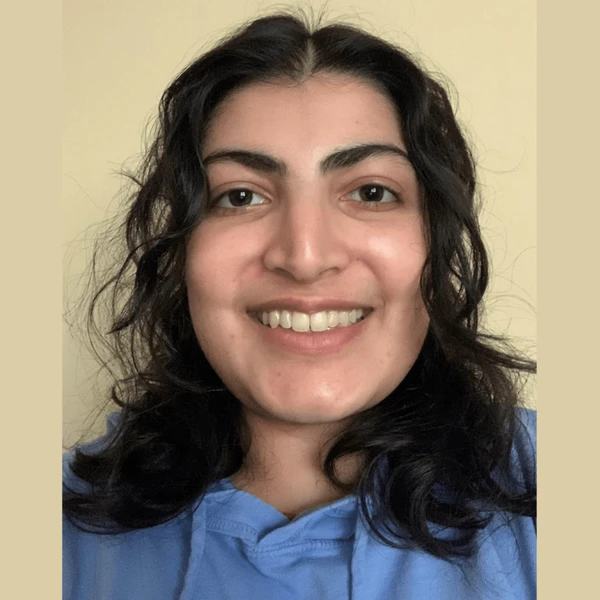
Hello! My name is Verisha. Thank you for visiting my page!
I am a full-time student majoring in Health Studies at the University of Washington, Bothell. I am passionate about increasing access to health education and addressing mental health disparities.
As a medical illustrator with HEAL for Health, I am part of a team creating a guide on epilepsy, helping increase access to crucial health information. I have created six medical illustrations and designed the book layout to make health information more accessible.
Through my coursework, I’ve developed proposals for mental health interventions tailored to cultural needs, including a health literacy program for refugees in the Seattle area. Additionally, I’ve researched topics like early life adversity and major depressive disorder, deepening my understanding of mental health disparities. I plan to use the scholarship funds to cover tuition and further develop the skills needed to research mental health disparities.
I aspire to become a psychiatric epidemiologist, studying mental disorder patterns in minority populations and collaborating to create tailored interventions. With each step, I aim to create an understanding and safer world for everyone, especially those facing mental health challenges.
Education
University of Washington-Bothell Campus
Bachelor's degree programMajors:
- Public Health
Minors:
- Data Analytics
Hazen Senior High School
High SchoolMiscellaneous
Desired degree level:
Bachelor's degree program
Graduate schools of interest:
Transfer schools of interest:
Majors of interest:
- Psychology, General
- Public Health
Career
Dream career field:
Mental Health Care
Dream career goals:
My long-term career goal is to become a psychiatric epidemiologist, focusing on regions with high mental illness rates. I will use data to identify contributing factors and include the social determinants of health to create interventions for underserved populations.
Community Health Specialist Intern
MiOra2025 – Present1 yearDirector of Outreach and Social Media
Eunoia Global Health2024 – 20251 yearMedical Illustrator
HEAL for Health2024 – Present2 yearsContent Team Intern
The Stemistry Project2022 – 20231 yearPromoter Intern
The Premed Scene2022 – 20231 yearTeaching Intern
Renton Teaching Program2020 – 20211 year
Research
Psychology, Other
University of Washington, Bothell — Summer Research Fellow2025 – PresentPsychology, General
Pokemon Psychology — Researcher2024 – 2025Clinical, Counseling and Applied Psychology
Up Next Scientists — Mentee Researcher2024 – 2024Clinical, Counseling and Applied Psychology
Be Confident Organization — Summer Program Lesson Plan Researcher and Writer2021 – 2021Medicine
Aspiring Meds — Article Researcher and Writer2021 – 2021
Arts
Advanced Placement 3D Arts and Fashion Course
DesignPresented dress designs to class2019 – 2020Ceramics Course
Ceramics2019 – 2020Metal Design Course
Metalwork2018 – 2019
Public services
Volunteering
Pre Health Shadowing — Creative Design Volunteer2023 – 2024Volunteering
The Neuroscience Foundation — Consultation Team Member2022 – 2023Volunteering
The Graveyard Zine — Writing and Artists Team Member2022 – 2022Volunteering
Maplewood Heights Elementary School — Teacher Assistant2018 – 2018
Future Interests
Advocacy
Volunteering
Ismat's Scholarship for Empowering Muslim Women
I glared at the sentence, “There is not enough data on the Muslim population to provide information.” On the final page of my public health reading, my community was invisible. My heart filled with worry as I thought of my family struggling with high blood pressure and blood sugar, mistaking them to be “normal aging problems.”. I felt helpless as I watched from afar, unable to offer any solutions. This guilt intensified my passion for public health.
My curiosity led me to unearth alarming statistics about Islamophobia’s impact on Muslims’ health and well-being. As a Muslim, I understand how often we are discriminated against; however, I was shocked to find out that discrimination can impact our health. According to a research article by Goleen Samari, "Islamophobia and Public Health in the United States", Muslim Americans face five times more hate crimes post-9/11 (Samari, 2016). Daily discrimination causes concerning health outcomes, such as high blood pressure, psychological distress, and mortality (Samari, 2016). I realized the urgency to address the consequences of Islamophobia, both at the individual level (experiencing constant stress or societal pressure to hide religious identity) and at the systemic level (through discriminatory policies and institutions).
Based on my experience with the lack of Muslim representation in health data, I chose to major in Health Studies. Through this degree, I can understand how the social determinants of health, or the environmental conditions where people are born, learn, work, age, and worship, influence health and health equity. As I continued exploring the public health world, I discovered a career I had never heard of: epidemiology. Known as “disease detectives,” this field studies the distribution of disease among different populations. Recently, I found psychiatric epidemiology, which aligns perfectly with my interest in clinical psychology. This subfield intrigues me because of the current rise of depression and anxiety post-COVID. I am passionate about learning the trends in mental disorders across a range of populations. Epidemiology allows me to see the connections between the social determinants of health and health status, including environment, education, and economic status. This field empowers me to use data highlighting disparities in access to and quality of care.
After completing my bachelor’s, I will pursue a master’s degree in public health with a concentration on epidemiology. My future goal is to become a psychiatric epidemiologist. I will focus on regions with high mental illness rates, particularly among racial minorities. I aim to use data to identify factors influencing population health and create culturally tailored interventions for underserved communities.
This scholarship will give me the funding to succeed as an epidemiologist, developing data analysis, critical thinking, and research skills. As I continue my career journey, I will transform my frustration and anger at Muslims’ lack of representation into an opportunity to create a difference through diverse research. I will become the change I long to see, assuring the future generation of students will see their communities’ voices represented. By researching Muslim communities, I will amplify our voices and advocate for our right to live a fulfilling and healthy life.