user profile avatar

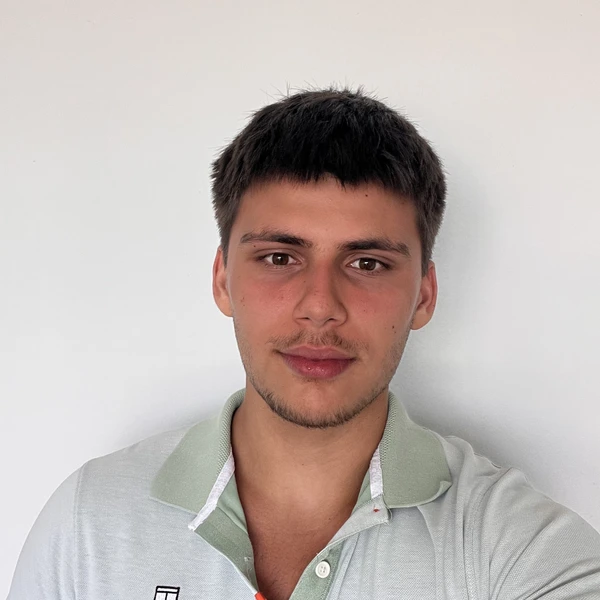
Varis Latypov

1x

Finalist

General information

Hobbies & Interests

  • Business And Entrepreneurship
  • Coding And Computer Science
  • Cars and Automotive Engineering
  • Artificial Intelligence
  • Foreign Languages

Bio

Things I spend my time on: neural networks, coding, distribution and marketing, investing, index funds, cars, sports. Most of it goes into one project right now. I built a system that measures how AI assistants answer questions about local businesses, and which businesses they never mention at all. I run it for a few small businesses in South Florida, so far without charging them. Senior year. Applying to study computer science in Florida.

Education

Don Soffer Aventura Charter High School

High School

2023 – 2027
Miscellaneous

Desired degree level:
Bachelor's degree program
Majors of interest:
Computer Science, Business/Commerce, General, Computer Software and Media Applications
Desired degree modality:
In-Person, Full-Time
Medical school interest:
No

Career

  • Founder

    Computer Software · Mention First

    Jan 2026 – Present

Miscellaneous

Dream career field:
Entrepreneurship, Computer Science, Artificial Intelligence, Software Engineering, Marketing and Advertising
Dream career goals:
I want to keep building what I started: software that shows a business how AI assistants describe it, and what to fix. Right now that is me, a few small businesses in South Florida I run it for unpaid, and a lot of test runs. Long term I want to run a software company, and to be one of the people who works out how search and recommendation actually function once AI answers most of the questions.
Work experience:
1 year
Has nursing license:
No
Frontier Scholarship
What matters most to me is building something one step at a time until it can hold weight. I learned that pace from my mother. In Russia we lived in an old house. My father was never part of my life, and my mother worked two or three jobs at once to move us to a better area. When the old house sold, she put down the first payment on an apartment with a single room, in a quiet settlement. One room, and it was ours. My sister is twenty years older than me and had already made a life in Florida. Through family reunification, we followed her. I landed in January 2020, eleven years old, with no English. The first stretch here was mostly waiting. I stayed home while my mother cleaned houses and took housekeeping jobs. My sister helped get me into school, and I finished seventh grade, then did all of eighth, in private schools. In eighth grade there was no class for English learners and not one other Russian speaker in the building. I was silent for the entire year. High school is where the steps started to show. Ninth and tenth grade were English through ESOL. By eleventh grade my English class was Cambridge's AS Level General Paper, and I earned an A in Algebra 2 Honors in all four quarters. The climb is the part I'm proud of. At the start of ninth grade a friend talked me into lifting with him. I thought I was fat and I wanted to be stronger. My first bench press was 75 pounds. I ended up spending around three hundred hours studying training on my own, and I started bringing friends along and teaching them. One of them got his brother and his girlfriend into lifting. About five of my friends now train together. My first car was not new. One day I saw oil on the ground under it, assumed the worst, and took it to whatever shop I had seen advertised. I got talking with the mechanic there, saw the sports cars they work on, and asked if I could come learn. His answer, in my translation: come in, knowledge is not something to be stingy with. Since February 2025 I have put about 228 unpaid hours into that shop. I have helped pull transmissions, worked on a thermostat, and taken out a valve. That is the pattern I trust. Show up, do the step in front of you, then take the next one. Today my mother teaches music to preschoolers as a contractor. I will be a first-generation college student, and I applied to study Management Information Systems and Business Analytics with AI. What I want to build with my future is a large company, one that is useful to the businesses it serves. I have already started on it. This summer I built a 21,000-line system that checks whether AI assistants recommend real local businesses when customers ask them, and I have spent the months since taking it to the people who might pay for it. It has not made money yet. I'm not finished with it. My mother moved us from an old house to one room, and then we followed my sister to a new country, one step at a time. I plan to build the same way, only bigger.
North Star Dreamers Memorial Scholarship
About seventy cold emails, zero replies. That number taught me more about my project than writing the code did. This summer I built an engine that answers one question: when a customer asks ChatGPT or Perplexity instead of Google, does a given business come up? It is 21,000 lines. It can collect up to 200 AI answers per run, and a checking layer tests the engine's own conclusions against the raw answers and blocks the client report by default when the numbers don't hold. On an auto shop in Florida, asking by the shop's bare name got it mentioned in zero of nineteen answers. A second question, with the name, the city and the word "reviews," got it mentioned in eleven of sixteen, and all eleven came from Grok and Perplexity. One run, 141 answers across four models, every answer saved to disk. Early runs ran $5 to $6 apiece because the models kept fooling themselves and eating tokens, so I rewrote the ranking scheme. A run now costs about $2. Then I tried to sell it, and the market showed me what the engine couldn't. Cold email went nowhere. On LinkedIn I sent 17 to 20 messages through Sales Navigator and heard back from 30 to 45 percent of people once I opened with a question about one specific detail of their work and left the offer for later. The biggest lesson came out of those conversations. The agencies I was talking to don't pay for audits. In their playbooks research is free, sometimes a loss, and the paid part is doing the work. I had put a price on the audit and ignored the execution. That one realization flips my whole business model, and I only got it by trying to sell. My career goal is to found a large company. The reference points I keep in my head are Anthropic and OpenAI. I can already build software. In college I want to learn how companies actually buy and how to read a market before spending money on it. I applied to Management Information Systems at FAU and Business Analytics and Artificial Intelligence at FIU. Here is where this scholarship comes in. My mother, a contract music teacher at a preschool, raises me alone, and I'll start college as a first-generation student. I've put several hundred dollars into the project, including about $100 a month for AI tools. So far the only company making a profit from my project is the AI provider I pay every month. A $2,500 award toward tuition is $2,500 I don't have to earn at a job that has nothing to do with what I'm building. It buys back hours, and hours are the one resource my project runs on. I also volunteer at an auto shop, about 228 unpaid hours since February 2025, and I'm keeping that. What I want to avoid is having to choose between the next version of my product and the next paycheck. I'm still working out what that next version looks like. I don't plan to walk away from this as the one who lost.
Kalia D. Davis Memorial Scholarship
I went to the gym the first time in ninth grade because a friend dragged me there. There was a trend, we thought it was fun, that was the whole reason. The other reason, the real one, is that I thought I was fat and I didn't like my body and I wanted to be stronger. First numbers: 75 pounds on the bench, 135 on the deadlift. I hadn't even tried squatting yet. Then I got interested in it as a subject, not just a thing I did. Videos, research, arguing with myself about programming, experimenting with cutting. I've probably put three hundred hours into learning it. Right now I bench 300, squat 420 for a double, pull 440 conventional. Dumbbells 55 kilos in each hand for six. What I like more than the numbers is that I started teaching friends. I bring people with me and I show them what I worked out. A few of them stuck with it long enough to get results, and then they started bringing their own friends and teaching them. It went one group to the next without me. That's the part I didn't expect. My first car was old. One day I saw oil spots under it and I panicked, honestly. I thought it was finished. I drove to the first shop I saw in an ad. Ended up talking to Alexey there, and I noticed all the sports cars around, these guys were deep into motorsport. I got curious instead of scared. So I asked if I could come learn. He said come by, knowledge is free. That was two years ago and I've been going ever since, Thursdays, unpaid. We rebuilt half of my own car. I've pulled transmissions, done a thermostat, taken a valve out, changed transmission fluid, which is genuinely unpleasant work. Plus a lot of jobs where I was the second pair of hands. Nobody made me go. I just kept going. I'm a senior in Aventura. My mom and I came from Russia when I was eleven. My father isn't in the picture, so it's the two of us. She worked two and three jobs back there, and here she cleaned for years, housekeeping and daycares, whatever hours she could get. She teaches music at a daycare now as a contractor, so there's no salary, just the hours they give her. Our household ran on under four thousand dollars last year. In eighth grade there was no ESOL class at my school and nobody who spoke Russian, so I barely talked for a year. By eleventh I was in AICE English. What I build now is a measurement engine. Your customer used to Google you, now they ask an AI, and nobody can tell a business owner if their name even comes up. So I measure it. Two hundred queries a job across five models, every answer saved, fourteen layers of verification on top so a false claim blocks the report before a client sees it. One shop here came back zero out of nineteen on its own name. I run those free, off my laptop. Nobody pays me yet. I'm applying to study computer science and business in Florida in 2027. Everything I've built got funded from whatever was left after the bills, and this would go to tuition. Tuition really buys time, and time is what I need more of.
Charles Bowlus Memorial Scholarship
The business part of my life started in ninth grade, on Facebook Marketplace. Before that there wasn't one. Before that it was Russia, an old house outside Novosibirsk, me and my mom. My father isn't in the picture. She worked two jobs, three sometimes. When the house sold she put all of it down on a one-room apartment in a quieter settlement, because the street was safer and the school was better. That was her whole reasoning. I was eleven when we came to Florida. My sister was already here. For a while I was just a kid at home who couldn't speak the language. Eighth grade my school had no ESOL and nobody who spoke Russian, so I said almost nothing for a year. My mom cleaned, housekeeping and daycares, whatever hours she could get. She teaches music at a daycare now, as a contractor, so there's no salary, just the hours they give her. None of that is a business education. It's where I learned that if you want something to change, you're the one changing it. So, ninth and tenth grade, reselling. Auto parts, electronics, a few watches. Ten or twenty deals. Every dollar went back into tools and projects, and that's the part I'd point at. I wasn't buying sneakers. I was buying the next thing I needed to build with. Then I built an app that scored how safely you drove off your phone sensors. City versus highway, hard braking. Tested it on forty of my own trips. Then I killed it. Not because it didn't work. Because I sat down and worked out that an insurer only trusts numbers that come with a reputation attached, and a seventeen-year-old doesn't have one. Shutting down something you spent months on is a business decision. First real one I ever made. What I run now is a convoluted system and I like it that way. A checker goes out and works out what a company's site actually is, what they do, what a real customer would ask an AI about them. Hands that to the engine, which fires two hundred queries, five models, five repeats each. The answers come back and then there's fourteen layers of true-or-false sitting on top. A claim turns out to be a lie, the report gets blocked right there. Separate re-checkers turn what survives into something a client can actually read. Original answers kept. Every source mapped back to whichever model said it. Here's what it found. Auto shop in Florida, searched by its own name: zero out of nineteen. Not one assistant even worked out it was an auto shop. Add the city and the word reviews, eleven of sixteen, all Grok and Perplexity. That owner had no idea. Most of them don't. I run these free off my laptop for small businesses around South Florida. Nobody pays me yet. First version cost me five or six bucks a run and I rewrote the ranking until it was about two, because a tool you can't afford to run isn't a business. I'm going to study business and keep building. Right now I'm finishing a study on small and mid-size companies, which ones the models name and why, with an SDK alongside it. I want to run a company. Anthropic and OpenAI are what I look at when I try to picture that. My mom traded a house for a school district. I'd like to be worth the trade.
Raise Me Up to DO GOOD Scholarship
In eighth grade I didn't talk for a year. No ESOL at that school and nobody there spoke Russian. So I sat in the back. The teachers stopped calling on me after a while, which was honestly a relief. This isn't a quiet-determination story. I didn't have the words and I was embarrassed, and at thirteen that's enough to shut you up for a whole year. Before that it was Russia. Me and my mom in an old house outside Novosibirsk. My father isn't in the picture and I don't know where he is. She worked two jobs. Three sometimes. I didn't get what she was doing back then. What I got was that she was gone a lot and we didn't buy stuff. Then the house sold and all of it went into a down payment on a one-room apartment in a quiet settlement. One room, two people. She was proud of that. Safer street, better school. That was the whole math for her. Florida came when I was eleven. My sister had been here for years so on paper it was family reunification. In real life it was me home all day with no English while my mom did housekeeping and daycares, whatever hours she could get. My sister found me a school. End of seventh and all of eighth I was in private schools we couldn't really pay for, because we were scared of the public ones. Ninth grade I finally walked into Don Soffer. By eleventh I was in AICE English General Paper. No turning point, I don't have that story. My mom kept working, I kept showing up. She teaches music at a daycare now. Contractor. No benefits, no salary, just whatever hours they give her. She has never called any of this a sacrifice, which is pretty much why I do. My first build scored how you drove off your phone sensors. Tested it on forty of my own trips, then killed it, because an insurer only trusts numbers that come with a reputation and a seventeen-year-old doesn't have one. The thing I run now is honestly a pretty convoluted system. There's a checker that goes and figures out what the site even is, what the business does, what people would actually be asking the neural nets about it. It hands those over. Then the engine catches that and fires off two hundred queries, five models, five repeats. The answers come back and then it's fourteen layers of true-or-false on top. If something's a lie the report gets blocked right there. After that separate re-checkers and agents look at all of it and turn it into the finished report. And under that is the technical part, the architecture, why it works and why it won't break in a year and where you can strengthen it. Original answers get kept. Source mapping. A lot of little things like that. An auto shop in Florida. Just the business name, zero out of nineteen. Not one assistant worked out it was an auto shop. Add the city and the word reviews, eleven of sixteen, all of them Grok and Perplexity. I run these free off my laptop for businesses that have no idea it's happening. Distribution I've been learning the same stubborn way, LinkedIn and email and posts and comments. I want to start a company. When I try to picture what that looks like I'm looking at Anthropic and OpenAI. My mom traded a house for a school district. I'd like to be worth the trade.
RonranGlee Literary Scholarship
The paragraph, from Plato's Phaedrus, in the Jowett translation. Thamus, king of Egypt, answers the god Theuth, who has just offered him the invention of letters: "Theuth, this discovery of yours will create forgetfulness in the learners' souls, because they will not use their memories; they will trust to the external written characters and not remember of themselves. The specific which you have discovered is an aid not to memory, but to reminiscence, and you give your disciples not truth, but only the semblance of truth; they will be hearers of many things and will have learned nothing; they will appear to be omniscient and will generally know nothing; they will be tiresome company, having the show of wisdom without the reality." Thamus is not afraid that writing will make people forget. He is afraid that their forgetting will stop showing. The king is refusing a gift, and the reason he gives is worth reading slowly, because it is not an objection to writing. It is an objection to what writing does to the person holding it. Start with the distinction he draws in the middle of the speech, between memory and reminiscence. A reminder is a thing that only functions for a person who already knows. My handwriting on a page brings back a thought I had; a stranger reading the same page gets marks. The trouble is that both people are holding the identical object, and the object gives no signal about which of the two they are. Thamus has found the flaw that matters. Writing does not weaken memory directly. It removes the test that used to tell a person whether he had a memory at all. Before letters, if you could not produce the poem, you did not have it, and you found out immediately, in front of everyone. After letters, you can reach for the roll and come back with the words, and the reaching feels enough like knowing that you will not check further. The next clause is usually read as a complaint about ignorance, and it is not. "Hearers of many things and will have learned nothing." Thamus predicts abundance, not scarcity. The reader he fears is not the man who has read too little. It is the man who has been through a great many things, all of them available, none of them his. This is the part of the passage I find hardest to argue with, because it predicts the specific shape of the failure. The failure does not arrive as a gap. It arrives as coverage. Then Thamus says the damage out loud: they will be tiresome company, having the show of wisdom without the reality. He puts the injury in a social place. Not in the soul of the reader alone, but at a dinner, in an argument, among people who cannot audit him and now have to sit with him. The show of wisdom is worth something in a room. That is exactly why it is dangerous to the person who has it, since he will be rewarded for the appearance long before anyone finds the hollow behind it, and the reward will teach him that the appearance is the thing. The frame of the story carries as much weight as the story. Socrates does not claim the myth as knowledge. He says he heard it from the men of old, and that only they know whether it is true. Then Plato, who is making all of this, writes it down. Readers like to call that a contradiction. I think it is the demonstration. A little further on, Socrates gives the reason writing cannot be trusted in the form of a test: written words seem to be alive, but ask them a question and they keep saying the same one thing over and over, and if they are attacked they cannot defend themselves, because their father is not there. So the criterion Thamus is really offering is not truth or falsity. It is whether the thing in front of you can be questioned. A person can be asked a second question. A page cannot. And Plato, by putting his argument in a written myth that openly refuses to vouch for itself, hands the reader a page that will not answer, which is the only honest way to teach someone to stop expecting pages to answer. I read this while I was in the middle of a project of my own, measuring how AI systems describe real businesses when someone asks about them. The systems answer in complete sentences every time. They are never short of coverage. What I keep running into is not machines being wrong, which is easy to catch, but answers that are shaped exactly like knowledge and carry nothing a person could go and verify. Thamus described the reader that produces. Someone who has been through many things and owns none of them, and who cannot tell from the inside, because the artifact he is holding gives off no signal about which kind of holder he is. The test I took from this passage is the second question. If I can ask the thing in front of me a follow up and get an answer that was not just the first one repeated, there is something there. If not, I am reading marks and calling it memory. Thamus loses the argument, in the sense that the letters were accepted and we all have them, and I would not trade them back. But he was not trying to stop writing. He was trying to say what it would cost, and he priced it correctly. The cost of any technology that answers for you is not the answers. It is the moment when you can no longer feel the difference between knowing something and having reached it.
American Dream Scholarship
My definition is narrow and it is not about money. The American dream, as I have actually experienced it, is permission to start without asking anyone. I am not a citizen. I hold a green card, I came here from Russia at eleven, and there is a long list of things my status closes off. But nothing about it stopped me from building. Nobody checked whether I was qualified before I wrote my first line of code. Nobody required a credential before I ran my first experiment. In the country I left, and in most places, the sequence goes permission first, then work. Here I got to run it backwards, and that inversion is the whole thing. I want to be precise, because this gets said in a sentimental way and it deserves better. Nobody handed me anything. Our household ran on $3,789 last year, my mother is paid per job for the music lessons she gives at a preschool, and I fund my own research out of whatever is left. The dream is not that the door is open. It is that there is no doorman. Those are different claims, and only the second one has ever been true for me. Here is what I did with that. Since February 2025 I have worked without pay at a repair shop in South Florida, doing oil changes, brakes, tires, whatever the day needs. That was the arrangement from the first day. While I was there I noticed something about the shop that had nothing to do with cars. Customers now ask AI assistants where to take their vehicle, and those assistants come back with a short list. Somebody decides what goes on that list, and it is neither the customer nor the shop. So I built a way to measure it and ran it for the owner at no charge. There was no version of that afternoon where I handed him an invoice. I also write strength training programs for three people and have never charged for those either. Every piece of work I have done so far has been unpaid, which I am not raising as a complaint. It is how somebody with my resume gets to do real work at all. That is the version of the dream I would defend. Not that anyone owes you an outcome. That you are allowed to go find out whether you are right, starting today, with whatever you happen to have, and the finding out is not gated behind somebody's approval. I am a senior heading into computer science. What I want to build is measurement for AI systems, because those systems are quietly becoming the doorman I said did not exist, and the people most affected are the ones with the least ability to check. The dream got me in. Keeping it open for the next person is the work.
Learner Math Lover Scholarship
Math is the subject I like most, and the reason is that it does not need anyone to believe me. I moved from Russia to Florida in January 2020 with no English. For the next few years almost every class was two subjects at once: the actual material, and the language wrapped around it. Math was the exception. What was written on the board meant the same thing to me that it meant to everyone else in the room, and my answer was either right or it was not. That was a relief long before it was an interest. The interest showed up slowly and it took years. In eleventh grade, my first year fully out of ESOL, I took Algebra 2 Honors and finished with 93, 98, 100 and 97, an A in all four quarters. I am not going to claim it was always like that. What I like is narrower than a feeling about numbers. It is that math hands you a way to check yourself. In every other argument I have been in, being right and being believed are two separate problems, and the second one takes much longer. In math they are the same problem. You go and find out, and then what anyone thinks of you does not move the answer. That habit followed me out of the classroom. Since June I have been putting together a way to measure what AI assistants say about a small local business when a customer asks. The difficult part was never the code. It is that if you ask an assistant one time you get an anecdote, and people were treating anecdotes as measurements. So I built the whole thing around repetition: the same questions, several models, many runs, and a result at the end that comes with a denominator you can look at. I did not get that instinct from a programming tutorial. I graduate in May and I am going into computer science. Math is not something I light up about, and I am not going to pretend otherwise. It is the thing I trust.
Larry Darnell Green Scholarship
I came to Florida from Russia in January 2020, at the start of fifth grade, with no English. It is my mother and me. My father has not been part of my life for years, and my mother teaches music at a preschool as a contractor, so there is no salary, only what comes in that month. What a single parent household did to my schooling is specific. In eighth grade my school had no ESOL class and nobody who spoke Russian, so I sat through the entire year in silence. I had two options that year: get help at home or go without. My mother was working and still learning the country herself, and her own training was a music and teaching program in Russia whose diploma has never even been translated into English. So it was without. I had ESOL in ninth and tenth grade. My first year fully out of it was eleventh, and that year I took AICE English General Paper at AS Level and Algebra 2 Honors, where I got 93, 98, 100 and 97, an A in all four quarters. The year before that I had three D grades on my transcript. I am not going to pretend the line was straight. The lasting effect is that I default to teaching myself. Everything I know about building software I learned from documentation, from AI assistants, and from failing at my own projects. In 2024 I built MileTrust, an app that scored driving from phone sensors, tested it on thirty or forty of my own trips, and then shut it down myself once I found a well funded company already in that market. Nobody made me kill it. There was also nobody to tell me it was fine to. For the last few months I have been building something that measures how AI assistants answer the questions customers ask about a local business, and which businesses those assistants never mention. The people who lose here are always the small ones. I ran it for free for the auto shop in South Florida where I volunteer as an unpaid apprentice. Asked by name alone, the shop appeared in zero of nineteen answers. Add the city and the same models named it 69 percent of the time. He had no idea, and nobody had ever offered to check. That is exactly what I want to keep doing. Big companies will pay somebody to watch how AI talks about them. A small repair shop or a family restaurant will not, and this is getting more expensive to ignore: BrightLocal's 2026 consumer survey found that 45 percent of US consumers had used AI to find a local business in the past year, against 6 percent the year before. My plan is to keep running it free for small local businesses that would never buy it, and to charge the ones that can pay so the free work stays possible. I have done it once already, and I rewrote how a run is put together so each one now costs me about a third of what it used to. The other half is simpler. I have coached three people through strength programs for free, and over twelve months two gained 33 and 11 pounds while one lost 44. One trains alone now. I am a senior and I plan to study computer science. Tuition is the piece I cannot grind my way around.
Michael Rudometkin Memorial Scholarship
I would not have used the word selfless about myself. What I have is time and a few skills, and the people around me mostly have neither, so it seemed obvious to hand those over. Here is what that actually looked like. The first one is training. I have been powerlifting for four years. I squat 413 pounds, deadlift 430 and bench 289. Over the last year three people asked me for help and I coached all three for free, three to six month programs, each one written out. Over twelve months two of them put on 33 and 11 pounds and one lost 44. None of them were going to pay for a coach, so it was me or nothing. The part I am proudest of is not the numbers. One of them trains on his own now. He writes his own programs, he does not text me before a session, and he does not need me. That was the goal from the start, and it is the opposite of how the business works, because a trainer who makes himself unnecessary loses a client. I was never selling anything, so I could aim at the right outcome. The second one started at the shop. I have been an unpaid apprentice at an auto shop in South Florida since February 2025, doing oil, brake pads, tires and whatever else the day needs. Since June I have also been building a system that measures how AI assistants answer the questions customers ask about a local business, and which businesses those assistants never mention at all. The shop is small and the owner had no idea this was even a thing. I ran it for him for free. The result was worse than either of us expected: asked by name alone, his shop came up in zero out of nineteen answers. Add the city to the question and the same models named it 69 percent of the time. So the business is not invisible, it is invisible until someone already knows roughly where to look, which for a shop that lives on new customers is the part that costs money. He now knows a number about his own business that he did not have before, and I am never going to bill him for it, because he is the reason I have hands-on experience at all. I am aware none of this is dramatic. I did not pull anyone out of a fire. What I did was notice three times that I had something a person next to me could use, a program, an afternoon, a measurement he was never going to run himself, and hand it over without making it a transaction. My mother and I live on very little, our adjusted gross income last year was $3,789, so I know exactly what it is worth to get something for free from someone who could have charged for it. The way I think about it is simple. Help is real when the person ends up needing you less afterward, not more.
Barbara Cain Literary Scholarship
Five books have changed how I actually do things. Three of them are about money, one is about how to start a morning, and one is about why a confident number can be wrong. I am not a fast reader and I do not get through many. What I do is finish one and then go change something because of it, which is a slow way to read, but it means I can point at exactly what each book did to me. Rich Dad Poor Dad and The Richest Man in Babylon taught me the same thing from two directions. Buy things that make money before you buy things that lose it. That sounds obvious written down, but I was reselling auto parts and electronics on Facebook Marketplace at the time, ten or twenty deals, and the money was real enough to spend. I put it into tools and into my own projects instead. That was the first decision I made because of a book and not because someone told me to. The Psychology of Money was harder and more useful. The argument is that doing well with money is behavior, not math, and that two people can know the same facts and end up in different places. I know exactly what our household made last year because I read our tax return. It was $3,789. My mother teaches music at a preschool as a contractor, so there is no salary, only whatever comes in that month. Reading that book while knowing that number changed how I think about risk. I cannot afford to be wrong expensively, so I have to be right early instead. The Miracle Morning is the one I half applied. The author had a car crash, was declared dead for six minutes, and rebuilt his life on a morning routine. I do not do all six steps he lists. I do get up and start on the hardest thing before anything else touches my attention, and that stuck. The Black Swan is the book that actually changed my work. Taleb's point is that averages hide the events that decide everything, and that people build confident models out of data that never contained the thing that matters. I read it and then I built something that assumes it is true. Since June I have been running a system that measures how AI assistants answer the questions customers ask about a local business. If I asked each assistant once and wrote down the answer, I would have a clean report and no idea whether it was real. So the system asks each question to five different assistants, repeats it, and saves every raw answer instead of a summary. I pointed it at the auto shop in South Florida where I volunteer. Its name on its own was recognized in zero out of nineteen answers. Add the city and the same models recognized it 69 percent of the time. One run would have shown me either number and I would have believed it. What reading gave me is a habit of not trusting a single result, including my own, and a clear idea of what I want to build. I want to make AI products and run my own company. Right now that means senior year during the day and 45 to 50 hours a week on this, and a scholarship would go toward tuition so that some of those hours can stop being about survival.
Marcia Bick Scholarship
I came to Florida from Russia in January 2020, at the start of fifth grade, with no English. In eighth grade there was no ESOL class at all and nobody who spoke Russian, so I sat through the year in silence. I had ESOL in ninth and tenth grade. In eleventh I took AICE English General Paper at AS Level. That was one year out of ESOL. In the same year I took Algebra 2 Honors and got 93, 98, 100 and 97, an A in all four quarters. Home is my mother and me. She teaches music at a preschool as a contractor, so there is no salary, only what comes in that month. Our adjusted gross income last year was $3,789. I know it exactly because I read our tax return. We live in Aventura, which is an expensive place to be poor in. The honest answer to why students like me deserve scholarships is margin. A student with margin can spend forty dollars finding out something does not work and try again next week. I have to be right the first time. I built things anyway. In 2024 I built MileTrust, an app that scored driving from phone sensors, tested it on my own trips, and closed it myself after I found a funded company already doing it. I resold auto parts on Marketplace and put the money back into tools. Since June I have been running a measurement system that tests how AI assistants answer the questions customers ask about a local business. It puts each question to five assistants, repeats it, and saves every raw answer. I pointed it at the auto shop in South Florida where I volunteer. Its name on its own was recognized in zero of nineteen answers. Add the city and the same models recognized it 69 percent of the time. The first version cost five or six dollars a run. I rewrote how a run is put together and got it down to about two. At $3,789 a year, three dollars a run is not a rounding error. I put 45 to 50 hours a week into this alongside my senior year. I have also coached three people for free. Over twelve months two of them put on 33 and 11 pounds and one lost 44. One trains on his own now and does not need me. The hardest part has not been money. It is watching people my age work ordinary jobs, earn real money, and buy what they want, while mine goes into runs that might lead nowhere. There were stretches this year when I wanted to stop and take a normal job. I did not, but it was close. This scholarship would go toward tuition. I want to build AI products and run my own company. Covering tuition is what would give me margin for the first time, and I know exactly what I would do with it.
Varis Latypov Student Profile | Bold.org