user profile avatar

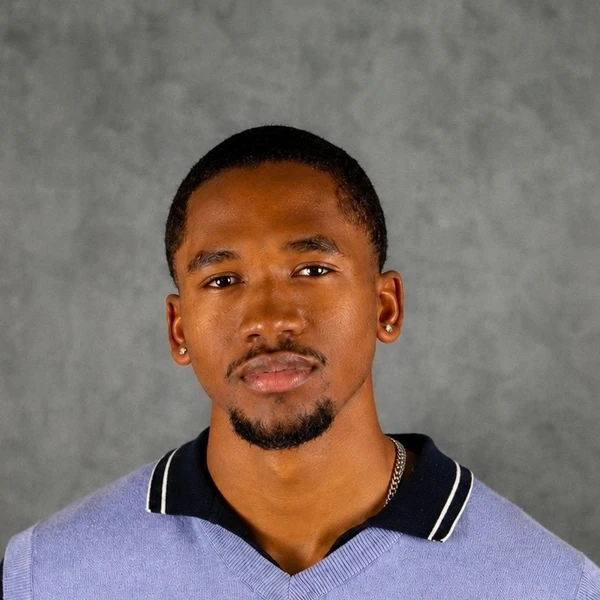
VanDer Woody

1x

Finalist

Bio

I’m VanDer Woody, a student-athlete at Xavier University of Louisiana studying Information Systems and competing on the tennis team. My mission is to bridge the gap between athletic discipline and real-world success, showing people that the same principles that win matches (patience, adaptability, fighting for every point) are the ones that build a life. Outside the classroom and the court, I run a consulting venture, Studio Aligned, and a resale business, putting that same competitive mindset into building something of my own rather than waiting for opportunities to come to me. I’ve spent years giving back through MTEG (Metropolitan Tennis and Education Group) and USTA community service, mentoring players who came to me for tennis tips and walked away with something bigger. I value hard work, loyalty, and freedom, and I’m working toward a future where I can provide for the people I love while staying true to where I came from

Education

Xavier University of Louisiana

Bachelor's degree program
2022 - 2027
  • Majors:
    • Finance and Financial Management Services
    • Business, Management, Marketing, and Related Support Services, Other
Baltimore Polytechnic Institute

High School
2018 - 2022

Miscellaneous

  • Desired degree level:

    Master's degree program

  • Graduate schools of interest:

    • University of Pennsylvania
  • Transfer schools of interest:

  • Majors of interest:

    • Computer/Information Technology Administration and Management
  • Not planning to go to medical school
  • Career

    • Dream career field:

      • Information Technology and Services
    • Dream career goals:

    • MM Warranty Services
      2025 – 20261 year

    Sports

    Tennis

    Varsity
    2012 – Present14 years

    Awards

    • I was awarded over $100,000 by the USTA Foundation. Numerous USTA championships in the junior circuit and on the national circuit.

    Public services

    • Volunteering

      MTEG (Metropolitan Tennis and Education Group) & USTA — Volunteer Tennis Mentor
      2021 – Present
    ESOF Academic Scholarship
    My educational and professional goals are built on a simple belief: the systems that create success should be available to everyone, not just people who already have access to them. I am a rising senior at Xavier University of Louisiana studying Information Systems, a varsity tennis player and team captain, and the founder of Studio Aligned, a digital services agency that works with real clients on real revenue. I am also building XULA Daily Briefing, an AI-powered morning news digest that delivers scholarship deadlines, campus updates, and opportunities directly to students at my HBCU every day at 7 a.m. Academically, my goal is to finish my degree with a foundation in both business and technology strong enough to build things that matter, not just study them. I chose Information Systems because I wanted to understand how information moves, or fails to move, through an organization or a community. That question became personal when I realized how many scholarships and opportunities I had missed simply because I never heard about them in time. Nobody had built the infrastructure to keep HBCU students informed. So I built it myself. Professionally, I want to keep growing as both an entrepreneur and an operator: someone who can pitch a client, close a deal, and also do the unglamorous work of writing the code and running the systems that make a promise real. Studio Aligned has taught me that discipline day to day: showing up for clients the same way I show up for a match, whether or not anyone is watching. My commitment to civic and public service comes directly out of my experience as a student at an HBCU and as someone who grew up having to build my own path rather than inherit one. Xavier University of Louisiana is not just where I study, it is a community I feel responsible to. That is why XULA Daily Briefing was never designed only for me. It currently reaches thousands of students on my campus, and my long-term goal is to scale that same infrastructure to the 107 HBCUs across the country, a potential reach of more than 350,000 students. Every one of those students deserves the same access to timely, curated information about scholarships, career opportunities, and campus resources that students at better-resourced institutions take for granted. Closing that information gap is, in my view, a form of public service: it does not require a grant or a government program, only the discipline to build something that works and keep showing up for it. I have also served my community more directly, through years of work with the Metropolitan Tennis and Education Group (MTEG) and USTA community service programs, mentoring younger players who came to me for tennis instruction and left with something bigger: a sense that someone believed in their potential. That mentorship shaped how I think about leadership. It is not about being the most talented person in the room. It is about using whatever position you have, whether that is team captain, business founder, or mentor, to make the people around you better and to make opportunity more visible to people who might not otherwise see it. As a first-generation, independent, low-income student, I have had to build most of my own opportunities rather than have them handed to me. That experience could have made me guarded about what I share with others. Instead, it convinced me that the most valuable thing I can do with what I am building, whether it is Studio Aligned's client work or XULA Daily Briefing's daily reach, is to make sure other people do not have to discover the hard way that the information they needed was out there all along, just never delivered to them. That is the throughline between my education, my professional ambitions, and my commitment to service: building systems that quietly widen the door for the people coming up behind me, the same way I wish someone had done for me.
    Justin Moeller Memorial Scholarship
    Last year I built and deployed XULA Briefing, an automated news aggregation system that delivers curated opportunities and relevant stories to HBCU students and the broader Black community every single day. It runs on Railway, a cloud platform, using cron job architecture and API integration to pull and distribute content without manual intervention. The system filters specifically for what HBCU students need: scholarship opportunities, career resources, and community news that mainstream aggregators consistently overlook. I learned cloud deployment, system architecture, and how to build something that keeps running without anyone watching over it. That project is where I stopped studying technology and started using it to solve problems I actually care about. I am a Black student at Xavier University of Louisiana, an HBCU in New Orleans. The barriers this scholarship was created to address are not abstractions to me. Limited mentorship in tech. Financial pressure that makes every semester a calculation. Being the only person in certain rooms who looks like you. I have lived all of it. That context is not a reason to stop. It is the reason I build. Outside of the XULA Briefing, I have applied AI and automation tools to build a reselling operation from the ground up, developing custom inventory tracking systems, financial models, and operational workflows that allow me to run a profitable business while completing my degree and serving as team captain of my university's tennis program. Competing at that level teaches you something that translates directly into technical work. A system either performs or it does not. There is no middle ground and no excuses. What draws me to information technology is what it makes possible for people who did not have a head start. AI and automation are opening doors that were not realistic a decade ago. A student with vision and the willingness to actually build something can now create systems that once required entire teams and capital I do not have. I have already seen that be true in my own work. My goal is to build technology solutions for underserved businesses and communities, starting with the restaurants and local operators I work alongside daily. The XULA Briefing proves I can build something technical that reaches a real audience. Studio Aligned, the AI services business I am building, is the next step in that direction. Being the only person who looks like you in a technology space is either a burden or a motivation. I have chosen to make it the latter. This scholarship removes a financial barrier so I can keep building what I know is possible.
    Joe Gilroy "Plan Your Work, Work Your Plan" Scholarship
    I keep a running list on my phone called "The Plan." It has three items: graduate from Xavier University of Louisiana in Spring 2027, build my AI automation company to $5,000 in monthly revenue before I leave campus, and expand a daily briefing that reaches every HBCU student in America. I am a rising senior at Xavier, a historically Black university in New Orleans. I study business, captain the tennis team, and run Studio Aligned, an AI automation company I started this year. My first client was a boutique vintage clothing store in Towson, Maryland. She was spending six hours every week photographing inventory, writing product descriptions, and updating her online store by hand. I built her an automated system using AI. The work that took six hours now takes twenty minutes. That gap between human effort and machine efficiency is exactly what my company sells. The resources Studio Aligned needs to grow are not capital-intensive. The tools are a laptop, API access to large language models (roughly $30 per month at my current scale), and the ability to understand a client's workflow well enough to automate the repetitive parts. I have all of these. The bottleneck is clients, not infrastructure. My plan for acquiring them is LinkedIn content marketing paired with direct outreach to small business owners in New Orleans, where I return in late July 2026. I am targeting two to three new clients by September, which would bring monthly recurring revenue to $1,500 to $3,000. By December, the goal is $5,000 per month across five clients. The second project is the HBCU Daily Briefing. I built an automated AI system that curates scholarships, fellowships, and career resources specifically for HBCU students and delivers them by email every morning at 7am. The system runs on Railway, costs under $15 per month to operate, and currently sends to subscribers at Xavier. The plan is to grow to 100 students by November 2026, then expand to three additional HBCUs by Spring 2027. Revenue follows through corporate sponsorships from companies actively recruiting HBCU talent. My budget for the next 12 months is built around three income sources: a part-time job this summer at approximately $1,200 per month, Studio Aligned client revenue targeting $2,000 to $5,000 per month by fall, and scholarships like this one. My costs are lean: API subscriptions, cloud hosting, and living expenses partially covered by financial aid. The plan is detailed, but the principle behind it is simple. I found problems that nobody in my community was solving and I built solutions while I was still in college. The next step is scale. Scale requires staying financially solvent long enough to keep building. That is what this scholarship supports, and exactly why Joe Gilroy's motto resonates with me. You plan the work first. Then you work the plan. I have done both.
    Camari Hunt 4x Foundation Independent Living Expenses Scholarship
    My name is VanDer James Dubois Woody. I am a rising senior at Xavier University of Louisiana, an HBCU in New Orleans, where I am finishing a degree in business management while captaining the university's tennis team and running two ventures I built from scratch. I am from Baltimore, Maryland, and I came south to play collegiate tennis at a historically Black institution because I believed in what that environment would do for me. I was right. I have been living independently since I began my college career. No parental support for rent, groceries, or utilities. In December 2024, I founded Studio Aligned, an AI consulting and automation company that helps small businesses streamline their operations. Around the same time, I began building XULA Daily Briefing, an AI-powered morning briefing designed to surface scholarships, campus news, career opportunities, and local events for HBCU students who currently have to piece that information together from too many scattered sources. I built the infrastructure from scratch, automated it on cloud servers, and I am preparing to launch it to real students this fall. I am doing all of this while rehabbing a tennis injury, carrying a full course load, and leading a team of athletes who look to me for direction every day. When I read about Camari Hunt, what stood out first was the timing. He was days from graduating. His degree was done. He had put in the years and earned every credit. He just did not get to walk. That detail stayed with me because I understand what it means to build something real before the world has had a chance to recognize it. Camari was not waiting for recognition to start doing the work. He was a scholar, an athlete, a mentor, and a leader by choice, not by title. Learning about his life reminded me why I get up early to build things before practice, why I stay up late refining systems that nobody has seen yet, and why I believe the work matters even when it is quiet and invisible. Camari embodied something I try to live: you do not lead because someone gave you the role. You lead because someone needed you to. I commit to his legacy by building infrastructure that serves people who look like him and like me. XULA Daily Briefing is not just a product. It is an attempt to make sure the students who come after me at Xavier and at HBCUs across the country never miss an opportunity because the information was scattered or buried. That kind of community investment is exactly the spirit of who Camari was. I intend to carry it. Independent living is not a background detail in my story. It is the whole context. Every month I am managing rent, groceries, utilities, and the everyday costs of adulthood while also being a full-time student, an athlete, and a founder. There is no fallback. There is no one to call when the month runs tight. The Camari Hunt 4x Foundation Scholarship would give me something specific: margin. The space between covering my basics and being able to focus entirely on what I am building. $1,500 is not a life-changing sum in most conversations, but for me right now, it is the difference between splitting my attention between survival and purpose or being able to pour everything into work that matters. I am not asking for a chance to prove myself. I am already doing that. I am asking for the support that lets me keep going without financial stress pulling at my attention every month. This scholarship would honor independent living in the truest sense: not just surviving on your own, but building something real while you do it. That is what I believe Camari would have wanted. And that is what I intend to keep doing.
    SIA Financial Planning Scholarship
    Growing up, I watched people in my community make financially consequential decisions without the tools to make them well. Not because they lacked intelligence or discipline — but because they lacked access. Financial planning has long been a service built for people who already have wealth. My goal is to be part of the generation that changes that. I am a rising senior at Xavier University of Louisiana, an HBCU in New Orleans, majoring in Business Management. As a first-generation professional navigating a field historically closed to people who look like me, I have come to see financial literacy not as a luxury but as infrastructure — as foundational to a community's future as roads or schools. This belief drives everything I do. In the past two years, I have founded two ventures from the ground up. The first, XULA Daily Briefing, is an AI-powered campus news platform that delivers real-time information to Xavier's student body. The second, Studio Aligned, is a digital services agency where I work directly with small business owners and entrepreneurs to build their digital presence. Running both has required more than business acumen — it has demanded financial discipline: managing revenue, controlling costs, reinvesting strategically, and making difficult tradeoffs with limited resources. These experiences made me a practitioner of financial planning before I had the formal vocabulary to describe it. What I learned is that the decisions that matter most — pricing a service, timing an investment, managing cash flow through a slow period — are exactly the decisions that most people in underserved communities are left to figure out alone. Black and Brown business owners, first-generation college students, working families: they are making high-stakes financial choices without advisors, without mentors, without a system designed to serve them. That gap is where I intend to work. The financial advisory profession has a representation problem. According to CFP Board data, fewer than 2% of Certified Financial Planners are Black. That is not simply a statistic about career diversity — it is a structural explanation for why entire communities have been underserved for generations. Clients seek advisors who understand their context. When that representation doesn't exist, trust breaks down and the wealth gap widens. The path forward requires both access and advocacy. I believe financial planners of the future need to meet communities where they are — in HBCUs, in churches, in community centers — not just in high-rise offices. It means building advisory practices with tiered pricing models that serve people at every income level, not just those with six-figure portfolios. And it means investing in pipeline: supporting young people from underrepresented backgrounds as they enter the profession, so the next generation of clients can see themselves in their advisors. I am also the captain of Xavier's tennis team — a role that has sharpened my understanding of preparation, leadership under pressure, and accountability to others. Those qualities translate directly into how I approach financial stewardship: for my businesses, and eventually, for clients. I am not pursuing a career in financial planning because it is lucrative. I am pursuing it because communities like the one I grew up in have needed it for a long time, and I am in a position to do something about that.
    Shepherd E. Solomon Memorial Scholarship
    Growing up, tennis became more than just a sport I played. It turned into a core part of who I am. Somewhere along that journey I started noticing a pattern. People who found out I was good at tennis would come to me wanting to learn. How do I win more matches? How do I fix my form? How do I get better, faster? At first those questions seemed simple enough, but the longer I sat with them and the people asking them, I realized their questions almost always went deeper than the game itself. I've given back to my community through MTEG (Metropolitan Tennis and Education Group) community service events and through the volunteer work required as part of the United States Tennis Association (USTA). In those settings I made a decision early on that I wasn't going to stop at surface level coaching. Anyone can tell a player to bend their knees or follow through on a swing. I wanted to give people something that would stick with them long after they left the court. So when someone asked me how to get better at tennis, I'd answer that question, then take it a step further and talk to them about how to get better at the game of life. The parallels between tennis and life are everywhere once you actually start looking for them. Tennis has its own language, and if you really listen to it, that language tells you something about life too. You start at love, which is zero, nothing, the same blank slate everyone begins with no matter where they come from. You hit deuce and realize that before you can pull ahead, you first have to fight back to even ground. You earn advantage and learn pretty fast that momentum is fragile. You have to capitalize on it quickly or it slips away. And you fight for a break, that one chance to take something the other side didn't expect to give up. I'd walk people through these ideas not as cute analogies but as real ways to handle setbacks, compete fairly, and keep showing up even when the score isn't in your favor. That was the mission I carried into every community service event and every USTA volunteer hour, to be more than a tennis instructor. I saw myself as a community servant and a public servant first, using a game I loved as the way into conversations that actually mattered. Plenty of people can teach a backhand. I wanted to be the person who helped someone walk off the court thinking differently about how they handle adversity, competition, and opportunity in their own life. Giving back matters to me because I know what it felt like to have someone take the time to teach me more than just a sport. I want to be that person for someone else, not just a better tennis player but someone better equipped to play the game of life. That's why I keep showing up, racket in hand, ready to talk about a lot more than tennis.