Hobbies and interests
Biology
Yoga
Education
Streaming
Self Care
Reading
Academic
Adult Fiction
Book Club
Classics
Women's Fiction
Young Adult
Chick Lit
History
Education
Fantasy
Humor
Gothic
Humanities
Leadership
Science Fiction
Sociology
Social Science
I read books daily
Alexandra Ramos
1x
FinalistAlexandra Ramos
1x
FinalistBio
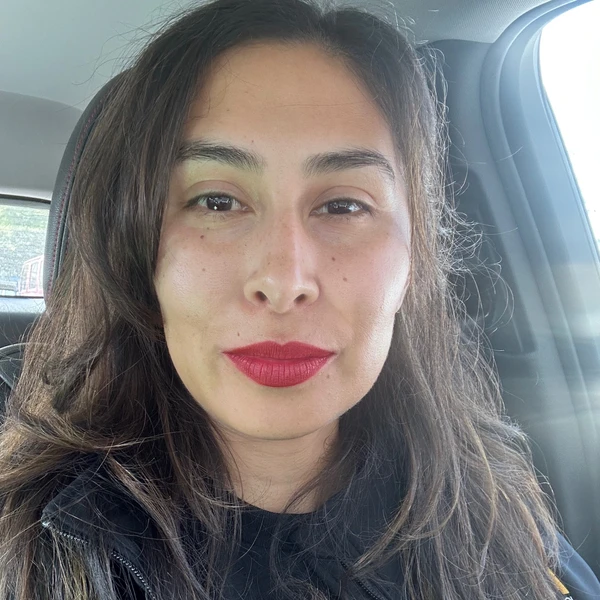
I’m Alexandra Ramos, a Chicana educator and Magnet Coordinator with the Los Angeles Unified School District, currently pursuing my PhD in Urban Leadership at Claremont Graduate University.
I’ve spent over 15 years teaching life science and leading social justice-focused STEM programs for students in Boyle Heights and across Los Angeles. As a first-generation college graduate and daughter of Mexican immigrants, I know firsthand the challenges that come with navigating higher education without a roadmap — and that experience drives my commitment to creating equitable pathways for others.
My research and leadership center on equity in STEM, culturally responsive education, and expanding opportunities for young women of color in science and technology. I believe education should be both critical and liberatory — empowering students not only to succeed, but to transform their communities.
Through my doctoral work, I aim to design new models of school leadership that integrate social justice, data literacy, and community wisdom to create lasting systems change. My dream is to continue opening doors for the next generation of students to see themselves as innovators, leaders, and agents of change.
Education
Claremont Graduate University
Doctoral degree program (PhD, MD, JD, etc.)Majors:
- Education, Other
University of California-Los Angeles
Master's degree programMajors:
- Education, Other
University of California-Los Angeles
Bachelor's degree programMajors:
- Sociology
Fontana A. B. Miller High
High SchoolMiscellaneous
Desired degree level:
Doctoral degree program (PhD, MD, JD, etc.)
Graduate schools of interest:
Transfer schools of interest:
Majors of interest:
Career
Dream career field:
Information Technology and Services
Dream career goals:
Teacher, Coordinator
Los Angeles Unified School District2011 – Present15 years
Sports
Cross-Country Running
Varsity1999 – 20034 years
Future Interests
Advocacy
Politics
Volunteering
Philanthropy
Entrepreneurship
Bick First Generation Scholarship
Being a first-generation college student has always meant walking into rooms my family never had the chance to enter, with their hopes on my shoulders and no roadmap in my hands.
No one in my immediate family had gone to college. My parents taught me about work ethic, sacrifice, and survival, but FAFSA, office hours, and “credit hours” were a foreign language. At UCLA, I was surrounded by students who seemed to know unspoken rules I’d never heard of. I learned quickly that being first-gen meant constantly translating—between home and school, Spanish and English, working-class realities and academic expectations.
At the same time, I was navigating a lot at home. In high school, I learned that my mother had schizophrenia. Later, my brother and sister faced their own serious mental health challenges. As I moved into teaching, I was trying to manage my career while also supporting my dad, who carried so much of that weight. More recently, my mom faced cancer (she’s now in remission), and my dad suffered a stroke. All of this happened while I was working full-time in schools and now, pursuing a PhD.
Being first-gen for me has never been just about being “the first to go to college.” It has meant being a quiet anchor in a family dealing with mental illness, addiction, and serious health issues—while still pushing myself to keep going academically. I couldn’t call home and ask, “How did you handle this in grad school?” Instead, I had to figure it out alone or with the help of mentors I was brave enough to seek out.
My dream is to transform that isolation into something different for the next generation. I’m now a school leader and doctoral student in Educational Leadership, with a background in science education. I use data and quantitative measures to track who is being left out of opportunities—advanced classes, STEM pathways, college access—and I design programs to bring those students in. My work is rooted in the belief that first-gen, low-income, and BIPOC students shouldn’t have to fight as hard as I did to stay in the game.
This scholarship would directly support my doctoral journey by helping cover the “unseen” costs—books, technology, transportation, and medical expenses that stack up alongside tuition. More importantly, it would be an investment in what I’m building: more just, humane schools where being first-generation is not a burden carried in silence, but a source of pride and power that systems are designed to honor and support.
Lotus Scholarship
I grew up in a low-income household where money was always calculated down to the dollar and nothing was guaranteed. We didn’t have extra for tutors, test prep, or new technology. I learned early how to stretch every resource, read the fine print, and advocate for myself and my family in schools, clinics, and government offices.
As I got older, those skills turned into a kind of quiet perseverance. When financial aid didn’t cover everything, I worked. When I didn’t understand the system, I asked questions, stayed on hold, and figured it out. There wasn’t a safety net, so giving up never felt like an option.
That background shapes the way I move through the world now. I’m a Chicana educator and school leader in Boyle Heights, working at a social justice STEM magnet school. I know what it feels like to be brilliant and broke, so I pay attention to the hidden costs that push students out—bus passes, fees, supplies, even confidence. I help build programs that make opportunities real for low-income BIPOC students: Girls in STEM clubs, internships, college and career support, and family outreach in both English and Spanish.
I’m also actively pursuing my PhD in Educational Leadership while working full-time. My goal is to redesign systems so that students from low-income backgrounds don’t have to fight as hard as I did just to stay in the game. I want my story to be one step in changing what’s “normal” for the next generation.
A Man Helping Women Helping Women Scholarship
I grew up watching the women in my family hold everything together—working, caregiving, surviving—often without being seen as leaders. As a Chicana, first-generation college student, and now a Latinx educator and school leader, I’ve built my life around changing that story so that women, especially women of color, are not just holding communities together behind the scenes, but are recognized, resourced, and leading from the front.
I began my teaching career as a science teacher in Koreatown, Los Angeles. Many of my students were the children of immigrants, navigating multiple languages and responsibilities at home while trying to figure out who they were at school. Later, I continued teaching in Boyle Heights, where I deepened my commitment to social justice and community-rooted education. In both neighborhoods, I met brilliant young women who loved learning but rarely saw themselves as scientists or engineers. When they thought of “STEM,” they pictured white men in lab coats, not girls who took the bus across the city, translated for their families, or helped raise younger siblings.
In my classroom, I made it my mission to change that image. I designed social justice–centered science projects, highlighted women scientists of color, and intentionally created space for girls to speak, question, and lead. I remember students who started the year barely willing to talk, later volunteering to present, joining STEM clubs, and saying things like, “Miss, I never thought I could do this.” Those moments showed me that representation and intentional support are not extras—they are essential.
Today, I serve as a Magnet Coordinator at a social justice STEM magnet school in Boyle Heights. My work now reaches beyond one classroom. I help design programs that center girls and gender-expansive youth in STEM: a Girls in STEM club, partnerships with local universities and museums, and internships where students conduct fundamental research rather than just read about it. I pay attention to who signs up, who feels welcome, and who disappears from our rosters. When I see fewer girls in robotics or advanced math, I don’t accept it as a coincidence—I see it as a signal that the system needs to change, and I take responsibility for helping to change it.
I am now pursuing a PhD in educational leadership to expand this impact. I hope that my research will focus on how school leaders can create systems that don’t just “include” young women, but are designed with their voices, safety, and brilliance at the center. I want to study the experiences of BIPOC young women in STEM and turn their stories into concrete tools, policies, and trainings that help schools become places where they feel protected, challenged, and seen.
Through my career, I plan to make a positive impact by building pathways where women help other women rise. That means mentoring young women into STEM, teaching, and leadership; challenging policies that harm or silence girls; and staying rooted in communities like Koreatown and Boyle Heights, where I began.
This scholarship would directly support my doctoral studies and, in turn, the girls and women I serve every day. An investment in my education is an investment in an entire network of young women who will inherit not just my lessons, but my commitment to making sure they are heard, protected, and powerful.
Healing Self and Community Scholarship
I will scale a bilingual, culturally-rooted model that makes care both affordable and local: Care Circles and Art Labs embedded in public schools and community hubs. Care Circles are peer-led, trauma-informed groups (facilitated by trained promotoras, school staff, or grad-level counseling interns) that meet weekly during advisory or after school; Art Labs pair movement, music, and visual storytelling with evidence-based skills (grounding, cognitive restructuring, safety planning). To remove cost barriers, we’ll braid funding streams—school-based Medicaid (where available), district wellness budgets, Title I/Community Schools funds, and philanthropy—and leverage supervised interns to expand capacity at low/no cost. Access barriers drop further with on-site telehealth kiosks (private rooms + tablets), a QR-code referral flow in English/Spanish, and opt-in text check-ins that nudge students toward resources without stigma.
My contribution is to design, document, and disseminate this as an open-source toolkit—curricula, training videos, consent forms, facilitator scripts, mini-grants budget, and billing guidance—so any BIPOC-serving school or nonprofit can launch in 60 days. I’ll use my PhD research to evaluate outcomes (uptake, symptom reduction, attendance, connectedness) and publish a how-to playbook for districts. As a Chicana educator and caregiver, I know healing is communal; by combining art, culturally responsive care, and smart financing, we can meet people where they are—and make mental health support a right, not a luxury.
Debra S. Jackson New Horizons Scholarship
At 40, I chose to begin a PhD in Urban Leadership, not as a detour but as a deliberate next chapter. I am a first-generation Chicana educator, the daughter of Mexican immigrants, and a Magnet Coordinator in Los Angeles Unified. My path has been shaped by two forces that sharpened my sense of purpose: the joy of helping students from historically underserved communities thrive in STEM and social justice spaces, and the challenge of caring for my father after a heart attack in 2020 and a debilitating stroke in 2021. Balancing full-time work, doctoral study, and caregiving clarified my priorities—dignity, equity, and community—and taught me that systems should lighten families’ burdens, not add to them.
These experiences have reshaped my values and leadership. In schools, I have seen how students can disappear into spreadsheets when compliance eclipses care. At home, I have navigated insurance denials, assisted living logistics, and the constant trade-offs working families face. Resilience, I’ve learned, should not mean carrying structural failures on your back; it should mean designing systems that make endurance less necessary. That belief guides my doctoral research at Claremont Graduate University and my day-to-day work with students and families in Boyle Heights.
My career goal is to build school models where social justice and STEM go hand in hand. Practically, that means creating data-literate campuses that use information to see who is missing, not just who is “on track”; building advisory and college-and-career programs that include mental-health supports and family engagement; and forging partnerships that connect classrooms to real opportunities. I currently mentor girls in STEM, coordinate internships with local museums and universities, host bilingual (English/Spanish) family workshops, and facilitate student advisory councils. Through my PhD, I am documenting and testing equity-centered practices—culturally and linguistically responsive teaching, restorative approaches, and community-anchored STEM pathways—so they can be scaled and sustained across schools, particularly to expand access for young women of color.
Service is not separate from this work; it is embedded in it. Families deserve schools that recognize their strengths, reflect their languages, and respond to the realities they navigate—health crises, housing instability, and economic strain. I aim to convert isolated wins into durable systems: toolkits that any school can adopt, coaching that builds staff capacity, and cross-sector partnerships embedded in calendars and budgets rather than dependent on a single coordinator. I want students to encounter a web of support strong enough to catch them before they fall through the cracks.
Returning to school at 40 also means financing tuition while supporting my father’s care. Much of my income goes toward assisted living and uncovered medical needs. The Debra S. Jackson New Horizons Scholarship would relieve immediate financial pressure, allowing me to maintain enrollment, secure course materials, and accept research or practicum opportunities that deepen my impact without compromising my family’s stability. It would also honor the spirit of second beginnings that defines this chapter of my life.
With this support, I will finish my degree and share what works: publish practical toolkits for equity-centered STEM programs; train school teams to use data as a lens for inclusion rather than exclusion; and build durable partnerships that bring mentorships, internships, and health resources into schools. I am returning to higher education with more clarity and urgency than I had at 20, carrying the hopes of my students, the trust of their families, and the lessons of caregiving. Like Debra S. Jackson, I believe in second chances; this degree is mine, and I will use it to make education not just a ladder for a few but a bridge for many.
John Nathan Lee Foundation Heart Scholarship
In 2020, my father had a massive heart attack that split our lives into a before and an after. He survived, but the damage was severe. In 2021, he suffered a stroke that took his speech and mobility. Overnight, I became not only his daughter but his advocate, translator, and caregiver—reading meaning in his eyes when words wouldn't come and making decisions no family is ready to make.
Heart disease didn't begin with my dad. I never met my grandfather on my father's side; he died from a heart attack before I was born. Even so, his loss is present in our family stories—the empty seat at celebrations, the careful way my aunts talk about chest pain, the urgency behind every new symptom. Many relatives on my father's side have struggled with cardiac issues. This isn't a single event; it's a lineage of loss, hospital rooms, and hard choices.
The practical obstacles are relentless. My father lives in assisted living because he needs round-the-clock care that we cannot provide at home. The costs are staggering for a working-class family. I work full-time in public education and am pursuing my PhD in Urban Leadership, but much of what I earn goes toward his care. Every month is a puzzle of bills, medications, and paperwork—deciding what we can pay now and what must wait. Fatigue is not just physical; it's financial and bureaucratic, the slow grind of systems that make families plead for what care should provide by default: dignity and stability.
The emotional terrain is just as demanding. Caring for someone who can't speak to you anymore is a grief that renews itself every day. My dad used to call me "mija", proud that I was the first in our family to graduate from college. Now I hold his hand and celebrate small wins: a clearer expression, a relaxed shoulder, a laugh that somehow breaks through. Those moments keep me going. They remind me that dignity isn't a luxury—it is the center of care —and that love is a language larger than words.
This multigenerational history has sharpened my purpose. As an educator in Los Angeles, I serve communities where chronic illness and financial strain are common—and where families meet those challenges with love and creativity, but not enough systemic support. My doctoral work focuses on building schools and systems that don't treat students and families as data points, but as whole people navigating realities like heart disease, disability, and poverty. I want schools to connect families to prevention, mental-health supports, and community resources—places where a parent's illness doesn't become a child's invisible barrier to learning. My guiding principle is simple: systems should recognize and reduce the hidden burdens families carry.
The most challenging obstacle has been sustaining hope without pretending. I've learned to balance acceptance with action: accepting that my father's condition may not change, while acting to ensure his days are safe, respectful, and filled with love—and acting to change the systems that failed our family and so many others. The losses we've shouldered have taught me to lead with compassion and to pursue solutions that honor people's humanity.
This scholarship would relieve immediate financial pressure, allowing me to continue my studies while maintaining my father's care. It would also honor families like mine, who carry the consequences of heart disease across generations yet keep showing up—with tenderness, grit, and faith. My father cannot speak the words anymore, but I know what he would say: keep going. Earn the degree. Use it to make the world kinder and more just. That is what I intend to do.