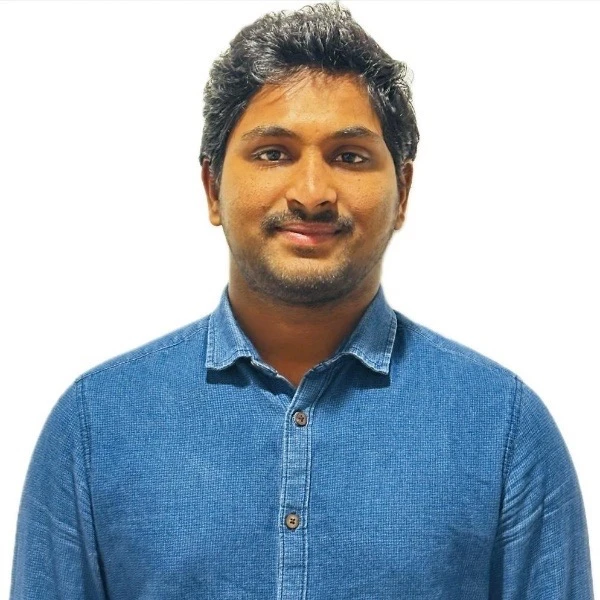
user profile avatar

Uttej Nandan Reddy Vemireddy

1x

Finalist

Bio

Ph.D. student in Environmental Engineering at Oklahoma State University with a strong interest in microbial diversity, physiology, and ecology in engineered environmental systems. Research focuses on understanding how microbial communities drive contaminant transformation and nutrient removal in wastewater treatment processes—experienced in integrating molecular biology, sequencing-based approaches, and bioinformatics with environmental chemistry and process-level analysis. Actively developing skills in experimental design and data interpretation to link microbial identity with function. Highly motivated to engage in intensive, hands-on training environments and collaborative scientific learning.

Education

Oklahoma State University-Main Campus

Doctoral degree program (PhD, MD, JD, etc.)
2026 - 2030
  • Majors:
    • Civil Engineering

University of South Florida-Main Campus

Master's degree program
2022 - 2024
  • Majors:
    • Biotechnology
  • Not planning to go to medical school
  • Career

    • Dream career field:

      • Environmental Services
    • Dream career goals:

    • Trainee scientist

      Sciegen Pharmaceuticals
      2024 – 20251 year

    Sports

    Volleyball

    Junior Varsity
    2014 – Present12 years

    Research

    • Environmental/Environmental Health Engineering

      University of Cincinnati, University of Utah, & Oklahoma State University — Visiting scholar, Research Assistant, & Teaching Assistant
      2024 – Present

    Arts

    • Self

      Drawing
      2010 – Present

    Public services

    • Volunteering

      University of Utah — Gardener
      2026 – Present
    Christian Fitness Association General Scholarship
    Growing up, I was fascinated by the idea that something invisible to the naked eye could have such a profound impact on the world. That curiosity led me to microbiology and, ultimately, environmental engineering, where I discovered that microorganisms play a vital role in protecting human health and restoring the environment. Today, as a Ph.D. student in Environmental Engineering at the University of Utah, I am committed to advancing sustainable wastewater treatment technologies that improve water quality and protect communities. For me, education is not simply about earning a degree—it is about developing the knowledge and skills to solve problems that matter. My academic journey has been guided by curiosity, perseverance, and a desire to make a meaningful difference. After earning my Master of Science in Biotechnology from the University of South Florida, I sought research opportunities that would challenge me both academically and personally. Instead of remaining in a single area of study, I intentionally pursued interdisciplinary research experiences that broadened my understanding of environmental microbiology, molecular biology, biotechnology, and engineering. These experiences have shaped not only my technical abilities but also my approach to problem-solving, collaboration, and leadership. Throughout my education, I have worked in research laboratories in both India and the United States, gaining experience with projects involving wastewater treatment, microbial ecology, nutrient removal, harmful algal blooms, and environmental contaminant analysis. My work has included operating biological reactors, collecting environmental samples, performing DNA and molecular analyses, and using advanced analytical techniques such as HPLC, GC/MS, PCR, and bioinformatics to understand complex microbial systems better. Every project has reinforced my belief that scientific research is most meaningful when it addresses real-world challenges and improves people's lives. One of my proudest accomplishments has been contributing to peer-reviewed publications in Bioengineering and the Journal of Cleaner Production. Publishing scientific research required far more than technical knowledge. It demanded patience, critical thinking, collaboration, and a willingness to learn from failure. Experiments rarely work the first time perfectly, and manuscripts often require multiple revisions before publication. Those experiences taught me that perseverance and integrity are just as important as intelligence. They also strengthened my confidence that I can contribute meaningful solutions to environmental challenges through research. Beyond academics, I have actively pursued opportunities that broadened my perspective and strengthened my professional development. Working at institutions such as the University of Utah, the University of Cincinnati, ScieGen Pharmaceutical, and the CSIR–Indian Institute of Chemical Technology exposed me to diverse research environments and multidisciplinary teams. Every new laboratory required me to adapt quickly, learn unfamiliar techniques, and collaborate with people from different backgrounds. These experiences taught me to communicate effectively, remain open to new ideas, and appreciate the value of teamwork in scientific discovery. The greatest challenge I faced during my education was leaving my home country to pursue graduate studies in the United States. While I was excited to continue my education, the transition came with significant personal and academic challenges. I had to adapt to a new educational system, navigate cultural differences, build professional relationships from the ground up, and balance rigorous coursework with demanding research responsibilities—all while being far from my family and support network. There were moments when the adjustment felt overwhelming. I often questioned whether I was prepared for the expectations of graduate research in a new country. Rather than allowing those doubts to limit me, I decided to face each challenge with determination. I sought guidance from faculty mentors, learned from experienced researchers, improved my communication skills, and developed disciplined habits that allowed me to manage my responsibilities more effectively. Every setback became an opportunity to grow, and every challenge strengthened my confidence. That experience transformed me in ways that extend beyond academics. It taught me resilience, adaptability, and humility. More importantly, it reminded me that meaningful growth often happens outside our comfort zones. Today, I approach research with greater independence, confidence, and appreciation for the collaborative nature of science. I have learned that success is not defined by avoiding obstacles but by continuing to move forward despite them. As I continue my doctoral studies, I remain committed to using my education to serve others. My long-term goal is to become a researcher and educator who develops sustainable technologies that improve wastewater treatment and environmental health while mentoring future scientists. My work will help address global challenges related to water quality, resource recovery, and environmental sustainability. I also hope to encourage future students—especially those facing challenges similar to mine—to pursue careers in science with confidence and determination. Receiving the Christian Fitness Association General Scholarship would ease the financial burden of pursuing my Ph.D. while allowing me to dedicate more time and energy to research that benefits society. More importantly, it would represent an investment in someone who believes that education carries a responsibility to serve others. The values of perseverance, integrity, humility, and service have guided my journey, and they will continue to shape both my career and my contributions to the communities I serve. Looking back, my greatest achievements are not limited to research publications, laboratory experience, or academic degrees. They are reflected in the resilience I developed through adversity, the curiosity that continues to drive my learning, and the determination to use my knowledge to create positive change. Every challenge has strengthened my commitment to improving the world through science, and every opportunity has reminded me that success is most meaningful when it benefits others. With the support of this scholarship, I will continue pursuing that mission with gratitude, purpose, and a deep commitment to making a lasting impact.
    Neetu Watumull Scholarship Program Managed by Rupa Shah
    I was born and raised in Thakkellapadu, a small village in Telangana, India, with only about 200–300 households. Growing up in a close-knit rural community taught me the importance of hard work, resilience, and supporting one another. My father has served as a medical practitioner in our village for many years. Watching him care for people regardless of their financial circumstances showed me that a meaningful career is not only about professional success but also about serving the community. His dedication inspired me to pursue an education that would allow me to make a positive impact on people's lives. Coming from a rural background, I have always understood that education is the most powerful way to create opportunities. My family encouraged me to work hard and dream beyond the boundaries of my village, even though pursuing higher education required significant sacrifices. Those values led me to pursue graduate studies in environmental engineering in the United States, where I am conducting research focused on sustainable wastewater treatment technologies. Clean water and environmental protection are essential to public health, particularly in developing communities, and my research will contribute to practical solutions that improve both environmental sustainability and quality of life. As an international graduate student, financing my education has been challenging. While my family has always supported my academic aspirations, their financial resources are limited. My father continues to serve our village, and although he has done everything possible to help me, the cost of tuition, health insurance, housing, and living expenses in the United States places a significant financial burden on my family. I have actively applied for both Research Assistant (RA) and Teaching Assistant (TA) positions and am currently awaiting decisions. Until I secure one of these opportunities, I am seeking scholarships to help bridge the financial gap and allow me to continue my studies without interruption. Receiving the Neetu Watumull Scholarship would ease this burden and enable me to devote my full attention to my research and academic development rather than worrying about finances. This scholarship would represent more than financial assistance; it would be an investment in a student whose journey began in a small village and whose goal is to contribute to solving global environmental challenges. I plan to use the knowledge and experience I gain through my graduate education to develop sustainable water treatment solutions that benefit communities both in India and around the world. I would be deeply honored to receive the Neetu Watumull Scholarship. I will strive to reflect its values through academic excellence, service, and a lifelong commitment to giving back.