Hobbies and interests
Advocacy And Activism
Acting And Theater
Animals
Art History
Basketball
Bible Study
ATV Riding
3D Modeling
Reading
Anthropology
I read books multiple times per week
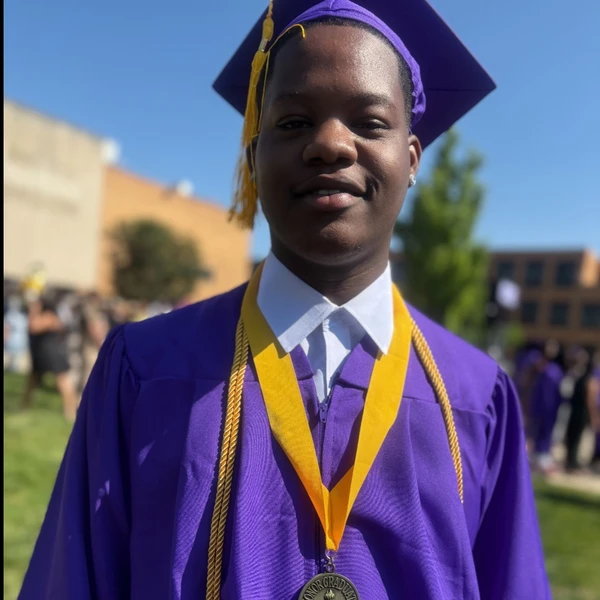
Tyree Callahan
1x
FinalistTyree Callahan
1x
FinalistBio
I’m a first-generation college student pursuing a degree in nursing with the goal of becoming a certified registered nurse anesthetist. I’m passionate about healthcare equity, mental wellness, and helping others overcome adversity—because I’ve lived it. After navigating poverty, trauma, and the loss of loved ones, I turned my pain into purpose. I bring grit, compassion, and a relentless drive to every space I enter. I’m not just chasing a degree—I’m building a future where I can uplift my family, serve my community, and break generational cycles.
Education
Illinois State University
Bachelor's degree programCareer
Dream career field:
Medicine
Dream career goals:
Cashier
Wendy's2022 – 20253 years
Sports
Track & Field
Varsity2020 – 20255 years
Basketball
Junior Varsity2022 – 20242 years
Research
Medicine
Fellow2024 – 2025
Arts
Cornerstone Christian Center
Dance2020 – 2025
Public services
Volunteering
Campus Kitchen — Preparing and delivering meals2022 – 2025Volunteering
Kids Visions for Life — Volunteer2021 – 2023
Future Interests
Advocacy
Volunteering
Philanthropy
Entrepreneurship
Dr. Christine Lawther First in the Family Scholarship
To me, being the first in my family to obtain a college degree means breaking a cycle that was never built for me to survive—let alone succeed. It means becoming the blueprint. No one in my immediate family has had the privilege to experience college. My great-grandmother’s education ended in the eighth grade, my mother battled addiction, instability, and at one point even tried to poison me, and for most of my childhood, I was left to fend for myself. I’ve lived in an abandoned building. I’ve gone to school hungry. I've gone without running water or electricity. I’ve faced betrayal by the very people who were supposed to protect me. Despite it all, I’m still here—alive, hopeful, and determined to create a life filled with purpose and service.
College isn’t just a milestone—it’s a declaration that I deserve to dream bigger. I plan to pursue a nursing degree, with the long-term goal of becoming a certified registered nurse anesthetist (CRNA). I was drawn to the medical field after losing my great-grandmother, who raised me and died from sepsis. Watching her deteriorate and feeling powerless in that moment forever changed me. I want to be the person in the room who brings comfort, expertise, and hope during critical times. Nursing combines my love for science with my deep desire to care for others, especially those who are vulnerable and overlooked like I once was.
But my goals don’t stop with a job title. I want to return to the very communities I came from and become a source of knowledge, guidance, and inspiration. I want to be a mentor to young men who have grown up in broken homes and chaotic environments—those who think they won’t live past 18 or who believe their story has already been written. I want to teach them that pain doesn’t disqualify you; it shapes you.
Being a first-generation college student comes with challenges—imposter syndrome, lack of financial support, and having no blueprint to follow—but it also comes with a deep sense of responsibility. I’m not just doing this for me. I’m doing it for the generation before me who didn’t get the chance, and the generation after me who will have more because I dared to believe it was possible.
Long term, I see myself starting a nonprofit that provides mentorship, mental health resources, and college readiness support for teens who’ve faced severe adversity. I want to create safe spaces where young people can talk about trauma, learn life skills, and see examples of success that look like them. My life has been anything but easy, but it has given me a heart for service and a mindset rooted in perseverance.
Earning a degree will give me the tools to not just survive, but to thrive—and more importantly, to reach back and uplift others along the way. I want to be living proof that where you start does not have to dictate where you finish.
Aktipis Entrepreneurship Fellowship
Growing up, I never had a roadmap. My earliest years were marked by instability — not just financial, but emotional and physical. At one point, I lived in an abandoned building without electricity or running water. I’ve also survived something few people could imagine — being poisoned by my own mother. I don’t share these details for pity, but to show that I understand hardship — and I’ve always chosen to rise above it.
That mindset — to create even when nothing is handed to me — is the root of my entrepreneurial spirit. Entrepreneurship, to me, is about more than business; it’s about resilience, adaptability, and creating solutions where others only see obstacles. Throughout high school, I leaned into this mindset. I mentored classmates, volunteered in my community, and always looked for ways to serve. I didn’t wait for someone to save me — I became the help I once needed.
My passion for innovation stems from this same drive. I’m pursuing nursing with plans to become an anesthesiologist. That dream started after I watched my great-grandmother pass from sepsis — a condition that could’ve been treated with proper care. Her death sparked something in me. I want to help reimagine what health care looks like in under-resourced communities. I think about mobile clinics, culturally competent care, and how to bring healing where it’s been historically withheld. I want to be part of reshaping the system — not just working in it.
This vision is fueled by deep scholarly engagement. I graduated high school with a 3.7 GPA despite tremendous personal challenges — managing trauma, supporting myself, and working to stay afloat. I’ve always studied with purpose. I want to understand how the body works, how systems operate, and how healing happens. Whether I’m reading about biology or medical breakthroughs, I approach learning as a tool for service. I don’t just want to earn a degree — I want to master what I need to become the kind of provider my community deserves.
That drive is rooted in my natural curiosity. I’ve always been a thinker — asking why, how, and what next. I observe people and systems, looking for patterns and possibilities. I wonder about the root of suffering, the future of medicine, and how technology and compassion can work together. I’ve never stopped being curious — even in the hardest times — because curiosity gives me hope that things can be different.
This scholarship would be life-changing. As a first-generation college student, I carry the dreams of many who didn’t get the chance. I don’t have a financial safety net, but I have faith, work ethic, and vision. I want to use my education to uplift others, to create access where there is lack, and to be the kind of medical professional who sees the whole person — not just the symptoms.
In honoring Stelios Aktipis’ legacy, I hope to reflect his values: service, innovation, curiosity, and academic excellence. The world didn’t expect me to succeed. But here I am — not just surviving, but building a life of purpose, faith, and impact.
SigaLa Education Scholarship
I chose to pursue a degree in nursing because I believe healing is one of the most powerful forms of impact. As a future medical professional, I see nursing not just as a job, but as a calling rooted in empathy, science, and service. In a world increasingly shaped by STEM, I want to be on the frontlines—using my knowledge to advocate for equity in healthcare, especially for those who are often forgotten. I’m entering my freshman year of college this fall as a nursing major, and this scholarship would be an important step in helping me turn my passion into a profession.
My short-term goal is to earn my nursing degree and gain clinical experience serving diverse patient populations. I plan to volunteer in hospitals and community clinics throughout my undergraduate years, while also exploring research opportunities that connect nursing to health equity and mental health. Long-term, I hope to become a registered nurse specializing in trauma-informed care or psychiatric nursing, with a vision of eventually launching a nonprofit focused on healthcare education and outreach in underserved communities.
Being a young Black man in the nursing field already makes me a minority in multiple ways—both in STEM and in healthcare. But I don’t see that as a disadvantage. I see it as motivation. I’ve spent much of my life being the “only”—the only boy in my family, the only person in my circle with plans to attend a four-year university, and often, the only one in the room who has lived through the kinds of challenges I have. I come from a background of extreme adversity: I was nearly poisoned as a child, abandoned at a liquor store by a caregiver, and lived for a time in an abandoned building. I know what it means to suffer without support. And I know what it means to feel invisible in systems that were never built for you.
These experiences are exactly what push me to pursue nursing. I want to be a provider who listens, advocates, and leads with compassion—especially for patients who don’t always have a voice. My background doesn’t make me weaker in the STEM field—it makes me uniquely equipped to meet people where they are and fight for better outcomes.
This scholarship would help relieve a significant burden. My family doesn’t have the resources to fully support my education. While I’ve earned scholarships and plan to work during school, the rising costs of tuition, supplies, and living expenses weigh heavily on my shoulders. Receiving this scholarship would allow me to focus more on my studies and service, and less on how I’m going to pay for the next semester. It would be an investment not just in me, but in every patient I will one day serve.
I believe representation matters. I believe empathy belongs in STEM. And I believe that nursing gives me the platform to bring both into the lives of people who need it most. With your support, I can walk confidently into this next chapter of my journey—ready to become not only a nurse, but a changemaker in the healthcare space.
Bear Fan Scholarship
In the final season of The Bear, the chaos doesn't stop—but this time, it leads to clarity, closure, and growth.
Carmy finally finds peace—not perfection, but peace. After seasons of pressure, spiraling anxiety, and unresolved trauma, he learns to delegate, trust, and most importantly, breathe. In the series finale, he doesn’t win another star—he doesn’t need to. Instead, he opens a second, more accessible restaurant in a Chicago neighborhood that mirrors the one he grew up in. It's not flashy or Michelin-starred, but it feeds the community and trains young chefs from underserved backgrounds. It’s his redemption. He cooks with purpose, not ego. He and Claire reconnect, slowly and maturely this time, after Carmy apologizes for sabotaging their relationship and admits he's still learning how to love and be loved.
Sydney becomes co-owner of The Bear, and it's made official in ink. Her creative dishes earn national attention, and she’s offered a spot on the James Beard panel—but she declines, choosing instead to lead a mentorship program for young Black and brown women in culinary arts. She's no longer in Carmy's shadow; she's a star in her own right, and their dynamic evolves into a healthy, mutually respectful partnership. They’re no longer just cooking to survive—they’re cooking to inspire.
Richie is the heart of the finale. After seasons of resistance and feeling lost, he finally finds his groove as the guest experience guru. He becomes the emotional anchor of the restaurant—the guy who remembers anniversaries, gives out flowers to first-time diners, and makes every person feel like family. In a poetic moment, we see him leading a quiet tour for a group of high school kids from his neighborhood, telling them they belong in spaces like this. The last shot of him is a toast he gives in the kitchen: “To purpose over pride. To showing up even when it’s hard.”
Tina becomes the kitchen’s unsung hero. With a deepened sense of self-worth, she steps into a formal leadership role, training new staff and overseeing a small team of young cooks. Her journey from line cook to sous chef to leader is quiet but powerful—a reflection of the dignity in steady growth. Her son, inspired by her resilience, decides to go to culinary school.
Marcus, having honored the loss of his mother, takes a sabbatical to study pastry abroad. He returns with a new vision for The Bear’s dessert program—one that fuses West African, Southern, and Scandinavian techniques. His bond with Sydney deepens, but remains beautifully ambiguous—romantic tension softened by mutual respect.
The restaurant doesn’t become a global empire. It doesn’t end with a trophy. It ends with family—flawed, chosen, and real. The Bear becomes a symbol of healing, of what’s possible when broken people create something beautiful together.
The final scene? The staff closes the restaurant for the night. The kitchen is quiet. Carmy turns off the last light and looks back—there’s no panic in his eyes this time. Just calm. Purpose. And hope.
Love Island Fan Scholarship
t’s time to test loyalty, instincts, and how well the Islanders really know each other in a brand-new challenge called “Secrets in the Suitcase.”
The Setup:
Each Islander is asked to pack a small suitcase with three personal items that represent who they are—one sentimental, one scandalous, and one surprising. The catch? They don’t pack their own. Each Islander is secretly assigned a fellow Islander and must choose what they think best represents that person, using props provided by the producers (think: fake tattoos, lipstick-stained shirts, old love letters, cringey photos, a dog toy, etc.).
The items are locked in identical suitcases and shuffled randomly. The Islanders are then gathered at the fire pit, where the suitcases are opened one by one.
The Challenge:
When a suitcase is opened, everyone must work together to guess which Islander the items represent—and why.
Once the group votes, the truth is revealed: the assigned packer explains what they chose and why they thought it represented that Islander. If the group guessed right, the “packer” gets a point. If they guessed wrong, the Islander the suitcase belonged to loses a point in the game and gets to defend or deny the contents.
But here’s the twist: One item in every suitcase is a planted “lie”—chosen by the producers to stir the pot. It’s up to the Islander whose suitcase is being discussed to either claim the item as theirs (to throw others off) or deny it convincingly. If they fool the group, they win immunity from the next recoupling.
Why it Works:
This challenge brings out humor, hidden truths, and clever deception. It forces Islanders to show how well they observe each other’s quirks, but it also opens the door for confessionals, flirtation, and even a little chaos. A funny item (like a “Team Virgo” t-shirt or a baby pacifier) could spark laughter, while something juicier (like an old engagement ring or a screenshot of a dating profile) might lead to real tension.
It also flips the usual format: instead of just showing attraction, it shows how much the Islanders are paying attention to the deeper sides of each other. It creates space for bonding, roasts, and maybe even a few sparks of jealousy.
Bonus Round:
At the end, the top three Islanders with the most correct guesses are invited to a “Truth or Takeoff” private jet-themed mini-date, where they can ask any uncensored question to a person of their choice—with no consequences. The person being asked must either answer truthfully or “take off” and leave the conversation.
Final Thought:
“Secrets in the Suitcase” is the perfect balance of flirtation, fun, and drama—everything Love Island thrives on. It pushes Islanders out of their comfort zones while making great TV and unforgettable moments.