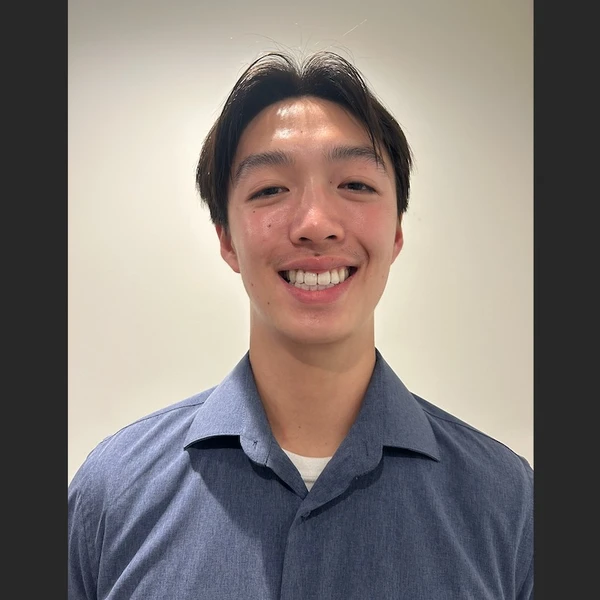
user profile avatar

Tyler Sy

1x

Finalist

Bio

I am an incoming medical student at Eastern Virginia Medical School. A Southern California native, I graduated from UC San Diego with Provost Honors and gained clinical experience working as an EMT and volunteering as a scribe in underserved communities. During my gap year, I moved back to home to serve the community that raised me working at a children's hospital in pediatric Dermatology and Endocrinology. My time in pediatric subspecialties deepened a focus on children's nutrition and wellness, and aspiring me to practice as a pediatric physician dedicated to improving health outcomes for young patients.

Education

Eastern Virginia Medical School

Doctoral degree program (PhD, MD, JD, etc.)
2026 - 2030
  • Majors:
    • Medicine

University of California-San Diego

Bachelor's degree program
2020 - 2024
  • Majors:
    • Microbiological Sciences and Immunology

Miscellaneous

  • Desired degree level:

    Doctoral degree program (PhD, MD, JD, etc.)

  • Graduate schools of interest:

    • Eastern Virginia Medical School
  • Transfer schools of interest:

  • Majors of interest:

  • Planning to go to medical school
  • Career

    • Dream career field:

      • Medicine
    • Dream career goals:

      Sabrina Carpenter Superfan Scholarship
      I first knew Sabrina Carpenter as Riley's best friend on Girl Meets World, the one who was funny and magnetic in a way that made her impossible not to like. She was also my childhood crush, which I say with full transparency and zero shame. Back then I had no idea she would become one of the defining voices of her generation, or that her music would find me at some of the most pivotal moments of my life. She resurfaced during the Joshua Bassett and Olivia Rodrigo situation, when "Skin" started making the rounds. I remembered her immediately, looked it up, and then stayed up until two in the morning going through her back catalog. Eyes Wide Open, Evolution, Singular. There was a sincerity in her writing that I hadn't expected, a willingness to sit in a feeling without flinching. Then I found emails i can't send, and something clicked. From there, her music started showing up everywhere. "read your mind" on loop at the gym, its energy reliable enough to power me through a final set when nothing else could. "Please Please Please" blasting in the ambulance during late-night interfacility transports, just my partner and me at midnight, belting along. There is something about that combination of absurdity and sincerity that felt exactly right for both the gap years and the job. Her music had a way of meeting me wherever I was. Sabrina followed me into Children's Hospital of Orange County, where I worked as a scribe in Dermatology, Endocrinology, and Hematology. Many of our patients were young girls who came in nervous and already guarded before the provider even walked through the door. Skin conditions are especially tender territory for kids who are already self-conscious. Some would sit with their arms crossed, giving one-word answers, bracing for something unpleasant. Sabrina Carpenter was a reliable way in. I'd mention her casually, ask if they had seen the Short n' Sweet tour or had a favorite song. The reaction was almost always immediate. Eyes would come up from the floor. A quiet "I love her" would slip out before they remembered they were nervous. We'd debate whether "Please Please Please" was better than "Taste," and by the time the provider was ready, the patient was relaxed and present in a way she hadn't been five minutes earlier. Their parents would sometimes catch my eye with a look of visible relief. It sounds small, but it wasn't. A child who feels safe in a clinical setting is more likely to describe her symptoms honestly and more likely to trust the people trying to help her. Finding that point of connection, even a silly one, is part of the care. My girlfriend and I saw her at Crypto.com Arena on the Short n' Sweet tour, one of the best nights I can remember. Somewhere in the middle of it, I thought about how much had changed since those late nights going through her old discography. I was closer to medical school than I had ever been, doing research I was proud of, and I had a list of young patients whose visits had gone a little better because we shared something. Her career has reminded me that doing the work quietly for a long time is not wasted effort. She kept writing and refining her craft long before the world caught up to her. In medicine, where the timeline is long and the milestones are far apart, that lesson lands. You just have to trust that the work matters and keep going.
      Christian Fitness Association General Scholarship
      My path to medicine started at a kitchen table, with my dad sketching veins across the pages of my sixth-grade textbook while I quietly hoped we weren't destroying school property. He was an ICU nurse, and his stories from the floor (the code blues, the families waiting in hallways) became the backdrop of my childhood. When my mother was hospitalized with an undiagnosed condition the following year, that backdrop became personal. The doctor who came out to speak with me that day did something I have never forgotten: he answered my questions in language I could understand, then acknowledged how hard the uncertainty must have been for a twelve-year-old. He made me feel seen. I decided then that I wanted to do the same for others. Since that moment, I have worked to build a record that reflects both the breadth and depth of what medicine demands. At UC San Diego, I majored in Microbiology, a discipline that required me to think across scales, from the molecular mechanisms of gene regulation to the evolutionary dynamics of infectious disease. I carried a 20-unit course load during one quarter that included a teaching assistant position, neuroanatomy, and specialized seminars on circadian biology and microbial evolution. That year taught me how to perform under pressure without losing the curiosity that makes science worth doing. I graduated in March 2024 with an MCAT score of 513. My clinical training has been equally intentional. I began as a volunteer hospital aide, offering small comforts to patients who reminded me of my mother. I became an EMT to learn what it felt like to be responsible for someone in crisis. I scribled in a primary care clinic in downtown San Diego, where I saw how continuity of care transforms a clinical relationship into something closer to a partnership. Then I returned home to serve my own community as a Dermatology medical assistant, where patients sometimes turned out to be former teachers or childhood neighbors. Each role added something the previous one could not. At Children's Hospital of Orange County, where I have worked since early 2025, those threads came together. Scribing in Endocrinology, I watched Dr. Haghi open every visit by asking a child what they had eaten for lunch and what they liked to do after school. She understood that an A1C would not budge without knowing the family's food environment. In Dermatology, I supported Dr. Buethe by documenting complex cases, designing a quick-order page in the EMR to reduce clicks and free time for patients, and building a patient database of children with rare skin conditions. That database became the foundation for case reports, clinical trial referrals, and ultimately a first-author publication in Practical Dermatology on pediatric hidradenitis suppurativa, a condition where diagnostic delays routinely cause permanent scarring. Building on that work, I was hired as a Junior Specialist in Pediatric Dermatology at UC Irvine. I presented a case series on subungual infantile hemangiomas at the Pediatric Dermatology Research Alliance Annual Conference in Minnesota, and the abstract was subsequently accepted in the Journal of Investigative Dermatology. I have since contributed to a published case report in JAAD Case Reports on a rare epidermal condition treated with a novel topical agent, and a case report accepted in Pediatric Dermatology on exercise-induced vasculitis in an immunocompromised child. I am currently helping develop wound care protocols with Plastic Surgery and Wound Ostomy teams at CHOC. Outside of medicine, I have tried to stay connected to the communities that shaped me. As a board member of the Pilipino Undergraduate Society for Health at UCSD, I co-led the planning of our annual Health Summit, bringing Filipino healthcare professionals together with undergraduates who rarely saw people who looked like them at the front of a room. I served as a teaching assistant for Molecular Biology, creating animated slide decks to make operons and enzyme kinetics accessible to students who were struggling. I now volunteer as a teacher's aide in a K-3 after-school program, working with kids who need extra support with focus and self-regulation. I am applying for this scholarship because I have a clear sense of where I am headed and why. I want to train in a specialty where I can form long-term relationships, expand access in regions where that specialty does not yet exist, and continue contributing to research that directly shapes how the next patient is treated. The financial support this scholarship provides would allow me to pursue that vision without the weight of debt limiting my choices when it is time to serve the communities that need it most.
      Learner Mental Health Empowerment for Health Students Scholarship
      My sister is eighteen now, and for as long as I can remember, being her older brother has been the role I take most seriously. I was five when she was born, and from the moment I held her hand, I wanted nothing more than to support her. I tutored her, practiced soccer drills with her, and pushed her to succeed. What I did not realize was that my expectations, layered on top of my parents', were becoming a weight she could not carry. When I left for college, her mental health declined, and she was admitted for suicidal ideation. Hearing my mother's voice break over the phone, telling me my sister wasn't coming home, was one of the hardest moments of my life. I blamed myself and hid behind a cheerful facade, afraid to let anyone see how much I was hurting. During my gap years, I returned home and chose to confront those feelings. Instead of pushing my sister as I always had, I learned to listen and validate her experiences. I checked in often, mediated tense conversations between her and my parents, and stayed up on the nights she ran off after an argument, knowing I was the only one in the house she would talk to. Her courage in opening up taught me something I have carried ever since: vulnerability is not weakness, but a source of strength. And true care is not about fixing, but about making someone feel safe, heard, and never alone. Those lessons have shaped how I move through every clinical space since. At Children's Hospital of Orange County, where I have worked as a scribe and junior specialist, mental health is never separate from physical health. A teenager overwhelmed by a new diagnosis needs more than an accurate chart. I learned to notice when a patient's posture shifted, to slow down and ask a quieter follow-up question, to bold and underline the key parts of their discharge instructions and have them repeat the plan back to me. I sat with restless younger siblings during visits so parents could focus. These habits did not come from a textbook. They came from watching my sister and learning what it actually means to be present for someone who is struggling. Outside the clinic, I have looked for ways to extend that commitment. I participated in community events raising funds for Still I Run, a national nonprofit that promotes the mental health benefits of running and works to dismantle the stigma around mental illness. The organization was founded by someone who turned to running to manage her own depression, and it has grown into a movement with chapters across the country. Running with and for a community built around shared struggle felt right, because that is exactly what my sister taught me mattered most. Mental health is important to me not as a cause I discovered, but as something I lived alongside someone I love. Students facing these challenges are not fragile. They are often doing the hardest work of their lives without anyone noticing. This scholarship names that reality, and I am grateful for it. I hope to spend my career doing the same, one patient and one honest conversation at a time.
      ACHE Southern California LIFT Scholarship
      Statement 1: My goal is to become a physician who improves patient outcomes not only at the bedside, but through the systems and teams that shape care delivery. This award would directly reduce the financial burden of medical school as I work toward that goal. At Children's Hospital of Orange County, I scribed across Endocrinology, Dermatology, and Hematology, sat in on multidisciplinary case conferences, and designed workflow tools that I later trained other scribes to use. I then joined UCI as a Junior Specialist in Pediatric Dermatology, where I served as first author on a published clinical review of pediatric hidradenitis suppurativa in Practical Dermatology, contributed to case reports now published in JAAD and Pediatric Dermatology, and presented a case series at the Pediatric Dermatology Research Alliance Annual Conference in Minnesota. As an EMT, I transported patients in critical condition and learned to stay composed in the most urgent moments. As a medical assistant in my hometown of Fountain Valley, I cared for neighbors and former teachers, deepening my commitment to being a physician rooted in the community I serve. I chaired the Health Summit committee for the Pilipino Undergraduate Society for Health at UCSD, organizing panels and connecting Filipino American pre-health students with physicians who reflected their backgrounds. I also mentored students as an Undergraduate Instructional Assistant for Molecular Biology, and volunteered as a teacher's aide for a K-3rd grade after-school program, working with students who needed extra patience and creative support. Statement 2: ACHE of SoCal's mission is to grow the knowledge, professional competency, and leadership of its members, and to develop the future leaders of the health industry. Those goals sit at the center of everything I have been working toward. I grew up in Orange County watching my father work ICU night shifts, and spent my gap years building the clinical and research foundation I will carry into medical school. What I kept returning to was this: outcomes depend on how well the people and systems around a patient work together. The scribe who designs a cleaner workflow, the resident who is mentored well, the multidisciplinary team that coordinates before entering the room. Each requires someone paying attention to the structure of care, not just the science. That attention to how healthcare is organized is what draws me to the values ACHE represents. I want to be a physician who leads well within institutions, contributes to research that shapes clinical practice, and brings colleagues along. My published work in Practical Dermatology and JAAD, my conference presentations, and my experience training scribes and mentoring pre-health students all reflect a commitment to building competency at multiple levels, not just my own. Southern California is where I trained, where I hope to practice, and where my family is. ACHE of SoCal's investment in the next generation of health leaders is exactly the kind of structure I want to grow into and eventually give back to.
      Tyler Sy Student Profile | Bold.org