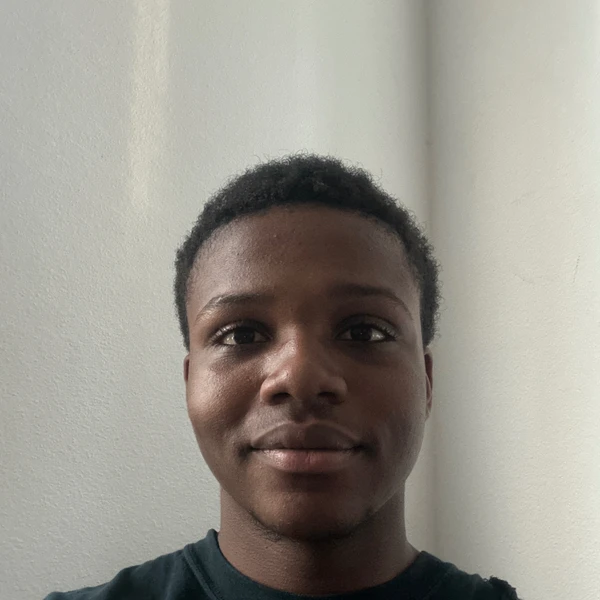
user profile avatar

Ty Reed II

1x

Finalist

Bio

I’m a kind of a guy that loves to be creative and stands out to people for what I could or want to be. I’m a really good poet. Still working on writing a book!

Education

River City High School

High School
2022 - 2026

Miscellaneous

  • Desired degree level:

    Bachelor's degree program

  • Majors of interest:

    • Journalism
  • Not planning to go to medical school
  • Career

    • Dream career field:

      Broadcast Media

    • Dream career goals:

      Sports

      Football

      Varsity
      2022 – Present4 years

      Awards

      • Marine Hardwork Award

      Wrestling

      Varsity
      2022 – 20264 years
      1000 Bold Points No-Essay Scholarship
      Finance Your Education No-Essay Scholarship
      Bold.org No-Essay Top Friend Scholarship
      Lady Gaga Fan No-Essay Scholarship
      Post Malone Fan No-Essay Scholarship
      K-POP Fan No-Essay Scholarship
      100 Bold Points No-Essay Scholarship
      300 Bold Points No-Essay Scholarship
      400 Bold Points No-Essay Scholarship
      500 Bold Points No-Essay Scholarship
      Chris Ford Scholarship
      Growing up, sports were never just games to me—they were stories. Behind every match, every comeback, and every loss was a deeper narrative about resilience, teamwork, and perseverance. During difficult moments in my life, those stories became something more than entertainment. They became motivation. Watching athletes push through adversity showed me that challenges do not define you; how you respond to them does. I am a high school senior from California with a deep passion for storytelling, journalism, and athletics. Throughout high school, I have explored this passion by participating in wrestling, football, theatre, journalism club, and photojournalism. These experiences allowed me to see sports from many perspectives—both as an athlete and as someone documenting the moments that matter. Whether I’m capturing photos from the sidelines or writing about a game, I’m constantly reminded that every athlete has a unique journey worth telling. Sports journalism stood out to me because it combines two things I care deeply about: sports and storytelling. While many people focus only on the final score, I am interested in the human stories behind those numbers. Every athlete has faced obstacles, doubts, and setbacks. Some are balancing school, family responsibilities, or personal struggles while still giving their all on the field or mat. Those are the stories that inspire people, and those are the stories I want to tell. In the future, I plan to pursue a degree in journalism or communications with a focus on sports media. My goal is to become a sports journalist who highlights the voices and experiences that are often overlooked. Representation in media matters. When young athletes see someone who understands their background or experiences telling their stories, it creates a sense of connection and possibility. I want young people—especially those from underrepresented communities—to see themselves reflected in the media that covers the sports they love. Sports also have the power to unite communities. A single game can bring together people from different backgrounds who might otherwise never interact. Through journalism, I hope to capture those moments and remind audiences that sports are about more than competition—they are about community, perseverance, and shared experiences. Receiving the Chris Ford Scholarship would allow me to continue pursuing my education and developing the skills necessary to achieve these goals. More importantly, it would support my journey toward using storytelling to make a positive impact. By sharing authentic stories of resilience, determination, and community, I hope to inspire others the same way I was inspired through sports.
      Justin Burnell Memorial Scholarship
      One Lifeline: Writing Through the Chaos Growing up, I often felt like I was navigating the world through multiple lenses at once. I am a Black student, a queer young man, and someone who grew up learning quickly that identity can shape how people see you before you even speak. For a long time, that reality felt heavy. It meant facing stereotypes, questioning whether my voice would be heard, and sometimes wondering where I truly belonged. But over time, I discovered something powerful: writing gave me a voice when the world felt like it was trying to silence it. Writing began as a private escape. When things around me felt overwhelming, whether it was dealing with expectations, navigating spaces where I didn’t always feel accepted, or simply trying to understand myself. I turned to a notebook. On those pages, I could be honest. I could ask questions. I could make sense of emotions that were too complicated to explain out loud. Writing didn’t judge me. It listened. As I grew older, writing transformed from a coping tool into something much bigger. I realized that stories have the power to shape how people see the world. For communities like mine, representation matters. When certain voices are missing from the conversation, the story becomes incomplete. I began to understand that writing wasn’t just about expressing myself it was about creating space for perspectives that are often overlooked. My passion for writing eventually connected with another passion: sports. Sports have always been more than games to me. They are stories of perseverance, identity, community, and resilience. Behind every athlete is a human story that deserves to be told with honesty and depth. Yet many of those stories especially those involving marginalized voices don’t always receive the attention they deserve. That realization pushed me toward sports journalism. I want to be someone who tells those stories. I want to highlight the journeys of athletes who come from difficult backgrounds, who challenge stereotypes, and who inspire others simply by showing up as themselves. Sports journalism gives me the opportunity to combine my love for storytelling with my desire to amplify voices that deserve recognition. The challenges I’ve faced because of my identity have shaped the way I see the world. They’ve taught me resilience, empathy, and awareness. They’ve also shown me the importance of storytelling. When people share their experiences, barriers start to break down. Understanding grows. Perspectives shift. Writing allows me to contribute to that change. When I write, I’m not just putting words on a page. I’m documenting experiences, asking questions, and inviting readers to see beyond assumptions. I’m creating the kind of stories that I wish I had seen more of growing up stories that acknowledge complexity, celebrate identity, and remind people that everyone’s voice matters. In many ways, writing has been my lifeline. It helped me process my identity, understand my challenges, and find my direction. Now, it has become my purpose. I want to use my voice to tell meaningful stories, challenge narratives, and make sure that the people and experiences that shaped me and so many others are never left out of the conversation.
      No Essay Scholarship by Sallie
      RonranGlee Literary Scholarship
      Selected Paragraph (from Meditations, Book II): “You have power over your mind—not outside events. Realize this, and you will find strength.” ⸻ Essay The central idea of this passage is that human strength comes from mastering one’s inner world rather than trying to control external circumstances. The writer argues that although life constantly produces unpredictable and often difficult events, our thoughts, interpretations, and reactions remain within our control. By recognizing this boundary between what we can and cannot control, a person gains resilience, clarity, and personal freedom. The statement draws a sharp line between two domains: the internal mind and the external world. External events include everything from natural disasters to other people’s behavior. These things occur regardless of our wishes. Many people spend their lives trying to influence or resist these forces, often becoming frustrated when the world refuses to cooperate. The passage suggests that this struggle is misguided because it targets the wrong arena. Instead of attempting to dominate external reality, the individual should focus on governing their own mind. Control over the mind refers to the ability to choose one’s response to circumstances. While we cannot prevent every hardship, we can decide how to interpret and react to those hardships. For example, two people may experience the same setback—losing a job, failing an exam, or facing rejection—but respond in completely different ways. One person might see the event as proof of personal failure and fall into despair, while the other might treat it as an opportunity to learn and improve. The event itself is identical, yet the outcomes differ dramatically because the individuals control their perspectives. The writer’s claim that realizing this truth leads to strength highlights the psychological power of perspective. When people believe their happiness depends on external events, they become vulnerable to constant disappointment. Life inevitably includes setbacks, conflicts, and uncertainty. If emotional stability depends on everything going smoothly, then stability becomes impossible. However, if strength comes from internal control, then stability becomes attainable even in chaotic circumstances. A person who governs their thoughts can remain calm, focused, and purposeful despite external turbulence. This perspective also challenges the common human habit of blame. When something goes wrong, people often look for external causes: unfair systems, difficult people, bad luck, or unfortunate timing. While those factors may indeed play a role, focusing solely on them leaves the individual powerless. The passage does not deny that external forces exist; instead, it redirects attention to the one area where power truly resides. By focusing on internal reactions rather than external blame, individuals reclaim responsibility for their own emotional and moral state. Another implication of the passage is the idea of mental discipline. Controlling the mind is not automatic; it requires conscious effort and practice. Thoughts arise constantly, often influenced by fear, anger, or insecurity. Without reflection, these emotions can dominate behavior. The passage implies that strength comes from learning to observe these reactions and choose which ones deserve attention. This process involves questioning impulsive judgments, resisting destructive emotions, and cultivating rational thinking. The idea also connects to the concept of personal freedom. Many people believe freedom means having control over their environment—wealth, status, influence, or power over others. However, the passage suggests a different definition. True freedom lies in independence from external forces. A person who depends on circumstances for peace of mind remains trapped by those circumstances. In contrast, someone who controls their mental responses cannot easily be dominated by outside pressures. Their well-being does not depend on the approval, behavior, or actions of others. Furthermore, the passage offers guidance for dealing with adversity. Difficult events often trigger immediate emotional reactions such as anger, fear, or resentment. These responses can intensify suffering and lead to harmful decisions. Recognizing that the mind is under one’s control creates a pause between event and reaction. Within that pause lies the opportunity to choose a response based on reason rather than impulse. In this way, internal control becomes a tool for navigating challenges with wisdom rather than panic. The passage also reflects a broader philosophical belief that self-mastery is the foundation of ethical living. When individuals regulate their emotions and thoughts, they are more capable of acting with fairness, patience, and compassion. Uncontrolled anger or fear often leads to harmful actions toward others. By governing the mind, a person not only protects their own peace but also contributes to a more stable and thoughtful society. Ultimately, the writer’s message is both simple and demanding. It does not promise that life will become easier or that suffering will disappear. Instead, it proposes a shift in focus: from controlling the uncontrollable to mastering the self. This shift transforms the individual’s relationship with the world. Events still occur, but they lose the power to dictate emotional responses. In conclusion, the passage teaches that genuine strength arises from internal discipline rather than external control. By understanding that the mind remains within our power even when circumstances do not, individuals gain resilience, clarity, and freedom. The realization that our reactions belong to us allows us to face uncertainty without losing stability. Through mastery of thought and perspective, a person can maintain strength regardless of the conditions surrounding them.