Hobbies and interests
Advocacy And Activism
Social Justice
Coding And Computer Science
Swimming
Speech and Debate
DECA
FBLA
Data Science
Reading
Academic
Classics
Contemporary
I read books multiple times per month
Tvisha Mishra
2x
Finalist
Tvisha Mishra
2x
FinalistBio
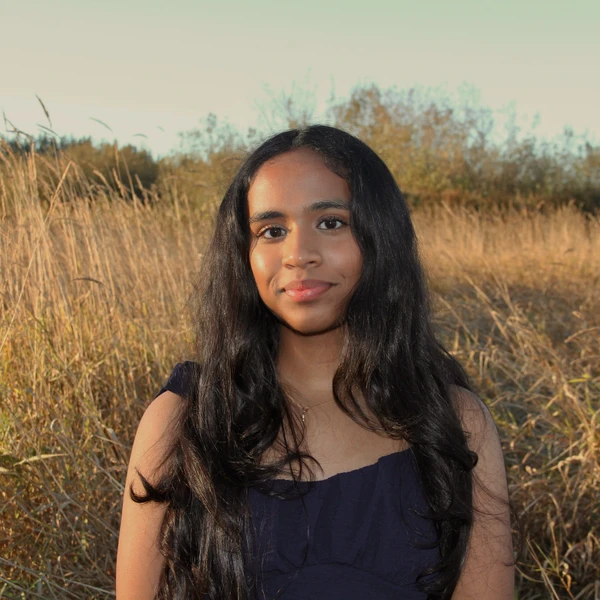
I am a driven high school senior from Henry M. Jackson High School in Mill Creek, Washington, with a strong passion for technology, problem-solving, and community impact.
As Manufacturing Lead for my school’s robotics team, Jack in the Bot, I helped design, build, and maintain a robot that won the 2025 FIRST Robotics World Championship, applying engineering principles, iteration, and teamwork to solve complex challenges. I am also the Vice President of my school’s Girls Who Code chapter and the President and Co-Founder of CodeBridge, an after-school program that has taught coding to over 150 K–8 students across four schools.
I have explored real-world applications of technology through internships in software engineering at Quadrant Technologies, data science at Saffron, and engineering at Boeing, where I worked with AI, data analysis, and manufacturing systems to develop practical solutions.
In college, I plan to study computer science and engineering, focusing on AI, data systems, and sustainability. My goal is to create ethical, accessible technologies that combine human insight with data-driven innovation.
Beyond technology, I am an international DECA competitor, placing 2nd in the Financial Literacy Project event and appearing on FOX 13 News to promote youth financial literacy. I am also a national FBLA qualifier. In my free time, I enjoy skiing, watching movies, and exploring new cities.
Education
Henry M. Jackson High School
High SchoolMiscellaneous
Desired degree level:
Master's degree program
Majors of interest:
- Computer Science
- Mechanical Engineering
- Electrical and Computer Engineering
Career
Dream career field:
Computer Software
Dream career goals:
Software Engineering Intern
Quadrant Technologies2024 – 2024Data Science Intern
Saffron2024 – 20251 yearEngineering Intern
Boeing2025 – 2025
Sports
Swimming
Junior Varsity2023 – 20252 years
Public services
Volunteering
CodeBridge — Co-Founder, President2024 – PresentVolunteering
HOWL (Habits of Wealth and Learning) — Founder, Leader2024 – PresentAdvocacy
Stop Sexual Assault in Schools/Students Against Sexual Harassment — Youth Leader2023 – Present
Future Interests
Advocacy
Volunteering
Philanthropy
Entrepreneurship
Chi Changemaker Scholarship
$3.65.
That was all that remained of an entire summer’s worth of earnings.
Staring at my bank balance, I realized I didn’t actually know how to manage money. Every coffee, snack, and impulsive purchase had quietly drained my account. Although I recognized terms like credit scores, student loans, and deductibles, my understanding existed only in theory—not in practice.
I looked for help, but my school offered few resources. Financial literacy wasn’t part of the curriculum, and teachers weren’t trained to fill the gap. When I talked to friends, I discovered they were just as confused. Digging deeper, I learned the problem was far larger than my school: Washington State does not require personal finance education, leaving thousands of students unprepared for rising student debt, increasing healthcare costs, and an increasingly complex financial system.
Once I understood the scope of the issue, I decided to act. I co-founded HOWL (Habits of Wealth and Learning) to expand access to practical, age-appropriate financial education for K–12 students. Alongside a classmate, I sought mentorship from Stacey Black, Lead Financial Educator at BECU. With her guidance, we developed accurate, engaging curricula that emphasized real-world decision-making. To date, we have taught over 400 students across multiple schools and built online resources that have reached more than 20,000 learners.
Our work quickly extended beyond classrooms. I appeared on FOX 13 News to advocate for stronger financial education policies and was invited to join FEPPP (Financial Education Public-Private Partnership), a statewide coalition working to improve financial literacy. Through FEPPP, I collaborated with legislators, educators, and administrators to support legislation creating statewide curriculum standards and district-level resources. Locally, I helped integrate financial education into existing courses, ensuring the program would continue long after I graduate.
What began as the shock of seeing $3.65 in my account became a catalyst for systemic change. Moving forward, I plan to expand HOWL by training student educators, translating materials for underserved communities, and developing scalable digital modules that districts can adopt statewide. By embedding financial literacy into education early, I hope to equip students with the tools to make informed decisions and build stable futures.
In addressing this gap, I learned that knowledge—when shared—is the most valuable investment of all.
Ja-Tek Scholarship Award
Can numbers capture the rhythm of a city struggling to breathe? What stories does a battery tell in the cold? How can data help a small business survive after a crisis? Questions like these first pulled me toward computer science—and they continue to define why I want to pursue it as my engineering major.
My journey with technology began early, dragging colorful blocks across a screen and debugging a frozen digital cat. What started as playful curiosity quickly became persistence. I learned to embrace errors not as failures, but as clues—signals guiding me toward better solutions. That mindset carried me from self-taught Java and Python into robotics, where as Manufacturing Lead for my FIRST Robotics Competition team, Jack in the Bot, I applied engineering principles under pressure. Our team’s persistence culminated in winning the FIRST World Championship, reinforcing my belief that thoughtful engineering can turn complex challenges into tangible success.
As my technical skills grew, so did my desire to apply them beyond competition. I began exploring real-world data—analyzing New York City’s air quality after the 2023 wildfires and using machine learning to study robot battery efficiency. Each project revealed how computer science uncovers hidden patterns that affect real lives. During my internship at Quadrant Technologies, I worked with a local Indian restaurant owner whose business had suffered after the pandemic. What began as rows of confusing spreadsheets became a billing and customer insights application I co-developed to model behavior patterns and help him reconnect with his community. The data didn’t just optimize operations—it told a story of resilience.
Seeking deeper rigor, I enrolled in community college computer science courses and later refined AI models during my internship at Saffron, cleaning complex telecom datasets while remaining mindful of the families depending on reliable connectivity. At Boeing, I saw how data-driven engineering directly impacts safety and efficiency at scale. Across these experiences, I learned that engineering decisions carry human consequences.
To extend that impact, I co-founded CodeBridge, an after-school coding program for K–8 students. Teaching forced me to distill complex ideas into their most essential logic, reinforcing my belief that technology must be accessible to truly serve society.
I am passionate about pursuing computer science because it sits at the intersection of curiosity and impact. As an engineer, I want to design systems that do more than function efficiently—I want them to serve people thoughtfully. For me, computer science is not just a career, but a tool for transforming questions into solutions that improve lives.