Hobbies and interests
Acting And Theater
YouTube
African American Studies
Artificial Intelligence
Boy Scouts
Rowing
Football
Blacksmithing
Bible Study
Boxing
Volunteering
Community Service And Volunteering
Cybersecurity
Reading
Historical
Action
Christianity
Classics
Cultural
Environment
Family
Fantasy
How-To
I read books daily
JULIUS WILLIAMS
1x
Finalist
JULIUS WILLIAMS
1x
FinalistBio
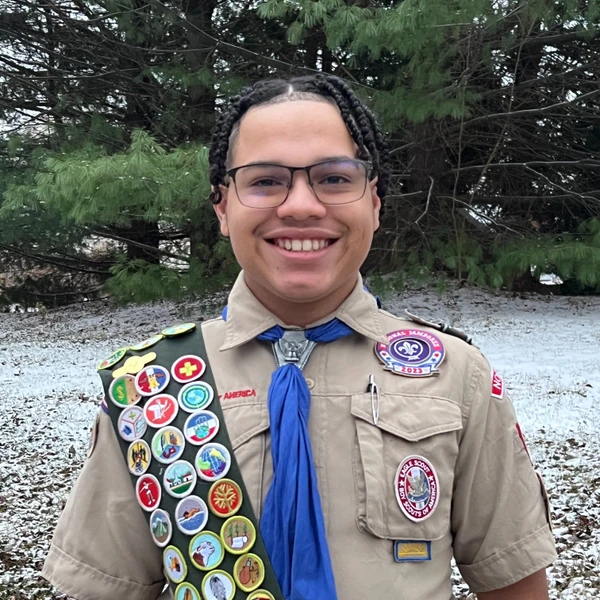
Julius “Trey” Williams III is a senior at Salesianum School who leads with quiet strength, integrity, and a deep commitment to service. An Eagle Scout, Trey earned all 141 available merit badges, an achievement that reflects years of discipline, curiosity, and perseverance. He is also a two-time Scout of the Year, recognized not only for his accomplishments, but for his character and leadership among his peers.
At school, Trey serves as Vice President of both the Black Student Union and the Robotics Club, where he works to build inclusive spaces, mentor younger students, and encourage others to pursue excellence. He has a strong passion for engineering and problem-solving, driven by a desire to create solutions that positively impact his community.
Grounded in faith and family, Trey approaches every challenge with humility and determination. He strives to uplift others, lead by example, and leave every space better than he found it.
Education
Salesianum School
High SchoolMiscellaneous
Desired degree level:
Bachelor's degree program
Graduate schools of interest:
Transfer schools of interest:
Majors of interest:
- Mechanical Engineering
- Journalism
- Electrical and Computer Engineering
- Natural Resources Conservation and Research
- Geography and Environmental Studies
- Environmental/Natural Resources Management and Policy
- Environmental Control Technologies/Technicians
- Security Science and Technology
- Computer and Information Sciences and Support Services, Other
- Computer and Information Sciences, General
- Computer Systems Networking and Telecommunications
- Computer Science
- Homeland Security
- International Relations and National Security Studies
- Homeland Security, Law Enforcement, Firefighting and Related Protective Services, Other
- Computer/Information Technology Administration and Management
- Information Science/Studies
- Management Information Systems and Services
- Engineering Mechanics
Career
Dream career field:
Mechanical or Industrial Engineering
Dream career goals:
ENVIRONMENTAL SERVICES, CYBERSECURITY
COFOUNDER
GREEN CAN RECYCLIND2019 – 20267 yearsCOUNSELOR
BSA2021 – 20254 years
Sports
Sports shooting/Marksmanship
Club2021 – 20265 years
Awards
- CERTIFICATE
Rowing
Junior Varsity2024 – 20262 years
Tennis
Club2023 – 20252 years
Football
Varsity2024 – 20262 years
Arts
HIGH SCHOOL
PhotographyNO2025 – 2026
Public services
Volunteering
HIGH FIVE INITIATIVE — WORKER2020 – 2026Volunteering
HIGH FIVE INITIATIVE — WORKER2021 – 2026
Future Interests
Advocacy
Politics
Volunteering
Philanthropy
Entrepreneurship
Julia Elizabeth Legacy Scholarship
Before I knew what engineering was, I was building it. Legos were my first lab, sorting pieces, testing ideas, tearing down my creations and starting over until something held. That instinct to figure out how things work, and then make them work better, never left me. It just grew into something larger: a conviction that the people doing that work should reflect all of the communities those solutions are meant to serve.
As an African American student pursuing mechanical engineering, I have watched how quietly students from underrepresented communities are pushed to the edges of advanced math, robotics, and technical leadership. The message is rarely spoken out loud. It lives in who gets called on, who gets encouraged, and who gets told they are better suited for something else. That message is wrong, and it has cost this field enormously.
I decided early that I would not wait for the field to change before I showed up in it.
As Vice President of my school's Black Student Union, I have worked to make sure younger students see leadership as something available to them. That work taught me something simple and true: students do not need permission to belong. They need proof. They need to see someone who looks like them already there.
Through Scouting, I earned every available merit badge, including Robotics, Engineering, and Programming. Working alongside peers from different backgrounds on hands-on projects, I saw firsthand what diverse teams actually produce: solutions that individuals working alone would never reach. That is not a talking point. I watched it happen repeatedly.
I also co-founded Green Can Recycling, a nonprofit focused on cigarette butt recycling and environmental cleanup. Through river cleanups and community litter projects, I kept seeing the same pattern: the communities carrying the heaviest environmental burdens were the same ones with the least access to the engineers and scientists who could help. STEM is not neutral. Who enters the field determines whose problems get solved.
I am a first-generation college student. My mother is our family's sole provider and recently lost her job. Post-viral fatigue kept me sidelined for longer than I want to admit, a hard thing for someone who had always been active and all-in. I am recovering. I am moving forward. This scholarship would directly help cover the costs that stand between me and that next step, tuition, fees, and the materials a student cannot go without. It is not a small thing. For my family, right now, it is a real one.
Diversity in STEM is not a pipeline problem to be managed. It is a question of who gets to shape the future. I intend to be part of that answer. Not someday. Now. And I intend to make sure the students coming up behind me know the door is open, because I will have held it.
Marie J. Lamerique Scholarship for Aspiring Scholars
I had a plan. I was going to attend a service academy. I had been working toward it for years, staying active, building my record, doing everything right. Then my senior year, my body gave out on me.
I got seriously ill with post-viral fatigue. I didn't know what that was before it happened to me. I just knew that one week I was playing football, working, leading, keeping up with a full schedule, and the next I could barely get out of bed. I was sleeping more than twenty hours a day. My mind was foggy. My body felt like it weighed twice what it should. There's no medication for post-viral fatigue. You look completely normal on the outside while feeling hollowed out inside, and most people don't understand that until they've been through it.
I had to stop playing football. That was its own kind of loss. Football wasn't just a sport to me. It was structure, discipline, a way of keeping myself grounded. Losing it while I was already struggling physically made everything feel heavier. I missed so much school that my grades dropped and I earned my first C. That one hurt. I had always taken academics seriously, so watching my GPA fall while I couldn't do anything to stop it was one of the hardest things I had dealt with up to that point. I had never let my grades slip before, and seeing that happen while I was already losing so much else made me feel like I was losing myself too.
But the moment that hit deepest was when I realized I could not complete the Candidate Fitness Assessments for the service academies. That dream was gone. Not because I gave up on it, but because my body could not do what those tests required. I had to sit with that. A door I had been walking toward for years just closed, and there was nothing I could do about it.
What made it harder was that this was all happening while my mom had just lost her job due to tariff-related business cuts. She was dealing with real financial pressure while still showing up for me every single day. I could see how much she was carrying. She never stopped. That mattered to me more than I could say out loud at the time.
So, I made a decision. I couldn't control what my body did or what the academies required. But I could control what happened next. I talked to my teachers and made up my work. I pushed through the exhaustion day by day and slowly rebuilt my grades. It wasn't fast and it wasn't easy, but I was not going to let my transcript tell a story that wasn't true about who I am. I stopped measuring myself against the plan I had lost and started figuring out what the next real path looked like.
That led me to Norwich University and mechanical engineering. It's not the path I originally drew up, but it's mine, and I chose it with clear eyes. Norwich has a serious military culture and a strong engineering program, and I can still build the kind of disciplined, service-oriented life I always wanted.
Everything I went through, the illness, the lost dream, the grades I had to fight to recover, watching my mom hold things together under pressure, all of it taught me something I couldn't have learned any other way. You don't always get to control what challenges you. You only get to control how you respond. I earned Eagle Scout and completed all 141 merit badges, became an Assistant Scoutmaster, served as Vice President of the Black Student Union, completed a 700-mile Underground Railroad trek from Maryland to Canada, and kept going through all of it.
I know how to take a hit and keep moving. That's what I'm bringing to college, and everything after.
Lyndsey Scott Coding+ Scholarship
Here's the full final essay with Option B locked in:
Most everyday failures are predictable. Whether it is reduced visibility in winter or inefficient system performance, the problem is not a lack of hardware but a lack of intelligent response. I want to study computer science to build systems that use data to anticipate problems and act before they happen.
Most software is written to respond. I want to write software that anticipates. That distinction is where my interest in computer science begins and where I intend to focus my work.
My goal is to use computer science as the layer that makes mechanical and embedded systems smarter, safer, and more responsive. I am drawn to the intersection of software and physical hardware: how code controls motion, monitors conditions, and responds faster than a human can react. Whether that means preventing nozzle freeze in subzero temperatures or building a driver-activated window system that responds to sudden weather, my focus is on applied engineering problems that quietly affect everyday safety. These are not glamorous ideas. They are the kind that matter when conditions turn dangerous and the hardware alone is not enough.
That instinct toward practical problem-solving was shaped long before I wrote a line of code. As an Eagle Scout, I learned that leadership is less about authority and more about preparation and follow-through. The experience that tested that most was a self-planned solo trek retracing portions of the Underground Railroad from Maryland to Canada. There was no team to lean on, no margin for poor planning, and no shortcuts. What I carried out of that journey was a clear understanding of what discipline and accountability actually feel like under pressure.
Service has been part of my life from the beginning. Scouting taught me early that showing up for others, giving your time and effort and whatever ability you have, is not something you do when it is convenient. It is a habit you build. Growing up around family members who served only deepened that. As a child I built ships and aircraft out of Legos, not knowing yet that two of my godfathers had served in the Navy. When I learned what they had done, the direction became clear. I want to follow their example, not because it is expected, but because I have always believed the most worthwhile thing a person can do is put their skills toward something that helps other people.
In the future I see these paths converging directly. An officer with an engineering background and software fluency is positioned to improve the systems his team depends on. I think about a convoy in poor conditions, a system that reads the environment and flags a problem before the driver does, or a logistics tool that reroutes automatically when a situation changes. That is the kind of work I want to do, not in a lab, but in the field, where the software I write has a name on it and a consequence attached to it. Computer science makes that possible. My experiences outside of it ensure I will not approach it carelessly.
The work I am drawn to is not visible until it is needed. It runs quietly in the background, until the road ices over, until the mission depends on it, until the system has to respond and there is no time to improvise. I want to be the person who already thought of that.
KC R. Sandidge Photography Scholarship
This portfolio comes from a journey that changed how I understand history.
The photographs were taken at the museum in North Buxton, Ontario, at the end of a solo trek I planned and completed from Cambridge, Maryland, retracing parts of the Underground Railroad. By the time I reached Canada, I had spent days moving along routes once used by those seeking freedom. I thought I understood what that meant. I didn't.
Inside the museum, that understanding became physical.
I was allowed to try on a set of iron shackles that had once restrained enslaved individuals. They were heavier than I expected. Cold, restrictive, and impossible to ignore. The third photograph captures them laid out on bare wood, no person in the frame, just the iron and chain. I chose to photograph them that way because I wanted the objects to speak without me in the way.
One exhibit that stayed with me was a doorway representing a point of no return. It symbolized the irreversible step into slavery, where freedom was left behind with no certainty of return. Standing there forced me to think about the people who moved in the opposite direction, leaving everything behind in pursuit of freedom, with no guarantee they would survive the journey. The second photograph shows me at that threshold, neither fully inside nor outside, which is what that exhibit asked me to feel. The first photograph captures the moment after, my fist gripping the barred door, my gaze turned downward, the chain hanging beside me.
The fourth photograph is the most difficult one in the portfolio. I am seated on the floor with the restraints on my hands and feet, my head bowed. I was not performing grief. I was sitting inside it.
I took these photographs because I did not want to forget what that felt like. Each image represents more than an artifact. It captures a moment where I had to stop and confront the reality of what people endured and the decisions they made.
This portfolio is not simply a collection of images. It is a record of a shift in perspective. The journey from Cambridge to North Buxton was physical, but the impact was internal. The shackles weighed more than I expected. I have tried, since that day, to carry that weight honestly, to let it slow me down before I speak, decide, or walk away from something difficult.
Ava Wood Stupendous Love Scholarship
There was a Scout in my troop who sat in the same corner chair every week. He rarely spoke, had no close friends, and was not advancing in rank. Over time, people stopped trying to reach him. It became normal to let him stay on the outside.
I was working toward earning every merit badge, a goal I had set for myself as an Eagle Scout, so my time was already spoken for. I would go on to earn all 141 before my 18th birthday. It would have been easy to stay focused on that and leave everything else alone. But I kept noticing him, disconnected, overlooked, invisible to the rest of the room. So I started inviting him along.
At first, he complained about everything. The requirements were too many. Some felt pointless. He pushed back constantly, and I almost took it personally. But I kept listening, and eventually I realized the complaints were not really about the merit badges. He had a hard time with reading and writing. Not because he lacked intelligence, he expressed himself clearly when he talked, but because processing written material was genuinely difficult for him. The requirements felt impossible because no one had ever helped him find another way through them.
So I did. We worked together on approaches that played to his strengths. Hands-on work. Verbal explanations. Demonstrations instead of written responses. He stopped complaining and started engaging, because for the first time the path forward did not require him to fight through something that held him back every step of the way.
This experience taught me that kindness sometimes means paying attention long enough to find the real problem, not just the one someone shows you first.
When I started including him, I was thinking about one person. I was not thinking about the troop. But what I eventually saw was that one person's belonging changed the entire room.
As he began to engage, something shifted in how others responded to him. Scouts who had stopped noticing him started including him in conversations. He was no longer the person everyone silently agreed to leave alone. He became part of the group, not because the group suddenly decided to be kinder, but because he was now visibly present in a way he had not been before.
He is now Senior Patrol Leader, elected by the same troop that once overlooked him. That outcome is not mine. He did the work of showing up, pushing past his frustration, and growing into someone others wanted to follow.
The last time I saw him at a meeting, he was the one running it. He was calling on Scouts, keeping the agenda moving, and checking in with the newer kids on the edges of the room. The same ones nobody was talking to. I do not think he even noticed he was doing it.
Chip Miller Memorial Scholarship
Most people see a car as transportation. I see a system that has to perform under pressure.
That perspective started early. I have been attending car shows since I was five years old, surrounded by high-end vehicles that most people would immediately gravitate toward. But the first car I was drawn to was a Ford Focus. My family laughed because it was one of the most basic cars there, surrounded by brands like Maserati. What stood out to me was not the status of the car, but how it worked. Even then, I was more interested in the system than the spotlight.
That mindset is why I am pursuing mechanical engineering and why I am drawn to the automotive field. Vehicles are not built for ideal conditions. They operate in heat, cold, rain, and stress, where small failures can have immediate consequences. Mechanical engineering gives me the foundation to understand how those systems function, where they break down, and how they can be improved.
I have always approached problems by breaking them down and improving performance piece by piece. As a robotics leader, I worked through mechanical and programming challenges where small adjustments determined whether a system succeeded or failed. As a sports videographer, I studied motion, timing, and efficiency, constantly refining how systems perform in real time. Both experiences trained me to focus on precision, reliability, and continuous improvement.
I tested that mindset outside of controlled environments during a 700-mile trek I planned and completed independently using walking, canoeing, and train travel. Every decision required planning and adjustment. I had to manage weight, route efficiency, timing, and contingency plans. When something did not go as expected, there was no margin for error. I had to diagnose the problem, adapt, and keep moving. That experience reinforced a principle I will carry into engineering: systems only matter if they perform in real-world conditions.
As I have learned more about mechanical systems, I have also started thinking about practical improvements to everyday vehicles. One example is a nozzle-level warming system for windshield washer fluid. In freezing conditions, the failure point is often not the reservoir, but the nozzle itself, where ice and salt buildup block the spray when visibility matters most. A small localized heating element at the nozzle could keep the spray path clear without requiring the entire system to be heated. That kind of targeted solution reflects how I think about engineering, identifying the point of failure and improving the system where it matters most.
My goal is to study mechanical engineering and apply it within the automotive field, focusing on reliability, safety, and performance in real-world environments. My long-term goal of becoming a commissioned Naval officer reinforces that focus. In both military and civilian settings, equipment must perform under pressure, and that standard is the one I expect to meet.
Earning my Eagle Scout rank and completing all 141 merit badges required long-term discipline, planning, and follow-through. It reflects my willingness to commit to a challenge and complete it at a high level.
Chip Miller built more than events. He built a community around people who care about how vehicles perform, not just how they look. That is what drew me to a Ford Focus when everyone else was focused on exotic cars, and it is what drives me now. I want to spend my career improving the systems people rely on every day, so they work when it matters most.
Gloria Rickett Memorial Scholarship
Systems That Hold
I have picked up cigarette butts from shorelines, cleared trash from riverbanks while kayaking through currents, and spent hours at turtle nesting sites making sure the habitat is intact enough for something that fragile to survive. None of that work is glamorous. What it does is put you in direct contact with how quickly a place can degrade and how much sustained effort it takes to protect it. That is what first drew me to environmental science, and it is what has kept me there.
Being on the water changes how you see things. You are not looking at pollution from a distance. You are moving through it. You see how fast waste builds up, how it affects wildlife, and how much effort it takes just to restore a small stretch. It made something clear to me. Cleanup is necessary, but it is reactive. The real problem is upstream, in how systems are designed and managed. I plan to study environmental science with a focus on infrastructure and systems design, specifically how environmental data, engineering, and policy can be combined to build solutions that do not require constant repair.
My background has pushed me toward that kind of thinking. As an Eagle Scout who earned all 141 merit badges, I spent years learning how to take on long-term goals and follow through on them. The most demanding thing I took on was a solo, self-designed nine-day, 700-mile trek retracing parts of the Underground Railroad from Maryland to Canada. Traveling by foot, canoe, and train, I had to manage resources carefully and adapt when conditions changed. There were stretches where I was exhausted, low on food, and fully dependent on the route I had planned. It also made geography feel real in a way it had not before. The landscape was not neutral. It shaped who could move through it, who had resources, and who did not. That same logic applies to environmental systems today.
On the water and in the field, I kept noticing the same pattern. The places hit hardest by pollution or neglect were rarely places with strong infrastructure or local resources to fight back. A community with a clean, well-monitored river is not luckier than one without. It is better served. That distinction matters to me. I want to work on the infrastructure side of that gap, on the design and engineering of systems that distribute clean water, manage environmental stress, and hold up when the pressure is highest.
Long term, I plan to serve as a commissioned Naval officer, where engineering and environmental challenges often intersect under real pressure. The problems are not going to simplify. Climate-related stress on infrastructure is increasing, and the communities least equipped to handle it are absorbing the most. I am pursuing environmental science because of what it allows me to do about that. The volunteer work on the water, in the habitat, along the shoreline, that is where it started. But the goal is to stop cleaning up after broken systems and start building ones that do not break. That is a systems failure, and systems failures have engineering solutions.
Dream BIG, Rise HIGHER Scholarship
Education did not give me a clear path. It forced me to build one and then taught me how to stay on it.
In school, I learned the fundamentals: how to analyze problems, manage time, and think critically. But those lessons only became real when I applied them outside the classroom. The most defining example came through the River Boys Award at my school, which recognizes students who design and complete a significant personal challenge. Previous recipients had climbed mountains or completed extreme physical goals. I chose to design something different. I built a solo journey retracing parts of the Underground Railroad from Maryland to Canada, combining physical endurance with historical research and real-world planning.
I traveled more than 700 miles by foot, canoe, and train, relying on the same kind of discipline, organization, and problem solving that my education had begun to develop. What made the experience meaningful was not just the distance, but the responsibility behind it. I had to map routes using primary sources, calculate distances between stops, plan for food and shelter, and adjust when conditions changed. There were no checkpoints or guarantees. If I made a mistake, there was no one to correct it for me.
There were moments where I was exhausted, behind schedule, and forced to make decisions without guidance. In those moments, education stopped being theoretical. It became practical. I was not just learning how to solve problems. I was responsible for solving them correctly the first time.
That experience changed how I approach challenges in school. Before, I saw difficult assignments as obstacles to get through. Now I see them as problems to solve with intention. In advanced math and science courses, I break complex problems into smaller parts, test solutions, and adjust when something does not work. That same approach showed up when I was managing the requirements to earn every available merit badge in Scouting. With more than 140 badges, each with its own prerequisites and time requirements, I built a detailed tracking system to manage deadlines, dependencies, and long-term goals. That system allowed me to complete every requirement, earn the rank of Eagle Scout, and develop a level of organization and accountability that directly affects how I perform academically.
I have also had to navigate challenges that go beyond workload. There are constraints that still exist, including access, cost, and in some cases perception. I have learned that performance is not always evaluated in isolation. That reality could have been discouraging, but instead it sharpened my focus. It forced me to be more deliberate in how I prepare, how I lead, and how I represent myself in spaces where expectations are high and opportunities are not always evenly distributed.
Education has given me direction by showing me where these skills matter most. I plan to pursue mechanical engineering and serve as a commissioned naval officer. That path is built on precision, accountability, and performance under pressure. Engineering requires solutions that work in real conditions, not just in theory. Military leadership requires decisions that affect more than just yourself. Both demand the ability to operate when there is no margin for error, which is the same standard I began developing through my academic work and experiences outside the classroom.
Looking forward, I want to use my education to design and improve systems that people depend on when failure is not an option. I am especially interested in mission critical mechanical and infrastructure systems that must perform reliably in environments where resources, access, and margin for error are limited. In many cases, systems are designed for ideal conditions, but the people who rely on them do not live in ideal conditions. When those systems fail, the impact is not equal. For some, it is an inconvenience. For others, it is a barrier that limits access to safety, mobility, or opportunity.
As a future mechanical engineer and naval officer, I want to work on systems that are built to hold up under real conditions. That includes equipment, infrastructure, and operational systems that must perform consistently in high pressure environments. My goal is not just to design systems that function, but to design systems that remain dependable for the people who need them most, especially those who are often overlooked in the design process.
Education did not just shape what I know. It shaped how I respond when things do not go as planned. That is the mindset I will carry forward as I continue my studies and build systems that are expected to work when failure is not an option.
Big Picture Scholarship
The movie that has had the greatest impact on my life is Malcolm X.
Most people react to Malcolm X based on one version of him. There is still a visceral response
to his name, and for some, it stops there. What stayed with me is that he did not stay that person. Early in his life, his beliefs were shaped by anger and experience, and they were rigid.
But when he was exposed to new perspectives, especially through travel, he did something most people avoid. He questioned himself.
He did not soften his position to be more acceptable. He changed it because he believed it was
more accurate. That distinction matters. It cost him support, damaged relationships, and put him
at risk. He still did it. He chose to be right over being consistent, and truth over ego. That is rare.
Last summer, I completed a solo trek of more than 700 miles retracing parts of the Underground
Railroad from Maryland to Canada. I traveled by foot, canoe, and train, and every part of it was
planned and executed by me. There was a moment on the water when I was exhausted, my
arms burning, and my canoe unsteady from passing boats. I remember thinking I could stop and
no one would know. No one was there to measure me or push me forward.
What made me keep going was not discipline in the moment. It was the realization that I did not
want to be the type of person who avoids discomfort just because no one is watching. That
thought stayed with me more than the physical challenge. It forced me to confront how easy it is
to take the easier option when there is no accountability.
Being in those places also changed how I understood history. Standing in locations where
people once risked everything made it clear how limited my perspective had been. It is one thing
to learn about history in a classroom. It is another to recognize how much you do not fully
understand until you see it up close.
That is why Malcolm X’s story mattered to me. He did not ignore what challenged his thinking.
He adjusted when the truth in front of him changed. That requires discipline and honesty. It is
easier to defend what you already believe. It is harder to admit when you need to grow.
The impact of that film is how I think about strength. Strength is not just holding a position. It is
being willing to examine it, challenge it, and change it when necessary. That is the standard I
hold myself to as I continue to make decisions, lead, and take responsibility for the person I am becoming.
Resilient Scholar Award
I was raised by my mother after my father left our family when I was eight years old. His departure was not quiet or respectful. It involved instability and periods of physical, verbal, and emotional abuse because I refused to accept the situation he created. For a time, I was forced into that environment, but eventually that contact stopped. While the absence of a parent is not easy, it brought a sense of relief and safety that allowed me to focus on growing instead of enduring.
My mother became the foundation of my upbringing. She made intentional decisions to ensure that my environment did not reflect what we had experienced. Even after we moved, she kept me connected to my longtime friends and placed me in structured activities like Scouting. Just as importantly, she surrounded me with strong, principled male role models. My grandfather, uncles, godfather, and leaders in Scouting demonstrated consistency, respect, and accountability in ways that reshaped my understanding of what leadership and family should look like.
One of the most important realizations I gained from that experience is that adversity does not define you unless you allow it to. I had a clear example of what I did not want to become. Instead of internalizing that negativity, I used it as a standard to push in the opposite direction. I decided early that I would build discipline, integrity, and consistency into my life, regardless of my circumstances.
That decision is reflected in one of my most meaningful accomplishments. I earned the rank of Eagle Scout and completed all 141 available merit badges. This required years of sustained effort, planning, and commitment. It was not about recognition. It was about proving to myself that I could set a goal and follow through, even without ideal support or conditions. Through that process, I learned that perseverance is not based on motivation. It is built on commitment, especially when motivation fades.
Just this year, during the final semester of my senior year, my father attempted to reconnect with me. However, the same patterns of verbal abuse and controlling behavior resurfaced. This experience reinforced a critical understanding. Growth is not just about overcoming the past, but about recognizing when patterns have not changed and choosing not to accept them. I set boundaries and focused on maintaining the standards I have built for myself.
Growing up in a single-parent household forced me to develop independence early, but it also gave me clarity. I know exactly what kind of person and future parent I intend to be. I will lead with consistency, respect, and accountability. These are values I learned by observing what was missing as much as what was present. What could have been a limiting experience instead became a foundation for how I choose to live and lead.
Sunshine Legall Scholarship
Last summer, I planned and executed a 700-mile solo journey retracing parts of the Underground Railroad from Maryland to Canada. There were moments when I wanted to stop, but I kept going because I knew those before me never had that choice.
That experience changed how I understand responsibility and the role I want to play in the world. During the journey, I visited museums, historical sites, and communities that preserved the stories of those who risked everything for freedom. At times, I was exhausted and unsure if I could continue. The people who traveled those routes did not have that option. They relied on courage, resilience, and the willingness of others to act.
That realization reshaped how I see my own role. I am responsible for using my abilities to contribute to something larger than myself. I am committed to stepping forward when others need support rather than waiting for someone else to lead. This means applying my skills and leadership where action is required, especially in situations where decisions directly affect lives.
That mindset has been developing through my experiences in Scouting and service.
As an Eagle Scout, I have spent years leading and mentoring younger scouts while taking on challenges that required planning and persistence. I completed all 141 merit badges available because I wanted to test my limits. Along the way, I gained skills ranging from emergency preparedness to engineering fundamentals. More importantly, I learned how to lead when things do not go as planned.
Beyond Scouting, I have worked to give back to my community. I have participated in multiple river cleanups and volunteered at summer camps supporting individuals with Down syndrome. In those settings, leadership meant patience, adaptability, and meeting people where they are. It reinforced that leadership is not just about directing others, but about serving in ways that matter to them.
When I returned from my journey, I created a documentary to share that experience with others. I wanted people to understand the reality behind the history and why it still matters. By sharing that journey, I wanted to encourage others to think differently about responsibility, perseverance and their ability to make an impact.
These experiences have directly shaped my goals. In the fall, I will attend a military college to study mechanical engineering with the goal of becoming a naval officer. I am drawn to engineering because it solves real problems and requires precision and accountability. Those same qualities are essential in military service. I want to contribute to missions where decisions directly affect lives and where leadership requires both technical skill and responsibility for others.
My community service and experiences have shown me that making a difference is not about recognition. It is about consistently choosing to act when action is needed. My experiences have shown me that real impact does not come from what you plan to do someday. It comes from what you are willing to do now. That is the standard I intend to live by.
"The Math Gift" Scholarship for High School Students
How does knowing math help people? - JULIUS WILLIAMS III
A lot of my fellow high school students ask, “When am I ever going to use this?” when we are sitting in math class learning something that seems complicated or unrelated to real life. I understand why people ask that, but the older I get, the more I realize that math is not just about solving problems on paper. Math teaches you how to think, how to solve problems, and how to make smart decisions in real life.
I want to become a mechanical engineer, and math is basically the language engineers use to build and design things. Engineers use algebra to solve equations, geometry to design parts and structures, trigonometry to calculate angles and forces, and calculus to understand motion, energy, and how machines work. Without math, you could not design engines, bridges, airplanes, heating systems, or even simple machines. Math is what turns an idea into something that actually works in the real world.
Even for people who are not engineers, math is still important. People use math when they manage their money, calculate interest on loans or credit cards, figure out taxes, plan budgets, and compare prices when buying things. Understanding math can help someone avoid debt and make better financial decisions for their family. Math also helps with everyday things like cooking, building, measuring, planning trips, and managing time.
Math also teaches problem solving and persistence. When you are working on a difficult math problem, you cannot just guess and move on. You have to slow down, break the problem into steps, try different approaches, and keep working until you figure it out. That same skill applies to life. Life is full of problems that do not have easy answers, and math teaches you how to think through problems instead of giving up.
I have already used math in real life. During my Eagle Scout project, we had to measure areas, calculate how much mulch we needed, estimate costs, and make sure we stayed within budget. If our math was wrong, we would not have had enough materials or we would have wasted money. Math helped us complete a project that improved a playground for the community.
Math is not just a subject you take in school and forget later. Math helps people manage money, build things, solve problems, and plan for the future. Even if someone does not become an engineer, math still helps them make better decisions and understand how the world works. That is why math is important for everyone to learn.
Valerie Rabb Academic Scholarship
My name is Julius “Trey” Williams, III, and I am a high school senior who has spent most of my time involved in sports, Scouting, leadership, and community service while preparing for college and a future career in engineering and the military. I was raised by a single mom, and growing up, money was not always available for everything I wanted to do, but my mom made sure I had opportunities to learn, grow, and stay involved in positive activities.
Being raised by a single mother taught me a lot about hard work and sacrifice at a young age. I watched my mom work, manage bills, drive me to activities, and still find ways to support everything I wanted to do. There were times when we had to make decisions based on money, not just what we wanted to do, and that taught me to appreciate opportunities and not waste them. It also taught me to work hard because I knew that college and my future would depend on my effort, not just what we could afford.
Because of that, I stayed involved in activities that helped me grow as a person and a leader. I played football and participated in rowing, and sports taught me discipline and teamwork. I spent many years in Scouting and earned the rank of Eagle Scout, where I completed a service project restoring a playground for kids in the community. I also volunteered with Green Can Recycling and participated in other community service activities. These experiences taught me leadership, responsibility, and the importance of helping other people.
After high school, I plan to attend college to study engineering and pursue a path to become an officer in the United States Navy. In my career, I want to make a positive impact by leading people, solving problems, and working on projects that help protect and support others. Engineering allows you to solve real problems, and military service allows you to serve your country and lead people, which are both things that interest me.
The adversity I had to overcome was growing up in a single-parent household with limited financial resources and having to learn independence and responsibility at a young age. I overcame this by focusing on school, leadership, sports, and service, and by setting goals for myself and working toward them step by step. I learned that you cannot control where you start, but you can control how hard you work and where you finish.
Growing up this way taught me independence, discipline, and gratitude. It also taught me that when people are given opportunities, they should take advantage of them and work hard, because not everyone gets the same opportunities. In the future, I hope to make a positive impact not only through my career, but also by mentoring younger students and helping others find direction and opportunities the same way mentors and leaders helped me.
Aserina Hill Memorial Scholarship
My name is Julius Williams, III - everyone calls me Trey. I am a high school senior who has spent most of my time in school, sports, Scouting, and community service. I like to stay busy, work toward goals, and help out where I can. A lot of the things I have done over the past few years have involved leadership and service, and those experiences have shaped who I am and what I want to do in the future.
In high school, I played football and participated in rowing, and both sports taught me discipline, teamwork, and how to keep working even when I was tired or things were not going well. Outside of sports, a large part of my life has been Scouting and community service. Through Scouting, I earned the rank of Eagle Scout and became involved in the Order of the Arrow, which focuses on service and leadership. For my Eagle Scout project, I led a group to restore a playground that had not been used in years. We cleared overgrown areas, cleaned and repaired equipment, and made the playground usable again for kids in the community. Seeing kids use something that we brought back to life was one of the most rewarding things I have done.
I have also volunteered with Green Can Recycling, a nonprofit organization that collects and recycles cigarette butts, so they do not end up in waterways and the environment. That experience showed me that even small problems can be solved if people are willing to do the work. I was also involved in the High Five Initiative, where we worked with younger students and tried to encourage them, help them, and be positive role models. Those experiences taught me that leadership is really about helping other people and setting a good example, not just being in charge.
After high school, I plan to attend college to study engineering and work toward becoming an officer in the United States Navy. I want a career where I can solve problems, lead people, and do work that matters.
If I could start my own charity, I would start a mentorship and leadership program for middle school and high school students who need guidance, structure, and positive role models. Not every student has someone helping them plan for the future, set goals, or believe in themselves, and I think having mentors can change the direction of a student’s life. The charity would focus on mentorship, leadership development, community service, and career exposure so students can see different paths they can take after high school.
Volunteers would include college students, veterans, professionals, and community members who could mentor students, teach skills, and help organize service projects. Students in the program would also complete community service projects so they learn that leadership is about helping other people and improving your community.
I have learned through Scouting and community service that when people help each other and work together, communities become stronger. I would want my charity to help students grow into confident, responsible leaders who are willing to help others the same way someone helped them.
Simon Strong Scholarship
When I was eight years old, my father made decisions that changed my family and my childhood. I did not fully understand what was happening at the time, but I knew there was a lot of conflict, arguing, and tension, and I often felt caught in the middle of situations that I did not cause and could not fix. I learned very early that adults do not always make the right decisions, and sometimes kids have to deal with the consequences of those decisions.
As I grew older, my relationship with my father was very inconsistent. Sometimes he was not around, and other times he would come back into my life and bring conflict and stress with him. I never knew whether a visit or a conversation would be calm or turn into an argument. That was difficult growing up because instead of just being a kid, I often felt like I had to manage situations, control my reactions, and stay focused on my own goals no matter what was happening around me.
During those years, I relied heavily on my faith in God. There were many times when I felt hurt, angry, and confused and did not understand why things were happening the way they were. My faith helped me deal with those feelings and helped me understand that I could not control other people’s behavior, but I could control my own behavior and the person I decided to become. My faith taught me about forgiveness, perseverance, and focusing on the future instead of staying stuck in the past.
Instead of letting those experiences push me in a negative direction, I focused on school, sports, Scouting, leadership, and community service. I worked toward becoming an Eagle Scout, took on leadership roles, and tried to become someone that younger kids could look up to. I decided that I was not going to let my situation become an excuse. I was going to use it as motivation to become a stronger person and a better leader.
One of the biggest blessings in my life was that my mom made sure I was surrounded by good men who showed me what leadership and character look like. My grandfather, uncles, godfather, coaches, and Scout leaders helped guide me and showed me what it means to be responsible, respectful, dependable, and to treat people the right way. They helped show me the kind of man I want to become.
This adversity shaped me by making me more independent, more resilient, and more focused on my future. It taught me how to handle disappointment, how to keep moving forward when things were not fair, and how to build my own path instead of waiting for someone else to build it for me.
The advice I would give to someone facing adversity at home or in their personal life is to remember that you cannot control other people’s decisions, but you can control your effort, your attitude, and your future. Surround yourself with good people, find mentors, set goals, and keep moving forward even when life is difficult. Difficult situations can either break you or build you, and if you keep moving forward, they will build you into a stronger person.
I could not control what kind of father I had growing up, but I can control what kind of man I become, and I choose to be a better man.
Nabi Nicole Grant Memorial Scholarship
A time when I relied on my faith to overcome a challenge was during a nine-day historical trek I planned and completed that followed portions of the Underground Railroad from Maryland to Canada. The trip covered more than 700 miles, and along the way I traveled by canoe, on foot, train, and car while visiting museums, historical sites, parks, and Underground Railroad locations.
Planning the trip was difficult, but actually doing it was much harder than I expected. There were days where I walked long distances with a backpack, woke up early to travel to the next site, and tried to keep up with the schedule I had planned. During the trip I also tried to eat historically accurate foods that freedom seekers might have eaten, which were very simple meals. Between the physical activity and the food, I ended up losing eight pounds during the trip. It showed me how physically demanding a journey like that really was.
One day after hours of walking between sites and museums, I was exhausted and still had a long way to go before I could stop for the night. I remember sitting down for a few minutes and thinking that the trip felt a lot bigger than I expected when I first planned it. I was tired, sore, and overwhelmed, and for a moment I wondered if I had taken on something that was too big.
While I was sitting there, I started thinking about the people who traveled those same routes hundreds of years ago. They did not have transportation, phones, money, or a plan written out like I did. They traveled at night, hungry, tired, and scared, but they kept going because they believed freedom was worth the risk. When I thought about that, my struggle felt small compared to theirs.
I took a few minutes and prayed. I did not pray for the trip to become easy. I prayed for strength to finish what I started and for the ability to keep going even when I was tired and uncomfortable. After that, I got up and kept walking. Nothing around me changed, but my mindset changed. I stopped thinking about how far I still had to go and just focused on taking the next step.
That experience taught me that faith does not mean things will be easy. It means you believe you can keep going when things are hard. It taught me perseverance, perspective, and gratitude. Whenever something feels difficult now, whether it is school, sports, leadership, or planning something challenging, I remember that day and remind myself to just keep moving forward one step at a time.
That was a time when I relied on my faith to overcome a challenge, and it is something I will carry with me for the rest of my life.
Anderson Engineering Scholarship
It all started with Legos, but I did not call them Legos. I called them creations. I did not just want to build what was on the box. I wanted to change it, add to it, and build something different. I liked figuring out how pieces fit together and how changing one part could change the whole design. Looking back, that was probably my first introduction to engineering, even though I did not know it at the time.
As I got older, that interest turned into robotics competitions and coding. In robotics, we had to design, build, and program robots to complete specific tasks. Most of the time the robot did not work the first time, and we had to figure out what went wrong and how to fix it. That is where I learned that engineering is really about problem solving, testing, fixing, and improving. I also learned coding so that we could program the robot to move and complete tasks automatically. Coding taught me how to think logically and break big problems into smaller steps.
I also gained hands-on experience through Scouting and building projects. I worked on projects that involved building, wiring, measuring, and using tools safely. These experiences helped me understand that engineering is not just math and science in a classroom, but real-world problem solving and building solutions that people can use. I enjoy working with my hands and seeing something go from an idea to a finished project.
I also learned a lot about teamwork and discipline through football and rowing. Engineering projects are rarely done alone, and those sports taught me how to work toward a goal with other people, communicate, and keep improving even when progress is slow. Rowing especially taught me that progress happens through consistent effort and teamwork. Everyone has to move together to succeed, and that is very similar to working on an engineering team.
As a student of color pursuing engineering, I understand that engineering is a field where diversity is still growing and representation matters. I want to become an engineer not only to design and build things, but also to show younger students that engineering is a field where they belong and where they can succeed. Representation matters because people need to see someone who looks like them in a career to believe that they can do it too.
My goal is to attend Norwich University and study engineering while completing ROTC so that I can become an officer in the United States Navy. Engineering and military leadership both require problem solving, discipline, teamwork, and responsibility. I want to use engineering to solve real problems, work on meaningful projects, and contribute to something larger than myself.
I am pursuing engineering because I like solving problems, building things, coding, and working toward solutions that improve people’s lives. Engineering is challenging, but I am not looking for an easy career. I am looking for a career that challenges me, allows me to keep learning, and allows me to make a difference.
Shepherd E. Solomon Memorial Scholarship
Julius “Trey” Williams III
My mom led by example. She delivered food for Meals on Wheels while I was still in her belly. Before I was even born, I was already riding along while she helped people in our community. As I grew up, she kept me involved in programs that focused on community and service, and even on my birthdays we did not just celebrate. We always did some form of community service. Because of that, giving back never felt like something I had to do. It was just part of how I was raised.
As I got older, service became something I chose to continue on my own. Through Scouting, school, and community organizations, I have completed hundreds of hours of community service. I have worked on environmental cleanup projects, helped at community events, mentored younger Scouts, and worked as a camp counselor during the summers where I helped teach younger Scouts skills and outdoor programs.
I also worked with Green Can Recycling, a nonprofit organization that collects and recycles cigarette butts so they do not end up in our waterways, parks, and streets. That experience showed me that improving a community is not always about big projects. Sometimes it is about doing small things that most people overlook but that still make a difference over time.
Service also taught me leadership. Leadership is not about being in charge or telling people what to do. Leadership is about setting the example, doing the work, and helping other people succeed. As I got older in Scouting, I started helping younger Scouts learn skills and earn merit badges. I learned that sometimes giving back is just helping the person behind you succeed.
One of the most meaningful experiences I had was planning and completing a nine-day solo historical trek retracing parts of the Underground Railroad. I visited museums, historical sites, and locations connected to Harriet Tubman and the Underground Railroad. I wanted to understand history by walking through the places where people risked their lives for freedom. That experience changed how I think about responsibility and opportunity. It made me realize that many people sacrificed so that future generations could have opportunities they never had. That made me think about what I can do in my own life to create opportunities and help others.
Giving back is important to me because I would not be where I am today without people who gave their time to help me. Scout leaders, teachers, coaches, and community members invested in me and helped me grow into a leader. Giving back is my way of continuing that cycle and doing for others what people have done for me.
In the future, I plan to attend college and continue serving my community and my country. No matter what career I choose, I want to be known as someone who worked hard, helped others, and made things better than I found them. That is what giving back means to me.
Kalia D. Davis Memorial Scholarship
My name is Julius “Trey” Williams, III, and I am a high school senior who has tried to challenge myself in academics, athletics, leadership, and community service. I believe that who you are is defined by how you respond when things are difficult, not when things are easy. Character is built when things do not go as planned and you have to decide whether you will keep going or give up.
I have played football and participated in rowing, and sports have taught me discipline, teamwork, and how to keep working even when I am tired or discouraged. Football taught me how to depend on a team, and rowing taught me that progress comes from consistent effort, one stroke at a time. Both taught me that improvement does not happen overnight, but it does happen if you refuse to quit.
Outside of sports, I have spent a large part of my life in service and leadership through Scouting and community work. I have completed hundreds of hours of community service, including environmental cleanups, community events, and mentoring younger Scouts. Through these experiences, I learned that leadership is not about being in charge, but about helping other people succeed and leaving things better than you found them. I also worked to earn every merit badge available through Scouting, which required years of persistence and goal setting. That experience taught me that big accomplishments are really just a lot of small steps completed over time.
One of the most meaningful experiences in my life was when I planned and completed a nine-day solo historical trek retracing parts of the Underground Railroad. I visited museums and historical sites and tried to understand the courage and determination of people who risked everything for freedom. I traveled by foot and canoe and tried to understand what that journey might have been like. That experience changed the way I look at challenges and made me realize that perseverance and determination matter more than comfort and convenience.
My goal is to attend Norwich University and complete ROTC so that I can become an officer in the US Navy. Unfortunately, I was sick for seven weeks before my ROTC physical fitness testing and was not able to perform at my best, which put me out of the running for the NROTC scholarship. However, I did receive the highest academic scholarship offered by Norwich University. Even with that scholarship, there is still a financial gap that I need help to cover so that I can attend Norwich and continue pursuing my goal.
Outside of school, sports, and service, one thing that people are often surprised to learn about me is that I love to dance. Dancing allows me to relax, have fun, and connect with people. It reminds me that life is not just about work and goals, but also about joy and enjoying the people around you.
Becoming a Naval officer is important to me because leadership means responsibility, not just authority. I want to lead by example, take care of the people around me, and be someone others can depend on. Norwich University and ROTC will give me the opportunity to grow as a leader, push myself academically and physically, and prepare for a career where service to others comes first.
If I am selected for this scholarship, I will carry Kalia’s legacy with me as I continue my education and ROTC training. I am determined to attend Norwich University, become a Naval officer, and live a life defined by hard work, service, leadership, and making a positive impact on others.
Shine on, Kalia!
Chris Ford Scholarship
I am interested in business and leadership because I like organizing things, solving problems, and being responsible for getting things done. Throughout high school, I have tried to put myself in situations where I had to plan, lead, and follow through on projects instead of just talking about them.
One of the biggest things I did was plan and complete a solo Underground Railroad history trek. I planned the route, figured out transportation, scheduled museum visits, and completed the trip over nine days while visiting historical sites and museums along the way. I learned very quickly that when you are the one responsible for everything, you have to make decisions, fix problems, and keep moving even when things don’t go according to plan. That trip taught me more about responsibility and planning than any class I have taken in school.
I also helped my mom as she started a nonprofit organization. I helped with planning events, organizing materials, setting up systems, and helping things run smoothly. Watching how much work it takes to start and run an organization taught me a lot about responsibility, organization, and leadership. It also showed me that organizations and businesses can really help people and communities when they are run well.
I have also spent many years in Scouting, where I earned all of the available merit badges and completed many hours of community service through environmental projects and service work. Through Scouting and school activities, I have had leadership roles where I had to help organize events, work with teams, and make sure things were completed the way they were supposed to be. These experiences taught me that leadership is not about being in charge, but about being the person who makes sure things get done and helps other people succeed.
In the future, I plan to attend Norwich University and study business or management while participating in ROTC. I want to develop leadership and management skills so that I can lead teams, manage projects, and eventually run organizations or businesses that create opportunities for other people.
This scholarship would help me continue my education and move closer to those goals. More importantly, it would allow me to continue developing the leadership and management skills that I plan to use throughout my career.
My goal is to become one who people can rely on to lead, solve problems and build organizations that help other people succeed.
Redefining Victory Scholarship
Marlene Manning Scholarship
My dream is to attend Norwich University and become a Naval Officer so that I can serve my country and lead others with integrity, responsibility, and purpose. I have already been fortunate enough to receive a scholarship to Norwich, but it is not enough to fully cover the cost. Receiving this scholarship would help make it possible for me to attend Norwich University and continue my education and leadership development so that I can achieve my goal of serving as an officer in the United States Navy.
A little about me: I have always tried to challenge myself, lead when possible, and take advantage of opportunities to learn. I earned the rank of Eagle Scout and completed all of the available merit badges, which required years of persistence, leadership, and dedication. I also planned and completed a nine-day solo trek retracing parts of the Underground Railroad, where I visited nine museums and more than twenty-five historical sites. That trip was an immersive experience that changed the way I think about opportunity, education, and responsibility. Seeing the sacrifices people made for freedom made me realize that if I am given opportunities like education and leadership, I should use them to serve something bigger than myself.
My goal is to study engineering and commission as a Navy officer through Norwich University. Norwich is not just a college to me. It is a place that develops leaders, discipline, and character. Furthering my education will allow me to develop problem-solving skills, leadership abilities, discipline, and resilience. These are skills that will help me step into the world beyond education and be successful not only in the Navy but in any industry or leadership role I take on in the future. Education does not just prepare you for a job; it prepares you to make decisions, lead people, solve problems, and handle responsibility.
I believe I have a true heart for service. Throughout my life, whether through Scouting, community service, school activities, or leadership roles, I have always tried to step up when something needed to be done. Becoming a Navy officer will allow me to serve my country while leading and taking care of the people who are under my responsibility. Success to me is not just about making money or having a title. Success is about leadership, responsibility, service, and making a positive impact on others.
This scholarship would not just help me pay for school. It would help make my dream of attending Norwich University possible, help me earn my degree, help me become a Naval Officer, and help me step into the world prepared to lead, serve, and succeed. I am committed to using my education not only to build a career, but to serve my country, lead others, and make a positive difference wherever I am placed.
Rev. Ethel K. Grinkley Memorial Scholarship
I was raised to believe that love is something you show through actions, not just words. Faith is not just something you talk about on Sunday, and service is not something you do when it is convenient. One of the verses that has always stayed with me is James 2:17, “Faith by itself, if it is not accompanied by action, is dead.” That verse reminds me that what we believe should be visible in how we treat people and how we serve others.
One of the biggest influences in my life has been my involvement in Scouting. Through Scouting I learned leadership, responsibility, and most importantly, service to others. I completed my Eagle Scout at 15 and earned all of the available merit badges, which required years of work, learning new skills, and helping my community. Many of my service hours were spent doing environmental work like river cleanups, trail maintenance, and conservation projects. Those experiences taught me that small actions, done consistently, can make a real difference in the world.
My faith has also played a big role in my life. It has taught me to treat people with respect, to help people who cannot help me back, and to try to do the right thing even when no one is watching. Another verse that guides me is Galatians 5:13, “Serve one another humbly in love.” I try to live by that idea, whether that means volunteering, mentoring younger Scouts, or helping in my community.
Last summer I planned and completed a nine-day solo trek retracing parts of the Underground Railroad. During that trip I visited nine museums and more than twenty-five historical sites to better understand the courage, faith, and sacrifice of people who risked everything for freedom. Seeing the places where people were imprisoned, escaped, and helped by others made history real to me. What stood out the most was how many people risked their own safety to help someone else. That showed me what love and faith look like in action, not just in words.
In the future, I plan to continue serving others through leadership, community service, and a career where I can help people and make communities stronger. I believe another verse that describes how I want to live is Micah 6:8, “Act justly, love mercy, and walk humbly with your God.” If I can live by that, help people when I can, and make my community better than I found it, then I believe I will be making a positive impact on the world.
I may not be able to change the whole world, but I can change someone’s world by helping, leading, and serving with love, faith, and a commitment to my community.
Janisse Berry Memorial Scholarship
Most people learn about the Underground Railroad from a textbook. I learned about it by spending nine days retracing parts of it alone.
I planned and executed the entire trip myself, traveling from Maryland to Canada and visiting nine museums and more than twenty-five historical sites connected to the Underground Railroad. Because there was no single route, I had to research locations, map routes, plan transportation, and figure out where I would stay and how I would get from place to place. Traveling alone meant that when plans changed or things did not go as expected, I had to solve the problems myself. That trip taught me independence, planning, and decision making in a way that school never really could.
But the most important part of the trip was not the travel. It was standing in the places where history actually happened. Some of the museums were difficult to walk through. In one museum, I stood in a narrow space with chains and a door designed so people could not easily turn around or back out. It was meant to show what conditions were like on slave ships and in holding areas. Standing there made history feel real in a way a textbook never could. It made me think about what people were willing to endure just for a chance at freedom. That moment stayed with me for the rest of the trip.
At several museums, I also learned that many enslaved people were forbidden to read and write because education gave them independence and the ability to communicate and plan escapes. I had never really thought about education that way before. Seeing documents, maps, and stories made me realize that something as simple as learning to read was once dangerous because it gave people power and freedom. That changed how I look at school and college. It made me realize education is not something to complain about. It is an opportunity that many people before me were never given.
I also learned that the Underground Railroad was not really a railroad or a single path. It was a network of people who helped each other. Farmers, ministers, business owners, and families opened their homes and risked their safety to help someone else have a chance at freedom. That stuck with me because it showed me that progress usually happens when people work together and help each other.
This experience is one of the main reasons I want to pursue higher education. I want to learn skills that allow me to build things that make life better for people, fix things that don’t work well, and improve systems people depend on every day. I plan to study engineering and continue working with media so I can both build things that matter and tell stories that matter. The people who built the Underground Railroad saw problems and quietly worked to fix them. That is the kind of person I want to be. I want to be someone who sees a problem, figures out how to fix it, and actually does something about it.
That nine-day journey taught me independence, responsibility, and a new respect for education. It showed me that education is not just about getting a degree. It is about learning how to solve problems, make good decisions, and build a better future.
Monroe Justice and Equality Memorial Scholarship
Every Black man I know who has been an adult for a while, including my grandfather, has been stopped by the police for no real reason at some point in their life. It is almost like a rite of passage that nobody wants. I am only 18, but I honestly feel like I am just waiting for my turn. That reality shapes how many African American families talk about law enforcement to their children growing up. All of my friends and I have gotten "the talk" from our parents.
Because of that, improving relationships between law enforcement and the African American community is not just about programs or meetings. It is about changing everyday interactions and building trust over time through respect and consistency.
One of the biggest ways to improve relationships is through positive interaction before something goes wrong. Many young Black kids only see police officers when someone is in trouble, when there is a traffic stop, or when something bad has happened. If the only interactions are negative or stressful, that becomes the image people grow up with. If officers were more involved in communities through school events, youth sports, community service projects, and neighborhood events, young people would grow up seeing officers as people they know, not just authority figures they fear.
Another important step is communication and respect during everyday interactions. Sometimes a situation is not just about what happens, but how it happens. Being spoken to respectfully, being told why you were stopped, and being treated like a person instead of a suspect can change how someone feels about law enforcement for years.
I also think mentorship programs would make a big difference. If more officers mentored students, coached teams, or helped with school programs, it would change how a lot of young people view law enforcement. It is hard to build negative stereotypes about someone who helped you succeed or gave you advice when you needed it.
At the end of the day, trust is not built in one meeting or one program. It is built over time through respect, fairness, communication, and consistency. Most people want the same things. They want to feel safe, respected, and treated fairly. If both law enforcement and the community focus on those things, relationships can improve over time.
I believe relationships improve when people get to know each other as people first, not as stereotypes, uniforms, or statistics.
Wicked Fan Scholarship
One of the reasons I like Wicked is because I relate to the character Fiyero. When he is first introduced, people think he is just a guy who doesn’t care about school, doesn’t take things seriously, and is just there to have fun. People judge him before they actually know him. But as the story goes on, you realize he is loyal, brave, and willing to stand up for what is right, even when it costs him something. That part really stuck with me.
As a young Black man, I feel like sometimes people make decisions about who you are before you even open your mouth. They see you and already have an idea of what kind of student you are, what kind of leader you are, or what kind of future you will have. Because of that, I have always felt like I had to work harder to show people who I really am. Not by talking about it, but by what I actually do.
That is why I stayed involved in Scouting, took on leadership roles, played sports, did community service, and pushed myself academically. I did those things because I want people to judge me by my work ethic, my leadership, and my character, not by assumptions.
What I like about Wicked is that the characters are not defined by what people call them. They are defined by their choices. That is how I try to live my life. I cannot control what people assume about me, but I can control how I work, how I lead, and how I treat people.
In the end, I want my actions to tell my story, not other people’s expectations.
Sammy Meckley Memorial Scholarship
Before sunrise on the first day of my journey, I pushed my canoe into the water along the Choptank River near the Harriet Tubman Underground Railroad Visitor Center in Maryland. I was beginning a nine day solo trek that I designed and planned myself to retrace part of the Underground Railroad. To complete the journey safely, I relied heavily on the outdoor skills I had developed through Scouting. Navigation, wilderness safety, endurance training, and backcountry camping allowed me to canoe, hike, and backpack hundreds of miles toward North Buxton, Ontario, a historic settlement of formerly enslaved people. To better understand the experience of those who once traveled these routes seeking freedom, I limited my supplies and relied on simple rations similar to what freedom seekers may have carried. By the end of the journey I had lost eight pounds, but the physical challenge helped me better appreciate the courage and determination required by those who traveled these paths in search of freedom.
Experiences like this are why I am passionate about my extracurricular activities. Through Scouting, community service, and historical education projects, I have learned that the most meaningful accomplishments are those that strengthen the communities around us.
Scouting has played a major role in shaping who I am. Through years of dedication, I earned the rank of Eagle Scout and completed all 141 merit badges. Each badge required learning new skills and exploring new subjects, from engineering and environmental science to emergency preparedness and public health. While earning the badges was challenging, the greatest value of Scouting is its emphasis on service. Through scouting projects, my church, school activities, and other community organizations, I have completed more than 300 hours of community service. Whether helping organize food drives, participating in community cleanups, or assisting younger scouts as they work toward their own goals, I have learned that leadership means helping others succeed.
My Underground Railroad trek was another way I hoped to contribute to my community. I designed the journey not only as a personal challenge but also as a way to better understand and share an important part of American history. Following routes connected to freedom seekers helped me appreciate the risks and determination required by those who pursued freedom. By sharing the story of the trek and the history behind it, I hope to encourage others to learn more about the people and events that shaped our nation.
Mentoring younger students has also become an important part of my activities. In Scouting and other youth programs, I enjoy helping younger scouts develop confidence and learn new skills. Guiding them through outdoor challenges, merit badge work, and leadership opportunities allows me to give back to the program that helped shape me. Seeing younger students gain confidence reminds me that leadership is about lifting others up and helping them believe in their own potential.
These experiences have also influenced my academic goals. I plan to study engineering in college and pursue a career that allows me to solve problems and improve people’s lives. The discipline, curiosity, and sense of responsibility I developed through my extracurricular activities will guide me as I continue working to make a positive difference in the communities I serve.
The activities I care about most have taught me that leadership is measured not only by personal accomplishments, but by the impact we have on others. Whether serving my community, mentoring younger students, or sharing history through my journey, I hope to continue using my experiences to help strengthen the communities around me.
Evangelist Nellie Delores Blount Boyce Scholarship
During the summer of 2025, I set out on a journey that changed the way I see history, resilience, and my own future. I canoeed, hiked, and backpacked along the route Harriet Tubman used to guide enslaved people to freedom. Beginning in Cambridge, Maryland, her reported birthplace, I followed the Underground Railroad north, sleeping outdoors and carrying everything I needed. After days of paddling rivers and hiking long miles, I reached North Buxton, Ontario, Canada. Standing there, at the end of the journey that so many freedom seekers once hoped to reach, made history feel real in a way that no classroom ever could.
Experiences like that have shaped the way I approach education and personal growth. I am an Eagle Scout and have earned all 141 merit badges, an accomplishment achieved by well under one percent of Scouts. Through Scouting, my church, school programs, and other community organizations, I have also completed more than 300 hours of community service. These experiences taught me that leadership is not about recognition. It is about showing up, working hard, and helping others when your community needs you.
Each merit badge required learning a new skill, from engineering principles to emergency preparedness to leadership. Scouting taught me that knowledge is most valuable when it is used to serve others. Whether mentoring younger Scouts, organizing service projects, or volunteering in my community, I have learned that the most meaningful work happens when people come together to make life better for others.
I am committed to pursuing higher education because I want to develop the knowledge and skills needed to solve real problems. My goal is to study mechanical engineering and apply those skills to design systems that improve people's lives. Engineers build the infrastructure, technology, and tools that keep communities moving forward. I want to contribute to that work and help create solutions that strengthen society and support people in their daily lives.
My path will also include military service. Through ROTC, I plan to become a naval officer while completing my engineering education. The military requires discipline, teamwork, and accountability. These values were reinforced through my years in Scouting and through the challenges my family and I have faced. Those experiences strengthened my determination and taught me the importance of perseverance.
Higher education will give me the opportunity to combine service, leadership, and innovation. My goal is to use my education to build solutions that protect people, strengthen communities, and advance our country. Just as my journey along the Underground Railroad taught me the power of courage and determination, my future career will be guided by the belief that knowledge should always be used to help others move forward.
Raise Me Up to DO GOOD Scholarship
I was seven years old, just about to turn eight, when the stability of my childhood suddenly disappeared. My father left our home, and the life my mother and I had known changed almost overnight. What followed were years of uncertainty and hardship that no child expects to face, but those experiences would ultimately shape the determination, faith, and resilience that guide my life today.
Through it all, my mother became my constant source of strength. She worked tirelessly to create stability and opportunity for me despite the challenges we faced. Our faith in God carried us through the most difficult moments and reminded us that our circumstances did not define our future.
Growing up in a single-parent household meant that my mother and I became a team. We faced challenges together and focused on building a better future. Even now, as I prepare for college, my father remains uninvolved and is not contributing to the cost of my education. Rather than discouraging me, that reality has strengthened my determination to work harder and create opportunities for myself.
Scouting became one of the most important influences in my life. Through Scouting I found mentors who modeled the kind of character and leadership I wanted to develop. My Scoutmasters, along with my godfathers and uncles, provided guidance and encouragement during some of the most important years of my life. They showed me what integrity, responsibility, and service look like through their actions. With their support and my mother's unwavering belief in me, I worked hard to grow into a leader. I earned the rank of Eagle Scout and went on to complete all 141 merit badges offered by the Boy Scouts of America, an accomplishment achieved by fewer than one percent of Scouts nationwide.
Looking toward the future, I want to use my talents and experiences to help others who are facing challenges in their own lives. Growing up in a single-parent household taught me resilience, responsibility, and the importance of strong mentors. Through the support of my mother, my faith in God, and the guidance of leaders in Scouting and my community, I learned that encouragement and opportunity can change the direction of someone's life. I hope to build a future where I can lead, serve, and create opportunities for others, especially young people who may need encouragement, guidance, and someone who believes in their potential.
Being raised by a single mother shaped my character in ways I could never have expected. It taught me perseverance, gratitude, and a deep commitment to helping others succeed. The lessons I learned from my mother, my faith, and the mentors who stepped forward to guide me will continue to shape the way I lead and serve throughout my life.