Hobbies and interests
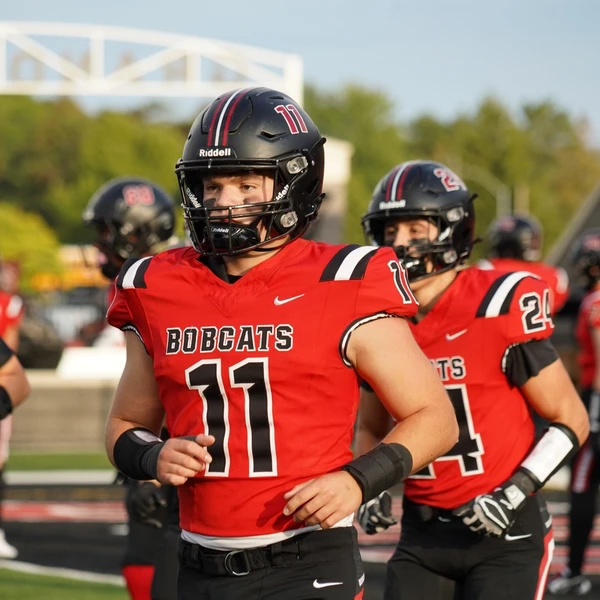
Football
Artificial Intelligence
Trevor London
1x
Finalist
Trevor London
1x
FinalistBio
My name is Trevor London, I’m from Grand Blanc, MI. I’m 17 years old, I played football from the age of 4. I love watching all sports. I plan on pursuing my education at Michigan State University and majoring in Finance.
Education
Grand Blanc Community High School
High SchoolMiscellaneous
Desired degree level:
Bachelor's degree program
Majors of interest:
- Finance and Financial Management Services
Career
Dream career field:
Finance
Dream career goals:
Sports
Football
Varsity2013 – 202512 years
Awards
- Academic All SVL and All State
Public services
Volunteering
Families and Children Together (FACT) — Clothes Distributor2023 – 2026
Future Interests
Entrepreneurship
Brooks Martin Memorial Scholarship
At sixteen, I learned that even the most basic assumptions of life can be fragile. Sitting in an exam room, I listened as a doctor explained that the eye conditions I have: Retinoschisis, congenital coloboma of the optic nerve, optic pits in both eyes, bilateral cystoid macular edema, and ocular hypertension, could worsen unpredictably. There was no dramatic diagnosis, no instant loss, just the quiet realization that something I had always relied on, my sight, was not guaranteed. Around that same time, those conditions progressed to the point where I was told to stop playing sports and working out. Activities that had shaped my daily life and sense of identity were suddenly off limits, not because of a lack of effort, but because my vision could no longer support it.
Until this point, I lived with the assumption that my body would always cooperate. Sight, movement, and health felt natural and permanent. Sitting in an exam room, listening to doctors explain uncertainty instead of timelines, forced me to face a reality I never considered. The most fundamental parts of life are not guaranteed. They can be stripped away from you without warning.
This realization reshaped how I see myself and the world. Losing the ability to train and compete was very frustrating. More importantly, it changed how I value opportunity. I no longer procrastinate goals with the assumption that I have plenty of time. I hold myself accountable and prioritize growth, knowing that things can be taken away in an instant.
As my conditions stabilized and I was eventually able to return to sports and working out with limits, my relationship with athletics changed completely. I no longer train out of habit, but out of gratitude. Every rep, every set, and every workout is a reminder that this is all temporary. Movement isn’t something you're owed; it's a privilege. This mindset has reshaped my discipline beyond just the gym; I approach academics the same way. Consistently, urgently, and without the assumption that I will have time later.
Living with medical uncertainty has taught me patience, adaptability, and empathy for the struggles others carry. When your future is unclear, you learn to focus on what you can control. Knowing that this isn’t temporary, it's something I will live with for the rest of my life, is frightening. Managing my vision requires daily medication, and I’ve had to accept that surgery may be necessary one day. Still, I refuse to let that dictate how I fully live.
I don’t know exactly how my vision will change in the future, but I do know how I will meet it: with discipline, urgency, and gratitude. What my eyes have taken from me, they have also given me perspective. I no longer live assuming I have unlimited time, unlimited wealth, or unlimited chances. I live intentionally. I work harder. I appreciate it more. I move forward knowing that nothing is guaranteed, which is exactly why every opportunity matters.
Janice Louise Olach Scholarship
At sixteen, I learned that even the most basic assumptions of life can be fragile. Sitting in an exam room, I listened as a doctor explained that the eye conditions I have: Retinoschisis, congenital coloboma of the optic nerve, optic pits in both eyes, bilateral cystoid macular edema, and ocular hypertension, could worsen unpredictably. There was no dramatic diagnosis, no instant loss, just the quiet realization that something I had always relied on, my sight, was not guaranteed. Around that same time, those conditions progressed to the point where I was told to stop playing sports and working out. Activities that had shaped my daily life and sense of identity were suddenly off limits, not because of a lack of effort, but because my vision could no longer support it.
Until this point, I lived with the assumption that my body would always cooperate. Sight, movement, and health felt natural and permanent. Sitting in an exam room, listening to doctors explain uncertainty instead of timelines, forced me to face a reality I never considered. The most fundamental parts of life are not guaranteed. They can be stripped away from you without warning.
This realization reshaped how I see myself and the world. Losing the ability to train and compete was very frustrating. More importantly, it changed how I value opportunity. I no longer procrastinate goals with the assumption that I have plenty of time. I hold myself accountable and prioritize growth, knowing that things can be taken away in an instant.
As my conditions stabilized and I was eventually able to return to sports and working out with limits, my relationship with athletics changed completely. I no longer train out of habit, but out of gratitude. Every rep, every set, and every workout is a reminder that this is all temporary. Movement isn’t something you're owed; it's a privilege. This mindset has reshaped my discipline beyond just the gym; I approach academics the same way. Consistently, urgently, and without the assumption that I will have time later.
Living with medical uncertainty has taught me patience, adaptability, and empathy for the struggles others carry. When your future is unclear, you learn to focus on what you can control. Knowing that this isn’t temporary, it's something I will live with for the rest of my life, is frightening. Managing my vision requires daily medication, and I’ve had to accept that surgery may be necessary one day. Still, I refuse to let that dictate how I fully live.
I don’t know exactly how my vision will change in the future, but I do know how I will meet it: with discipline, urgency, and gratitude. What my eyes have taken from me, they have also given me perspective. I no longer live assuming I have unlimited time, unlimited wealth, or unlimited chances. I live intentionally. I work harder. I appreciate it more. I move forward knowing that nothing is guaranteed, which is exactly why every opportunity matters.
William "Bill" Scotti Memorial Football Scholarship
Football has been a central part of my life for as long as I can remember. From playing in youth leagues to high school competition, the sport has taught me lessons far beyond wins and losses. For fifteen years, football shaped not only my daily routines but also my values, work ethic, and approach to challenges. The discipline, teamwork, resilience, and leadership I gained through the sport continue to influence my character and guide how I engage with my community.
The discipline required to excel on the field has carried over into every part of my life. Football demanded early mornings, strict practice schedules, and consistent focus, even when progress was slow or setbacks occurred. Balancing academics with athletics required careful time management, prioritization, and a commitment to improvement, lessons that are now integral to my approach to school, work, and personal growth. Football taught me that effort and consistency matter more than talent alone. Whether preparing for exams, completing projects, or pursuing individual goals, I rely on the discipline I honed in the field to stay focused and accountable.
Teamwork has been equally transformative. Football is inherently collaborative: every player has a role, and the team succeeds only when each person performs theirs and supports others. Over the years, I learned to trust my teammates, communicate effectively, and put the collective goal above personal recognition. These lessons have extended into my life off the field, helping me build strong relationships, collaborate on group projects, and support friends and peers when they face challenges.
At sixteen, my experience with football took an unexpected turn. A series of progressive eye conditions forced me to step back from playing competitively. The sport that had shaped my identity and daily life was suddenly off-limits. This was difficult, not because of a lack of effort, but because my vision could no longer safely support me on the field. Stepping away from football tested my resilience in a way nothing else had. It was frustrating and humbling, but it also taught me that challenges are not the end of growth; they are opportunities to adapt, learn, and continue contributing in new ways. I stayed involved by mentoring younger players, attending practices, and supporting my teammates, learning that leadership isn’t only about performance; it’s also about influence, encouragement, and presence.
Leadership, another core lesson from football, has shaped how I interact with others in meaningful ways. Encouraging teammates, modeling discipline, and supporting others through setbacks taught me the importance of responsibility and empathy. I aim to bring this mindset into my community by mentoring youth, volunteering in athletic programs, and helping create environments where others can develop confidence, teamwork, and resilience.
Football has taught me that discipline, teamwork, resilience, and leadership are not just traits for athletes, they are qualities that guide how I navigate life. Even when faced with obstacles like my eye conditions, I continue to apply these lessons to academics, personal development, and community involvement. Football shaped my character, and the values it instilled will continue to guide how I contribute, inspire, and make a positive difference wherever I go.
Boddu Football Scholarship
For as long as I can remember, football has been more than a sport in my life, it has been a defining force in shaping who I am. From early childhood practices to years of competitive play, football gave me structure, purpose, and a sense of belonging. The lessons I learned on the field didn’t stop at wins and losses; they became life lessons that taught me discipline, teamwork, leadership, and resilience. These are the same qualities that now guide how I interact with others, face challenges, and look to make a positive impact in my community.
On the surface, football may seem like a game built of tackles and touchdowns, but at its core it teaches something deeper. Being part of a team required me to learn how to work with others toward a shared goal, a skill that extends far beyond the field. Whether we were running drills in the summer heat or huddling after a tough loss, I learned that success depends on mutual trust, communication, and selflessness. These values didn’t just help us win games; they helped me become more compassionate and dependable in my relationships outside of sports, and motivated me to support others when they faced their own challenges. This reflects what so many studies show about sports: team participation fosters connection, confidence, and personal growth in young people.
However, my journey with football wasn’t only defined by these lessons; it was also deeply personal. Around the time I was sixteen, a series of serious eye conditions progressed to the point that I was told to stop playing. Suddenly, the sport that had shaped my identity was no longer something I could participate in physically. It was frustrating to step away not because of a lack of effort, but because my body couldn’t support the demands of the game. Still, I continued to be involved off the field, cheering on teammates, attending games, and offering encouragement, because the culture of football had already taught me that support matters as much as participation.
This sense of community is not unique to my personal experience. Football, as a sport, has a remarkable ability to bring people together across backgrounds and differences, fostering unity and cooperation among players and fans alike. It is this sense of shared purpose that I hope to bring to my community. I plan to use my passion for the sport to inspire others, particularly young athletes who may face obstacles of their own. Whether through coaching youth football, mentoring young players, or leading community fitness activities, I want to help create environments where everyone feels supported and encouraged.
Football taught me perseverance, the ability to keep moving forward even when the path changes unexpectedly. It taught me leadership, that influence comes not just from being the best player, but from being someone others can rely on. Most of all, it taught me that sports are more than games; they are opportunities to build character, strengthen community, and uplift others. As I continue my education and future career, I will carry these lessons with me and seek to make a positive difference wherever I go.