
Hobbies and interests
Military Sciences
Drawing And Illustration
Music
Counseling And Therapy
Reading
Drama
Adventure
Health
I read books multiple times per month
Titus Oliver
1x
Finalist
Titus Oliver
1x
FinalistBio
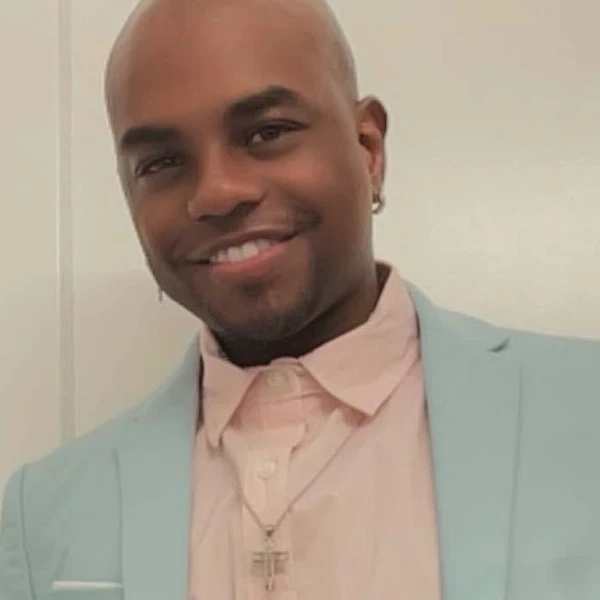
I am a scholar–leader shaped by lived experience and disciplined service. As a U.S. Army officer, I lead with accountability and composure, knowing that leadership extends beyond mission success to the well-being of those entrusted to my care. I have witnessed how trauma reshapes lives, clouds decision-making, and leaves lasting marks on mental health long after physical wounds fade.
Supporting loved ones through profound psychological hardship has made this mission deeply personal. I have seen trauma erode confidence and clarity in ways that feel irreversible. Those experiences did not weaken me; they strengthened my resolve and clarified my purpose.
I now pursue global mental health and trauma studies with a focused commitment to improving care for military and minority communities, particularly service members, veterans, and their families. Too often, these communities navigate the invisible wounds of service while facing cultural stigma, systemic barriers, and limited access to quality care. They deserve support that is informed, equitable, and culturally responsive.
As a member of Phi Beta Sigma Fraternity, Inc., I live out Brotherhood, Scholarship, and Service through mentorship and community engagement. Leadership, to me, means standing in the gap and building systems that restore dignity and hope.
Through advanced training, I will become a practitioner–leader equipped to deliver culturally competent, trauma-informed care. This is not simply a professional ambition, it is a calling rooted in service, justice, and unwavering commitment.
Education
University of Denver
Master's degree programMajors:
- Clinical, Counseling and Applied Psychology
Minors:
- Clinical, Counseling and Applied Psychology
- Mental and Social Health Services and Allied Professions
- Psychology, Other
The University of Texas at Arlington
Bachelor's degree programMajors:
- Psychology, General
Minors:
- Clinical, Counseling and Applied Psychology
Mississippi Gulf Coast Community College
Associate's degree programMajors:
- Veterinary/Animal Health Technologies/Technicians
Miscellaneous
Desired degree level:
Master's degree program
Graduate schools of interest:
Transfer schools of interest:
Majors of interest:
- Mental and Social Health Services and Allied Professions
- Psychology, General
- Psychology, Other
- Military Applied Sciences
Career
Dream career field:
Mental Health Care
Dream career goals:
Platoon Leader
Army2014 – Present12 yearsPeer Mentor
The University of Texas at Arlington2022 – 20231 year
Sports
Track & Field
Varsity2008 – 20135 years
Research
Research and Experimental Psychology
The University of Texas at Arlington — Student2022 – 2023
Arts
South Panola High School
Drawing2006 – 2013
Public services
Volunteering
Phi Beta Sigma Fraternity, Inc. — Graduate Member2023 – Present
Future Interests
Advocacy
Volunteering
Philanthropy
Entrepreneurship
Lotus Scholarship
Coming from a single parent, low-income household taught me resilience at an early age. My mother worked tirelessly to provide for my family while raising me and my sibling with special needs. Watching her balance multiple responsibilities showed me what perseverance truly looks like. There were moments of uncertainty, financial strain, and emotional stress, but those challenges shaped my mindset rather than limiting it. I learned how to adapt, stay disciplined, and push forward even when circumstances were not in my favor.
Growing up in that environment also instilled in me a deep sense of responsibility and purpose. Helping care for my sibling and supporting my family through difficult times gave me firsthand experience with the emotional and mental strain that many people silently carry. These experiences sparked my passion for mental health awareness and my desire to help others who are struggling in silence.
I am actively working toward my goals by pursuing higher education in a field that will allow me to better understand and support individuals facing mental health challenges. My commitment extends beyond academics. Through my service in the military and my involvement in my community, I have developed leadership, discipline, and a strong desire to help others. I also use my voice to encourage open conversations around mental health, especially in communities where stigma often prevents people from seeking help.
In the future, I plan to use both my personal experiences and professional training to support individuals dealing with mental health issues. My goal is to create meaningful change by providing resources, advocacy, and compassionate support that helps people feel seen, understood, and empowered to seek help and heal.
Special Needs Advocacy Inc. Kathleen Lehman Memorial Scholarship
My passion for serving individuals with special needs is deeply rooted in my lived experiences and the responsibilities I have carried since childhood. Growing up in a single parent household, I witnessed resilience firsthand, but one of the most defining aspects of my life has been having a sibling with special needs. My sister, who is neurodivergent and has significant health challenges, shaped my understanding of patience, empathy, and advocacy long before I had the language to describe those concepts. From an early age, I was not just a sibling, I was a helper, a protector, and often an extension of the support system she needed to navigate a world that was not always built with her in mind.
As I have grown older, that role has continued to evolve. Today, I also help care for my neurodivergent nephews, which has further expanded my perspective. Each child is different, with unique strengths, challenges, and ways of interacting with the world. These experiences have shown me that there is no one size fits all approach when it comes to supporting neurodivergent individuals. What works for one person may not work for another, and meaningful care requires both knowledge and genuine understanding. This realization has been a driving force behind my desire to pursue a career focused on serving individuals with special needs.
My goal is to gain a deeper and more comprehensive understanding of neurodivergent individuals, not just from personal experience, but through formal education and professional training. I want to learn how to properly assess, treat, and support individuals in ways that honor their individuality while helping them thrive. Too often, neurodivergent individuals are misunderstood, overlooked, or placed into rigid systems that fail to recognize their potential. I want to be part of changing that narrative.
In my career, I plan to make a positive social impact by advocating for more inclusive, informed, and compassionate approaches to care. This includes working directly with individuals and families, as well as contributing to systems that provide better access to resources, mental health support, and educational opportunities. I am particularly passionate about ensuring that families, especially those from underserved communities, feel supported and empowered rather than isolated or overwhelmed.
Additionally, my background has given me a unique ability to connect with people on a human level. I understand the emotional weight that can come with caring for a loved one with special needs, the uncertainty, the exhaustion, but also the deep love and pride. I want to be someone who not only provides professional support but also offers reassurance and understanding to families walking similar paths.
Ultimately, my purpose is to bridge the gap between personal experience and professional impact. By combining empathy with education, I hope to create spaces where neurodivergent individuals are not just accommodated, but truly valued and understood. My journey began at home, but my mission extends far beyond it, to serve, advocate, and make a lasting difference in the lives of those who deserve to be seen, heard, and supported.
Marie J. Lamerique Scholarship for Aspiring Scholars
Growing up in a single parent household brought many challenges. My mother raised me and my sister, who was born with cerebral palsy and other serious health conditions. She worked two jobs to provide for us, all while trying to protect us from my father, whose violent behavior made our home feel unsafe. Much of my childhood was shaped by fear and uncertainty, and there is one moment that remains vivid in my mind, a moment that forced me to understand both the fragility and strength within my family.
I remember the day we were changing the locks on our house in an attempt to keep my father out. It was supposed to be a step toward safety, but that sense of security was shattered in an instant. I saw him move past the window, and before I could fully warn my mother, he forced his way inside. What followed is something I will never forget. He began attacking my mother and the person helping us, holding a hammer in the air and threatening to kill her, then to come after my sister and me. My sister and I stood there crying and screaming, frozen between fear and helplessness.
In that moment, everything felt out of control, but it also became a turning point. The person helping us managed to pull him away long enough for us to escape. We ran outside barefoot, desperate to get away. My mother flagged down passing cars, pleading for help, but many people drove past us, likely out of fear. I remember the panic in her voice as she begged strangers to stop, to help us survive. Finally, in an act of sheer desperation, she stepped in front of a moving vehicle and cried out, “He’s trying to kill us. Please, I’m trying to protect my children.” That moment, seeing my mother willing to risk everything to save us, is something that has stayed with me ever since.
What I did in that moment was simple, but it shaped me. I ran, I stayed close to my family, and I trusted my mother’s strength even when everything felt uncertain. As a child, there was little else I could do, but that experience forced me to grow up quickly. It taught me what survival looked like, not just physically, but emotionally. I learned that strength is not the absence of fear, but the decision to keep moving forward despite it.
That moment has profoundly shaped how I approach my future. It instilled in me a deep sense of responsibility, resilience, and purpose. Watching my mother fight to protect us showed me what it means to persevere under unimaginable pressure. It also gave me a deep awareness of how trauma impacts individuals and families, often in ways that are unseen.
As I pursue my future, particularly in the field of mental health, I carry that experience with me. I want to be someone who helps others navigate the aftermath of trauma, who provides support to those who feel powerless, and who creates spaces where people feel safe and heard. My upbringing did not break me, it shaped me into someone who understands pain, values resilience, and is determined to turn those experiences into a source of strength for others.
Pay It Forward Scholarship
From a young age, I have witnessed how mental health struggles quietly shape the lives of those around me, family members grappling with anxiety and depression, friends silently carrying heavy burdens, and later, soldiers I served alongside facing invisible wounds. These experiences left a lasting imprint, but it was the personal losses I endured in one year that became a turning point. Losing five soldiers and a mentor to suicide forced me to confront mental health challenges I had long avoided, and it illuminated the urgent need for compassionate, accessible care for those in high-stress environments. This is why I chose to pursue a degree in healthcare with a focus on mental health.
I want my education to be more than a personal journey, I want it to be a tool for meaningful change. My goal is to serve military personnel, veterans, and their families, those who often endure trauma in silence. I have seen firsthand how stigma and fear of judgment can prevent individuals from seeking help, sometimes with tragic consequences. Through my degree, I aim to provide not just treatment, but understanding and advocacy, creating spaces where people feel safe to confront their mental health struggles. My hope is to encourage young Black men and women, particularly, to seek help without shame, because no one should feel that suffering must be endured alone.
Being a member of Phi Beta Sigma Fraternity, Inc., has strengthened my commitment to community service and mentorship. I am dedicated to demonstrating that seeking help is a sign of strength, not weakness. I want to leverage my education and experiences to build outreach programs, workshops, and support networks that normalize conversations about mental health in both military and civilian communities. I envision a future where individuals know they are not alone, where assistance is accessible, and where healing is possible before crises escalate.
Winning this scholarship would not only help me fund my education, it would allow me to dedicate myself fully to this mission. It would provide the opportunity to focus on rigorous academic and practical training, equipping me with the knowledge and skills necessary to impact lives directly. More than financial support, it represents a chance to transform personal pain into professional purpose, turning the losses I’ve endured into a source of empathy and advocacy for others.
Ultimately, my pursuit of a healthcare degree is driven by a profound understanding of both vulnerability and resilience. I want to be a professional who sees beyond symptoms and statistics, who acknowledges the human experience behind every story of struggle. By merging personal insight, academic preparation, and a commitment to service, I hope to change the narrative around mental health, especially for those who serve, sacrifice, and often suffer in silence.
Dr. DeNinno’s Scholarship for Mental Health Professionals
Growing up in a small town in Mississippi, I always felt there was something bigger waiting beyond the familiar streets and fields of my childhood. I am the first in my family, and the only male, to pursue education beyond high school, and being a first-generation, low-income student has made this journey both challenging and deeply meaningful. My decision to pursue a graduate degree in mental health is rooted not only in my personal circumstances but in profound experiences of loss, trauma, and caregiving that reshaped my life.
In one year, I lost five soldiers I served alongside, a great mentor, and, most painfully, some of these individuals were my own blood relatives. The grief was overwhelming and forced me to confront my mental health in ways I had long avoided. I realized how trauma can silently erode a person’s well-being and how unprepared I felt to help those I cared about most. These losses opened my eyes to the urgent need for compassionate, informed mental health support, care that can prevent further suffering and provide hope in the darkest moments.
Beyond my personal losses, I assist my sister and her children, all of whom are neurodivergent. Supporting them has shown me the daily challenges families face when navigating mental health needs without adequate understanding or resources. Pursuing graduate studies in mental health will equip me with the knowledge and skills to better support them, while also preparing me to advocate for others facing similar struggles. This personal connection strengthens my commitment to making mental health care accessible, informed, and empathetic for individuals and families alike.
Witnessing both my family and colleagues struggle with mental health challenges has given me a unique perspective. I have seen how trauma, when left unaddressed, can ripple through entire families and communities. Serving in the military has further shaped this vision, showing me how trauma affects service members and their families, from active duty to retirement. I am committed to bridging the gap between their struggles and the support they deserve.
Being a first-generation, low-income student adds an extra layer of responsibility to my work. Every step I take toward this degree is a step toward breaking cycles of hardship in my family and advocating for those whose voices are often unheard. By transforming my personal experiences with loss, grief, and caregiving into professional expertise, I aim to serve others with empathy, understanding, and dedication.
I am pursuing this degree not only to honor those I have lost but to help others reclaim hope and resilience in the face of trauma. This scholarship would empower me to continue this path, allowing me to turn pain into purpose and ensure that mental health care reaches those who need it most.
Joshua’s Light: Suicide Awareness & Resilience Scholarship by Solace Mind®
My decision to pursue a master’s degree in mental health is deeply rooted in lived experiences that have fundamentally changed who I am. Serving in the military has exposed me to both the visible and invisible costs of service, but nothing impacted me more than a single year in which I lost five soldiers and a mentor who had a profound influence on my life and leadership. That level of loss was not something I was prepared for. It did not just affect my unit, it affected me personally in ways I could not ignore. It forced a shift in my own mental health and brought emotions and struggles to the surface that I had spent years trying to suppress.
For a long time, I believed that staying strong meant pushing forward without addressing what I felt. Grief, however, does not stay buried. I found myself confronting emotions I had tried to avoid, including guilt, helplessness, and deep sadness. At the same time, I was expected to lead and remain steady for others even as I struggled internally. That experience opened my eyes to how many people suffer in silence, especially in environments where vulnerability is often mistaken for weakness.
Those losses changed my direction. What stayed with me most was the realization that I did not have the tools to fully support the people around me or even myself. I remember wanting to do more, to say the right things, and to recognize the signs earlier, but not knowing how. That sense of limitation became my motivation. I am pursuing advanced education in mental health so I can intervene in meaningful ways and provide support that is informed, intentional, and effective.
Self-advocacy has become a critical part of my growth. I learned that I could not neglect my own well-being. I began to prioritize reflection, seek support when needed, and engage in conversations that challenge stigma. I try to create space for others to speak openly, even when it is uncomfortable. I have come to understand that suicide awareness and prevention often begin in small moments by checking in, listening, and recognizing when someone is not okay even if they have not said it out loud.
Looking ahead, I am committed to serving underrepresented communities, particularly military members, veterans, and their families, as well as individuals from small, underserved towns like the one I come from. My goal is to provide trauma informed, culturally aware care that meets people where they are.
Ultimately, my purpose is shaped by loss, but not defined by it. I carry those individuals with me, and this path allows me to honor them by helping others survive what they could not.