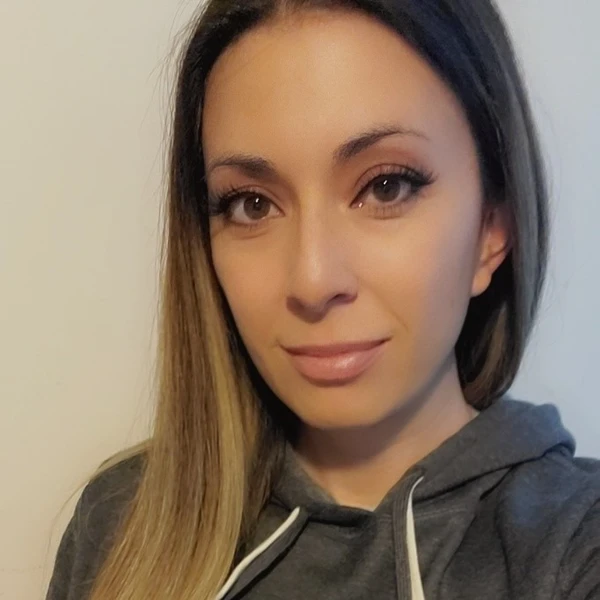
Tiffany Silva
1x
FinalistTiffany Silva
1x
FinalistBio
I’m a dedicated high school math teacher and graduate student pursuing a Master’s in Mathematics. I’m passionate about education, financial literacy, and helping students build strong foundations for their futures.
Education
Grand Canyon University
Master's degree programMajors:
- Mathematics
University of Redlands
Master's degree programMajors:
- Education, General
University of California-Riverside
Bachelor's degree programMajors:
- Mathematics
Miscellaneous
Desired degree level:
Master's degree program
Graduate schools of interest:
Transfer schools of interest:
Majors of interest:
Career
Dream career field:
Education
Dream career goals:
A Man Helping Women Helping Women Scholarship
My name is Tiffany Silva, and I am a high school math teacher who believes that education is one of the most powerful tools for empowerment. I teach not only numbers and formulas, but confidence, independence, and the ability to problem-solve, skills that go far beyond the classroom. I have always loved math, but I also know how intimidating it can feel, especially for young women who often doubt their abilities in STEM fields. My goal as a teacher is to help my students, especially my female students, see that they are capable of anything they set their minds to.
When I was in school, I was quiet and unsure of myself. Even though I was strong in math, I did not always feel confident enough to take the advanced courses that could have opened more doors for me. I watched my friends move on to calculus while my own math journey ended with algebra in high school. At the time, I did not realize how much that one choice would limit my opportunities. I did not take calculus until community college, and while I still loved it, the experience was not the same. I often wonder what might have been different if I had believed in myself earlier.
That experience shaped how I approach teaching today. I see myself in so many of the young women I teach, smart, capable, and full of potential, but sometimes unsure if they belong in advanced math or science courses. I make it my mission to help them see that they do. I tell them that confidence grows with practice, that intelligence is not about being perfect, and that they do not have to wait until they feel ready to take on a challenge. They just have to start.
When I transferred to the University of California, Riverside to study mathematics, I was often one of only a few women in my upper-level math classes. Most of my classmates were men, and while they were kind and welcoming, it was impossible not to notice the imbalance. Sitting in a lecture hall surrounded mostly by male students made me realize how important representation is. I knew I belonged there, but I also knew not every young woman gets to feel that same sense of belonging. That experience deepened my commitment to encourage more girls to pursue math and STEM fields. I want my students to walk into any classroom, no matter the subject or who is around them, and know that they belong.
Empowering my female students means showing them examples of women succeeding in STEM, encouraging them to pursue higher education, and reminding them that their voices matter. I create a classroom environment where mistakes are part of learning and where everyone’s ideas are valued. I make sure they see that strength and intelligence can coexist with kindness and empathy. Many of my students have told me that they never liked math until my class. Hearing that reminds me that I am making a difference, not just in how they see math, but in how they see themselves.
My goal is to continue my education by earning my master’s degree in mathematics so I can teach at the college level and inspire students beyond high school. I want to mentor young women entering the field, helping them gain both knowledge and confidence. The world needs more women in STEM, and I want to be part of that change, one classroom, one student, one moment of encouragement at a time.
Qwik Card Scholarship
Building credit early is important to me because I have learned what happens when you do not. Your credit affects everything from the car you drive to the home you live in, and I learned that the hard way. I once fell into what I now call my “death loans.” They were short-term, high-interest loans that promised quick help but left me in a cycle of endless payments. I took one to cover an emergency, then another to pay off the first, and before I knew it, I was stuck in a financial trap that felt impossible to escape.
Those loans taught me one of the most painful but valuable lessons of my life: debt can grow faster than you can imagine. I remember the feeling of watching money disappear from my paycheck before I could even use it. I told myself it was temporary, but the truth was that I had not built a strong financial foundation. I did not have savings, I did not have good credit, and I did not fully understand how interest worked.
The turning point came when I decided that I was done feeling powerless. I stopped taking out new loans and started facing my debt head-on. I created a spreadsheet listing every balance, due date, and interest rate. I began using the snowball method to pay off one debt at a time, focusing on the smallest balances first to build momentum. Every time I paid one off, I felt a little stronger. For the first time, I could see progress instead of pressure.
I also began learning about credit repair and responsible rebuilding. I paid off old collections, disputed inaccuracies on my report, and opened a secured credit card. I used it for small purchases, paid it in full every month, and watched my score slowly climb. I started checking my credit reports regularly. These habits not only helped my credit but changed the way I viewed money.
One of the smartest financial choices I made was changing my mindset. I stopped focusing on what I had lost and started focusing on what I could build. Instead of feeling ashamed of my financial mistakes, I treated them as lessons. I learned to budget more effectively, save for emergencies, and plan ahead. Each paycheck now has a purpose. I make sure my needs are met, my savings grow, and my debts shrink.
Building credit early matters to me now because I understand what it means to live without it. It is not just about having access to credit cards or loans; it is about creating opportunities and protecting your future. Good credit allows you to borrow responsibly, secure better rates, and reduce financial stress. It gives you choices.
Taking control of my financial future means continuing on this path of growth and accountability. I am focused on paying off the last of my “death loans,” strengthening my savings, and preparing for the next stage of my life. My next financial goal is to purchase a Kia Carnival, a reliable vehicle that fits me and my four kids perfectly. For me, this represents more than just buying a car; it is proof that financial knowledge leads to real, tangible results.
The lesson I learned the hard way is that quick money is never easy money. I used to think I was surviving, but now I am truly rebuilding. I am not defined by my past mistakes. I am defined by how I learned from them and how I continue to move forward with confidence, discipline, and hope for my financial future.
Learner Calculus Scholarship
I have always loved math. It has a rhythm and logic that makes sense to me in a way few other things do. But even with that love, I did not always have confidence in myself. When I was in middle school, I was placed in honors math, but when it came time to move a year ahead in high school, I hesitated. I took Algebra I again in my freshman year because I was not sure I could keep up. While my friends continued down the accelerated path, my final high school math class ended up being Algebra II, while theirs was Calculus.
Looking back, I wish I had believed in myself sooner. My first experience with calculus did not come until community college, and the environment there was very different. The learning experience was not as personal as what I might have had in high school. Calculus can be challenging even under the best conditions, but in large college classes where you are mostly on your own, it can feel intimidating. I struggled to connect with it the way I wanted to, and I realize now how much that early lack of confidence limited my opportunities.
At one point, I briefly considered studying chemical engineering. I loved math and chemistry, and I wanted a career where I could use them together. But the first physics class I took scared me away. Physics is basically applied calculus and I did not feel strong enough in calculus to understand it fully. I remember feeling frustrated that something I loved so much felt just out of reach. Engineering is, in many ways, a degree built on physics and calculus, and had I been more confident and better prepared, I might have continued down that path.
Even though I did not pursue engineering, my love for math never faded. It continued to show up in my life in small ways, helping friends and family with homework, tutoring, or explaining concepts to classmates. Over time, I realized that what I truly enjoyed was not just solving problems but helping others understand them. That realization changed everything. I decided to major in mathematics and eventually became a high school math teacher.
Now, as a teacher, I see calculus from a completely different perspective. It is not just another class; it is a gateway. Calculus opens doors to careers in science, technology, engineering, and so many other fields. I tell my students that understanding calculus means understanding how the world changes, how things grow, move, and interact. It is the foundation for innovation. Whether they dream of becoming doctors, architects, or software engineers, calculus gives them the tools to think critically and apply what they learn to real life.
When I think back to my own journey, I want my students to have more confidence than I did. I want them to see calculus not as something intimidating but as something within their reach. I remind them that the effort they put in now could open doors later that they might not even know exist yet. Every time I see a student challenge themselves or begin to see the beauty in math, I feel like I am helping them build the confidence I once lacked.
Calculus is important in the STEM field because it represents possibility. It connects curiosity to understanding and gives students the power to imagine, design, and create. For me, it has come full circle, from the class I was once too afraid to take to the subject that now helps me inspire others to believe in their own potential.
STEAM Generator Scholarship
Being a first-generation student means stepping into the unknown and figuring things out as you go. Neither of my parents earned a bachelor’s degree, but they always encouraged me to go further than they did. They were supportive in every way they could be, but since college was unfamiliar territory for all of us, I had to learn most of it on my own.
Because of that, I started my college journey without truly understanding how the system worked. I did not take the SAT or ACT, apply for scholarships, or even fill out college applications in high school. My parents did not know to push for those things, and I did not know to ask. I started at a community college, thinking it would be a simple two-year path to a university, but I soon learned how easy it was to fall behind without a plan. I took lighter class loads and changed my schedule often, not realizing how much that would delay my progress. What should have taken two years ended up taking much longer. It was frustrating at times, but it also forced me to grow.
Eventually, I learned how to advocate for myself. I met with counselors, built detailed academic plans, and pushed myself to take full course loads while balancing work and family responsibilities. Every mistake became a lesson, and every step forward reminded me that success was possible even when it took longer than expected. Being a first-generation student taught me perseverance and patience in a way no class ever could.
At first, I was majoring in accounting because it seemed like a safe and practical choice. But while planning my transfer, I realized I had no more math classes ahead. That realization surprised me with how sad it made me feel. Math had always been something I loved, something that gave me comfort and clarity. I missed solving problems and helping others understand them too. That moment made me realize that math was not just a subject I enjoyed; it was part of who I am. I changed my major to mathematics and never looked back.
Today, I am a high school math teacher. I see many students like me, bright, capable, and full of potential but unsure where to start. I make it my mission to guide them through those first steps, to help them avoid the same mistakes I made, and to remind them that their journey does not have to be perfect to be meaningful.
My dream is to continue my education and earn my master’s degree in mathematics so I can teach at the college level and reach even more students who remind me of my younger self. This scholarship would help me move closer to that goal by easing the financial strain of graduate school and allowing me to focus on what matters most: learning, teaching, and giving back.
Being a first-generation student has not been easy, but it has shaped me into someone who does not give up easily. I learned to find my own way, and now I help others find theirs.
Bick First Generation Scholarship
Being a first-generation student means stepping into the unknown and figuring things out as you go. Neither of my parents earned a bachelor’s degree, but they always encouraged me to go further than they did. They were supportive in every way they could be, but since college was unfamiliar territory for all of us, I had to learn most of it on my own.
Because of that, I started my college journey without truly understanding how the system worked. I did not take the SAT or ACT, apply for scholarships, or even fill out college applications in high school. My parents did not know to push for those things, and I did not know to ask. I started at a community college, thinking it would be a simple two-year path to a university, but I soon learned how easy it was to fall behind without a plan. I took lighter class loads and changed my schedule often, not realizing how much that would delay my progress. What should have taken two years ended up taking much longer.
Eventually, I learned how to advocate for myself. I met with counselors, built detailed academic plans, and pushed myself to take full course loads while balancing work and family responsibilities. Every mistake became a lesson, and every step forward reminded me that success was possible even when it took longer than expected. Being a first-generation student taught me perseverance and patience in a way no class ever could.
At first, I was majoring in accounting because it seemed like a practical choice. But while planning my transfer, I realized I had no more math classes ahead. That realization surprised me with how sad it made me feel. Math had always been something I loved. I missed solving problems and helping others understand them, too. That moment made me realize that math was not just a subject I enjoyed; it was part of who I am. I changed my major to mathematics and never looked back.
Today, I am a high school math teacher. I see many students like me, bright, capable, and full of potential but unsure where to start. I make it my mission to guide them through those first steps, to help them avoid the same mistakes I made, and to remind them that their journey does not have to be perfect to be meaningful.
My dream is to continue my education and earn my master’s degree in mathematics so I can teach at the college level and reach even more students who remind me of my younger self. This scholarship would help me move closer to that goal by easing the financial strain of graduate school and allowing me to focus on what matters most: learning, teaching, and giving back.
Being a first-generation student has not been easy, but it has shaped me into someone who does not give up easily. I learned to find my own way, and now I help others find theirs.
Kathleen L. Small Teaching Scholarship
I have always been a quiet person. In high school, I was shy and often kept to myself. I was a good student, but at one point I stopped turning in my work. My geometry teacher noticed something was off. Instead of scolding me or assuming I was lazy, he reached out to my mom. What he told her still means everything to me. He explained that I was bright but learning how to socialize, which was an important life skill. He said he was happy to see me growing in that way and allowed me to make up my work. Because of his understanding, I passed his class.
That moment changed how I saw education. He saw me as a person first and a student second. His empathy showed me what it means to truly care about someone’s growth beyond academics. He believed in me before I believed in myself. His encouragement not only helped me regain confidence but also sparked my love for math. That experience planted the first seed that I could one day make a difference for students the same way he did for me.
Years later, after I became a teacher, I saw him again at a professional development event. This time, I was not his student but his colleague. We worked together to explore activities we could use with our students. Experiencing his brilliance in that collaborative setting reminded me why I admired him so much. When he retired last year, I felt deep gratitude for everything he had given to students like me. I now work in the same district, and my goal is to carry forward a little of what we lost when he left the classroom.
My journey to teaching was not a straight line. When I began college, I thought accounting would be a natural fit. But when I was about to transfer to a university from community college, I looked over my upcoming classes and realized there was no math. After everything I had experienced in high school, the thought of not taking another math class made me unexpectedly sad. That was when I realized math was not just a subject I was good at; it was something I truly loved. I missed solving problems, finding patterns, and explaining concepts to others. I had been helping friends and family with math for years, not for money, but because it made me happy. That realization changed everything. I switched my major to mathematics and never looked back.
Today, I am a high school math teacher, and I see pieces of my younger self in many of my students. Some are quiet and unsure, just like I was. Others are confident but do not yet see their potential. I make it my mission to show them that learning math is not just about numbers and formulas. It is about building confidence, perseverance, and problem-solving skills that apply far beyond the classroom.
My geometry teacher taught me that education is more than instruction. It is compassion, patience, and belief in others. His kindness changed the course of my life, and his example continues to guide me every day. Because of him, I understand that teaching is not just about helping students pass a class. It is about helping them see their worth and realize what they are capable of. That is why I teach.