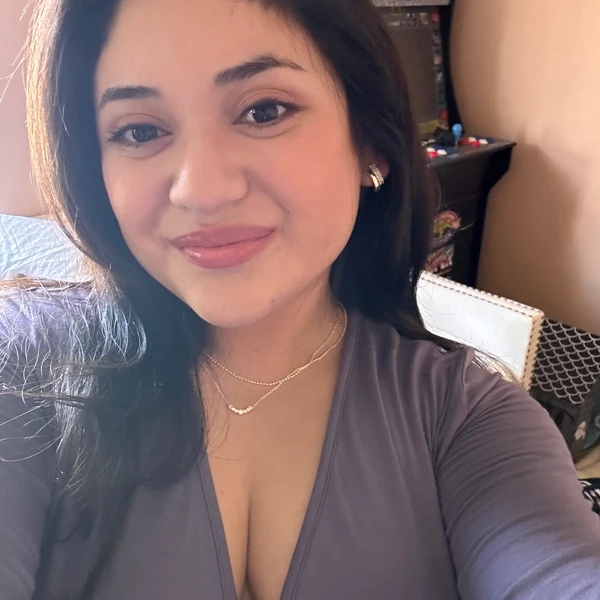
Hello, my name is Tiffany Gutierrez, and I am excited to announce that I have been accepted into my dream master's program. Starting in January 2024, I will be studying counseling psychology with a focus on children and adolescents.
As someone who has family members diagnosed with paranoid schizophrenia, I have a deep understanding of the effects mental illness has in my family, more specifically on my mother's side from Peru. My grandmother and great-grandmother were diagnosed with paranoid schizophrenia. They lived with the illness their entire lives without being diagnosed until later in their senior years. In Peru, mental health illnesses are often overlooked and stigmatized with labels such as "unstable" or "insane" due to a lack of awareness and education. With a lack of awareness, countless individuals in the country and Latin America are left struggling with mental health issues in isolation.
I've always heard wonderful stories about my great-grandmother. She was known for her kind and caring nature and was always willing to do favors for anyone who asked. Along with owning a clothing boutique, she also cared for her many animals. However, she tended to let people take advantage of her generosity. She often provided clothes and sewing services free of charge, without asking any follow-up questions.
My great-grandmother was often seen as naive and lacking self-respect by my family. They believed that she was unaware of people taking advantage of her. Unfortunately, she also became paranoid after her longtime boyfriend left her. Her experiences with her partner's infidelity increased her anxiety and paranoia connected to her schizophrenia. She couldn't shake the feeling that someone was watching her every move. Even though her ex-boyfriend had moved out and started a new life with his new girlfriend, her paranoia made her believe the woman he left her for was hiding in her home. It was not until she became elderly, that she became medically diagnosed with paranoid schizophrenia. Although she was a delight to many, her thoughts and fears intruded on her well-being.
In contrast to my great-grandmother, who was kind and always put others before herself, my grandmother's character was anything but kind. As my mother and her sisters grew older, the schizophrenia in my grandmother also grew worse. My mother recalled how, as punishment, my grandmother had made her kneel on bottle tops. At one point, my grandma became so enraged at my mother and aunts that she beat them with a hefty acoustic guitar. Numerous other accounts of my grandmother abusing my mother, including reporting her to the police for hitting her when that was entirely false. These instances deeply traumatized them of the way they saw motherhood and womanhood.
After a while, my mother and aunts could not take the abuse. At age seventeen, my mother and her younger sister left the household, leaving their eldest sister to care for my grandmother. It was not till decades after that they found out she had schizophrenia by a doctor. Her abuse and toxic personality gave my mother the impression that she was just a bad mother and not somebody suffering from a mental disorder. Her mental illness made sense for how she acted throughout her life but was never suited to be a parent. In her senior age, she believed she was being chased by somebody who was not there and being spied on by the government similar to the paranoia my great-grandmother experienced.
The impact that my grandmother had on my mother and aunts was significant. They all inherited anxiety and depression through their unresolved childhood trauma, impacting their mental state in adulthood and as mothers. As my aunts and my mother became fully established women with careers and families of their own, they still held negative emotions toward their mother.
The treatments given to my grandmother did not change my family’s opinion of my grandmother and still blamed her for being a bad mother to them regardless of her illness. A new toxic environment was created between my family members once they were aware of the mental illness that stemmed in the family. As my mother and aunts argued, they would bring up the topic of schizophrenia and paranoia to weaponize and belittle each other instead of taking the time to talk calmly and receive help themselves.
Up to now, my family has not sought professional mental help due to fear that they inherited a mental illness. One of my childhood memories was of my mother screaming, "I am not crazy" at my aunts when they argued. I was in the room at that moment and was only four years old. Witnessing this side of my mother at such a delicate age, left me terrified and made me see her mental instability right before my eyes.
Growing up with a single mother, I remember feeling like things were always uncertain and unpredictable. There were times when her behavior was erratic, and it had an impact on my development. I saw and heard things that were hard for me to process as a kid, and it left a mark on me. I felt scared most of my time at home and felt like a burden inside the home I shared with my mother. Even though my mother was aware of her behavior and toxic personality towards me, she still did not take responsibility for her actions and refused to see a professional psychologist.
My mother always wanted to believe that she would be different when becoming a parent. I am grateful for the times she did the best she could under our circumstances while embedding the importance of education and supporting me through school. Sadly, we could never have a proper mother-daughter relationship due to her conflictive personality. The most impactful statement she ever said to me as a child stayed permanently in my memory. One night my mother tells me, "If you ever see me ‘change’ from one moment to another, just ignore me. Do not talk to me. Just go inside your room and do not come out." It was not till in my adulthood that I made the connection between her and bipolar disorder considering that her moods shifted from euphoric to depression and anger. However, we both will never know since she will never receive a diagnosis or mental help.
While studying in college and taking psychology courses, I began to learn and differentiate stable behavior from unstable behavior, and my mother was emotionally unstable. I began to block all my mother's negative comments towards me, such as my body size, low income, and love life. I had to immediately step away for the sake of my fiancé, but most importantly, for myself. As we went through many life changes and the impact the COVID-19 pandemic inflicted on us, I was finally able to see my mother in a clear light and that was that she was mentally ill.
I feel an immense achievement for making it through my development despite the challenges. Although it was difficult to hold onto hope, I found solace in my artistry and education. My passion for the arts, particularly painting, and drawing, brought positivity into my world. I am delighted to have earned a bachelor’s degree in fine arts and immersed myself in studio art while learning about art education in school districts. My life's ambition has always been to pursue a career in assisting individuals facing obstacles. Little did I know that my path would lead me to work with children from various family backgrounds.
I find great satisfaction in both the educational journey and my current role as a substitute preschool teacher. I am aware that by showing great compassion and understanding in the field of assisting children, I can positively impact those who were in my shoes when I was young. I believe that every child should have the opportunity to live a fulfilling life, and for that reason, families should have access to mental health education to ensure a brighter future for their loved ones and future generations. I am thrilled to be starting my program, which will equip me with the knowledge and skills needed to assist young people in navigating life's challenges and flourishing.
While I understand that the program will require a lot of effort, I am committed to doing whatever it takes to succeed. This includes reducing my work hours to fully concentrate on my studies. Additionally, I will continue to seek guidance from my therapist, especially regarding my career path and life experiences. This can be costly, but it is crucial for my mental well-being and personal growth. Nonetheless, I'm looking forward to embarking on this fulfilling journey and making a meaningful contribution to society by raising awareness of mental health issues affecting children and young adults.