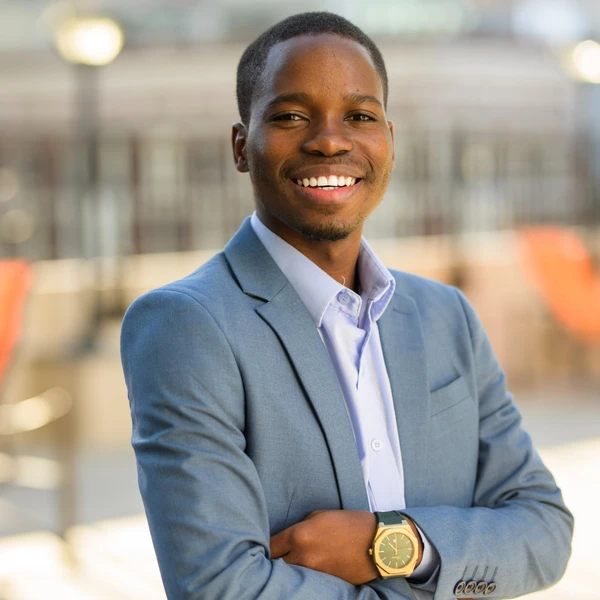
user profile avatar

Thubelihle Ndaba

1x

Finalist

1x

Winner

Bio

I am the first person in my family of eight to attend college. Growing up in Zimbabwe, I learned how quickly life can change when my grandfather, our family's primary provider, was diagnosed with cancer, leaving our family without its primary source of income. I left school and, at twelve, sold freezits (frozen juice snacks) and cooked maize at the city bus rank so I could return to school. My journey to the United States was another lesson in perseverance. Applying to U.S. colleges from Zimbabwe without guidance, I received 12 rejections and spent two gap years refusing to give up before finally being admitted. Those experiences taught me not to wait for opportunities, but to build them. I chose actuarial science because actuaries use math and data to manage financial risk. Although my college has no actuarial science program, I built my own. I pursue a double major in Mathematics and Finance, work 20 hours a week to finance my education, serve as Treasurer of the CSS Actuarial Society and Co-Head of SGA's Voter Registration Committee, and have independently passed four SOA credentialing exams: P, FM, SRM, and FAM. I earned actuarial internships with RGA and Corebridge Financial, became a National Finalist in Travelers' actuarial catastrophe risk case competition, mentored students through the CSS Actuarial Society, and served as a volunteer judge for the Modeling the Future Challenge. Becoming a Fellow of the Society of Actuaries is only the beginning. I want to use data and AI to expand financial security for others and open doors for students like me.

Education

The College of St. Scholastica

Bachelor's degree program
2024 - 2028
  • Majors:
    • Insurance
    • Mathematics and Statistics, Other
  • Minors:
    • Data Analytics

Miscellaneous

  • Desired degree level:

    Bachelor's degree program

  • Graduate schools of interest:

  • Transfer schools of interest:

  • Majors of interest:

    • Business/Commerce, General
    • Insurance
    • Mathematics and Statistics, Other
    • Data Analytics
    • Entrepreneurial and Small Business Operations
  • Not planning to go to medical school
  • Career

    • Dream career field:

      • Insurance
    • Dream career goals:

      Become a Fellow of the Society of Actuaries, advance the use of data and AI in insurance, and eventually build businesses that improve financial security while creating opportunities for future generations.

    • Actuarial Consulting Bootcamp Participant

      Oliver Wyman
      2026 – Present7 months
    • Dining Services Student Assistant

      The College of St. Scholastica
      2024 – 20251 year
    • Mathematics, Physics & Statistics Tutor

      Olivet Science Academy (Zimbabwe)
      2023 – 20241 year
    • Facilities Student Assistant

      The College of St. Scholastica
      2025 – Present1 year
    • College Advancement Student Assistant

      The College of St. Scholastica
      2025 – Present1 year
    • Actuarial Intern

      Corebridge Financial
      2026 – 2026
    • General Senator

      Student Government Association – The College of St. Scholastica
      2025 – Present1 year
    • Treasurer

      CSS Actuarial Society
      2025 – Present1 year
    • Team Lead – Case Competition Participant

      Global Insurance Symposium Case Competition
      2025 – 20261 year
    • Case Competition Participant

      Spencer RIMS Risk Management Case Competition
      2025 – 20261 year
    • National Finalist – Actuarial Case Competition Participant

      Travelers Actuarial Case Competition
      2026 – 2026
    • Actuarial Intern

      Reinsurance Group of America
      2025 – 2025

    Sports

    Volleyball

    Intramural
    2019 – Present7 years

    Pickleball

    Intramural
    2024 – Present2 years

    Awards

    • No

    Research

    • Insurance

      Global Insurance Symposium Case Competition — Research Analyst
      2025 – 2026
    • Insurance

      Reinsurance Group of America (RGA) — Actuarial Research Intern
      2025 – 2025
    • Data Analytics

      Travelers Actuarial Case Competition — Researcher and Risk Analyst
      2026 – 2026

    Public services

    • Volunteering

      DoSomething.org – Project STEM Heroes — STEM Outreach Volunteer
      2026 – Present
    • Volunteering

      CSS Actuarial Society — Actuarial Peer Mentor
      2024 – Present
    • Public Service (Politics)

      Student Government – Voter Registration Committee — Co-Head
      2025 – Present
    • Volunteering

      Modeling the Future Challenge by The Actuarial Foundation. — Volunteer Judge
      2026 – 2026

    Future Interests

    Advocacy

    Volunteering

    Philanthropy

    Entrepreneurship

    Bick First Generation Scholarship
    Being the first person in my family of eight to attend college means carrying hope that extends far beyond myself. Every opportunity I earn reminds my younger siblings that a different future is possible. My family in Zimbabwe sees my education as a chance to change our future, and that responsibility has become my greatest motivation. In many ways, earning a degree is not the finish line for me. It is the beginning of what I hope to make possible for those who follow me. Growing up in Zimbabwe, I learned how quickly life can change. When my grandfather, our family's primary provider, became unable to work because of cancer, our household lost its income almost overnight. I had to leave school, and at twelve years old, I sold freezits (frozen juice snacks) and cooked maize at a local bus station to earn enough money to return to school. That experience taught me how quickly financial stability can disappear and inspired me to pursue actuarial science, the profession that uses mathematics and data to help families and businesses prepare financially for life's unexpected risks. My journey to the United States became another test of that mindset. Applying to colleges without guidance, I received twelve rejections before earning admission two years later. When I discovered my college did not offer an actuarial science program, I created my own path by joining the International Association of Black Actuaries, seeking mentors, and preparing independently for the actuarial exams while working twenty hours each week to finance my education. Those efforts led me to pass four Society of Actuaries exams, earn internships with Reinsurance Group of America and Corebridge Financial, and become a National Finalist in the Travelers Actuarial Case Competition. Looking back, every one of those opportunities began with the decision to keep moving when circumstances suggested I should stop. My dream is to become a Fellow of the Society of Actuaries and build stronger financial protection systems for families facing life's uncertainties. I also want to change my family's future. My younger siblings attend under-resourced rural schools and walk nearly 2.5 miles each way to class. I hope to help them attend better schools, support my parents after years of sacrifice, and mentor first-generation students beginning journeys like mine. If I succeed, my success will never belong only to me. This scholarship would do far more than reduce my financial burden. As an international student with limited access to financial aid and educational loans, there have been semesters when outstanding tuition balances delayed my registration, bringing back the fear of leaving school once again. This scholarship would provide the stability to focus fully on my education and continue building the future I have worked so hard to create. I would be incredibly grateful for your support. Your investment would help me create opportunities for my family, my younger siblings, and the first-generation students I hope to mentor. Thank you sincerely for taking the time to read my story and consider my application.
    Our Destiny Our Future Scholarship
    Life’s most disruptive hardships rarely announce themselves. I learned that as a child in Zimbabwe, when my grandfather, the primary provider for our household, was diagnosed with cancer and gradually lost his ability to work. What began as a health crisis quickly became a financial one. Our household income disappeared, and the stability we depended on unraveled. At twelve years old, I left school and began selling freezits and cooked maize at a local bus rank and to small-scale miners to help support my family. At home, I took on small responsibilities, bringing my grandfather water, making tea, and being present during long, quiet days. Alongside support from our church, which provided basic necessities such as rice, mealie-meal, and baking flour, those efforts helped us endure a difficult period. That experience shaped how I understand service. To me, making a positive impact means helping people preserve opportunity when hardship threatens to take it away. My commitment to service began in Zimbabwe and has continued throughout my education. After graduating from high school, I became an assistant teacher at Olivet Science Academy, where I taught mathematics, physics, and statistics to students from resource-limited backgrounds. Many had limited access to textbooks, computers, and academic support. Because I had once faced similar barriers, I focused not only on teaching formulas but also on building confidence and helping students believe they were capable of succeeding. By the end of the year, my class achieved a 100% national exam pass rate. That experience showed me that education can change lives when students receive consistent support and encouragement. At The College of St. Scholastica, I have continued serving others by helping students access opportunities and resources. As Co-Head of the Voter Registration Committee, I have worked to make civic engagement more accessible on campus. Although I am an international student and cannot vote, I understand how public policy decisions affect educational access and affordability. Our committee helped raise awareness about resources such as the Minnesota State Grant through outreach events, class announcements, tabling, and QR-based registration tools. Participation in our events grew from roughly 15 students to over 40. For me, this work has never been about politics. It has been about helping students understand that their voices can influence decisions affecting their futures. I also serve as a General Senator in Student Government, where I help bring student concerns to campus leaders and support practical solutions, from improving dining services to addressing safety concerns during harsh Minnesota winters. As Treasurer of the CSS Actuarial Society, I help create access to a profession many students at my college might never otherwise discover, especially because my school does not offer a formal actuarial science program. My long-term plan is to make an impact through actuarial science by helping build financial protection systems for families facing illness, disability, and unexpected loss. During my actuarial internship at Reinsurance Group of America, I supported work related to income protection products for people unable to work due to illness or disability. That experience connected directly to what I witnessed in my own family: when illness strikes, families need more than medical care. They need financial stability. I plan to use my actuarial training to design insurance systems that help families stay financially stable during hardship, using data and risk analysis to make financial protection accessible when people need it most. I also want to mentor students from disadvantaged backgrounds and expand access to opportunity. I know how quickly hardship can interrupt a person’s future. That is why I want my life’s work to help protect that future for others.
    Marie J. Lamerique Scholarship for Aspiring Scholars
    Life’s most disruptive risks rarely announce themselves. Growing up in Zimbabwe, I understood this at twelve years old, the afternoon my grandfather could no longer finish a story he had told me many times before. He was sitting outside, as he often did, and began talking about growing up in a polygamous family. It was a story he used to tell with clarity. But this time, he paused midway, searching for the next words, before falling silent. I remember waiting for him to continue, but he did not. In that moment, I realized something had changed in a way I could not fix. His illness had already made it difficult for him to work, but that moment made the situation real. My grandfather, the primary provider for our household, was suffering from cancer that had progressed to the point where he could no longer support our family. The person who had been the foundation of our household was no longer able to carry that role. Our income had already begun to disappear, and now the responsibility of holding things together shifted. I did not have the option to wait. With the guidance of my mother, I left school and began selling freezits (frozen juice treats) and cooked maize at a local bus rank and to small-scale miners. I learned how to speak to customers, manage small amounts of money, and adapt when sales were slow. At home, I took on responsibilities that had once belonged to adults, bringing my grandfather water, making tea, and being present during long, quiet days. There was no long-term plan. The goal was simple: contribute in whatever way I could so that my family could get through each day. That experience changed how I approach challenges. I learned to act even when the situation is uncertain, and to take responsibility before feeling ready. I also learned that financial stability is fragile, and when it disappears, the consequences are immediate and deeply human. Years later, I encountered that same reality from a different perspective during my actuarial internship at Reinsurance Group of America. I worked on pricing long-term disability insurance, a type of coverage that provides income replacement to individuals who are unable to work for extended periods due to illness or injury. I analyzed claims data to understand how illness affects an individual’s ability to work and how long financial support is needed. For many, losing the ability to earn income is not just a temporary setback. It becomes a turning point that can destabilize entire families. What I saw in the data reflected what I had experienced personally. Behind every claim was a story like my own, where illness and income loss intersect. That connection changed how I approach my work. I no longer see risk as just numbers to be calculated, but as real situations that require thoughtful and responsive solutions. Today, as a first-generation college student pursuing mathematics and finance with a focus on actuarial science, I approach my future with a clear sense of purpose. I am committed to building financial systems that are not only technically sound but also accessible and responsive to people facing uncertainty. I carry with me the understanding that when systems fail, the impact is not abstract. It is personal. That moment with my grandfather did not just represent loss. It marked the point where I began to take responsibility for my circumstances and for others around me, shaping my resilience and work ethic. As the first in a family of eight to pursue higher education, I carry the opportunity to change my family’s trajectory. Despite ongoing financial challenges that have at times threatened my ability to continue my education, I remain committed to building financial systems that protect families facing hardship rather than leaving them vulnerable.
    Sgt. Albert Dono Ware Memorial Scholarship
    Life’s most disruptive risks rarely announce themselves. I learned this early growing up in Zimbabwe when my grandfather, the primary provider for our family, became unable to work due to severe back problems related to cancer. Our household income disappeared almost overnight, and I had to step away from school. In that moment, I experienced what it means when systems meant to protect people fall short. That experience shaped my understanding of service, sacrifice, and responsibility long before I had the words to define them. Sgt. Albert Dono Ware’s legacy reflects a commitment to something greater than oneself. While my path is not through military service, I have come to understand service as a responsibility to use my abilities to create stability for others, especially in communities where uncertainty is constant. My family’s experience showed me that sacrifice is not always dramatic or visible. Sometimes, it is the quiet decision to keep going, to support others, and to rebuild when systems fail. As an African student now studying in the United States, I have become increasingly aware of the challenges faced by the African diaspora, particularly in areas of financial access, economic mobility, and institutional trust. Many individuals within the diaspora, especially first-generation immigrants and African American communities, face structural barriers that limit access to financial protection, quality education, and economic opportunity. These challenges are often compounded by a lack of accessible information and representation within the systems designed to serve them. My academic path in mathematics, finance, and actuarial science has equipped me with the technical tools to understand risk, but my lived experience has shown me that solving these challenges requires more than technical expertise. It requires intentional service and a commitment to designing systems that reflect the realities of the people they serve. During my actuarial internship at Reinsurance Group of America, I worked on pricing long-term disability insurance, which provides income protection for individuals who are unable to work due to illness or injury. Through analyzing claims data, I saw how factors such as healthcare access, recovery timelines, and socioeconomic conditions influence outcomes. What became clear is that many financial products are not designed with diverse populations in mind, which can lead to gaps in protection for those who need it most. This realization shapes my vision for addressing challenges within the African diaspora. One of the most critical areas for reform is improving financial accessibility and literacy. Many individuals lack awareness of financial tools such as insurance, credit systems, and long-term planning strategies, not because of disinterest, but because these systems are often complex, inaccessible, or historically exclusionary. Policy reform should focus on increasing transparency and accessibility within financial systems. This includes simplifying insurance products, improving communication, and incentivizing companies to design products that better reflect diverse risk profiles. Additionally, expanding community-based financial education programs can empower individuals to make informed decisions and build long-term stability. Equally important is strengthening representation within these industries. Increasing diversity among actuaries, financial analysts, and policymakers ensures that decision-making reflects a broader range of experiences. Representation is not only about fairness; it directly impacts the effectiveness of the systems being built. Community reform must also play a central role. Local organizations, cultural associations, and student-led initiatives can serve as bridges between complex institutions and the communities they aim to support. My own involvement in mentoring students and supporting campus organizations reflects my belief that knowledge-sharing is a powerful form of service. When individuals understand how systems work, they are better positioned to benefit from them and advocate for change. Key stakeholders in driving this change include policymakers, insurance and financial institutions, educational systems, and community organizations. Policymakers must create frameworks that promote fairness and accessibility. Financial institutions must take responsibility for designing inclusive products. Educational institutions should integrate financial literacy into their curricula. Community organizations must continue to provide culturally relevant support and outreach. Sgt. Ware’s legacy reminds us that service requires both commitment and action. For me, that action lies in using my skills to improve the systems that shape people’s lives. My goal is to contribute to building financial systems that are not only technically sound but also equitable and accessible. Service, sacrifice, and bravery are not limited to one field. They are values that guide how we respond to challenges and how we choose to impact others. My journey has been shaped by moments of uncertainty, but those experiences have strengthened my resolve to create solutions that extend beyond myself. In doing so, I hope to honor the spirit of service reflected in Sgt. Ware’s legacy by contributing to a future where stability and opportunity are more widely shared.
    WCEJ Thornton Foundation Low-Income Scholarship
    Life’s most disruptive risks rarely announce themselves. Growing up in Zimbabwe, I experienced this early when my grandfather, the primary provider for our household, was diagnosed with cancer that gradually took away his ability to work. What began as a health crisis quickly became a financial one. Our household income disappeared, and the stability we depended on unraveled within months. As his condition worsened, I began to notice changes that were difficult to understand. I remember one afternoon when he began telling me a familiar story about growing up in a polygamous family, but this time, he paused midway and could not continue. The man who had been steady and dependable became someone we had to support in new ways. At twelve years old, I left school and began selling freezits and cooked maize at a local bus rank and to small-scale miners to support my family. At home, I took on small responsibilities, from bringing him water to being present during long, quiet days. With additional support from our church, which provided basic necessities, we endured a period of deep strain. This experience showed me that cancer is not only a medical crisis, but a financial one, and that gap is where I intend to contribute. My understanding of impact began within my household, where I learned the importance of responsibility during uncertainty. I later saw similar patterns while visiting patients at Kwekwe General Hospital, where families navigated illness with limited resources. These experiences shaped my view of impact not only as large-scale change, but as consistent, practical support during difficult moments. Today, I carry this perspective into my academic and professional path. I am pursuing a double major in Mathematics and Finance with a concentration in Actuarial Science. In 2025, I worked as an actuarial intern at Reinsurance Group of America, where I supported the pricing of income protection products, including long-term disability insurance, which provides income replacement when individuals are unable to work for extended periods due to illness or injury. I analyzed claims data to understand how recovery patterns and treatment timelines affect claim duration and cost. This experience reinforced what I had seen earlier in life: when financial protection systems are not responsive, families already facing illness are pushed into deeper instability. Beyond technical work, I am committed to expanding access to knowledge and opportunity. As a 2026 volunteer judge for the Modeling the Future Challenge, I evaluated high school projects in data analysis and risk modeling, assessing model design, data quality, and assumptions. Through this role, I supported students in developing structured approaches to real-world problems and provided feedback to strengthen their reasoning. This experience reinforced my belief that access to guidance and analytical thinking can significantly shape opportunities and outcomes. Higher education provides the technical training and professional exposure necessary for me to develop and apply actuarial models that improve financial protection systems. Without this training, I would not have the tools to translate my experiences into solutions that can operate at scale. However, financial uncertainty remains a constant part of my journey. As the first in a family of eight to attend college, I am working toward becoming our first graduate. There have been times when funding instability has prevented me from registering for classes on time, and this scholarship would provide the stability needed to remain focused on my goals. I intend to use my actuarial training to improve financial protection systems that reduce the burden of serious illnesses such as cancer. By incorporating evolving medical data into pricing models, I aim to ensure coverage remains responsive and accessible to those who need it most. My goal is to help build systems where facing a life-threatening illness does not also lead to financial collapse for families.
    Strong Leaders of Tomorrow Scholarship
    Leadership, to me, is not defined by position, but by the ability to create structure, improve access, and produce outcomes that continue beyond my direct involvement. I focus on identifying gaps, building systems, and ensuring others are better positioned to succeed because of that work. At The College of St. Scholastica, I have applied this approach through roles focused on practical impact. As Co-Head of the Voter Registration Committee, I work to increase student participation in civic engagement, particularly in understanding how voting decisions affect access to financial aid programs such as the Minnesota State Grant. Many students are eligible to vote but lack clear information about the process or its relevance. To address this, I organize outreach through tabling, class announcements, and simplified registration tools such as QR codes, reducing barriers to participation. More importantly, I help students understand why their participation matters. Policies tied to voting decisions affect access to financial aid and educational resources. By making these connections clear, students better understand how their actions influence their ability to remain in school. This has shown me that leadership requires not just creating access, but ensuring people understand how to use it. As a General Senator in Student Government, I represent student concerns and work with administrators to implement solutions that improve campus experiences. Whether addressing dining services or ensuring walkways are maintained during winter, I translate concerns into actionable outcomes. This role has strengthened my communication, accountability, and ability to operate within structured systems. My leadership approach is shaped by my background growing up in Zimbabwe, where financial instability and limited access to resources made problem-solving a necessity. When my grandfather, the primary provider for our household, became unable to work due to severe back problems related to cancer, our income disappeared almost overnight, and my education was interrupted. I had to find ways to return to school at a young age. That experience taught me to focus on solutions rather than circumstances. As a first-generation college student, I continue to apply that mindset while building my path with limited resources and supporting others facing similar challenges. Through these experiences, I have learned that leadership requires consistency, accountability, and thinking beyond immediate outcomes. It is not enough to solve a problem once; effective leadership creates systems that prevent it from recurring and expand access for others. I intend to carry this approach into my career in the insurance industry as an actuary. In the long term, I aspire to lead actuarial teams in roles such as Chief Actuary or Vice President, guiding decision-making at both technical and strategic levels. I want to lead teams in building accurate, transparent, and accessible systems. Drawing from my 2025 actuarial internship at Reinsurance Group of America, where I worked with long-term disability insurance, I saw how these products provide income replacement when individuals are unable to work due to illness or injury, and how sensitive they are to assumptions around recovery and claim duration. My goal is to both lead and contribute to building insurance products, particularly in long-term disability, that provide reliable income protection and remain accessible to diverse populations. By combining technical expertise with a leadership approach grounded in access and structure, I aim to improve how financial systems serve individuals, especially those who may not fully understand or access them. Whether through better models, clearer communication of risk, or mentoring others, I want my work to create a lasting impact. Leadership is not about visibility. It is about responsibility, follow-through, and improving outcomes for others in a lasting way.
    Harry & Mary Sheaffer Scholarship
    Life’s most disruptive risks rarely announce themselves. I learned this early growing up in Zimbabwe when my grandfather, the primary provider for our family, became unable to work due to severe back problems related to cancer. Our income disappeared almost overnight, and I had to step away from school. That experience did more than shape my career interests. It shaped how I understand people. When systems fail, the consequences are not abstract. They are deeply human. As a first-generation college student, I have had to navigate higher education without a built-in roadmap while managing financial uncertainty and academic demands. These challenges have strengthened my ability to adapt, but more importantly, they have deepened my awareness of how differently people experience risk depending on their access to resources and information. My academic path in mathematics, finance, and actuarial science has given me technical tools to measure uncertainty, but my lived experience has shown me that data alone is not enough. To build a more empathetic and understanding global community, I intend to use my skills to bridge the gap between complex financial systems and the people they are meant to serve. During my actuarial internship at Reinsurance Group of America (RGA), I supported the pricing of long-term disability insurance, a product that provides income replacement to individuals who are unable to work due to illness or injury over an extended period of time. I analyzed claims data to understand how recovery timelines, claim duration, and healthcare trends affect both the affordability of coverage and the financial stability of insurers. This experience showed me that even well-designed systems can fall short if they are not updated to reflect real human conditions. However, many people do not fully understand these systems or have access to products that reflect their realities. I plan to contribute to developing more transparent and accessible insurance models that account for diverse populations, ensuring that financial protection is not limited to those who already understand or can afford it. Beyond technical work, I am committed to expanding access to knowledge. At my university, which does not have a formal actuarial program, I mentor students preparing for their first professional exams and help them understand career pathways they may not have been exposed to. I have also served as a volunteer judge for national student competitions, supporting younger students in developing their ability to think critically about risk and decision-making. These experiences reflect my belief that empathy begins with access: when people are given the tools to understand systems, they are better positioned to participate in them. Building a more empathetic global community requires more than innovation. It requires intentional inclusion. My goal is to contribute to a world where financial systems are designed with a broader understanding of human experience, where protection is accessible, and where individuals are not left vulnerable simply because they lack information or opportunity. My unique strength lies in combining technical skill with lived experience. I understand both the structure of risk and the reality of its impact. By using that perspective, I aim to design systems, mentor others, and advocate for approaches that recognize not just numbers, but people. Financial uncertainty has been a constant challenge in my education. As the first in my family of eight to attend college, this scholarship would not only ease that burden but also help me become our first college graduate and continue working toward my goals of building more inclusive and accessible financial systems.
    Stephan L. Daniels Lift As We Climb Scholarship
    Life’s most disruptive risks rarely announce themselves. A normal day can end with illness or injury, and suddenly, the ability to earn an income disappears. I experienced this early in life, growing up in Zimbabwe, when my grandfather, the primary provider for our household, developed severe back problems related to cancer and could no longer work. Our family’s income vanished almost overnight. I had to step away from school, and basic needs like food became uncertain. That experience reshaped how I understand stability and showed me how quickly hardship follows when financial protection is absent. That moment did not just influence my career interest. It defined why I chose to pursue STEM. Actuarial science uses data and mathematics to measure risk and design financial systems that remain stable under uncertainty. I chose this field because it offers a direct way to solve the problem I witnessed: protecting income and stability when life changes unexpectedly. However, the field I am entering lacks representation. Black professionals make up roughly 13% of the U.S. population, yet only about 2-3% of actuaries are Black. This gap reflects not a lack of ability, but a lack of access, exposure, and opportunity. Pursuing actuarial science is not only a career choice for me; it is also a way to contribute to changing that reality. I am pursuing a double major in Mathematics and Finance with a concentration in Actuarial Science. Since arriving in the United States in 2024, I have passed four Society of Actuaries exams while balancing a full academic load and part-time work. At a university without a formal actuarial program, I built my own preparation structure. My academic preparation has been reinforced through professional experience. In 2025, I worked as an actuarial intern at Reinsurance Group of America, supporting the pricing of long-term disability products. Disability insurance provides income replacement when individuals are unable to work due to illness or injury, yet its effectiveness depends on accurate assumptions around recovery, claim duration, and healthcare trends. I analyzed claims data to evaluate how these factors influence costs and sustainability, and found that outdated assumptions can make coverage either unaffordable or insufficient. Beyond technical work, I focus on expanding access to the profession. At a university without an actuarial program, I mentor students preparing for their first actuarial exams. As Treasurer of the CSS Actuarial Society, I manage budgets for events that increase exposure to actuarial careers. I also served as a volunteer judge for the Modeling the Future Challenge through the Actuarial Foundation, evaluating high school students’ risk modeling projects and supporting early exposure to the profession. As a Black student in STEM and an active participant in initiatives aligned with the International Association of Black Actuaries, I work to increase representation through mentorship and outreach, helping students access pathways into a field where they are often underrepresented. Financial uncertainty, however, has remained a recurring challenge in my academic journey. There have been semesters when funding delays prevented me from registering for classes, leaving me unsure whether I could continue my education. Having once stepped away from school due to financial hardship, that possibility carries weight. This scholarship would provide stability, allowing me to focus fully on my studies and continue progressing toward my goals. Risk management and insurance exist to protect people from the disruptions I experienced growing up. Through my STEM training, I intend to build data-driven systems that reduce financial vulnerability and expand access to protection, particularly in underserved communities. My goal is to help create a system where a health crisis does not also become a financial catastrophe.
    Sharra Rainbolt Memorial Scholarship
    Life’s most disruptive risks rarely announce themselves. Growing up in Zimbabwe, I experienced this early when my grandfather, the primary provider for our household, was diagnosed with cancer that gradually took away his ability to work. What began as a health crisis quickly became a financial one. Our household income disappeared, and the stability we depended on unraveled within months. As his condition worsened, I began to notice changes that were difficult to understand. I remember one afternoon when he began telling me a story about growing up in a polygamous family, describing tensions between brothers from different mothers. It was a story he used to tell with clarity. But this time, he paused midway and could not continue, sitting quietly before letting the story fade into silence. The man who had been steady and dependable became someone we had to support in new ways. At twelve years old, I left school and began selling freezits and cooked maize at a local bus rank and to small-scale miners to support my family. At home, I took on small responsibilities, bringing him water, making tea, and being present during long, quiet days. Alongside support from our church, which provided basic necessities such as rice, mealie-meal, and baking flour, these efforts helped us endure a period of deep strain. This experience taught me that serious illness does not only affect health, but disrupts income, stability, and the structure of a family’s daily life. It also taught me the importance of resilience and practical support during uncertainty. My advocacy began within my household, where I took on responsibility during uncertainty and learned the importance of support. I also visited patients at Kwekwe General Hospital, where I saw similar patterns in families navigating illness with limited resources. These experiences shaped my understanding of advocacy not only as large-scale initiatives, but as sustained actions that support individuals through uncertainty. Today, I carry this perspective into my role as an actuarial peer mentor, supporting students navigating demanding academic paths while managing personal and financial pressures. I approach this role with the same mindset I developed at home: showing up consistently, offering guidance, and helping others move forward despite challenges. I am currently pursuing a double major in Mathematics and Finance with a concentration in Actuarial Science. In 2025, I worked as an actuarial intern at Reinsurance Group of America, where I supported the pricing of income protection products for individuals unable to work due to illness, including cancer. I analyzed claims data to understand how recovery patterns and treatment timelines affect claim duration and cost. This experience reinforced what I had seen earlier in life: families facing serious illnesses encounter not only medical challenges, but also the loss of income that sustains them. Receiving this scholarship would allow me to continue my education and contribute more effectively to this cause. Financial uncertainty has remained part of my journey since my grandfather’s illness disrupted my education and continues through funding instability. As the first in a family of eight to attend college, I am working toward becoming our first graduate, a step toward stability for my family. I intend to use my actuarial training to improve financial protection systems that reduce the burden of serious illnesses. By integrating evolving medical data into pricing models, I aim to ensure coverage remains responsive and accessible to families in need. My goal is to help build a system where facing a life-threatening illness does not also mean financial instability.
    Kyla Jo Burridge Memorial Scholarship for Brain Cancer Awareness and Support
    Life’s most disruptive risks rarely announce themselves. Growing up in Zimbabwe, I experienced this early when my grandfather, the primary provider for our household, was diagnosed with cancer that gradually took away his ability to work. What began as a health crisis quickly became a financial one. Our household income disappeared, and the stability we depended on unraveled within months. As his condition worsened, I began to notice changes that were difficult to understand. I remember one afternoon when he began telling me a story about growing up in a polygamous family, describing tensions between brothers from different mothers. It was a story he used to tell with clarity. But this time, he paused midway and could not continue, sitting quietly before letting the story fade into silence. The man who had been steady and dependable became someone we had to support in new ways. At twelve years old, I left school and began selling freezits and cooked maize at a local bus rank and to small-scale miners to support my family. At home, I took on small responsibilities, bringing him water, making tea, and being present during long, quiet days. Alongside support from our church, which provided basic necessities such as rice, mealie-meal, and baking flour, these efforts helped us endure a period of deep strain. This experience showed me that cancer is not only a medical crisis, but a financial one, and that gap is where I intend to contribute. My advocacy began within my household, where I took on responsibility during uncertainty and learned the importance of support. I also visited patients at Kwekwe General Hospital, where I saw similar patterns in families navigating illness with limited resources. These experiences shaped my understanding of advocacy not only as large-scale initiatives, but as sustained actions that support individuals through uncertainty. Today, I carry this perspective into my role as an actuarial peer mentor, supporting students navigating demanding academic paths while managing personal and financial pressures. I approach this role with the same mindset I developed at home: showing up consistently, offering guidance, and helping others move forward despite challenges. I am currently pursuing a double major in Mathematics and Finance with a concentration in Actuarial Science. In 2025, I worked as an actuarial intern at Reinsurance Group of America, where I supported the pricing of income protection products for individuals unable to work due to illness, including cancer. I analyzed claims data to understand how recovery patterns and treatment timelines affect claim duration and cost. This experience reinforced what I had seen earlier in life: families facing serious illnesses encounter not only medical challenges, but also the loss of income that sustains them. It also showed me how small changes in assumptions affect access to coverage, and how delays in updating them can increase financial strain for those already at risk. Receiving this scholarship would allow me to continue my education and contribute more effectively to this cause. Financial uncertainty has remained part of my journey since my grandfather’s illness disrupted my education and continues through funding instability. As the first in a family of eight to attend college, I am working toward becoming our first graduate, a step toward stability for my family. I intend to use my actuarial training to improve financial protection systems that reduce the burden of serious illnesses such as brain cancer. By integrating evolving medical data into pricing models, I aim to ensure coverage remains responsive and accessible to families in need. My goal is to help build a system where facing a life-threatening illness does not also mean financial instability.
    Let Your Light Shine Scholarship
    Life’s most disruptive risks rarely announce themselves. A normal day can end with illness or injury, and suddenly, the ability to earn an income disappears. I experienced this early growing up in Zimbabwe when my grandfather, the primary provider for our household, developed severe back problems related to cancer and could no longer work. Our income vanished almost overnight. I had to step away from school, and even basic needs like food became uncertain. At twelve, I did not wait for conditions to improve. I began selling freezits and cooked maize at a local bus rank and to small-scale miners, eventually earning enough to return to school. That experience shaped how I think about stability. It is not guaranteed. It must be built. Today, I am pursuing a double major in Mathematics and Finance with a concentration in Actuarial Science. Since arriving in the United States in 2024, I have passed four Society of Actuaries exams while balancing a full academic load and part-time work, preparing independently at a university without a formal actuarial program. In 2025, I worked as an actuarial intern at Reinsurance Group of America, supporting the pricing of long-term disability products. Disability insurance provides income replacement when individuals are unable to work due to illness or injury, helping maintain financial stability during periods of lost earnings. I analyzed claims data to understand how recovery timing, claim duration, and healthcare trends influence affordability and insurer sustainability, and how delays in updating assumptions affect access to coverage. I have continued to apply this mindset in more complex environments, where the challenge is not only to analyze problems, but to design solutions that remain effective under uncertainty. As a finalist in the 2026 Travelers Actuarial Case Competition, I analyzed catastrophe risk for a commercial property portfolio across perils such as hurricanes, wildfires, and hailstorms. A central challenge was estimating losses from events that are inherently unpredictable and increasingly influenced by changing environmental conditions. Relying solely on recent historical data in such an environment can be misleading. A few quiet years in flooding events, for example, may suggest low risk, but a single extreme event can result in catastrophic losses. That insight shaped my entrepreneurial goal. I plan to build a risk-technology startup focused on catastrophe modeling that goes beyond traditional approaches. The company would develop simulation-based models that incorporate forward-looking signals such as weather patterns, wind speeds, and environmental changes to better estimate extreme-event risk. Instead of reacting to past losses, insurers could explicitly model rare but high-impact events before they occur. These models would be offered to insurance companies to improve pricing, capital allocation, and risk management decisions. More accurate modeling allows insurers to set fairer premiums, remain financially stable after large events, and continue providing coverage in high-risk regions. My goal is not only to build a company, but to contribute to a broader shift in how financial protection systems are designed. Insurance should not fail precisely when it is needed most. I shine my light by creating opportunities where none are given. At a university without an actuarial program, I mentor students preparing for their first actuarial exams, helping them structure study plans, approach practice problems, and understand early-career pathways. I have also volunteered as a judge in the Modeling the Future Challenge, administered by the Actuarial Foundation, evaluating high school projects in data analysis and risk modeling, and helping identify finalists. Whether selling maize to return to school or mentoring students today, I approach challenges the same way: take initiative, create structure, and build forward. That is how I plan to create a legacy.
    CL Proferes Scholarship
    Winner
    Life’s most disruptive risks rarely announce themselves. A normal day can end with illness or injury, and suddenly, the ability to earn an income disappears. I experienced this early growing up in Zimbabwe when my grandfather, the primary provider for our household, developed severe back problems related to cancer and could no longer work. Our family’s income vanished almost overnight. I had to step away from school, and basic needs like food became uncertain. That experience reshaped how I understand stability and showed me how quickly hardship follows when financial protection is absent. That moment did not just influence my career interest. It defined it. I am pursuing a career in risk management and insurance because I have seen what happens when protection systems fail. I am studying a double major in Mathematics and Finance with a concentration in Actuarial Science. Since arriving in the United States in 2024, I have passed four Society of Actuaries exams: Probability (P), Financial Mathematics (FM), Statistics for Risk Modeling (SRM), and Fundamentals of Actuarial Mathematics (FAM) while balancing a full academic load and part-time work, preparing independently at a university without a formal actuarial program. This required developing my own learning and exam-preparation structure. My academic preparation has been reinforced through professional experience. In 2025, I worked as an actuarial intern at Reinsurance Group of America, supporting the pricing of long-term disability products. Disability insurance provides income replacement when individuals are unable to work due to illness or injury, offering financial stability during periods of lost earnings, though it is highly sensitive to assumptions around recovery timing, claim duration, and healthcare trends. I analyzed claims data to evaluate how these factors influence cost and sustainability, and saw how delays in updating assumptions can affect both insurer stability and the affordability of coverage for policyholders. I was also selected as a National Finalist in the 2026 Travelers Actuarial Case Competition, where I applied catastrophe risk modeling across multiple perils, including hurricanes and hailstorms, to inform real-world pricing decisions under uncertainty. This recognition reinforced that my independent preparation allows me to compete alongside students from established actuarial programs and strengthened my confidence in navigating complex, unstructured problems. These experiences deepened my interest in building more responsive and forward-looking risk frameworks. Beyond technical work, I focus on expanding access to the profession. At a university without an actuarial program, I mentor students preparing for their first actuarial exams, helping them structure study plans, approach practice problems, and understand early career pathways. As Treasurer of the Actuarial Society, I manage budgets for student-led events designed to increase exposure to actuarial careers on campus. I also volunteered as a judge for the 2026 Modeling the Future Challenge, administered by the Actuarial Foundation, evaluating high school teams’ projects in data analysis and risk modeling and helping identify finalists. These efforts reflect my belief that access and guidance can change trajectories. Financial uncertainty, however, has been a recurring part of my academic journey. There have been semesters when funding delays affected my ability to register for classes, leaving me unsure whether I could continue my education. Having once stepped away from school due to financial hardship, that possibility carries weight. This scholarship would provide stability, allowing me to focus fully on my studies and continue progressing toward a career dedicated to strengthening financial protection systems. Risk management and insurance exist to protect people from the kinds of disruptions I experienced growing up. My goal is to help build systems that are not only technically sound but also responsive, accessible, and resilient. That is the impact I am committed to building.