Hobbies and interests
Artificial Intelligence
Biology
Physics
Foreign Languages
Mathematics
Animals
Cooking
Music
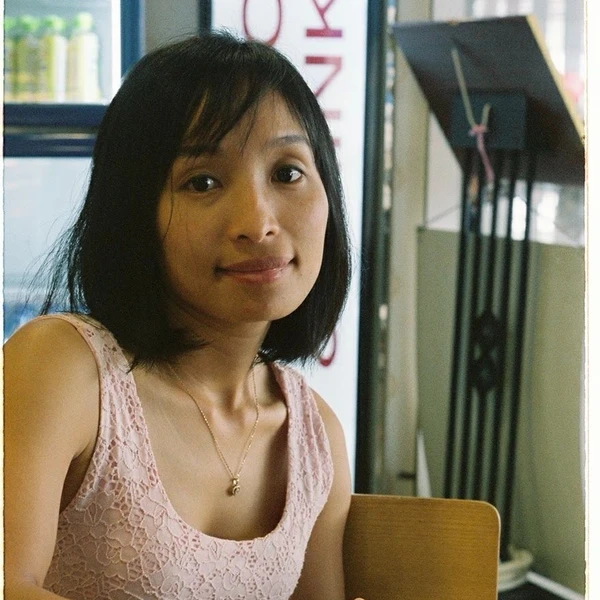
Thi Kim Cuc Le
1x
Finalist
Thi Kim Cuc Le
1x
FinalistBio
My life goals are to complete my education in mathematics, transfer to a four-year university, and build a stable, meaningful career that allows me to support my family and contribute positively to my community. Education represents opportunity and security for me, and I am committed to using it as a foundation for long-term success.
I am most passionate about learning, especially problem-solving and analytical thinking through mathematics. I enjoy challenges that require persistence, logic, and discipline, and I find fulfillment in developing skills that have real-world applications. As a non-traditional student, mother, and immigrant, I value education deeply because it has required sacrifice, resilience, and determination to pursue.
I am a strong candidate for this scholarship because I have consistently demonstrated perseverance, responsibility, and commitment to academic excellence despite financial and personal challenges. I balance my coursework with family and work responsibilities while remaining focused on my goals. This scholarship would not only support my education but also recognize the dedication and effort I bring to my studies and my determination to create a better future for my family.
Education
Valencia College
Associate's degree programMajors:
- Mathematics
Miscellaneous
Desired degree level:
Bachelor's degree program
Graduate schools of interest:
Transfer schools of interest:
Majors of interest:
- Applied Mathematics
Career
Dream career field:
Accounting
Dream career goals:
Future Interests
Advocacy
Volunteering
Entrepreneurship
Learner Calculus Scholarship
Calculus is a foundational tool in the STEM field because it provides a precise language for understanding change, motion, and relationships in the natural and engineered world. While arithmetic and algebra describe static quantities, calculus allows scientists, engineers, and technologists to analyze dynamic systems—how variables evolve over time, how forces interact, and how small changes can produce significant outcomes. Nearly every major scientific and technological advancement relies on the principles of calculus in some form.
One of the most important contributions of calculus to STEM is its ability to model real-world phenomena. Concepts such as derivatives and integrals allow professionals to describe rates of change and accumulation, which are essential in fields like physics, engineering, biology, and economics. For example, derivatives help engineers determine velocity, acceleration, and optimization of systems, while integrals are used to calculate areas, volumes, energy, and total growth over time. Without calculus, many modern technologies—such as satellites, medical imaging devices, and computer graphics—would not exist.
Calculus also plays a critical role in problem-solving and critical thinking. It requires students to break complex problems into smaller, logical steps and to analyze relationships rather than isolated values. This way of thinking is essential in STEM fields, where solutions often require precision, prediction, and efficiency. By learning calculus, students develop analytical skills that extend beyond mathematics and into scientific reasoning, algorithm design, and data interpretation.
In addition, calculus serves as the bridge between theory and application. Scientific laws and engineering principles are often expressed as differential equations, which rely directly on calculus. Whether modeling the spread of a disease, optimizing traffic flow, analyzing electrical circuits, or understanding climate change, calculus provides the mathematical framework needed to turn theoretical ideas into practical solutions. In this sense, calculus is not just a subject, but a universal tool that connects disciplines across STEM.
From a technological perspective, calculus is essential in data science, artificial intelligence, and machine learning. Algorithms that power search engines, recommendation systems, and predictive models depend on optimization techniques derived from calculus. As technology continues to advance, the importance of calculus in developing efficient and ethical solutions becomes even more significant.
Ultimately, calculus is important in STEM because it enables innovation, accuracy, and understanding. It teaches students how to think systematically about change and complexity, preparing them to tackle real-world challenges with confidence. By mastering calculus, STEM students gain not only mathematical knowledge, but also a mindset that supports discovery, problem-solving, and progress across scientific and technological fields.
Debra S. Jackson New Horizons Scholarship
My journey to higher education has not followed a traditional path. I am returning to college at this stage of my life as a wife, a mother of three, an immigrant, and a lifelong learner who understands the value of education through lived experience rather than convenience. Growing up in Vietnam during a time of social and economic hardship taught me resilience early on. Education was always respected in my family, but access to opportunity was limited. When I later moved to the United States, I faced the challenge of adapting to a new culture, language, and educational system while raising a family. These experiences ultimately led me to pursue higher education not only as a personal goal, but as a purposeful decision rooted in responsibility and growth.
Becoming a student again as an adult required courage and discipline. Balancing coursework with work and family responsibilities has shaped my core values: perseverance, accountability, empathy, and long-term thinking. I do not take education for granted. Every class represents sacrifice—time, energy, and financial strain—but also hope. These experiences have clarified my career aspirations and strengthened my determination to succeed. I am particularly drawn to mathematics and finance because they are practical tools that empower individuals to make informed decisions and build stability. I see education not as an end, but as a means to create meaningful change.
My commitment to community service comes from understanding how confusing and inaccessible systems—especially financial systems—can be for immigrants, low-income families, and first-generation students. Through my own experiences navigating school, finances, and family responsibilities, I have seen how a lack of knowledge can limit opportunity. My goal is to pursue a career in finance, eventually becoming a financial advisor who serves diverse and underserved communities. I want to help people understand budgeting, saving, investing, and long-term planning so they can build security for themselves and their families. I believe financial literacy is a form of empowerment, and I am committed to sharing that knowledge in ways that are accessible and culturally sensitive.
Receiving this scholarship would significantly support my educational journey. As a non-traditional student with dependents, financial pressure is one of my greatest challenges. This scholarship would allow me to focus more fully on my studies, reduce the need to overextend myself through work, and maintain balance between my academic and family responsibilities. More importantly, it would affirm that adult learners and immigrant students are worthy of investment and trust.
My life journey has taught me that education has the power to transform not only individual lives, but entire families and communities. I am committed to using my education with integrity, purpose, and service, and this scholarship would be a vital step toward making that vision a reality.
Rose Ifebigh Memorial Scholarship
I describe myself as a resilient learner shaped by responsibility, migration, and perseverance. I was born and raised in Vietnam and later moved to the United States as an adult, bringing with me not only a different language and culture but also the responsibilities of motherhood. Being a wife, a mother of three children, and a full-time student has deeply shaped my values—discipline, empathy, hard work, and gratitude for education. My life experiences have taught me that learning is not a privilege to be taken lightly, but a powerful tool for change. While I do not have a direct connection to Nigeria or the African diaspora, I strongly relate to the shared immigrant experience of adapting, rebuilding, and striving for opportunity in a new country while honoring one’s roots.
Studying in the United States has been one of the most transformative experiences of my life. Coming from a different educational culture, I had to adapt not only to a new language but also to a new way of thinking—one that encourages discussion, critical analysis, and self-expression. As a foreign student, I learned how to advocate for myself, ask questions without fear, and collaborate with classmates from diverse backgrounds. Navigating cultural differences while balancing family responsibilities strengthened my confidence and independence. These challenges helped me grow into a more open-minded, patient, and reflective learner who values diversity as a source of strength rather than difficulty.
Through my educational journey, I have gained a deeper understanding of myself and the world around me. Academically, I discovered my strong interest in mathematics and finance—fields that require logic, persistence, and problem-solving, qualities I have developed throughout my life. Personally, I learned that my background is not a limitation but a source of insight. Being an immigrant and a nontraditional student has allowed me to see education not just as a personal achievement, but as a responsibility to my family and community. One of the most meaningful lessons I have learned is that growth often comes from discomfort, and perseverance matters more than perfection.
My academic goal is to complete my Associate of Arts degree, transfer to the University of Central Florida, and pursue a career in finance, with the long-term goal of becoming a financial advisor. I hope to support individuals and families—especially immigrants and underserved communities—by helping them understand financial systems, build stability, and make informed decisions. Receiving this scholarship would directly support my educational journey by reducing financial pressure, allowing me to focus more fully on my studies while continuing to care for my family. More importantly, it would affirm that students like me—adult learners, immigrants, and parents—belong in higher education and have valuable contributions to make.
Harry & Mary Sheaffer Scholarship
I will use my unique talents and skills to help build a more empathetic and understanding global community by leading with compassion, education, and responsibility. My life experiences as an immigrant, non-traditional student, and mother have shaped the way I view the world and interact with others. Navigating cultural differences, financial hardship, and unfamiliar systems has taught me the importance of listening carefully, respecting diverse perspectives, and responding with patience and understanding.
One of my strongest abilities is my capacity for empathy. Having experienced moments of uncertainty, isolation, and misunderstanding, I am deeply aware of how meaningful it is to feel heard and supported. These experiences have strengthened my ability to connect with people from different backgrounds and life experiences. I approach conversations with openness and humility, striving to understand others before offering my own perspective. I believe that empathy begins with listening, and this mindset guides the way I engage with my community, classmates, and future professional environments.
My academic focus on mathematics has also influenced how I contribute to a more understanding global community. Mathematics has taught me discipline, persistence, and analytical thinking. Problem-solving requires patience, collaboration, and openness to multiple approaches—skills that extend far beyond the classroom. In a world facing complex global challenges such as inequality, access to education, and economic instability, thoughtful analysis and cooperation are essential. I aim to use my analytical skills in a future career that promotes ethical decision-making, fairness, and inclusive solutions.
Education plays a central role in my vision for global empathy. I strongly believe that education empowers individuals and creates opportunities for understanding across cultures and communities. As someone who returned to school despite fear and uncertainty, I hope to encourage others—especially non-traditional students, immigrants, and parents—to pursue education without feeling limited by age or circumstance. By sharing my journey and offering guidance, I strive to help others build confidence in their abilities and recognize their potential.
As a parent, I understand that building a more empathetic world begins at home. I actively teach my children the values of kindness, responsibility, and respect for others. I want them to grow into individuals who value diversity and contribute positively to society. Through my actions, I aim to model integrity, perseverance, and compassion.
By combining empathy, education, analytical thinking, and lived experience, I am committed to contributing to a global community rooted in understanding and respect. I believe that meaningful change begins with individual actions, and I am dedicated to using my skills and experiences to foster connection, inclusion, and shared humanity.
Susie Green Scholarship for Women Pursuing Education
What gave me the courage to go back to school was a deep realization that education was the most powerful way I could reclaim control over my future and create stability for my family. My decision was not sudden or easy. It came after years of navigating personal hardship, financial uncertainty, and the challenges of adapting to a new country and educational system. For a long time, fear and self-doubt held me back. I questioned whether I was capable, whether I was too old, or whether the responsibilities I carried as a mother made returning to school unrealistic. However, those same responsibilities eventually became my greatest source of strength.
As a mother, I wanted to show my children the value of perseverance, discipline, and lifelong learning. I realized that my actions would speak louder than any advice I could give them. I wanted them to see that challenges do not define us, but how we respond to them does. That understanding gave me the courage to take the first step back into the classroom, even when I felt unprepared and afraid.
Another source of courage came from my belief in education as a path to independence and dignity. Having experienced financial limitations and instability, I understood how vulnerable life can be without the tools and credentials needed to build a secure future. Returning to school represented more than earning a degree; it symbolized self-respect, empowerment, and the possibility of long-term stability. Each class I complete strengthens my confidence and reinforces my belief that persistence can change the direction of my life.
Returning to school as a non-traditional student has required significant sacrifice. I balance academic responsibilities alongside work and family obligations, often studying late at night or early in the morning. There are moments of exhaustion and doubt, but each challenge I overcome reminds me why I started. Education has given me purpose, structure, and hope. It has taught me that growth often begins outside of comfort zones.
Ultimately, the courage to return to school came from within, shaped by my experiences, responsibilities, and determination to build a better future. I chose to believe in my potential despite uncertainty, and that choice continues to guide me forward. Pursuing my education is one of the most difficult and rewarding decisions I have made, and it reflects my commitment to perseverance, personal growth, and creating opportunities not only for myself but also for my family.