
Age
26
Gender
Female
Ethnicity
Caucasian
Religion
Christian
Church
Catholic
Hobbies and interests
Swimming
Video Editing and Production
Acting And Theater
Movies And Film
Playwriting
Screenwriting
Cinematography
Dungeons And Dragons
Mental Health
Skydiving
Voice Acting
YouTube
Writing
Videography
Crafting
Reading
Mystery
Action
Fantasy
Drama
I read books multiple times per week
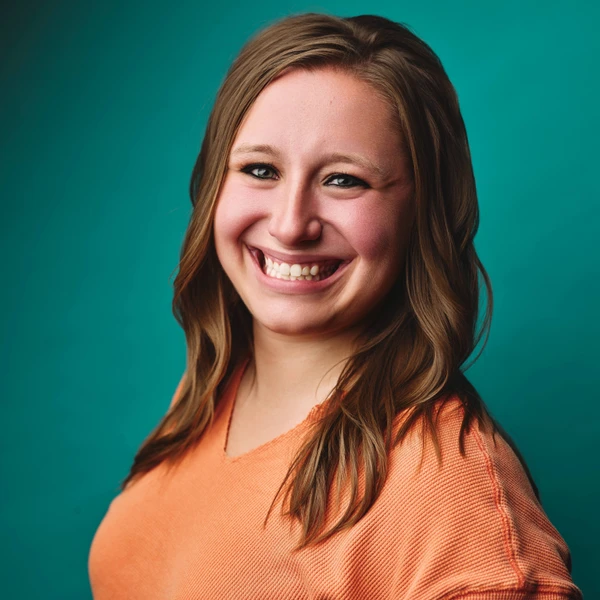
Katie Evans
1x
Finalist
Katie Evans
1x
FinalistBio
Katie Evans is a filmmaker, playwright, and storyteller who has never once taken no for an answer. A Nebraska Wesleyan University BFA graduate and founder of Four Lights Films, Katie built her independent production company from the ground up — turning a collegiate stage play into a feature film and never looking back. In just one year, Four Lights Films has produced five feature-length films, earned 20+ festival awards, and assembled a powerhouse creative team of 20+ artists who believe, like Katie does, that stories worth telling are worth fighting for.
As a writer, producer, and lead actress, Katie has worn every hat on set and worn them well. Her work spans psychological thrillers, supernatural dramas, and deeply human stories that refuse to look away from the hard stuff. She does not wait for permission to create — she builds the table, pulls up the chairs, and gets to work.
Now accepted into Loyola Marymount University's MFA Screenwriting program, one of the top five film programs in the world, Katie is taking her relentless drive from the Midwest to Los Angeles with one goal: to become one of the top writers in television and film. She has faced doubt, industry politics, and every obstacle a small-town dreamer can face — and she has met every single one of them head on.
The ocean does not scare her. She has been swimming her whole life.
Education
Loyola Marymount University
Master's degree programMajors:
- Radio, Television, and Digital Communication
- Rhetoric and Composition/Writing Studies
- Film/Video and Photographic Arts
Nebraska Wesleyan University
Bachelor's degree programMajors:
- Drama/Theatre Arts and Stagecraft
Miscellaneous
Desired degree level:
Master's degree program
Graduate schools of interest:
- Loyola Marymount University
Transfer schools of interest:
Majors of interest:
- Fine and Studio Arts
- Film/Video and Photographic Arts
- Rhetoric and Composition/Writing Studies
Career
Dream career field:
- Entertainment
Dream career goals:
Executive Producer/Director/Writer
Four Lights Films2022 – Present4 yearsResidential Education Coordinator
Nebraska Wesleyan Univeristy2022 – 20264 years
Sports
Artistic Gymnastics
Club2008 – 20124 years
Softball
Club2011 – 20143 years
Basketball
Club2010 – 20144 years
Soccer
Club2007 – 20147 years
Swimming
Varsity2003 – 201815 years
Awards
- Lettered
- State Qualifier
- Captain
Research
Drama/Theatre Arts and Stagecraft
Nebraska Wesleyan Univeristy — Producer/Director2020 – 2022
Arts
BLIXT
Performance Art2020 – 2022Flatwater Films
Film Criticism2023 – PresentFour Lights Films
CinematographyI-21, Thank You For Her, Left Down Raven Street , Por Fava/or, Dancing with Georgia2022 – Present
Public services
Volunteering
Ronald McDonald House — Teaching Artists2022 – 2024
Future Interests
Advocacy
Entrepreneurship
Jules Ehlers-Danlos Syndrome Resilience Scholarship
Most people do not know this about me because I do not lead with it. But since I was nineteen years old I have been passing kidney stones at a rate of at least three attacks a year and I have never once let it stop me from doing what I came here to do.
Chronic kidney stones are not glamorous. They are not the kind of struggle that gets talked about because they are not visible and on a good day you look completely fine to everyone around you. But the pain is unlike anything I have words for. Passing a stone is the kind of pain that drops you. That takes over your entire body and leaves no room for anything else. And knowing that it is always coming, that at any point your body might decide today is the day, adds a layer of anxiety to everyday life that most people will never have to factor into their plans.
I have had to factor it into everything.
There have been days on set running on pain medication and sheer determination where nobody around me knew it. Days where I sat down to write and had to stop because my body had other ideas. Days where the kidney function issues that come alongside the stones made even basic tasks feel like climbing a mountain. The fatigue is real. The physical toll is real. The way it quietly complicates every goal I have ever set for myself is real.
But I have produced five feature films. Built a production company from the ground up. Written scripts and led crews and shown up to every shoot and every deadline because the alternative was letting my body decide what my life looked like. I refused to do that.
What I have never been able to do is give my body the attention it deserves when an attack hits. There has always been something else that needed me more. A shoot that could not reschedule. A deadline that could not move. So I have shoved the pain to the side and kept going because stopping never felt like something I could afford. Not the toughness of pushing through but the cost of it. The times I should have rested and did not. The times I should have gotten medical attention sooner and could not because I did not have the financial cushion to pause and just take care of myself.
This scholarship would change that in a way I cannot overstate. Knowing I have funds available for when a stone attack hits during grad school, and it will hit, means that for the first time I would not have to choose between my health and my education. I would not have to sit through a lecture in agony or delay getting care because the financial math does not work. I would be able to take care of my body and come back to the work fully. That is something I have never had the luxury of before.
I have never waited to feel good to do the work. I have just done the work.
But I am ready to finally stop choosing between taking care of myself and chasing my dreams. This scholarship makes that possible. And I would not take a single dollar of it for granted.
Taylor Swift Fan Scholarship
My first memory of truly living inside a story was not in a classroom or a movie theater. It was in the back seat of my parents car listening to Love Story come through the speakers and realizing with every single word that my brain was on fire.
I could not have been very old but I remember it so clearly. The way the song built this entire world in my head without showing me a single image. A girl, a boy, a balcony, a family that did not approve, and a ending that felt like everything was going to be okay. I was not just listening to a song. I was watching a movie that only existed inside my own imagination and I was completely hooked on the feeling of it. I did not have the words for it then but I know now exactly what was happening. Storytelling had found me. Or maybe I had finally found it. Either way something clicked into place in that back seat that has never clicked back out.
Taylor Swift has been a constant in my life ever since. And the older I have gotten and the deeper I have gone into my own creative work the more I have understood why. She does not just write songs. She writes films. She writes characters with full histories and specific heartbreaks and complicated motivations. She writes scenes so vivid you can see the kitchen light and feel the temperature of the room. Every album is a world you can live inside and every song is a story that respects the intelligence of the person listening to it. As someone who has spent years trying to do exactly that in my own work, I find that genuinely extraordinary.
She is a huge part of why I started Four Lights Films. Not because I sat down one day and made that connection consciously but because the standard she set for storytelling embedded itself in me so early that it became the bar I measured everything against without realizing it. Specific. Emotional. Honest. Unafraid. Those are the words I use when I talk about what I want our films to be and those are the exact words I would use to describe her best work.
What she also showed me, especially watching her career from the outside over the years, is that the artist who stays true to their own voice no matter what the industry says is always the one who lasts. She has been underestimated and dismissed and written off more times than I can count and she has come back every single time with something that silenced every doubt. I think about that constantly when the path gets hard and the self doubt gets loud.
Four Lights Films exists because a little girl in the back seat of a car heard Love Story and felt her soul light up for the first time. Everything I have built since has been chasing that feeling.
I am still chasing it. And I do not ever plan to stop.
Sabrina Carpenter Superfan Scholarship
I know it sounds simple. Maybe even a little embarrassing to admit. But some of the most honest creative decisions I have ever made started with putting in my headphones, pressing play on a Sabrina Carpenter album, and just listening.
I discovered Sabrina Carpenter at a point in my life when I was trying to figure out what kind of stories I actually wanted to tell. I had the technical skills by then. I had taught myself to edit, to run a set, to build a production from nothing. What I was searching for was the emotional core. The thing that would make someone feel something real when they watched what I made. And somewhere between the melody and the lyrics and the specific way she has of making you feel like she is singing directly about your life, I found it.
What gets me about Sabrina Carpenter is that she writes about being human in a way that does not dress it up. Heartbreak, self doubt, desire, the messy in between spaces of figuring out who you are and what you deserve, she puts it all out there without apology and without over explaining it. There is a specificity to her songwriting that I find genuinely inspiring as a storyteller. She does not write in generalities. She writes in moments. A specific feeling at a specific time that somehow ends up being universal because of how precise it is. That is exactly what I want my films to do.
I remember sitting with her music on a night when I was trying to crack a story I had been circling for weeks and something just clicked. I started thinking about her songs as short films. Each one had a character, a conflict, an emotional arc, a beginning middle and end. The way she could make you feel the entire weight of a relationship in three minutes and forty seconds made me realize that economy of storytelling was something I wanted to chase in my own work. Say the true thing. Say it specifically. Trust the audience to feel it.
That realization shaped the way I approach every Four Lights Films project. I want our films to feel the way her best songs feel. Immediate and personal and like they were made specifically for the person watching them even though they were made for everyone. I want someone to finish one of our films the way I finish one of her albums, a little wrecked, a little seen, and grateful that someone put words to something they did not know how to say themselves.
She also showed me that you do not have to wait for someone to give you permission to tell your story. She built her audience project by project, era by era, on her own terms and in her own voice. That is the career I am building with Four Lights. That is the artist I am working every day to become.
Sabrina Carpenter taught me that the most powerful stories are the ones told without armor.
I am still learning that lesson. But I am showing up to it every single day!
Learner Online Learning Innovator Scholarship for Veterans
Nobody taught me how to make a film. Not a professor, not a mentor, not a formal program. YouTube did.
I know that sounds like a joke but I mean it completely seriously. When I decided I wanted to make my first feature film I had a cast, a story, and absolutely zero technical knowledge of how to actually pull it off. I did not have money for film school. I did not have industry connections. I did not have anyone around me in Lincoln, Nebraska who could sit down and walk me through what a color grade was or how to build a shooting schedule or what in the world an export setting meant. What I had was a laptop, a dream that was frankly too big for my current skill set, and an internet connection.
So I got to work.
I taught myself to edit entirely through YouTube tutorials. Hours and hours of them. I would watch a video, pause it, try the thing, fail at the thing, rewind, try again. DaVinci Resolve, Premiere Pro, audio mixing, color correction, transitions, pacing, all of it learned through creators who had figured it out before me and were generous enough to put it on the internet for free. What I found was that YouTube did not just teach me the technical steps. It taught me the why behind them. Why a cut works in one place and kills the scene in another. Why color temperature changes the emotional tone of a shot. Why sound design is half the movie even though nobody talks about it. I was not just absorbing tutorials. I was building a real understanding of the craft from the ground up.
Running a business was the same story. I had never managed a budget, drawn up a contract, filed anything for an LLC, or figured out how to pay people correctly on an indie set. Online forums, Reddit threads, filmmaker communities, and more YouTube videos than I could ever count became my business school. I built Four Lights Films on the back of that collective knowledge and I genuinely do not think the company exists without it.
Five feature films later I can say without any hesitation that "YouTube University" gave me a foundation that I am genuinely proud of. Not because it was the easy route but because it required me to be disciplined enough to teach myself, resourceful enough to find the right information, and determined enough to keep going when I did not understand something the first time or the fifth time. Every skill I brought to Four Lights Films, every edit I cut, every budget I built, every set I ran, came from that self taught foundation.
I am heading to LMU's MFA Screenwriting program now to take everything the digital world taught me and build on it in a formal setting for the first time. I am not arriving empty handed. I am arriving with five produced feature films, a running production company, and a skill set I built myself from scratch using nothing but determination and an internet connection.
The digital world raised me as a filmmaker. LMU is where I grow up.
Ethel Hayes Destigmatization of Mental Health Scholarship
Mental health is not something I learned about in a classroom or read about in a textbook. I learned about it watching my sister Sarah disappear right in front of me. And then I learned about it again when I almost disappeared myself.
Sarah was everything to me growing up. I mean that. She was older and cool and talented and I followed her around in my head even when I could not follow her around in real life. She was winning awards in college and lighting up every room she walked into and I just thought that was who she was. That was the whole picture. I did not know yet that the whole picture included something a lot darker that she was fighting every single day without anyone really seeing it.
The alcoholism got bad. Like really bad. I remember the screaming matches with my parents that did not even sound like her anymore. I remember the police at our door. I remember watching them take Sarah to detox and just standing there completely frozen because nobody tells you what to do in that moment. Nobody prepares you for what it feels like to watch someone you love get taken away and not know if the person you get back is going to be the same one who left.
When she came home to recover we got something I had always wanted. We got to actually be sisters. She was funny and warm and real and those were genuinely some of the best times of my life. I did not know they had an expiration date. She relapsed, left on a bender, and never came back. No call. No text. No note. Nothing. Absolutley nothing. To this day, I do not know if Sarah is alive right now and I mean that in the most literal way possible. That is just something I wake up with every day and figure out how to carry.
What I did not see coming was how close I would get to the same edge she fell off of.
I have always been someone who puts an insane amount of pressure on myself. Like genuinely unhealthy amounts. From the time I wrote my first award winning script at eighteen I set this bar for myself that had absolutely no grace built into it. Every project had to top the last one. Every room I walked into I felt like I had to prove I had a right to be there. And for a while that pressure worked and I confused working with being okay. Those are not the same thing at all.
College broke that wide open. The pressure that had been pushing me forward started crushing me instead and my mental health just collapsed under the weight of it. I stopped seeing myself as someone who was capable of anything and started seeing myself as someone who had been faking it the whole time. The drinking got worse. The substances got worse. And then one night everything got so much worse than that. I attempted suicide. I am still here but I will never pretend that night did not happen because it did and it changed everything.
What brought me back was Sarah.
Right in the middle of the worst of it I thought about her. I thought about that living room and the police and the detox and the years of silence after. I thought about what not knowing where she is has done to me and to my family every single day since she left. And I realized I was standing in the exact same place she had once stood. I had watched that story play out from the outside. I knew what it cost. I knew what it did to the people left behind. And I could not be that for my people. I could not let them spend the rest of their lives not knowing, the way I spend mine not knowing about Sarah.
She never found her way to a different path. I do not know why and I have stopped pretending I do. But I could find mine. And in that moment it felt like the only real way I could honor her was to take the road she never got to finish walking. To live the life she deserved and did not get to have.
So I chose it. And I keep choosing it every single day.
It changed my art completely. The stories I used to dance around because they were too close I now run straight toward. Four Lights Films exists because I believe that the most honest mental health storytelling is the kind that does not clean itself up for the audience. Not the version where everything makes sense and recovery is a straight line. The real version. The one that looks like a specific night you do not bring up at dinner and recovery looking like just getting up the next morning and still being here.
That is who I make movies for. The people in that night. The families of the Sarah's of the world who do not know how to carry what they are carrying. The survivors who made it to the other side and are not sure yet what to do with that. Or where they should go next. Only knowing that they need to move.
I am going to LMU SFTV because I want to tell those stories on the biggest stage I can get to. I want mental health on screen to look real. Survivable. Human. I want someone white knuckling it through their worst stretch to turn on the TV and feel less alone in it.
I almost did not make it here. That is just the truth. But I did. And I think about Sarah every single day. I carry her into every script.
I am here. I am still writing. And every single thing I make is for both of us.
Arin Kel Memorial Scholarship
I don't know if my sister is alive right now. I mean that literally. She left on a bender years ago and never came back. No calls, no texts, no trace. And the not knowing is its own kind of grief that never really closes. You cannot mourn someone who might still be out there. You just learn to carry it.
I recognize this scholarship is intended for those who have lost a sibling. My sister is not confirmed to be gone. But the day she disappeared without a word was the day I was forced to start grieving her like she was. When years go by and there is nothing, the grief shows up whether you are ready for it or not. I have been living in that grief for a long time now.
When I was little I thought she was the coolest person alive. She was winning awards in college, lighting up every room she walked into, and I just wanted to be her when I grew up. I did not see what was underneath all of that. The alcoholism got worse over time until there was no looking away from it. I remember watching her scream at my parents. I remember the police showing up. I remember watching them take her to detox and standing there completely frozen, not knowing what to do with any of what I was feeling. That is not something you forget.
When she came home to recover we finally got to actually be sisters. She was funny and warm and real and I cherished every single second of it. Then she relapsed and left without a word and that was the last time I saw her.
It took me years to let myself remember the good stuff. To see her as a whole person and not just the illness that took her. She deserved to be remembered that way. She still does.
When I started Four Lights Films I built it for people without a roadmap. I grew up in Nebraska with a big dream and no connections, no experience, no blueprint. Four Lights exists to give people like that a place to belong and make something real. People who just need someone to hand them the opportunity and say you can do this.
But I built it for her too. She is the empty chair at the table I have never stopped thinking about. She is the person I would have called first after every festival win. She is the one I would have handed a script to, put in front of a camera, and told that just being herself was more than enough.
Every person who walks through Four Lights and discovers something in themselves they did not know was there, that is for her.
Four Lights will always partly be hers.
Tawkify Meaningful Connections Scholarship
I am a storyteller. It was what I was born to be. I know this with full confidence.
Every story I have ever written started with a relationship. Not a concept, not a theme, not some grand artistic statement. A relationship. Two people trying to find their way to each other, or failing to, and everything that lives in that space between them. That is where I always start. That is where the truth always is.
Relationships are not just what inspire my work. They are why I do it at all.
I grew up watching my sister battle addiction from a distance I did not know how to close. When she finally came home and we started actually knowing each other, it was the first time I understood what it means to truly connect with someone. We watched each other grow. It was fun and messy and real and I cherished every second of it. Then she relapsed and disappeared without a word, and I had a choice about how to carry that. My family was angry. I was sad. And in that sadness I found something I did not expect, the ability to sit with someone else's pain and try to understand it instead of just reacting to it. That became the foundation of every character I have ever written. I do not write villains. I write people. People with reasons, even when those reasons hurt.
That instinct is also what built Four Lights Films.
My indie film production company did not start because I had a business plan or some big vision board moment. It started because of the people who stayed. When Dancing with Georgia, the play I wrote and produced my senior year of college, got attacked by basically our entire theater department before it ever opened, the people who kept showing up to rehearsal anyway became everything to me. We went through something together that I honestly still do not have full words for. And when it was over, when we had four sold out shows and a standing ovation from the same people who tried to shut us down, none of us wanted to stop making things together. So we did not. Four Lights Films is what happened when a group of people decided that what they built under pressure was worth keeping. Every film we have made since has come from that same core of trust and I do not take that lightly for even a second.
On a personal level, the relationship that has shaped me most in the last few years is the one with my mom. In 2022 she was diagnosed with breast cancer and I had just been accepted to a graduate film program. I never told anyone in my family about the acceptance. I just deferred and stayed. My dad was in his late sixties and had no idea how to navigate any of it, my brother was across the country, and someone had to step up. So I did. I managed appointments and medications and insurance calls and all the invisible stuff that comes with being the person a family leans on when everything goes sideways. It was the hardest stretch of my life and also the one that changed me the most as a writer. Because when you spend years showing up for someone else's survival you start to understand human beings on a level that you just cannot get from anywhere else. You understand what people look like when they are terrified but trying to be brave. You understand what love actually costs. And you understand that the most important stories are usually the quiet ones that nobody thinks to tell.
I am heading to LMU's MFA Screenwriting program now because I want to tell those stories on the biggest stages possible. I want to write relationships that feel so real that someone watching at home has to pause and catch their breath because they recognize something they have never seen named before. That is the goal. That has always been the goal.
Every relationship I have ever had, the ones that built me and the ones that broke me, lives somewhere in my writing. My sister. My mom. My Four Lights family. They are all in there.
That is not just where my stories come from.
That is why I write at all.
Learner Mental Health Empowerment for Health Students Scholarship
I want to build a world where a teenager can turn on the television and see their darkest thoughts reflected back at them not with shame, but with honesty. Where mental health is not a whispered topic, a content warning to be weaponized, or a reason to shut a story down before it ever gets the chance to breathe. That is the entertainment landscape I am committed to building. And I learned exactly why it matters the hard way.
When I wrote Dancing with Georgia, a stage play exploring suicide, sexual assault, and abortion through dialogue and dance, I included content warnings in every audition notice and promotional material. I wanted everyone involved to make an informed choice. What I did not anticipate was that those same warnings would be used as ammunition against us. Cast members dropped. Faculty applied pressure. People who had never read a single page of the final script rallied to have the show removed, citing concern for student mental health while simultaneously doing everything in their power to make sure those students never got to tell their story at all.
That contradiction taught me everything.
The people most threatened by honest conversations about mental health are often the loudest voices calling for their removal. And when a story gets that kind of reaction, when it makes people that uncomfortable that quickly, it is not a sign to stop. It is a sign that you are doing something right. The resistance itself is the proof that the story needs to exist.
I kept rehearsing. Four sold-out shows later, the very people who had called for its shutdown were on their feet. My directing professor called it one of the top five productions in his entire collegiate teaching career. The audience did not leave traumatized. They left seen. They left less alone. That is what honest storytelling about mental health actually does when it is given the chance.
That experience became the foundation of everything I create. As the founder of Four Lights Films, with five feature-length films and 20+ festival awards, I have built a company rooted in the belief that the stories hardest to tell are the ones most worth telling. My play Umbra, centered on a closeted high school senior who witnesses a hate crime, carries that same conviction. Silence does not protect people. Honest, visible, human storytelling does.
I am heading to Loyola Marymount University's MFA Screenwriting program, one of the top five film programs in the world, to take that mission further than a small Midwest town has allowed me to. I want to be in the rooms where cultural narratives are shaped, writing characters whose mental health journeys are treated with the complexity and dignity they deserve, not hidden, not sanitized, not used as shock value, but told truthfully.
Because every time someone tries to shut that conversation down, it means we are getting closer to something real.
And I intend to keep going.
Bulkthreads.com's "Let's Aim Higher" Scholarship
I want to build a world where a queer teenager can turn on the television and see themselves, not as a token, not as a tragedy, not as someone else's lesson, but as the main character. Fully realized, deeply human, and completely normal. That is the entertainment landscape I am committed to building. And I have been laying the groundwork my entire creative life.
I grew up queer in Lincoln, Nebraska, where visibility is not a given and representation in the stories around you is sparse at best. I felt the quiet ache of watching film and television and never quite seeing myself reflected back as a whole person. LGBTQ+ characters existed, but too often as plot devices, punchlines, or walking tragedies whose queerness was the entire story rather than simply one beautiful part of it. I did not want to replicate that. I wanted to dismantle it.
So I started building something different.
As the founder of Four Lights Films, I have produced five feature-length films and earned 20+ festival awards telling stories that center honest, unapologetic human experience. My play Umbra, centered on a closeted high school senior who witnesses a hate crime, and Dancing with Georgia, which faced a department-wide campaign to shut it down before selling out four shows and earning some of the highest praise of my collegiate career, are testaments to what happens when you refuse to let fear dictate which stories get told.
Every project I create is a brick in the foundation of the entertainment world I want to exist. One where queer characters fall in love, solve problems, make mistakes, and find their way home, not because their identity is the plot, but because they are the plot. The same way straight characters have always simply been allowed to exist, without explanation, without justification, without having to earn their place in the story.
That normalcy is not a small ask. It is a cultural shift. And it requires writers in the rooms where the biggest stories are being made.
That is why I am heading to Loyola Marymount University's MFA Screenwriting program, one of the top five film programs in the world. It is not just the next step in my career. It is the step that puts me in position to make the kind of mark I have been working toward since I first picked up a pen. I did not get here easily. A mother's cancer diagnosis put my first graduate school acceptance on hold, and I spent years as my family's primary caregiver before I could put myself first again. But I never stopped writing. And I never stopped building.
The world I want to create in entertainment already exists in my head. It is full of queer people living full lives, seen completely, loved entirely, and written with the same depth and dignity every human being deserves.
I am going to build it. I have already started.
Elijah's Helping Hand Scholarship Award
Being a queer artist in a small Midwest town is its own kind of courage. There are no parades on every corner, no industry networks buzzing around you, and no guarantee that the stories you feel compelled to tell will be welcomed by the community you grew up in. You learn quickly that visibility is not given. It is fought for. And I have been fighting for it my entire creative life.
When I was a senior in college, I wrote and produced Dancing with Georgia, a stage play tackling suicide, sexual assault, and abortion through dialogue and dance. It was the truest, most vulnerable thing I had ever put on a page. It was also the most attacked. Cast members dropped. Faculty applied pressure. A department I had once felt safe in turned hostile almost overnight, rallying against a script most of them had never even read. To them it was gossip. To me it was my soul.
I kept rehearsing anyway. Four sold-out shows later, my directing professor called it one of the top five productions in his entire collegiate teaching career.
That experience taught me something I carry into every project: the stories people try hardest to silence are the ones that need to be told the most. As an LGBTQ+ identifying artist in Lincoln, Nebraska, I have lived that truth in more ways than one. Telling queer stories in a community that is not always ready to receive them requires a specific kind of stubbornness. It requires believing in the power of representation even when the room is not with you yet. My play Umbra, centered on a closeted high school senior who witnesses a hate crime, was born directly from that belief. These are not abstract stories to me. They are personal. They are necessary. And they deserve a stage.
Building Four Lights Films from the ground up gave me the platform to tell them. Alongside the people who had stood by me when it mattered most, I founded an independent production company that has now produced five feature-length films and earned 20+ festival awards. Every project we take on is rooted in the same conviction: that honest, human, unapologetic storytelling changes people. That has always been the mission, even when the Midwest made it complicated.
I did not arrive at this point easily. A mother's cancer diagnosis put my first graduate school acceptance on hold, and I spent years prioritizing her fight before my own. I have navigated industry politics, public creative humiliation, and the particular isolation of being a queer creator in a place where that identity is still, far too often, considered a footnote. I have never had a straightforward path. But I have never stopped moving forward either.
Now I am heading to Loyola Marymount University's MFA Screenwriting program, one of the top five film programs in the world, and I am bringing every bit of that fight with me. This scholarship would mean the difference between surviving Los Angeles and truly thriving in it. Between splitting my focus between finances and fully immersing myself in the program, the industry, and the community I have worked toward my entire life.
I am not the kind of artist who waits for permission. I am the kind who writes the story anyway, produces it anyway, and stands on that stage anyway, even when the room is not ready.
The room will catch up.
It always does.
Christian Fitness Association General Scholarship
When I was a senior in college, my ultimate dream became a reality. An original stage play I had been working on, Umbra, was chosen for our theater company's mainstage season and was the talk of the department all year. Standing ovations, tears, awards, and interviews followed. I felt on top of the world — and perfectly set to graduate with a legacy that would last decades, according to my professors.
Then a peer asked me to write something new. Something heavy. And I realized that while I may have been set, I was not content. That distinction became the start of the most challenging semester of my life.
The play was called Dancing with Georgia. It tackled suicide, sexual assault, and abortion — not for shock value, but because these are human experiences that deserve to be seen on a stage. We were transparent about the themes from the very beginning, including them in every audition notice and promotional material so that every person who joined the production did so with full awareness and full choice.
That transparency was later weaponized against us.
The lead actor was pressured by a faculty member to drop the show the same night he was cast, warned that choosing a student production over her faculty-led show would cost him his standing in the department. I was moved to the lead role within minutes. Then our leading lady dropped as well, publicly calling the script "appalling" — despite having read it, praised it, and signed a contract agreeing to its themes. Her true motivation, I later learned, had nothing to do with the script at all. It was personal. But rather than own that, she turned the blame onto my writing, which turned the blame onto me.
What followed was unlike anything I had experienced. The rhetoric of a "dark and appalling play" spread through the department like wildfire, attached to my name at every turn. People who had never laid eyes on the final draft of the script rioted against it. A department I had once felt safe in became somewhere I dreaded walking into every day. The same professors and peers who had celebrated Umbra months before were now lining up to take their shot at me. To them, it was gossip. To me, it was my life and my art being put on trial.
I kept rehearsing anyway.
The safest I felt during that entire month was inside those rehearsal walls, running a show where my character nearly takes her own life. The most frightening place was anywhere else. I pushed through the stares and the comments and the whisper campaigns because I knew, even when I lost sight of it momentarily, exactly who Georgia was and what she meant. Umbra was everything my mind had to offer. Dancing with Georgia was my soul.
Opening night, four sold-out shows. The very people who had called for its removal were on their feet. My directing professor called it one of the top five productions in his entire collegiate teaching career. The script they had tried to silence moved every single person who saw it.
That experience did not just test me. It built me.
I learned what it means to protect a story you believe in when the world is telling you to let it go. I learned the difference between people who create and people who compete. I learned that the most powerful thing a writer can do is refuse to shrink. And I carried every one of those lessons into the next chapter, founding Four Lights Films, my independent production company, alongside the people who had stood by me and Georgia when it mattered most. Together we have produced five feature-length films, earned 20+ festival awards, and built a team of 20+ artists united by the belief that stories worth telling are worth fighting for.
I did not arrive at this point easily. I arrived here through sleepless nights, public humiliation, industry politics, a mother's cancer diagnosis that put my first graduate school acceptance on hold, and years of showing up for my art even when the circumstances gave me every reason not to. I have never had the luxury of a straightforward path. Every step forward has required me to fight for it.
Which is exactly why this scholarship matters.
I have applied for 25+ scholarships and pursued student employment on the Loyola campus because attending LMU's MFA Screenwriting program, one of the top five film programs in the world, requires not just talent but relentless resourcefulness. I am not asking for a handout. I am asking for the investment that allows me to put every ounce of my energy into becoming the writer I have spent my entire life working toward. Financial stability is not a luxury for a graduate student relocating across the country. It is the foundation that makes full, focused, fearless learning possible.
Every dollar of this scholarship would go directly toward that foundation: toward the housing that lets me show up to every workshop and screening, toward the meals that fuel late-night writing sessions, toward the peace of mind that frees a creative mind to take the risks that great storytelling demands.
I am the student who stayed in the rehearsal room when the whole department wanted the show shut down. I am the filmmaker who turned a stage play into a film company. I am the daughter who deferred her dreams to sit beside her mother through cancer treatments and came back swinging. I do not quit. I do not shrink. I do not wait for permission to create.
Dancing with Georgia taught me that the stories people try hardest to silence are often the ones that need to be told the most. I have spent my entire career proving that. I will spend my time at LMU doing the same.
I am ready. I have always been ready.
Lost Dreams Awaken Scholarship
Recovery, to me, is not a destination. It is a choice you make over and over again, often quietly, often alone.
My sister struggled with alcoholism for years. During my high school years, she lived with us while recovering, and for the first time in our lives, despite our age gap, we were close. We watched each other grow. Then she relapsed, went no contact with our entire family, and disappeared without a word. No calls. No texts. No note. Just gone.
Her absence taught me something I did not expect: empathy. While my family raged at her departure, I sat with the hurt and tried to understand it rather than run from it. That process became the foundation of every human-centered story I have written since.
What I did not anticipate was how close I would come to needing that same understanding for myself.
In college, I found myself slipping into habits I recognized but told myself I could control. Drinking more than I should. Leaning on substances to quiet a mind that never stopped running. Then one night, in the fog of it all, I thought of her. I thought of my mother's face. I realized I was standing at the same edge she once had.
That realization pulled me back.
I have practiced safer, more intentional habits ever since, not out of shame, but out of love. For her. For myself. Recovery, to me, means choosing the page over the fog, every single time.
Sharra Rainbolt Memorial Scholarship
Art has always been where I go when life becomes too loud to process any other way. And in 2022, life became very loud.
That year, I was accepted to a graduate film program, a dream I had been working toward with everything I had. I remember the feeling of reading that acceptance. For one brief, shining moment, everything I had fought for had paid off. Then my phone buzzed. A text from my mother. Two words: "It's cancer."
My world shattered.
I never told anyone in my family about the acceptance. Not that day, not for a long time after. I deferred quietly, alone, and turned every ounce of my attention toward my mother. There was never a question in my mind about what I was going to do. The acceptance letter could wait. She could not. Some people may have seen that as giving something up. To me, it was the only choice that made sense. She is my mother. There was no version of me that got on a plane to chase a dream while she was sitting at home facing the fight of her life.
The years that followed were among the hardest and most clarifying of my life. I watched my mother fight with a strength that redefined the word for me. I sat with her through treatments, through the fear, through the days when neither of us had the right words and so we just sat together in the quiet. I handled what needed to be handled, kept life moving for both of us, and never let her see me break, at least not until I was alone. There is a particular kind of grief that comes with watching someone you love fight for their life while they are still here. It is not clean or linear. It sits alongside hope and terror in equal measure, and you learn to carry both at once.
What those years also gave me, quietly and unexpectedly, was depth. Every story I had written before 2022 was built on empathy I had cultivated from the outside looking in. After those years at my mother's side, I understood something different, the weight of showing up every single day for someone else's survival, and the silent cost of putting your own dreams on hold out of love. That is not a sacrifice I regret. It is one I would make again without hesitation. But it changed me as an artist in ways I am still discovering.
My mother is still here. She fought, and she won, and I was there for every round of it.
And now, it is my turn.
I am heading to Loyola Marymount University's MFA Screenwriting program, one of the top five film programs in the world, not just with a dream but with years of earned perspective behind it. I am not the same person who deferred that first acceptance. I am someone who has sat in the hardest rooms and found a way to keep writing anyway, in journals, in scripts, in the quiet moments between hospital visits when storytelling was the only thing that reminded me who I was.
I go now for both of us. For the years she fought to stay, and for the years I spent making sure she could. I go because she is here to see it, and because the stories I have to tell are bigger and truer than they have ever been.
The wait made me ready. She made me ready.
Max Bungard Memorial Scholarship
My name is Katie Evans, and I was eighteen years old when I wrote my first award-winning script. I was a senior in high school, unsure of my academic future, with a missing alcoholic sister, a mother on the verge of a nervous breakdown, and a festival deadline I had not asked for. I have always worked best under pressure. Armed with caffeine, sleepless nights, and a Google search history full of "How To Write a One-Act," I discovered something I had not expected: writing was the only place I could put everything I had no words for yet.
My sister and I had a significant age gap between us, which made connection difficult growing up. But during my high school years, she moved back home while recovering from alcoholism, and for the first time, we were truly together. We watched each other grow. I cherished every moment of it. Then she relapsed, went no contact with our entire family, and disappeared without a word. No calls. No texts. No note. Just gone.
The grief that followed was complicated and quiet. My mother's pain turned to anger. Mine turned inward. While the rest of my family raged at her absence, I found myself trying to understand it — sitting with the hurt rather than running from it, separating her actions from my worth, learning to hold space for pain without letting it consume me. That process became the foundation of every empathetic, human-centered story I have told since. It is where I learned that understanding someone's darkness does not mean excusing it. It means honoring the full complexity of being alive.
What I did not anticipate was how close I would come to losing myself in that same darkness.
In college, during one of the harder stretches of my life, I found myself slipping into habits I recognized but told myself I could control — drinking more than I should, leaning on substances to quiet a mind that never stopped running. It crept up slowly, the way it always does. And then one night, in the fog of it all, I thought of her. I thought of the girl I had watched disappear. I thought of my mother's face. I thought of the years I had spent trying to understand a pain that had swallowed someone I loved whole — and I realized I was standing at the same edge she once had.
That realization pulled me back.
I have practiced safer, more intentional habits ever since — not out of shame, but out of love. For her. For myself. For the artist I promised I would become. My sister taught me, without ever meaning to, that the stories we suppress will find their way out one way or another. I chose to let mine out on the page.
Every script I write carries that choice in it. The courage to feel things fully, to tell the truth about what hurts, and to believe that art built from real pain has the power to reach people in the places they are most afraid to look. That is the writer I am. That is the writer she helped make me.